Zhong Guo Neng Yuan Wang

Search documents
打响春节保供电攻坚战
Zhong Guo Neng Yuan Wang· 2026-02-14 04:12
Core Viewpoint - The company is enhancing its power supply responsibilities to ensure a joyful and safe Spring Festival for the residents of Xiaoyi City, entering a comprehensive power supply protection state [1] Group 1: Power Supply Preparation - The company is conducting special inspections and rectifications of power grid equipment in advance, utilizing infrared imaging and partial discharge detection methods to identify and eliminate equipment defects and hidden dangers [1] - A "Two Festivals" power supply protection plan has been developed, increasing monitoring and early warning for load changes, equipment damage, and fire hazards [1] - The company is strengthening power grid operation monitoring, load forecasting, and operational arrangement to issue timely risk warnings regarding power grid operations [1] Group 2: Safety and Service Enhancement - All departments are implementing risk control measures, conducting safety inspections, and addressing hidden dangers in key areas and components [1] - The company is improving service awareness and response capabilities at power supply service windows, ensuring customer issues are addressed without evasion or delay [1] - The company aims to enhance customer satisfaction regarding electricity supply by actively resolving practical issues faced by customers [1]
国网晋中供电公司:全面排查充电设施 筑牢节日用电安全防线
Zhong Guo Neng Yuan Wang· 2026-02-14 04:12
春节临近,为保障节日期间新能源汽车充电服务安全可靠,近日,国网晋中供电公司深化"一个党员一面旗 帜 万家灯火有我守护"两队传承共建专项行动,组织"两队"队员对辖区内电动汽车充电设施开展专项排 查,全力筑牢春节供电保障防线。 此次排查聚焦返乡车流密集区域与公共补能需求,重点覆盖高速服务区充电站、城区公共充电站点、乡 镇主干道充电桩等区域的充电站点。巡检中,队员们对充电桩本体、充电终端、内部线路等进行了全 面"体检",测试电压电流稳定性,排查设备老化、接触不良等隐患,并同步检查了消防设施。现场负责人强 调:"春节前后充电需求集中,我们必须确保每一台设备都以最佳状态投入运行。"此外,"两队"队员还向车 主普及了安全充电知识与便捷操作方法。 本次专项排查共涉及34个充电站、150余个充电桩,及时处理各类隐患7处。下一步,国网晋中供电公司将 加强节日期间设备监测与应急值守,以可靠的电力保障护航群众平安便捷出行。(刘煊琨 庞沁怡) ...
国网达州市新桥供电公司:深夜抢修保供电 暖心护航迎新春
Zhong Guo Neng Yuan Wang· 2026-02-14 04:12
Core Viewpoint - As the Spring Festival approaches, the demand for electricity is rising, prompting the company to implement emergency measures to ensure reliable power supply during peak usage periods [1][2]. Group 1: Power Supply Assurance - The company has initiated a special power supply guarantee action for the Spring Festival, focusing on peak electricity usage times and conducting infrared temperature inspections to identify potential hazards [1][2]. - A specific incident involved the discovery of overheating in a low-voltage switch at the Wanxing Shijia community, which could have led to equipment failure and disrupted power supply for over 800 households [1][2]. Group 2: Emergency Response - The company activated its emergency power supply plan, coordinating various departments to quickly develop a repair strategy and allocate personnel and resources effectively [2]. - To minimize disruption to residents, the repair team scheduled work during off-peak hours and communicated with the community through SMS notifications to inform them of power outages [2]. Group 3: Successful Repair Operations - The repair team completed the necessary work two hours ahead of schedule, restoring power by 5 AM on February 11, ensuring that residents, including those preparing for weddings, were not affected [2]. - The proactive communication and efficient service provided by the company received positive feedback from residents, highlighting the importance of customer service during critical operations [2]. Group 4: Future Measures - The company plans to enhance safety measures by increasing the frequency of equipment inspections and improving load monitoring and hazard management to ensure a safe and bright Spring Festival for residents [3].
从“一粒种”到“中国蔬菜第一县”
Zhong Guo Neng Yuan Wang· 2026-02-14 02:30
1994年初,山东省电力工业局开展"村村通电"工程,当年9月15日,最后一个无电村齐王庄村通了电, 标志着山东实现全省行政村"村村通电"。这不仅点亮了一个村,更打开了通向"户户通电"的最后一道 门。从全国重点扶贫县到"中国蔬菜第一县",莘县的蝶变是齐鲁大地乡村振兴的缩影,镌刻着从乡乡 通、村村通到户户通的光明足迹,映照出山东电力人践行"人民电业为人民"企业宗旨的使命初心。 ...
北京四方继保赵凤青:AI破解分布式光伏预测难题,数据质量与标准是规模化关键
Zhong Guo Neng Yuan Wang· 2026-02-14 02:25
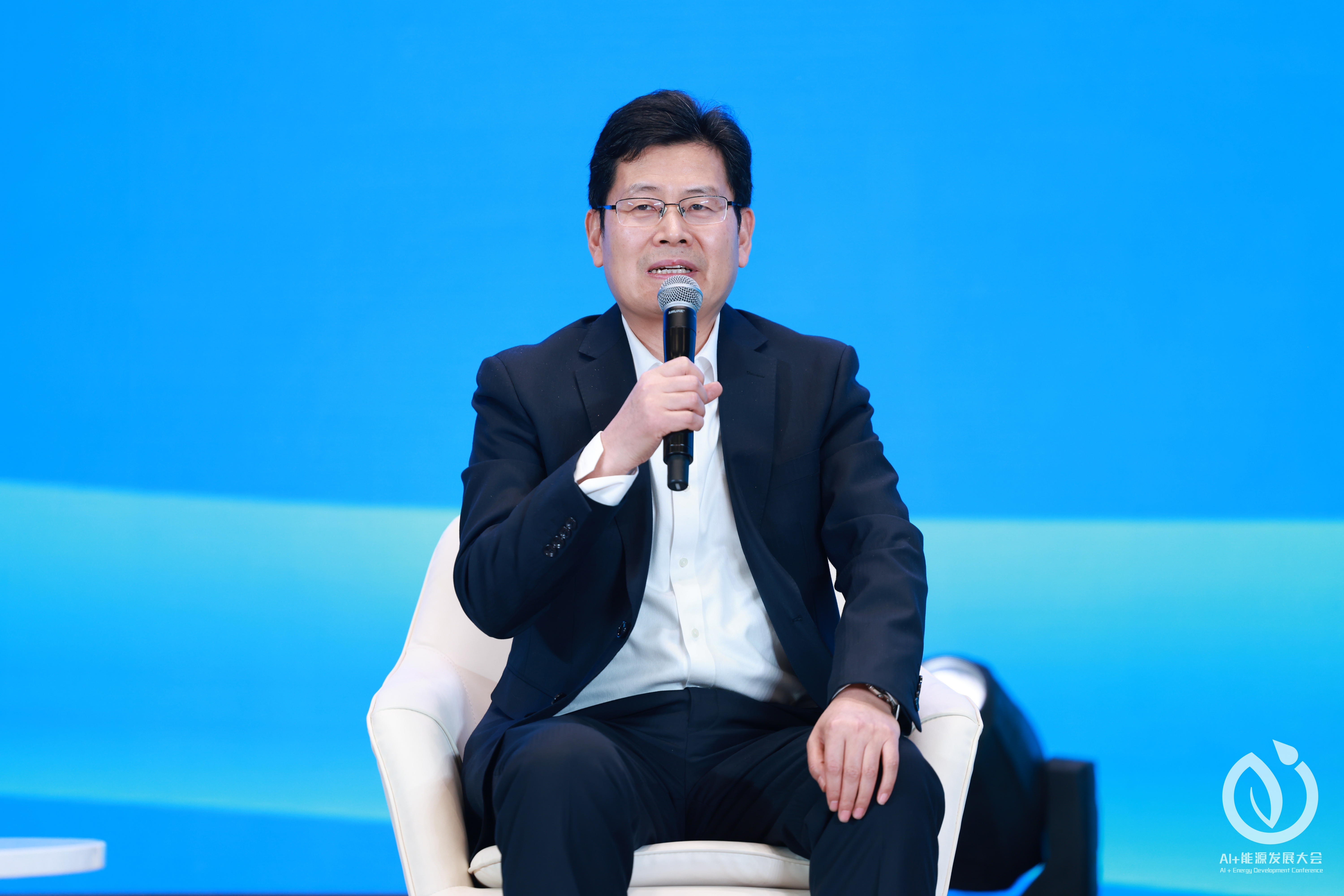
Core Insights - The "AI + Energy Development Conference" held in Beijing focused on exploring new paths and opportunities for the integration of AI and the energy industry, attracting over 300 representatives from government, energy companies, and academia [1] Group 1: AI Integration in Energy - The core challenge in renewable energy is its volatility and randomness, particularly with wind and solar power, which poses high demands on grid scheduling and operational optimization [1] - Distributed photovoltaic (PV) systems are expected to account for over 40% of China's total PV installed capacity by 2024, complicating management due to their small size and dispersed nature [1] Group 2: AI Implementation Achievements - Beijing Sifang Automation has achieved significant results in AI applications for power automation, integrating data from distribution automation systems with electricity information collection systems to enhance the accuracy of distributed PV power forecasting [4] - A pilot project in Huai'an has successfully covered over 60,000 PV stations, achieving an average prediction accuracy of over 80%, which meets engineering standards and supports grid scheduling [4] Group 3: Challenges in AI Deployment - Despite recognizing the value of AI, significant bottlenecks remain in its large-scale implementation in the power sector, primarily related to data quality and standardization [5] - The lack of high-quality fault and anomaly data limits the training of adaptable AI models, while inconsistent data standards across different manufacturers complicate the deployment of AI technologies [5] Group 4: Proposed Solutions - Data sharing and standardization are identified as key areas for overcoming current challenges, with suggestions for utilizing federated machine learning to enable collaborative data use without compromising privacy [6] - The establishment of unified data input/output standards and IoT communication protocols is essential for facilitating efficient collaboration and scaling AI applications in the energy sector [6]


JX金属指引明确行业景气度,靶材成为半导体金铲子
Zhong Guo Neng Yuan Wang· 2026-02-14 01:30
Group 1 - The global semiconductor sputtering target market is expected to reach 25.1 billion by 2027, with a CAGR of approximately 14.4% from 2023 to 2027 [1][4] - JX Metals holds over 50% market share in the semiconductor target materials sector, focusing on various bulk and rare metals [2] - JX Metals reported a revenue of 614.5 billion yen for the first three quarters of FY2025, a year-on-year increase of 19%, with semiconductor materials revenue at 130.2 billion yen, up 17% [3] Group 2 - The demand for semiconductor targets is expected to remain strong due to advancements in manufacturing processes and increased usage of materials [4] - JX Metals has revised its FY2025 revenue guidance upwards to 820 billion yen, reflecting a 4% increase, with semiconductor materials expected to reach 180 billion yen, a 6% increase [3] - The company anticipates a significant increase in operating profit, projecting a 33.3% year-on-year growth to 150 billion yen for FY2025 [3] Group 3 - Investment recommendations include focusing on Jiangfeng Electronics, with beneficiaries being Youyan New Materials, Ashi Chuang, Olay New Materials, and Longhua Technology [5]
国网甘肃电力“五位一体”护航 甘肃虚拟电厂首月交易结算开门红
Zhong Guo Neng Yuan Wang· 2026-02-14 01:15
Core Insights - Gansu Province's virtual power plants officially began continuous market trading from January 2026, marking a significant step in market-oriented development [1] - The State Grid Gansu Electric Power Company has established a comprehensive service system to promote the orderly and high-quality development of virtual power plants [1][2] Group 1: Market Participation - The cumulative electricity settlement for January reached 34.9116 million kilowatt-hours, indicating a successful start for trading [1] - The company has implemented a "daily clearing and monthly settlement" approach to provide precise services to two virtual power plants and aggregated users [1] Group 2: Service System Development - A five-in-one service system has been innovatively constructed, including policy promotion, system construction, platform support, resource standardization, and market orientation [1] - The company has strengthened government-enterprise collaboration to revise the "Implementation Plan for the Construction and Operation Management of Virtual Power Plants in Gansu Province" [1] Group 3: Operational Efficiency - The company has established an operational control platform for virtual power plants that integrates access testing, operational monitoring, effect evaluation, and transaction management [1] - Standardized and refined services have been implemented to ensure that virtual power plants can be effectively integrated, adjusted, traded smoothly, and settled quickly [2] Group 4: Future Development - The company plans to continue deepening its services in the virtual power plant sector, improving market mechanisms, accumulating operational experience, and expanding resource access [2] - The initiative aims to inject strong momentum into Gansu's energy structure transformation and support the achievement of carbon neutrality goals [2]
首条“电力天路”海拔5211.5米的带电作业
Zhong Guo Neng Yuan Wang· 2026-02-14 01:12
近日,国网青海省电力公司运维检修人员在唐古拉山口附近5211.5米海拔处,成功开展等电位带电作 业,消除青藏联网工程±400千伏柴拉直流线路上的缺陷。 本次带电作业现场空气含氧量仅为平原地区的40%,最低气温达零下28℃。国网青海省电力公司提前制 定了针对超高海拔严寒环境的特殊作业方案和安全保障措施,并采用"无人机+电动升降机"组合技术, 安全高效地完成了此次带电消缺任务,全力保障这条"电力天路"安全稳定运行,守护雪域高原群众温暖 祥和的中国年。 此次带电作业,是我国首次在5000米级高海拔区域开展超高压带电作业,也刷新了世界超高压带电作业 海拔纪录。 ...
以“人工智能+”助推能源高质量发展
Zhong Guo Neng Yuan Wang· 2026-02-14 00:39
Core Insights - The integration of "Artificial Intelligence+" is crucial for reshaping the energy sector and addressing resource constraints, emphasizing the need for high-quality energy development [1] Group 1: Transformation of Energy Systems - The energy system is transitioning from rigid support to flexible intelligence, with AI embedded across the entire energy production and consumption chain [2] - There is a need to create a panoramic intelligent scheduling hub by building a cross-layer, cross-region, and cross-industry energy big data platform [2] - The shift from experience-driven to model-driven scheduling control is essential for enhancing operational efficiency [2] Group 2: Innovation in Energy New Business Models - New business models such as virtual power plants and integrated energy services are emerging, breaking industry boundaries and reshaping value chains [4] - The focus is on achieving intelligent aggregation operations for virtual power plants and developing dynamic aggregation platforms for load-side resources [4] - The development of comprehensive energy systems and collaborative optimization technologies is necessary for enhancing energy efficiency [4] Group 3: Advancements in AI Core Technologies - The energy sector faces challenges such as data silos and high energy consumption, necessitating a focus on autonomous and controllable core technologies [6] - There is a need to develop energy-specific large models and tackle issues related to algorithm transparency and efficiency [6] - Green intelligent computing technologies must be advanced to reduce energy consumption and enhance sustainability [6] Group 4: Foundations for Intelligent Transformation - Data, computing power, and algorithms form the "iron triangle" of AI, with existing issues in data collection, utilization, and collaboration [8] - Establishing an energy data element market and improving data governance are critical for unlocking value [8] - Coordinated planning of computing power and electricity is essential for enhancing operational synergy [8] Group 5: Ecosystem for Collaborative Innovation - The development of energy AI requires comprehensive support in talent, funding, platforms, and policies [9] - There is a need to cultivate interdisciplinary talent and establish training bases to bridge the gap between academia and industry [9] - A diversified funding mechanism should be created to support energy AI innovation and attract investment [9]
读懂省级“十五五”规划建议中的“双碳”关键词
Zhong Guo Neng Yuan Wang· 2026-02-14 00:39
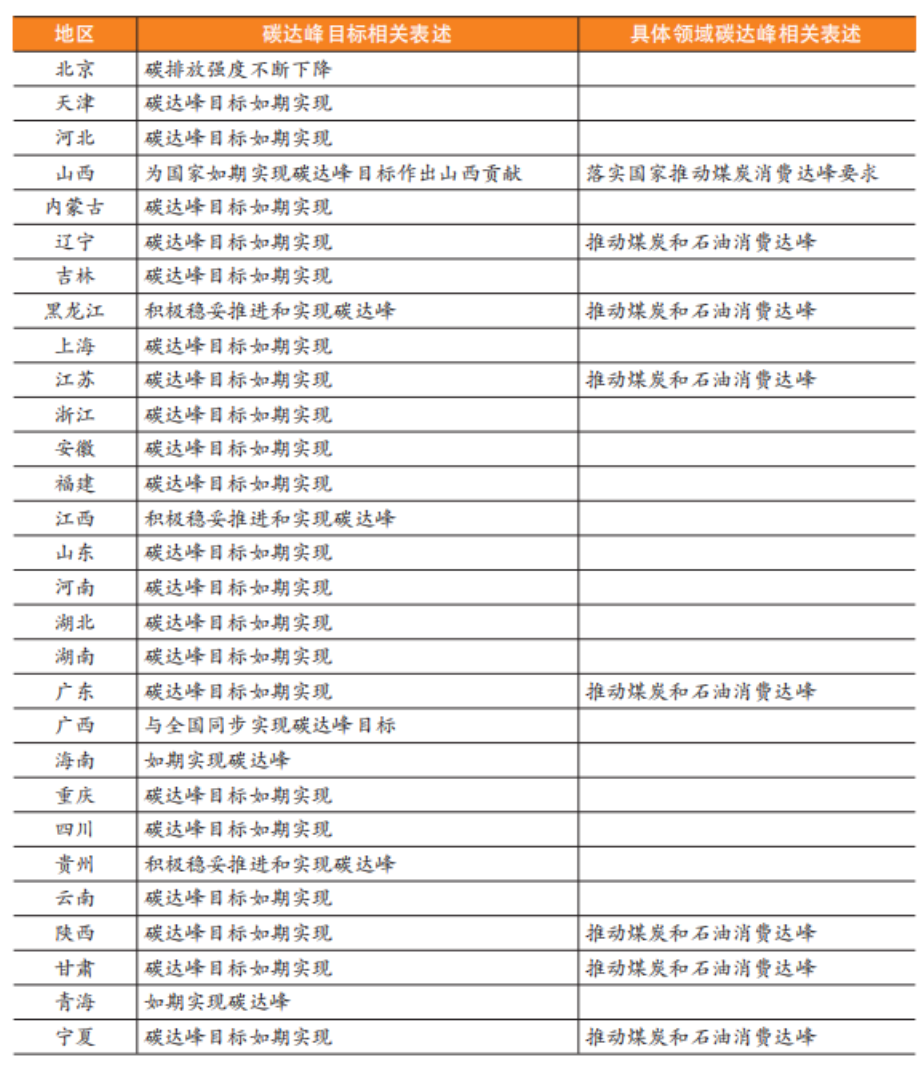
Core Insights - The article emphasizes the alignment of provincial "14th Five-Year" plans with national carbon neutrality goals, highlighting the importance of achieving carbon peak and dual control of carbon emissions as key objectives for local governments [1][2][7] Group 1: Carbon Peak and Dual Control - The "14th Five-Year" period is identified as a critical phase for China to achieve its carbon peak, with 28 provinces mentioning "carbon peak" in their plans [2] - The national strategy includes a shift from energy consumption dual control to carbon emissions dual control, with all 30 provinces committing to implement this system [2] Group 2: Non-CO2 Greenhouse Gas Emissions - There is an increased focus on controlling non-CO2 greenhouse gas emissions, with local plans reflecting a commitment to reduce these emissions in line with national targets for 2035 [3] Group 3: New Energy System Development - The establishment of a new energy system is highlighted as a priority, with all provinces outlining plans to enhance clean and low-carbon energy sources [4] - The national plan advocates for a diversified energy supply, emphasizing the development of solar and wind energy, with 28 provinces mentioning solar energy and 26 focusing on wind energy [4] Group 4: Clean and Efficient Use of Fossil Fuels - The clean and efficient use of fossil fuels is crucial for optimizing energy structure, with various provinces outlining measures to upgrade coal power and reduce coal consumption [5][9] - Specific initiatives include promoting carbon capture technologies and transitioning coal power from a primary energy source to a supportive role [5][9] Group 5: Green and Low-Carbon Energy Consumption - Enhancing electrification across sectors is a key strategy for promoting green energy consumption, with 18 provinces advocating for increased electrification levels [6][11] - Local plans include commitments to improve energy consumption efficiency and promote renewable energy usage in high-energy-consuming industries [6][11]