
Zhong Guo Neng Yuan Wang

Search documents
氢能公交“停摆”的冷思考
Zhong Guo Neng Yuan Wang· 2026-02-14 00:39
然而,也要清醒认识到,不能因为某些地方氢能公交遇到的短期问题,否定氢能本身的战略价值。恰恰 相反,国家层面已将氢能明确纳入未来能源体系的重要组成部分。 在"十五五"规划建议中,氢能被列为前瞻谋划的未来产业之一,强调要统筹推进氢能"制储输用"全链条 发展,并在交通、工业等领域拓展多元应用。这一定位从顶层设计上肯定了氢能作为实现"双碳"目标重 要载体的长期前景。国家战略的支撑意味着氢能公交这一应用场景绝非没有未来,而是必须摒弃短视, 转向一场需要久久为功、善作善成的长期、系统化工程。 为此,地方政府不能再单纯把氢能公交作为招商引资手段,而是要因地制宜,在既有交通示范成果基础 上,推进"氢车+X"多元化应用路径。在此过程中,场景选择比数量更关键。 就氢能行业本身来说,氢源成本下降是当务之急,也需要建立持久的供应保障机制。同时,务实推进工 业副产氢规模化利用,就近提纯、就近使用。短期内,可以先实现氢源稳定、价格可控。鼓励"油氢气 电"综合站建设,避免加氢站孤岛运营,切实提高设施利用率。更重要的是,应在规划中明确氢气供应 保障的中长期责任主体与合同关系,保障氢气供应合约的履行与价格稳定性。 另外,技术经济性要经得起全生 ...
看懂风电新格局:亚洲领跑、欧美分化!老旧风机“退休”催生新市场
Zhong Guo Neng Yuan Wang· 2026-02-14 00:32
全球风电产业迎来新的里程碑。全球风能理事会最新数据显示,2025年,全球风电新增装机容量突破 150吉瓦,亚洲市场是核心增长引擎。展望2026年,亚洲地区将以强劲动能引领全球风电发展,中国继 续发挥全球风电增长核心引擎作用,印度创纪录风电新增装机与太阳能形成补充,越南、菲律宾、泰国 等新兴市场推动东南亚陆上风电规模指数级越增。相比之下,欧美风电产业经历阶段性调整。整体来 看,全球风电发展区域分化日渐明显。 亚洲驱动风电新增装机创纪录 全球风能理事会指出,在亚洲地区驱动下,2025年全球风电新增装机容量刷新纪录,预计2030年前全球 风电装机容量有望突破2太瓦。中国、印度、越南、菲律宾等国正大规模发展风电,以满足不断增长的 工业需求、城市化和电气化需求。 清洁能源统计分析机构Cleanview调查显示,2025年,美国取消了1891个总装机容量达266吉瓦的电力项 目,其中包括86466兆瓦太阳能、79045兆瓦储能和54328兆瓦风电项目。 同时,美国海上风电产业面临政策不确定性。2025年12月,美国以存在"国家安全风险"为由,叫停所有 正在建设的大型海上风电项目,以及部分海上风电租赁与评估。 对比之下,2 ...
中国国家金融监管总局等部门约谈高德地图、同程旅行等六家出行平台企业
Zhong Guo Neng Yuan Wang· 2026-02-13 13:17
Core Viewpoint - The Chinese National Financial Regulatory Administration, in collaboration with the State Administration for Market Regulation and the People's Bank of China, has conducted discussions with six travel platform companies regarding issues related to their lending practices [1] Group 1: Regulatory Actions - The six travel platforms involved are Ctrip, Amap, Tongcheng Travel, Fliggy, Hanglv Zhongheng, and Qunar [1] - The regulatory bodies have mandated these companies to standardize their marketing practices and refrain from using misleading promotional language [1] - Companies are required to clearly disclose the names of lending institutions and information about credit products to borrowers [1] Group 2: Consumer Protection Measures - The platforms must provide clear reminders to borrowers about responsible lending [1] - There is an emphasis on improving customer complaint channels, ensuring timely responses, and effectively handling consumer disputes [1] - The overall goal is to enhance service quality and protect consumers' legal rights [1]

新年开门红!远程蝉联1月销冠,甲醇电动重卡暴增314.8%
Zhong Guo Neng Yuan Wang· 2026-02-13 11:08
Group 1 - The core viewpoint of the articles highlights the rapid growth and market leadership of the new energy commercial vehicle industry, with a significant increase in penetration rate from 19.8% to 27.4% year-on-year as of January 2026 [1] - The company, referred to as "远程," has maintained its position as the industry leader for 45 consecutive months, showcasing strong performance in various segments, including logistics vehicles and VAN models, with a 97.9% year-on-year sales growth in the VAN category [1][3] - The company has achieved a remarkable compound annual growth rate of over 120% in sales over the past five years, becoming the first brand in the industry to surpass 500,000 units sold [3] Group 2 - The methanol electric technology route is emerging as a new growth driver for the company, with a staggering 314.8% year-on-year increase in sales of methanol electric heavy trucks as of January 2026 [2] - The company has expanded the application of methanol electric technology beyond roads to various sectors, including ships, mining machinery, and agricultural equipment, supported by over 70 policy documents promoting methanol vehicle adoption [2] - The recent approval of technical standards for methanol refueling stations is expected to facilitate the large-scale promotion of methanol fuel, contributing to the green and low-carbon transformation of the transportation sector in China [2] Group 3 - The company has set an ambitious "30111 strategy," aiming to achieve an annual sales target of 1 million units by 2030, positioning itself as the top commercial vehicle seller in China and the global leader in new energy commercial vehicles [3]
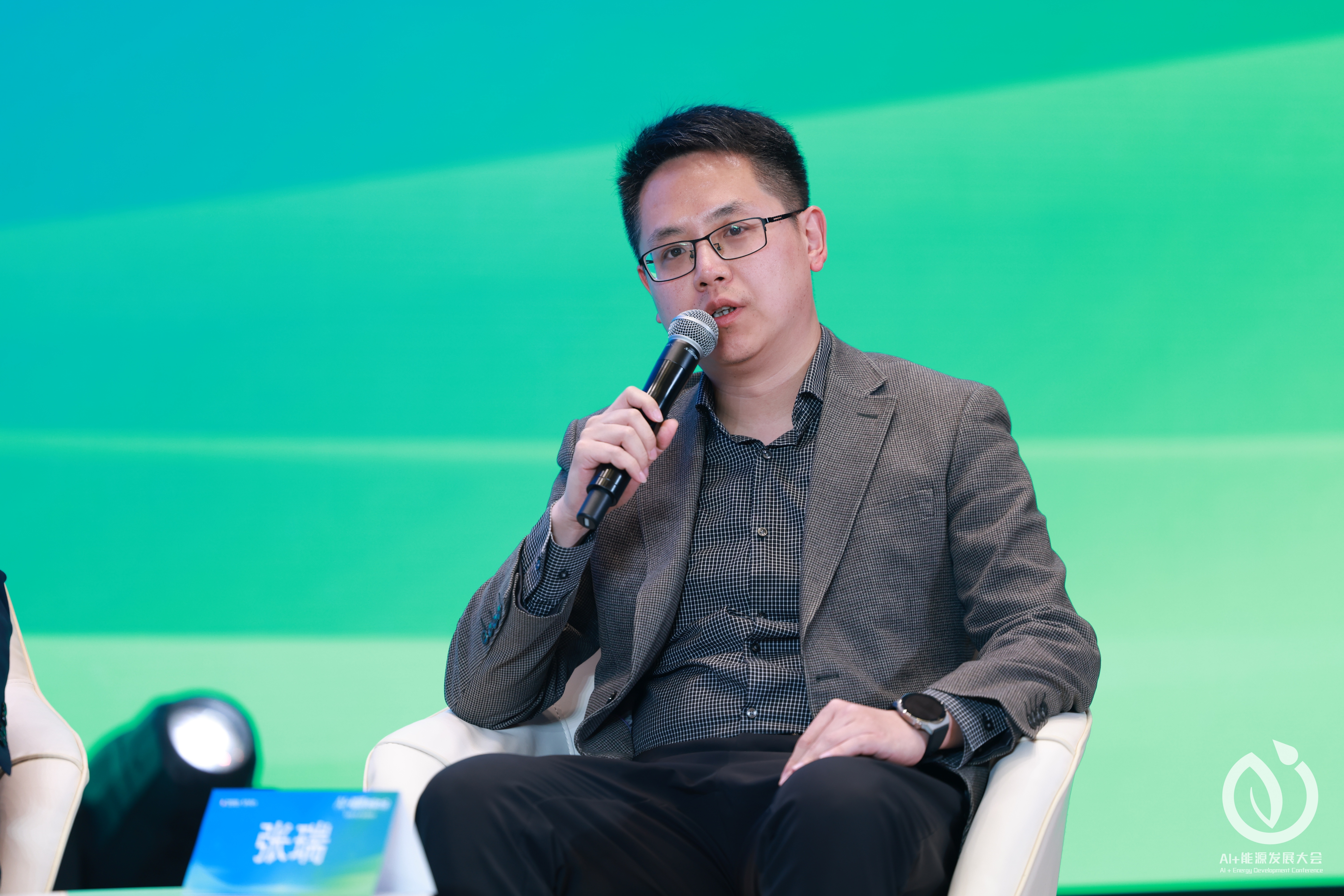
告别AI“黑盒子”!龙德缘电力张瑞:破解三大难题,推动用户侧电力智能化落地
Zhong Guo Neng Yuan Wang· 2026-02-13 08:07
Core Insights - The "AI + Energy Development Conference" held in Beijing focused on exploring new paths and opportunities for the integration of AI and the energy industry, attracting over 300 representatives from government, energy companies, and academia [1] Group 1: AI Applications in Energy - Longdeyuan Electric Group emphasizes AI applications in the user-side power distribution sector, differentiating from traditional generation and transmission applications [4] - The company has achieved breakthroughs in three main scenarios: intelligent operation and maintenance, electricity spot trading, and integrated scheduling of "source-network-load-storage" [4] - In intelligent operation and maintenance, AI technologies have significantly improved fault warning timeliness and accuracy, reducing operational costs [4] - In electricity spot trading, AI-driven quantitative trading models have increased returns by 3%-5% compared to traditional methods [4] - The integrated scheduling scenario utilizes AI for load forecasting, enhancing green electricity consumption and reducing customer electricity costs [4] Group 2: Challenges in AI Implementation - The company identifies three major challenges in AI practice: data issues, trust in AI strategies, and insufficient iteration of business models [5] - Data challenges include insufficient trading data and high costs of data collection due to non-standard communication protocols among different manufacturers [5] - Trust issues arise when AI strategies deviate from human judgment, particularly in critical areas like electricity trading, affecting profitability and production [5] - The current use of AI as a tool without fundamentally upgrading the business model limits the scalability of AI technology in the user-side power service [5] Group 3: Future Outlook - Longdeyuan Electric plans to continue focusing on the user-side power distribution sector, addressing data collection and AI model trust issues [5] - The company aims to optimize AI application solutions in the three identified scenarios and explore new business models empowered by AI [5] - The goal is to promote high-quality development of the integrated "source-network-load-storage" system, contributing to the construction of a new power system [5]

气候修正案锁定减排目标 欧盟能源自主寻求破局
Zhong Guo Neng Yuan Wang· 2026-02-13 07:13
Group 1: Core Points - The European Parliament has passed an amendment to the European Climate Law, legally establishing a target to reduce greenhouse gas emissions by 90% by 2040 compared to 1990 levels, which is crucial for achieving the EU's 2030 and 2050 climate goals [1][7] - The EU's climate actions are deeply tied to energy autonomy, especially in light of the geopolitical impacts of the Russia-Ukraine conflict, which has disrupted the previous energy balance in Europe [2][3] Group 2: Energy Security and Climate Goals - The amendment to the European Climate Law provides a legal framework to reduce dependence on fossil fuels, particularly Russian gas, which has historically accounted for nearly one-third of the EU's fossil fuel imports [3][4] - The law aims to stabilize the transition to renewable energy by providing clear legal targets for the expansion of renewable energy sources, such as offshore wind power in the North Sea [3][4][7] Group 3: Regional Cooperation and Strategic Autonomy - The amendment facilitates regional cooperation among EU member states, allowing countries like Germany, Denmark, France, and the Netherlands to integrate resources and technologies, thereby enhancing overall energy resilience and strategic competitiveness [4][8] - The EU's energy strategy is evolving into a multi-dimensional approach that integrates energy supply, industrial transformation, and climate governance, with the Climate Law serving as a central link [8][9] Group 4: Risks of New Dependencies - As Europe seeks to reduce reliance on Russian energy, it risks becoming dependent on U.S. liquefied natural gas (LNG), which could account for 57%-61% of European imports by 2025, potentially rising to 75%-80% in the coming years [5][6] - The volatility of U.S. energy prices, influenced by domestic demand and geopolitical considerations, poses a risk to European energy security, as seen in the recent spike in natural gas prices due to increased heating demand in the U.S. [5][6] Group 5: Global Climate Governance - The EU's climate legislation offers valuable lessons for global climate governance, but it faces challenges such as internal disparities among member states and external pressures from global energy dynamics [9][10] - Collaboration with countries like China in green technology and renewable energy sectors is essential for overcoming current development challenges and leading the global green transition [10]
中俄电力供应终止,双方合作价值链升级才是破局之道
Zhong Guo Neng Yuan Wang· 2026-02-13 07:12
2026年1月1日,我国正式全面停止从俄罗斯进口电力。1月21日俄能源部长表示2026年将追加1.16亿美 元的专项拨款用于电网建设,重点集中在远东、西伯利亚等地区。该事件核心信号是中俄远东地区开发 合作亟需提质升级。 结语 中俄电力合作始于2012年,双方签署了有效期至2037年的长期供电合同,约定整个合同期内俄罗斯向我 国供应电力约1000亿千瓦时,年均供电量约40亿千瓦时。合作初期,俄对华电力出口有效弥补了我国部 分边境地区的电力缺口,尤其是2021年中国东北地区出现能源短缺时,俄罗斯应中方请求将出口量提升 30%至39.7亿千瓦时,2022年峰值达到47亿千瓦时,为我国区域能源安全提供了重要支撑。 中俄电力合作的战略价值,远超越电力贸易本身,更是双边战略互信的重要载体和我国深度参与俄罗斯 远东开发的核心抓手。从能源供应全局来看,俄罗斯对华电力出口占我国全社会用电量不足万分之一, 处于完全可替代范围,此次停购俄电虽规避了短期经济损失,但俄方远东能源基建的短板暴露,也为中 俄合作提质升级创造了关键机遇。俄方已明确2026年追加1.16亿美元专项拨款用于远东、西伯利亚电网 建设,其改善远东能源基建的意愿明确 ...
储能安全痛点难破?国电投中央研究院张蔚琦:AI + 大模型破解五大瓶颈
Zhong Guo Neng Yuan Wang· 2026-02-13 07:06
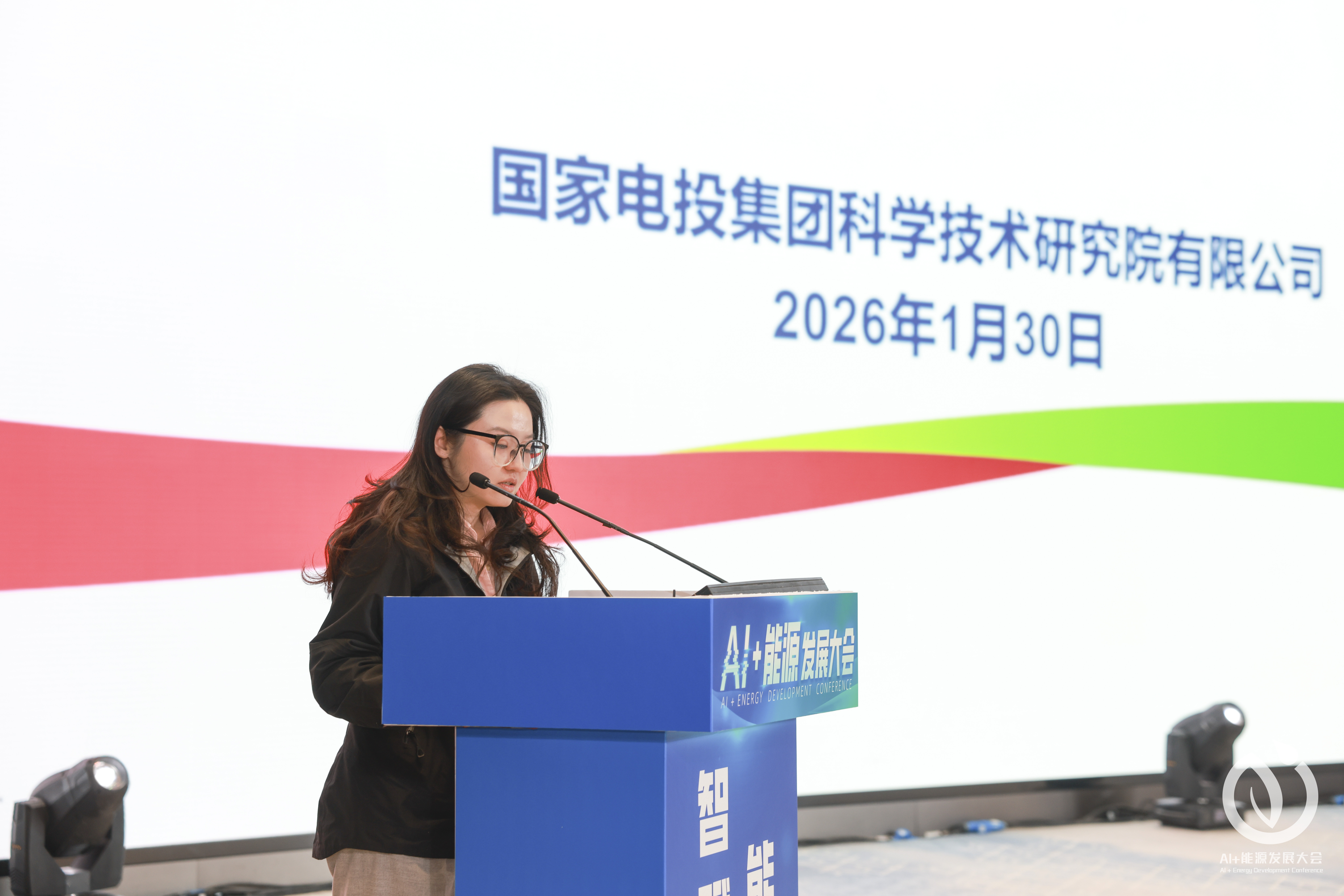
Core Insights - The AI+Energy Development Conference held in Beijing focused on the integration of AI and the energy sector, with over 300 representatives from government, academia, and industry discussing new pathways for development [1] - Zhang Weiqi from State Power Investment Corporation emphasized the need for an intelligent safety system in energy storage, driven by data and supported by mechanisms and large models [1][5] Industry Overview - AI technology has permeated all aspects of the power industry, including generation, transmission, distribution, and consumption, laying the groundwork for focusing on energy storage safety [4] - The demand for energy storage is expected to surge, with China's electrochemical storage capacity projected to reach 37.13 GW by 2024, a year-on-year increase of over 150% in 2025 [4] Key Pain Points - Five core pain points in the energy storage sector were identified: 1. Diverse technology routes leading to complex material systems 2. Lack of transparency in fault mechanisms, making prevention difficult 3. Low utilization of operational data, affecting decision-making and profitability 4. Fragmented operational processes reliant on manufacturers with inconsistent standards 5. Frequent safety incidents, complicating risk management [4][5] Proposed Solutions - To address these challenges, the company aims to break down data silos and build a comprehensive database, utilizing AI for intelligent operational predictions and lifespan optimization [5] - Starting in 2024, State Power Investment Corporation will implement policies requiring energy storage stations to establish independent safety monitoring platforms and include annual safety reports in assessments [5] Focused Applications - The company has identified two core scenarios for AI application: safety risk assessment and fault diagnosis, as well as smart operations and maintenance [5][6] - Key performance indicators for AI applications include battery state assessment accuracy of no less than 95%, fault diagnosis time under 2 minutes, and operational decision-making efficiency within 5 minutes [5] Practical Implementation - The company has developed a safety monitoring and early warning platform for energy storage, which has been deployed at a 200 MW/400 MWh shared storage station in Yunnan [6] - The platform has transformed safety management from reactive to proactive, enhancing operational efficiency and safety levels [6][7] Technological Innovations - Key innovations include digital twin technology for real-time monitoring, graded alarm systems to reduce operational burdens, and intelligent algorithms for precise battery state analysis [7] - The company has also developed two AI agents to enhance operational decision-making and offline assessment capabilities, improving efficiency and standardization [7][8] Future Directions - The company plans to standardize energy storage systems and expand AI applications in safety across various sectors, contributing to the development of a safer, more efficient, and intelligent new power system [8]

华宝基金主动权益业务持续弱化引关注 多只基金清盘背后现规模结构隐忧
Zhong Guo Neng Yuan Wang· 2026-02-13 06:55
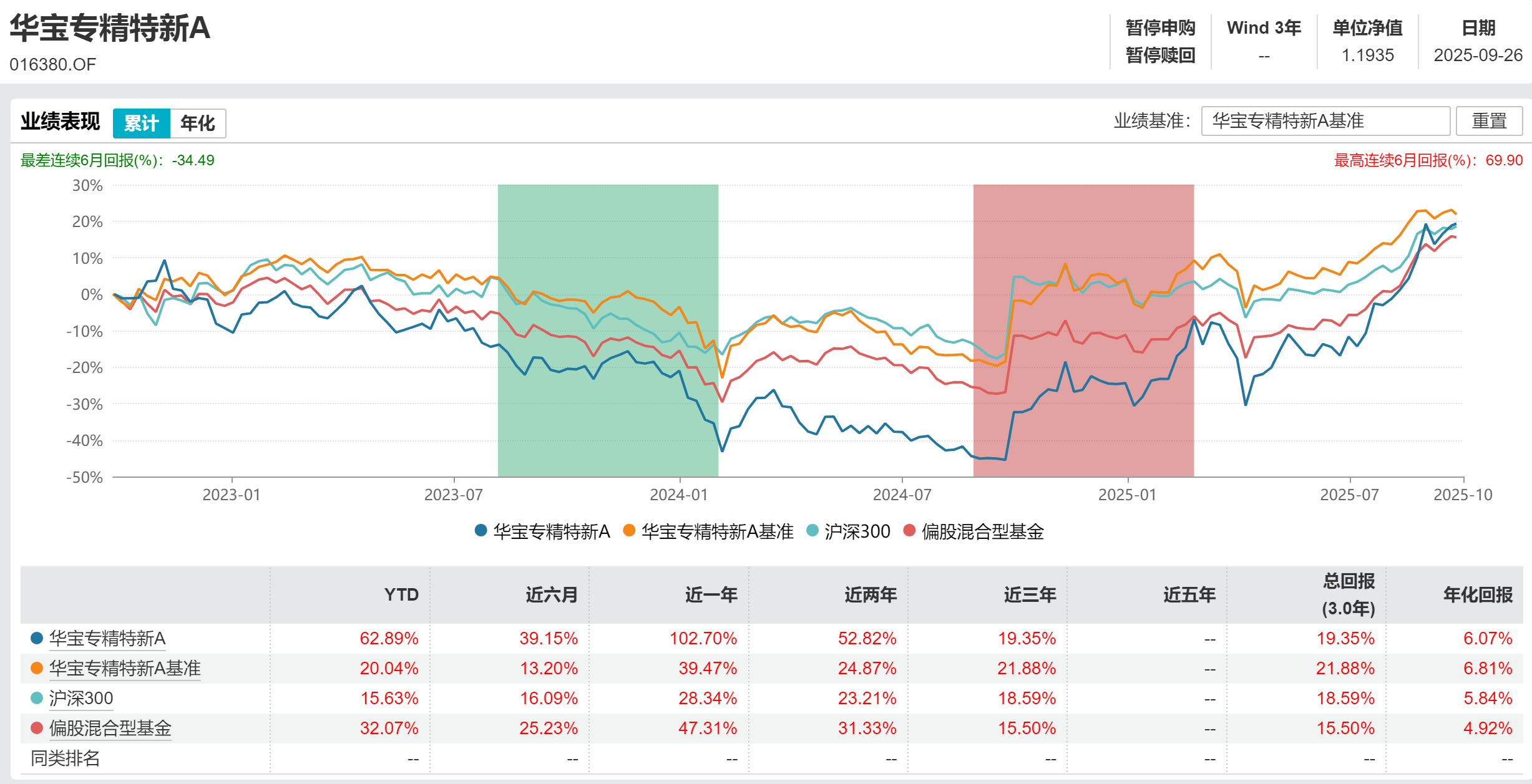
Core Viewpoint - The recent liquidation of several actively managed equity funds by Huabao Fund has raised significant concerns about the company's challenges in the active equity sector, despite the impressive performance of some funds [1][5]. Fund Performance and Liquidation - Huabao's "Zhuanjing Te Xin" fund achieved over 100% growth in the past year but was still liquidated due to not meeting the minimum scale requirement [1][5]. - The "Yuan Shi" fund was terminated just 7 months after its establishment, highlighting the difficulties faced by Huabao in maintaining its active equity offerings [1][5]. Asset Management Scale and Structure - As of early 2026, Huabao Fund's total asset management scale is approximately 420 billion yuan, ranking 28th in the industry [5][7]. - The fund's structure is heavily skewed, with over 90% of its assets in money market funds and ETFs, while actively managed equity funds account for less than 5% of its total assets [6][7]. Strategic Goals and Management Changes - The previous chairman, Huang Kongwei, set an ambitious target of reaching 1 trillion yuan in assets by 2027, but the current scale is still 580 billion yuan short of this goal [7]. - The new chairman, Xia Xuesong, lacks experience in the public fund sector, which raises concerns about the company's strategic direction [7][21]. Management Focus and Future Challenges - The new management has emphasized strengthening the ETF segment and expanding fixed-income investments, with little focus on active equity strategies [21]. - Despite a recent successful launch of a mixed equity fund, the overall trend indicates a weakening of Huabao's active equity business, which may pose greater challenges in a competitive market [21].
晋能控股集团金鼎公司:科创赋能强根基 新品破局提效能
Zhong Guo Neng Yuan Wang· 2026-02-13 06:32
Core Viewpoint - The company has made significant advancements in technology and innovation, particularly in the field of coal mining equipment, enhancing its core competitiveness and filling technological gaps in the industry [1][3][5]. Group 1: Technological Innovations - The company has developed a shield-type integrated rapid excavation equipment, which is over 50 meters long, representing a leading level of intelligence in domestic coal machinery [1]. - The company focuses on key core technology breakthroughs, moving away from imitation to independent innovation, resulting in new products that fill industry gaps and enhance market competitiveness [3]. - The high-efficiency excavation system integrates multiple core modules, achieving over 30% improvement in operational efficiency and nearly 50% reduction in labor input compared to traditional methods [3]. Group 2: Standardization and Talent Development - The company has established a comprehensive technical standard system covering 707 items, completing 55 iterations of technical standards in the year, and has obtained 240 product safety certification [2]. - A talent cultivation model has been implemented, with over 50 technical training sessions held throughout the year, enhancing employee professional skills and fostering a strong innovation talent pool [2]. Group 3: Product Development and Market Expansion - The company has made strides in hydraulic support systems, achieving international advanced levels with its research and application of high-reliability hydraulic support systems [4]. - The successful development of a mine emergency drainage vehicle has filled a gap in the company's water disaster rescue equipment, expanding its product service range [4]. Group 4: Research and Development Investment - The company has committed to increasing R&D investment, with R&D expenses accounting for over 3.5% of main business revenue, and has achieved a transformation rate of over 60% for its innovation projects [5]. - Production efficiency has been enhanced through the introduction of advanced technologies, resulting in significant increases in the output of hydraulic supports, belt conveyors, and scraper conveyors [5]. Group 5: Intellectual Property and Recognition - The company has been active in patent applications, with 22 new utility model patents authorized and 31 patent applications submitted, strengthening its intellectual property protection [6]. - The company has received multiple awards for its innovative achievements, including recognition in industry competitions and honors at the provincial level, showcasing its strong capabilities in technological innovation [6].