Zhong Guo Qing Nian Bao

Search documents
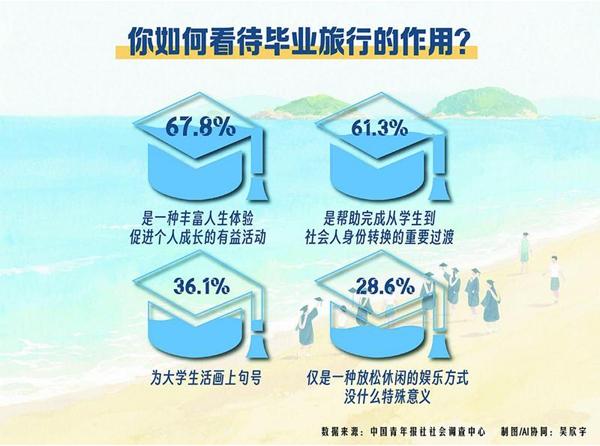
67.8%受访毕业生认为毕业旅行有助于促进个人成长
Zhong Guo Qing Nian Bao· 2025-07-24 05:40
Group 1 - The core viewpoint of the article highlights the increasing trend of graduation trips among graduates, with 55.2% of surveyed graduates participating in such trips this summer [2][3] - A significant 67.8% of graduates believe that graduation trips enrich life experiences and promote personal growth, while 81.8% prioritize the growth experienced during travel over the social media aspect of sharing photos [4][5] - The reasons for undertaking graduation trips include commemorating graduation (32.7%), the rarity of traveling with classmates post-graduation (32.5%), and filling free time after graduation (30.4%) [3][4] Group 2 - Graduates express a desire to create precious memories with important friends (73.2%), redefine and reposition themselves in new environments (58.1%), and develop independent living and decision-making skills (56.9%) through their travels [3][4] - The article notes that graduation trips serve not only as a means of relaxation but also as a rite of passage, helping graduates transition from student life to the workforce [4][5] - The demographic breakdown of surveyed graduates shows that 44.7% are male and 55.3% are female, with 70.6% being undergraduates [5]

格栅板脱落致6名大学生遇难 中金黄金致歉
Zhong Guo Qing Nian Bao· 2025-07-24 03:58
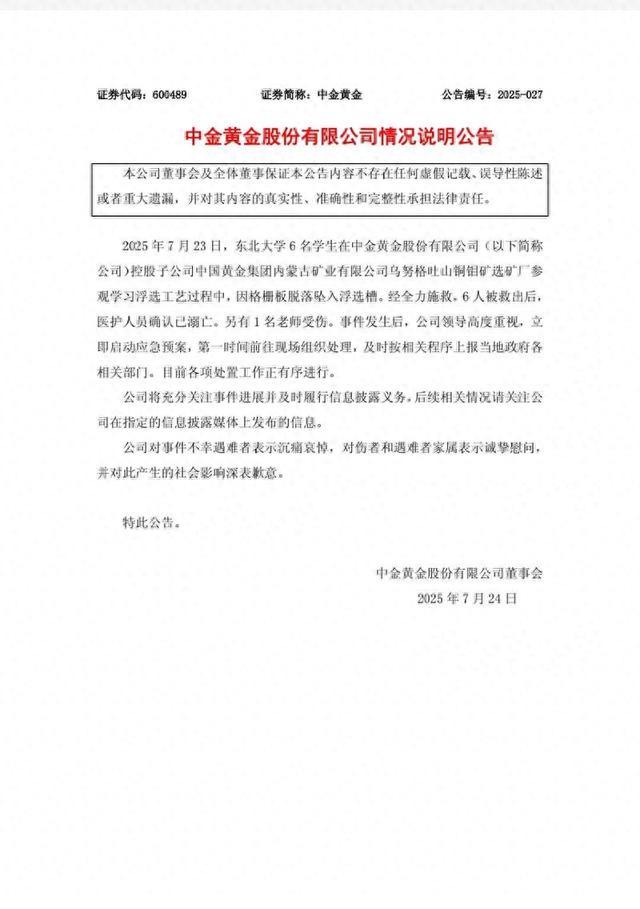
中国青年报客户端北京7月24日电(中青报·中青网见习记者 赵丽梅 记者 张均斌)今天,中金黄金发布 情况说明公告,并向遇难学生致歉。公告指出,7月23日,东北大学6名学生在中金黄金股份有限公司控 股子公司中国黄金集团内蒙古矿业有限公司乌努格吐山铜钼矿选矿厂参观学习浮选工艺过程中,因格栅 板脱落坠入浮选槽。经全力施救,6人被救出后,医护人员确认已溺亡。另有1名老师受伤。 今年2月25日,内蒙古矿业有限公司官方微信公众号发布《内蒙古矿业选矿部浮选车间进一步提升生产 效率和质量》文章,称其顺利完成了一二系列混精二层平台地面格筛板更换、三系列泡沫冲洗水改造以 及药剂制备间和石灰乳制备间、循环泵地面修复等众多改善作业环境技改项目,消除现场安全隐患。 中金黄金发布情况说明公告。上海证券交易所官网截图 7月24日, 公告称,事件发生后,中金黄金领导高度重视,立即启动应急预案,第一时间前往现场组织处理,及时 按相关程序上报当地政府各相关部门。目前各项处置工作正有序进行。 中金黄金对事件不幸遇难者表示沉痛哀悼,对伤者和遇难者家属表示诚挚慰问,并对此产生的社会影响 深表歉意。 此次事故的直接原因是格栅板脱落致6名学生坠入浮选槽。 ...

以文化为桥 汇青年之力
Zhong Guo Qing Nian Bao· 2025-07-24 02:01
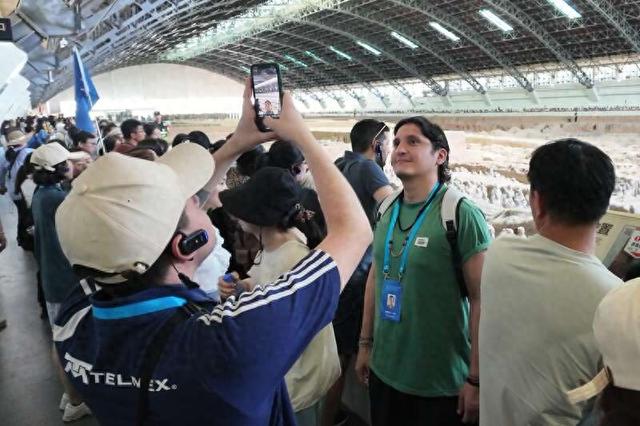
Core Points - The event "Future Bridge" youth leadership exchange camp was held in Xi'an, China, from July 18 to 19, 2025, aimed at fostering cultural connections between China and Latin America [2] - Over 20 youth representatives from Iberian American organizations and 9 Latin American and Caribbean countries participated in the event, visiting historical sites such as the Terracotta Army Museum and Shaanxi History Museum [2] - The exchange highlighted the interest of Latin American youth in Chinese culture and the importance of cultural heritage preservation [3][4] Group 1 - The event served as a platform for Latin American youth to explore and understand Chinese history and culture, with participants expressing their admiration for China's cultural heritage [3][4] - Participants engaged in traditional Chinese cultural experiences, such as shadow puppetry and tea ceremonies, enhancing their understanding of non-material cultural heritage [4] - The exchange encouraged discussions on social issues faced by both regions, emphasizing the responsibility of youth to contribute to solutions for a better future [4] Group 2 - The event was seen as a significant step in strengthening ties between China and Latin America, with participants expressing a desire for increased collaboration in various fields [3] - The involvement of youth leaders from different countries underscored the potential for future cooperation and cultural exchange initiatives [3][4] - The activities provided a unique opportunity for participants to share perspectives and foster mutual understanding, which is crucial for building long-term relationships [4]
亲近大自然,52.8%受访家长选择带孩子参观自然博物馆、天文馆
Zhong Guo Qing Nian Bao· 2025-07-24 00:39
为了亲近自然,很多家长喜欢带孩子去户外。日常生活中,有哪些方式可以让孩子多接触自然?近日, 中国青年报社社会调查中心联合问卷网(wenjuan.com),对1336名未成年人的家长进行的一项调查显 示,日常生活中,52.8%的受访家长会带孩子参观自然博物馆、天文馆等场馆,50.0%的受访家长会带 孩子观察和探索生活中遇到的自然现象,48.6%的受访家长会带孩子种花、浇花、施肥,42.1%的受访 家长会带孩子养金鱼、乌龟等小动物,41.8%的受访家长会带孩子看科普绘本、科普动画丰富视野。 彭慧是深圳的一名二孩妈妈,她的两个孩子都非常喜欢小动物,对什么虫子都不怕。"上周我们去山上 摘荔枝,他们带回来一只甲壳虫,还让我陪他们找视频看,研究它的习性。" "目前为止,我们养过乌龟、小金鱼、兔子、鹦鹉,家里快成小型动物园了。"彭慧很注重培养孩子对自 然的兴趣。"我家有一本很厚的讲动物和昆虫的书,书放在床头,孩子们一有时间就让我给他们读,现 在哥哥都能自己看并且给弟弟讲了。他俩现在对昆虫、海洋动物门儿清,说的很多动物我都不认识。如 果在大自然中看到了书上的动物,他们会特别兴奋。" 北京的80后章琳琳家有一个小菜园。"最开始 ...

破局之路:千年纳西古乐遇见Z世代
Zhong Guo Qing Nian Bao· 2025-07-23 23:45
Core Insights - The article highlights the enduring legacy and cultural significance of Naxi ancient music, showcasing its unique transmission through generations without formal education or written scores [2][5][9] - The current challenges faced by the Dali Naxi Ancient Music Association, including declining audience numbers and the passing of key figures, emphasize the need for innovation and adaptation to modern entertainment preferences [5][6][9] Group 1: Cultural Significance - The Naxi ancient music ensemble, known for its average age being the highest in China, relies on oral tradition for its preservation, demonstrating a unique cultural continuity [2][4] - The performances evoke a deep emotional response, resonating with both local and international audiences, as evidenced by the impact on young students who attended a concert [1][3] Group 2: Current Challenges - The decline in attendance at the Dali Naxi Ancient Music Association's performances is attributed to various factors, including the death of prominent figures and the increasing variety of nighttime entertainment options [5][6] - The need for innovation in performance formats is highlighted, as traditional methods may not attract younger audiences [6][9] Group 3: Innovations and Adaptations - The introduction of female performers into the traditionally male-dominated ensemble has revitalized the performances, creating a new visual and auditory experience [7][8] - The establishment of a cultural space, the Xuanke Book Room, aims to blend traditional music with modern cultural experiences, offering resources for deeper engagement with Naxi culture [4][10] Group 4: Future Prospects - The involvement of younger generations, such as the 00s youth, in both performance and cultural preservation indicates a potential for revitalization and continuity of Naxi ancient music [12][16] - The emphasis on educational initiatives and community engagement is seen as crucial for sustaining the cultural heritage and expanding its influence [16][17]
暑假怎么过?86.5%受访家长表示会带孩子多去户外
Zhong Guo Qing Nian Bao· 2025-07-23 23:32
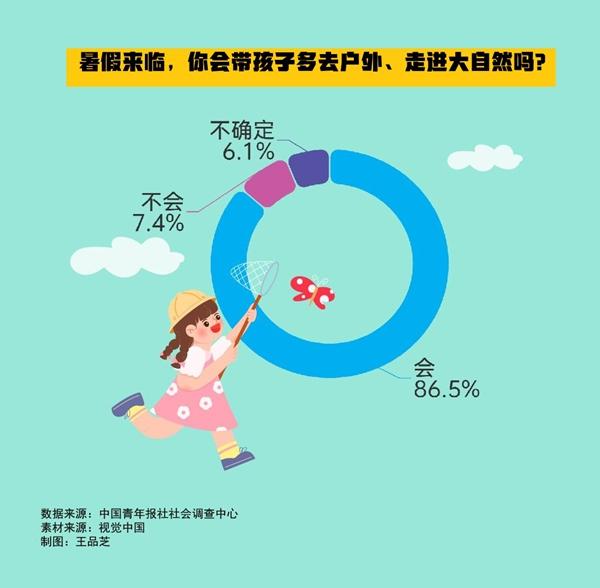
暑假正是孩子亲近自然、开阔眼界的好时机。你会带孩子多去户外、走进大自然吗?近日,中国青年报 社社会调查中心联合问卷网,对1336名未成年人的家长进行的一项调查显示,暑假来临,86.5%的受访 家长会带孩子多去户外、走进大自然。多去户外、亲近自然,60.1%的受访家长认为能够引导孩子热爱 大自然,敬畏生命,54.5%的受访家长认为有利于促进孩子观察力、注意力的发展。 暑假来临,86.5%受访家长会带孩子多去户外、走进大自然 暑假到了,经常带孩子徒步爬山的90后胡婷早早订好了民宿,打算带快6岁的女儿去云南住两周,"平时 都在北京周边爬山,趁暑假空闲时间比较长,想带孩子感受不一样的自然风光"。 调查中,86.5%的受访家长表示暑假会带孩子多去户外、走进大自然。 "我极少带孩子去游乐场和商场玩儿,周末尽量带着去户外,让孩子亲近自然。"深圳的二孩妈妈彭慧打 算暑假带孩子多去公园捞鱼、钓鱼或放风筝、踢足球。 鞠爱丽说,亲近自然可以强身健体,磨炼意志。坚持下来会让孩子体会到,不要怕苦怕累,生活中没什 么是不可战胜的。此外,大自然里空气好,能愉悦身心,放松心情,身处其中会感受到更多美好的东 西。 "汛期不能爬山,太冷了不爬, ...
新能源汽车如何圈粉年轻用户 同济学子建议车企这样出招
Zhong Guo Qing Nian Bao· 2025-07-23 23:30
Core Insights - Chinese brands have achieved remarkable success in the electric vehicle (EV) sector, with BYD leading global sales for three consecutive years and Hongqi becoming the first luxury brand in China to surpass 2 million users [1][3] - The consumer demographic for EVs is becoming increasingly younger, with individuals aged 26 to 45 making up 65.1% of the total user base by 2025 [1] - The integration of technology and cultural elements is crucial for attracting young consumers, as brands like Hongqi and Lantu showcase innovative features and marketing strategies that resonate with this demographic [3][4] Industry Trends - The rise of Chinese brands in the EV market reflects a shift from foreign dominance, with local brands now offering competitive performance and pricing [10] - The focus on intelligent and personalized driving experiences is reshaping consumer expectations, with features like Huawei's ADS 4.0 and HarmonyOS enhancing user interaction and safety [6][10] - The marketing strategies employed by Chinese brands are evolving, utilizing social media and cultural elements to connect with younger audiences and promote a lifestyle around green transportation [3][13] Consumer Preferences - Young consumers are redefining the concept of a car, viewing it as a "mobile intelligent living space" rather than just a mode of transportation [6] - The aesthetic appeal and smart interaction capabilities of vehicles are becoming increasingly important, with brands like Lantu and Hongqi focusing on design and user experience [13] - The notion of EVs as lifestyle companions that embody personal expression and social connectivity is gaining traction among the younger generation [13]

绿色消费看中国 让“车轮上的减碳”成为新风尚
Zhong Guo Qing Nian Bao· 2025-07-23 23:29
Core Insights - China's automobile exports reached 3.083 million units in the first half of the year, a year-on-year increase of 10.4%, with new energy vehicle (NEV) exports at 1.06 million units, up 75.2% [2] - BYD has established a global presence in over 110 countries and regions, with R&D centers in Hungary, Thailand, Uzbekistan, and Brazil, contributing to a complete industrial ecosystem [2] - The 2025 World Youth Development Forum highlighted the importance of green consumption and sustainable development, emphasizing the role of youth in promoting low-carbon lifestyles [2][3] Industry Trends - The trend towards green consumption is gaining momentum, with 93.3% of surveyed youth prioritizing eco-friendly products and 77.6% believing that low-carbon lifestyles will become more popular among young people [4] - The domestic market for NEVs is thriving, with production and sales reaching 6.968 million and 6.937 million units respectively in the first half of 2025, marking increases of 41.4% and 40.3% year-on-year [5] - BYD has sold over 12.7 million NEVs, reducing carbon emissions by over 100 million tons, equivalent to planting 1.7 billion trees [5] Company Performance - BYD's overseas sales reached a record high of 472,100 units in the first half of 2025, reflecting its strong global expansion [8] - The company has invested heavily in R&D, with 13 out of the last 14 years seeing R&D expenditures exceed net profits, leading to breakthroughs in core technologies across the NEV supply chain [6][5] - The Chinese automotive industry has established a complete and self-controlled industrial chain for NEVs, achieving 100% autonomy in core technology areas [5] Future Outlook - Predictions suggest that China's automobile exports could reach 4 million units in the second half of the year, with an annual target of 7 million units, potentially approaching 10 million by 2030 [7] - The youth's active participation in the NEV sector is expected to drive innovation and development, with BYD hiring over 50,000 recent graduates in the past three years [9] - The forum underscored the potential for global youth to contribute to sustainable development through innovative ideas and collaborative actions [10]

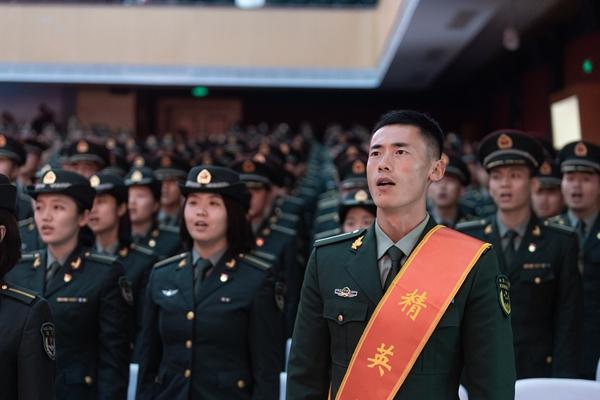
军校学员的热血青春
Zhong Guo Qing Nian Bao· 2025-07-23 22:49
Core Viewpoint - The graduation ceremony of the 2025 class at the Army Engineering University highlights the commitment of the graduates to serve the nation and their readiness to take on military responsibilities, emphasizing the importance of practical training and battlefield readiness [2][7]. Group 1: Training and Competitions - Graduates have participated in various competitions, applying their skills in real-world scenarios, such as the International Advanced Robotics and Simulation Technology Competition, where they faced challenges that mirrored battlefield conditions [3][4]. - The focus on practical applications is evident as students like Jiang Longyu transition from theoretical research to real-world applications, such as testing concrete strength for disaster prevention [3][4]. - The emphasis on teamwork and collective success is reinforced through experiences in competitions, where students learn to prepare for unexpected situations and prioritize group performance over individual accolades [5][6]. Group 2: Personal Development and International Exposure - Students have engaged in international activities, enhancing their confidence and understanding of global military trends, as seen in the Army International Student Week [6]. - The university promotes a culture of patriotism and dedication through storytelling and outreach programs, inspiring both military personnel and young students [6]. - The diverse skill sets of students, including language proficiency, are showcased in various foreign affairs activities, reflecting the university's commitment to developing well-rounded military leaders [6]. Group 3: Future Aspirations - The graduates are set to embark on their military careers, continuing the legacy of dedication and excellence established by previous classes, with a focus on contributing to the nation's military strength [7].
徐迅:故乡仍然是创作的永恒母题
Zhong Guo Qing Nian Bao· 2025-07-23 22:35
Group 1 - Xu Xun is a member of the Chinese Writers Association and has published various literary works, including novels, essays, and biographies [2] - Xu Xun's literary journey began in his hometown of Qianshan, Anhui Province, where he was influenced by the natural beauty and cultural history of the region [3][4] - The author reflects on the deep emotional connection to his hometown, which serves as a continuous source of inspiration for his writing [5][6] Group 2 - Xu Xun emphasizes that writing is a form of discovery and presentation, and the ease of access to information has diminished the traditional sense of "hometown feeling" [6] - Despite changes in transportation and communication, the concept of "hometown" remains a vital theme in Xu Xun's literary work, representing a rich source of creativity [6] - The author believes that literary creation should reflect a person's character and insights, and that true writing comes from genuine emotions [7][8]