Zhong Guo Qing Nian Bao

Search documents
大学里的“数字匠人”:为文物注入“青春代码”
Zhong Guo Qing Nian Bao· 2025-07-25 02:24
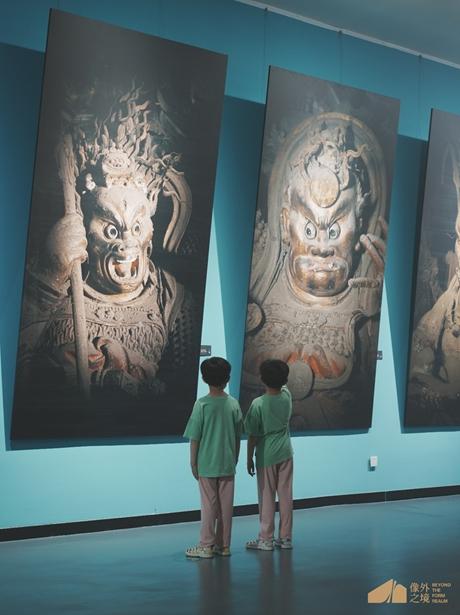
Core Viewpoint - The article highlights the innovative efforts of a team from Beijing Institute of Technology in using digital technology to preserve and revitalize cultural heritage, particularly through the "Xiangwai Zhijing: Lantian Water and Land Temple Sculpture Art Image Exhibition" [2][9]. Group 1: Digital Heritage Preservation - The team has created over 200 high-precision digital models of cultural heritage, showcasing their commitment to preserving historical artifacts through modern technology [2][5]. - The digitalization efforts began with the Beijing Central Axis project in 2006, evolving from basic hand-drawn methods to advanced 3D modeling and AI-assisted design [4][8]. - The team has collected over 2,000 images and 120 books related to the Beijing Central Axis, establishing a cultural creative image database [5]. Group 2: Technological Innovation - The digital preservation paradigm has shifted from simple replication to interactive and artistic expressions, allowing for a more engaging experience with cultural artifacts [8][9]. - New technologies such as gesture recognition and panoramic projection are employed to create immersive experiences for exhibition visitors [9][11]. - The team emphasizes the importance of integrating modern aesthetics with traditional cultural elements to create appealing cultural products [9][10]. Group 3: Cultural Impact and Community Engagement - The exhibition attracted a diverse audience, enhancing public engagement with cultural heritage and fostering a sense of cultural appreciation [9][12]. - The project aims to create a replicable cultural operating system that encompasses not just visual elements but also the cultural context and spatial characteristics [10]. - The ongoing contributions of students to the digital heritage preservation efforts signify a generational commitment to cultural continuity and innovation [10][12].

大学生如何避开“实习陷阱”
Zhong Guo Qing Nian Bao· 2025-07-25 02:24
作为成年人,大学生具备完全民事行为能力,可以独立签署协议。在签署实习协议时,一定要认真阅读 协议内容,对于不明白不了解的地方,及时要求实习单位明确解释,特别是工作内容、协议有效期以及 违约条款部分。有些协议虽然名为"实习协议",但可能暗藏陷阱,对大学生科以较高的义务,并且规定 高昂的违约金。 暑假来临,不少在校大学生都在考虑找份实习,以开阔视野、提升专业技能,为未来的就业增加竞争 力。但是,大学生希望获得实习机会的迫切心理,加上社会经验的缺乏,极易导致他们遭遇骗局,严重 时还可能违法犯罪。 最后,还未走入社会的大学生要对市场的工资水平有初步的了解,不应当盲目自信,也不应当对市场有 太高的乐观估计,对于薪酬与行业平均水平不匹配的实习工作要注意甄别。越是钱多活少的工作,越是 应当警惕企业从事的业务是否合法合规。有些大学生因为轻信高薪实习,误入传销组织。对于一些不知 名的电商或者互联网公司,要注意工作是否涉及刷单或者电子诈骗等违法犯罪行为,特别是在实习单位 要求提供身份证、银行卡、手机卡时,一定要注意防范帮信犯罪的风险。 据《检察日报》报道,今年以来,北京、上海、江苏、浙江、安徽等地检察机关陆续办理了多起利用实 习 ...
一年卖了200万件,国博“销冠”为何是冰箱贴
Zhong Guo Qing Nian Bao· 2025-07-25 01:01
Core Insights - The article highlights the rising popularity of the "Phoenix Crown" refrigerator magnet, which has become a cultural phenomenon and a must-buy item for visitors to the National Museum of China [1][2] - The sales milestone of 2 million units sold within a year indicates a significant consumer interest and engagement with museum-related merchandise [1] - The evolution of cultural and creative products (文创) in museums is discussed, with refrigerator magnets emerging as a leading category in the current market [2][3] Industry Development Stages - The development of museum cultural products can be categorized into four stages: 1.0 Stage: Simple souvenirs like replicas and basic printed items [2] 2.0 Stage: Practical cultural products, exemplified by the Palace Museum's "Zhao Zhu" headphones [2] 3.0 Stage: Cultural products evolve into IPs, integrating abstract designs with merchandise [2] 4.0 Stage: The current phenomenon where refrigerator magnets have become a significant product category [2] Emotional Value and Consumer Behavior - The concept of "emotional value" is identified as a key driver of sales, with young consumers attributing personal significance to refrigerator magnets as symbols of their experiences and social interactions [3][4] - The notion of "usefulness" is redefined, where emotional attachment and personal stories associated with each magnet outweigh traditional functional utility [4] - The collaboration between historical cultural heritage and contemporary youth trends is emphasized as a core aspect of museum merchandise [4]
让学生每一口饭都吃得放心
Zhong Guo Qing Nian Bao· 2025-07-24 22:27
Core Viewpoint - The introduction of the national standard "Guidelines for Campus Catering Service Enterprises Management" aims to address safety and quality concerns regarding food provided to students, responding to public demand for better oversight and accountability in school meal services [1][2]. Group 1: Regulatory Framework - The new guidelines establish a comprehensive framework for campus catering services, covering key areas such as menu and ingredient management, food preparation, meal delivery, service evaluation, and emergency response [1]. - The guidelines require catering companies to implement an "Internet + Open Kitchen" system to enhance transparency and allow parents and students to access critical operational processes [2]. - Catering enterprises must appoint a food safety director and dedicated personnel for food safety management and inspections, establishing a dynamic risk prevention mechanism [2]. Group 2: Addressing Issues and Enhancing Standards - The guidelines respond to issues identified in school meal services, including unsanitary conditions and financial misconduct, with a reported 38,000 cases of corruption related to student meal funds being addressed [1]. - The guidelines also emphasize the importance of nutritional health information exchange and waste reduction, promoting balanced diets and environmentally friendly practices among students [2]. - The successful implementation of these guidelines is crucial, as any lapse in adherence could jeopardize student health, highlighting the need for a robust enforcement mechanism [2]. Group 3: Future Expectations - The expectation is that with the full implementation of the guidelines, school meals will become safer, more transparent, and healthier, contributing to an overall improvement in food safety governance across society [3].

低空经济万亿蓝海吸引全球目光
Zhong Guo Qing Nian Bao· 2025-07-24 21:52
Industry Overview - The 2025 International Low Altitude Economy Expo was held from July 23 to 26 at the Shanghai National Exhibition and Convention Center, featuring an exhibition area of 60,000 square meters and over 300 exhibitors, focusing on low-altitude infrastructure, manufacturing, and related services [2] - The market shows high expectations for the practical application of low-altitude flying vehicles, with attendees particularly interested in the commercialization timeline and airworthiness certification status [2] Company Highlights - Nanjing Tianlu Flying Car Technology Co., Ltd. showcased its "Tianlu Flying Car," which attracted significant attention, with 500 product brochures distributed on the first day [2] - The company plans to release a new product in October 2025, following the first generation's design completion in 2021 and its debut in April 2023 [2] Infrastructure Development - The R&D center of Nanjing Tianlu is located in Jinshan, Shanghai, which has favorable test flight conditions, including a large cross-provincial low-altitude airspace of 1,370 square kilometers [3] - The Jinshan UAV base has established a commercial logistics system for drones and has supported approximately 230,000 flights with over 2,200 days of safe operation [3] - Jinshan District announced plans to further develop the "Shanghai Low Altitude Economy Characteristic Park" to attract eVTOL, industrial-grade drones, and new energy aviation aircraft [3] Market Potential - The eVTOL "Skylar (VE25-100)" from Volant Aviation received a record order of 500 units worth $1.75 billion from Thailand's Pan-Pacific Company, marking the highest public procurement order in China's eVTOL sector [3] - Sichuan's Wofei Chang Kong showcased its AE200 eVTOL prototype and a smart cockpit, targeting consumer markets for commuting and emergency rescue [4] - The AE200 can complete a typical commute in the Yangtze River Delta in about 25 minutes, with a capacity of five passengers, and significantly reduces emergency transport times [5] - The low-altitude economy market in China is projected to reach 1.5 trillion yuan by 2025 and 3.5 trillion yuan by 2035 [5]
在质检一线探寻“好品山东”品牌密码
Zhong Guo Qing Nian Bao· 2025-07-24 16:10
Core Viewpoint - The event highlighted the importance of quality in building strong brands in Shandong, showcasing various companies that emphasize quality in their products and operations [1][3][5]. Group 1: Quality Assurance in Companies - Shandong Furuida Bio Co., Ltd. emphasizes rigorous quality control, conducting 8 quality tests involving over 200 indicators, achieving a repurchase rate 5 percentage points higher than the industry average [3][5]. - Hisense Group focuses on quality as a foundation for global expansion, utilizing advanced testing systems to ensure superior product performance in real-life scenarios [4]. - Lu Hua Group has developed a high-oil peanut variety through extensive testing over 8-9 years, demonstrating a commitment to quality from seed to product [4][5]. - Huaguang Guoci Technology Culture Co., Ltd. faced challenges in developing lead-free glaze but ultimately achieved a 97% product qualification rate after three years of dedicated research [5]. Group 2: Brand Development and Recognition - The event served as a platform for companies to promote their commitment to quality, which is seen as a key driver for brand strength and consumer trust [1][3][5]. - The concept of "Good Products from Shandong" was reinforced through the presentations of various companies, showcasing their unique approaches to quality and innovation [5].
出崖记:从藤梯到钢梯再到楼梯 悬崖村搬出新天地
Zhong Guo Qing Nian Bao· 2025-07-24 15:14
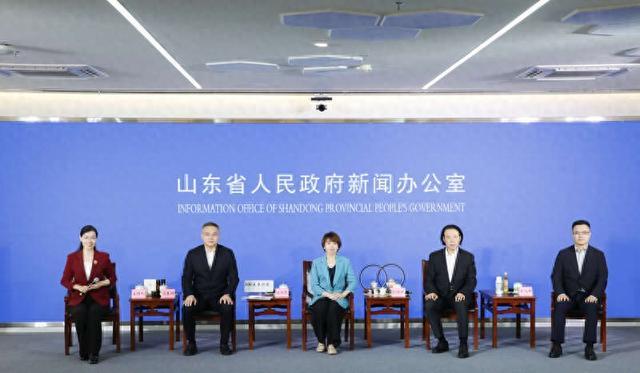
Core Viewpoint - The article highlights the significant transformation of the residents of Xuanqiao Village in Sichuan Province, who have transitioned from a life of poverty and hardship to a more prosperous and stable existence following their relocation to urban communities. Group 1: Background of Xuanqiao Village - Before 2020, residents of Xuanqiao Village lived in extreme poverty, often unable to afford basic necessities like shoes, and relied on subsistence farming [1][2] - The village was known for its perilous living conditions, with children needing to navigate dangerous wooden ladders to attend school, and medical emergencies requiring risky descents down cliffs [2][5] Group 2: Relocation and New Opportunities - In May 2020, residents began relocating to urban settlement areas, marking the start of a new chapter in their lives [1][5] - The new communities provide essential services within a 15-minute radius, including schools and medical facilities, significantly improving the quality of life for the villagers [5][9] Group 3: Economic Activities and Income Generation - Many former villagers have started businesses in their new communities, such as small shops and online sales, leading to monthly incomes ranging from 6,000 to 9,000 yuan [6][8] - The introduction of local handicrafts, particularly traditional embroidery, has also become a source of income, with an average increase of 2,500 yuan per person for the 1,729 embroiderers in the area [9][11] Group 4: Employment and Future Prospects - New job opportunities are emerging in the region, with plans to create over 200 additional jobs in the textile industry and significant investments in local projects [11] - The overall sentiment among the villagers is one of optimism, with many expressing satisfaction with their improved living conditions and economic prospects [11]

6名大学生坠入浮选槽遇难,不该发生的事故为何发生?
Zhong Guo Qing Nian Bao· 2025-07-24 11:33
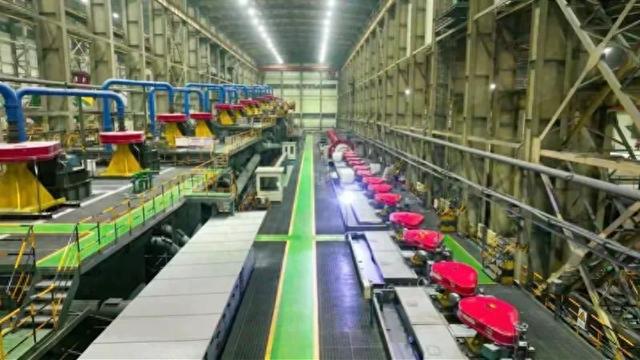
Group 1 - The tragic incident involved six students from Northeast University who died during a visit to a flotation process at a copper-molybdenum mine operated by Zhongjin Inner Mongolia Mining [2][3] - The immediate cause of the accident was the falling of a grating board, indicating a significant possibility of a responsibility accident [3] - Zhongjin Inner Mongolia Mining had previously been found with 27 safety hazards in 2021 and faced penalties in 2024 for unauthorized construction [3] Group 2 - The Inner Mongolia government has taken the incident seriously and is in the process of forming an investigation team to conduct a thorough investigation [2][3] - The importance of safety in production units has been emphasized, with a call for all similar facilities to conduct self-examinations and corrections to prevent future incidents [3] - There is a strong public sentiment for accountability and ensuring that safety measures are reinforced to avoid the recurrence of such tragedies [2][3]

中国信通院:超一半金融企业积极规划内部开源的协作机制
Zhong Guo Qing Nian Bao· 2025-07-24 10:04
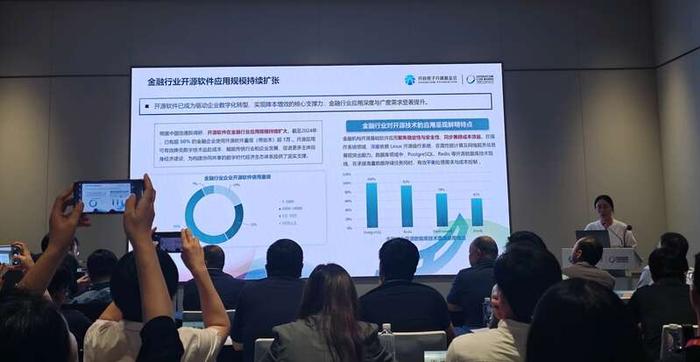
Group 1 - The "support for the development of open-source technology communities" goal outlined in the "14th Five-Year Plan" is being actively implemented across various sectors of the financial industry [1] - Over 58% of the financial sector is actively planning internal open-source collaboration mechanisms to enhance deep collaboration and sharing among technology teams, accelerating the industry's transition to intelligence and platformization [1] - The China Academy of Information and Communications Technology (CAICT) has facilitated open-source governance assessments for numerous financial institutions, including Agricultural Bank of China, Industrial and Commercial Bank of China, and China Construction Bank, creating replicable and scalable standardized practices [1] Group 2 - More than 50 financial enterprises have collaboratively established an innovation platform for technological collaboration and achievement transformation within the financial open-source community [1] - Open-source models are recognized as a new production method in the digital age, effectively reducing costs associated with technological innovation, resource allocation, and industrial transformation [1] - According to CAICT's research, the application rate of the DeepSeek series open-source models in financial enterprises is as high as 100%, while the Tongyi Qianwen series exceeds 70%, indicating that open-source is becoming the mainstream model for digital technology innovation [1] Group 3 - Representatives from China Ping An Life, Agricultural Bank of China, CAICT, China Construction Bank, and Industrial and Commercial Bank of China jointly released a roadmap for the construction of the financial open-source system and initiated a collection of excellent case studies [2] - A pilot program for assessing the innovation and development capabilities of financial open-source initiatives has also been launched [2]

低空经济龙头在沪集聚,公众关心“啥时候卖”
Zhong Guo Qing Nian Bao· 2025-07-24 05:46
Core Insights - The 2025 International Low Altitude Economy Expo will be held from July 23 to 26 in Shanghai, showcasing over 500 exhibitors and focusing on low-altitude infrastructure, manufacturing, and application scenarios [1][2] Industry Developments - The Shanghai Jinshan District announced the construction of a new site for the "Shanghai Low Altitude Economy Characteristic Park and East China Drone Base," aimed at attracting leading companies in eVTOL, industrial drones, and new energy aviation [3] - The East China Drone Base has been approved for the largest cross-provincial low-altitude airspace in the city, covering an area of 1,370 square kilometers, with a regular flying area of approximately 300 square kilometers [2][3] Company Highlights - Nanjing Tianlu Flying Car Technology Co., Ltd. showcased its flying car, Tianlu Feiche, which generated significant public interest, with all 500 product brochures distributed on the first day of the expo [2] - Volant Aerospace introduced its AE200 aircraft and a new smart cockpit, enhancing the low-altitude travel experience [4][6] - The CEO of Volant Aerospace highlighted the efficiency of their electric aircraft, which can reduce travel time significantly compared to traditional ground transportation [6][9] Market Potential - The low-altitude economy market in China is projected to reach 1.5 trillion yuan by 2025 and is expected to exceed 3.5 trillion yuan by 2035, indicating substantial growth potential in this sector [9]