
Zhong Guo Qing Nian Bao

Search documents
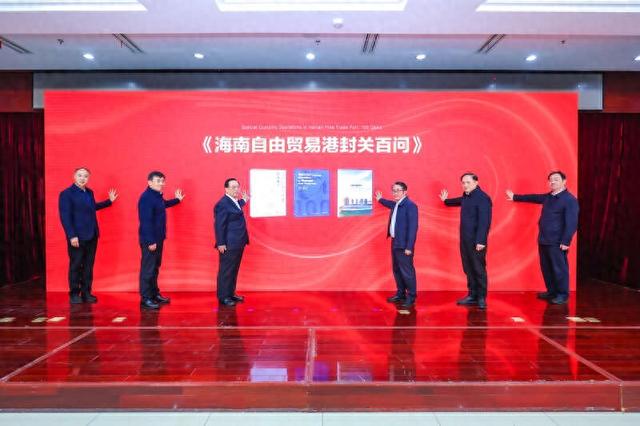
《海南自由贸易港封关百问》新书出版座谈会在京举行
Zhong Guo Qing Nian Bao· 2025-12-14 09:06
Group 1 - The book "Hundred Questions on Hainan Free Trade Port Closure" was published in both Chinese and English, aimed at clarifying the core logic and policy highlights of Hainan's free trade port construction in an accessible Q&A format [1][3] - The book addresses 100 hot topics related to the closure operation of the free trade port, organized into 11 key areas, and includes vivid images and content links to enhance reader understanding [3] - The publication is seen as a timely response to the central government's strategic deployment and serves as an important policy interpretation and knowledge dissemination effort to the international community [3] Group 2 - The Hainan Provincial Publishing and Distribution Group plans to further promote the narrative of Hainan's reform and opening-up, aiming to create more quality works that interpret policies and showcase the charm of the free trade port [3] - The event was guided by the China Foreign Languages Publishing Administration and the Hainan Provincial Committee of the Communist Party, co-hosted by multiple publishing entities [3]

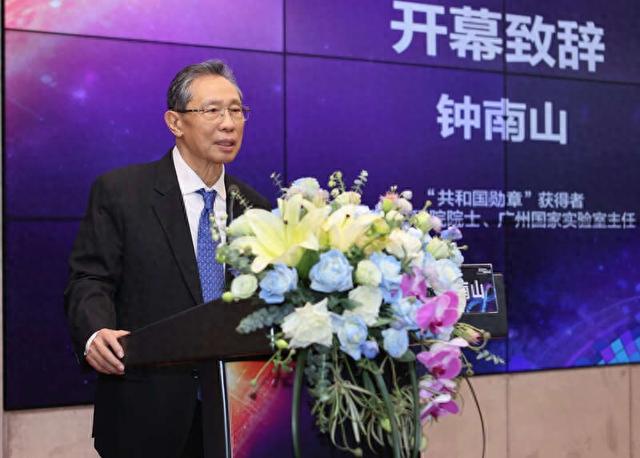
钟南山:医学AI发展需要产学研医用联动
Zhong Guo Qing Nian Bao· 2025-12-13 12:47
Core Insights - The first Greater Bay Area Medical Artificial Intelligence Conference highlighted the necessity of integrating AI into healthcare, as emphasized by academic leaders like Zhong Nanshan, who stated that "medical AI is not a choice but a must" [1][3]. Group 1: Industry Challenges and Opportunities - The uneven distribution of medical resources and weak grassroots service capabilities in China necessitate innovative solutions through new-generation information technology [3]. - The integration of "AI + healthcare" requires a collaborative approach involving technological innovation, systemic mechanism innovation, and ecological synergy, making it a complex system engineering task [3]. - The medical AI sector is identified as a highly promising area for application due to its vast data, diverse scenarios, and essential public needs [3]. Group 2: Collaboration and Ecosystem Development - Zhong Nanshan emphasized the importance of collaboration among various institutions to advance medical AI, advocating for the integration of industry, academia, and research to facilitate rapid implementation [3][5]. - The establishment of a credible data space for medical testing and AI exploration was showcased at the conference, aiming to expand the ecological cooperation network and develop new scenarios and data products [5]. - The health data is recognized as a crucial strategic resource for the nation and a foundational element for the development of medical AI, with expectations for high-level medical institutions and tech companies to engage in innovative practices [5].
创五项吉尼斯纪录, 吉利全球全域安全中心发布
Zhong Guo Qing Nian Bao· 2025-12-13 11:46
Core Insights - Geely Auto has launched a global all-domain safety center in Ningbo, Zhejiang, covering over 80,000 square meters and featuring 27 categories of safety testing capabilities, establishing five world records including the "largest automotive safety testing laboratory" [2] Group 1: Safety Center and Technology - The global all-domain safety center aims to meet comprehensive safety verification needs from complete vehicles to components [2] - Geely has introduced the "All-Domain Safety 2.0" technology system, which enhances the original four safety areas by integrating AI technology into nine safety systems and includes "public domain safety" considerations [2] Group 2: Industry Collaboration - Geely has partnered with 11 industry, academic, and research institutions, including the China Automotive Technology Research Center and Tsinghua University, to release the "Intelligent Vehicle All-Domain Safety Development White Paper" [2] - The white paper is designed to systematically plan the technological pathways for intelligent vehicle all-domain safety and provide a reference framework for industry safety system construction [2] Group 3: Open Sharing Initiative - The global all-domain safety center will be open for sharing with the entire industry, promoting the centralized utilization of automotive safety technology research resources [2] - This initiative aims to enhance the overall safety verification capabilities of both complete vehicle and component manufacturers [2]


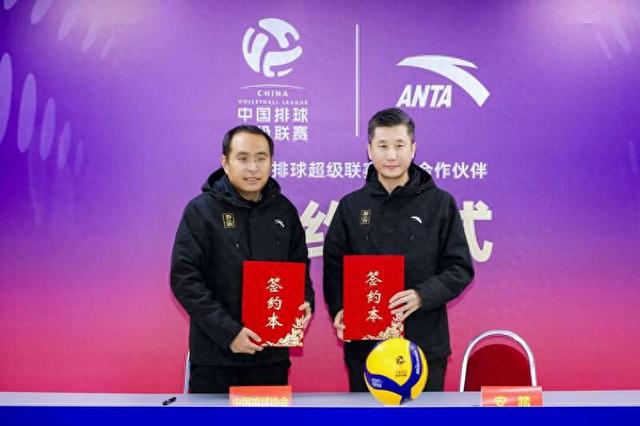
新赛季中国排球超级联赛获专业运动装备支持
Zhong Guo Qing Nian Bao· 2025-12-13 10:26
Group 1 - Anta has become the official partner and exclusive designated sports equipment sponsor for the 2025-2026 season of the Chinese Volleyball Super League (CVSL) [1] - Anta will provide sports apparel, footwear, and equipment for 50 clubs in both men's and women's A and B leagues, covering competition, training, and daily life scenarios [2] - The company has launched its first professional volleyball shoe, "Lan Yue," aimed at addressing the long-standing gap in professional volleyball footwear from Chinese brands [2]
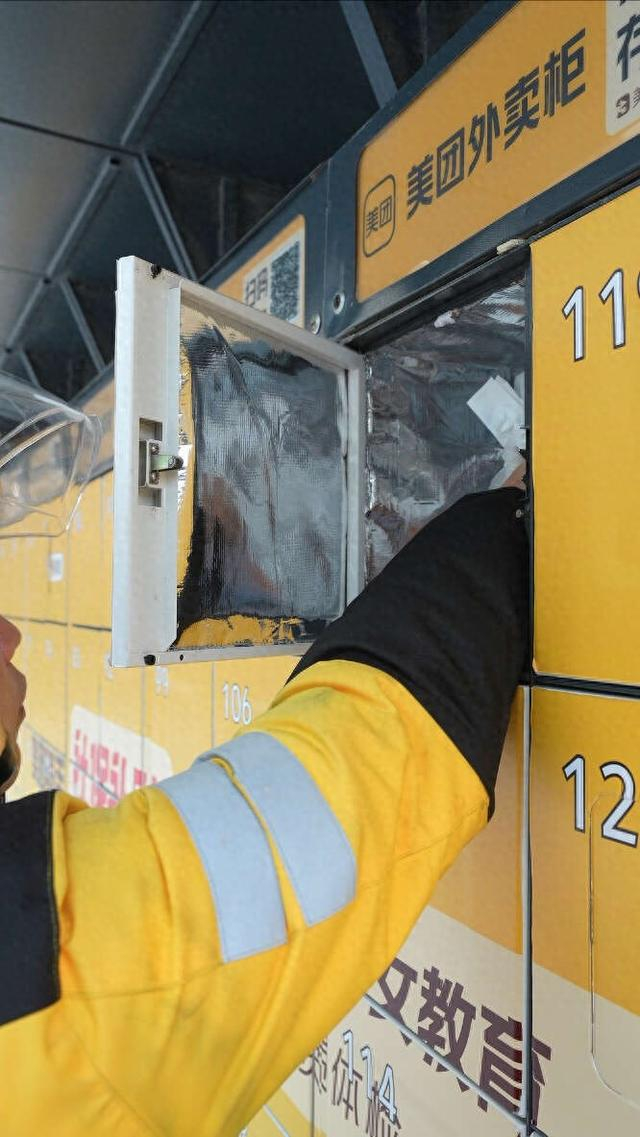
美团升级冬日“热乎乎计划”
Zhong Guo Qing Nian Bao· 2025-12-13 07:16
Group 1 - The core idea of the article is that Meituan has upgraded its winter delivery service to meet increased consumer demands for timely and warm food deliveries during adverse weather conditions [1][4] - Meituan is distributing free "1-on-1 urgent delivery" experience vouchers in over 180 cities, allowing users to enjoy delivery that is 5-25 minutes faster [1][4] - The company has equipped approximately 400,000 delivery boxes with insulation to maintain food temperature during winter [4] Group 2 - Meituan has implemented additional weather subsidies for delivery riders and provided them with winter gear and emergency supplies to ensure safety during adverse weather [4] - The "1-on-1 urgent delivery" service allows riders to deliver one order at a time, resulting in higher average earnings of about 15 yuan per order, which is 2-3 times more than the regular delivery model [4]

长大后,这些年轻人为何还在依赖“阿贝贝”
Zhong Guo Qing Nian Bao· 2025-12-13 07:11
Group 1 - The article discusses the emotional attachment of young adults to their "Abeibe," which are comfort objects like blankets, pillows, and toys that provide a sense of security and comfort [1][2] - "Abeibe" serves as a transitional object in psychology, helping children cope with separation anxiety as they grow and learn to become independent [1] - The experiences of individuals like Qin Si and Wang Weiming illustrate how these comfort objects continue to play a significant role in their lives even into adulthood [2][3] Group 2 - The article highlights the case of Jiang Yixuan, who, despite not having a childhood "Abeibe," received a toy bear from a friend that became her emotional support during stressful times [3][4] - The narrative emphasizes that these comfort objects provide a safe emotional space for adults, allowing them to express their feelings and cope with anxiety [4] - The article concludes with the notion that maintaining a connection with these comfort objects does not have negative effects, but rather helps individuals face life's challenges with more confidence [4]
金融“活水”如何更精准灌溉绿色工厂
Zhong Guo Qing Nian Bao· 2025-12-13 00:05
Core Viewpoint - The recent policy notification from the Ministry of Industry and Information Technology and the People's Bank of China aims to enhance financial support for the construction of green factories, which are crucial for green manufacturing, accounting for over 20% of total manufacturing output [1][2]. Group 1: Policy and Financial Support - The notification establishes mechanisms to improve financial services for green factory construction, encouraging financial institutions to develop tailored financial products and services [2]. - Key support areas include major technological innovations in traditional industries, projects for energy conservation and carbon reduction, and the development of zero-carbon factories [1][2]. Group 2: Current Achievements and Future Plans - As of now, 6,430 green factories and 491 green industrial parks have been cultivated at the national level, with green industrial parks showing energy and water consumption rates at two-thirds and one-fourth of the national average, respectively [2]. - The Ministry of Industry and Information Technology plans to increase the output value proportion of green factories to 40% by 2030 and will implement a management approach for the gradual cultivation of green factories [3].
大学里的“爱情课”:感悟爱情 学习成长
Zhong Guo Qing Nian Bao· 2025-12-12 22:44
Core Insights - The increasing popularity of courses on love and relationships in universities reflects students' desire to address real emotional issues and improve their understanding of intimate relationships [1][2][3] Group 1: Course Offerings and Student Experiences - The course "Psychology of Love" is designed to help students navigate their emotional challenges, with many students enrolling to resolve specific relationship issues [2][3] - Students like Mu Yi and Li Xiao Bei express that these courses provide valuable insights into their emotional struggles and relationship dynamics, helping them to better understand themselves and their partners [5][9] - The courses emphasize the importance of communication and understanding in relationships, encouraging students to address issues rather than avoid them [2][3][5] Group 2: Educational Philosophy and Goals - Educators like Zhou Li and Lin Guanghua argue that understanding intimate relationships is crucial for personal development and emotional well-being, viewing these courses as essential rather than frivolous [6][7] - The courses aim to enhance students' emotional intelligence and ability to manage relationships, focusing on personal growth rather than merely teaching dating techniques [11][12] - The instructors highlight the significance of experiencing and processing emotions, including pain, as a pathway to personal growth and deeper connections with others [12][13]
2026年退役大学生士兵专项硕士研究生招生计划公布
Zhong Guo Qing Nian Bao· 2025-12-12 22:44
Core Viewpoint - The Ministry of Education has announced the continuation of the Special Master's Degree Enrollment Plan for Retired College Student Soldiers in 2026, which will be implemented by 532 higher education institutions including Peking University and Tsinghua University [1]. Group 1: Enrollment Plan Details - The Special Master's Degree Enrollment Plan for Retired College Student Soldiers is a crucial part of the national master's degree enrollment process, allocated separately within the total enrollment scale and cannot be adjusted to ordinary plans or other special plans [1]. - Enrollment units are allowed to set their own initial examination score requirements for candidates under this plan, with priority given to those with longer service time under equal conditions [1]. Group 2: Candidate Eligibility and Application Process - Candidates for the Special Master's Degree Enrollment Plan must be college students who have enlisted and completed their service, meeting the national master's degree enrollment criteria [1]. - The term "college students" includes full-time ordinary undergraduate (including vocational), graduate, second bachelor's degree graduates, current students, and new entrants, as well as ordinary undergraduate (including vocational) graduates from adult higher education institutions [1]. Group 3: Admission and Supervision Regulations - Enrollment units must adhere to the principles of voluntary application, unified examination, independent score setting, and merit-based admission, ensuring fairness and quality in the admission process [2]. - Strict adherence to admission policies and procedures is required, prohibiting any direct changes to candidates' preferences or adjustments to plan types during the re-examination and admission process [2]. - Provincial education administrative departments and examination institutions are tasked with enhancing guidance and supervision of the enrollment work for the Special Master's Degree Enrollment Plan, focusing on key areas such as plan execution, candidate qualification review, and information transparency [3].
山东共青团为“青春小店”量身定制成长路径 让小梦想在烟火气中绽放大光彩
Zhong Guo Qing Nian Bao· 2025-12-12 22:30
Core Insights - The "Youth Shops" are becoming a significant force driving the youth economy, serving as incubators for entrepreneurial dreams while facing challenges such as insufficient customer flow and lack of resources [1] Group 1: Attracting Customers - Initial challenges for "Youth Shops" include building brand awareness and attracting the first batch of customers [2] - The "Youth City Recommendation Officer" initiative by the Jining Youth League has helped local entrepreneurs like Gong Ting, who faced low visibility for her handmade leather goods store, by leveraging local university resources and tourism influence [2][3] - The support from the Youth League has led to increased recognition and customer loyalty for Gong Ting's shop, allowing her to offer personalized services [3] Group 2: Strengthening Operations - The key to transforming short-term interest into long-term patronage lies in addressing operational shortcomings and enhancing core competitiveness [4] - The "West Youth Quality Shop" initiative in Qingdao has been instrumental in promoting local youth shops, including the "Evening Wind with You" café, which has seen a significant increase in customer traffic due to official recognition [4][5] - The café's owner, Wang Xiaotong, has gained confidence to expand her business, opening a second location [5] Group 3: Building an Ecosystem - Systematic support is essential for the long-term development of "Youth Shops," encouraging collaboration rather than isolated efforts [6] - The "Jinan Imprint" shop has successfully integrated local culture and youth engagement, becoming a popular destination through strategic partnerships and promotional efforts [6][7] - The Jinan Youth League is implementing the "Spring City Youth Shop" cultivation plan to support a hundred innovative shops, creating a comprehensive ecosystem of policy support, skills training, resource linking, and community backing [7]