
Zhong Guo Qing Nian Bao

Search documents
规范未成年人网购退款流程,绝不容忍“扇娃”自证
Zhong Guo Qing Nian Bao· 2025-10-22 00:15
Group 1 - The incident involves a seller on a trendy toy e-commerce platform demanding a mother to submit a video of her physically punishing her child as a condition for a refund, which raises serious ethical and legal concerns [1][2] - The platform's response indicates that the seller's demands were not part of official policies but rather personal communications, acknowledging the inappropriate nature of the seller's request [1][2] - The seller's actions may constitute "incitement to infringement," as they compel parents to harm their children to prove their innocence, which could violate laws against domestic violence and infringe on minors' rights [2][3] Group 2 - The platform has a responsibility to implement proper oversight and management of sellers to prevent such incidents, and merely suggesting "negotiation" is seen as neglecting regulatory duties [2][3] - There is a need for clearer rules and standards regarding refunds and disputes involving minors to enhance operational efficiency and protect both buyers and sellers [3] - Parents are encouraged to take responsibility for monitoring their children's online activities and instilling proper financial values to prevent such situations from arising [3]
探索前沿技术 点亮国防初心
Zhong Guo Qing Nian Bao· 2025-10-21 23:10
Core Insights - The 2025 National Youth Intelligent Unmanned System Application Competition finals took place in Shanghai, featuring over 200 teams from 106 military and civilian institutions, showcasing advancements in unmanned technology and promoting national defense education [1] Group 1: Competition Overview - The competition included five main events: fiber-optic remote flying challenge, ground anti-drone swarm challenge, air-ground coordinated confrontation, unmanned vehicle cluster racing, and air-ground joint support transport [1] - The design of the events emphasizes the integration of peacetime and wartime applications, testing educational curricula, talent cultivation, and technological innovation [1] Group 2: Participant Insights - Participants came from diverse academic backgrounds, with both military and civilian students demonstrating unique strengths; military students excelled in operational skills, while civilian students brought innovative thinking [2] - Many competitors were key members of their school's innovation clubs, leveraging prior competition experience to enhance their performance [2] Group 3: Technical Innovations - Teams designed and built their own vehicles for the air-ground joint support transport event, focusing on cost-effectiveness and skill development; for instance, a team created a wheeled transport vehicle for better maneuverability [3] - Participants utilized advanced materials like carbon fiber and 3D printing to enhance the capabilities of their drones, such as developing a six-axis drone for improved load capacity and stability [4] Group 4: Educational Integration - Educational institutions incorporated national defense education into their curricula, with students participating in training sessions and practical applications related to unmanned systems [5] - The competition aligns with broader national defense initiatives, reflecting the increasing relevance of unmanned systems in military applications [5]
胡东平:少年科创里的家国担当
Zhong Guo Qing Nian Bao· 2025-10-21 23:02
Core Insights - The article highlights the innovative journey of Hu Dongping, a 14-year-old student who has achieved significant recognition in technology and innovation, holding 46 national awards and 105 municipal-level awards [1][2]. Group 1: Early Inspiration and Learning - Hu Dongping was influenced by his father's ideals and aimed to serve the country, leading to his interest in using robots for high-risk military tasks [2]. - He began systematic learning in robotics and programming at the age of 5, creating his first invention, a road safety robot named "Xiao Bei," at age 9 [2]. - His dedication to knowledge is evident in his extensive collection of books on various subjects, which he studies diligently [2]. Group 2: Practical Applications of Technology - Hu Dongping's inventions are driven by human needs, such as developing a bathing robot to assist disabled individuals after caring for his grandparents [3]. - He created a home delivery and disinfection robot during the COVID-19 pandemic to reduce infection risks, which features stair-climbing capabilities [4]. - His designs also include a "Campus Security Rescue Station" and a "Backpack Weight Reduction Robot," addressing safety and physical burden issues for students and the elderly [4]. Group 3: Addressing Niche Needs - The "Kneeling Easy" robot was developed to alleviate the physical strain on professionals who work in kneeling positions, showcasing a focus on ergonomics and user comfort [5]. - This robot is unique in its ability to operate under body control while minimizing knee pressure, and it has been implemented in rehabilitation centers and hospitals [5]. Group 4: Overcoming Challenges - Hu Dongping faced setbacks during the development of the "Backpack Weight Reduction Robot," but he persevered by seeking advice and researching solutions, ultimately improving the design [7]. - His experiences in competitions have led to numerous accolades, reinforcing his belief that these events are opportunities for learning and growth [7]. Group 5: Commitment to Social Responsibility - Hu Dongping has been involved in charitable activities since childhood, using his competition earnings to support those in need, reflecting a strong sense of social responsibility [7][8]. - He actively participates in youth science discussions and cultural exchanges, mentoring peers in their innovation journeys [8]. - Currently, he is focused on a confidential drone project aimed at overcoming technical limitations in modern warfare applications [8].
让青少年触摸中国式民主的脉搏
Zhong Guo Qing Nian Bao· 2025-10-21 23:00
Core Points - The event "Walking into the CPPCC" was held, allowing 91 students and teachers from eight high schools in Beijing to engage with the National Committee of the Chinese People's Political Consultative Conference (CPPCC) for the first time, promoting understanding of China's socialist consultative democracy [1] - The event included visits to historical exhibitions and discussions with CPPCC officials, emphasizing the unique advantages of China's political system and fostering institutional confidence among youth [1][5] Group 1 - The event was co-hosted by the CPPCC General Office's News Bureau and the Central Committee of the Communist Youth League, aiming to enhance youth engagement with the political system [1] - Students actively participated in discussions, sharing their insights on the importance of democratic practices and their roles in community engagement [5][6] - The event highlighted the significance of "whole-process people's democracy," encouraging students to understand their responsibilities in democratic practices [5][6] Group 2 - The teaching approach was adapted to resonate with students, focusing on their interests and aligning with new curriculum standards on "people's democracy" [3] - Students expressed their understanding of the CPPCC's functions and the importance of political participation through interactive learning experiences [4][5] - The event fostered a sense of connection between students and the CPPCC, making the concept of democracy more tangible and relatable [7]
云岭国门雄关 青春洒热血
Zhong Guo Qing Nian Bao· 2025-10-21 22:55
Core Viewpoint - The article highlights the ongoing battle against drug trafficking in Yunnan, China, particularly along the border with Myanmar, Laos, and Vietnam, emphasizing the dedication and sacrifices of law enforcement officers in this critical area [2][5][9]. Group 1: Drug Trafficking Situation - Yunnan has a long border of 4,060 kilometers, accounting for nearly one-fifth of China's total border, making it a significant frontline in the fight against drug trafficking [2]. - In 2024, Yunnan police reported over 2,600 drug-related criminal cases and seized 10.5 tons of drugs, with the Dehong Dai and Jingpo Autonomous Prefecture being a major battleground due to its proximity to the "Golden Triangle" [2][4]. - The Mokang Border Inspection Station has uncovered over 13 tons of various drugs and apprehended more than 12,000 drug-related suspects since its establishment [4]. Group 2: Law Enforcement Challenges - Officers face life-threatening situations, with incidents of violence against them, including stabbings and armed confrontations with drug traffickers [5][7]. - The article recounts specific cases where officers, such as Li Zhiwen and Zheng Zhaorui, demonstrated bravery and quick thinking in dangerous situations, leading to significant drug seizures [5][6][7]. Group 3: Technological Advancements in Drug Enforcement - The reform of the police force in 2019 transitioned officers from the armed police to immigration management, focusing on data analysis and intelligence gathering to combat drug trafficking [9][10]. - Officers are now utilizing technology and data analysis to track and apprehend drug traffickers, as demonstrated by Hu Zhen's successful identification of a suspect through digital means [10][11]. - The integration of technology in operations aims to enhance the efficiency of drug detection, especially in the context of evolving methods used by traffickers [11].
职场“早鸟票”有必要抢吗
Zhong Guo Qing Nian Bao· 2025-10-21 22:47
Core Insights - The trend of early internships among university students is increasing, with a significant rise in the number of students starting internships in their first or second year of college [1][9][22] - Companies are increasingly looking for candidates with relevant internship experience, often prioritizing practical skills over academic performance [11][12][22] - The competitive job market is pushing students to gain multiple internships early in their academic careers to enhance their employability [9][20][22] Group 1: Internship Trends - A survey indicated that 41.1% of graduates from prestigious universities and 59.5% from regular universities began internships in their first or second year [1] - The percentage of students from top universities who interned in lower grades rose from 21% in 2019 to current levels [1] - 78.4% of graduates have at least one internship experience, with 32.7% having two or more, reflecting an upward trend from the previous year [9] Group 2: Student Experiences - Students are increasingly proactive in seeking internships, with some starting as early as their first year to avoid competition with upperclassmen [3][7] - Many students view internships as a "snowball effect," where each experience builds on the last, leading to better opportunities [9] - The pressure to secure internships is leading students to balance multiple commitments, including competitions and academic performance [9][22] Group 3: Employer Expectations - Employers are beginning to favor candidates who can demonstrate immediate productivity, often requiring relevant internship experience before hiring [11][12] - Companies are cautious about hiring first- and second-year students due to their limited availability and the short duration of internships [22] - The demand for candidates who can quickly adapt and contribute to the company is reshaping the expectations for internship candidates [11][22] Group 4: Educational Institutions and Policies - There is a growing recognition of the need for educational institutions to align their training with industry requirements, leading to initiatives that connect students with real-world experiences [22][26] - Some universities are implementing programs to enhance the practical skills of students, ensuring they are better prepared for the job market [22][26] - The Ministry of Education has issued guidelines to protect students' rights during internships, emphasizing fair compensation and reasonable working hours [26]

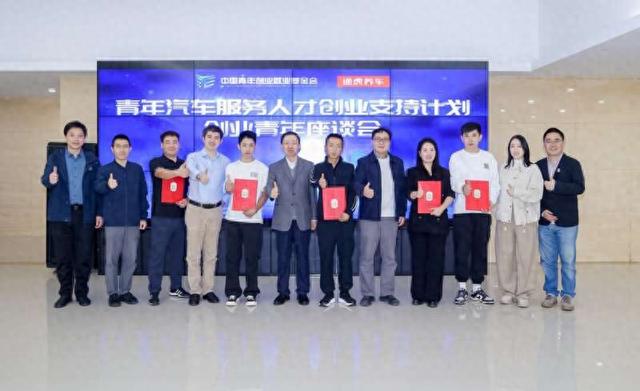
途虎养车持续扶持青年汽服创业
Zhong Guo Qing Nian Bao· 2025-10-21 08:42
Core Points - The "Youth Automotive Service Talent Entrepreneurship Support Program" was organized by the China Youth Entrepreneurship and Employment Foundation to address the needs of young entrepreneurs in the automotive service sector [2][3] - The automotive industry in China is experiencing stable growth, with the new energy vehicle market expanding, creating new opportunities for youth employment and entrepreneurship [2] - By 2025, the total number of talents in energy-saving and new energy vehicles in China is expected to reach 1.2 million, with a talent gap of approximately 1.03 million [2] Group 1 - The meeting featured five representatives from different regions who shared their entrepreneurial experiences and feedback on their needs [2] - The foundation's support policies have effectively lowered industry entry barriers and alleviated operational pressures for young entrepreneurs [2] - The standardized operational system of Tuhu Car Service has simplified the process of opening a store, enabling entrepreneurs to achieve stable income [2] Group 2 - The Secretary-General of the China Youth Entrepreneurship and Employment Foundation emphasized the importance of maintaining confidence and social responsibility among young entrepreneurs [3] - Tuhu Car Service, in collaboration with the foundation, launched the support program offering substantial entrepreneurial subsidies, training, and mentorship [3] - Future plans include further assistance for young automotive service entrepreneurs and the continuation of the "New Youth Plan" to help more young people realize their entrepreneurial dreams [3]
从“升学路”到“条条大路”——中青赛推动校园足球托举更多可能
Zhong Guo Qing Nian Bao· 2025-10-21 02:53
Core Insights - The fourth edition of the China Youth Football League (中青赛) U17 group concluded with Tsinghua Affiliated High School winning the championship, defeating Chongqing Nankai High School 2-1, while Zhengzhou No. 9 Middle School secured sixth place, matching their best previous performance [2] Group 1: Development of Campus Football - The establishment of "Campus Football Characteristic Schools" and "Pilot Counties" by the Ministry of Education in late 2014 has significantly contributed to the growth of youth football in China [3] - The performance of campus teams like Tsinghua Affiliated High School and Zhengzhou No. 9 Middle School in national competitions reflects the success of the football development system over the past decade [3] - The proportion of school and sports education collaborative teams in the U13 group reached 38%, indicating a growing integration of educational institutions in youth football [2] Group 2: Impact on Students and Families - Many talented student players are being recommended to professional clubs for trials, but the majority choose to continue their education while playing football [4] - The shift in parental attitudes over the past decade shows that football is now viewed as an essential part of student growth rather than a distraction from academics [5] - Data from Zhengzhou No. 9 Middle School indicates that over one-third of football-specialized graduates have entered top-tier universities, demonstrating the dual pathway of sports and academics [5] Group 3: Future of Football in China - The campus football system is seen as a crucial source of talent for professional teams, with many students returning to teach or coach after graduation [6] - The emphasis on grassroots coaching within the campus football framework is aimed at fostering a sustainable football culture in China [6] - The ongoing national competitions like the China Youth Football League are essential for promoting the integration of campus teams with professional training systems, allowing students to balance sports and education effectively [5][6]

“越界”背调让求职者遭遇“隐形门槛”
Zhong Guo Qing Nian Bao· 2025-10-21 01:44
Core Viewpoint - Background checks are essential in the hiring process to verify candidates' professional information and mitigate hiring risks, but the inclusion of unrelated personal matters in these checks raises concerns about privacy and fairness in the job market [1][8]. Group 1: Background Check Issues - Background checks, or "背调," are conducted by employers to verify candidates' educational qualifications, work history, and performance to identify potential information fraud and assess job fit [1][2]. - Some background checks extend beyond professional qualifications to personal life matters, leading to controversies and even legal disputes [1][3]. - A case study involving a candidate named 罗文 illustrates how a non-work-related property dispute led to a "yellow light" flag in her background check, resulting in a lost job opportunity [2][3]. Group 2: Candidate Experiences - Many candidates have reported excessive information collection during background checks, with some being questioned about personal financial issues or family details that are irrelevant to the job [3][4]. - Candidates argue that personal matters, such as marital disputes or neighborhood conflicts, should not be included in background checks as they do not reflect job performance or capabilities [3][4]. Group 3: Legal Implications - A legal case involving a candidate named 王某 highlights the potential for defamation through background checks, where negative personal evaluations affected his job prospects and salary [6][7]. - The court ruled that background check companies must exercise a higher duty of care in verifying the credibility of information that could harm a candidate's reputation, emphasizing the need for reasonable boundaries in background checks [7][8].
黄金史诗级“暴涨”:生长于美元货币信任裂痕之上
Zhong Guo Qing Nian Bao· 2025-10-20 23:49
Core Viewpoint - The acceleration of global central banks' "de-dollarization" is leading to a structural change in the international monetary system, with an increasing share of gold in foreign exchange reserves over the past 15 years [1][2]. Group 1: Central Bank Actions - Global central banks are significantly increasing their gold reserves, providing strong structural support for gold prices. By the second quarter of 2025, the share of the US dollar in global foreign exchange reserves is expected to drop to 56.32%, the lowest since 1995 [1][2]. - One-third of the 75 central banks managing $5 trillion in assets plan to increase their gold reserves in the next 1-2 years, marking a five-year high [1][2]. Group 2: Market Dynamics - The recent surge in gold prices is not solely driven by market sentiment but is a result of long-term adjustments in monetary reserve structures by global central banks [2]. - The demand for gold from central banks has exceeded 1,000 tons for two consecutive years, providing a structural floor for gold prices [2]. Group 3: Geopolitical and Economic Factors - The ongoing geopolitical tensions and the US's internal "de-globalization" trends are reshaping the pricing logic of gold, transitioning from market-driven pricing to a focus on national sovereign reserve currency pricing [3][4]. - The decline in the US dollar index, which has dropped nearly 10% since 2025, is correlated with the rise in gold prices, as the weakening dollar makes gold more attractive to holders of other currencies [4]. Group 4: Investment Trends - Institutional investors are increasingly accumulating gold, with North American and European markets leading in gold ETFs [4]. - The expectation of a new round of monetary easing by the Federal Reserve, with a 98.3% probability of a 25 basis point rate cut in October, is lowering the opportunity cost of holding non-yielding gold, further driving investment into the gold market [4]. Group 5: Currency Reallocation - The rise of the renminbi as a potential asset class is highlighted, with 30% of global central banks planning to increase their allocation to renminbi assets, which may rise to 6% in foreign exchange reserves [6]. - The structural transformation of the renminbi's exchange rate is supported by improvements in China's manufacturing sector, particularly in high-value-added industries [6].