
Si Chuan Ri Bao

Search documents
第四届成渝地区双城经济圈全球投资推介会在新加坡举行 “双城双百”万亿投资邀合作
Si Chuan Ri Bao· 2025-10-16 00:16
Core Insights - The fourth Chengdu-Chongqing Economic Circle Global Investment Promotion Conference was held in Singapore, marking the first time the event has been conducted overseas [1][2] - The event showcased a "dual-city dual-hundred" investment project opportunity list with a total investment exceeding 1 trillion yuan, highlighting diverse investment opportunities in the Sichuan-Chongqing region [1][2] - Five key projects were successfully signed, with a total cooperation amount of 1.15 billion yuan, covering sectors such as artificial intelligence, new materials, food and agricultural product processing, and health data analysis [1][2] Investment Opportunities - The event utilized a "provincial-city + district-county" linkage promotion model to present multi-layered and diversified investment opportunities in the Sichuan-Chongqing region to global investors [1] - The focus was on promoting cooperation opportunities in electronic information, intelligent connected vehicles, high-end equipment, artificial intelligence, biomedicine, and new materials [2] Strategic Importance - Singapore serves as a core node in ASEAN and an important bridge connecting the world, making it a significant window for the Chengdu-Chongqing Economic Circle to deepen international cooperation [2] - The conference is viewed as a crucial step for the Sichuan-Chongqing region to actively connect with the ASEAN market and integrate into the global industrial and supply chains [2] - Future efforts will focus on strategic collaboration, policy coordination, platform docking, and shared benefits to enhance the international influence of the region [2]
助力乡村产业更有韧性、农文旅融合更富活力 浙川牵手 给四川乡间带来了什么?
Si Chuan Ri Bao· 2025-10-15 23:58
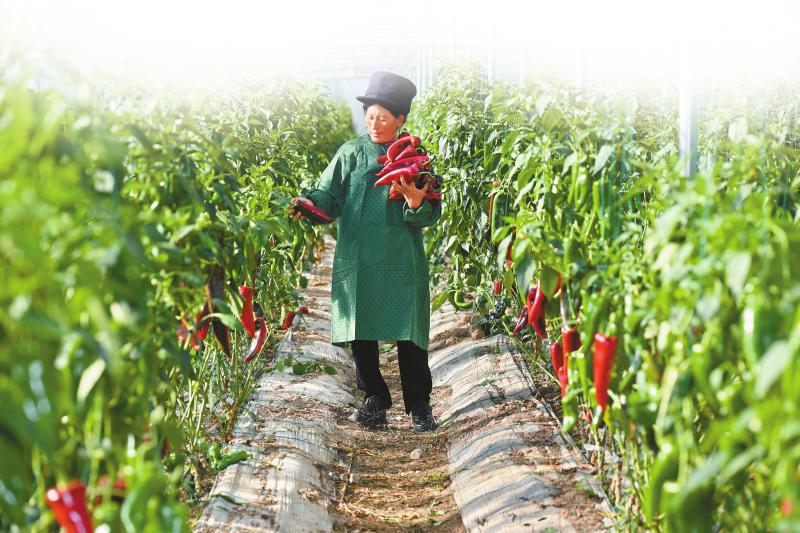
Core Insights - The collaboration between Zhejiang and Sichuan provinces has led to significant advancements in agricultural modernization and rural revitalization, benefiting both local farmers and enterprises [3][8] Group 1: Agricultural Development - Sichuan Zhongyi Olive Development Co., Ltd. has established a model of "company + cooperative + base," providing local villagers with job opportunities and land rental income, resulting in over 1 million yuan in wages distributed annually [2] - The oil olive planting base in Baiya Town spans over 5,000 acres, with an annual output value nearing 40 million yuan [3] - The "Revitalization Workshop" initiative has created nearly 20,000 local job opportunities, with an investment of 460 million yuan in 173 projects, expected to generate an annual output value of 1.28 billion yuan [5] Group 2: Employment and Skills Training - The "Blue Eagle Project" has been implemented in 68 counties in Sichuan, training nearly 2,000 students, with a focus on those from impoverished backgrounds, achieving an average starting salary of over 6,000 yuan per month for graduates [6] - From January to July this year, Zhejiang has facilitated the transfer of employment for 51,800 individuals from Sichuan [7] Group 3: Market Integration - Sichuan's agricultural products, such as apples and green pepper, are now being marketed effectively, with initiatives to enhance branding and market access [9][10] - The establishment of modern agricultural industrial parks has diversified the agricultural structure in poverty-stricken areas, increasing the per-acre output value significantly [10] Group 4: Rural Tourism Development - Sichuan is leveraging experiences from Zhejiang to develop rural tourism, launching 10 distinctive tourism routes to attract visitors [11] - Collaborative cultural events, such as the "Red Original Grassland Music Festival," are being organized to enhance tourism appeal and cultural exchange [12][13]

第十五届中国音乐金钟奖10月18日至29日在蓉举办 总奖数增至40个 将开展80余场系列活动
Si Chuan Ri Bao· 2025-10-15 23:58
Core Points - The 15th China Music Golden Bell Award will take place in Chengdu from October 18 to 29, featuring over 80 events including an opening concert on October 19 and a closing concert on October 29 [1][2] - The award has undergone reforms, increasing the total number of awards from 20 to 40, with the introduction of new categories for both works and performances [1] - The event is expected to attract over 1,500 music industry professionals and nearly 30,000 audience members, with more than 200,000 participants in offline activities [2] Award Structure - The award categories now include two types of works awards: orchestral and ethnic orchestral, and six types of performance awards: vocal (bel canto, ethnic), piano, guzheng, ethnic plucked instruments, and brass [1] - The reform aims to optimize the evaluation mechanism and expand the award categories [1] Event Activities - The event will feature main performances, industry forums, talent matchmaking, and flash mob activities, enhancing engagement within the music community [2] - Five professional venues in Chengdu will host the performances, and ticket sales for the opening concert and five special concerts have already begun [2]
资阳国际合作“朋友圈”扩容
Si Chuan Ri Bao· 2025-10-15 20:31
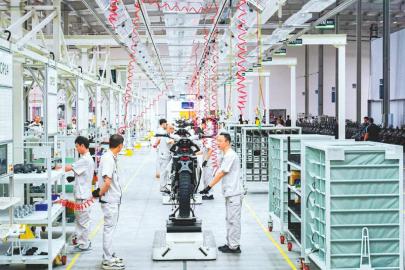
Core Insights - Keeway held its first "Morbidelli Days" global dealer conference in Ziyang, attracting over 500 dealers and partners from more than 40 countries, marking the official production launch of the Morbidelli brand in Ziyang [2][3] - Ziyang is actively expanding its international connections and promoting foreign investment and trade, aiming for stable growth in these areas [2][4] Group 1: Investment and Production - The Morbidelli brand, acquired by Keeway in April 2022, has established its global manufacturing base in Ziyang [2] - Ziyang's Keeway Southwest production base features modern and automated production facilities, impressing international dealers [3] - The Ziyang-based Oufei Egg Industry is conducting trial runs in its smart workshop, equipped to process 120,000 eggs per hour, meeting both Chinese and EU standards [3] Group 2: International Cooperation - Ziyang is fostering international cooperation through various initiatives, including hosting delegations from Costa Rica and Vietnam to explore collaborative opportunities [3][4] - The city has adopted a "trade fair as a medium + enterprises as a bridge" approach to deepen economic ties with countries involved in the Belt and Road Initiative [4] - Ziyang's foreign direct investment has ranked second in the province for two consecutive years, with a projected import-export total of over 6 billion yuan in 2024, reflecting a 21.4% year-on-year growth [4]

突破10000米
Si Chuan Ri Bao· 2025-10-15 20:31
Core Insights - The successful drilling of the China Petroleum Deep Earth Sichuan 1 well, which has surpassed a depth of 10,000 meters, marks a significant advancement in China's exploration of deep earth energy resources [1][2] - The well is the first scientific exploration well in the Sichuan Basin to reach such depths, aimed at addressing scientific blind spots and enhancing original technology for oil and gas exploration [1] Group 1: Geological and Technical Achievements - The well has penetrated 23 geological layers and reached the 5.4 billion-year-old Sinian strata, entering the previously unexplored "no man's land" of the Sichuan Basin [1] - The drilling process faces extreme conditions, including temperatures exceeding 200 degrees Celsius and pressures over 130 MPa, which traditionally were considered barriers to oil and gas accumulation [1] - Analysis of core samples from depths over 9,500 meters indicates favorable reservoir conditions, revealing significant exploration potential in the region [1] Group 2: Technological Innovations - China Petroleum Southwest Oil and Gas Field Company has mobilized engineering expertise to tackle challenges related to efficient rock breaking, drilling tool safety, and well control [2] - The company has developed over ten advanced technologies, including a 15,000-meter intelligent drilling rig and high-temperature resistant drilling fluids, enhancing its international competitiveness in oil and gas exploration [2] - The Deep Earth Sichuan 1 well has already led to two major oil and gas discoveries, expanding the resource base in the Sichuan Basin [2] Group 3: Strategic Importance - The deep earth exploration project is likened to the lunar exploration program, highlighting its significance for national technology and resource strategy [2]

墙内墙外都是产业链
Si Chuan Ri Bao· 2025-10-15 20:29
Core Viewpoint - The Sichuan Xiangyuan cylindrical lithium battery project, with a total investment of 6 billion yuan, aims to enhance the local lithium battery manufacturing capacity and is expected to significantly contribute to the regional lithium battery industry chain [2] Investment and Project Details - The project covers an area of approximately 400 acres and is being developed in two phases, with the first phase involving an investment of 2.8 billion yuan to establish 9 cylindrical battery production lines and 1 PACK production line, projected to generate an annual output value exceeding 2 billion yuan [2] - The second phase will expand with 13 additional production lines, with the total annual output value expected to surpass 5 billion yuan upon full completion [2] Construction Progress - As of October 14, the construction site is progressing rapidly, with five main buildings completed and interior renovations ongoing, aiming for production to commence by the end of the year [2] - The project has seen a significant acceleration in its timeline, with key milestones achieved within a few months, including signing, excavation, and structural completion [2] Local Industry Ecosystem - The project is strategically positioned within a growing lithium battery ecosystem in Suining, which includes upstream companies like Tianqi Lithium and Sichuan Youneng, and downstream manufacturers such as JAC Motors [2] - The local industry is characterized by a relatively weak midstream battery manufacturing segment, prompting the establishment of Sichuan Xiangyuan to fill this gap [2] Collaboration and Supply Chain - The project is expected to foster collaboration within the local lithium battery supply chain, with Tianqi Lithium and Sichuan Youneng working closely to optimize logistics and reduce costs [2] - The establishment of a circular supply chain is anticipated, with Sichuan Youneng supplying raw materials to Sichuan Xiangyuan, enhancing local production efficiency [2] Industry Growth and Scale - Suining has developed a comprehensive lithium battery industry chain, with over 50 enterprises contributing to a total industry scale of approximately 67 billion yuan, accounting for about one-quarter of the province's lithium battery industry [2] - The lithium battery sector in Suining has maintained a high growth rate of 15% in value added this year, indicating robust demand and expansion in the industry [2]


若尔盖国家公园创建任务总体完成 创建期间四川完成生态修复23.25万公顷
Si Chuan Ri Bao· 2025-10-15 06:36
Core Viewpoint - The establishment of the first batch of national parks in China marks its fourth anniversary, with significant progress made in the creation of the Ruoergai National Park, which is crucial for ecological protection in the upper reaches of the Yellow River [1] Group 1: National Park Establishment - The Ruoergai National Park candidate area is located at the intersection of Sichuan, Gansu, and Qinghai provinces, playing a strategic role in the ecological safety of the Yellow River basin [1] - The park features the world's largest and best-preserved high-altitude cold peat swamp, contributing to rich biodiversity and significant water supply (annual water storage capacity of nearly 10 billion cubic meters) [1] - The creation of the Ruoergai National Park was initiated by Sichuan in early 2020 to strengthen the ecological barrier in the upper reaches of the Yellow River [1] Group 2: Creation Process - The establishment of national parks follows a two-phase process: creation and approval, which includes selecting areas, submitting applications, conducting assessments, and obtaining expert validation [1] - In early 2022, Sichuan and Gansu jointly submitted the creation plan for Ruoergai National Park, which was later included in the national park layout in November [1] - The implementation of the "Ruoergai National Park Creation Work Promotion Plan" was initiated following the approval process [1]
省级水网先导区建设三年行动方案发布 到2027年新增供水能力12亿立方米
Si Chuan Ri Bao· 2025-10-15 06:36
Core Viewpoint - The Sichuan Provincial Water Resources Department has issued a three-year action plan aimed at enhancing water supply capacity and irrigation efficiency by 2027, with specific targets for water resource management and infrastructure development [1][2]. Group 1: Water Supply Capacity and Irrigation - The plan aims to increase water supply capacity by 1.2 billion cubic meters and expand effective irrigation area by 1.6 million acres by 2027 [1]. - The rural tap water coverage is targeted to reach 93%, and soil conservation rate is expected to improve to 80.5% [1]. Group 2: Key Focus Areas - The action plan focuses on five main areas: enhancing water resource allocation and supply security, strengthening flood control measures, improving water ecological protection, advancing smart water network engineering, and modernizing water management capabilities [1][2]. - Significant projects include the initiation of the "Yin-Da-Ji-Min" project and the construction of various irrigation districts and reservoirs, such as the Tizi Kou and Xiang Jia Ba irrigation districts [2]. Group 3: Smart Water Network Development - The plan emphasizes the integration of smart technology in water network projects, including the development of digital twin systems for major irrigation and reservoir projects [2]. - The initiative aims to enhance the intelligence of existing water infrastructure, including urban water supply systems and flood control measures [2]. Group 4: Provincial Water Network Strategy - The provincial water network strategy aims to optimize the layout, structure, and functionality of the water network, ensuring interconnectedness and coordinated management to enhance water security [3].
“第一笔启动金”“梦想试验田”“陪伴式支持”……成都出台十条措施全周期支持人才发展
Si Chuan Ri Bao· 2025-10-15 06:34
Core Viewpoint - Chengdu has introduced ten measures aimed at attracting and gathering talent to accelerate the construction of a high-level talent hub, focusing on urban strategy, industrial development, and the needs of employers [2][4]. Group 1: Talent Attraction and Support - The measures emphasize strengthening financial support for innovation and entrepreneurship, with a focus on attracting top talent and teams [3][4]. - Chengdu plans to select approximately 300 industry-leading talents and 600 skilled craftsmen annually, encouraging local universities to optimize their academic programs in line with key industrial developments [5][6]. - A comprehensive support system for innovation and entrepreneurship funding is being established, including a "seed, startup, growth" lifecycle approach [6]. Group 2: Evaluation and Performance - The city aims to evaluate talent based on contributions rather than academic credentials, with plans to support at least 300 key employers in conducting independent talent evaluations annually [5]. - There will be no less than 600 slots available for local departments to evaluate high-level talents based on their performance contributions [5]. Group 3: Resource Allocation and Services - Chengdu is creating a "dream test field" in industrial parks, providing over 20,000 square meters of free office space and at least 1,000 application scenarios each year [6]. - The city offers tailored support for entrepreneurial talents, including financial assistance and reduced housing costs for young talents relocating to Chengdu [6].
四川:两个家蚕新品种试养情况良好
Si Chuan Ri Bao· 2025-10-15 06:15
Core Viewpoint - The collaboration between Sichuan San Tai Silkworm Seed Farm and Yibin Agricultural Science Institute aims to enhance the sericulture industry through the introduction of new silkworm varieties and innovative breeding methods, which are expected to increase production and income for local farmers [1] Group 1: New Silkworm Varieties - The "Xianbai No. 1" silkworm variety shows healthy and uniform body structure, with a single cocoon yield reaching 40 kilograms and a fresh cocoon layer weight of 12.5 grams [1] - The selling price per kilogram of "Xianbai No. 1" is 5 yuan higher than conventional varieties, leading to an estimated income increase of about 12% for farmers using the same amount of mulberry leaves [1] Group 2: Innovative Breeding Methods - The "Yile No. 1" variety employs an innovative breeding model of "1-2 age feed + mulberry leaves after 3 age," which reduces labor costs while increasing cocoon yield by 5% and improving mulberry leaf utilization by 10% [1] - This method significantly enhances the resistance of silkworms during the high-temperature summer period, with an expected income increase of over 15% for silkworm farmers [1]