
Nan Fang Ri Bao Wang Luo Ban

Search documents
广东向中度以上失能老年人发放电子消费券 每人每月最高可抵扣800元
Nan Fang Ri Bao Wang Luo Ban· 2026-01-22 08:05
日前,广东省民政厅、省财政厅联合印发《广东省向中度以上失能老年人发放养老服务消费补贴项目实 施方案》。根据方案,广东将为符合条件的失能老年人发放电子消费券,每人每月最高可抵扣800元, 初步实施期限为2026年1月至12月。本次补贴政策将减轻失能老年人家庭照护负担,更好满足失能老年 人照护服务刚需。符合条件的老年人可通过"民政通"(含小程序、APP)进行申请。 老年人经评估为中度以上失能的,其评估费用可通过能力评估电子消费券予以抵扣(能力评估电子消费 券额度为100元)。中度以上失能老年人正在享受长期护理保险待遇的,对于其符合此次补贴项目范围 内的养老服务消费金额,扣除已享受的长期护理保险待遇后,个人自付部分可通过电子消费券按规定比 例予以抵扣。 本次补贴对象需同时满足两个条件:经统一评估为中度、重度、完全失能等级的老年人(下称"中度以 上失能老年人"),且购买居家、社区、机构养老服务的服务地址在广东省内。正在享受特困人员供养 救助待遇、经济困难失能老年人集中照护服务补助、居家和社区基本养老服务提升行动项目服务的老年 人不纳入本次补贴对象范围。 补贴项目覆盖居家、社区、机构养老服务。居家、社区养老服务主要包括 ...
广东万亩山苍子撬动超10亿元产值
Nan Fang Ri Bao Wang Luo Ban· 2026-01-22 08:05
山苍子还富含生态价值。它根系发达,固土保水能力强,在酸性红壤、黄壤甚至肥力掉线的荒地里都能 生长,且较耐旱,是荒山复绿、矿山修复、水土流失治理的"先锋树种"。 1月,清远连山壮族瑶族自治县的山坡上,山苍子枝头悄悄冒出细小花苞。待到春天,这里将是一片金 黄色花海。近年来,连山将山苍子作为林下经济突破点,力争到2027年前种植面积破万亩、产值破亿 元,打造成富民新产业。 山苍子,也叫木姜子、山鸡椒,是我国特有的木本油料资源,被誉为"香料之王"。它个头不大,但全身 都是宝:根可以吃,是云南米线、贵州酸汤鱼等美食里的独特调味料;花、叶子、果皮富含柠檬醛,可 以生产山苍子油、特种香精。 山苍子在我国分布广泛,种植总面积占全球的90%,精油市场份额约占全球的70%。而在广东,山苍子 被纳入绿美广东生态建设植绿增绿的树种之一,全省种植面积约1万亩,撬动超10亿元产值的产业发 展,成为带动农民致富的"黄金果"。 纳入绿美广东植绿增绿树种 走进位于连山的山苍子深加工车间,技术人员正从果皮中提取成分,用于制作精油和日化产品。"我们 不仅要卖原材料,还要卖精油、药膳包、文创产品,提升山苍子的产业附加值。"清远壮瑶宝生物科技 有限公 ...
广东出台14条政策措施 推动人工智能赋能交通运输高质量发展 支持地市有序扩大高级别自动驾驶应用区域
Nan Fang Ri Bao Wang Luo Ban· 2026-01-22 01:39
Core Insights - The article discusses the implementation of the "Measures" by the Guangdong provincial government to accelerate the integration of artificial intelligence (AI) in transportation, aiming to enhance the quality, efficiency, and transformative power of the sector [1] Group 1: Support Framework - The "Measures" focus on three core areas: data supply, computational power and algorithm support, and key technology breakthroughs [1] - In terms of data supply, Guangdong aims to lead with the construction of a digital foundation for the transportation industry, enhancing data governance and creating a high-quality data resource directory [1] - For computational power, the province will utilize data center clusters and deploy edge computing nodes in critical areas to create a collaborative system of centralized and real-time computing [1] - Key technology breakthroughs will focus on developing AI models and agents, particularly in real-time perception, multi-modal data integration, intelligent control, and strategy optimization [1] Group 2: Innovative Application Scenarios - The "Measures" outline eight innovative application scenarios to transition AI technology from research to practical use [2] - These include advancing smart connected vehicle trials, enhancing smart road construction, and supporting the integration of rail transport systems [2] - Other scenarios involve improving smart waterway efficiency, upgrading smart port operations, enhancing civil aviation safety, expanding low-altitude intelligent applications, and developing a comprehensive smart transportation service system [2] Group 3: Operational Mechanisms - The "Measures" establish three operational mechanisms to ensure effective implementation [3] - A dedicated task force will be formed by the provincial transportation department to oversee the execution of these initiatives [3] - Collaborative innovation will be promoted through regular innovation competitions and industry showcases [3] - The province will also create a platform for communication between application scenario enterprises and technology innovators, while fostering talent development in AI and transportation [3]
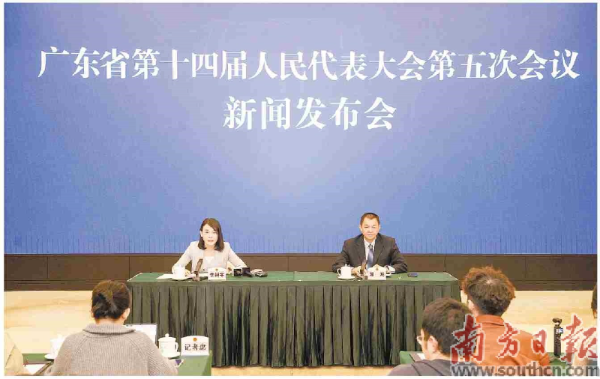
省十四届人大五次会议26日召开 会期3天半 12名基层代表将参加“代表通道”集中采访活动
Nan Fang Ri Bao Wang Luo Ban· 2026-01-21 08:18
1月20日,省十四届人大五次会议新闻发布会召开。图片来源:南方日报 商务厅等部门主要负责同志出席,回答记者提问。第二场是地市专场记者会,时间为1月28日上午,邀 请广州、深圳、珠海、东莞、惠州市政府主要负责同志出席,回答记者提问。 除驻粤部队代表团外,各代表团还将至少安排1场全体会议或分组会议向媒体开放,代表团开放团组会 议,境内外记者均可旁听,会议结束后,将组织集中采访。 大会议程草案共有八项,分别是:听取和审议广东省人民政府工作报告;审查和批准广东省国民经济和 社会发展第十五个五年规划纲要;审查和批准广东省2025年国民经济和社会发展计划执行情况与2026年 计划草案的报告及2026年国民经济和社会发展计划;审查广东省2025年预算执行情况和2026年预算草案 的报告及2026年预算草案,批准广东省2025年预算执行情况和2026年预算草案的报告及2026年省级预 算;听取和审议广东省人民代表大会常务委员会工作报告;听取和审议广东省高级人民法院工作报告; 听取和审议广东省人民检察院工作报告;其他事项。会议议程草案将经过1月25日上午各代表团会议审 议,提请当天下午召开大会预备会议表决通过。 在现场,大会筹 ...

3架直升机入列广州南沙 广东低空产业再添“尖兵”
Nan Fang Ri Bao Wang Luo Ban· 2026-01-21 08:16
南沙将融资租赁作为重点特色金融产业深耕,历经数年发展,航空租赁产业已经从整机租赁业务拓展至 直升机、模拟机、发动机及航材租赁,资产价值突破千亿元,逐步构建航空租赁全产业生态。 1月20日,2架H175、1架H160直升机由世界现役最大的军用运输机之一"An-124"运抵广州白云机场。这 3架直升机由天合国际融资租赁有限公司、南航国际融资租赁有限公司相继引进,同日入列南沙自贸片 区。 为全面优化南沙融资租赁营商环境,南沙开发区国资局联同区属国企科金控股集团组建由国企主导、专 注于为融资租赁企业提供全链条商事秘书服务的专业团队,以"全程代办一条龙"的深度服务,为企业设 立特殊目的公司(SPV)、海关备案、税务筹划、工商登记等事项保驾护航。 下一步,南沙将持续为驱动航空租赁产业升级注入强劲动力,构建一个更具韧性与活力的飞机融资租赁 产业生态体系,将南沙打造成为具有国际竞争力的租赁产业高地。 ...
清远连南入选全国学前教育普及普惠县
Nan Fang Ri Bao Wang Luo Ban· 2026-01-21 08:16
Core Viewpoint - The Ministry of Education has announced the list of counties (cities, districts) that have achieved national recognition for the popularization and accessibility of preschool education by 2025, with 427 counties recognized, including Lian Nan Yao Autonomous County, which is the first in Guangdong Province to receive this honor as a minority autonomous county [1] Group 1: Recognition and Achievements - Lian Nan Yao Autonomous County has been recognized as a model for high-quality preschool education development in ethnic regions, referred to as the "Lian Nan Speed" [1] - The county has established an innovative "2+7+2+5" model for preschool education, consisting of 2 county-level kindergartens, 7 township central kindergartens, 2 rural public kindergartens, and 5 private kindergartens [1] Group 2: Resource Supply and Investment - The coverage rate of inclusive kindergartens in the county is 100%, with 75.08% of children in public kindergartens, and the gross enrollment rate for the first three years of preschool education is 101.81% [1] - Over the past five years, approximately 149 million yuan has been invested, adding 1,295 quality preschool places, and the per-student public funding standard has been raised to 600 yuan per student per year, marking a historical high for preschool education investment in Lian Nan [1] - The certification rate for kindergarten principals and teachers in the county has reached 100% [1] Group 3: Quality of Education - Lian Nan emphasizes scientific standards and distinctive development in preschool education, establishing a "1+1+N" urban-rural preschool education community model, with a standard class size compliance rate of 91.56% [1]
藏粤直流工程广东段线路开工建设 总投资约532亿元 今年一季度计划完成投资超10亿元
Nan Fang Ri Bao Wang Luo Ban· 2026-01-21 08:16
Group 1 - The core viewpoint of the article highlights the commencement of the construction phase of the Zang-Yue DC project, which is a significant clean power transmission project in China, marking a major step in infrastructure investment [1][2] - The Zang-Yue DC project is part of China's 14th Five-Year Plan and is the world's first four-terminal ultra-high voltage flexible DC project, with a transmission capacity of 10 million kilowatts [1] - The project will enable the southeastern clean energy base in Tibet to deliver over 43 billion kilowatt-hours of green electricity annually to the Guangdong-Hong Kong-Macao Greater Bay Area, which is equivalent to half of the annual output of the Three Gorges Dam [1] Group 2 - The total investment for the Zang-Yue DC project is approximately 53.2 billion yuan, with plans to complete over 1 billion yuan in investments by the first quarter of 2026 [1] - The project is expected to create over 100,000 direct jobs during its peak construction phase, significantly contributing to local economic development [1] - The construction will adhere to the principles of ecological priority and green construction, aiming for innovative breakthroughs in various technical fields [2]
“广货行天下”活动现场109个展台直播 智能穿戴等2000多种产品“吸睛”
Nan Fang Ri Bao Wang Luo Ban· 2026-01-21 08:16
Group 1 - The flagship product is priced at 5299 yuan, with a promotional price of 4599 yuan after subsidies, which is 200 yuan cheaper than last year's Double 11 event [1] - The "Guanghuo Hang Tianxia" Spring Action mobile promotion event features 109 exhibition booths and showcases 36 AI smartphones from leading companies like Huawei, Vivo, OPPO, Honor, ZTE, and TCL [1] - The newly released Honor Magic8 Pro Air smartphone is highlighted for its lightweight design, measuring 6.1mm in thickness and weighing 155g, with a 6.31-inch screen [1] Group 2 - The promotion integrates online and offline channels, collaborating with platforms like JD.com, Kuaishou, and Douyin to enhance brand exposure and market influence for Guangdong's mobile and consumer electronics [2] - The event aims to drive sales momentum and brand visibility through a combination of offline traffic generation and online conversion strategies [2] - Guangdong plans to strengthen AI technology and new materials to upgrade the mobile industry and develop high-quality action plans for AI terminal growth [2]
“十四五”以来广东整治修复海岸线超200公里 新营造红树林面积居全国首位
Nan Fang Ri Bao Wang Luo Ban· 2026-01-21 08:16
Core Viewpoint - Guangdong Province is accelerating the construction of a comprehensive protection and governance framework for marine ecology, aiming for integrated land-sea development and protection during the 14th Five-Year Plan period [1][2]. Group 1: Marine Ecological Protection Achievements - Over 200 kilometers of coastline have been restored, with more than 40 kilometers of new ecological restoration coastline added, exceeding national targets for maintaining natural coastline [1][2]. - The area of newly created mangroves ranks first in the country, with over 4,900 hectares of new mangroves and more than 2,600 hectares of restored mangroves, surpassing the 2025 target of 1,500 hectares [3]. - The proportion of excellent water quality in coastal waters is expected to reach 91.2% by 2025, with significant improvements in nearshore water quality over the past five years [1][3]. Group 2: Regulatory Framework and Funding - Guangdong has established a marine ecological protection red line covering 16,600 square kilometers, accounting for 25.62% of the province's marine area, and implemented detailed management of coastline protection [2]. - The province has received over 3.3 billion yuan in central and provincial funding for marine ecological restoration projects, with 33 projects initiated [2]. Group 3: Pollution Control and Water Quality Improvement - The province has completed a comprehensive survey of over 9,900 river mouth pollution outlets, achieving a 100% remediation rate in six cities including Guangzhou and Shenzhen [3]. - By 2025, the total nitrogen concentration in rivers entering the sea is expected to show a negative growth compared to 2020 levels, with 73.9% of the water quality in the Pearl River Estuary meeting excellent standards [3]. Group 4: Marine Ranching and Aquaculture Development - Guangdong is promoting the construction of modern marine ranches, with over 70,000 acres of aquaculture facilities upgraded and traditional net cages being transformed [4]. - The province has built 8,000 gravity-type deep-water cages and 28 truss-type cages, facilitating the development of deep-sea aquaculture [4]. Group 5: Green and Low-Carbon Shipping Initiatives - The Guangdong Maritime Bureau has implemented a monitoring platform for ship water pollutants, conducting over 13,510 inspections and reducing illegal discharges by 40% compared to the previous five years [5]. - Support has been provided for the construction or retrofitting of 228 liquefied natural gas-powered vessels during the 14th Five-Year Plan period [5]. Group 6: Innovative Carbon Trading Projects - Guangdong has launched several pioneering carbon trading projects, including the first "blue carbon" project in 2021, generating approximately 388,000 yuan from the sale of carbon credits [6][7]. - In 2023, Shenzhen completed the first carbon credit transaction for mangrove protection, achieving a record price of 485 yuan per ton [7]. - The province has also initiated public subscription models for carbon credits, expanding the scope of blue carbon trading [7].
广东推动自然保护地全方位智慧监管
Nan Fang Ri Bao Wang Luo Ban· 2026-01-20 10:00
Group 1 - During the 14th Five-Year Plan period, Guangdong focuses on creating national parks to enhance the quality of natural protected areas, transitioning from "quantity coverage" to "quality improvement" [1] - Guangdong has established a comprehensive digital and refined management system for natural protected areas, with 376 biological resource monitoring plots and 1,192 kilometers of sample lines constructed, along with the addition of 3,006 infrared cameras [1] - The smart monitoring system in the Nanling National Park candidate area has integrated seamlessly with the national forestry and grassland bureau's perception system, uploading nearly 590,000 ecological factor data points and over 350,000 wildlife image data in real-time [1] Group 2 - Guangdong has established 124 suburban and mountain parks, covering all 21 prefecture-level cities, creating a diverse and complementary green space network [2] - The Nanling National Park is promoting pilot construction in the Luokeng area, leading to a nearly threefold increase in visitor numbers and over double the output value in cultural tourism and ecological agriculture [2] - Utilizing the Gaode Map technology platform, Guangdong is developing a series of cultural tourism maps to enhance digital accessibility for green and beautiful protected areas [2]