
Jin Rong Shi Bao

Search documents
近三年首次正增长!2025年银行网点数量有看点
Jin Rong Shi Bao· 2026-01-08 13:43
2025年,银行网点变革颇具看点。 单从数量上看,根据国家金融监督管理总局数据,2025年,国内商业银行累计关停线下网点约7871家。 与此同时,全年新设商业银行线下网点数量达8494家。也就是说,虽然关停网点数量巨大,但却实现净 增加623家,近三年来首次正增长。 "网点出现净增长的现象,其深层原因在于银行业正经历从'规模扩张'到'结构优化'的战略转型。这也并 非简单的数量回升,而是结构性重构。"苏商银行特约研究员薛洪言在接受《金融时报》记者采访时表 示。 "一退一进"之间,银行网点并未"消失" 2025年全年关停网点7871家,是什么概念? 可以从数据对比中窥见一斑。2024年,商业银行线下网点关停2483家,2023年的数据为2649家。这意味 着,2025年关停网点总数超过前两年数量的总和。 "银行新设网点通常重点布局县域、社区与养老、政务等场景,推动网点向轻型化、智能化、功能复合 型转型。"中国邮政储蓄银行研究员娄飞鹏在接受《金融时报》记者采访时表示。 记者大致梳理关停网点发现,从银行类型角度看,农商行分支机构退出数量最多,约5400家;国有大型 银行退出900余家;城商行与股份制银行则相对较少。 ...
全球“大模型第一股”上市!听听天使投资人怎么说
Jin Rong Shi Bao· 2026-01-08 13:04
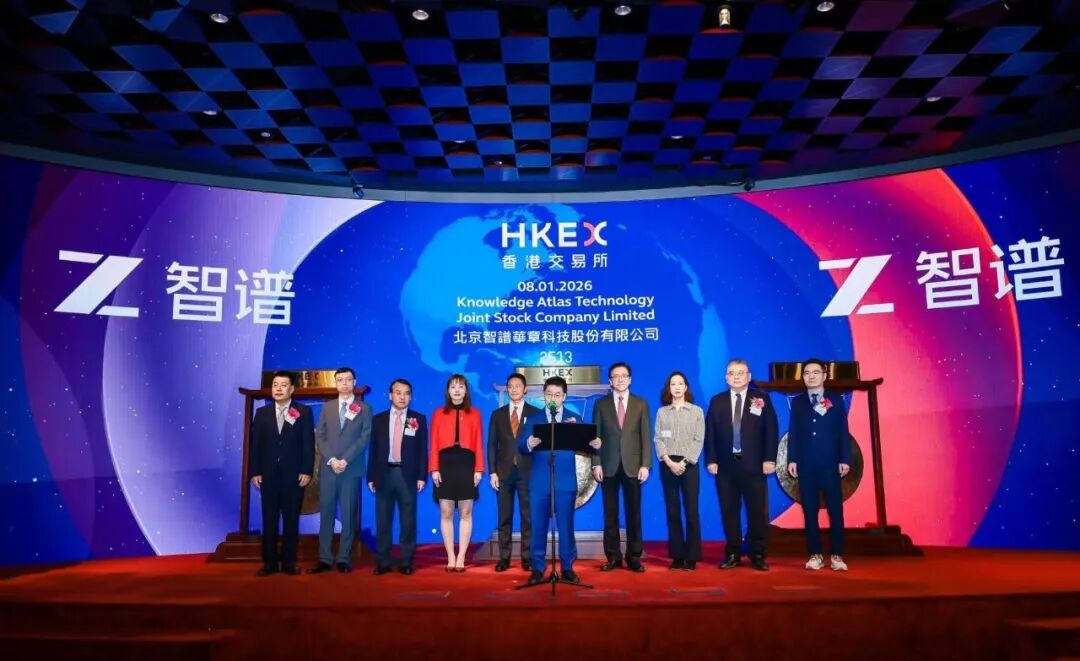
Core Viewpoint - Beijing Zhiyu Huazhang Technology Co., Ltd. (Zhiyu) has officially listed on the Hong Kong Stock Exchange, marking a significant milestone as the world's first publicly traded company focused on large language models, with an initial share price of HKD 116.20 [1][11]. Investment Background - Zhiyu received early investment from Zhongke Chuangxing, which recognized the potential of the AI team even before the company was established, investing CNY 40 million during its angel round [1][4]. - The investment was made during a challenging period for the AI sector, with Zhongke Chuangxing's average investment typically around CNY 10 million, highlighting the confidence in Zhiyu's long-term potential [5][6]. Growth and Development - Zhiyu has shown rapid growth, with revenue increasing from CNY 57.4 million in 2022 to CNY 312.4 million in 2024, achieving a compound annual growth rate of 130% [11]. - The company has developed a series of advanced models, including GLM-10B and GLM-130B, and has shifted its focus towards intelligent agents since 2025 [7][8]. Market Position and Strategy - As of 2024, Zhiyu holds the largest market share among independent general-purpose large model developers in China, with a market share of 6.6% [11]. - The company has adopted an open-source strategy, empowering over 12,000 enterprise clients and 45 million developers globally [9]. Future Outlook - The listing of Zhiyu is seen as a new beginning, indicating a shift in China's hard technology investment landscape from academic research to capital market engagement [12]. - The AI industry is transitioning into a new phase of commercialization, with significant opportunities for innovation in AI software and hardware emerging from the advancements in large model capabilities [13].

这几家中小银行宣布:调整存款利率,有升有降
Jin Rong Shi Bao· 2026-01-08 12:37
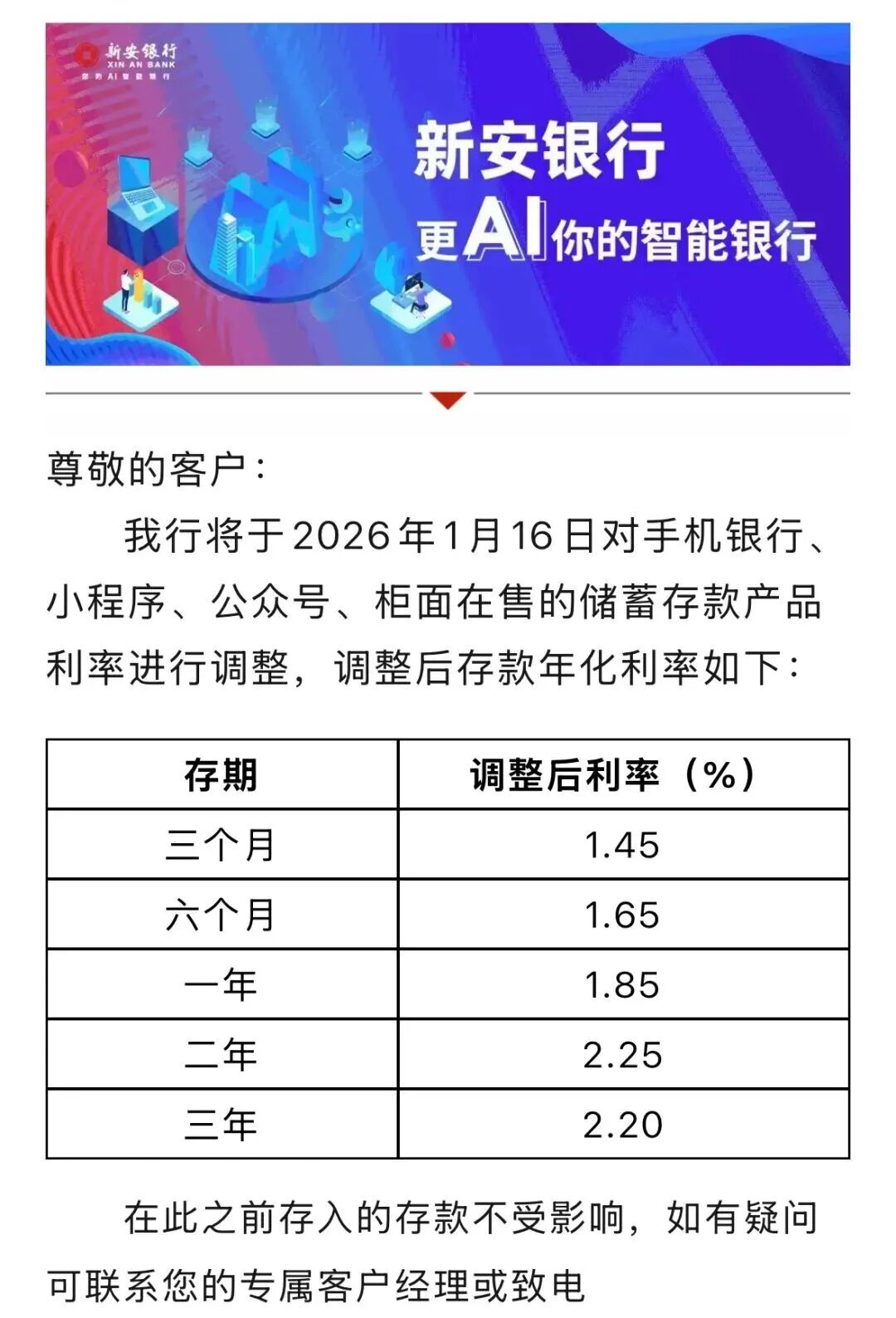
新年伊始,银行存款利率调整大幕再度拉开。 《金融时报》记者注意到,1月以来,已有安徽新安银行、辽宁振兴银行、山西浑源农商行等多家中小银行密集发布存款利率调整的公告。其中,多数银 行延续了降息的趋势,也有少数区域中小银行有针对性上调部分定期存款利率。 从降息阵营的具体动向来看,多家中小银行的调整呈现出"全期限覆盖、差异化降幅"的特征,民营银行与村镇银行成为本次调整的主力。 在民营银行中,新安银行于2025年12月26日在官方微信公众号发布公告称,将于1月16日起下调储蓄存款产品利率。其中,该行二年期定期存款利率从 2.35%降至2.25%,降幅为10个基点。 | 存期 | 调整后利率 (%) | | --- | --- | | 三个月 | 1.45 | | 六个月 | 1.65 | | 一年 | 1.85 | | 二年 | 2.25 | | 三年 | 2.20 | 1月3日,辽宁振兴银行发布了《关于调整人民币存款利率的公告》,自1月4日起,该行整存整取定期存款二年期、三年期利率均调整为1.80%,五年期存 款利率调整为1.70%。 经另一家民营银行营销人员证实,自1月5日起,该行全期限定期存款利率均下调20个基 ...
数字人民币App上线新服务!这些行为都能挣钱了!
Jin Rong Shi Bao· 2026-01-08 08:56
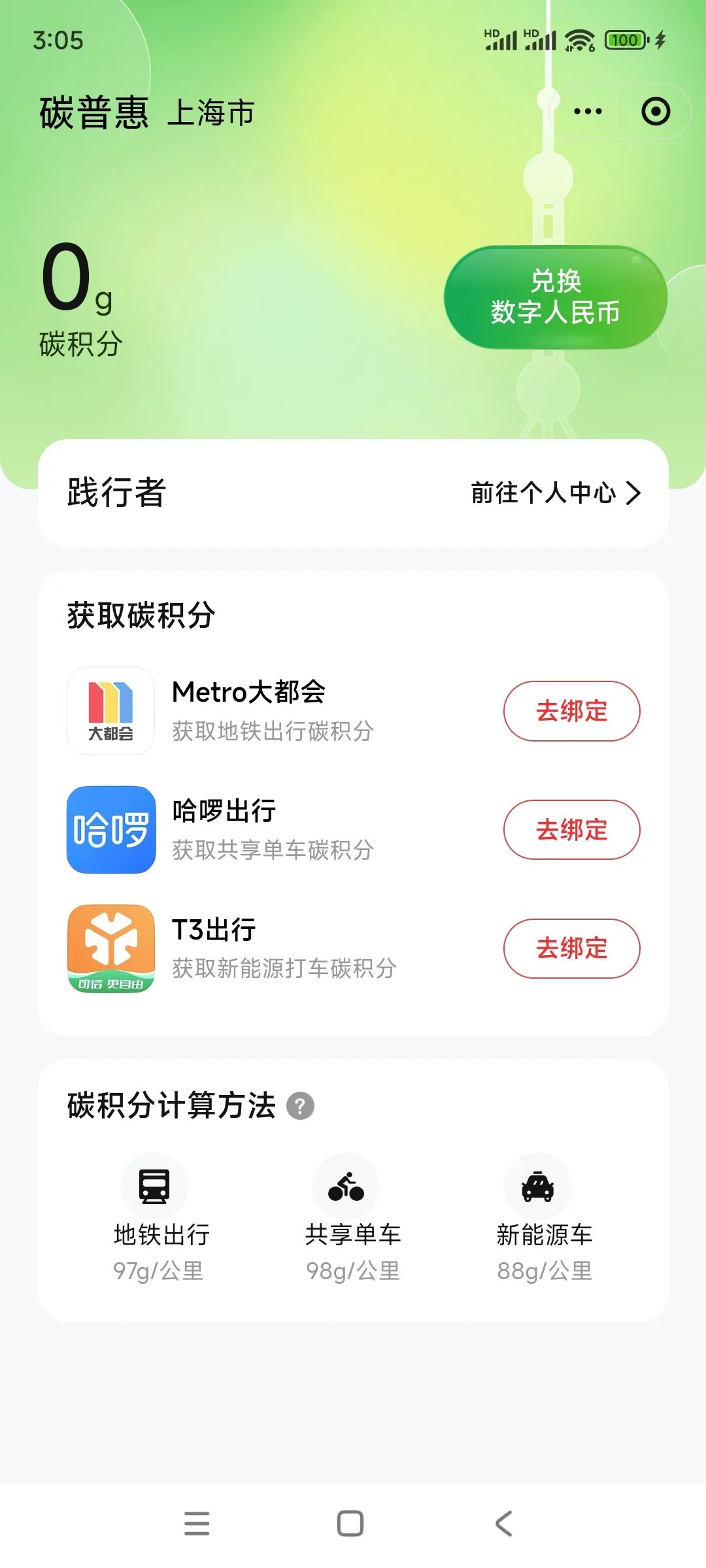
骑单车、坐地铁,还能赚钱? 《金融时报》记者了解到,为丰富数字人民币在"绿色金融"场景的运用,数字人民币运营管理中心协调并支持业务运营机构构建碳普惠领域的创新应用场 景,在数字人民币App内推出"碳普惠"小程序服务并率先在上海地区上线。用户开通该服务后,日常绿色低碳行为产生的碳积分将自动归集至"碳普惠"账 户,并可以兑换数字人民币。 所谓"碳普惠",简单来说就是将个人、企业的低碳行为量化为可兑换、可流通的"碳资产",通过激励机制引导全社会参与节能减排。作为应对气候变化 的"全民行动方案",它早已在各地展开多元探索。 而本次数字人民币"碳普惠"服务,也是鼓励公众践行低碳行为的一项服务。简单来说——你做的每一件环保小事,比如骑共享单车、乘坐地铁公交,都能 被量化成"碳积分"。这些碳积分不仅可以记录你的绿色足迹,还能兑换为实实在在的数字人民币。 哪些低碳行为能被计入? 《金融时报》记者了解到,"碳普惠"小程序首批接入Metro大都会(上海地铁)、哈啰出行和T3出行三大平台,只要你在数字人民币App内登录了"碳普 惠"小程序,并关联上述平台的账号,以后你使用公共交通或共享出行服务时,系统会自动记录你的低碳行为,并将对 ...

境内规模最大ETF,官宣更名!
Jin Rong Shi Bao· 2026-01-08 07:44
Core Viewpoint - The recent name change of the Huatai-PB CSI 300 ETF marks the first rebranding in over 13 years, reflecting a response to regulatory requirements aimed at enhancing market transparency and investor recognition [2][4]. Group 1: Fund Name Change - The Huatai-PB CSI 300 ETF has changed its name to include the fund manager's name, becoming "Huatai-PB CSI 300 ETF" from "CSI 300 ETF" [2][4]. - As of January 7, the latest scale of the Huatai-PB CSI 300 ETF is 436.6 billion yuan, making it the largest ETF product in the domestic market [2]. Group 2: Regulatory Compliance - The name change aligns with the revised fund business guidelines issued by the Shanghai and Shenzhen Stock Exchanges, which require all existing ETFs to complete name standardization by March 31, 2026 [4]. - This initiative aims to reduce investor confusion caused by similar product names, as there are currently 25 ETFs tracking the CSI 300 index [4]. Group 3: Industry Implications - The move towards standardized naming is seen as a significant step towards the normalization and transparency of the ETF market, enhancing investor protection and reducing operational risks [4][5]. - The ETF market in China has surpassed 6 trillion yuan, indicating a shift from a focus on scale to a focus on quality, with standardized naming reflecting a commitment to high-quality development [5].

他们是怎么用奶牛母猪,融资几百万的?
Jin Rong Shi Bao· 2026-01-08 07:00
Core Insights - The exploration of using livestock, such as cows and sows, as lease assets for financing is gaining traction, with companies like China Railway Construction Capital Holdings Group launching "biological leasing" services to address valuation and regulatory challenges [1][3] - The practice of including biological assets in financing leases is not new, with historical precedents dating back to 2015, indicating a growing acceptance of livestock as eligible lease assets [2] - The promotion of this model is supported by government policies aimed at expanding the scope of lease assets to include biological assets, which has led to various financing projects across the agricultural sector [3][4] Group 1 - The recent launch of "biological leasing" by China Railway Construction Capital involves using breeding cows as lease assets to provide financing solutions for enterprises [1] - In August 2025, Beijing Agricultural Investment Leasing Company utilized "breeding sows" as lease assets for a 2 million yuan sale-leaseback project, showcasing the potential of biological asset financing [1] - Industry experts believe that financing lease innovations for biological assets open new channels for the development of agriculture, forestry, and animal husbandry [1] Group 2 - The inclusion of biological assets in financing leases has been established since 2015, with a notable case involving a financing lease company and 200 cows, marking the beginning of this trend [2] - Not all biological assets qualify as lease assets; only productive biological assets with sustainable usage characteristics are deemed eligible, while public and consumable biological assets are excluded [2] - Cows are recognized as productive biological assets, making them suitable for leasing arrangements [2] Group 3 - Continuous policy support has been crucial for the promotion of biological asset leasing, with the State Council issuing guidelines in 2015 to explore the inclusion of biological assets in leasing [3] - In December 2025, a joint notice from the People's Bank of China and other regulatory bodies encouraged financial leasing companies to consider modern agricultural facilities and livestock as eligible lease assets [3] - The financing leasing exploration is also expanding to include well-known fruits and economic crops, further broadening the scope of agricultural financing [3] Group 4 - The release of policy benefits has led to successful case implementations, such as a 110 million yuan financing lease project for economic forest trees in Jiangxi [4] - Silver Sea Leasing has replicated its biological asset financing model across various agricultural sectors, supporting projects like ecological tea gardens and orange orchards [4] - Utilizing productive biological assets as lease objects aligns with the core attributes of financing leasing, providing essential financial support to small and medium-sized agricultural enterprises and contributing to rural revitalization [4]
“一煤独大”怎么解?
Jin Rong Shi Bao· 2026-01-08 05:18
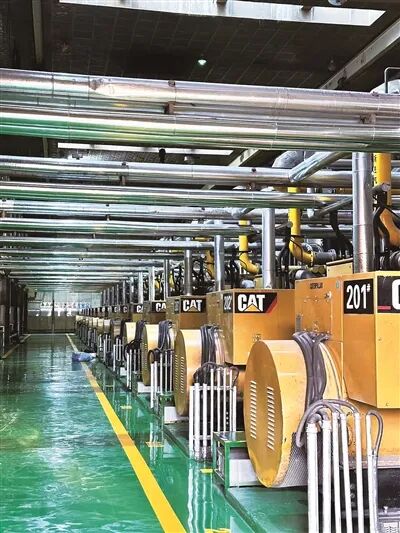
Group 1 - The core viewpoint of the articles highlights the transformation of the coal industry in Shanxi, particularly focusing on the development of coalbed methane (CBM) and its integration into green finance initiatives to support low-carbon transitions [1][4][8] - Shanxi's Jinchen city has seen a significant increase in coalbed methane utilization, with production rising from 3.59 billion cubic meters to 5.48 billion cubic meters, achieving a city gasification rate of over 95% [4][8] - The financial support from institutions like the Industrial and Commercial Bank of China has been crucial, providing tailored financing solutions, including a total of 100 million yuan in working capital loans since 2025 [7][8] Group 2 - The technology employed by Qinshi River Gas Power Co., which includes a self-developed waste heat recovery power generation technology, has improved energy conversion efficiency to over 80% and reduced nitrogen oxide emissions to internationally advanced levels [3][4] - The financial ecosystem in Jinchen has been enhanced through the establishment of a communication mechanism between financial institutions and local government, leading to a comprehensive support directory for green projects [8][25] - The shift towards intelligent mining in Shanxi, with a focus on reducing labor and increasing efficiency, has been supported by financial institutions, which have recognized the need for substantial investment in technology and infrastructure [9][10][11] Group 3 - The Lu'an Coal-based Clean Energy Company is leading the charge in high-end coal chemical product development, with a projected total output value of 71.5 billion yuan in 2024, making it the top in the province [20][22] - The company has developed 54 types of coal-based synthetic products, filling domestic gaps and focusing on import substitution, thus enhancing its market competitiveness [21][22] - Financial institutions have provided long-term, stable credit support, including a 1 billion yuan project loan for the Lu'an 180 project, which is crucial for equipment procurement and construction [22][24] Group 4 - The articles emphasize the importance of a systematic financial support framework that aligns with the industrial transformation needs, moving from traditional coal reliance to innovative, high-value product development [24][25] - The integration of technology and finance is seen as essential for the successful transition of resource-based regions, enabling the extension of value chains and the broadening of application scenarios [25]
红票子”托举起“黑珍珠
Jin Rong Shi Bao· 2026-01-08 03:48
Core Viewpoint - The article highlights the unique cash transaction ecosystem in the Hongyuan pastoral area, where cash remains the preferred payment method for over 70% of herders due to the region's specific financial and geographical conditions [2][3]. Group 1: Cash Transaction Preferences - More than 70% of herders in the Hongyuan pastoral area prefer cash transactions for yak trading, as it aligns with their production and lifestyle needs [2]. - The vast area and intermittent network coverage in remote pastures make digital payments unreliable, necessitating immediate cash transactions for large yak trades [2]. - The traditional habit of cash transactions among herders reinforces the importance of cash as a payment medium in yak trading [2]. Group 2: Financial Services Innovations - Local banks have implemented a "fixed point + mobile service" dual financial service system, utilizing 12 mobile banking vehicles that travel over 20,000 kilometers annually to serve over 70% of the pastoral area [3]. - These mobile banking vehicles are equipped with satellite communication devices, enabling core cash services even in areas without network coverage, effectively addressing the "last mile" of cash service delivery [3]. - The banks have developed a cash demand forecasting model to optimize cash distribution based on yak growth cycles and market prices, resulting in a 15% reduction in operational costs compared to traditional methods [3]. Group 3: Cash Security Measures - The introduction of intelligent cash handling equipment has achieved a 100% accuracy rate in counterfeit detection, ensuring the safety of herders' finances [4]. - Banks have conducted over 60 bilingual anti-counterfeiting education sessions to help herders identify counterfeit currency, enhancing the cash security network [4]. Group 4: Regional Cash Supply Enhancements - The establishment of a cash custody warehouse in Hongyuan has improved cash supply efficiency for surrounding areas, significantly reducing travel times for cash withdrawals [5][6]. - Since the establishment of the custody warehouse, a net cash injection of 4.23 billion yuan has been recorded, leading to increased satisfaction among pastoral communities regarding financial services [6]. - The efficient cash services in the Aba highland pastoral area complement digital payments, enhancing the inclusivity and accessibility of payment services [6].
当人工智能遇上健康管理 健康险风险减量能否破局
Jin Rong Shi Bao· 2026-01-08 03:42
Core Insights - The insurance industry is transitioning from traditional financial compensation models to a customer-centric service model, focusing on risk reduction through proactive health management [1][4] - The establishment of the Ping An Health Management Company marks a significant step in integrating health management services with health insurance, aiming to enhance customer engagement and reduce claims [1][2] Group 1: Health Management Integration - Ping An Health has reported a service revenue of 159 million yuan in the first half of 2025, providing health management services to over 4.8 million customers, reflecting a year-on-year growth of 21.4% [2] - Other companies, such as China Pacific Insurance and China Ping An, have also established health management subsidiaries to enhance their competitive edge in the health insurance market [3][4] - Health management services are becoming a standard feature in health insurance products, even in basic insurance offerings, which now include services like health consultations and chronic disease follow-ups [2][3] Group 2: Shift from Passive to Active Management - The health insurance sector is undergoing a transformation from passive risk compensation to active health management, aiming to lower claim rates and improve customer retention [4][5] - The importance of health management is recognized as a core component for product competitiveness and sustainable industry development, especially in the context of rising health demands and clearer basic insurance roles [4][5] Group 3: Challenges and Opportunities - Despite the recognized importance of health management, low user awareness and service utilization rates remain significant challenges for the industry [5] - The Chinese government has issued guidelines to promote the integration of health insurance and health management, emphasizing the need for preventive measures and improved public understanding of health insurance [6][7] - Artificial intelligence (AI) is seen as a potential solution to enhance service delivery and efficiency in health management, with applications in personalized health interventions and dynamic assessments [6][7]


外资独资保险资管公司接连落地
Jin Rong Shi Bao· 2026-01-08 03:42
Core Insights - The approval of AIA Asset Management and Holland Insurance Asset Management marks a significant step in China's financial sector's opening up, reflecting international institutions' confidence in the Chinese market [1][2] Group 1: Company Overview - AIA Asset Management has a registered capital of 100 million yuan, fully subscribed by AIA Life Insurance, with Zhang Xiaoyu as the chairman [1] - Holland Insurance Asset Management has a registered capital of 250 million yuan, fully funded by the Dutch Global Life Insurance Group, with Zhang Mengjiao as the chairman [1] - Prudential Insurance Asset Management, the first foreign-funded insurance asset management company in China, was established in September 2025 with a registered capital of 20 million USD, fully funded by Prudential Financial [1][2] Group 2: Industry Context - The establishment of these foreign-funded asset management companies is driven by confidence in China's long-term economic development and aligns with the country's financial market opening policies [2][4] - The insurance asset management industry in China has shown robust growth, with total managed funds reaching 33.30 trillion yuan by the end of 2024, a year-on-year increase of 10.60% [3] - The entry of foreign institutions is expected to enhance product innovation, risk management, and technological empowerment within the industry, promoting higher quality and sustainable development [4]