Qian Zhan Wang

Search documents
大家不看电视了吗?中国电视10月出货量创今年最大跌幅:暴跌超25%【附智能电视行业市场分析】
Qian Zhan Wang· 2025-11-12 08:33
Group 1 - The core viewpoint of the article highlights a significant decline in China's television market, with a 16% year-on-year drop in brand shipments in October 2025, marking the largest monthly decline of the year [2] - The retail sector is experiencing a severe downturn, with online retail volumes dropping by 25.2% and retail revenues decreasing by 18.3% [2] - This marks the fourth consecutive month of substantial year-on-year declines in the television market since July 2025, despite October being a peak consumption period due to the National Day holiday and "Double Eleven" shopping festival [2] Group 2 - Runto Technology predicts that the television shipment volume may decline by over 15% in Q4 2025, with retail declines likely exceeding 20%, leading to an annual shipment total of around 33 million units [2] - The smart television segment has evolved into a comprehensive home smart center, integrating entertainment, smart interaction, IoT control, and computing services [2][3] - The penetration rate of smart televisions globally has surged from 27% in 2012 to over 90% by 2024, indicating a significant market transformation [3] Group 3 - In China, the number of households activating smart televisions has shown stable growth, reaching 332 million in the first half of 2024, indicating a robust application market despite pressures on shipment volumes [4] - The domestic demand potential for television products is substantial, with a comparison made to the U.S. market, suggesting that China's maximum annual sales could reach 100 million units due to its larger population [5] - There is a growing opportunity for Chinese television manufacturers in global markets, particularly in regions like Africa and India, where demand for television products remains unmet [8]


【最全】2025年个人冰雪装备行业上市公司全方位对比(附业务布局汇总、业绩对比、区域布局、业务规划等)
Qian Zhan Wang· 2025-11-12 06:08
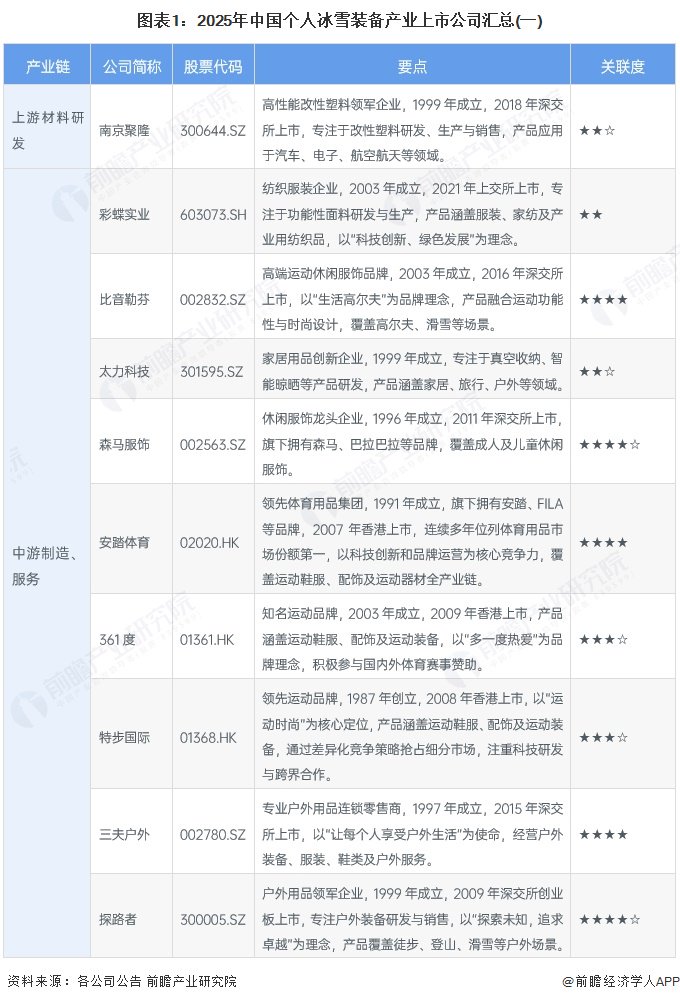
Core Insights - The article discusses the landscape of the personal snow equipment industry in China, highlighting the limited number of listed companies and their focus on outdoor sports and ice facility construction [1][5]. Company Overview - Major listed companies in the personal snow equipment sector include Sanfu Outdoor, Ternua, Anta, Inpace, Shuhua Sports, Xinlong Health, and Huali Technology, among others [1]. - The industry is divided into two main categories: companies focusing on outdoor sports equipment (e.g., Anta, Ternua) and those specializing in ice facility construction (e.g., Inpace) [1]. Financial Performance - Anta Sports leads in revenue with 42.2 billion yuan and a gross margin of 63.4%, attributed to its multi-brand strategy and strong profitability in snow-related business [3][4]. - Bi Yin Le Fen achieves the highest gross margin at 75.9% due to its high-end positioning, while Sanfu Outdoor maintains a gross margin of 58.6% from its specialized snow equipment [3][4]. - Other companies like Ternua and Semir have moderate gross margins, with Inpace and Shuhua Sports showing average margins [3]. Revenue and Profitability Metrics - In the first half of 2025, Anta Sports reported a revenue of 42.27 billion yuan, while other companies like 361 Degrees and Tebu International reported revenues of 6.26 billion yuan and 7.5 billion yuan, respectively [4]. - The earnings per share (EPS) varied significantly, with Anta at 2.77 yuan and Ternua at 0.38 yuan, while companies like Ternua and Inpace reported lower EPS figures [12]. Regional Market Focus - Companies are strategically located in regions rich in snow resources, with Anta, Sanfu Outdoor, and Ternua focusing on the Beijing-Tianjin-Hebei and Northeast areas, while others like Tebu and Inpace target East China and North China [5][7]. - Internationally, companies are expanding into Southeast Asia, Europe, and the Middle East to meet the growing demand for snow equipment [5][7]. Future Business Plans - Companies like Anta, 361 Degrees, and Tebu are increasing R&D investments in snow equipment and enhancing their international presence [15]. - Sanfu Outdoor plans to expand its snowfield store network and strengthen partnerships with ski clubs and event organizations [15]. - Inpace and Shuhua Sports are focusing on upgrading ice facilities and services, while Huali Technology is developing VR snow products [15].




前瞻全球产业早报:我国成功发射卫星互联网低轨卫星
Qian Zhan Wang· 2025-11-12 01:17
Group 1 - The National Development and Reform Commission and the National Energy Administration have issued guidelines to promote the consumption and regulation of renewable energy, emphasizing the development of high-efficiency and low-cost photovoltaic and wind power technologies, and the pilot construction of ultra-large power deep-sea wind turbines [2] - The Ministry of Industry and Information Technology plans to accelerate the cultivation of application scenarios in key areas such as 5G, artificial intelligence, robotics, and industrial internet [2] Group 2 - China successfully launched 13 low-orbit satellites for satellite internet on November 10, 2025, using the Long March 12 rocket, marking a successful mission [3] Group 3 - The Guangdong Provincial Development and Reform Commission aims to expand major application scenarios in areas such as unmanned systems, deep-sea resource development, and intelligent manufacturing [4] Group 4 - The eighth China International Import Expo concluded with an intended transaction amount of $83.49 billion, a 4.4% increase from the previous year, setting a new historical high [5] Group 5 - Domestic gasoline and diesel prices will increase by 125 and 120 yuan per ton respectively, starting from November 10, 2023, with an average increase of 0.10 yuan per liter for 92 and 95 gasoline and 0 diesel [7] Group 6 - The AS700 manned airship, known as the "Sky Whale," has been officially delivered to Shaoxing, Zhejiang, marking the first delivery of this type in East China [9] Group 7 - Meituan has launched its first AI IDE product, CatPaw, which is now in public testing, featuring intelligent programming capabilities [10] Group 8 - Japan's labor shortage is projected to result in an economic loss of 16 trillion yen (approximately $104 billion) in 2024, highlighting the impact of an aging population on the economy [12] Group 9 - Rumble has signed a merger agreement with German AI company Northern Data, aiming to expand its cloud business and accelerate international expansion [16] Group 10 - Subaru plans to reassess its 1.5 trillion yen (approximately $99.5 billion) electrification investment plan, focusing on cost savings and reallocating some investments towards hybrid and internal combustion engine vehicle development [17]

预见2025:《2025年中国商业智能行业全景图谱》(附市场现状、竞争格局和发展趋势等)
Qian Zhan Wang· 2025-11-11 12:05
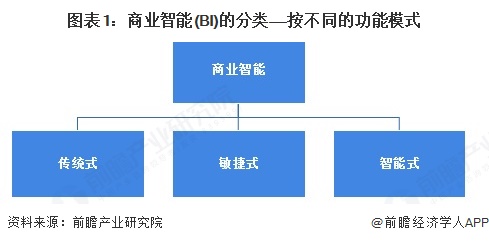
Industry Overview - The current Business Intelligence (BI) can be categorized into three types: traditional, agile, and intelligent BI, with intelligent BI emerging as a new force driven by AI technology [1][3] - The Chinese BI industry has experienced rapid growth, with a market size projected to reach approximately $1.07 billion in 2024, reflecting an 8.1% year-on-year increase [17][18] Industry Chain Analysis - The BI industry chain consists of three segments: upstream (information system suppliers, data integration), midstream (big data management system suppliers, vertical product suppliers), and downstream (application fields such as finance, e-commerce, logistics) [3][4] - Major players in the BI industry include infrastructure providers like Unisplendour and Huawei, technology platform providers like Baidu and Alibaba, and technology empowerment companies like Ant Group and Tencent [4] Industry Development History - The development of the Chinese BI industry has gone through three stages: the emergence phase (2000-2012), the reshuffling phase (2013-2015), and the current prosperous phase since 2016, driven by advancements in AI, big data, and cloud computing [7][9] Policy Background - The Chinese government has increasingly emphasized the importance of the BI software industry, introducing policies to encourage procurement, establish industry standards, and promote technological innovation [11][12] - Key policies include support for small and medium enterprises to adopt BI tools and initiatives to enhance data-driven decision-making [12][15] Market Trends - The deployment model in the Chinese BI market is primarily on-premises, although the share of public cloud deployments is gradually increasing [19] - Agile BI is the dominant segment within the market, accounting for 63% of the market share in 2024, followed by traditional and intelligent BI [20] Competitive Landscape - The competitive landscape is characterized by increasing participation from both domestic and foreign companies, with domestic firms like Fanruan leading the market with a share of 19.2% in the first half of 2024 [27] - Regional distribution shows a concentration in eastern China, with Beijing, Guangdong, and Shanghai being key hubs [24] Future Outlook - The BI market is expected to grow significantly, with projections indicating a market size of $1.68 billion by 2030, driven by the increasing importance of data value and the proliferation of big data applications [30] - Trends include a shift towards localization and domestic product replacement, as well as a significant move towards intelligent and cloud-based BI solutions [34]
【最全】2025年锂电池行业上市公司全方位对比(附业务布局汇总、业绩对比、区域布局、业务规划等)
Qian Zhan Wang· 2025-11-10 10:57
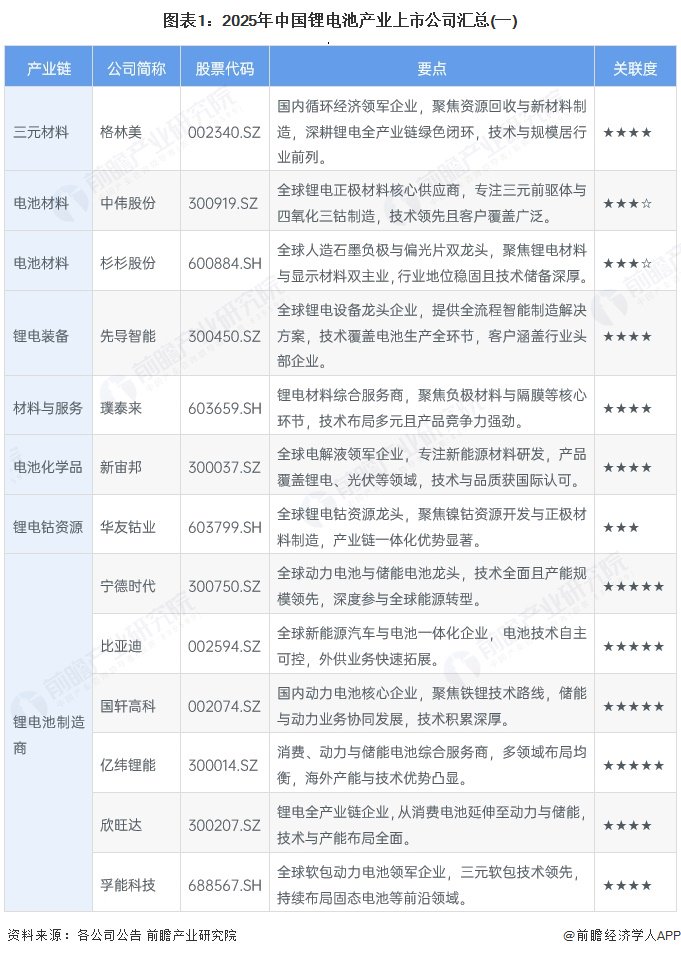
Core Insights - The Chinese lithium battery industry has established a complete ecological chain, with leading companies each having unique characteristics and focusing on different segments of the industry [1][4]. Industry Overview - The lithium battery industry in China has formed a comprehensive layout covering all core links of the industrial chain, with leading enterprises deeply engaged in various segments [1]. - Key players include CATL, BYD, and others, with a strong focus on manufacturing, materials, and equipment [1][4]. Company Performance Comparison - In the first half of 2025, most lithium battery companies reported gross margins between 15% and 35%, indicating moderate profitability [4]. - CATL led the industry with a revenue of 178.9 billion yuan, followed by BYD at 371.28 billion yuan, with 80% of BYD's revenue coming from automotive sales [4][5]. - The highest gross margin was reported by Leading Intelligent at 33.8%, followed by Putailai at 32.1% [4][5]. Regional Layout - The regional layout of lithium battery companies shows a concentration in domestic clusters, particularly in the Yangtze River Delta and Pearl River Delta, while also expanding overseas [6][8]. - Companies are focusing on resource-rich areas like Indonesia for raw material supply and are also targeting markets in Europe and Southeast Asia [6][8]. Future Business Plans - Companies are focusing on three core directions: technological breakthroughs, capacity optimization, and industrial chain collaboration [15]. - Key areas of research include solid-state batteries and high-nickel materials, with many companies planning to accelerate production and development [15][16].


填补燃油税收入缺口!英国将对电动汽车驾驶者征收按里程计费税,每英里征收3便士【附新能源汽车行业市场分析】
Qian Zhan Wang· 2025-11-10 10:53
Group 1 - The UK government plans to introduce a mileage-based tax for electric vehicle (EV) drivers, marking the end of the tax exemption era for EVs. This tax will be set at 3 pence per mile, which translates to an annual cost of £435 for drivers covering 8,000 miles, including the existing vehicle excise duty [2] - The new tax policy is expected to be officially launched in 2028 after public consultation, aiming to address the revenue shortfall from the transition from fuel vehicles to electric vehicles [2] - In the first five months of 2023, the UK saw a 37.6% year-on-year increase in new energy vehicle sales, with a penetration rate of 28.1%. Battery Electric Vehicles (BEVs) and Plug-in Hybrid Electric Vehicles (PHEVs) accounted for nearly 36% of total vehicle sales [3] Group 2 - China is the largest market for new energy vehicles, projected to sell over 11 million units in 2024, which would represent 66% of global sales, significantly outpacing Europe [3] - By the first three quarters of 2025, China is expected to contribute 68% of the global increase in new energy vehicle sales, with a penetration rate reaching 40.3% [4] - BYD's sales in the UK have surged, reflecting the global expansion of Chinese automotive brands. In Q2 2025, BYD is projected to hold a 22% market share globally, selling over 850,000 vehicles, which is more than three times the total annual sales of new energy vehicles in the UK [7] Group 3 - The UK faces challenges in its electric vehicle supply chain, with local battery production meeting only 10% of demand and over 95% reliance on imported raw materials. The impact of Brexit has further increased supply chain costs by 12%-18% [7] - The development of smart connected vehicles is seen as a key trend in the new energy vehicle industry, with China leading the way in proposing integrated vehicle-road-cloud solutions [10]
前瞻全球产业早报:马斯克计划建造特斯拉超大型AI芯片工厂
Qian Zhan Wang· 2025-11-10 10:48
Trade and Economic Data - ASEAN has become China's largest trading partner in the first ten months of the year, with a total trade value of 6.18 trillion yuan, an increase of 9.1%, accounting for 16.6% of China's total foreign trade [2] - The EU is the second-largest trading partner, with a trade value of 4.88 trillion yuan, growing by 4.9%, representing 13.1% of total foreign trade [2] - The US ranks third, with a trade value of 3.38 trillion yuan, a decrease of 15.9%, making up 9% of total foreign trade [2] - China's total imports and exports with Belt and Road countries reached 19.28 trillion yuan, an increase of 5.9% [2] Digital Economy and Technology - Beijing's digital economy increased by 9% in the first three quarters, with core digital economy industries growing by 10.7% [3] - The city has released implementation opinions to build a data factor comprehensive experimental zone, focusing on market-oriented data allocation reform [3] - The State Council has issued opinions to promote the integration of new-generation information technologies, including big data and IoT, in medical applications [4] Robotics and AI Developments - Predictions indicate that there may be ten times the number of robots compared to humans working in the future, with a global robot count potentially exceeding 70 billion [5] - Tesla's full self-driving software is expected to receive full approval in China by early 2026 [5] - Ant Group has upgraded its organizational structure, establishing a health business group to accelerate its healthcare strategy [5] - Lens Technology is set to supply key components for Xiaopeng Robotics, although mass production plans are not yet finalized [6] AI and Chip Technology - Google is set to launch its most powerful AI chip, Ironwood, in the coming weeks [7] - Tesla is considering building a large AI chip factory and may collaborate with Intel for chip production [7] - Tesla's humanoid robots are expected to have a production cost of under $20,000 each [8] Funding and Investments - Thunderbird Innovation has completed a Series C financing round, led by CITIC Jinshi, to accelerate AI+AR glasses development [13] - Simple AI, a new player in the embodied AI robotics sector, has raised a total of 200 million yuan in seed funding within three months [13] - Companies like Zhongwei New Materials are pursuing dual listings in Hong Kong and A-shares [14]





2025年兰州市产业结构之四大支柱产业全景图谱(附产业空间布局、产业增加值、各区域发展差异等)
Qian Zhan Wang· 2025-11-10 09:55
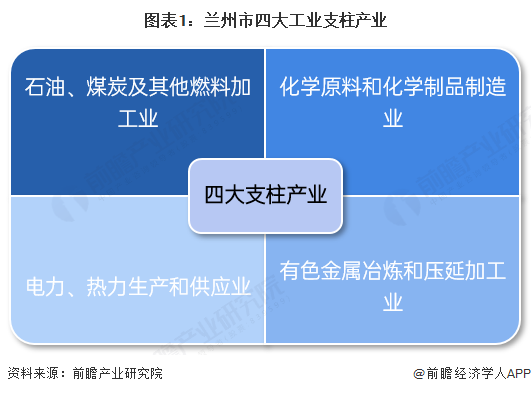
Core Viewpoint - Lanzhou is actively developing four major industrial pillar industries, which significantly contribute to the city's economic output, accounting for over 50% of the industrial output value in 2023 [1][4]. Group 1: Overview of Major Industries - The four pillar industries in Lanzhou include petroleum, coal and other fuel processing, chemical raw materials and chemical products manufacturing, electricity and heat production and supply, and non-ferrous metal smelting and rolling [1][4]. - In 2023, the output value of the petroleum, coal, and other fuel processing industry reached 546 billion yuan, projected to increase to approximately 563 billion yuan in 2024, representing about 37% of Lanzhou's total industrial output [7][10]. Group 2: Distribution of Industries - The four major industries are primarily concentrated in specific districts: non-ferrous metal smelting in Yongdeng County and Honggu District, petroleum and coal processing in Xigu District, chemical manufacturing in Gaolan County, and electricity and heat supply in Gaolan County and Qilihe District [4][10]. Group 3: Industry-Specific Developments - The chemical raw materials and chemical products manufacturing industry maintained an output value above 200 billion yuan since 2021, with 2023 figures at 247 billion yuan and a projected 252 billion yuan for 2024 [12][15]. - The electricity and heat production and supply industry achieved an output value of 314 billion yuan in 2023, with an 11% year-on-year growth, and is expected to reach around 345 billion yuan in 2024 [16][18]. - The non-ferrous metal smelting and rolling industry saw a significant growth rate of 18.9%, with an output value of 248 billion yuan in 2023, and is projected to exceed 300 billion yuan in 2024 [22][23].

购车成本增加!明年起,新能源车购置税将从全免调为减半【附新能源汽车行业市场分析】
Qian Zhan Wang· 2025-11-10 07:12
Group 1 - The core point of the news is that China's new energy vehicle (NEV) purchase tax policy will shift from "exemption" to "50% reduction" starting January 1, 2026, with the maximum reduction amount decreasing from 30,000 yuan in 2025 to 15,000 yuan [2] - The adjustment is seen as a critical step to transition the NEV industry from price competition to value competition, encouraging companies to focus on quality and technology rather than low-cost strategies [2][7] - The price war in the automotive market has led to significant financial losses, with the new car market experiencing a cumulative loss of 138 billion yuan from January to August 2024 [3] Group 2 - BYD, a leading player in the NEV sector, held a market share of 31.7% in 2022, but has faced challenges due to the ongoing price war, resulting in a 32.6% year-on-year decline in net profit for Q3 2025 [3][5] - The company's strategy of lowering prices to maintain market dominance has severely impacted its profitability, with single-vehicle profit dropping to 5,000 yuan and gross margin reaching historical lows [5] - Future growth opportunities in the NEV industry are expected to arise from advancements in smart electric vehicles, artificial intelligence, connected vehicle technology, cloud computing, and digital car-sharing platforms [5]

小鹏机器人被质疑藏真人!何小鹏发视频澄清:总有人不相信世界变化如此快【附人形机器人行业市场分析】
Qian Zhan Wang· 2025-11-10 03:53
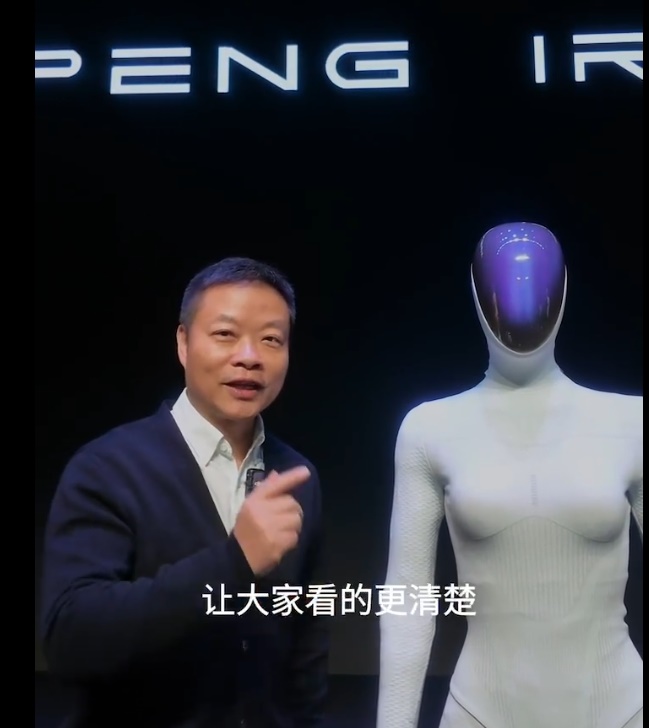
11月5日,小鹏科技日的舞台上,人形机器人IRON踩着轻盈的猫步闪亮登场,成为全场焦点,这段现场视 频在社交媒体瞬间引爆。何小鹏或许没料到,一场因太逼真而起的舆论风暴正席卷而来。现场视频中, IRON肩颈舒展自然、胯部随步伐摆动,转身时的重心转移与真人如出一辙,以至于社交媒体瞬间被100%真 人在里面的质疑淹没。网友们纷纷猜测,"这里面是真人,放大能看到头部有耳朵的轮廓"、"特斯拉的机器 人走路都没这个利索,不可能是真的,不可能做到这么丝滑"。 面对铺天盖地的质疑,11月6日,小鹏汽车董事长、CEO何小鹏回应称"既高兴又哭笑不得,总有人不相信 世界变化如此快",并发布一镜到底视频证明。为彻底打消网友的疑虑,员工还扒开机器人背部拉链,将内 部晶格状仿生肌肉与精密控制器展现在众人眼前,散热风扇的嗡嗡声清晰可闻。何小鹏解释道:机器人皮肤 下面是肌肉,手中有谐波关节,绝对不是人;而头部看着像耳朵的地方,其实是两组麦克风阵列,解决了机 器人听觉的问题。 (图片来源:视频截图) 当众"解剖"IRON的何小鹏,心酸地表示:"大家不愿意相信,一个强大的技术来自中国的创业公司,我们心 中的成见是一座大山。" 争议的背后,实则是 ...