Qian Zhan Wang

Search documents
前瞻全球产业早报:阿里巴巴将召开重磅业务发布会
Qian Zhan Wang· 2025-09-09 23:13
我国已发布人工智能国家标准30项,15项人形机器人国标正在研制 市场监管总局新闻发言人9月9日在2025年三季度例行新闻发布会上表示,现在正全力推动15项人形机器人国 标研制,接下来还会重点攻关人形机器人安全、驱动技术、数据利用等标准,给机器人产业插上"标准的翅 膀",助力中国机器人飞得更高、更稳。 上半年国家高新区企业营业收入同比增长6.5% "十四五"以来,国家高新区综合实力稳步提升,优质企业持续壮大。统计显示,今年上半年,国家高新区企 业实现营业收入26.9万亿元,同比增长6.5%。 工信部:"十四五"以来,累计超2000家专精特新企业在A股上市 工业和信息化部部长李乐成表示,"十四五"以来,国家中小企业发展基金累计投资项目1981个、投资金额超 690亿元,累计超2000家专精特新企业在A股上市。工信部联合财政部开展中小企业数字化转型百城试点, 支持超4.5万家试点企业实施数字化改造。 我国最大煤制天然气基地外输管道开工建设 9月9日,从国家管网获悉,我国最大的煤制天然气生产基地外输管道——准东煤制天然气管道干线工程正式 开工建设,项目建成后将与西气东输管道系统互联互通,进一步提升我国天然气资源供应保 ...


前瞻全球产业早报:中国人工智能企业数量已超5000家
Qian Zhan Wang· 2025-09-09 10:31
育儿补贴申领正式全面开放 9月8日,国家卫健委宣布育儿补贴申领正式全面开放,符合条件的3周岁以下婴幼儿家庭可通过支付宝、微 信或各省政务服务平台线上申领,也可到婴幼儿户籍地的乡镇政府进行申领。 中国人工智能企业数量已超5000家 9月8日,工业和信息化部在重庆2025世界智能产业博览会上披露,我国人工智能企业数量已超5000家,已建 成11个国家人工智能创新应用先导区、17个国家级智能网联汽车测试示范区,展现出强劲的创新活力和市场 潜力。 国家发改委、国家能源局印发《关于推进"人工智能+"能源高质量发展的实施意见》 国家发改委、国家能源局印发《关于推进"人工智能+"能源高质量发展的实施意见》,《实施意见》围绕数 据、算力、算法,系统构建人工智能应用基础支撑体系,提出人工智能在能源领域应用的三大共性关键技术 攻关方向:夯实数据基础,加快形成能源领域高质量数据集,确保能源数据全流程安全可靠;强化算力支 撑,统筹规划资源,构建算力、电力深度融合的算电协同发展机制;提升模型基础能力,推动人工智能与能 源领域软件深度融合,加快突破人工智能绿色低碳技术瓶颈。 上海:支持"AI+数字广告"产业创新服务平台建设,最高给予20 ...
苹果发布会倒计时!iPhone17或成国内首款无卡槽手机?iPhone17系列预产1亿台【附智能手机行业市场分析】
Qian Zhan Wang· 2025-09-09 10:15
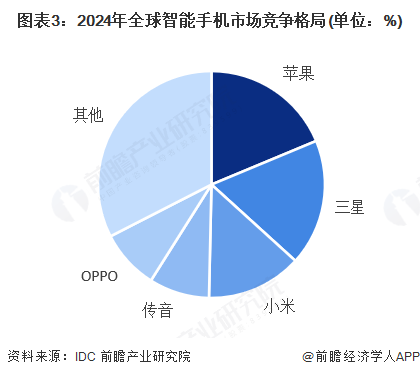
全球智能手机市场增速放缓背景下,苹果通过"精简机型、聚焦高端"提升单机利润。Counterpoint于 2025年7月发布的《手机型号销量追踪》报告显示,2025年上半年全球高端手机销量同比增长8%,创上 半年历史新高。而苹果以62%的市场份额独占鳌头,远超三星(12%)、华为(8%),仍然是最大的品牌。 价格方面,摩根士丹利预计,苹果将小幅上调高端机型售价,这是自2017年以来首次涨价。具体来看, iPhone 17 Pro起售价1049美元(国行预估8999元起),Pro Max起售价1249美元(国行预估10999元起),标准 版保持5999元起,iPhone 17 Air预计6999元起。 据Wccftech报道,苹果今年计划生产1亿台iPhone 17系列,业内人士表示,iPhone 17 Pro Max将拥有最 多功能和优势,预计将重点生产,占比最高。 苹果是全球智能手机市场重要玩家,2024年全球智能手机市场仍由苹果占据主要市场领先市场份额,占 比达到18.7%。 北京时间9月10日凌晨1点,苹果2024年秋季发布会即将开始,作为全球智能手机市场重要玩家,苹果的 每一次新品发布都备受关注,而iP ...
2025年中国医药流通行业数字化现状 数字化转型有利于提升医药流通服务效率
Qian Zhan Wang· 2025-09-09 09:33
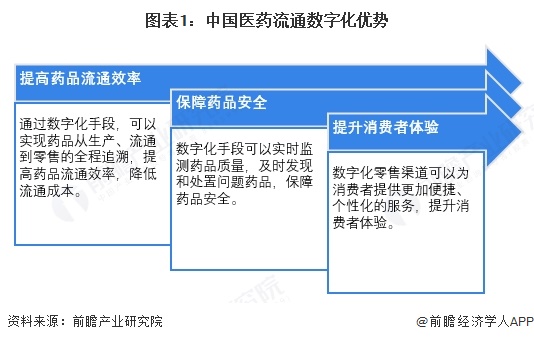
Core Insights - The pharmaceutical distribution industry in China is undergoing significant transformation driven by digitalization, particularly in retail channels [1] - The development of digital services in outpatient settings is facilitating more online transactions in the pharmaceutical sector [2] - The construction of a digital middle platform in pharmaceutical distribution is progressing through five layers, including infrastructure and data management [5] - Digital marketing in the pharmaceutical sector is enhancing communication efficiency between pharmaceutical companies, doctors, and patients [9] - The proportion of R&D expenses relative to revenue among major pharmaceutical distribution companies in China is generally low, with some companies below 1% and the highest being 3.4% [13] Group 1 - The rapid development of new technologies such as IoT, big data, and cloud computing is significantly impacting the retail channels in the pharmaceutical distribution industry [1] - Digital pharmaceutical distribution transactions are categorized into platform models and self-operated models, driven by internet and big data advancements [2] - The digital middle platform construction involves deploying smart warehousing and cold chain IoT devices at the infrastructure level [5] Group 2 - The integration of cloud computing and blockchain is essential for building the foundational architecture of the digital middle platform in pharmaceutical distribution [5] - The establishment of a master data governance system for pharmaceuticals is a key component of the data middle platform [5] - The digital marketing strategy focuses on connecting information between pharmaceutical companies, doctors, and patients, thereby improving communication efficiency [9] Group 3 - The R&D expense ratio to revenue for major listed pharmaceutical distribution companies in China is notably low, indicating a potential area for improvement [13] - Companies like Shanghai Pharmaceuticals and Jiuzhoutong report R&D expenses below 1%, while Huadong Medicine has a higher ratio of 3.4% due to some drug R&D expenses [13]

工信部部长李乐成:十四五我国工业机器人新增装机量占全球超5成【附工业机器人行业发展趋势】
Qian Zhan Wang· 2025-09-09 08:54
Core Insights - The Chinese government is focusing on high-end, intelligent, green, and integrated development to upgrade traditional industries, resulting in significant advancements in manufacturing and technology [2] - China has become the largest downstream application market for industrial robots globally, accounting for nearly 40% of the market share in 2023 [2][4] - The domestic industrial robot market is witnessing a shift towards local brands, with several Chinese companies entering the top ranks, indicating a deepening phase of domestic substitution [4][6] Group 1: Industrial Development - The Ministry of Industry and Information Technology has supported 46 cities in implementing new technology transformation pilot projects, leading to the establishment of over 230 excellent smart factories and 1,260 5G factories [2] - The comprehensive energy consumption of products like steel and cement has reached advanced global levels, with green electrolytic aluminum production exceeding 10 million tons annually [2] - Traditional manufacturing brands have significantly improved their reputation, with 18 companies entering the global top 500 brands last year [2] Group 2: Market Trends - The domestic industrial robot industry has developed competitive advantages, with companies like Efort, Estun, Huichuan, and Siasun making it into the top 10 sales rankings [4] - The overall market size of the Chinese industrial robot industry is expected to exceed 77 billion yuan by 2030, indicating continued growth potential [6] Group 3: Technological Challenges - Despite advancements, the application of industrial robots is limited to 20%-30% of total industrial demand, highlighting the need for further integration of AI in decision-making and control layers [9] - Current industrial robots primarily rely on traditional programming methods, lacking autonomy and versatility in non-predefined scenarios [9] - Achieving natural language-driven robot control remains a key goal, necessitating breakthroughs in critical technologies such as large language models [9]

马云持股公司豪掷3.1亿布局以太坊,未来将持续加大数字资产投入【附数字货币行业市场分析】
Qian Zhan Wang· 2025-09-09 06:28
Core Viewpoint - Yunfeng Financial Group has approved the purchase of Ethereum (ETH) as a reserve asset, indicating a strategic shift towards increasing investment in digital assets [2][10]. Group 1: Company Overview - Yunfeng Financial is a comprehensive financial platform listed on the Hong Kong main board, founded by Jack Ma and entrepreneur Yu Feng in 2010 [2]. - The company has acquired a total of 10,000 ETH, with an investment amount of $44 million (approximately 314 million RMB), funded entirely from internal cash reserves [2]. Group 2: Market Context - Ethereum is a significant player in the digital currency market, ranking second in market capitalization with $365.47 billion as of January 19, 2022, following Bitcoin [5]. - In January 2023, Ethereum's trading volume reached 660 million, significantly surpassing that of its closest competitor, Solana [7]. - The growing institutional interest in Ethereum is driven by its unique smart contract ecosystem, positioning it as a foundational asset for investments in the metaverse and digital art [10]. Group 3: Industry Trends - In 2023, companies like Meitu and MicroStrategy have been increasing their Bitcoin holdings, while Ethereum is attracting more institutional investors as a reserve asset due to its distinct characteristics [10].

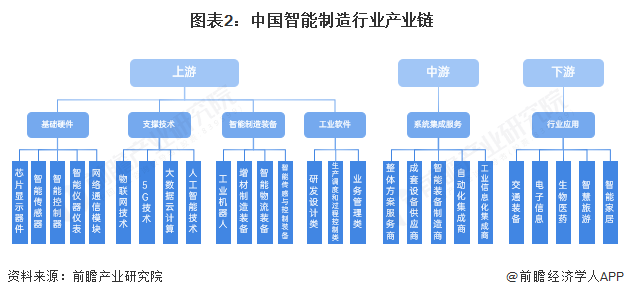
智能制造行业企业选址清单:立讯机器人总部基地落户常熟
Qian Zhan Wang· 2025-09-09 01:52
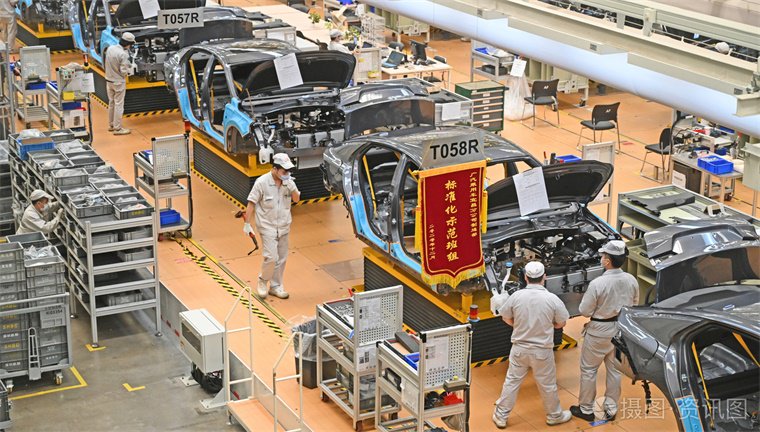
Group 1 - The core point of the article is the establishment of Luxshare Precision's robot headquarters in Changshu, which represents a significant investment in smart manufacturing and aims for an annual output value of 10 billion yuan after reaching full production [1] - Luxshare Precision's robot business has achieved a compound annual growth rate of 37% over the past three years, indicating strong growth potential in the smart manufacturing sector [1] - The decision to locate in Changshu is based on the region's existing advantages in industries such as new energy vehicles and consumer electronics, which provide a robust supply chain and market opportunities for Luxshare's robot business [1] Group 2 - The article discusses the importance of scientific site selection for enterprises to ensure sustainable growth in a competitive market, emphasizing the need for a comprehensive analysis of local industry foundations, policy environments, and cost factors [1] - The Forward Industry Research Institute utilizes a "research + big data + industrial planning" model for precise site selection, offering customized services to assist companies in identifying optimal locations [1] - The institute's self-developed big data platform generates industrial regional heat maps and innovation indices to quantitatively assess the suitability of key areas for industrial development [2] Group 3 - The article outlines a systematic approach to site selection, including diagnosing enterprise needs, evaluating regional compatibility, and conducting in-depth due diligence on potential industrial parks [7][10] - The evaluation process includes assessing the industrial ecosystem compatibility, policy adaptability, infrastructure maturity, and cost competitiveness of candidate parks [7][10] - The final decision-making process involves quantifying the economic value of site selection, including initial investment comparisons, policy benefits, and comprehensive ROI predictions [10][11]
人人适配新能源车并不现实!长安汽车副总杨大勇:未来至少35%用户仍选燃油车【附新能源汽车行业市场分析】
Qian Zhan Wang· 2025-09-08 07:39
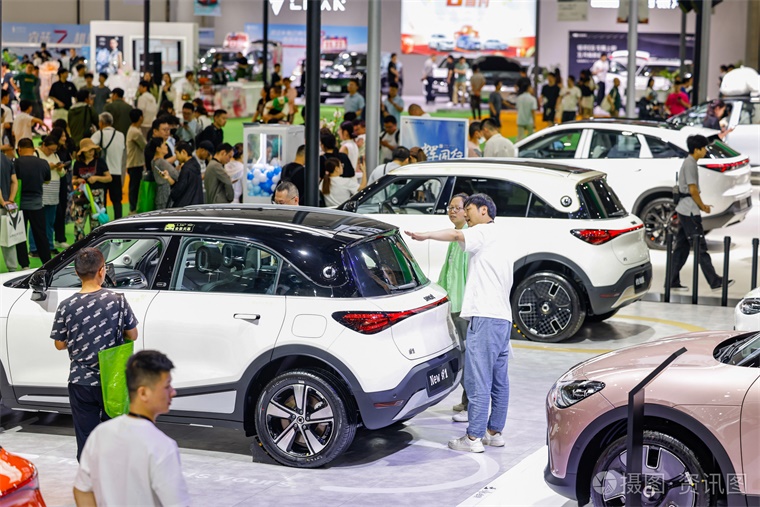
Group 1 - The core viewpoint is that despite the rapid development of electric vehicles (EVs), traditional fuel vehicles will still maintain a significant market presence, with at least 35% of users expected to continue choosing fuel vehicles in the future [2] - As of July 2023, the number of private charging piles in China was only 12.49 million, indicating that for many households without charging facilities, fuel vehicles remain a more practical choice [2] - The sales structure of fuel vehicles and EVs is projected to be 35:65 in the future market [2] Group 2 - The penetration rate of new energy vehicles in China reached 31.6% in 2023, a significant increase from 2022, and is expected to rise to 40.3% in early 2024 [3] - By the first half of 2025, the penetration rate is anticipated to reach 44.3%, marking a historical high for the same period [3] Group 3 - The advancement of battery technology, particularly the rise of solid-state batteries, is seen as a key factor in enhancing the range of EVs and improving user acceptance [6] - Solid-state batteries offer higher energy density and safety compared to traditional lithium-ion batteries, potentially alleviating "range anxiety" for consumers [6] - Companies like Chery, CATL, and SAIC have plans to implement solid-state batteries in vehicles by 2026 and achieve mass production by 2027 [6] Group 4 - The growth of EVs necessitates an improved charging infrastructure; without adequate charging station deployment, users may still face "charging difficulties" despite advancements in vehicle range [8] - The proliferation of EVs relies not only on battery technology but also on the development of charging networks and vehicle-to-grid (V2G) systems [8] Group 5 - Geely's president predicts that in two to three years, there will be a balance between fuel and electric vehicles, potentially altering how capital markets value automotive companies [9] - The future of fuel and electric vehicles may not be about one replacing the other, but rather how they can coexist and adapt within the industry ecosystem [9]

美团CEO王兴发布内部信:月均连接336万骑手,高频骑手平均收入达到7230-10100元【附外卖行业市场分析】
Qian Zhan Wang· 2025-09-08 07:05
Core Insights - Meituan's CEO Wang Xing revealed in an internal letter that the company served 770 million users and 14.5 million active merchants over the past year, with a peak of 150 million daily orders in instant retail [2] - The company's Q2 2025 earnings report showed a revenue of 91.8 billion yuan, with an adjusted net profit of 1.49 billion yuan, representing an 89% year-on-year decline due to irrational competition in the food delivery sector [3] - Meituan's marketing expenses increased by 51.5% year-on-year to 7.7 billion yuan in Q2, primarily to enhance user engagement amid fierce competition [3] Company Performance - Meituan's high-frequency rider average income reached 7,230 to 10,100 yuan in Q1 2025, a 12% increase compared to the end of 2024, with nationwide pension insurance subsidies for riders being introduced [2] - The food delivery market in China has rapidly expanded, becoming an essential part of daily life, with Meituan maintaining a leading position despite short-term performance fluctuations [3][6] Market Dynamics - The competitive landscape in the food delivery market is dominated by Meituan and Ele.me, with Meituan holding a market share of 68.2% as of mid-2020 [4] - The food delivery business is characterized by low margins, and increased competition has led to greater short-term volatility in performance [3][6] - Research indicates that resource allocation towards subsidy wars may hinder long-term industry transformation and efficiency, suggesting a need for investment in infrastructure to support restaurant operations [9]

【行业深度】洞察2025:中国超硬材料行业竞争格局及市场份额(附市场集中度、企业竞争力评价等)
Qian Zhan Wang· 2025-09-08 06:53
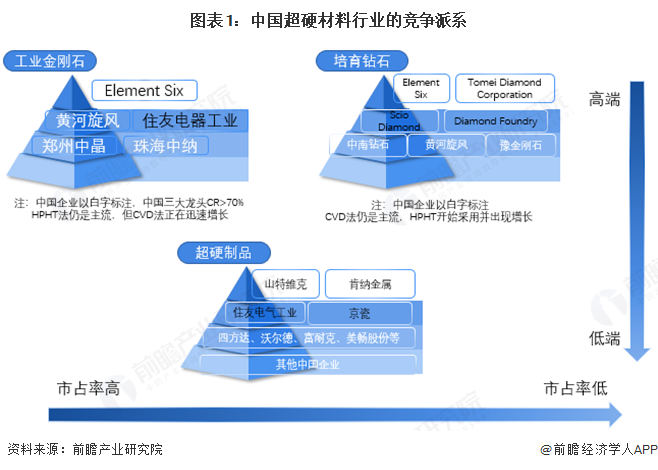
Core Insights - The Chinese superhard materials industry is characterized by a competitive landscape with significant market concentration in the upstream raw materials sector, while the downstream products sector remains highly fragmented [10][15]. Group 1: Industry Overview - Superhard materials, including diamonds (natural and synthetic) and cubic boron nitride (CBN), are essential in high-end manufacturing applications such as cutting, grinding, and drilling [1]. - China is the world's largest producer of industrial synthetic diamonds, accounting for over 90% of global production by 2024, although it lags behind in high-value functional diamond materials used in electronics and semiconductors [5]. Group 2: Market Share and Competition - The Chinese superhard materials market is evolving into a fully competitive environment, with major players like Zhongbing Hongjian, Huanghe Xuanfeng, and Liliang Diamond controlling over 80% of the country's synthetic diamond production capacity [5]. - The market is characterized by a low concentration in the high-end product segment, where foreign giants dominate, while domestic companies primarily compete in the mid to low-end markets [5][10]. Group 3: Company Profiles and Competitive Strengths - Zhongbing Hongjian leads in industrial diamond production with a global market share of 46%, leveraging its technological capabilities and diverse business operations [14]. - Huanghe Xuanfeng is notable for its vertical integration across the entire supply chain, maintaining a leading position in both synthetic diamond and superhard materials production [14]. - Emerging companies like Liliang Diamond are gaining traction in the cultivated diamond sector, showcasing strong growth potential with high profit margins [14]. - The competitive landscape is marked by a dichotomy where large raw material producers face off against specialized manufacturers focusing on niche markets [13][15]. Group 4: Future Outlook - The Chinese superhard materials industry is expected to undergo a process of consolidation, with stronger companies likely to enhance their market positions as weaker players exit the market [15]. - The industry is transitioning from being a "quantity powerhouse" to a "technology powerhouse," aiming for greater international competitiveness and influence [15].