Qian Zhan Wang

Search documents
【行业深度】洞察2025:中国演唱会行业竞争格局及市场份额(附细分市场竞争、区域竞争等)
Qian Zhan Wang· 2025-07-11 03:42
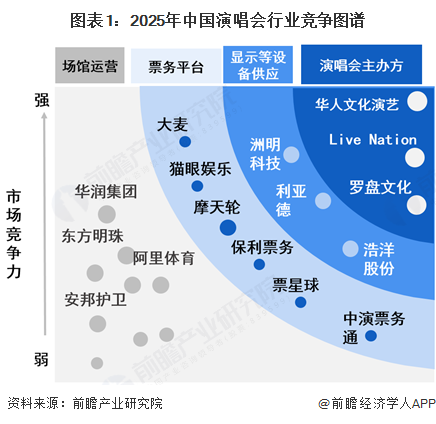
Core Insights - The Chinese concert industry encompasses a wide range of activities including content production, planning and execution, artist management, ticket sales, and venue operations [1] - Major players in the concert hosting sector include Huayi Brothers Media, which has a rich artist resource and extensive experience in hosting concerts [1] - The ticketing platform competition is led by major brands such as Damai, Maoyan Entertainment, and Tiantian Ticketing [5] - The regional distribution of concert-related enterprises is closely linked to population density, income levels, and consumer spending [11] Concert Hosting Competition - In Q1 2025, five institutions hosted 10 or more concerts, with Huayi Brothers Media leading by hosting 46 performances featuring artists like Gigi Leung and G.E.M. [3][4] - Other notable hosts include Luopan Culture and Live Nation, with 14 and 13 concerts respectively [3][4] Ticketing Platform Competition - As of May 13, 2025, the top ticketing brands include Damai, Maoyan, and Tiantian Ticketing, recognized for their data-driven and consumer-focused approaches [5] Venue Operations - The top five venues for concerts in Q1 2025 included Hangzhou Olympic Sports Center, which hosted 6 shows, and Shanghai Oriental Sports Center, with 14 performances [8] Regional Competition Landscape - As of May 30, 2025, there are approximately 484,500 enterprises in the concert industry, with Guangdong province having the highest number at over 50,000 [11] - The top five provinces (Guangdong, Zhejiang, Shandong, Hubei, and Hebei) account for 38.3% of the total concert-related enterprises in China [11] Concert Location Distribution - Major concert events are concentrated in economically developed urban clusters such as Beijing-Tianjin-Hebei, Yangtze River Delta, and Pearl River Delta, generating 63.5% of the total box office revenue [13] Competitive Dynamics - The threat of substitutes in the concert industry mainly comes from other entertainment forms like movies and streaming services, but the unique live atmosphere of concerts mitigates this threat [16] - The competitive intensity among existing firms is high, with larger companies holding significant market share while smaller firms seek differentiation [16]

【最全】2025年医美注射材料行业上市公司全方位对比(附业务布局汇总、业绩对比、业务规划等)
Qian Zhan Wang· 2025-07-11 02:56
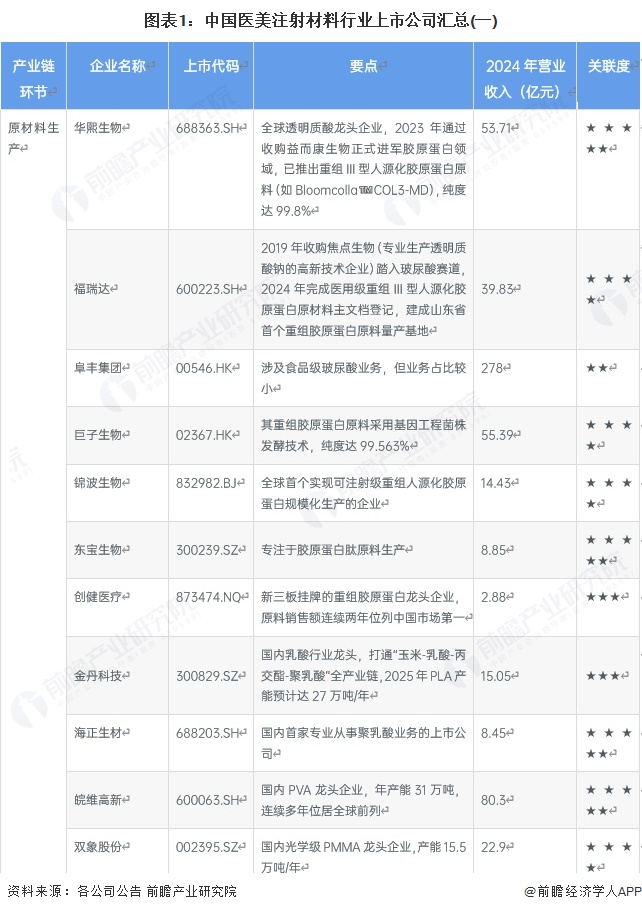
Industry Overview - The medical beauty injection materials industry in China has a limited number of publicly listed companies, primarily including Huaxi Biological, Haohai Biological, Aimeike, and Juzhi Biological, with most companies involved in the supply of upstream raw materials [1][7]. Company Summaries - Huaxi Biological is a global leader in hyaluronic acid, with a projected revenue of 53.71 billion yuan in 2024, and has expanded into collagen products through acquisitions [2][9]. - Haohai Biological has secured exclusive rights for domestic and international botulinum toxin products and is focusing on a dual product line of hyaluronic acid and botulinum toxin [6][15]. - Aimeike is expected to generate approximately 29.60 billion yuan in sales for its medical beauty injection materials in 2024, emphasizing high-end products [9][15]. - Juzhi Biological is projected to achieve sales of around 55.20 billion yuan in 2024, focusing on collagen products and leading the industry in standard-setting [9][15]. Sales and Production Data - Huaxi Biological has sold over 10 million units of its products, while Haohai Biological and Aimeike have sales around 7 million units each [13]. - Juzhi Biological's collagen products have a sales volume of approximately 55.20 billion yuan, indicating a strong market presence [11][13]. Business Strategies - Huaxi Biological is focusing on core technologies in glyco-biology and cell biology, aiming to enhance its position in the extracellular matrix and anti-aging sectors [15]. - Haohai Biological is pursuing international collaborations and technology imports to strengthen its product offerings and market competitiveness [15]. - Aimeike is developing a high-end product matrix centered on regenerative materials, with significant investments in training and technology [15]. - Juzhi Biological is leading the development of industry standards and expanding its product offerings in the collagen segment [15]. Regional Distribution - The majority of medical beauty injection material companies are concentrated in Shandong Province, with key players in raw material production and equipment manufacturing [7].



前瞻全球产业早报:我国连续15年稳坐全球制造业首位
Qian Zhan Wang· 2025-07-10 11:29
Group 1 - China has maintained its position as the world's largest manufacturing country for 15 consecutive years, with annual manufacturing value added exceeding 30 trillion yuan since the start of the 14th Five-Year Plan [2] - The National Development and Reform Commission (NDRC) has planned 102 major projects during the 14th Five-Year Plan, all of which are expected to be completed by the end of the year [2] - The NDRC projects that China's GDP will reach approximately 140 trillion yuan by 2025, continuing to surpass previous milestones of 110, 120, and 130 trillion yuan [3] Group 2 - The State Administration for Market Regulation and the Ministry of Industry and Information Technology have issued a plan to establish a risk assessment system for artificial intelligence, focusing on key technologies and measurement capabilities [4] - Shanghai has included unicorn companies in its listing cultivation database and is developing measures to support their listing and fundraising projects [5] Group 3 - China's largest green hydrogen and ammonia project has officially commenced production, with an annual output of 320,000 tons of green synthetic ammonia, powered entirely by renewable energy [6] - The project is expected to reach a total capacity of 1.52 million tons upon full completion [6] Group 4 - Starbucks' stake sale in China has attracted nearly 30 investment institutions, with a valuation of around 10 billion USD, although the company may retain a 30% stake [7] - The first domestic nine-valent HPV vaccine has been priced at 499 yuan per dose, significantly lower than imported alternatives [7] Group 5 - The U.S. is set to implement "reciprocal tariffs" starting August 1, 2025, as announced by President Trump [8] - Nissan has suspended production of certain models in two U.S. factories due to tariffs imposed on imported vehicles between the U.S. and Canada [8] Group 6 - Nvidia's first desktop chip is reported to have performance close to Apple's M3, indicating competitive advancements in the AI PC processor market [9] - New Zealand has launched its first national AI strategy, aiming to enhance productivity and competitiveness, with potential contributions to GDP estimated at 76 billion NZD by 2038 [10] Group 7 - Merck is nearing a deal to acquire Verona for approximately 10 billion USD, indicating ongoing consolidation in the pharmaceutical sector [11] - Meta has invested 3.5 billion USD in EssilorLuxottica to advance its AI glasses strategy, reflecting the growing interest in smart eyewear [12] Group 8 - OpenAI has successfully recruited top engineers from Tesla, xAI, and Meta, intensifying competition in the AI talent market [13] - The company Extreme Robotics has recently gone public in Hong Kong, achieving a market valuation exceeding 21.5 billion HKD [13]

能活到多少岁?中国人均预期寿命79岁,联合国预测2044年中国人寿命将赶超美国【附中国养老产业现状分析】
Qian Zhan Wang· 2025-07-10 11:29
Group 1 - The average life expectancy in China has reached 79.5 years as of 2024, showing a steady increase from 74.8 years in 2010 and 77.9 years in 2020 [2] - China's life expectancy growth rate surpasses that of some developed countries, with projections indicating that by 2044, China's life expectancy may slightly exceed that of the United States [2] - The aging population in China is increasing, with 21.1% of the population aged 60 and above by the end of 2023, and the proportion of those aged 65 and above rising to 15.6% in 2024 [2] Group 2 - Global aging is a widespread trend, with the highest aging rates in ten countries or regions exceeding 20%, and Hong Kong projected to surpass 40% by 2050 [4] - The increase in the elderly population impacts various sectors, including labor supply, economic growth, and social security systems, leading to higher demands for healthcare and pension systems [6] Group 3 - The demand for elderly care services in China is expected to rise significantly, with the number of elderly individuals requiring home care services projected to increase from approximately 40.33 million in 2020 to around 76 million by 2050 [8] - Various companies are actively engaging in the elderly care industry, with technology firms like Xiaomi and Huawei focusing on health monitoring devices and smart products for the elderly [9][10] Group 4 - Recommendations for addressing the challenges of rapid aging include transitioning the pension system from a pay-as-you-go model to a pre-funded investment model, as suggested by experts [12]


中国科学院院士潘建伟:我国在量子通信领域已处于国际引领地位【附量子信息产业分析】
Qian Zhan Wang· 2025-07-10 11:22
Group 1 - China's quantum communication sector is at the forefront internationally, with significant achievements such as the launch of the "Mozi" quantum satellite and the establishment of the "Beijing-Shanghai" fiber optic network [2] - The quantum communication market in China is currently valued at approximately 600 million yuan, with its strategic importance recognized globally due to increasing demands for national defense and information security [2] - Quantum communication is characterized by its high security and efficiency, making it a core branch of quantum information science [2] Group 2 - In the quantum computing field, China is positioned among the global leaders, with major tech companies like Alibaba, Tencent, Baidu, and Huawei investing in quantum laboratories and technologies [4] - The global investment in quantum information reached $38.6 billion in 2023, with China leading at $15 billion, surpassing the United States and Europe [6][7] - The quantum technology sector is in its early stages of industrialization, with a projected global market size of $130.08 billion by 2030 across quantum computing, communication, and measurement [7] Group 3 - China's advancements in quantum technology reflect a journey from theoretical breakthroughs to practical applications, showcasing a comprehensive innovation path [9]

2025年中国文旅融合配套产业之交通运输工具客运现状 出行方式以公路为主【组图】
Qian Zhan Wang· 2025-07-10 09:18
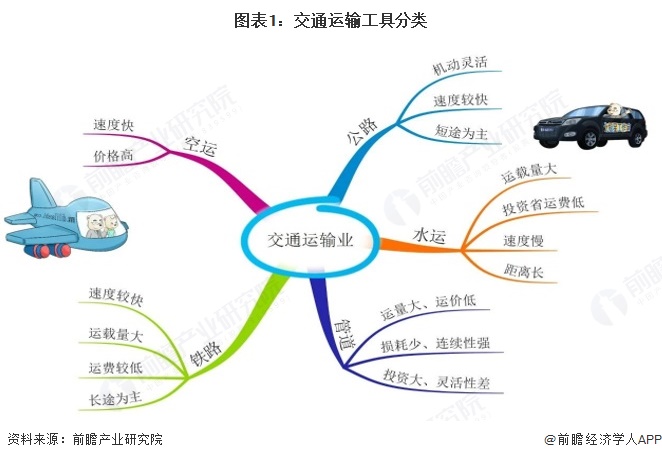
Group 1 - The transportation industry is defined as a production sector that utilizes various transportation tools to facilitate the movement of passengers and goods along specific routes [1] - The main transportation tools include air transport, railways, highways, waterways, and pipelines [1] Group 2 - From 2015 to 2022, the passenger transport volume by road in China showed a declining trend, with a significant drop to 5.587 billion passengers in 2022. However, it is expected to rise to 11.781 billion passengers by 2024, reflecting a year-on-year growth of 7.0% [2] - The railway passenger transport volume in China experienced a steady increase from 2009 to 2019, but fell sharply to 2.2 billion passengers in 2020 due to the pandemic, a decrease of 39.9%. It is projected to recover to 4.31 billion passengers by 2024, with a year-on-year increase of 11.9% [6] - The civil aviation passenger transport turnover in China grew annually from 2015 to 2019, reaching 11,705.1 billion passenger-kilometers in 2019, an increase of 9.3%. However, it plummeted to 3,913.9 billion passenger-kilometers in 2022, a decline of 66.6% compared to 2019. By 2024, it is expected to reach 12,915.0 billion passenger-kilometers, showing a year-on-year growth of 25.3% [8] - The waterway passenger transport volume in China has shown fluctuations in recent years, with a significant decline following the COVID-19 pandemic. In 2021, the volume was 16 million passengers, dropping to 11.6 million passengers in 2022. It is anticipated to recover to 25.8 million passengers in 2023, with stability expected in 2024 [9]


2025年全球中硼硅玻璃市场现状分析 2024年全球市场规模约44亿美元【组图】
Qian Zhan Wang· 2025-07-10 05:15
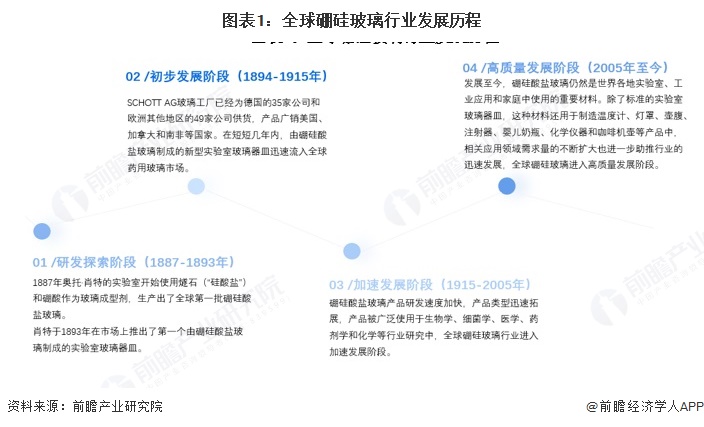
Group 1 - The global borosilicate glass industry has entered a high-quality development stage, driven by its importance in laboratories, industrial applications, and household products [1] - The demand for borosilicate glass is expanding due to its applications in various products such as thermometers, lamp shades, syringes, and baby bottles [1] Group 2 - The global borosilicate glass market is projected to reach approximately $4.4 billion by 2024, with a year-on-year growth of 4.6% [3] - The North American region is currently the largest market for borosilicate glass, accounting for nearly half of the global market share [4] Group 3 - By 2030, the global borosilicate glass market is expected to grow to $6.5 billion, benefiting from the development of the global pharmaceutical market and increased penetration in developing countries [6] Group 4 - Key trends in the global borosilicate glass industry include the growing importance of emerging markets, the need for sustainable development, and continuous improvement in production processes [10] - Emerging markets are expected to play a significant role in the growth of the borosilicate glass market due to urbanization and rising income levels [10] - Companies are facing stricter environmental regulations and need to invest in cleaner production methods to reduce waste emissions [10] - Industry leaders are innovating production techniques to enhance efficiency and product quality, utilizing advanced technologies such as AI and big data [10]



【彩电】行业市场规模:2024年中国彩电行业市场规模约2400亿元 零售市场均价突破4000元/台
Qian Zhan Wang· 2025-07-10 04:09
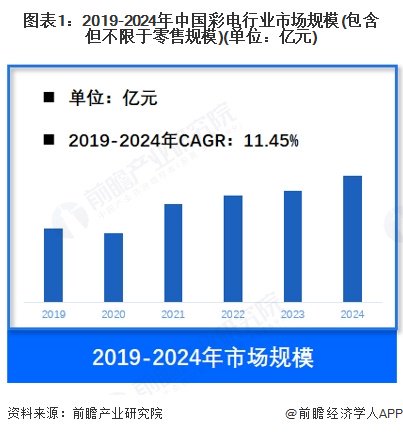
Core Insights - The Chinese color TV industry is projected to reach a market size of approximately 240 billion yuan in 2024, with a compound annual growth rate of 11.45% over the past five years [1][4] - Chinese brands are expected to account for over 44% of global TV shipments in 2024, with Hisense, TCL, and Xiaomi ranking among the top five globally, collectively holding nearly 45% market share [1] - The high-end market remains dominated by South Korean brands, with Samsung and LG capturing 80% of the market for TVs priced above $2,500 [1] Market Trends - The growth in the Chinese TV market is primarily driven by product structure upgrades, with a significant push from the "old-for-new" policy stimulating demand for high-end products [4] - The average retail price of TVs in China is expected to exceed 4,000 yuan per unit in 2024, reflecting a trend towards larger, more technologically advanced, and aesthetically pleasing products [4] Competitive Landscape - Leading manufacturers in the domestic TV sector include Hisense, TCL, Skyworth, Xiaomi, and Changhong, each with distinct technological advancements and market strategies: - Hisense is a leader in MINILED technology and holds a 47% market share in the global 100-inch TV segment, focusing on gaming scenarios through its VIDDA sub-brand [5] - TCL is recognized as a pioneer in global MINI LED technology, leveraging its supply chain advantages to produce high-end models like the 98Q10K PRO [5] - Skyworth leads in eye-care technology and has a strong presence in the internet TV space through its subsidiary, focusing on content services [5] - Xiaomi capitalizes on its internet ecosystem, emphasizing high cost-performance models and holding a 19.5% market share in the MINI LED segment [5] - Changhong utilizes military technology for its product development and has a comprehensive IoT ecosystem, with plans to launch AI-driven TV models [5]


打破国外垄断!万泰生物公布国产首款九价HPV疫苗价格:499元/支,仅为进口40%【附HPV疫苗行业市场分析】
Qian Zhan Wang· 2025-07-10 03:58
Core Viewpoint - The approval and launch of the domestic nine-valent HPV vaccine "Xinkening®9" marks a significant milestone for China's biopharmaceutical industry, breaking the global monopoly of high-priced imported HPV vaccines and establishing China as the second country after the United States capable of independently supplying such vaccines [2][9]. Group 1: Vaccine Development and Approval - The nine-valent HPV vaccine was developed through a collaboration between Xiamen University, Xiang'an Innovation Laboratory, and Wantai Biological Pharmacy, taking 18 years from inception to approval [2]. - The vaccine covers nine HPV types (6, 11, 16, 18, 31, 33, 45, 52, 58) and utilizes an innovative E. coli expression platform, which has reduced production costs and validated safety and efficacy through key clinical trials [2][3]. Group 2: Clinical Trials and Efficacy - Since 2019, five clinical trials have been conducted across China, enrolling over 11,000 healthy volunteers aged 9 to 45, providing robust research data [2]. - The vaccine shows comparable protection rates against HPV16/18-related lesions to imported vaccines and over 98% protection against persistent infections from other high-risk types [3]. Group 3: Market Position and Pricing - The pricing of "Xinkening®9" is set at 499 yuan per dose, approximately 40% of the price of imported vaccines, which were previously monopolized by Merck & Co. at around 1300 yuan per dose [3][9]. - The vaccine has received WHO PQ certification and has gained market access in over 20 countries, being included in immunization programs in four countries, thus positioning it as a "Chinese solution" in global public health [3][9]. Group 4: Industry Context and Future Outlook - The global market for HPV vaccines is projected to grow at an annual rate of 8%, potentially reaching nearly $10 billion by 2027, driven by the increasing inclusion of vaccines in national immunization programs [8]. - The successful launch of "Xinkening®9" exemplifies China's capability in biopharmaceutical innovation and is expected to enhance the competitiveness of Chinese companies in the international market while contributing to global cervical cancer prevention efforts [9].


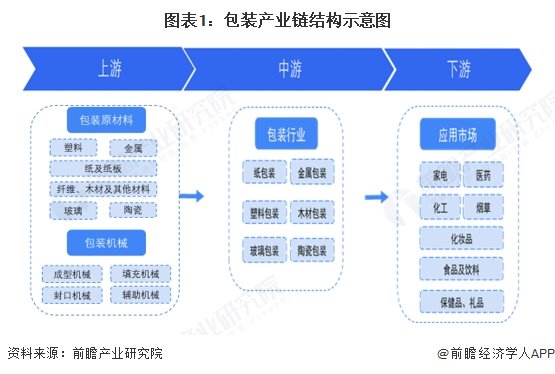
【干货】2025年包装行业产业链全景梳理及区域热力地图
Qian Zhan Wang· 2025-07-10 03:23
Industry Overview - The packaging industry in China has established a significant production scale and has become an important part of the manufacturing sector, covering design, production, printing, raw material supply, and machinery manufacturing [3][5] - The packaging supply chain includes upstream raw materials such as paper, plastic, glass, aluminum, and steel, as well as equipment like forming machines and filling machines [1][3] Regional Distribution - Guangdong Province has the highest concentration of packaging companies, followed by Shandong and Jiangsu, with notable enterprises like Kingfa Technology and Nine Dragons Paper in these regions [5][8] Representative Companies - Leading companies in the glass packaging sector include Shandong Pharmaceutical Glass and Zhengchuan Co., while major players in paper packaging include Dazhengda and Wanshun New Materials [8][9] - Companies like Jiamei Packaging and Yongxin Co. focus on metal packaging, with Jiamei's business heavily involved in beverage packaging [10][11] Investment Trends - Recent investment activities in the packaging industry include establishing overseas subsidiaries, horizontal acquisitions, and strategic partnerships [11] - For instance, Huayuan Holdings plans to establish a knowledge and standards innovation center for the metal packaging industry by May 2025 [11] - A significant acquisition was completed by Aori Jin, acquiring all issued shares of COFCO Packaging for approximately HKD 60.7 billion [11]