Qian Zhan Wang

Search documents
2025年中国包装行业发展现状分析:行业竞争激烈,盈利能力减弱
Qian Zhan Wang· 2025-07-15 07:24
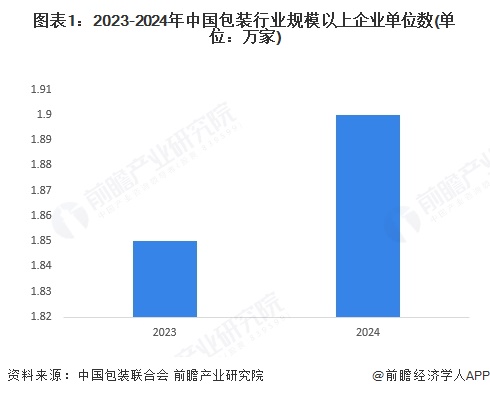
Group 1 - The number of scale enterprises in China's packaging industry is nearly 19,000, showing a steady increase and intensifying market competition, with a year-on-year growth of 2.70% in 2024 [1] - The total profit of scale enterprises in China's packaging industry is projected to be 97.5 billion yuan in 2024, a decrease of 6.43% compared to 2023, primarily due to rising raw material costs, intensified market competition, and fluctuating market demand [2] - The revenue of plastic packaging enterprises is expected to see the largest growth, with an 8.87% year-on-year increase in 2024, while other segments also show varying degrees of revenue growth [6] Group 2 - Guangdong province ranks first in the production of packaging special equipment, with an output of 748,133 units in 2024, accounting for 45.83% of the national total [7][9] - The cumulative output of the packaging special equipment industry in China is projected to reach 1.6325 million units in 2024, reflecting a year-on-year growth of 24.5% [9] - The packaging industry in China is characterized by a large number of challengers due to its current phase of green transformation, with significant market growth potential and continuous influx of competitors [11]

2025年中国奶酪行业销售发展现状 零售和餐饮是主要销售渠道【组图】
Qian Zhan Wang· 2025-07-15 05:27
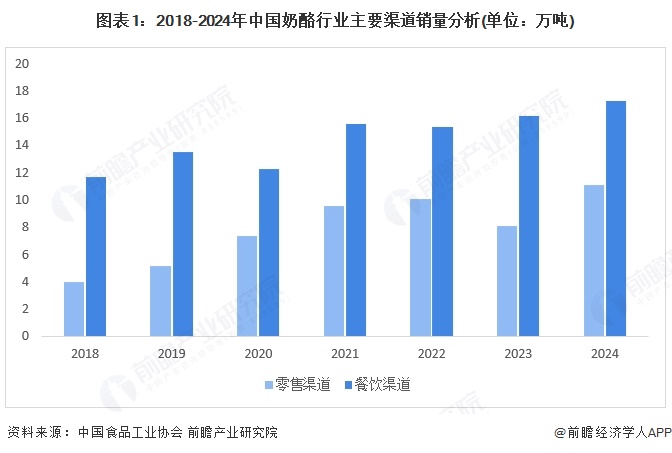
Core Insights - The Chinese cheese industry is experiencing growth, particularly in the restaurant channel, which significantly influences overall cheese sales [1][4] - Retail sales of cheese are projected to reach 111,400 tons in 2024, while restaurant sales are expected to be 173,000 tons [1] Retail Channel Analysis - The retail segment primarily consists of children's snacks, adult snacks, and family baking ingredients, with children's cheese accounting for over 50% of the retail market [2] - Mozzarella cheese and cheese slices are the main products for family baking, targeting higher-income women aged 18-35 [2] - The market for adult snack cheeses, such as cheese sticks, cheese crisps, and cheese cups, shows significant growth potential [2] Restaurant Channel Analysis - Cheese is widely used in Western fast food, baking, and new-style tea drinks, with its application expanding into Chinese cuisine [4] - Key cheese types in Western fast food include mozzarella, cream cheese, and sliced cheese, while new-style tea drinks utilize cheese for toppings [4][5] - The demand for cheese in Chinese dishes, such as cheese hot pot and cheese ribs, is increasing [4] Consumer Characteristics - The cheese industry relies heavily on brand recognition, with consumers prioritizing nutrition, safety, and quality of ingredients [7] - There is a high sensitivity to price among consumers, and companies are focusing on enhancing brand visibility through retail channels [7] - The market is seeing stricter production standards, leading to healthier and safer cheese products [7] Business Model Analysis - The cheese industry's business model encompasses key partners, core resources, customer relationships, and revenue sources, reflecting a comprehensive approach to market engagement [8]
油车更污染环境?最新研究:电动车全生命周期碳排放比燃油车低73%【附新能源汽车行业市场分析】
Qian Zhan Wang· 2025-07-15 03:59
Core Viewpoint - The latest research from the International Council on Clean Transportation (ICCT) indicates that electric vehicles (EVs) in Europe have a lifecycle greenhouse gas emission that is 73% lower than that of traditional gasoline vehicles, including emissions from battery production [2] Group 1: Lifecycle Emissions - Electric vehicles have a higher carbon footprint during the initial manufacturing phase due to battery production, approximately 40% higher than gasoline vehicles, but this difference is offset after driving about 17,000 kilometers [2] - From 2025 to 2044, the average carbon emissions for medium-sized electric vehicles in the EU are projected to be around 63 grams of CO2 equivalent per kilometer, compared to approximately 235 grams for gasoline vehicles, which includes tailpipe emissions and indirect emissions from fuel production and vehicle manufacturing [2] Group 2: Market Growth in China - The penetration rate of new energy vehicles (NEVs) in China reached 31.6% in 2023, a significant increase from 2022, and is expected to rise to 40.3% in the first 11 months of 2024 [5] - In the first half of 2023, China's automotive industry saw a year-on-year growth of over 10% in multiple economic indicators, with NEV production and sales reaching 696.8 million and 693.7 million units respectively, marking a year-on-year increase of 41.4% and 40.3% [8] Group 3: Future Projections - It is anticipated that by 2025, the penetration rate of NEVs will reach 50%, with sales projected at approximately 16.5 million units; by 2030, the penetration rate is expected to be between 70% and 75% [9] - By 2035, the penetration rate of pure electric vehicles is expected to reach 85% to 90%, establishing a market structure of 333 for gasoline, hybrid, and pure electric vehicles [9]
特殊信号!挖掘机突然被卖爆,关乎国运的重大转向来了
Qian Zhan Wang· 2025-07-15 02:09
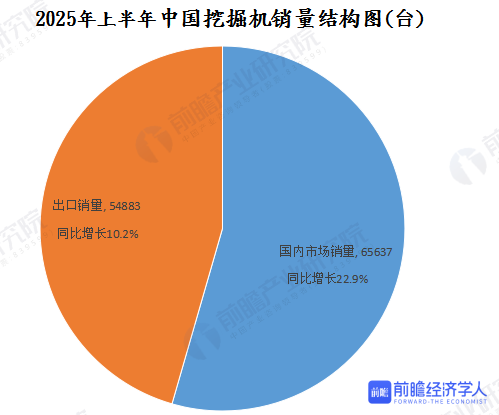
Core Viewpoint - The sudden surge in excavator sales in China, with a 16.8% year-on-year increase in sales, indicates a strong demand despite pressures in the real estate sector and infrastructure projects being paused in various provinces [1][3]. Group 1: Excavator Sales and Market Trends - In the first half of the year, a total of 120,520 excavators were sold, with domestic sales reaching 65,637 units, marking a significant increase of 22.9% [1][3]. - The "excavator index" serves as a barometer for fixed asset investment and economic changes, suggesting that strong excavator sales typically reflect a booming real estate and infrastructure market [3]. - The highest monthly sales growth rate exceeded 99%, reaching a five-year high [1]. Group 2: Infrastructure Investment and Water Conservancy Projects - Infrastructure investment in China grew by 5.8% year-on-year in the first quarter, outpacing both import/export growth (1.3%) and consumption growth (4.6%) [3]. - Water conservancy projects are a major driver of this growth, with investments projected to exceed 1 trillion yuan in both 2023 and 2024 [3][4]. - Approximately 3 trillion yuan has been invested in water conservancy infrastructure over the past two years, which is double the investment in high-speed rail [4]. Group 3: Canal Construction Projects - Eight provinces are collaborating on significant canal construction projects, with total investments reaching billions, such as the Zhejiang-Jiangxi-Guangdong Canal with an estimated investment of 320 billion yuan [6][7]. - These projects are expected to enhance China's inland waterway transportation network, creating a comprehensive system that connects various regions [8]. Group 4: Equipment Renewal and Industry Growth - A large-scale equipment renewal initiative is underway, with a target to increase equipment investment by over 25% by 2027 [11][12]. - The excavator sector is a primary focus of this renewal, with an estimated 400,000 to 500,000 units needing replacement [13]. - Major manufacturers like SANY Heavy Industry are experiencing a resurgence in orders, with profit margins soaring by 56.4% year-on-year in the first quarter [15]. Group 5: Export Trends and Global Demand - Excavator exports reached 54,883 units in the first half of 2025, reflecting a 10.2% year-on-year increase, with June alone seeing a 19.3% growth [16][17]. - Emerging markets, particularly in Latin America, India, and Africa, are driving demand, especially in countries involved in the Belt and Road Initiative [17]. Group 6: Future Industry Transformation - The engineering machinery sector is undergoing a transformation towards electrification and intelligence, driven by environmental policies and the need for modernization [18][20]. - The market for electric engineering machinery is expected to reach 400 billion yuan annually by 2035, with a projected penetration rate of 30% [18]. - Key regions like Hunan, Jiangsu, and Shandong are leading in engineering machinery production, but face challenges in technology and supply chain collaboration [19][20].


2025年中国运动服价值链分析:采购原材料是运动服产品生产的主要成本
Qian Zhan Wang· 2025-07-14 06:36
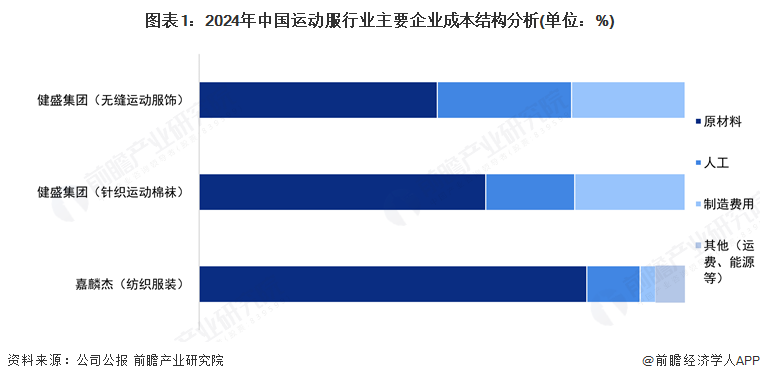
Core Insights - The article discusses the cost structure and pricing mechanisms in the Chinese sportswear industry, highlighting the trends in material costs, labor costs, and the overall value chain [1][2][6]. Cost Structure - In the production of sportswear, raw materials constitute the largest cost component, although their proportion has been declining in recent years. For instance, in 2024, the raw material cost for seamless sportswear from Jian Sheng Group is projected to be 49.01%, while for knitted cotton socks, it is 58.97%. Additionally, Jia Lin Jie reports a raw material cost proportion of 79.8% [1][2]. - Labor costs represent the second-largest expenditure, fluctuating between 10% and 30%, while manufacturing expenses range from 3% to 25% [1]. Pricing Mechanism - The pricing of sportswear in China is influenced by the supply side, manufacturing side, value-added premiums, and consumer demand elasticity. The cost prices on the supply side include material, equipment, technology, and labor costs, which are then transformed into production costs at the manufacturing level. These costs, along with supply-demand premiums, R&D costs, and corporate profits, determine the "manufacturing price" that is transmitted through distribution channels to the end market [6]. Value Chain - The value chain of the Chinese sportswear industry exhibits a "low-middle, high-both-ends" trend. The upstream consists of textile raw materials and equipment suppliers, while the midstream involves the production of various sportswear. The downstream primarily includes sales through online platforms and offline stores [8]. - The production process begins with designers creating concepts based on market demand and trends, followed by sourcing raw materials for production. While well-known brands often produce in-house, many opt to use authorized professional factories for manufacturing, which are then sold through specialized channels. High-end brands typically enjoy higher pricing and profit margins, whereas traditional textile manufacturers face tighter margins due to rising labor costs [10].
2025年中国建筑节能行业应用现状 公共建筑主导节能市场【组图】
Qian Zhan Wang· 2025-07-14 04:12
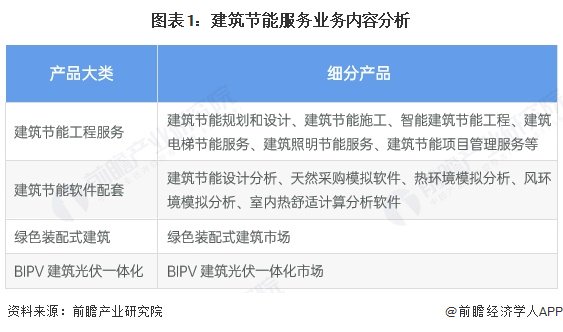
Core Insights - The article discusses the growth and trends in the building energy efficiency sector in China, highlighting the increasing energy-efficient building area and the investment trends in public, residential, and industrial buildings [1][4]. Group 1: Building Energy Efficiency Services - Building energy efficiency services include engineering services, software support, green prefabricated buildings, and BIPV (Building Integrated Photovoltaics) [1][2]. - Different building types require tailored energy-saving solutions, with public buildings focusing on systemic energy savings and residential buildings emphasizing comfort and cost balance [1]. Group 2: Energy-Efficient Building Area - As of 2020, China's energy-efficient building area reached 238.0 billion square meters, growing to 303.0 billion square meters by 2022, and further expanding to 326.8 billion square meters by 2023 [4]. - Projections indicate that by 2024, the energy-efficient building area could reach 360 billion square meters [4]. Group 3: Public Building Energy Consumption - Public buildings account for over 20% of national energy consumption, with hospitals, schools, and office buildings making up 38% of total building energy consumption [5]. - Investment in office buildings and commercial properties has been declining since 2018, with a projected investment of 416 billion yuan in 2024, reflecting a 9% year-on-year decrease [5]. Group 4: Residential Building Energy Efficiency - Residential energy efficiency focuses on insulation, natural lighting, renewable energy integration, and smart control technologies [8]. - The investment in residential buildings peaked and then declined, with 2023 investment dropping to 838.2 billion yuan and a further decrease to 760.4 billion yuan projected for 2024, a 10.5% decline [8]. Group 5: Industrial Building Energy Efficiency - Distributed photovoltaics are a significant application in industrial building energy efficiency, with cumulative installed capacity exceeding 100 million kilowatts by 2023 and projected to surpass 200 million kilowatts by 2024 [10][12].




一文读懂北京市集成电路特色产业发展现状与投资机会(附特色产业现状、空间布局、重点项目、产业投融资情况、投资机会分析等)
Qian Zhan Wang· 2025-07-14 03:58
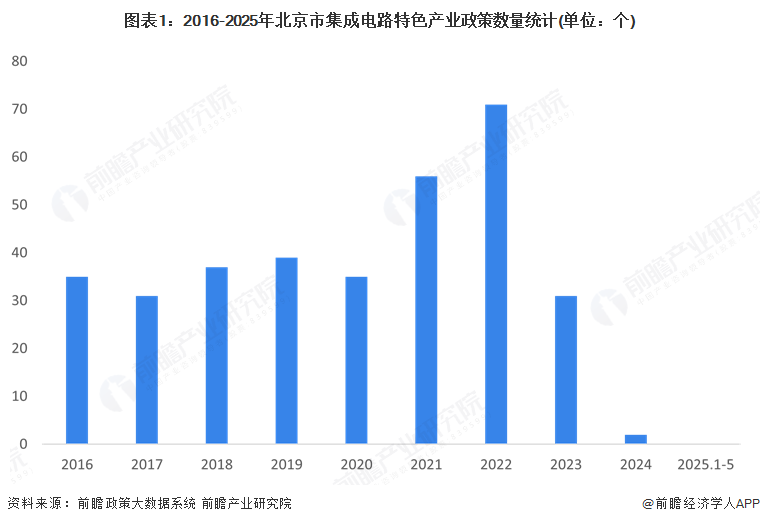
Group 1 - The core viewpoint of the article highlights the development of Beijing's integrated circuit industry, emphasizing its policy environment, industry scale, and investment opportunities [1][4][28] - As of May 2025, Beijing has implemented 464 policies related to the integrated circuit industry, with a peak of 71 policies in 2022 [1][4] - The integrated circuit industry in Beijing aims to achieve a revenue of 300 billion yuan by 2025, supported by various policies across financial, technological, and talent dimensions [4][12] Group 2 - The integrated circuit industry in Beijing has a complete supply chain, including design, manufacturing, packaging, and materials, with a production volume reaching 25.81 billion units in 2024, an increase of 9.6% [12][15] - The industry is concentrated in districts such as Haidian, Chaoyang, and the Economic Development Zone, with Haidian being the core area for integrated circuit design [15][21] - As of May 2025, there are 23,861 integrated circuit-related enterprises in Beijing, with 1,238 high-tech enterprises and 477 specialized small and medium-sized enterprises [18][21] Group 3 - Investment in Beijing's integrated circuit industry has shown fluctuations, with the highest financing amount reaching 25.757 billion yuan in 2021 [28][29] - The financing activities in 2025 indicate a vibrant investment environment, with numerous rounds of financing occurring, particularly in early stages [28][29] - Key investment opportunities include high-end equipment development, semiconductor materials, and applications in automotive electronics and industrial internet [35][37]
2025年中国声呐行业区域竞争分析:江苏技术竞争力强
Qian Zhan Wang· 2025-07-12 04:13
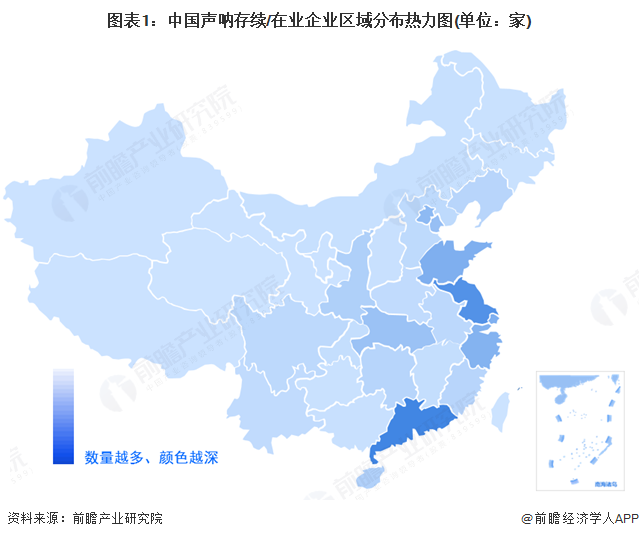
Group 1 - The sonar industry in China has over 690 active companies, with Guangdong province having the highest number at approximately 110 companies, followed by Jiangsu, Shandong, and Zhejiang [1] - Jiangsu province leads in effective patent applications in the sonar industry, with a total of 1,186 applications, indicating its strategic positioning and technological innovation in this field [3] - China Shipbuilding Industry Corporation holds the highest number of effective patent applications among companies, totaling 25, followed by Zhongke Tanhai (Shenzhen) Marine Technology Co., Ltd. with 21 applications [5] Group 2 - Zhejiang province has the highest number of sonar bidding projects, totaling 657, followed by Guangdong, Jiangsu, and Anhui with 492, 420, and 334 projects respectively [7] - Jiangsu province also has the most winning bids in the sonar sector, with 385 projects, followed by Shandong, Zhejiang, and Guangdong with 358, 283, and 195 projects respectively [9]


不如买纯电动车!蔚来李斌吐槽:增程车电池越做越大,油箱一年用一两次不太合算【附电动汽车充电桩行业市场分析】
Qian Zhan Wang· 2025-07-11 10:57
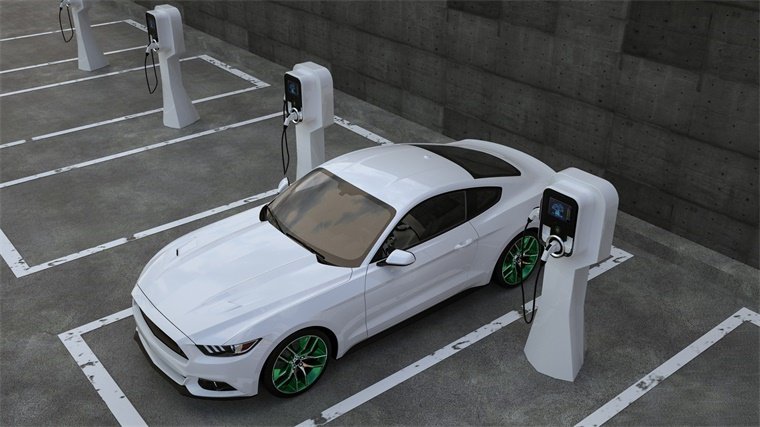
Group 1 - NIO's founder and CEO Li Bin highlighted the inefficiency of range-extended vehicles, stating that the battery size is increasing while the fuel tank is rarely used, making it impractical to carry heavy equipment daily [2] - NIO's co-founder and president Qin Lihong emphasized that the user experience of pure electric vehicles has significantly improved due to the development of charging infrastructure, making them a more viable option compared to range-extended vehicles [2] - NIO has established the world's largest high-speed battery swap network, with over 1,000 stations covering major urban areas, which alleviates concerns about long-distance travel for electric vehicle users [2] Group 2 - The charging infrastructure in China is experiencing explosive growth, with an increase of 3.288 million charging points from January to October 2024, representing a year-on-year growth of 19.8% [3] - As of October 2024, the total number of charging points in China reached 11.884 million, showing a year-on-year increase of 49.4% [3] - The Ministry of Industry and Information Technology plans to achieve a vehicle-to-charging point ratio of 2:1 by 2025 and 1:1 by 2030, projecting that the number of charging points will reach 80 million by 2030 [5] Group 3 - By the end of 2021, the number of battery swap stations in China was approximately 1,600, with NIO holding a market share of 48.6% through 777 stations [7] - NIO continues to lead in the construction of battery swap stations and is increasing its investment to expand the coverage of its network [7]


2025年中国银基合金靶材市场分析:市场规模不断扩张,但国产化不足
Qian Zhan Wang· 2025-07-11 08:17
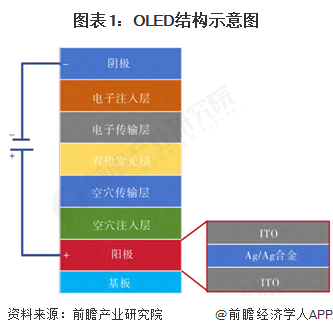
Core Viewpoint - The silver alloy target material market in China is experiencing rapid growth, driven by increasing demand in the semiconductor integrated circuit sector, particularly for OLED display panels [1][3][4]. Group 1: Market Size and Demand - The market size for silver alloy targets in China is projected to reach 135 million yuan in 2024, with an expected increase to nearly 160 million yuan by 2025 [3]. - The consumption of silver alloy targets in the G6.0 generation line is significant, with usage increasing from 6.20 tons in 2021 to an estimated 22.38 tons in 2024, and further to 23.56 tons in 2025, indicating a compound annual growth rate (CAGR) exceeding 37% [4]. Group 2: Market Competition and Supply - The silver alloy target market in China is predominantly controlled by Japanese, Korean, and German companies, with over 95% market share held by Mitsubishi (over 50%), LT (34.95%), and Materion (6.8%) [6]. - Following Mitsubishi's gradual exit from the target material market, the market share of Korean LT and German Materion is expected to rise, providing opportunities for domestic manufacturers [6]. Group 3: Technological Development - The development of silver alloy targets in China is hindered by a lag in preparation technology compared to Japan and South Korea, primarily due to long-standing technology and patent restrictions [10]. - Domestic companies such as Astone and Shenzhen Top New Materials are actively researching and developing silver alloy targets by optimizing preparation processes and adding elements like In and Sc to enhance performance [10][12]. Group 4: Innovation and Research Directions - Key research directions for improving silver alloy targets include alloying and preparation process control, with a focus on enhancing electrical, optical, and environmental resistance properties through the addition of various elements [10][12]. - The table outlines the effects of different additive elements on the performance of silver alloy films, highlighting the need for further optimization in alloy composition and preparation techniques to develop high-performance silver alloy targets [12].