Qian Zhan Wang

Search documents
30万以上新能源轿车第一!华为余承东:享界S9男女车主比例6:4,25-40岁占比达60%【附新能源汽车行业市场分析】
Qian Zhan Wang· 2025-07-09 11:30
Group 1 - The core viewpoint of the articles highlights the growing acceptance and market share of electric vehicles (EVs) in China, particularly focusing on the success of the Huawei Enjoy S9 model, which has attracted a diverse demographic of consumers, including a significant proportion of female drivers and younger age groups [2] - The Enjoy S9 has achieved impressive sales figures, delivering 4,154 units in the previous month, making it the best-selling electric sedan priced above 300,000 yuan [2] - As of mid-2024, the total number of electric vehicles in China reached 24.72 million, with 4.397 million new registrations in the first half of the year, accounting for 7.18% of the total vehicle population [2] Group 2 - The Chinese EV market is characterized by an oligopolistic structure dominated by Tesla and BYD, with Tesla leveraging advanced technology and global brand influence, while BYD capitalizes on its battery technology and extensive product line [3] - Emerging brands such as NIO, Xpeng, and Li Auto are rapidly gaining market share by focusing on user experience and innovation, while traditional automakers like Geely and SAIC are accelerating their electric transformation [3] - The competitive landscape is expected to undergo significant changes, with industry leaders predicting that only a handful of companies will survive the upcoming market consolidation phase [6] Group 3 - Technological innovation is identified as a key driver for the development of the EV industry, helping companies enhance product performance, reduce costs, and create competitive advantages [7] - The transition from incremental competition to stock competition in the EV market is anticipated, emphasizing the importance of achieving scale and keeping pace with AI advancements [6]


70天横跨3万公里,搭载超7000辆电动车!比亚迪“深圳号”滚装船完成首次跨洋远航
Qian Zhan Wang· 2025-07-09 07:41
Core Viewpoint - BYD has achieved a significant breakthrough in the maritime transportation of electric vehicles, marking a strategic expansion in its global operations and logistics capabilities [2]. Group 1: Maritime Operations - The "Shenzhen" roll-on/roll-off ship completed its first transoceanic voyage, covering over 30,000 kilometers in 70 days, transporting over 7,000 electric vehicles to Brazil [2]. - The "Shenzhen" is BYD's fourth specialized electric vehicle transport ship, with a length of 219.9 meters and a capacity to carry 9,200 standard vehicles across 16 decks [2]. - Following its initial voyage, the "Shenzhen" set off again on July 8, carrying 6,818 electric vehicles to Europe [2]. Group 2: Global Expansion - BYD's electric vehicle footprint has expanded to over 110 countries and regions across six continents, with overseas sales exceeding 470,000 units in the first half of 2025, a 132% year-on-year increase [2]. - The company has successfully secured orders in multiple countries, including Hungary, Colombia, and Sweden, demonstrating its strong presence in the global electric bus market [2]. - BYD aims to operate eight roll-on/roll-off ships by early 2026, with an annual capacity exceeding 1 million electric vehicles, reinforcing its logistics foundation for global expansion [2]. Group 3: Market Performance - In April, BYD's sales of pure electric vehicles in Europe surpassed those of Tesla for the first time, with a 397% year-on-year increase in registrations in the EU and UK markets in May [2]. - BYD has become the highest and fastest-growing electric vehicle exporter in China, with an expected export volume of 433,000 units in 2024, a 71.8% increase [2].


重磅!2025年中国及31省市奶酪行业政策汇总及解读(全)政策鼓励奶酪拓展零售渠道,支持培养国民饮食习惯
Qian Zhan Wang· 2025-07-09 06:10
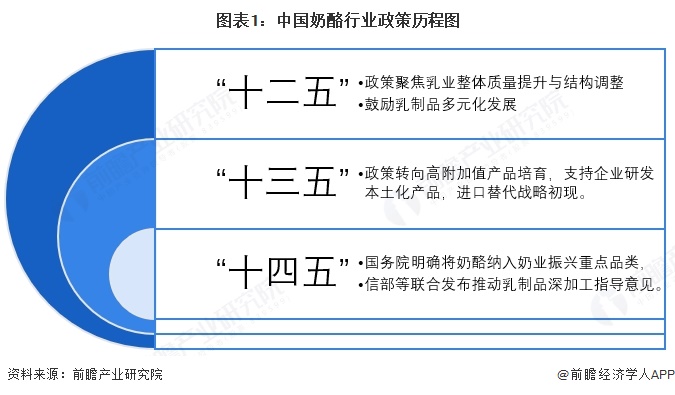
Core Insights - The article discusses the evolution of China's cheese industry policies from initial guidance to systematic promotion, highlighting significant milestones and government initiatives aimed at enhancing the dairy sector, particularly cheese production [1][3]. Policy Evolution - During the 12th Five-Year Plan, policies focused on overall quality improvement and structural adjustments in the dairy industry, with the 2013 State Council opinion encouraging diversification in dairy products but not specifically mentioning cheese [1]. - The 13th Five-Year Plan shifted towards high-value product development, with the 2018 Ministry of Agriculture and Rural Affairs document first advocating for the moderate development of cheese and other dry dairy products, supporting local product R&D and import substitution strategies [1]. - The 14th Five-Year Plan saw a significant policy boost, with the 2021 State Council explicitly including cheese as a key category for dairy revitalization, and the 2022 Ministry of Industry and Information Technology guidelines aiming to increase cheese production capacity to over 10% [1]. National Policy Summary - China has introduced multiple national policies focusing on high-quality development in the dairy sector, emphasizing dairy revitalization, quality safety, technological upgrades, and green transformation [3]. - The State Council and Ministry of Agriculture are leading efforts to scale up dairy source bases, enhance quality control across the supply chain, and revise national standards for dairy products [3]. - Financial support is being provided for farm renovations and technological upgrades in dairy enterprises, with a goal to enhance the competitiveness of domestic dairy products, including cheese [3]. Provincial Policy Overview - Following the national directives, various provinces have issued policies to strengthen local dairy product safety and promote cheese production, with regions like Inner Mongolia, Hebei, and Shanghai actively supporting cheese industry development [11][12]. - Specific measures include subsidies for new large-scale dairy farms, support for fresh milk processing, and initiatives to enhance local dairy product quality and safety [12][14]. Cheese Industry Development Goals - The "14th Five-Year Plan for Dairy Industry Competitiveness Enhancement" outlines key tasks for cheese, including promoting the development of pasteurized milk, low-temperature fermented milk, and cheese products tailored to Chinese consumer preferences [11]. - The plan aims to increase domestic cheese production efficiency and consumer awareness of dairy nutrition, fostering a diverse and localized consumption habit [11]. Conclusion - The comprehensive policy framework at both national and provincial levels indicates a strong commitment to advancing the cheese industry in China, with a focus on quality, safety, and technological innovation, positioning the sector for sustainable growth [3][11].
2025年江苏省土壤修复行业发展现状 土壤环境风险得到基本管控【组图】
Qian Zhan Wang· 2025-07-09 05:09
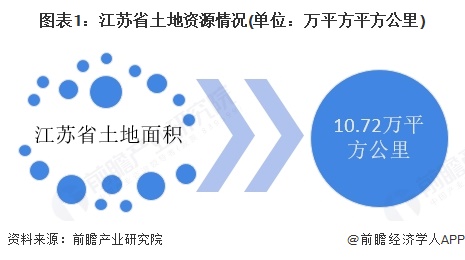
Group 1: Land Resources in Jiangsu Province - Jiangsu Province covers an area of 107,200 square kilometers, accounting for 1.12% of the national land area, primarily consisting of fertile plains suitable for agricultural development [1] Group 2: Soil Pollution Monitoring and Status - In 2023, Jiangsu conducted soil quality monitoring at 778 national monitoring sites, with 94.7% of points showing pollutant levels below risk screening values, indicating overall good soil quality, although construction land pollution remains a concern [2][4] - The province has 87 contaminated sites pending control or remediation as of May 2025, with 57 sites successfully removed from the pollution risk management and remediation list since 2020 [8] Group 3: Fertilizer Usage Trends - Jiangsu has seen a continuous decline in fertilizer usage since 2010, with 2023 usage at 2.6704 million tons, projected to decrease to 2.6126 million tons in 2024 [7] Group 4: Soil Pollution Prevention Funding - The budget for soil pollution prevention in Jiangsu for 2025 is set at 13.839 million yuan, following a peak funding of nearly 200 million yuan in 2022 [11] Group 5: Environmental Safety Goals - The Jiangsu government aims for a 93% safety utilization rate of contaminated farmland by 2025, with a focus on both agricultural and construction land soil safety [12][15]
【调节阀】行业市场规模:2024年中国调节阀行业市场规模约270亿元 石油化工市场占比约38%
Qian Zhan Wang· 2025-07-09 04:15
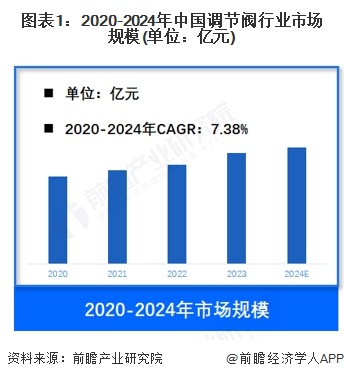
Core Viewpoint - The Chinese control valve industry is experiencing rapid growth, with a projected market size of approximately 27 billion yuan in 2024 and a compound annual growth rate (CAGR) of 7.38% over the past four years [1]. Industry Overview - Control valves are essential components used to regulate flow, pressure, and temperature in various industrial processes, and the industry has evolved over 60 years, currently entering a phase of high-quality development [1]. - The main application markets for control valves in China include the petrochemical sector, power generation, biomedicine, air separation, and nuclear power [4]. Application Market - The petrochemical market and the power market are the two largest segments within the Chinese control valve industry, accounting for 38% and 19% of the market share, respectively, in 2024 [4]. Industry Competition - Leading companies in the domestic control valve industry include Zhejiang Lino, Wuzhong Instrument, Chuan Yi Co., Intelligent Control, and Zhejiang Control Valve [6]. - Chuan Yi Co. is expected to have a production capacity of 185,000 units in 2024, leading the domestic market [6]. Company Production Capacity - Zhejiang Lino has a production capacity utilization rate close to saturation, with a production of 243,000 units in 2023 and an estimated capacity of 50,000 units for 2024 [7]. - Wuzhong Instrument and its subsidiaries have a manufacturing capability of 200,000 customized products annually [7]. - Intelligent Control has an estimated production capacity of 32,000 units for control valves in 2023 [7]. - Zhejiang Control Valve has a production capacity of approximately 15,000 units annually, supported by advanced manufacturing technologies [7].
【干货】2025年食用油产业链全景梳理及区域热力地图
Qian Zhan Wang· 2025-07-09 03:12
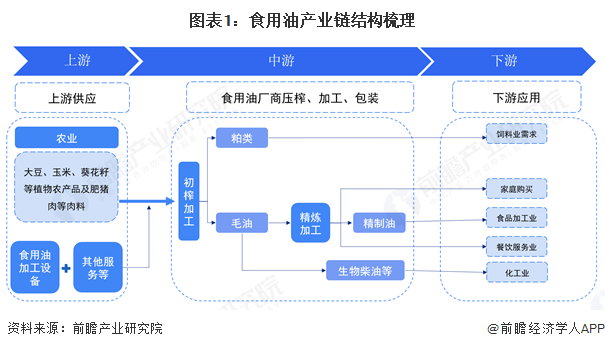
Core Insights - The article provides a comprehensive overview of the edible oil industry chain in China, detailing its various segments including oilseed cultivation, pressing, refining, packaging, and sales channels [1][5]. Industry Overview - The edible oil industry in China comprises numerous companies, with key producers including Jinlongyu, Shandong Luhua, Shanghai Liangyou, Jingliang Holdings, Jinjian Rice Industry, Xiwang Food, Daodaoquan, and COFCO Technology [2][5]. - The upstream raw materials are sourced from various agricultural enterprises, while downstream consumers include restaurants and e-commerce platforms like JD.com and Alibaba [2]. Regional Distribution - As of May 30, 2025, there are 60,329 registered companies in the edible oil industry chain in China, with Shandong province having the highest number at 5,946, followed by Hunan (5,269), Henan (4,519), and Sichuan (3,762), collectively accounting for 32.3% of the total [5][6]. - The geographical distribution of edible oil companies is closely linked to transportation convenience and agricultural production capabilities [5]. Listed Companies - Among the listed companies in the edible oil sector, 10 have disclosed revenue data related to edible oil, with a concentration in coastal regions. Notable companies include Xiwang Food and Jiahua in Shandong, Daodaoquan and Jinjian Rice Industry in Hunan, and Jinlongyu in Shanghai [6][10]. Industrial Parks - There are nearly 40 industrial parks related to edible oil production in China, primarily located in Sichuan (6 parks), followed by Henan and Zhejiang (4 parks each). Despite Shandong having the most companies, it has only 3 industrial parks, indicating a dispersed nature of edible oil enterprises in the province [10].




投资深圳 | 一文看懂深圳市高端医疗器械发展现状与投资机会前瞻(附高端医疗器械产业现状、空间布局、投资机会分析等)
Qian Zhan Wang· 2025-07-09 02:12
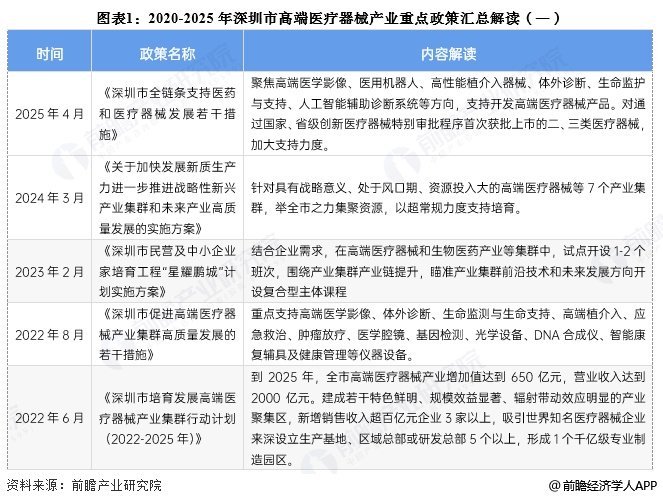
Core Insights - Shenzhen is transforming from "policy dividends" to "industry dividends" with a focus on technological innovation, making it a strategic hub for global investors in the high-end medical device industry [1] - The city has implemented multiple supportive policies to enhance the high-end medical device sector, aiming to gather resources and support strategic emerging industries [1][2] Policy Environment - Shenzhen has introduced various policies to support the high-end medical device industry, including the "Implementation Plan for Accelerating the Development of New Quality Productivity" in March 2024, which targets seven strategic industry clusters [1][2] - The "Measures to Promote the High-Quality Development of the High-End Medical Device Industry Cluster" issued in August 2022 emphasizes support for specific areas such as high-end medical imaging and life monitoring [2][4] - By 2025, the goal is to achieve an industrial added value of 65 billion yuan and revenue of 200 billion yuan in the high-end medical device sector [2][4] Industry Chain Overview - Shenzhen has established a comprehensive industry chain covering upstream materials and production equipment, midstream manufacturing, and downstream applications [8] - The city is home to over 104 companies in high-end medical device materials and equipment, with significant numbers in various sub-sectors such as imaging and life monitoring [13][26] Industry Scale - In 2023, the output value of Shenzhen's medical device industry reached 99 billion yuan, accounting for approximately 10% of the national market [16][18] - The added value of the high-end medical device industry in Shenzhen is projected to reach 40 billion yuan in 2024 [18][19] Company Landscape - Shenzhen has seen a steady increase in the number of high-end medical device companies, with 93 new registrations in 2023, reflecting a growing ecosystem [22] - As of April 2025, Shenzhen has 14 listed companies in the high-end medical device sector, including one unicorn and over 41 specialized small giant enterprises [24][38] Financing Analysis - The financing landscape for Shenzhen's high-end medical device industry is active, with a significant number of early-stage investments indicating strong growth potential [30][33] - Notably, the financing is concentrated in districts like Nanshan and Baoan, with Nanshan being the most active area for investments [33] Investment Opportunities - The high-end medical device industry in Shenzhen presents substantial market potential and investment value, with various districts developing tailored strategies to attract investment [36][38] - Key investment directions include advanced imaging equipment, surgical robots, and high-compatibility implantable medical devices [38]
2025年全球AI玩具发展现状分析:技术演进推动产品个性化交互
Qian Zhan Wang· 2025-07-08 08:27
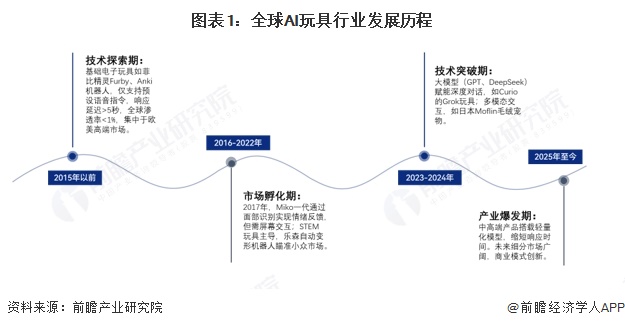
Group 1 - The global AI toy market is entering an explosive growth phase, transitioning from a technology exploration phase (before 2015) to a market incubation phase (2016-2022), and now to a technology breakthrough phase (2023-2024) with advancements in deep dialogue and multi-modal interaction [1] - The global toy market is projected to reach a size of $113.94 billion in 2024, with North America holding over 39.9% of the market share, driven by changing consumer preferences and increased disposable income [3] - The global AI toy market is expected to reach $18.1 billion in 2024, with AI enabling toys to interact with children in more personalized and engaging ways, enhancing learning and play experiences [5] Group 2 - The evolution of AI toy technology is driving personalized interactions, with features such as facial recognition and natural language processing becoming standard, allowing toys to meet emotional and personalized needs [7] - The global AI toy industry is showing multi-dimensional development trends, with deepening AI technology, expanding product functionalities, and increasing market competition leading to a shift towards mid-to-high-end products [10] - A variety of AI toys are emerging, such as Moxie, Fawn friends, and Curio, each offering unique interactive features and targeting different age groups, reflecting the growing complexity and educational value of AI toys [9]
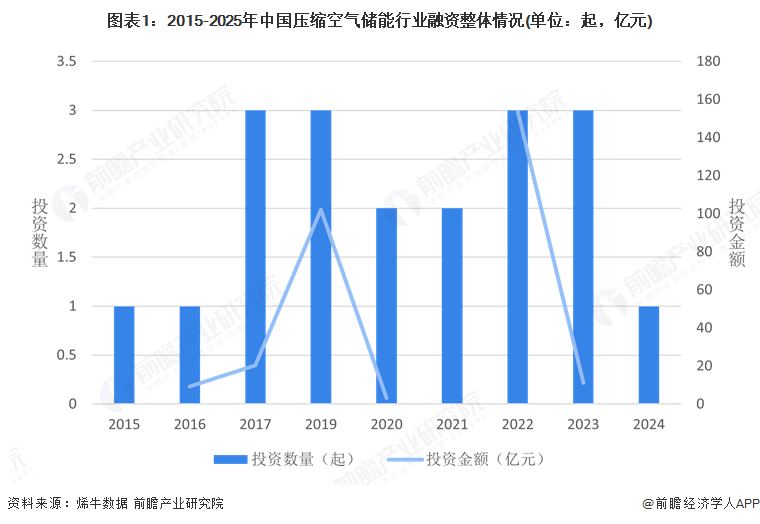
【投资视角】启示2025:中国压缩空气储能行业投融资分析(附投融资事件和产业基金等)
Qian Zhan Wang· 2025-07-08 08:02
Group 1 - The recent investment and financing activity in the compressed air energy storage (CAES) industry in China has decreased, with no financing events reported in 2025 as of May 13 [1][7] - The average single financing amount in the CAES sector has shown significant variation, with an average of 3.15 billion RMB in 2020 and a peak of 76.77 billion RMB in 2022, indicating a high demand for capital [2][4] - The financing rounds in the CAES industry have increasingly concentrated in later stages, with only three events in the angel and A rounds, suggesting high entry barriers for startups [4][14] Group 2 - The CAES industry financing is predominantly concentrated in Beijing and Jiangsu, with five and four companies respectively, reflecting the competitive advantages of large state-owned enterprises and local government support [6][9] - The primary investment focus in the CAES sector is on energy storage equipment manufacturing and the research and development of storage technologies and systems [9][10] - The majority of investors in the CAES industry are capital organizations, accounting for over 83%, with notable investment entities including Shenglong Investment and Dize Investment [14][16] Group 3 - As of May 13, 2025, there have been 23 financing events in the CAES industry in China, with a trend of initial growth followed by a decline in investment scale [7][21] - The CAES industry is characterized by a lack of dedicated industrial investment funds, although existing energy storage and renewable energy funds are expected to support its development [16][18] - The CAES sector is primarily represented by equipment manufacturing companies, which account for 42% of the total investment events, highlighting the importance of breakthroughs in core technologies [12][14]
2025年中国A级旅游景区及夜间旅游运营现状分析 运营状态向上发展【组图】
Qian Zhan Wang· 2025-07-08 05:13
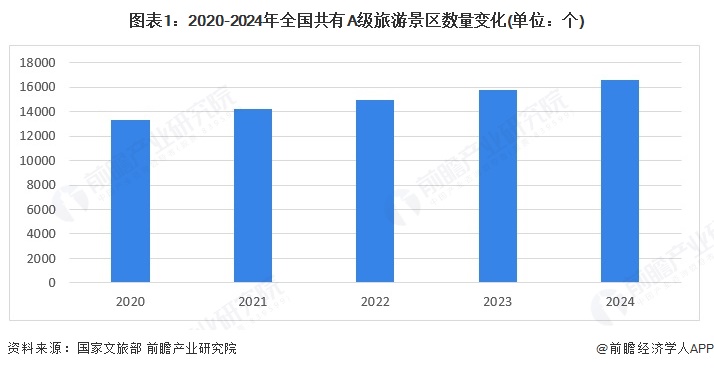
Group 1: A-Level Tourist Attractions - The number of A-level tourist attractions in China is projected to increase annually, reaching 16,541 by the end of 2024, an increase of 820 from 2023 [1] - The number of directly employed personnel in A-level tourist attractions is expected to rise to 1.653 million by the end of 2024, an increase of 46,000 from 2023 [2] - The total number of visitors to A-level tourist attractions is anticipated to reach 6.76 billion in 2024, an increase of 1.01 billion from 2023 [4] - The total revenue generated by A-level tourist attractions is projected to be 481.42 billion yuan in 2024, an increase of 74.55 billion yuan from 2023 [5] Group 2: National Night Culture and Tourism Consumption Aggregation Areas - From 2021 to 2024, the Ministry of Culture and Tourism has announced three batches of national-level night culture and tourism consumption aggregation areas, totaling 345 [8] - The provinces with the highest number of selected areas include Shanghai, Jiangsu, Shandong, and Sichuan, each with 16 [10] - Other notable provinces include Zhejiang, Fujian, Guangdong, and Guangxi with 15 each, and Beijing, Jiangxi, Hunan, and Yunnan with 14 each [10]