Qian Zhan Wang

Search documents
2025年中国电线电缆价值链分析:原材料是电线电缆生产最大的成本来源,国内电线电缆价值链重心后移
Qian Zhan Wang· 2025-05-08 08:13
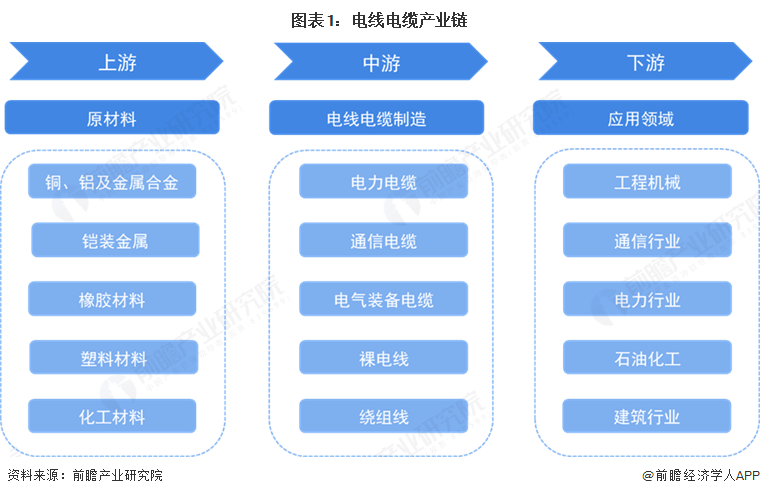
Group 1 - The core point of the article highlights the cost structure of the wire and cable industry, emphasizing that raw materials constitute the largest cost component in production [1][6] - The upstream sector provides essential raw materials such as copper, aluminum, rubber, and various chemicals, while the midstream focuses on manufacturing different types of cables [1][6] - The downstream sector includes industries that demand wire and cable products, such as construction, telecommunications, and power [1] Group 2 - In the power cable sector, raw material costs account for over 95% of the total production costs for companies like Dongfang Cable, Yuancheng Co., and Baosheng Co., with manufacturing costs ranging from 1% to 3% [2] - For electronic equipment cables, raw material costs are around 90%, which is lower than that of power cables, but still represents the primary cost source [5] - The overall raw material cost in the wire and cable industry is approximately 71%, with labor costs at about 14% and facility costs around 10% [6] Group 3 - The pricing in the wire and cable industry is influenced by supply-side costs, manufacturing costs, and consumer demand elasticity, creating a multi-tiered price transmission mechanism [10] - The value chain in the wire and cable industry is shifting towards higher value-added services, driven by digital transformation and innovation [12]


【最全】2025年硅钢行业上市公司全方位对比(附业务布局汇总、业绩对比、业务规划等)
Qian Zhan Wang· 2025-05-08 06:40
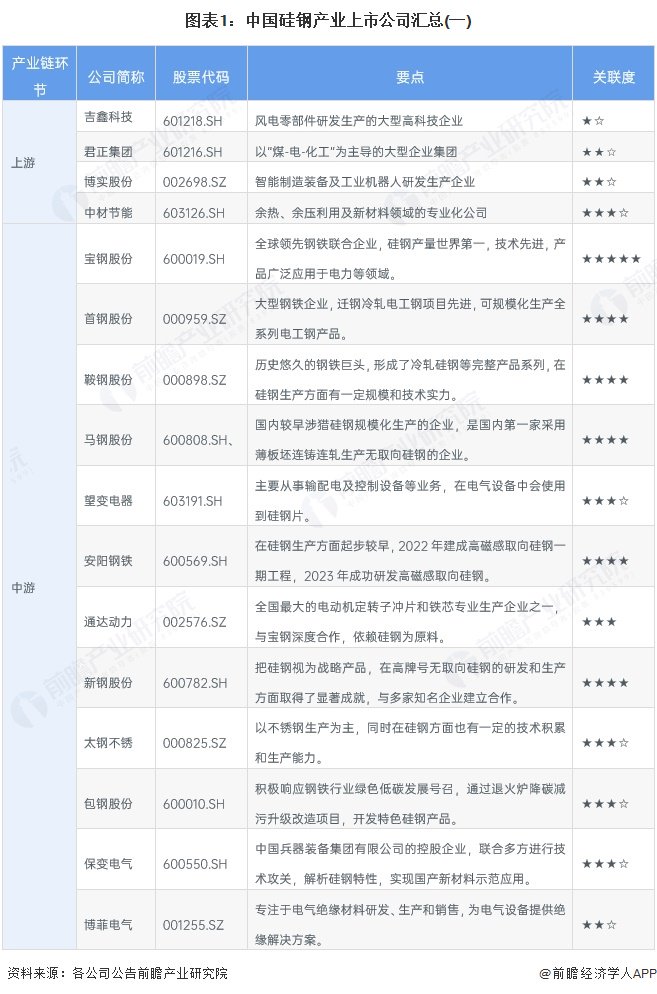
Core Insights - The article discusses the current state and future prospects of the silicon steel industry, highlighting key players, their performance, and strategic developments in the sector [1][3][5]. Industry Overview - The silicon steel industry comprises numerous upstream companies involved in the production of silicon iron and industrial silicon, with major players including Junzheng Group, Ansteel, and New Steel Group [1]. - Midstream production includes companies like Baosteel, Shougang, Taiyuan Iron and Steel, and others, which are significant producers of silicon steel [1]. Company Performance - Baosteel is the world's leading producer of silicon steel, with a production capacity exceeding 4 million tons and a focus on high-value products [15][18]. - Shougang's revenue for the first three quarters of 2024 reached 819.7 billion yuan, with a gross margin of 3.74%, primarily from electrical steel products [13][14]. - Companies like Ansteel and Maanshan Steel are facing challenges, with negative ROE indicating operational inefficiencies and potential market issues [6][7]. Financial Metrics - Baosteel's EPS remains positive, reflecting strong profitability, while companies like Liugang and Chongqing Steel report negative EPS, indicating financial difficulties [7][9]. - The overall profit margin in the steel industry is under pressure, with a reported loss of 34.1 billion yuan in the black metal smelting and rolling industry for the first nine months of 2024 [7]. Market Capitalization - Baosteel's market capitalization stands at 148.32 billion yuan, showcasing its strong market position, while other companies like Baogang and Shougang have lower valuations due to performance issues [9][10]. Production Capacity and Developments - Baosteel's silicon steel production capacity includes 1 million tons per year of oriented silicon steel, leading the industry [15][18]. - Future projects include Shougang's new high-end non-oriented silicon steel production line, expected to produce 350,000 tons annually [18][20]. Strategic Planning - The industry is moving towards high-end, green, and intelligent production, with companies like Baosteel investing in smart manufacturing technologies [20][22]. - Future demand for oriented silicon steel is expected to grow due to the increasing market for high-efficiency transformers, driven by advancements in supercomputing centers [20][22].





【投资视角】启示2025:中国饲料行业投融资及兼并重组分析(附投融资汇总、产业园区和兼并重组等)
Qian Zhan Wang· 2025-05-08 03:09
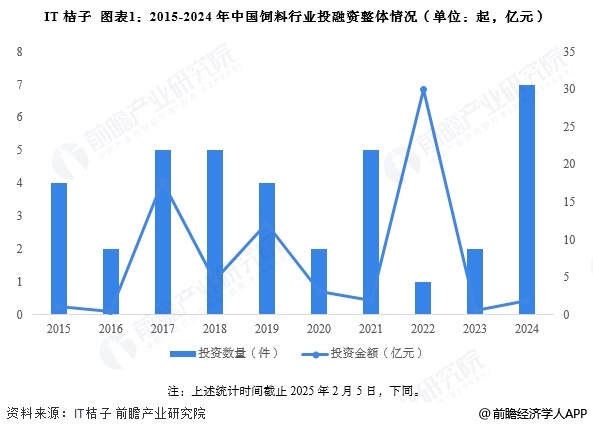
Core Insights - The Chinese feed industry has experienced significant fluctuations in investment and financing activities since 2015, with the highest financing amount reaching 3 billion yuan in 2022 and the most financing events occurring in 2024 with 7 instances [1][2]. Investment Scale - The investment scale in the feed industry is substantial, with the highest single financing amount recorded at 3 billion yuan in 2023, while the second-highest was 1.62 billion yuan in 2017 [2]. Development Stage - The feed industry is currently in a developmental phase, with financing amounts showing volatility. The largest single financing event in 2023 reached 3 billion yuan [2]. Financing Rounds - Financing rounds in the feed industry are primarily concentrated in angel rounds, A rounds, and strategic investments, with 14 angel rounds, 14 A rounds, and 10 strategic investment events recorded [5]. Regional Concentration - Investment activities in the feed industry are concentrated in Beijing, Guangdong, and Jiangsu, with Guangdong leading with 11 financing events, followed by Beijing and Jiangsu with 7 events each [6]. Investment Focus - The main focus of investments in the feed industry from 2021 to 2024 is on feed production, feed usage, and related construction [11]. Investor Composition - The primary investors in the feed industry are investment firms, with notable representatives including Zhongke Kexin and Jizhi Capital, while industrial investors include Guangfa Qianhe and Jinrui Biological [13]. Mergers and Acquisitions - The feed industry has seen horizontal mergers and acquisitions, with companies like Guangdong Feed focusing on acquiring to enhance product quality and output, while companies like Tangrenshen, Dabeinong, and New Hope are improving their supply chains through acquisitions [15][17].





【前瞻分析】2018-2024年全球铅酸蓄电池行业市场规模分析
Qian Zhan Wang· 2025-05-08 01:21
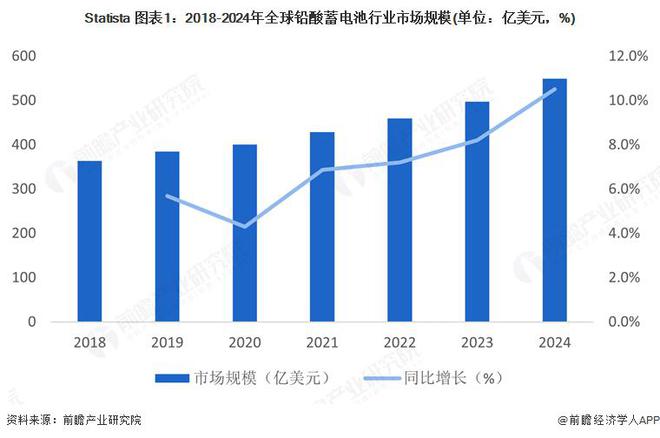
行业主要上市公司:天能股份(688819.SH);南都电源(300068.SZ);骆驼股份(601311.SH);雄韬股份 (002733.SZ);万里股份(600847.SH)等 全球铅酸蓄电池行业市场规模稳步扩张 铅酸蓄电池价格较低,具有技术成熟、高低温性能优异、稳定可靠、安全性高等比较优势,市场竞争优 势明显。因此,在全球市场范围内,铅酸蓄电池仍占据着重要地位。 全球铅酸蓄电池企业竞争格局凸显,市场集中度较高 当前,全球铅酸蓄电池制造企业竞争格局显著,据Statista统计,全球龙头公司Clarios的铅酸蓄电池市场 份额高达24%;Exide和Yuasa位列二、三位,市场份额均为10%;全球铅酸电池市场集中度CR3达44%, CR10为76%。 近年来,得益于新兴市场汽车工业的快速发展以及中国、欧美地区数据中心等通信基础设施建设的加 快,全球铅酸蓄电池的市场规模持续增长。根据Statista统计数据,2024年,全球铅酸蓄电池市场规模达 到549.24亿美元,同比增长10.5%,增速达到近几年最高水平。 铅酸蓄电池行业上市公司汇总及基本信息 我国铅酸蓄电池制造企业上市公司有8家,分别为天能股份、雄韬股 ...


重磅消息!央行宣布降准0.5个百分点,释放1万亿资金!专家:未来仍有下调余地【附企业贷款及个人贷款分析】
Qian Zhan Wang· 2025-05-07 11:42
降准后,银行的资金成本降低,进而能够推动企业融资成本的下降。这不仅有助于企业扩大生产规模、进行 技术创新和转型升级,还能增强企业的竞争力,特别是对于中小微企业来说,能够更好地满足其资金需求, 促进实体经济的健康发展。 银行业代表企业贷款发放工商银行规模最大:从银行业代表企业的业绩来看,2022年前三季度工商银行发放 贷款及垫款金额、吸收存款金额均为最高,分别为22.30万亿元、30.09万亿元。 (图片来源:摄图网) 图表7:2022年中国银行业代表性企业贷款发放、存款吸收情况(单位:亿元) | 公司名称 | 发放贷款及垫款金额(亿元) | 吸收存款金额(亿元) | | --- | --- | --- | | 工商银行 | 223024.50 | 300915.01 65 | | 建设银行 | 202107.86 | 247916.00 | | 农业银行 | 185976.23 | 248906.97 | | 中国银行 | 169775.48 | 199591.34 | | 交通银行 | 70463.35 | 78878.13 | | 邮储银行 | 69152.78 | 122650.45 | | 招商银行 ...
【干货】航空发动机行业产业链全景梳理及区域热力地图
Qian Zhan Wang· 2025-05-07 05:12
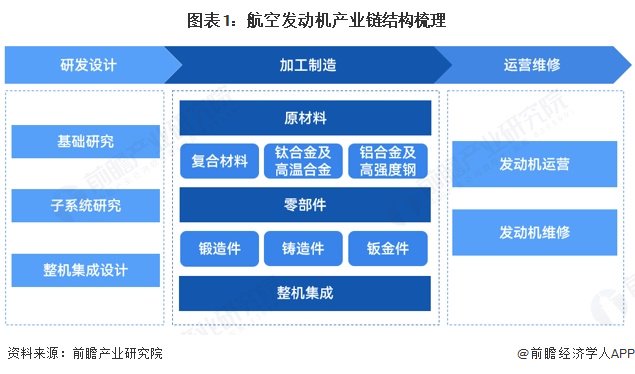
Core Insights - The article discusses the development and current state of the aviation engine industry in China, highlighting the complete manufacturing system that has been established [1][2]. Industry Overview - The aviation engine industry includes research and design, manufacturing (raw materials, components, complete machine manufacturing), operation, and maintenance [1]. - Key participants in research and design include major universities and research institutes, such as Beihang University and Nanjing University of Aeronautics and Astronautics [2]. - The complete machine manufacturing segment is primarily dominated by China Aviation Engine Group, while raw material processing involves companies like Fushun Special Steel and Baosteel [2][4]. Regional Distribution - The distribution of aviation engine manufacturing companies is mainly concentrated in inland regions of China, with titanium alloy material leaders located in Shaanxi and other material representatives in Jiangsu [4]. Company Performance - Aviation Power (航发动力) leads the industry with projected revenue of 44.994 billion yuan in 2024, with an average gross margin of around 25% across the industry [5][7]. - Other notable companies include: - AVIC Heavy Machinery (中航重机) with revenue of 8.108 billion yuan and a gross margin of 23.69% [7]. - AVIC Control (航发控制) with revenue of 4.882 billion yuan and a gross margin of 28.11% [7]. - AVIC Technology (航发科技) with revenue of 2.572 billion yuan and a gross margin of 16.09% [7]. - Yingliu Co. (应流股份) with revenue of 1.208 billion yuan and a gross margin of 34.24% [7]. Investment Trends - Recent investment trends in the aviation engine industry focus on enhancing the supply chain and improving technological capabilities [9]. - Aviation Power has invested in multiple subsidiaries to strengthen its industry chain, while AVIC Heavy Machinery has acquired stakes in precision casting companies to enhance its technical strength [10].


独家!赛莱拉V.S.中源协和干细胞医疗技术布局对比(附专利总量对比、合作申请对比、专利布局对比等)
Qian Zhan Wang· 2025-05-07 04:14
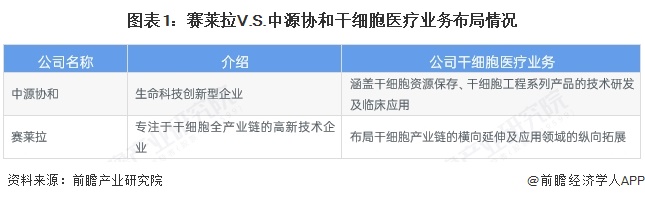
Group 1 - The core viewpoint of the article highlights the competitive landscape of China's stem cell medical industry, focusing on the strengths of Zhongyuan Xiehe and Sailera in their respective fields [1] - Zhongyuan Xiehe specializes in cell therapy for urgent medical care needs, particularly in blood cancers and blood diseases, while Sailera has established a comprehensive industry chain covering research, production, and sales, extending into consumer medical applications [1] - The article provides a comparative analysis of patent applications and values between Sailera and Zhongyuan Xiehe, indicating that Sailera leads in total patent applications while Zhongyuan Xiehe has a higher number of authorized patents [2][5] Group 2 - In terms of patent value, Zhongyuan Xiehe holds a higher proportion of high-value patents, with 40% of its patents valued between 8-10, compared to Sailera's 24% [6] - Sailera has a greater number of collaborative patent applications, including partnerships with foreign companies, while Zhongyuan Xiehe primarily collaborates with domestic entities [10][12] - Both companies focus their patent applications mainly in China, with Sailera having 515 patents filed in China and Zhongyuan Xiehe having 211 [12] Group 3 - Sailera's patent applications are predominantly invention patents, whereas Zhongyuan Xiehe focuses more on utility model patents [14] - The primary technical field for both companies is aligned, but Sailera shows a more pronounced focus in its area of expertise, specifically in the A61K field with 312 applications [16] - Sailera has a higher number of cited patents, indicating a stronger influence in the field, with its most cited patents exceeding 50 citations, compared to Zhongyuan Xiehe's most cited patent with over 40 citations [20] Group 4 - Overall, Zhongyuan Xiehe demonstrates competitive advantages in differentiation and response improvement, while Sailera emphasizes reducing complexity and enhancing speed, showcasing a more comprehensive and diverse technological layout [21]

预见2025:《2025年中国汽车零部件行业全景图谱》(附市场现状、竞争格局和发展趋势等)
Qian Zhan Wang· 2025-05-07 03:09
Industry Overview - The automotive parts industry includes all components and parts excluding the vehicle chassis, with parts being indivisible components and assemblies being combinations of parts [1] - The industry has evolved from imitation production to technological research and transformation, with significant improvements in production processes and product quality over the years [8][10] Industry Chain Analysis - The automotive parts manufacturing industry involves various upstream and downstream sectors, including raw material suppliers and vehicle manufacturers [4] - Key upstream suppliers include steel, non-ferrous metals, and electronic components, while downstream includes vehicle manufacturers and repair shops [6] Market Demand and Supply - China's automotive ownership is projected to reach 353 million vehicles by 2024, reflecting a growth of 5.06% [17] - The automotive parts market in China is expected to exceed 4.5 trillion yuan in 2023, with a forecast of 5 trillion yuan in 2024 [20][23] Competitive Landscape - The competitive landscape is fragmented, with leading companies like CATL, Huayu Automotive, and Weichai Power showing strong market positions [24][26] - CATL holds approximately 6% market share in the automotive parts sector, while Huayu Automotive and Weichai Power each exceed 2% [29] Development Trends and Future Outlook - The industry is expected to focus on high technology, green environmental practices, and intelligent development, particularly in electric vehicles and automated driving technologies [31] - The automotive parts industry is projected to maintain steady growth, with an estimated compound annual growth rate of about 7% from 2025 to 2030, potentially exceeding 7.5 trillion yuan by 2030 [33]





2025年中国稀土行业技术环境分析:国家鼓励稀土在绿色环保及新能源等前沿技术领域融合应用
Qian Zhan Wang· 2025-05-06 09:13
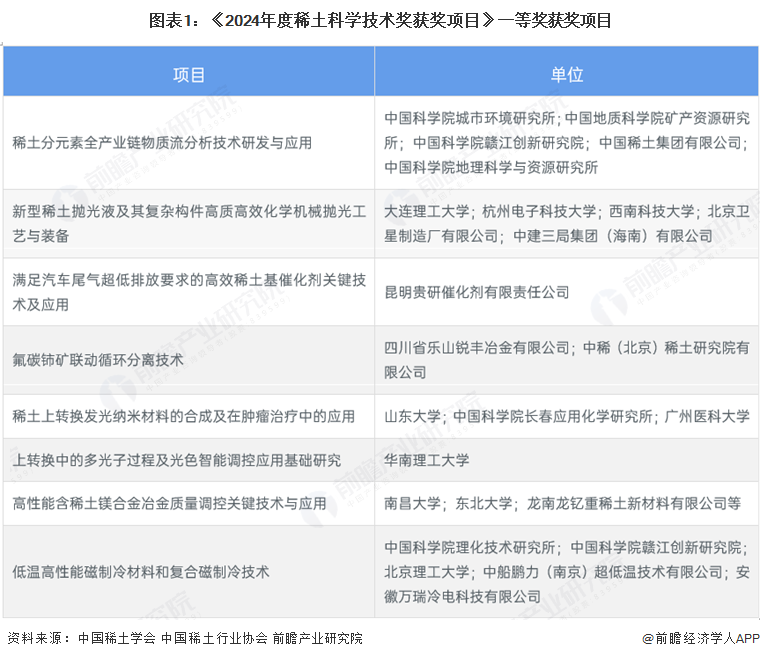
Core Insights - The article emphasizes the importance of technological innovation in China's rare earth industry, highlighting government support for research and development in various applications and processes [1][4][8]. Summary by Sections Technological Innovation Directions - The Chinese government encourages technological innovation in the rare earth sector, focusing on basic research, cutting-edge technology, and key industrial technology development [1]. - In 2024, the China Rare Earth Society and the China Rare Earth Industry Association will award 8 first prizes and 24 second prizes for outstanding projects in rare earth science and technology [1]. - Award-winning projects include efficient catalysts for ultra-low emissions in automotive exhaust, applications of rare earth upconversion luminescent nanomaterials in cancer treatment, and low-temperature high-performance magnetic refrigeration materials [1]. Industry Technology Transformation - The government is accelerating technological upgrades in rare earth enterprises, with specific measures to improve mining, refining, and metal production processes [4][6]. - Key measures include adopting efficient green mining technologies, advanced refining techniques to reduce waste, and eliminating outdated production capacities [6]. Policy Planning for Technological Innovation - The rare earth industry is crucial for strategic emerging industries, with China being the world's leading producer and exporter [4]. - The Ministry of Industry and Information Technology's "14th Five-Year Plan" emphasizes enhancing technological innovation capabilities, promoting green transformation, and integrating domestic and international resources [4][7]. Integration with New Energy - The rapid development of new technologies like 5G and artificial intelligence is driving the digital transformation of the rare earth industry [8]. - Key applications of new technologies in the rare earth sector include high-performance magnetic materials for wind power and hydrogen storage materials for energy applications [9]. R&D Dynamics of Representative Companies - Northern Rare Earth is involved in key national R&D projects focusing on intelligent preparation technologies and has established a carbon emission accounting platform [11]. - China Rare Earth is enhancing its core business through various R&D initiatives, including high-value utilization of rare earth elements and new energy materials [11]. - Other companies like Baotou Steel and Xiamen Tungsten are also advancing their R&D efforts in high-performance magnetic materials and rare earth recovery technologies [11].


【投资视角】启示2025:中国多模态大模型行业投融资及产业基金分析(附投融资事件、投资类型和兼并重组等)
Qian Zhan Wang· 2025-05-06 08:08
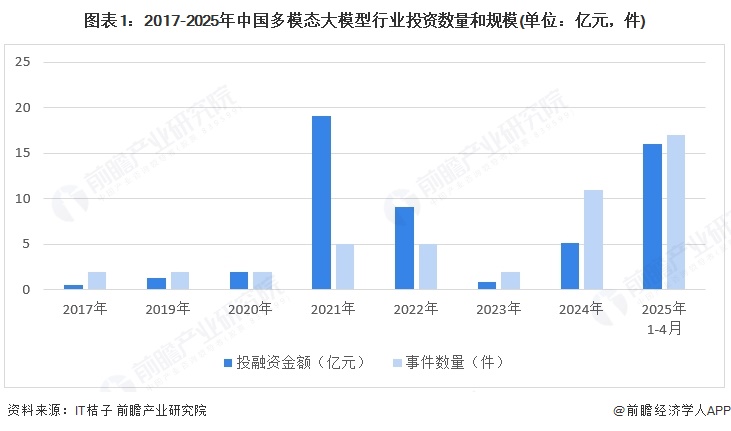
转自:前瞻产业研究院 行业主要公司:阿里巴巴(09988.HK,BABA.US);百度(09888.HK,BIDU.US);腾讯(00700.HK, TCEHY);科大讯飞(002230.SZ);三六零(601360.SH);云从科技(688327.SH)等 本文核心数据:多模态大模型代表企业融资规模;多模态大模型代表企业投资规模 2025年开始投融资呈爆发式增长 截至2025年4月,多模态大模型投融事件数量接近50件,其中国2021年投融资金额出现了高峰,达19.1 亿元,尽管当年投资事件数量为5件。2024年开始新一轮的投资周期,共有11件投资事件,金额达5.16 亿元。2025年前4个月,共有17件投资事件,金额为16亿元,后续多模态大模型题材的投资将呈现爆发 式增长。 企业能获得多轮投资 根据IT桔子显示,多模态大模型行业2025年开始投融资恢复热度。主要的融资事件如下: | 时间 | 254 | 地区 | 在不同分 | 金额 | 融资金额 | 投资方 | | --- | --- | --- | --- | --- | --- | --- | | 2025/4/9 | 爱芯元智 | 宁波市 | 人工智 ...