Qian Zhan Wang

Search documents
重磅消息!国家出手整顿“隐藏式车门把手”,长城汽车魏建军:隐藏式门把手安全隐患大【附汽车零部件行业市场分析】
Qian Zhan Wang· 2025-05-12 08:57
Core Viewpoint - The Ministry of Industry and Information Technology (MIIT) of China has initiated a public consultation for the mandatory national standard revision project regarding the safety technical requirements for automotive door handles, highlighting the safety risks associated with the widespread use of hidden door handles in recent years [2][3][4]. Industry Context - The automotive industry is experiencing rapid electrification and intelligence, leading to the widespread adoption of hidden door handles due to their aesthetic appeal and technological advantages [4]. - However, these hidden door handles have revealed several issues during practical application, including insufficient strength, potential safety risks in control logic, difficulty in operation due to lack of visible markings, failure during power outages, and risks of hand clamping, all contributing to potential escape and rescue risks in emergencies [3][4]. Safety Concerns - Experts have criticized hidden door handles as a "poor design," prioritizing aesthetics and aerodynamic efficiency over passenger safety. Concerns include increased weight, poor sealing leading to noise, and reliance on electrical operation, which can fail in low power situations or during collisions [5]. - The MIIT emphasizes the need to enhance the safety logic of automotive door handles in accident scenarios, proposing the addition of mechanical or power failure protection designs to ensure door systems can be opened during emergencies [3][4]. Supply Chain Dynamics - The automotive parts industry in China is characterized by cyclical trends influenced by upstream and downstream industries, with the production of automotive parts being significantly affected by the steel and plastic industries as well as the automotive manufacturing and repair markets [6]. - The relationship between the automotive parts industry and the overall economy is closely linked, with both sectors exhibiting cyclical characteristics that respond to economic fluctuations [6]. Market Landscape - Various companies in China's automotive parts industry focus on different niche markets, such as CATL specializing in battery systems and Fuyao Glass concentrating on automotive glass technology [9]. - The automotive industry's transition to electrification and intelligent systems is still in its early stages, facing numerous challenges that require a solid hardware foundation and clear technological boundaries to ensure safety [11].



2025年中国多模态大模型行业生产生活应用现状 多模态大模型助力生产生活走向高品质【组图】
Qian Zhan Wang· 2025-05-12 08:11
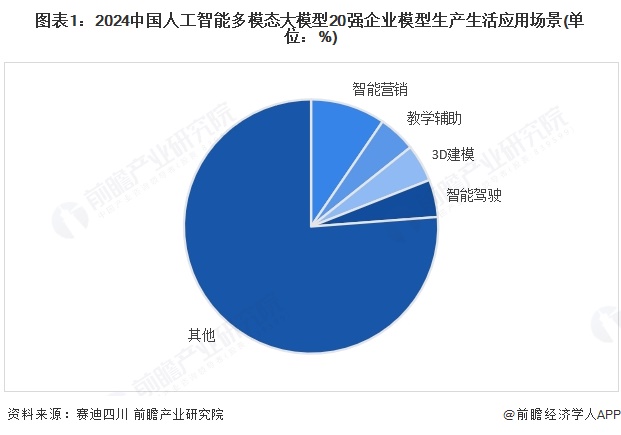
转自:前瞻产业研究院 智能营销、教学辅助、3D建模以及智能驾驶等应用场景是生产生活中的重要领域,也是目前多模态大 模型可以切入并且精准赋能的领域。根据赛迪四川研究数据显示,2024年智能营销占中国人工智能多模 态大模型20强企业模型场景的9.5%,教学辅助、3D建模和智能驾驶均占4.8%左右。 行业主要上市公司:阿里巴巴(09988.HK,BABA.US);百度(09888.HK,BIDU.US);腾讯(00700.HK, TCEHY);科大讯飞(002230.SZ);万兴科技(300624.SZ);三六零(601360.SH);昆仑万维(300418.SZ);云从科技 (688327.SH);拓尔思(300229.SZ)等 本文核心数据:应用场景比重; 多模态大模型生成生活相关场景 多模态大模型助力智能营销优化策略 智能营销行业利用人工智能、大数据、机器学习和多模态技术,通过自动化、个性化的方式优化广告投 放、客户关系管理和内容营销。智能营销不仅帮助品牌实现更高效的客户触达,还能够动态调整营销策 略,提升用户体验,推动品牌增长。 智能营销是应用人工智能技术,对数字营销的全链路进行智能化升级的新型营销方式。智 ...
【物流】行业市场规模:2024年中国物流行业市场规模突破360万亿元,工业品物流占主要份额
Qian Zhan Wang· 2025-05-12 04:00
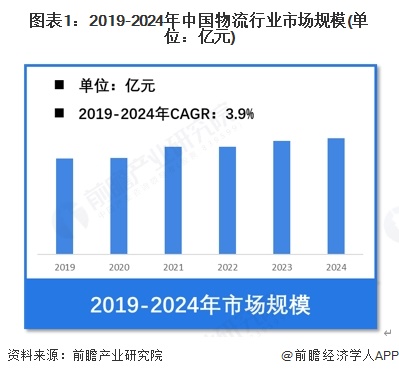
Core Insights - The Chinese logistics industry is projected to exceed 360 trillion yuan in market size by 2024, with a year-on-year growth of 5.8% and a five-year compound annual growth rate (CAGR) of 13.82% [1][3]. Market Segmentation - Agricultural logistics is expected to reach 5.5 trillion yuan in 2024, growing by 4.0% year-on-year - Industrial logistics is projected at 318.4 trillion yuan, with a growth of 5.8% - Import logistics is anticipated to total 18.4 trillion yuan, increasing by 3.9% - Recycled resources logistics is expected to reach 4.4 trillion yuan, with a significant growth of 15.7% - Logistics for units and household goods is projected at 13.9 trillion yuan, growing by 6.7% [3][6]. Industry Competition - Major players in the Chinese logistics sector include SF Express, COSCO Shipping, and Xiamen Xiangyu, which have strong competitive advantages in express logistics, warehousing, and cold chain logistics - The demand for logistics services is continuously growing due to the expansion of e-commerce, manufacturing, and agriculture sectors - Chinese companies are making significant advancements in technological innovation and service quality, particularly in smart logistics and cold chain logistics, gradually closing the gap with international competitors [6][7].



重磅!2025年中国及31省市新媒体行业政策汇总及解读(全)
Qian Zhan Wang· 2025-05-11 05:18
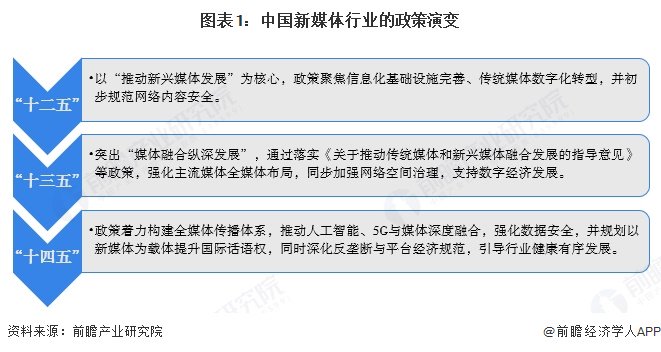
Core Viewpoint - The article discusses the rapid development of China's new media industry, driven by supportive government policies from the "12th Five-Year Plan" to the "14th Five-Year Plan," focusing on infrastructure, integration, and international expansion [1]. Policy Overview - A series of national policies have been issued to encourage the development of micro-short dramas, live e-commerce, and other new media businesses, while also implementing regulations to ensure a healthy environment for short videos and live streaming [3][4]. National Policy Summary - As of February 2025, various policies have been introduced, including: - Support for cultural originality and digital transformation in cultural creation [4]. - Plans to enhance the quality of micro-short dramas and integrate them into various industries [4]. - Initiatives to expand cross-border e-commerce and improve overseas warehouse construction [4]. - Actions to regulate self-media and ensure compliance with public morals [4][5]. Development Goals - The government aims to promote new cultural formats such as digital publishing, digital film, and digital arts, while guiding industry standards and fostering high-quality development in the new media sector [8][10]. Provincial Policy Summary - Local governments are actively implementing policies to support the new media industry, including: - Beijing's initiatives to enhance digital transformation for traditional businesses [12]. - Shanghai's focus on developing online new economy brands through digital and live-streaming platforms [12]. - Guangdong's plans to cultivate digital creative industries and support live e-commerce [12][13]. Industry Trends - The new media industry is expected to see significant growth in areas such as digital content production, live streaming, and the integration of advanced technologies like AI and blockchain [10][11].


重磅消息!我国研发锂离子电池原位膨胀力监测技术,助力车载电池管理升级【附锂离子电池行业发展趋势】
Qian Zhan Wang· 2025-05-11 02:44
Group 1 - A significant breakthrough in lithium-ion battery monitoring technology has been achieved by a research team from the University of Science and Technology of China [2] - The new technology allows for in-situ monitoring of lithium-ion battery expansion force using the battery's own electrolyte and materials, eliminating the need for additional packaging [2] - The technology has demonstrated stable operation for over one month and can capture irreversible lithium dendrite deposition through pressure curve asymmetry and peak changes [2] Group 2 - China's lithium-ion battery production has been steadily increasing, with a production of 24.528 billion units in 2023, marking a year-on-year growth of 25.57% [3] - The lithium battery industry is expected to expand at a rate of approximately 26% before 2030, driven by the growing demand for 3C products, electric vehicles, and energy storage batteries [3] - The production of power lithium batteries in China reached 675 GWh in 2023, reflecting a year-on-year increase of 23.6% [4] Group 3 - The new monitoring technology positively impacts electric vehicles by providing early warnings and precise management of critical issues like lithium dendrite growth and SEI layer thickening, enhancing battery safety and reliability [8] - This technology optimizes the charging and discharging process, extends battery lifespan, and reduces operational costs, while also dynamically adjusting vehicle driving strategies to improve range [8] - The widespread application of this technology supports the development of intelligent battery management systems and promotes sustainable growth in the electric vehicle industry [8]

AI将动物语言转换为人类语言!百度公布动物语言转换专利,可实现动物与人类深度交流【附人工智能行业市场分析】
Qian Zhan Wang· 2025-05-10 02:24
随着宠物家庭渗透率的不断攀升,动物语言转换技术有望在未来成为智能终端的"标配能力"。对于广大宠物 主人而言,它就像是一座沟通的桥梁,能够更精准地理解宠物的需求和情感,从而提升宠物的照顾质量,让 宠物与主人之间的情感纽带更加牢固。在动物园、野生动物保护区等场景中,该技术也将发挥巨大作用,辅 助科研人员与保护工作者更高效地与动物互动,为珍稀动物保护提供有力的技术支持,助力人类更好地守护 地球上的生物多样性。 从更宏观的视角来看,百度动物语言转换专利的诞生,是人工智能技术在跨物种交流领域的一次重大突破, 生动地展现了人工智能的无限潜力。它不仅体现了人工智能在多模态数据处理、深度学习和自然语言处理等 核心技术上的卓越能力,更为未来人与动物的深度互动提供了全新的思路和方法。 (图片来源:摄图网) 随着科技的飞速发展,尤其是人工智能技术的崛起,人与动物之间的交流正在迎来新的突破。 人与动物之间的交流,一直是人类探索的重要领域。从古至今,人类从未停止过与动物沟通的尝试。在古 代,人们通过观察动物的行为和声音来理解它们的需求和情绪,比如牧羊人通过羊群的叫声和动作来判断羊 群的状态。然而,这种交流往往是有限的、模糊的。 5月6 ...


预见2025:《2025年中国绝缘材料行业全景图谱》(附市场规模、竞争格局和发展趋势等)
Qian Zhan Wang· 2025-05-10 01:10
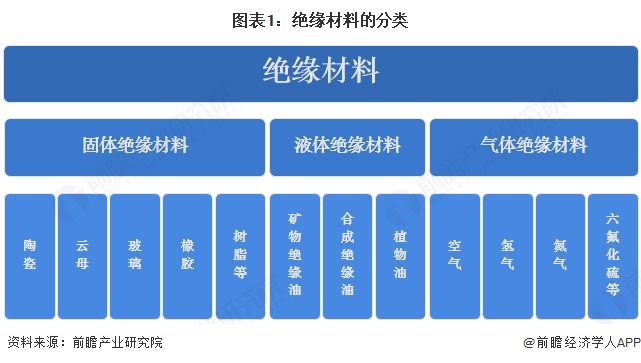
Industry Overview - The insulation materials are defined as materials that do not conduct electricity under permissible voltage but can conduct under certain electric field strengths. Their primary function is to isolate charged conductors in electrical equipment, allowing current to flow along specific paths while providing mechanical support and protection [1][11]. - Insulation materials are categorized into solid, liquid, and gas types, with solid materials further divided into organic and inorganic categories [2][3]. Industry Chain Analysis - The insulation materials industry chain consists of upstream raw materials (e.g., phenol, formaldehyde, epoxy resin), midstream production (solid, liquid, and gas insulation materials), and downstream applications in sectors like electrical infrastructure, new energy vehicles, and aerospace [5][8]. Industry Development History - The insulation materials industry in China has evolved through four stages: initial development, technology introduction, technology innovation, and the current phase of industrial upgrading driven by new energy [11][12]. Policy Background - Recent policies from various government departments aim to promote the development of high-efficiency and environmentally friendly insulation materials, supporting the industry's high-quality growth [14]. Current Industry Status - The number of bidding projects in the insulation materials sector has shown a fluctuating growth trend, peaking at 612 projects in 2023 [15]. - The financing activity in the insulation materials industry has increased, with a peak financing amount of 2.025 billion yuan in 2022 [15]. - The market size of the insulation materials industry in China grew from 86.4 billion yuan in 2018 to 120.6 billion yuan in 2023, with a compound annual growth rate of 6.9% [19]. Competitive Landscape - The insulation materials industry is concentrated in economically developed eastern coastal regions, particularly Guangdong and Jiangsu provinces [20]. - Major companies in the insulation materials sector include Shandong Glass Fiber, Dongcai Technology, and Yuxing Co., with revenues exceeding 1.8 billion yuan for Shandong Glass Fiber in 2023 [24]. Future Development Trends - The market size of insulation materials is expected to exceed 200 billion yuan by 2030, with a compound annual growth rate of 7.8% from 2025 to 2030 [26]. - The industry is trending towards high-end and environmentally friendly products, with a focus on enhancing product performance and providing comprehensive insulation system solutions [28].


全球鞋行金额最高并购案!斯凯奇宣布退市,94亿美元“卖身”给3G资本【附运动鞋行业市场分析】
Qian Zhan Wang· 2025-05-09 10:56
2016-2020年,中国运动鞋服市场上保持领先地位的是耐克和阿迪达斯两家外企,紧随其后的是安踏、 李宁和特步三家本土企业。2020年,这五家企业的市占率之和为69.8%,呈现出明显的"马太效应"。头 部企业凭借品牌优势、技术优势和渠道优势,不断扩大市场份额,而中小品牌则面临着生存困境。 当地时间5月5日,全球第三大运动鞋品牌斯凯奇(Skechers)宣布接受巴西私募巨头3G资本的收购并私有 化退市。3G资本将以每股63美元的现金收购斯凯奇所有已发行股票,较公司15天成交量加权平均股价 溢价30%,交易总额达94.2亿美元。交易完成后斯凯奇将私有化退市成为私人控股公司。斯凯奇有1.29 亿股流通股,以此计算本次交易对价约81.27亿美元。此次交易不仅是全球鞋类行业金额最高的并购 案,也是3G资本继汉堡王、卡夫亨氏后,在消费品领域的又一重磅投资。 斯凯奇退市原因是美国政府掀起的"对等关税"风暴。新关税政策下,一双原本售价1100元的球鞋,如今 消费者要支付近1700元,这让主打"高性价比"的斯凯奇陷入两难境地。若维持原价,企业将面临巨大的 成本压力和利润缩水;若提高售价,又可能失去对价格敏感的消费者群体,市场份 ...

【行业深度】洞察2025:中国口腔医疗行业竞争格局及市场份额(附市场集中度、企业竞争力等)
Qian Zhan Wang· 2025-05-09 07:47
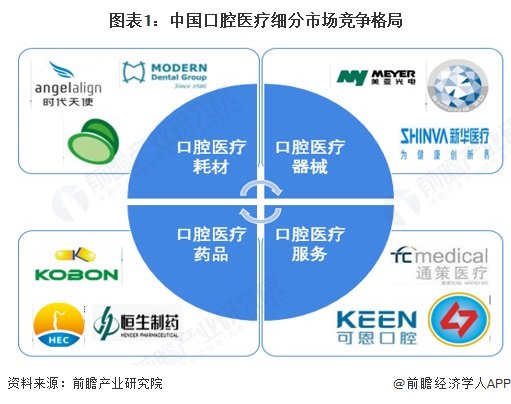
Group 1: Market Competition Landscape - The main companies in China's oral medical consumables market include Times Angel, AoJing Medical, and Modern Dental, while the medical devices sector is led by Meiya Optoelectronics, Xianlin 3D, and Xinhua Medical [1] - In the pharmaceutical segment, key players are Shenghua Pharmaceutical, Nanyue Pharmaceutical, and Hengsheng Pharmaceutical, and in the medical services sector, Tongce Medical, Koen Dental, and Lantian Dental are prominent [1] Group 2: Regional Distribution - The oral medical industry in China is concentrated in regions such as Guangdong, Shandong, and Jiangsu, with Guangdong being the most concentrated area [3] Group 3: Dental Implant Market - The high-end dental implant market is primarily dominated by foreign companies such as Straumann, Dentsply, and Nobel, while the mid-to-low-end market is led by domestic brands like Aochitai and Dentium, which face challenges in clinical application and brand establishment compared to imported products [6] Group 4: Orthodontics Market - The orthodontic treatment market includes traditional braces and clear aligners, with Times Angel and Invisalign together holding over 70% of the clear aligner market in China as of 2023 [7] Group 5: Overall Industry Competition Status - There is a notable quality and effectiveness disparity between imported and domestic oral medical consumables and devices, leading to stronger bargaining power for imported suppliers, while domestic suppliers have weaker bargaining power [8] - Large chain dental hospitals have superior equipment and personnel, resulting in lower bargaining power for consumers [8] - The oral medical industry has significant technical barriers and high entry thresholds, making it difficult for new entrants, thus posing a low threat from new competitors [8] - The overall competition level among existing companies in the Chinese oral medical market is moderate, based on factors such as the number of competitors, market concentration, and entry barriers [8]


前瞻全球产业早报:央行宣布降准又降息
Qian Zhan Wang· 2025-05-09 01:43
Group 1: Monetary Policy and Economic Measures - The People's Bank of China announced a 0.5 percentage point reduction in the reserve requirement ratio, providing approximately 1 trillion yuan in long-term liquidity to the market [2] - A policy interest rate cut of 0.1 percentage points was also announced to support market stability and expectations [2] Group 2: Consumer and Family Support Initiatives - Guangdong Province is increasing support for childbirth and child-rearing, including simplifying the process for issuing childcare subsidies and encouraging local governments to enhance support for families with two or three children [3] - The province aims for 90% of grassroots medical institutions to provide pediatric services by 2025 [3] Group 3: Semiconductor Industry Performance - The semiconductor sector in A-shares showed a mild recovery, with total revenue reaching approximately 602.2 billion yuan, marking a record high [3] - North Huachuang has replaced SMIC as the "profit king" in the A-share semiconductor industry, with improved operational efficiency and inventory issues being effectively resolved [3] Group 4: Automotive Industry Developments - Geely Auto proposed to privatize Zeekr at a price of $2.57 per share, indicating strategic moves within the electric vehicle sector [6] - NIO Energy reported over 634,000 battery swap services during the May Day holiday, reflecting strong user engagement and operational capacity [7] Group 5: Investment and Strategic Partnerships - Uber is set to invest an additional $100 million in WeRide, marking its largest investment in the autonomous driving sector to date [9] - Taobao Tmall and Xiaohongshu have signed a strategic cooperation agreement to enhance the integration of their platforms, aiming to boost merchant sales through improved advertising and consumer interaction [10] Group 6: Technology and AI Advancements - Google DeepMind released the upgraded Gemini 2.5 Pro "I/O" model, which has achieved top rankings in various metrics on the AI leaderboard [11] - Amazon has purchased approximately $84.4 million worth of AMD stock, coinciding with AMD's strong performance in the data center and AI chip markets [12] Group 7: Manufacturing and Supply Chain Adjustments - Seagate plans to develop a 100TB hard drive by 2030 to meet the increasing demand from data centers driven by the AI boom [13] - YS Pharmaceuticals announced a phased closure of its Copenhagen facility, transferring production to locations outside Denmark to address pricing pressures and operational costs [14]