Zhong Guo Zheng Quan Bao

Search documents
深耕可持续发展 东方证券标普CSA得分实现新突破
Zhong Guo Zheng Quan Bao· 2026-01-20 05:07
Group 1 - S&P Global has awarded Dongfang Securities a Corporate Sustainability Assessment (CSA) score of 53 for 2025, the highest score among Chinese securities firms published to date [1][2] - The CSA score reflects Dongfang Securities' commitment to ESG principles and its leadership in sustainable finance and risk management [1][2] - The company has established a board-level committee to oversee the implementation of ESG goals and policies, enhancing its governance structure [2] Group 2 - Dongfang Securities is integrating sustainable development into its corporate strategy, focusing on optimizing its ESG risk management system and promoting responsible investment [2] - The company is actively engaged in green operations, reducing carbon emissions, and contributing to social welfare and rural revitalization efforts [2] - Recent disclosures include updates to its ESG risk management and responsible investment statements, improving governance transparency [2]

万家基金旗下20只ETF集体更名,多元化指数投资生态再升级
Zhong Guo Zheng Quan Bao· 2026-01-20 05:05
根据公告,万家基金此次对旗下20只ETF实施更名,覆盖宽基、行业主题、策略及跨境等多个产品类 型。本次调整仅涉及产品在二级市场交易中显示的"扩位简称",更名后将统一采用"投资标的核心要素 +ETF+万家"的命名格式,进一步强化管理人品牌识别度。例如,"工业有色ETF"将更名为"工业有色 ETF万家","红利ETF基金"将更名为"红利ETF万家"。 需要说明的是,此次更名不涉及基金代码、投资目标、投资策略、风险收益特征及基金份额持有人权益 的任何变更。所有产品将继续按照基金合同约定正常运作,投资者可照常进行申购、赎回及二级市场交 易。 万家基金此次对旗下ETF实施集体更名,是积极响应行业命名规范化要求、推动ETF市场高质量发展的 重要举措。2025年11月份,沪深交易所发文明确要求,存量ETF需在2026年3月31日前有序完成扩位简 称规范化调整,且扩位简称必须包含基金管理人简称,采用"投资标的核心要素+ETF+管理人简称"的标 准结构。 1月20日,万家基金发布公告,正式启动旗下20只ETF扩位简称的统一更名工作。此次调整系公司落实 行业命名规范、强化投资者服务的重要举措,体现了其在指数业务发展中对合规性与用 ...
利好!财政政策“大礼包”,提高个人消费贷贴息标准,实施民间投资专项担保计划
Zhong Guo Zheng Quan Bao· 2026-01-20 05:05
Core Viewpoint The Ministry of Finance and other departments have announced multiple policy measures aimed at extending financial support for service industries, personal consumption, and small and micro enterprises, with a focus on enhancing loan interest subsidies and expanding the scope of support. Group 1: Loan Interest Subsidy Policies - The loan interest subsidy for service industry entities has been extended until December 31, 2026, with a maximum subsidy of 10 million yuan for new loans issued in 2026, and a subsidy rate of 1% for a maximum period of one year [2][4] - The personal consumption loan interest subsidy policy has also been extended to December 31, 2026, with the removal of the previous limits on single loan subsidies and cumulative consumption subsidies [4][5] - The annual interest subsidy for fixed asset loans to eligible small and micro enterprises will be 1.5 percentage points, with a maximum loan amount of 50 million yuan per entity [8] Group 2: Special Guarantee Plans - A special guarantee plan for private investment has been introduced with a total quota of 500 billion yuan, to be implemented over two years, aimed at supporting small and micro enterprises in various sectors [5][6] - The plan will cover loans for equipment purchases, technological upgrades, and other operational needs, including expansions in sectors such as health, tourism, and digital services [5][6] Group 3: Equipment Update Loan Policies - The equipment update loan interest subsidy policy has been optimized, allowing for a 1.5 percentage point subsidy on fixed asset loans for equipment updates, applicable for loans issued until December 31, 2026 [7][8] - The policy will also include support for new technology innovation loans starting from 2026 [7]
A股调整,三大原因
Zhong Guo Zheng Quan Bao· 2026-01-20 05:05
Market Overview - The Shanghai Composite Index experienced significant volatility, dropping below 4100 points and reaching a maximum decline of over 0.8% before recovering slightly [1] - The technology sector faced a pullback, particularly in the computing industry chain, while consumer sectors, high-dividend assets, and chemicals saw gains [1] Market Influences - The U.S. stock market was closed on Martin Luther King Jr. Day, leading to concerns about its performance upon reopening, which negatively impacted the Asia-Pacific markets [1] - A report indicated that U.S. President Trump announced a 10% tariff on imports from Denmark, Norway, Sweden, France, Germany, the UK, the Netherlands, and Finland starting February 1 [1] - Market liquidity has changed, with a rapid decline in trading volume since January 15 and a decrease in margin financing balance, which reported 2.7059 trillion yuan as of January 19, down 8.5 billion yuan from the previous day [1] Consumer Sector Activity - The consumer sector showed strong performance, with significant gains in beauty care, food processing, and liquor sectors. Notably, stocks of "new consumption" companies like Pop Mart, Mixue Group, and Laopu Gold rose collectively [4] - Analysts attribute the strength in the consumer sector to several factors, including Pop Mart's announcement of a share buyback worth approximately 251 million Hong Kong dollars, which positively influenced market sentiment [6] Policy Support - Recent government policies aimed at boosting consumption were highlighted, including a meeting on January 16 that discussed measures to enhance service consumption and domestic demand [7] - The National Development and Reform Commission emphasized the need to strengthen domestic demand and adapt to the evolving demand structure, with plans to develop a strategy for expanding domestic demand from 2026 to 2030 [7] AI Sector Developments - The AI for Science concept saw active performance, with leading stocks like Zhite New Materials rising over 17%. Other AI application stocks also experienced significant gains [8] - Analysts noted that advancements in model capabilities and cost reductions are accelerating the commercialization of AI applications, suggesting a growing competitive landscape among major AI model providers [8]

A股调整 三大原因
Zhong Guo Zheng Quan Bao· 2026-01-20 05:03
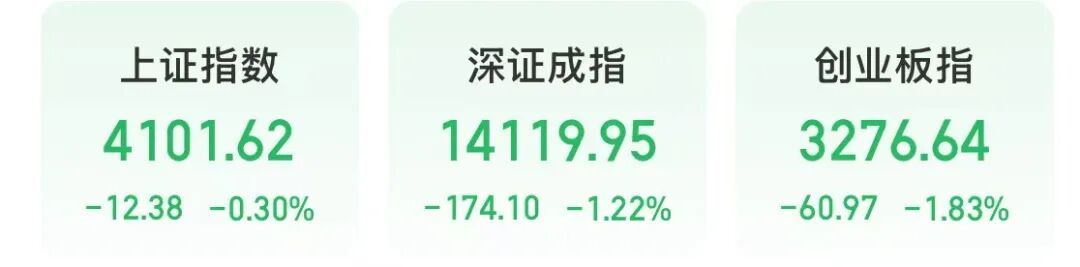
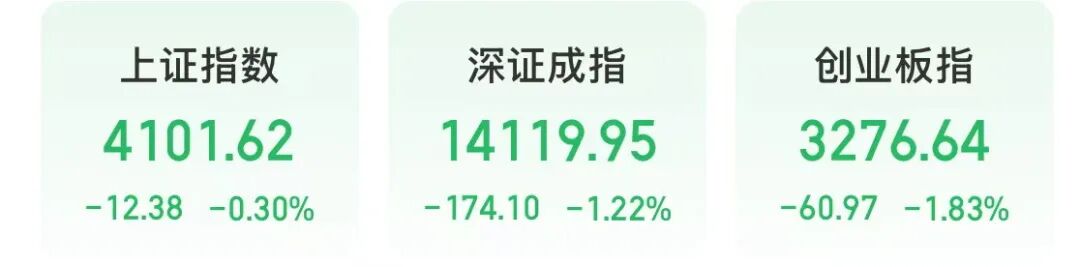
Market Overview - The Shanghai Composite Index experienced significant volatility, dropping below 4100 points with a maximum decline of over 0.8%, before narrowing its losses [1] - The technology sector faced a pullback, particularly in the computing industry chain, while sectors such as consumer goods, high-dividend assets, and chemicals saw gains [1] Market Fluctuation Reasons - The U.S. stock market was closed on Martin Luther King Jr. Day, leading to concerns about its performance upon reopening, which negatively impacted the Asia-Pacific markets [2] - A notable decrease in market liquidity was observed, with the A-share market's financing balance reported at 27,059 billion yuan, down 8.5 billion yuan from the previous day, ending a 10-day increase [2] - The commercial aerospace concept has cooled down, contributing to the overall market decline, with the Shanghai Composite Index down 0.3%, Shenzhen Component Index down 1.22%, and ChiNext Index down 1.83% [3] Consumer Sector Activity - The consumer sector showed strong performance, with significant gains in beauty care, food processing, and liquor manufacturing [6] - The stock of Pop Mart surged, positively influencing the new consumption sector. On January 19, Pop Mart announced a repurchase of 1.4 million shares for approximately 251 million HKD, with prices ranging from 177.7 HKD to 181.2 HKD per share [7] - Recent favorable policies have been released, including a meeting on January 16 focused on boosting consumption and a commitment to expand domestic demand [8] - Analysts suggest that the consumer sector is in a phase of "policy catalysis + peak season drive," with opportunities in essential and discretionary consumption expected to continue improving [9] AI for Science Sector - The AI for Science (AI4S) concept saw active performance, with leading stocks like Zhizhi New Materials rising over 17%, alongside significant gains in other related stocks [11] - Analysts from CITIC Securities noted that advancements in model capabilities and cost reductions are accelerating the commercialization of AI applications [11] - Open Source Securities highlighted the competitive landscape among major AI model companies, suggesting that the commercialization of AI applications could open up growth opportunities across various sectors [11]
A股资产出海,新加坡上市首只中证A500ETF
Zhong Guo Zheng Quan Bao· 2026-01-20 04:56
Group 1 - The South China East England Southern CSI A500 Index ETF was listed on January 20, marking the first CSI A500 Index ETF to be listed in Singapore under the China-Singapore Connectivity Mechanism [1] - The ETF opened at a price of 1.005 Singapore dollars and was trading at 0.996 Singapore dollars by 11:50 AM [1] - This listing reflects the ongoing process of China's financial opening and represents a milestone in the internationalization of Chinese assets [1] Group 2 - The CSI A500 Index includes 500 A-share securities selected from various industries, representing companies with larger market capitalizations and better liquidity [2] - The index has a high allocation in sectors such as industrials, information technology, materials, finance, and communication services, indicating potential for relative excess returns [2] - The South China East England Southern CSI A500 Index ETF is the seventh ETF product launched by the company in Singapore, providing an important channel for investors to access representative Chinese companies across various industries [2]
朗姿股份:子公司朗姿医管通过员工持股平台实施医美业务激励
Zhong Guo Zheng Quan Bao· 2026-01-20 01:57
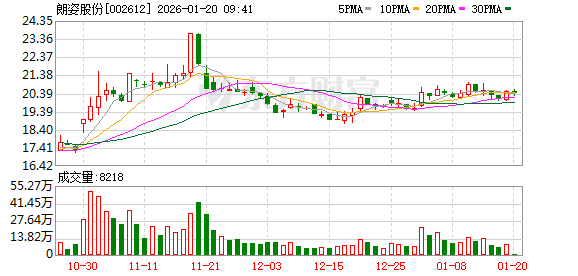
Core Viewpoint - The company is accelerating its national layout in the medical beauty business and establishing a long-term incentive mechanism through investments in new or existing medical beauty institutions by its wholly-owned subsidiary, Langzi Medical Management Group [2] Group 1: Business Strategy - Langzi Medical Management Group is collaborating with management and key employees in the medical beauty sector to invest in new medical beauty institutions [2] - The transaction aims to enhance the motivation of key employees and improve the operational performance of the subsidiary, constituting a related party transaction [2] Group 2: Financial Performance - For the first three quarters of 2025, the company achieved total operating revenue of 4.328 billion yuan, representing a year-on-year increase of 0.89% [2] - The net profit attributable to the parent company reached 989 million yuan, showing a significant year-on-year growth of 366.95% [2] Group 3: Risk Management - The company asserts that the arrangement is controllable in terms of risk and will not have a significant adverse impact on its financial and operational status [2] - There are no circumstances that would harm the rights and interests of the listed company and minority shareholders [2] - The company will follow approval and information disclosure procedures for any future related party transactions to ensure fair pricing [2]

2025年年报业绩预告进入加速披露期:40余家上市公司净利翻番 AI成业绩增长强大驱动力
Zhong Guo Zheng Quan Bao· 2026-01-20 00:36
Core Viewpoint - The A-share listed companies are entering a rapid disclosure period for their 2025 annual performance forecasts, with a significant number of companies expecting substantial profit growth driven by AI and rising commodity prices [1][2]. Group 1: Performance Forecasts - A total of 451 A-share listed companies have disclosed their 2025 performance forecasts, with 156 companies expecting positive results [1]. - Among these, 42 companies anticipate a net profit growth of over 100% year-on-year [2]. - Notable companies include: - DingTong Technology expects a revenue of approximately 1.593 billion yuan, a 54.37% increase, and a net profit of about 242 million yuan, a 119.59% increase, driven by AI demand in the communications sector [2]. - Baiwei Storage forecasts a net profit between 850 million and 1 billion yuan, representing a growth of 427.19% to 520.22% [3]. Group 2: Mining Sector Performance - Mining companies are experiencing significant growth due to rising prices and demand for gold and copper [4]. - Luoyang Molybdenum expects a net profit of 20 billion to 20.8 billion yuan, a year-on-year increase of 47.8% to 53.71%, attributed to effective cost control and product price increases [4]. - Zijin Mining anticipates a net profit of approximately 51 billion to 52 billion yuan, a growth of 59% to 62%, with increased production across key minerals [5]. Group 3: Innovative Sectors - Companies in semiconductor, innovative pharmaceuticals, and commercial aerospace sectors are gaining market attention [6]. - Haopeng Technology projects a net profit of about 19.5 million to 22 million yuan, a growth of 113.69% to 141.09%, focusing on AI hardware applications [6]. - The pharmaceutical industry is entering a critical phase of innovation and global expansion, with investment opportunities shifting towards companies with global competitiveness [7].

财信证券黄红卫:“降温”稳节奏不改趋势 五大主线锚定2026年投资方向
Zhong Guo Zheng Quan Bao· 2026-01-20 00:33
Group 1 - The A-share market has experienced a strong start in 2026, driven by a combination of market trend continuation, spring market catalysts, and a recovery in overseas markets [1][2] - Recent market fluctuations are attributed to the implementation of counter-cyclical adjustment policies and profit-taking in popular sectors, indicating a healthy adjustment that does not alter the overall upward trend [1][3] - The spring market typically lasts around 57 days, and historical data suggests that A-shares tend to strengthen during this period, supported by liquidity and valuation drivers [2][7] Group 2 - Investment strategies should focus on five main lines for 2026: the artificial intelligence industry chain, high-dividend assets, anti-involution sectors, domestic demand expansion, and resource sectors, all of which have performance support and policy backing [1][7][8] - The AI industry is transitioning, with investment opportunities expected to shift from hardware to application sectors, emphasizing the importance of commercial viability [7] - High-dividend assets remain a stable investment choice, with long-term funds continuing to increase their positions in dividend-paying stocks, which are characterized by stable returns and low volatility [7][8] Group 3 - The anti-involution sectors, including coal, steel, photovoltaic, and lithium battery industries, are expected to see performance improvements due to high state-owned enterprise ratios and market consolidation [7][8] - The expansion of domestic demand should focus on new consumption areas such as health, sports, and travel-related industries, which are poised to benefit from recovering consumer scenarios and policy support [7][8] - Resource sectors, particularly precious metals and strategic minor metals, are anticipated to experience valuation recovery in 2026, presenting potential investment opportunities [8]
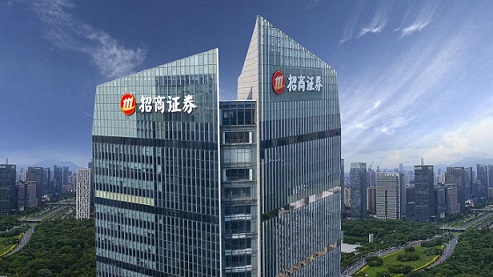
招商证券党委书记、董事长霍达:以专业为“器”服务大局 以改革为“道”激发动能
Zhong Guo Zheng Quan Bao· 2026-01-20 00:15
Core Viewpoint - The article emphasizes the commitment of China Merchants Securities to high-quality development and its alignment with national strategies, highlighting its achievements and future goals in the evolving capital market landscape [1][2][7]. Group 1: Company Development and Achievements - Since its establishment in 1991, China Merchants Securities has evolved into a comprehensive leading brokerage firm, adhering to its core values of professionalism and national service [1]. - During the "14th Five-Year Plan" period, the company has seen steady improvements in development quality and operational efficiency, aligning its growth with national economic strategies [2]. - The company has successfully raised 43.1 billion yuan in equity financing for green and new energy-related enterprises since 2021, and has issued green bonds and asset-backed securities totaling 64 billion yuan [2]. Group 2: Financial Services and Innovations - In the field of inclusive finance, the company launched the "Lingyue Plan" to provide comprehensive financial services to early-stage technology enterprises, with a total investment of 2.6 billion yuan across 645 companies [3]. - The company has also obtained qualifications for personal pension fund sales, positioning itself favorably in the growing pension finance market [3]. - As part of its digital finance strategy, the company is advancing AI integration across its business models and service systems, aiming to transform into an AI-driven securities firm [5]. Group 3: Strategic Directions and Future Outlook - The company aims to enhance its role in supporting the development of new productive forces and technological self-reliance, focusing on hard technology and strategic emerging industries [7]. - It plans to optimize its product and service offerings to meet diverse investor needs, leveraging AI and big data to improve service efficiency and reduce transaction costs [8]. - The company is committed to internationalization, seeking to enhance its global competitiveness and financial influence by expanding its presence in international markets [9]. Group 4: Compliance and Cultural Foundations - The company emphasizes strict compliance and risk management as essential components of its high-quality development strategy, aiming to build a robust internal control system [12]. - It seeks to embed Chinese financial culture into its operations, promoting values that align with national interests and enhancing employee engagement and satisfaction [13]. - The company is dedicated to continuous reform and innovation, striving to build a first-class investment bank and contribute to the construction of a financial power [10][11].