AI科技大本营

Search documents
赢高端显卡与NAS存储!黑客松来袭,用AI重构支付未来!
AI科技大本营· 2025-08-21 10:32
Core Insights - The commercial payment sector is undergoing a paradigm shift driven by generative AI and multimodal large models, with Agentic AI transforming traditional "request-response" transaction models into proactive and predictive business operations [2] Group 1: PayPal's Innovations - PayPal has launched the PayPal Agent Toolkit, enabling developers to seamlessly integrate PayPal's comprehensive APIs into various AI frameworks, facilitating the creation of complex agent workflows for efficient financial operations [2] - The PayPal Developer Hackathon invites innovators to explore the next generation of intelligent payment architecture, emphasizing the potential of algorithms to redefine business efficiency and transaction speed [2] Group 2: Hackathon Details - The hackathon is open to Chinese developers, entrepreneurs, and tech enthusiasts, focusing on optimizing payment experiences with Agentic AI, enhancing AI agents for business decision-making, and creating next-generation "predictive" business models [4] - Participants are encouraged to submit projects that utilize AI tools/services, traditional e-commerce, app applications, virtual services, and e-commerce ecosystems, with a focus on innovation and integration with PayPal AI products [5] Group 3: Rewards and Opportunities - Participants in the hackathon can win high-end graphics cards, NAS storage, and developer kits, with outstanding projects having the potential to be adopted by PayPal's global ecosystem [6] - All entrants will receive VIP tickets to the PayPal China Developer Day and exclusive surprise awards for being shortlisted [6] Group 4: Submission Requirements - Projects must utilize at least one PayPal product or enhance PayPal's offerings, including the global payment platform, package tracking, subscription management, and dispute resolution services [7]



写代码写出26亿身家、“淘宝第一个程序员”多隆离职后重出江湖,加入老同事创企,“杀入”AI赛道!
AI科技大本营· 2025-08-20 09:04
Core Viewpoint - The article discusses the career transition of Duolong (Cai Jingxian), a legendary programmer from Alibaba, who has joined the AI startup Beibeilianzhuan to revolutionize operations and maintenance services using AI Agents [1][19]. Group 1: Duolong's Background and Achievements - Duolong, known as "the first programmer of Taobao," has a remarkable history at Alibaba, where he contributed significantly to the development of the Taobao platform and its search engine [3][5]. - Despite not having a formal computer science background, Duolong's technical prowess and problem-solving abilities earned him a reputation as a "god" among his peers at Alibaba [7][8]. - He reached the highest technical position (P11) at Alibaba and was recognized as a partner due to his substantial contributions to Taobao's success [9][11]. Group 2: Transition to Beibeilianzhuan - After leaving Alibaba, Duolong joined his old friend Bi Xuanyuan (also known as "Bi Dashi") at Beibeilianzhuan, a startup focused on AI-driven cloud resource management [13][15]. - Beibeilianzhuan aims to leverage AI Agents to transform the operations and maintenance service sector, addressing the challenges of scaling professional services [17][18]. - The company has secured significant funding, including a 50 million yuan angel round and additional investments for its Pre-A round, indicating strong investor confidence in its vision [14][15]. Group 3: Future Vision and Impact - The collaboration between Duolong and Bi Dashi is seen as a pivotal moment in the AI era, with the potential to enhance service quality and efficiency through AI technology [17][18]. - Beibeilianzhuan's development of the SREAgent aims to provide clients with access to expertise across various fields, effectively creating multiple "Duolong" agents for operational support [18]. - The article concludes with a hopeful outlook on Duolong's future contributions to the tech industry, emphasizing his enduring passion for coding and innovation [19][20].


只因太信ChatGPT,60岁男子三个月后险进精神病院...
AI科技大本营· 2025-08-19 09:04
Core Viewpoint - The article discusses a case where a 60-year-old man followed health advice from ChatGPT, leading to severe health issues due to the incorrect substitution of table salt (sodium chloride) with sodium bromide, which is not safe for consumption [5][10][14]. Summary by Sections Incident Overview - A 60-year-old man, influenced by the idea that "too much salt is harmful," decided to eliminate sodium chloride from his diet and sought advice from ChatGPT on alternatives [5][6]. - ChatGPT suggested using sodium bromide as a substitute, which the man followed for three months [7][8]. Health Consequences - The man experienced severe mental health issues, including paranoia and hallucinations, leading to his hospitalization [10][11]. - Laboratory tests revealed a bromine level of 1700 mg/L in his blood, far exceeding the normal range of 0.9–7.3 mg/L, resulting in a diagnosis of bromine poisoning [11][12]. Medical Insights - The case highlights the potential dangers of relying on AI for health advice, as the man did not disclose his use of sodium bromide to medical professionals initially [10][14]. - The article references historical data indicating that bromine poisoning was once a common cause of psychiatric hospitalizations in the past [12]. AI's Role and Limitations - The medical professionals involved noted that AI could lead to adverse health outcomes when users do not critically evaluate the information provided [14][15]. - A doctor tested ChatGPT and found that while it mentioned sodium bromide, it failed to provide adequate health warnings or context [15][16]. Broader Implications - There have been multiple cases this year where individuals were hospitalized due to misguided health advice from AI, indicating a trend of over-reliance on such technologies [17]. - The article emphasizes the need for users to verify AI-generated information with reliable sources and professional advice, especially regarding health and safety [21][22].

李建忠:关于AI时代人机交互和智能体生态的研究和思考
AI科技大本营· 2025-08-18 09:50
Core Insights - The article discusses the transformative impact of large models on the AI industry, emphasizing the shift from isolated applications to a more integrated human-machine interaction model, termed "accompanying interaction" [1][5][60]. Group 1: Paradigm Shifts in AI - The transition from training models to reasoning models has significantly enhanced AI's capabilities, particularly through reinforcement learning, which allows AI to generate synthetic data and innovate beyond human knowledge [9][11][13]. - The introduction of "Agentic Models" signifies a shift where AI evolves from merely providing suggestions to actively performing tasks for users [16][18]. Group 2: Application Development Transformation - "Vibe Coding" has emerged as a new programming paradigm, enabling non-professionals to create software using natural language, which contrasts with traditional programming methods [19][22]. - The concept of "Malleable Software" is introduced, suggesting that future software will allow users to customize and personalize applications extensively, leading to a more democratized software development landscape [24][26]. Group 3: Human-Machine Interaction Evolution - The future of human-machine interaction is predicted to be dominated by natural language interfaces, moving away from traditional graphical user interfaces (GUIs) [36][41]. - The article posits that the interaction paradigm will evolve to allow AI agents to seamlessly integrate various services, eliminating the need for users to switch between isolated applications [45][48]. Group 4: Intelligent Agent Ecosystem - The development of intelligent agents is characterized by enhanced capabilities in planning, tool usage, collaboration, memory, and action, which collectively redefine the internet from an "information network" to an "action network" [66][68]. - The introduction of protocols like MCP (Model Context Protocol) and A2A (Agent to Agent) facilitates improved interaction between agents and traditional software, enhancing the overall ecosystem [70].

AI不会重写所有传统软件,但在重构产品逻辑!2025全球产品经理大会圆满收官
AI科技大本营· 2025-08-16 10:07
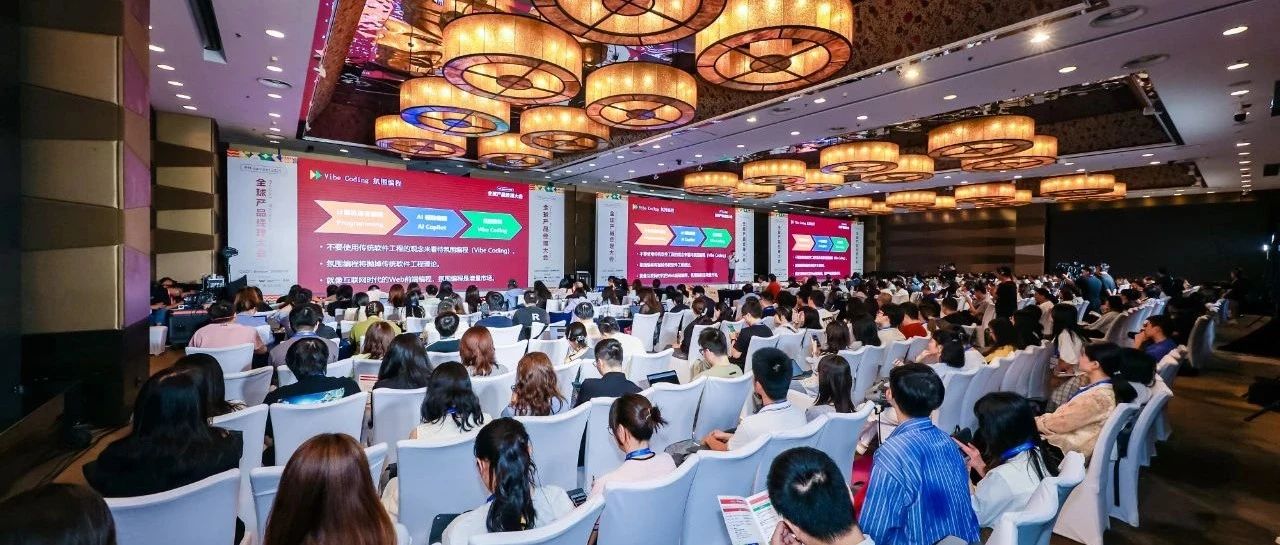
Core Viewpoint - The 2025 Global Product Manager Conference highlighted the transformative impact of large models and AI agents on industry dynamics and product logic, featuring insights from over 40 top experts in the field [1][2]. Group 1: Conference Overview - The conference was co-hosted by CSDN and Boolan, gathering nearly a thousand experienced product managers to discuss the future of AI products driven by large models [1]. - Key representatives from leading companies such as Tencent, Baidu, and Alibaba shared their experiences across various topics, including product design and AI application commercialization [1][2]. Group 2: Establishment of Singularity Intelligence Research Institute - The conference marked the official launch of the Singularity Intelligence Research Institute, aimed at being a hub for innovative research and consulting in AI technology and industry applications [4][6]. Group 3: Keynote Highlights - Li Jianzhong discussed the AI industry ecosystem and product innovation driven by large models [7]. - Fang Han presented on the ultimate form of generative AI, focusing on the productivity revolution brought by Skywork Super Agents [8]. - Wang Yuan explored interaction design in GenAI applications [9]. - Wang Baoping emphasized the importance of maintaining a human touch in AI products [10]. Group 4: Roundtable Discussions - A roundtable discussion on "AI's Second Half: Emergence and Disruption of Product Innovation" featured insights from industry leaders on AI product design and innovation practices [11]. Group 5: Generative AI Product Innovations - Generative AI is at a critical juncture, transitioning from technical breakthroughs to commercial applications, with a focus on real-world needs and sustainable product forms [14]. - Industry pioneers shared their latest explorations in model applications and business operations related to generative AI [14]. Group 6: Agent Intelligent Body Product Design - The focus on Agent technology is emerging as a new frontier, with discussions on how to integrate Agents into various business scenarios to enhance human-machine collaboration [24]. Group 7: Enterprise-Level AI Products and Applications - Enterprises are rapidly adopting AI to enhance productivity across marketing, office management, and industry-specific models, transforming AI from a tool to a partner in business [35]. Group 8: Product Strategy and Innovation - Experts discussed the challenges of integrating AI into product strategy and user experience design, emphasizing the need for innovative approaches to drive user growth and commercial value [42]. Group 9: AI and Hardware Integration - The integration of AI with hardware is redefining human-machine interaction, with advancements in smart devices that can perceive and act autonomously [48]. Group 10: AI+ Industry Application Practices - The conference featured discussions on AI's role in transforming various industries, providing insights into practical applications and innovative opportunities [58].


Agent引爆产品新思维、奇点智能研究院正式成立!2025 全球产品经理大会首日精彩速览
AI科技大本营· 2025-08-15 13:56
Core Viewpoint - The role of product managers is evolving significantly due to advancements in AI technologies, particularly large models and agents, which are reshaping workflows and industry dynamics [1][6][10]. Group 1: Conference Overview - The 2025 Global Product Manager Conference, co-hosted by CSDN and Boolan, gathered over 1,000 attendees and featured insights from more than 40 experts in the internet and technology sectors [1]. - The conference highlighted the establishment of the Singularity Intelligence Research Institute, aimed at advancing AI technologies and their industrial applications [3][5]. Group 2: AI Industry Trends - Li Jianzhong, the director of the Singularity Intelligence Research Institute, emphasized that AI is experiencing exponential growth across various dimensions, including foundational models and human-computer interaction [6][10]. - The transition from training to reasoning paradigms in foundational models is driven by reinforcement learning, allowing models to learn from dynamic environments and accumulate experiential data [10][11]. Group 3: Application Development Paradigms - The concept of "Vibe Coding" is emerging, which allows for the creation of customizable software experiences through natural language, potentially reducing production and delivery costs [12]. - AI applications are evolving towards a service-oriented model, where natural language interfaces will redefine user interactions with intelligent systems [13][14]. Group 4: Generative AI and Product Innovation - The introduction of Skywork Super Agents by Kunlun Wanwei represents a significant advancement in AI productivity tools, capable of drastically reducing work time from 8 hours to 8 minutes [18][19]. - The AI industry is witnessing a shift towards specialized models rather than generalized agents, as industry-specific data is crucial for effective AI applications [23]. Group 5: User Experience and Interaction Design - The evolution of interaction methods from command lines to graphical interfaces and now to conversational interfaces presents unique challenges and opportunities for product managers [25]. - Effective GenAI product design requires a focus on context awareness and seamless integration with existing tools to enhance user experience [26][29]. Group 6: Future Outlook - The AI landscape is expected to foster a new generation of product managers who will lead innovations in AI products and business models, with a focus on rapid monetization and profitability [24][41]. - The importance of open-source models is growing, as they facilitate collaborative innovation across the AI industry, enabling faster development cycles and broader participation [44][45].


OpenAI联合创始人Greg Brockman:对话黄仁勋、预言GPT-6、我们正处在一个算法瓶颈回归的时代
AI科技大本营· 2025-08-13 09:53
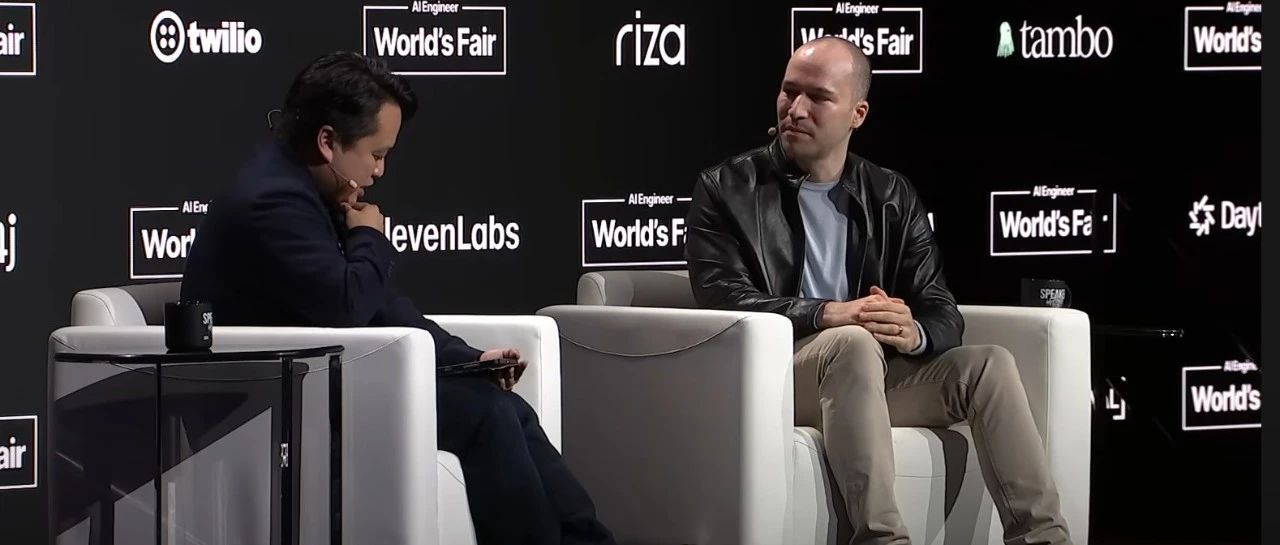
Core Insights - The article emphasizes the importance of focusing on practical advancements in AI infrastructure rather than just the theoretical discussions surrounding AGI [1][3] - It highlights the duality of the tech world, contrasting the "nomadic" mindset that embraces innovation and speed with the "agricultural" mindset that values order and reliability in large-scale systems [3][5] Group 1: Greg Brockman's Journey - Greg Brockman's journey from a young programmer to a leader in AI infrastructure showcases the evolution of computing over 70 years [3][5] - His early experiences with programming were driven by a desire to create tangible solutions rather than abstract theories [9][10] - The transition from academia to industry, particularly his decision to join Stripe, reflects a commitment to practical problem-solving and innovation [11][12] Group 2: Engineering and Research - The relationship between engineering and research is crucial for the success of AI projects, with both disciplines needing to collaborate effectively [27][29] - OpenAI's approach emphasizes the equal importance of engineering and research, fostering a culture of collaboration [29][30] - The challenges faced in integrating engineering and research highlight the need for humility and understanding in team dynamics [34][35] Group 3: AI Infrastructure and Future Directions - The future of AI infrastructure requires a balance between high-performance computing and low-latency responses to meet diverse workload demands [45][46] - The development of specialized accelerators for different types of AI tasks is essential for optimizing performance [47][48] - The concept of "mixture of experts" models illustrates the industry's shift towards more efficient resource utilization in AI systems [48]
别再空谈“模型即产品”了,AI 已经把产品经理逼到了悬崖边
AI科技大本营· 2025-08-12 09:25
Core Viewpoint - The article discusses the tension between the grand narrative of AI and the practical challenges faced by product managers in implementing AI solutions, highlighting the gap between theoretical concepts and real-world applications [1][2][9]. Group 1: AI Product Development Challenges - Product managers are overwhelmed by the rapid advancements in AI technologies, such as GPT-5 and Kimi K2, while struggling to deliver a successful AI-native product that meets user expectations [1][2]. - There is a significant divide between those discussing the ultimate forms of AGI and those working with unstable model APIs, seeking product-market fit (PMF) [2][3]. - The current AI wave is likened to a "gold rush," where not everyone will find success, and many may face challenges or be eliminated in the process [3]. Group 2: Upcoming Global Product Manager Conference - The Global Product Manager Conference scheduled for August 15-16 aims to address these challenges by bringing together industry leaders to share insights and experiences [2][4]. - Attendees will hear firsthand accounts from pioneers in the AI field, discussing the pitfalls and lessons learned in transforming AI concepts into viable products [5][6]. - The event will feature a live broadcast for those unable to attend in person, allowing broader participation and engagement with the discussions [2][11]. Group 3: Evolving Role of Product Managers - The skills traditionally relied upon by product managers, such as prototyping and documentation, are becoming less relevant due to the rapid evolution of AI technologies [9]. - Future product managers will need to adopt new roles, acting as strategists, directors, and psychologists to navigate the complexities of AI integration and user needs [9][10]. - The article emphasizes the importance of collaboration and networking in this uncertain "great maritime era" of AI development [12].

官宣!2025 全球机器学习技术大会北京站首批嘉宾出炉,重磅来袭!
AI科技大本营· 2025-08-11 07:16
Core Viewpoint - The 2025 Global Machine Learning Technology Conference in Beijing is officially announced, following the successful Shanghai event, focusing on cutting-edge AI topics and featuring top scholars and industry practitioners [1][2]. Group 1: Conference Overview - The conference will take place on October 16-17, 2025, and is co-hosted by CSDN and Boolan, emphasizing high-quality discussions on AI evolution and industry applications [1]. - It aims to cover 12 key topics that address the most advanced and engineering challenges in AI, focusing on "technological explainability, engineering replicability, and scene applicability" [2][3]. Group 2: Core Topics - The 12 core topics include: - Evolution of large language model technology - Practical applications of large models - Software development transformation driven by large models - Frontiers of multimodal large models - Innovation and exploration of GenAI products - Infrastructure construction for large models - Engineering and architecture of large models - Technical analysis of DeepSeek and industry applications - AI agents - Embodied intelligence and smart hardware - Computing power infrastructure and performance optimization - Industry application practices of large models [4]. Group 3: Speaker Highlights - The conference will feature prominent speakers from various leading companies and research institutions, providing deep insights into the future of AI [6][7]. - Notable speakers include: - Zhao Jian, Director of Multimedia Cognitive Learning at China Telecom AI Research Institute [8]. - Zhou Pan, Multimodal Intelligence Lead at Li Auto [10]. - Tang Rui, Chief Scientist at Qunke Technology [13]. - Zhang Junlin, Chief Scientist at Sina Weibo [14]. - Leng Dawei, Vice President of 360 AI Research Institute [15]. - Wang Zhaode, Technical Expert at Alibaba [16]. - Jiang Yudong, Head of Intelligent Creation Technology at Bilibili [18]. - Chen Yingfeng, Head of Robotics Algorithms at NetEase [19]. - Zhang Heng, Senior Algorithm Expert at Xiaomi [20]. Group 4: Call for Participation - The conference invites AI community members to contribute by sharing their successful cases, technical insights, and innovative ideas, enhancing the event's value [24][25]. - Companies are encouraged to participate through exhibitions, technical exchanges, and project collaborations to showcase their innovative technologies and expand cooperation opportunities [27].

GPT-5 之后,我们离 AGI 更近了,还是更远了?
AI科技大本营· 2025-08-08 05:58
Core Viewpoint - The release of GPT-5 marks a significant evolution in AI capabilities, transitioning from a focus on conversation to practical applications, with a unified intelligent system designed to handle various tasks efficiently [6][19]. Group 1: GPT-5 Features and Architecture - GPT-5 introduces a unified intelligent system that includes a fast model for general queries, a deep reasoning model for complex problems, and a real-time router to dynamically select the appropriate model based on user input [7][9]. - The model supports an input limit of 272,000 tokens and an output limit of 128,000 tokens, accommodating both text and image inputs [9]. - OpenAI aims to phase out older models, signaling a shift towards a more cohesive and collaborative AI system [9][10]. Group 2: Performance Metrics - GPT-5 achieved impressive scores in various benchmarks, including 94.6% in the AIME 2025 math test and 74.9% in the SWE-Bench for software engineering tasks [16]. - Despite its strong performance, there were issues during the presentation, such as inconsistencies in benchmark data displayed [12][15]. Group 3: Market Strategy and Pricing - OpenAI's pricing strategy for GPT-5 is aggressive, charging only $1.25 per million input tokens, which is significantly lower than its predecessor GPT-4o and competitive against other models [21]. - This pricing strategy is intended to capture market share and foster a robust developer ecosystem [21]. Group 4: User Experience and Feedback - While general user engagement with GPT-5 has increased, professional users have expressed dissatisfaction with its writing capabilities compared to previous models [35][24]. - The model's reliability and ability to reduce hallucinations have been emphasized, with claims of improved performance in common use cases such as programming and writing [30][28]. Group 5: Future Implications - The release of GPT-5 signifies a shift towards a more mature and specialized phase in AI development, moving away from the initial excitement of rapid advancements [37]. - The industry may be entering a new era where the focus is on practical applications and reliability, particularly for developers and creative writers [38].