
生态化布局

Search documents
马斯克的商业帝国:六大产业链闭环,未来指向多星球文明
QYResearch· 2026-02-12 02:40
Core Viewpoint - Elon Musk's business empire is not limited to a single company but encompasses a vast industrial network covering space, earth, human-machine interaction, and energy, aiming for "sustainable prosperity" and "multi-planet civilization" [3] Group 1: Six Major Industrial Chains - Musk's empire is built on three main pillars: Tesla (energy + transportation), SpaceX (space exploration), and xAI (artificial intelligence), along with three extensions: Neuralink (brain-machine interface), The Boring Company (underground tunnels), and Optimus (humanoid robots), forming a self-reinforcing collaborative loop [4] Group 2: Key Data Summary for 2026 - SpaceX aims for $18.2 billion in revenue by 2025, with a 45% year-on-year increase, and plans to launch over 200 rockets, achieving a market share of 86% in U.S. space launches [5] - Tesla targets $94.827 billion in total revenue by 2025, with a projected delivery of 1.636 million vehicles and a 120% increase in FSD subscription users [5] - xAI has raised $20 billion in funding, with plans to build a data center and enhance its Grok model [5] - Neuralink has implanted devices in 12 individuals, aiming for large-scale production and expanded clinical cases [5] Group 3: Collaborative Logic of the Industrial Chain - The synergy among the six industrial chains creates a "1+1>2" effect, where energy systems from Tesla support SpaceX and xAI, while data from various sources feeds into xAI's Grok model, enhancing overall efficiency [6][7] Group 4: Global Industry Benefits - The commercialization of Musk's industrial chains is expected to drive growth in multiple related industries, including aerospace materials, lithium batteries, AI computing power, precision manufacturing, and underground engineering, with significant market growth projections for 2026 [8] Group 5: China's Related Industry Development - China's commercial space sector is rapidly developing, with over 300 companies and a market size exceeding 200 billion RMB by 2026, benefiting from global aerospace trends [9] - In the new energy and electric vehicle sector, China leads globally, with a projected production of 9.5 million electric vehicles by 2025, capturing over 60% of the global market [11] - The AI sector in China is expected to reach a scale of 500 billion RMB by 2026, with significant advancements in large models and computing infrastructure [13] - The humanoid robot and precision manufacturing sectors are also advancing, with Chinese companies focusing on key components and achieving a 35% localization rate by 2025 [14] Group 6: Insights from Musk's Industrial Logic - Musk's approach emphasizes ecological layout, long-termism, differentiated competition, and the importance of hard technology and complete industrial chains, providing valuable lessons for global and Chinese industries [15][16][17][18]



净利腰斩 “非洲之王”传音失速
Bei Jing Shang Bao· 2026-02-01 15:55
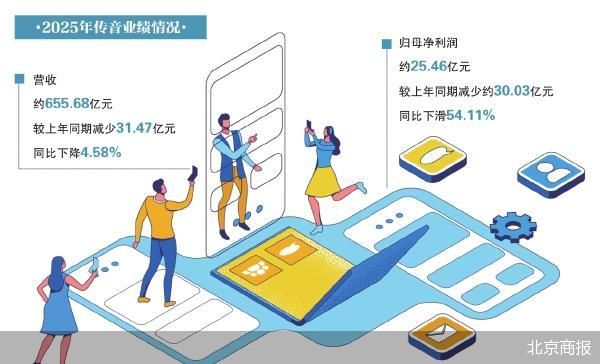
Core Viewpoint - Transsion Holdings, known as the "King of Africa" in the mobile phone industry, reported disappointing annual results for 2025, with significant declines in revenue and net profit due to rising supply chain costs and intensified competition in emerging markets [1][3]. Financial Performance - The company expects to achieve approximately 65.568 billion yuan in revenue for 2025, a decrease of 4.58% year-on-year [1]. - Net profit attributable to shareholders is projected to be around 2.546 billion yuan, down 54.11% compared to the previous year [1]. - The first quarter saw a revenue decline of 25.45% and a net profit drop of 69.87% [3]. - By mid-year, revenue had decreased by 15.86%, with net profit down 57.48% [3]. - Despite a 22.6% revenue increase in the third quarter, cumulative revenue for the first three quarters still fell by 3.33% [3]. Market Position and Competition - In the third quarter, Transsion achieved a 13.6% year-on-year increase in shipments, reaching 29.2 million units, making it one of the top five global smartphone manufacturers [5]. - However, the company did not appear in the global top five rankings in other quarters, indicating instability in its market presence [5]. - In Africa, Transsion maintained a leading position with a 51% market share, but growth has slowed, with competitors like Xiaomi and Honor rapidly increasing their market presence [6][7]. Industry Challenges - Rising storage costs have become a common challenge in the smartphone industry, significantly impacting Transsion's operations in price-sensitive emerging markets [8]. - The increase in DRAM prices has raised production costs across all price segments, with low-end models experiencing the most significant cost hikes [8][9]. - The company faces pressure to maintain market share while exploring new growth avenues, making its future uncertain [9].
全年净利腰斩背后 “非洲之王”传音的怨与愁
Bei Jing Shang Bao· 2026-02-01 14:13
Core Viewpoint - Transsion Holdings, known as the "King of Africa" in the mobile phone industry, reported a disappointing annual performance for 2025, with significant declines in revenue and net profit due to rising supply chain costs and intensified competition in emerging markets [2][3]. Group 1: Financial Performance - The company expects to achieve approximately 65.568 billion yuan in revenue for 2025, a decrease of 4.58% year-on-year, equating to a drop of 3.147 billion yuan [2]. - Net profit attributable to shareholders is projected to be around 2.546 billion yuan, reflecting a substantial decline of 54.11%, or a reduction of about 3.003 billion yuan compared to the previous year [2]. - The non-recurring net profit saw an even steeper decline of 58.06% [2]. Group 2: Market Challenges - The decline in performance is attributed to a combination of rising storage chip prices impacting supply chain costs and increased competition in both local and global emerging markets [2][4]. - The first quarter of 2025 saw a revenue drop of 25.45% and a net profit plunge of 69.87%, indicating a significant early warning of ongoing pressure throughout the year [4]. - By the end of the third quarter, despite a seasonal revenue increase of 22.60%, cumulative revenue still showed a decline of 3.33% year-on-year [4][6]. Group 3: Competitive Landscape - In the global smartphone market, Transsion's performance was mixed, with a notable increase in third-quarter shipments of 29.2 million units, marking a 13.6% year-on-year growth, positioning it among the top five manufacturers [6]. - However, the company struggled in other quarters, failing to maintain a consistent presence in the global top rankings, reflecting instability in its competitive position [6][7]. - In the African market, while still leading with a 51% share, Transsion faced challenges from competitors like Xiaomi and Honor, who exhibited significantly higher growth rates [7][8]. Group 4: Cost Pressures - The rising cost of storage components has become a common challenge in the smartphone industry, particularly affecting Transsion's low to mid-range offerings, where price sensitivity is high [9][10]. - The increase in DRAM prices has raised production costs across all price segments, with low-end models experiencing the most significant increases [9]. - The inability to fully pass on these costs to consumers may lead to further profit compression or reduced shipments of lower-end models, exacerbating the company's operational pressures in emerging markets [10].

三力齐发 助中国科技勇立潮头
Zheng Quan Ri Bao· 2026-01-06 23:31
Core Viewpoint - The International Consumer Electronics Show (CES) showcases China's technological advancements, highlighting a transition from "smart creation" to "ecological leadership" in the tech industry [1] Group 1: Technological Advancements - The exhibition features next-generation personal terminals with multi-modal interaction capabilities and embodied intelligent robots entering homes and businesses [1] - Smart vehicles are transforming driving experiences and reshaping human-vehicle relationships, while core computing chips and advanced solutions empower various industries [1] - Chinese tech companies are evolving from mere technology integrators to global leaders, launching defining technological architectures and open platforms [1] Group 2: Key Dimensions for Future Growth - Strengthening foundational research and frontier exploration is essential for maintaining a competitive edge in global technology, particularly in artificial intelligence, quantum information, and life sciences [2] - Enhancing the resilience and collaboration of the industrial chain is crucial, focusing on upgrading to high-end, intelligent, and green manufacturing, while addressing gaps in key components and advanced materials [2] - Optimizing capital supply to support technological innovation involves fostering "patient capital," ensuring smooth capital circulation, and enhancing global investment capabilities [2] Group 3: Future Outlook - The trajectory from "Made in China" to "Created in China" and now to "Leading in China" indicates a clear upward trend, positioning Chinese technology to significantly contribute to global economic development [3]
央企投资新范式:主题指数基金如何抢占万亿赛道?
Jin Rong Jie· 2025-12-16 07:29
Core Insights - The strategic value of state-owned enterprises (SOEs) is being redefined amid a sluggish global economic recovery and deep domestic economic adjustments, with multiple factors driving SOE investments from traditional valuation logic to a new paradigm [1] - Public funds are rapidly capturing this trend, with the total scale of SOE-related funds exceeding 300 billion yuan in 2023, reflecting a shift in investment logic and strategic positioning [1] - Bosera Fund is leveraging a diversified product system and AI technology to create a differentiated advantage in the SOE value reassessment era [1] Group 1: Policy and Market Dynamics - The dual forces of policy catalysis and industrial upgrading are reshaping the valuation system of SOEs, with the State-owned Assets Supervision and Administration Commission (SASAC) emphasizing market value management [2] - In 2024, SOE assets are projected to exceed 90 trillion yuan, with strategic emerging industry investments reaching 2.7 trillion yuan, marking a 21.8% year-on-year increase [2] - New indices like the CSI SOE Innovation-Driven Index and the CSI National New SOE Modern Energy Index have emerged to cover core assets in technology innovation and green transformation [2][3] Group 2: Product Diversification and Performance - Bosera Fund's SOE Innovation-Driven ETF and Modern Energy ETF have become important tools for investors, offering low thresholds and high liquidity to capture industrial upgrade dividends [4] - The SOE Innovation-Driven ETF has shown impressive performance, with net value growth rates of 2.8%, 40.88%, and 65.29% over the past year, three years, and five years, respectively, all exceeding benchmark returns [5] - The Modern Energy ETF, launched in July 2023, has a clear investment strategy focused on energy and public utility sectors, achieving a net value growth rate of 15.92% since inception [5] Group 3: Investment Philosophy and Technological Integration - Bosera Fund's investment philosophy prioritizes strategic over financial accounting, recognizing the potential for value reassessment in traditional resource factors and the importance of nurturing strategic emerging industries [6] - The firm has initiated AI technology exploration since 2018, establishing an AI laboratory in 2023 to enhance its investment research capabilities across various business functions [7] - The AI-driven investment research engine has achieved significant results, including smart factor allocation and deep learning factor mining, contributing to differentiated alpha generation [7] Group 4: Future Outlook and Commitment - The essence of SOE value reassessment is the capital market's revaluation of the transformation and upgrading of the real economy, with Bosera Fund committed to providing diversified products for investors to share in reform dividends [8] - The firm aims to write a new paradigm for SOE value investment through digital transformation and a long-termism approach, contributing to the high-quality development of SOEs [8]
华人健康(301408) - 2025年12月12日投资者关系活动记录表
2025-12-12 08:58
Group 1: Financial Performance - In the first three quarters of 2025, the company achieved a revenue of CNY 3.892 billion, representing a year-on-year growth of 19.06% [1] - The net profit attributable to shareholders was CNY 157 million, with a year-on-year increase of 45.21% [1] - The net profit excluding non-recurring gains and losses was CNY 151 million, reflecting a growth of 51.00% year-on-year [1] Group 2: Strategic Development - The company is implementing the "1234 strategy" to enhance collaboration across business segments, focusing on revenue and profit growth [1] - Future plans include a commitment to a long-term development strategy that balances scale and quality, innovation and tradition [2] - The company aims to build a technology-driven, innovation-led, and ecologically collaborative pharmaceutical health industry group [2] Group 3: Retail Network Expansion - Guosheng Pharmacy operates under the principle of "professional quality, affordable convenience," providing comprehensive health services [3] - As of June 30, 2025, the company had 2,266 directly operated stores across several provinces, including Anhui, Jiangsu, Zhejiang, and Fujian [3] - Future expansion will focus on optimizing resource allocation and filling market gaps, particularly in economically strong regions of East China [3] Group 4: Response to Industry Policies - The company maintains a high level of strategic sensitivity and adaptability to changes in pharmaceutical industry policies [4] - Specific measures include enhancing R&D innovation, optimizing product structure, and increasing operational efficiency to mitigate cost pressures [4] - The company emphasizes brand building and customer service to strengthen its competitive edge in retail and chronic disease management [4] - Active participation in policy guidance and market opportunities is a priority to secure a favorable position amid policy changes [4]
东安动力打造生态市场增长新引擎
Zhong Guo Qi Che Bao Wang· 2025-12-09 01:33
Core Insights - The Chinese automotive market is undergoing a significant transformation characterized by deep penetration of new energy vehicles, rapid upgrades of traditional powertrains, and the emergence of new sectors, leading to intense competition among automakers [2] - Dong'an Power is leveraging AI and ecological strategies to turn the competitive "卷潮" (involution) into opportunities for growth, thereby reshaping its competitive advantage and solidifying its leading position in the industry [2][3] Market Structure and Strategy - Dong'an Power has developed a diversified market ecosystem by analyzing industry trends and customer needs, creating integrated power system solutions tailored for various vehicle manufacturers [3] - The company has established a comprehensive power industry layout covering traditional and new energy efficient engines, range extenders, and specialized products, forming a multi-dimensional market structure [3][4] Innovation and AI Integration - Dong'an Power is focusing on innovation-driven market development, utilizing AI tools to analyze market trends and customer demands, which enhances decision-making and operational efficiency [6] - The company has achieved an 80% project conversion rate for potential new market projects, demonstrating its effective market development capabilities [6] Partnerships and Market Expansion - Dong'an Power has formed partnerships with over 90% of leading new energy vehicle manufacturers, optimizing its customer structure and enhancing its core competitiveness [7] - The company is actively expanding into new markets, including specialized products, with nearly 30 new projects initiated in areas such as drones and flying cars, contributing to a diversified growth strategy [8] Product Development and Sales Growth - In 2023, Dong'an Power has initiated 68 new market projects, with a significant focus on new energy, resulting in a 138% year-on-year increase in new energy market projects [9] - The company expects to achieve a sales volume of approximately 400,000 units from these new projects, with new market initiatives projected to contribute nearly 45% to total sales [9] Future Outlook - Dong'an Power is developing a new generation of specialized rotor engines aimed at the aviation sector, focusing on lightweight and efficient designs to meet market demands [10][11] - The company aims to continue its growth trajectory by deepening its core business in power systems and expanding into emerging market sectors, contributing to the transformation of the Chinese automotive industry [11]


4.5 亿,巨子生物创始人,入局新赛道
Xin Lang Cai Jing· 2025-12-08 12:25
Core Viewpoint - The recent capital layout by Yan Jianya, founder of Juzhi Biotechnology, involves acquiring shares in Sanrenxing Media Group, indicating a strategic investment in a company facing declining performance in recent years [1][2][17]. Company Overview - Sanrenxing Media Group is a comprehensive advertising and marketing service company, focusing on digital marketing, event services, and campus media marketing, with clients from various sectors including telecommunications, finance, consumer goods, and automotive [1][15]. - As of December 5, the total market capitalization of Juzhi Biotechnology is approximately HKD 410.2 billion (around RMB 372.54 billion), while Sanrenxing's market capitalization stands at RMB 64.09 billion [16]. Financial Performance - In 2022, Sanrenxing achieved record revenues of RMB 56.53 billion and a net profit of RMB 7.37 billion [3][18]. - However, the company has experienced a decline in performance over the past two years, with projected revenues for 2024 dropping to RMB 42.08 billion (a 20% decrease) and net profit falling to RMB 1.23 billion (a 76.65% decline) [4][18]. - For the first three quarters of the current year, Sanrenxing reported revenues of RMB 25.69 billion, down 16.72% year-on-year, and a net profit of RMB 1.45 billion, down 20.48% [4][18]. Investment Details - Yan Jianya's acquisition involves the transfer of 16.865 million unrestricted shares from multiple controlling shareholders of Sanrenxing, totaling approximately RMB 4.51 billion [1][19]. - Post-transaction, Yan will hold an 8% stake in Sanrenxing, becoming the second-largest shareholder after the controlling shareholders [1][15]. Strategic Implications - The investment is seen as a strategic move for Yan, allowing him to leverage Sanrenxing's extensive marketing resources, including a nationwide campus media network covering over 900 universities [20]. - Sanrenxing has established partnerships with major internet media platforms, enhancing its digital marketing capabilities and transitioning towards a technology-driven marketing model [21]. Industry Context - The beauty industry, including companies like Juzhi Biotechnology, faces challenges in balancing brand building and effective advertising, with marketing costs rising significantly [22][23]. - Juzhi's sales expense ratio has increased from 22.30% in 2021 to 36.25% in 2024, reflecting the industry's trend towards higher marketing investments [23]. Future Outlook - The collaboration with Sanrenxing is expected to provide Juzhi Biotechnology with enhanced marketing strategies and execution support, aiding in the establishment of a more sustainable brand communication system [25]. - The beauty sector is witnessing a shift towards ecological layouts, with companies expanding their investment portfolios and seeking synergies among brands to create value [26][27].

集体上糖水,茶饮品牌在赌下一个“超级品类”
3 6 Ke· 2025-12-02 00:11
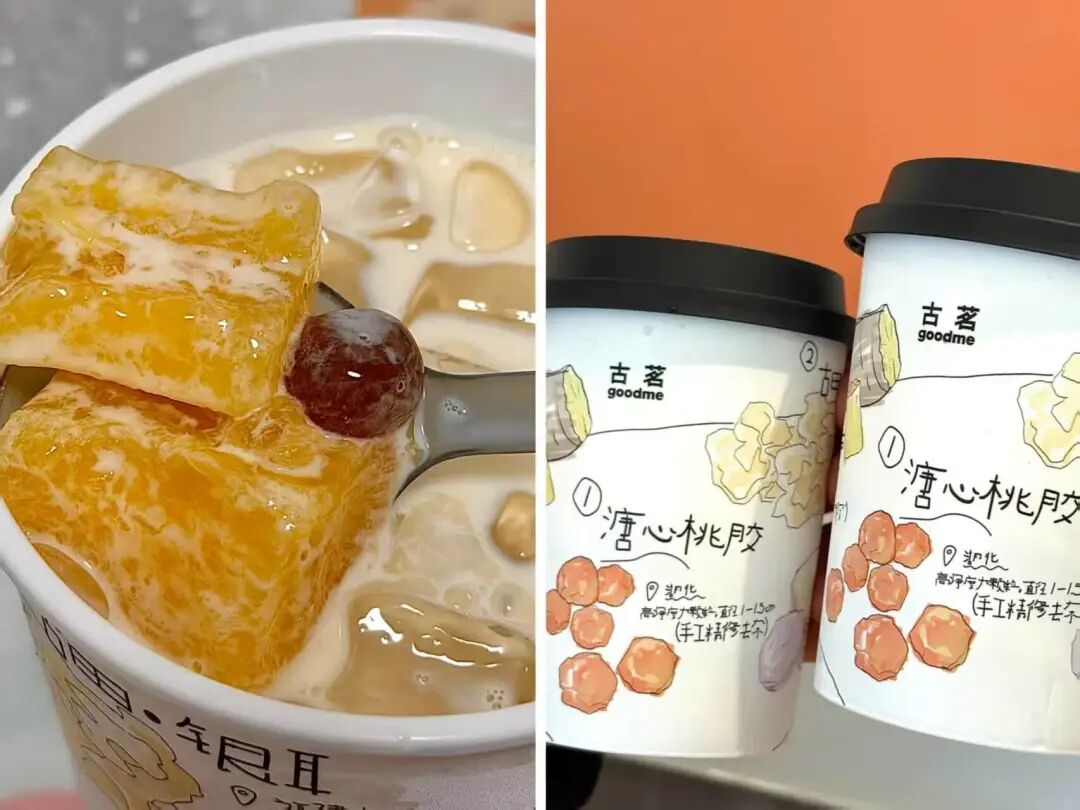
Core Viewpoint - The tea beverage industry is experiencing a surge in the introduction of sugar water products, with major brands launching new offerings to attract consumers and enhance their product lines [1][3][10]. Group 1: New Product Launches - Several leading tea brands have recently introduced sugar water products, such as Gu Ming's peach gum tapioca milk and CoCo's amber peach gum sugar water bowl, which have seen high demand and sold out in many locations [1][3]. - The number of new sugar water products launched by tea brands has increased significantly, with 8 new sugar water products identified among 74 brands in September and October [3]. Group 2: Strategies for Sugar Water Integration - Tea brands are adopting three main strategies for integrating sugar water into their offerings: adding sugar water directly to menus, creating dedicated sugar water sections in existing stores, and establishing sub-brands focused on sugar water [5][7][10]. - For example, brands like Ji Dong and Cha Yan Yue Se have successfully created dedicated sugar water stores, with Ji Dong's upgraded stores seeing performance increases of over 200% [5][7]. Group 3: Market Trends and Consumer Behavior - The resurgence of sugar water has attracted new players in the market, particularly those offering "new-style sugar water," which appeals to younger consumers' aesthetic and health concerns [8][10]. - Social media platforms have seen significant engagement with sugar water content, indicating a strong consumer interest in this product category [8]. Group 4: Industry Evolution and Competitive Landscape - The tea beverage industry is transitioning from a focus on single product breakthroughs to a more integrated ecosystem approach, expanding into adjacent categories like sugar water, coffee, and desserts [11][12]. - As competition intensifies, brands are increasingly looking to diversify their product offerings to extend operational hours and enhance customer loyalty [13][15]. Group 5: Future Outlook and Consolidation Trends - The industry is expected to undergo a consolidation wave, with leading companies exploring mergers and acquisitions to build brand matrices and expand product boundaries [16]. - The competition is evolving from single products to an ecosystem-based approach, with sugar water being a strategic move in this broader trend [16].
从摸石头过河到构建护城河,朝云宠物增长超100%
2 1 Shi Ji Jing Ji Bao Dao· 2025-09-01 07:14
Group 1 - The core viewpoint is that despite the overall pressure on consumer stocks, the pet economy is thriving, with projections indicating it may exceed 1.15 trillion yuan by 2028 [1] - Chaoyun Group has successfully built a comprehensive pet industry chain, leveraging early investments in the pet business since 2019 [1] Group 2 - Chaoyun Group's pet business has achieved over 100% growth, with revenue increasing from 48 million to 96 million yuan, reflecting a year-on-year growth of 101.4% and a gross margin of 58.1% [2] - The company has developed a core competitive advantage through an "online + offline" collaboration strategy [2] Group 3 - Online marketing efforts have led to a significant increase in pet food sales, which now account for nearly 70% of total revenue, with a year-on-year revenue increase of 124% [3] - The company has utilized "content e-commerce + precise marketing" to create popular pet food products on platforms like Douyin [3] Group 4 - Chaoyun Group's new pet store model has resulted in an 82% increase in revenue, with 77 new high-quality stores opened [4] - The company has implemented strategies to enhance customer experience and operational efficiency, leading to rapid profitability for new stores [4] - The integration of self-owned brands with store operations has resulted in over 30% of sales coming from proprietary products, creating a closed-loop system from online marketing to offline experience [4] Group 5 - According to the 2025 mid-year performance report, the company has seen a 7.2% year-on-year revenue increase, marking the fifth consecutive period of growth [5] - The home care business has also shown growth, with pest control products maintaining the top market share for 11 years [5] - The synergy between essential goods and pet business has created a positive feedback loop, contributing to overall growth [5]