中关村储能产业技术联盟

Search documents
重磅官宣!宁德时代冠名ESIE 2026储能展A2电池与智能制造馆
中关村储能产业技术联盟· 2025-12-10 08:06
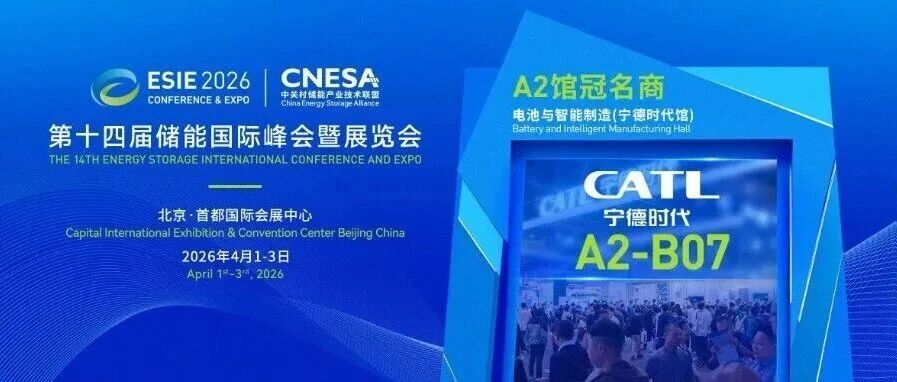
文 | 中关村储能产业技术联盟 由中关村储能产业技术联盟、中国能源研究会、中国科学院工程热物理研究所主办 的 第十四届储能国际峰会暨展览会ESIE 2026 将于2026年4月1 - 3日在北京·首都国际会 展 中 心 举 办 。 本 届 峰 会 展 览 面 积 达 160000 平 米 , 开 设 六 大 主 题 展 馆 , 将 汇 聚 1 000+ 展商/赞助商、 5000+ 产业链上下游企业,吸引专业观众 200000+ 人次。 宁德时代冠名「A2电池与智能制造」 ESIE 2026 CONFERENCE & EXPO 第十四届储能国际峰会暨展览会 THE 14TH ENERGY STORAGE INTERNATIONAL CONFERENCE AND EXPO 北京 · 首都国际会展中心 Capital International Exhibition & Convention Center Beijing China 2026年4月1-3日 April 1st-3rd, 2026 A2馆冠名商 电池与智能制造(宁德时代馆) Battery and Intelligent Manufacturing ...


3GWh! 东方日升再签全球储能新单!
中关村储能产业技术联盟· 2025-12-10 03:36
Core Viewpoint - The strategic cooperation agreement between Dongfang Risheng and WEG marks a significant step in global collaboration for energy solutions, focusing on a total capacity of 3GWh for energy storage systems from 2026 to 2028 [2][4]. Group 1: Partnership Details - Dongfang Risheng will provide advanced large-scale and commercial energy storage system solutions to WEG, contributing to global energy structure optimization and green low-carbon transition [2]. - WEG, established in 1961 and headquartered in Brazil, is one of the largest electrical equipment manufacturers in Latin America, with a strong presence in renewable energy and energy efficiency [4]. - The partnership signifies an upgrade from regional collaboration to a global strategic layout, with Dongfang Risheng supporting WEG's projects across multiple regions including South America, North America, Europe, Africa, and Australia [4][5]. Group 2: Company Background and Technology - Dongfang Risheng has 20 years of experience in the lithium battery sector, offering a comprehensive product line that includes energy storage inverters (PCS), battery management systems (BMS), energy management systems (EMS), and battery systems [4]. - The company has developed a high-reliability energy storage system using its proprietary "4S deep integration technology," suitable for various applications such as renewable energy grid connection and microgrids [4]. - Dongfang Risheng's energy storage battery system is the first in China to receive safety certification from both China and the US UL9540A [4]. Group 3: Global Impact and Future Plans - Dongfang Risheng's business has expanded to over 90 countries, providing stable electricity to remote villages in South America and supporting energy transitions in North American commercial areas [6]. - The company aims to continue collaborating with global partners like WEG to promote green energy solutions across diverse regions and scenarios, accelerating the construction of an efficient, resilient, and sustainable new energy system [6].


0.29~0.35元/Wh!楚能新能源/天合储能/宁德时代入围华能2GWh储能电池框采
中关村储能产业技术联盟· 2025-12-10 03:36
1 2月9日,华能清能院20 2 5 - 2 0 2 6年度储能项目储能原材料(磷酸铁锂电池)框架协议采购 中标候选人公示。 中标候选人第1名: 楚能新能源股份有限公司 投标报价:5 9 0 0 0 0 0 0 0元 投标单价约为 0 . 2 9 5元/W h ; 中标候选人第2名: 江苏天合储能有限公司 投标报价:5 8 0 0 0 0 0 0 0元 投标单价约为 0 . 2 9元/Wh 中标候选人第3名: 宁德时代新能源科技股份有限公司 投标报价:7 0 0 0 0 0 0 4 9 . 2 8元 投标单价约为 0 . 3 5元/Wh 。 招标公告显示,采购储能原材料(磷酸铁锂电池),采购总容量为2.0GWh,单体电池容 量不小于31 4Ah,单体电池能量不小于1004.8Wh,额定充放电功率为0.5P。 本次框架协议采购框架协议有效期自协议签订生效之日起1年或实际采购量达到2GWh。 招标人不保证本次框架协议实际采购规模,具体采购规模有可能低于预估规模。招标人保 文 | 中关村储能产业技术联盟 留提前终止框架协议的权利。 公告原文如下: 华能清能院2 0 2 5 - 2 0 2 6年度储能项目储能原材料( ...

1GW/4GWh!内蒙古阿荣旗构网型储能项目正式投运
中关村储能产业技术联盟· 2025-12-09 10:43
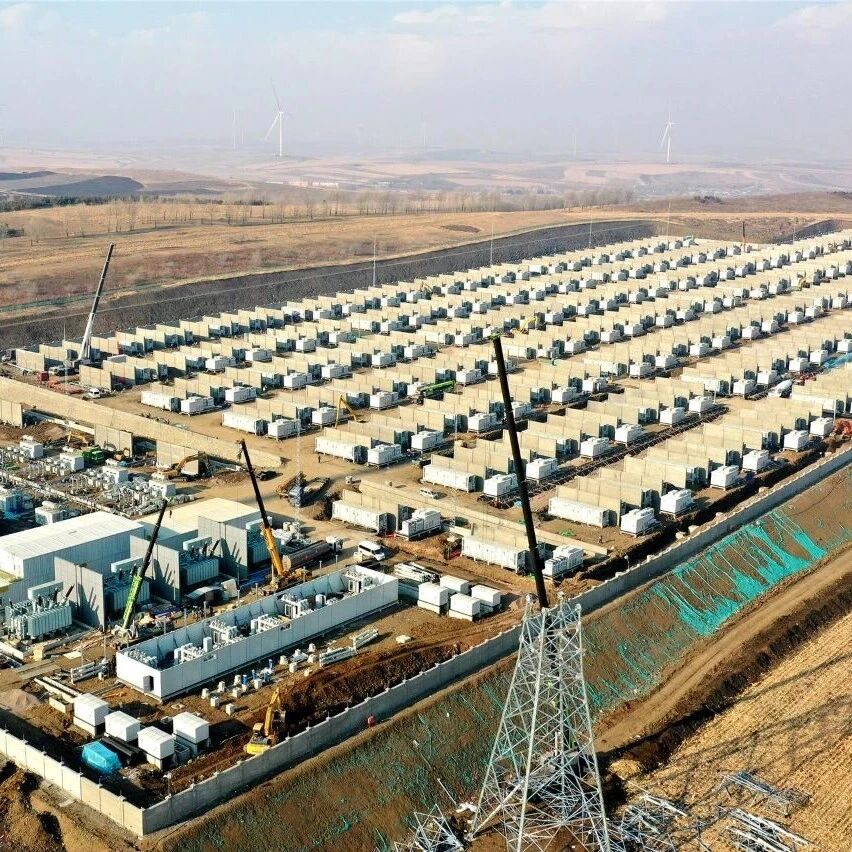
Core Viewpoint - The article highlights the successful launch of the 1 million kW/4 million kWh grid-type energy storage project in Arongqi, Hohhot City, Inner Mongolia, which is expected to enhance renewable energy consumption and improve grid stability [1][4][6]. Group 1: Project Overview - The energy storage project officially commenced operations on December 6, with a total investment of 2.5 billion yuan [1]. - The project utilizes grid-type energy storage technology and lithium iron phosphate batteries, featuring a single storage unit capacity of 1.25 MW/5 MWh and a cycle life exceeding 6,000 times [1][6]. - A total of 800 battery units have been constructed to meet the energy storage demands [1]. Group 2: Technical Features - The project includes the implementation of black start technology, which provides the grid with self-healing capabilities, allowing it to restore operations after a complete failure [6]. - The system can instantaneously supply short-circuit current during grid faults, addressing challenges related to high proportions of renewable energy integration [6]. Group 3: Economic and Environmental Impact - The project is expected to increase the consumption rate of surrounding wind and solar energy by 6%, allowing for an additional 1.2 billion kWh of clean energy to be utilized annually [6]. - It aims to reduce the curtailment rates of renewable energy by approximately 6% and output green electricity of 1.032 billion kWh each year, leading to a reduction in coal consumption by about 300 million tons [6]. - The project will enhance the grid voltage qualification rate to over 99.9% and achieve a power supply reliability rate of 99.99%, supporting the low-carbon transition of the energy structure in the eastern Inner Mongolia region [6].
四川绿电直连实施细则征求意见:配套储能不得独立参与电力市场和对外租赁盈利
中关村储能产业技术联盟· 2025-12-09 10:43
Core Viewpoint - The article discusses the draft implementation details for promoting green electricity direct connection projects in Sichuan Province, aiming to leverage the region's clean energy advantages and accelerate the development of related support measures [9][12]. Group 1: General Principles - The implementation details apply to green electricity direct connection projects within the administrative region of Sichuan Province, focusing on new energy sources such as wind, solar, and biomass, excluding existing hydropower and other renewable sources [13]. - The development goal is to meet the green energy needs of various enterprises while ensuring the stability of the public power grid and fair market operations [13]. Group 2: Basic Requirements for Green Electricity Direct Connection Projects - Projects must scientifically determine the types and scales of new energy sources based on load characteristics, with at least 60% of the annual self-generated electricity from new energy sources and at least 30% of total electricity consumption being self-generated [16]. - Projects are not allowed to feed electricity back to the public grid before the continuous operation of the electricity spot market, and after that, they can adopt a model primarily focused on self-consumption [16]. Group 3: Pricing and Trading Mechanisms - The pricing mechanism for green electricity direct connection projects must comply with national regulations, and projects in specific regions are exempt from peak pricing policies [21]. - Projects must participate in the electricity market as a unified whole and cannot have their supporting storage facilities operate independently in the market [21]. Group 4: Management and Implementation - Project owners must submit applications for approval or record-keeping according to regulations, and if projects are not commenced within two years of approval, the allocated new energy resources will be revoked [25][26]. - The overall implementation plan must be evaluated and approved by local energy authorities, ensuring that all components of the project are constructed and put into operation simultaneously [24]. Group 5: Safety and Monitoring - Projects must establish clear safety responsibility interfaces with the public grid and adhere to safety management measures to ensure stable operation [19]. - The provincial energy bureau is responsible for guiding the evaluation of project demand and monitoring project management and operation [26].

远景田庆军:储能 “生而全球化”,中国企业必须以 “竞合” 替代 “内卷”
中关村储能产业技术联盟· 2025-12-09 08:42
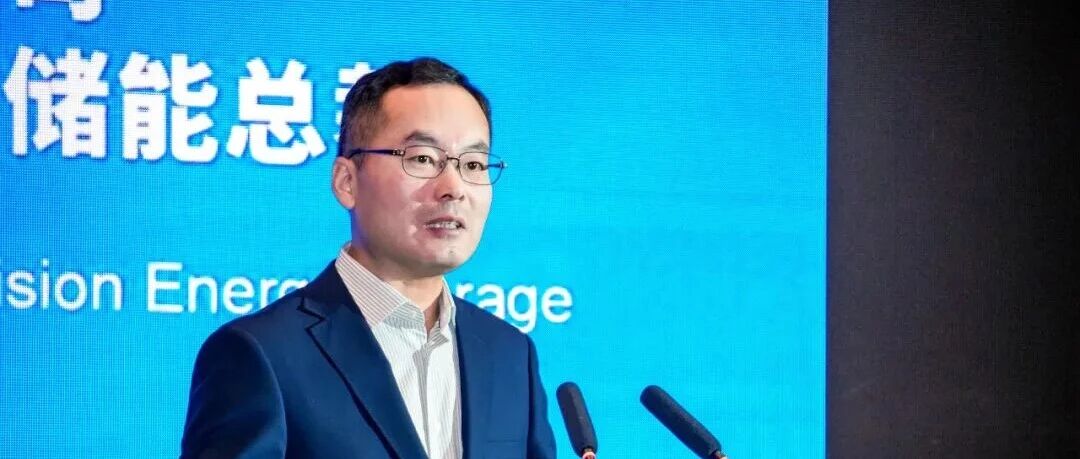
Core Viewpoint - The article emphasizes that for Chinese energy storage companies, going global is not an option but a necessity for survival, driven by the industry's inherently global nature [4]. Group 1: Globalization of Energy Storage Industry - The speaker highlights that China has become the world's largest new energy storage installation country, but the mature business models in overseas high-value markets and the rapid expansion of emerging markets create a complementary global landscape [4]. - Chinese energy storage batteries hold over 90% of the global market share, with eight out of the top ten system integrators being Chinese, indicating a strong supply chain advantage [4]. - The need for global resource allocation and scenario-based innovation is underscored, as diverse global scenarios demand technological innovation [4]. Group 2: Risks of Going Global - The speaker warns that going global is not a "gold mine" and companies must recognize three major risks: policy entry risks represented by U.S. tariffs and the EU's "battery passport," technical solution challenges due to differentiated demands from various countries, and internal competition leading to industry health damage and long-term loss of interests [4][6]. - The speaker specifically points out that malicious competition below cost ultimately harms the entire industry's interests and may cause China to miss the historical window for global industry output [4]. Group 3: Strategies for Success - To address these challenges, the speaker shares the operational philosophy of transitioning from "going out" to "integrating in," focusing on deep localization and international talent reserves [6]. - The company has established a global layout with over 50% of its employees being international talents, distributed across more than 80 manufacturing bases and R&D centers worldwide, which is crucial for winning overseas orders [6]. - The speaker calls for the establishment of a "co-opetition" relationship within the industry, advocating for dialogue mechanisms and self-regulatory standards to promote collaboration based on complementary capabilities [6]. Group 4: Role of Chinese Companies - The speaker believes that the role of Chinese companies should be as "technology partners" and "ecological co-builders" in the global energy transition, rather than as "commercial bystanders" or "resource plunderers" [8]. - The value of companies lies in assisting various countries in achieving their clear energy strategic goals, emphasizing the importance of long-term value over short-term pricing to earn global respect and genuinely contribute to the energy transition [8].
1.59GWh!四家中企获海外储能订单
中关村储能产业技术联盟· 2025-12-09 08:42
Group 1 - Jinko Energy has announced the expansion of its project layout in the UK with an additional 140MWh grid-level energy storage system, bringing the total capacity to 280MWh, making it one of the largest battery storage projects in the UK [2] - Hongzheng Energy has signed a strategic cooperation agreement with Vietnamese company AISEN for a 100MWh energy storage project, aiming to create a comprehensive energy application ecosystem that provides safe, efficient, and sustainable storage solutions [4] - Kubo Energy has established a strategic cooperation with VoltLink Energy in Romania, focusing on a 1GWh collaboration to provide professional, durable, and reliable energy storage solutions [6] Group 2 - Nenghui Technology has signed a framework contract for 350MWh of energy storage systems with a European partner, with the first batch of 20MWh already contracted, amounting to €2,504,408.60, to be delivered within 135 days after the prepayment [8] - The 14th International Energy Storage Summit and Exhibition (ESIE 2026) is scheduled to take place from April 1-3, 2026, in Beijing, highlighting the ongoing developments in the energy storage industry [9] - The 2025 China Energy Storage CEO Summit and the 10th International Energy Storage Innovation Competition preliminary round were successfully held in Xiamen, showcasing 77 outstanding projects [12]


专注PCS,英博智储连中多标!
中关村储能产业技术联盟· 2025-12-09 08:42
Core Viewpoint - The article highlights the recent successes of Yingbo Electric in securing significant contracts in the energy storage sector, showcasing its competitive edge in technology and project execution [2]. Group 1: Project Wins - Yingbo Electric has successfully won the bid for the centralized procurement project of energy storage PCS (1250kW—3450kW) from China Electric Equipment Group [2]. - The company also secured the 200MW/200MWh independent energy storage frequency modulation station project located in Shanwei City, which utilizes an innovative 450kW liquid-cooled modular PCS solution [2][5]. Group 2: Technological Advancements - The 450kW modular PCS features a design that enhances system flexibility and fault tolerance, allowing for precise power distribution to reduce the load on individual units, thereby extending the lifespan of the equipment [6][7]. - The PCS series includes various specifications (400kW, 430kW, 450kW) and is designed for high power integration, supporting high voltage box options and efficient outdoor operation under harsh conditions [9]. Group 3: Industry Context - The energy storage industry is experiencing rapid growth, with Guangdong's new energy sector projected to reach a trillion yuan by 2025, positioning Shanwei as a key player in clean energy supply and a model for new power systems [5]. - Yingbo Electric aims to leverage its recent contract wins to focus on continuous technological innovation and product upgrades, expanding its market presence both domestically and internationally [10].

湖南“两个细则”征求意见:新型储能调峰补偿300元/MWh,违规运行将面临考核
中关村储能产业技术联盟· 2025-12-08 10:42
12月5日, 国家能源局湖南监管办公室 印发《湖南电力辅助服务管理实施细则(征求意见稿)》《湖南电力并网运行管理实施细则(征求 意见稿)》。 辅助服务管理实施细则 《湖南电力辅助服务管理实施细则》适用于并入湖南电网运行的接入 35kV 及以上电压等级并网主体,其中新型储能指具有法人资格的 独立电化学储能电站。压缩空气、飞轮等独立新型储能电站参照执行。纳入本细则管理的独立新型储能容量不低于 2 MW/ 2 MWh 。 以配建形式存在的新型储能项目,在完成站内计量、控制等相关系统改造并符合相关技术要求的情况下,鼓励与所配建的其他类型电源 联合并视为一个整体,参与电力市场。也可通过技术改造满足同等技术条件和安全标准时,选择转为独立储能项目。 独立新型储能调峰补偿: 电力调度机构结合系统调峰需要调用,下达调度计划(含调度指令)要求独立新型储能电站进入充电状态时,对其充电电量进行补偿, 具体补偿标准为 H 2 × 300 (元 / 兆瓦时)。 H 2 为独立新型储能参与调峰补偿系数。 | 序号 | 参数指标 | 系数 | 取值 | | --- | --- | --- | --- | | 1 | 燃煤机组深度调峰补偿系数 ...

华能首台套高压直挂浸没式储能项目并网投运
中关村储能产业技术联盟· 2025-12-08 10:42
文 | 中关村储能产业技术联盟 12月3日,华能公主岭235MW/470MWh集中式储能项目一期(115MW/230MWh)工程暨华能富民储能电站成 功并网投运,正式投入商业化运营。据悉, 这也是华能首套高压直挂浸没式 储能项目 。 项目位于吉林省公主岭市,总规划规模235MW/470MWh,占地约5.26公顷,总投资4.93亿元,由华能吉林发电 有限公司全资子公司投资建设,并由华能吉林发电有限公司新能源分公司负责运营管理。 项目采用华能清能院自主研发的高压直挂浸没式储能系统,结合非步入式液冷磷酸铁锂技术, 同步配套微网储能 系统与泡沫消防系统, 运行稳定、能效显著。一期共布置5套23MW/46MWh储能单元,通过一台135MVA主变 压器升压至220kV接入电网,系统设计预留二期、三期扩建空间,具备良好的规模弹性与发展潜力。 作为贯彻国家"双碳"目标、服务吉林新型电力系统建设的重点工程,华能吉林新能源公司聚焦电网调峰能力提升 与系统安全稳定,积极探索独立储能参与电力市场交易的新路径。 项目全面投运后,将有效提升长春西部地区对风电、光伏等新能源的消纳能力,依托其黑启动功能,进一步增强 极端天气下、突发情况的电 ...