量子位

Search documents
大模型公司不搞浏览器搞Agent,实测找到原因了
量子位· 2025-10-31 06:27
Core Insights - The article discusses the emergence of a desktop agent named "Xiao Yue," which can interact with the entire computer system through natural language commands, enabling users to perform various tasks seamlessly [1][2][40]. Group 1: Product Features - Xiao Yue is designed to operate as a floating ball on the desktop, distinguishing itself from browser-based agents by being more interactive and visually appealing [3][6]. - The agent supports multiple functionalities, including internet access, browser searching, Excel processing, and local system interaction [6]. - Notably, Xiao Yue can reuse operation steps through "smart plans" and set up scheduled tasks for automatic execution, allowing for parallel task processing [8][28]. Group 2: Practical Applications - The agent can assist users in setting up programming environments, significantly reducing the time spent on this task, which is traditionally cumbersome [8][14]. - For instance, Xiao Yue can automatically create a conda virtual environment with specific packages installed, demonstrating its capability to handle complex programming tasks [14][25]. - The agent can also upgrade existing projects, such as enhancing a simple Snake game by replacing its interface and adding features like a score leaderboard [21][24]. Group 3: Limitations and Future Trends - Despite its advanced features, users have reported that Xiao Yue can be slow, with task completion times measured in minutes, which may not meet the expectations of impatient users [36][37]. - The current version of Xiao Yue is only available for Mac, with a Windows version reportedly in development [39]. - The article emphasizes that the trend of agents taking over computer operations is a significant development in human-computer interaction, suggesting a future where users can interact with computers as easily as conversing with another person [40][47].


微软独家:OpenAI最新季度净亏损115亿美元
量子位· 2025-10-31 06:27
Core Viewpoint - OpenAI reported a significant loss of $11.5 billion in the last quarter, which was disclosed by Microsoft, its largest investor, indicating potential financial instability despite the company's high valuation expectations for an IPO [1][22]. Group 1: Financial Performance - Microsoft reported a net profit of $27.747 billion for Q3 2025, a 12% increase year-over-year, but faced a $3.1 billion reduction in net income due to losses from its investment in OpenAI [6][8]. - The losses from OpenAI investments accounted for a $31 billion impact on Microsoft's financials, affecting earnings per share by $0.41 [8][9]. - OpenAI's revenue for the first seven months of the year reportedly doubled, reaching an annual recurring revenue (ARR) of $12 billion, suggesting that the company is generating substantial income despite the reported losses [26][27]. Group 2: Accounting Methodology - Microsoft uses the equity method for accounting its investment in OpenAI, meaning that the company's financial performance directly affects Microsoft's income statement [11][15]. - Under this method, Microsoft cannot adjust the book value of its investment based on market valuations, which means that OpenAI's operational performance is crucial for Microsoft's financial results [13][14]. Group 3: Industry Context - The AI industry is facing a "prisoner's dilemma," where companies like OpenAI must continuously invest in R&D to maintain their competitive edge against open-source models [24][35]. - OpenAI's significant losses are primarily attributed to high R&D expenditures, which are necessary to ensure its models remain state-of-the-art [30][32]. - The competitive landscape has shifted from merely developing the best models to sustaining operations while managing high costs, indicating a change in the rules of the AI game [49]. Group 4: Strategic Implications - Microsoft is more focused on ensuring that OpenAI remains a leader in AI technology rather than on immediate profitability, viewing its investment as a strategic subsidy [45][42]. - OpenAI's operational costs, including substantial cloud service purchases from Microsoft Azure, indicate a symbiotic relationship where losses may ultimately benefit Microsoft [48][47]. - The ongoing financial dynamics suggest that as OpenAI incurs losses, companies like NVIDIA may benefit from the increased demand for AI infrastructure and services [50][51].


Kimi开源新线性注意力架构,首次超越全注意力模型,推理速度暴涨6倍
量子位· 2025-10-31 06:27
Core Insights - The era of Transformers is being redefined with the introduction of the Kimi Linear architecture, which surpasses traditional attention models under the same training conditions [2][10]. Group 1: Kimi Linear Architecture - Kimi Linear employs a novel attention mechanism that reduces the KV cache requirement by 75% and achieves up to 6 times faster inference in long-context tasks [4][26]. - The architecture introduces Kimi Delta Attention (KDA), which allows for fine-grained control over memory retention, enabling the model to discard redundant information while preserving important data [12][10]. - KDA's state update mechanism is based on an improved Delta Rule, ensuring stability even with sequences of millions of tokens, preventing gradient explosion or vanishing [13][14]. Group 2: Performance and Efficiency - The model utilizes a 3:1 mixed layer design, combining three layers of linear attention followed by one layer of full attention, balancing global semantic modeling with resource efficiency [15]. - Kimi Linear has demonstrated superior performance across multiple benchmark tests, such as MMLU and BBH, outperforming traditional Transformers while maintaining accuracy in mathematical reasoning and code generation tasks [22][26]. - The architecture's deployment is seamless with existing vLLM inference frameworks, allowing for easy upgrades of Transformer-based systems to Kimi Linear [21]. Group 3: Industry Trends - The dominance of Transformers is being challenged, with alternative models like state space models (SSM) showing potential for efficient computation and long sequence modeling [28][30]. - Companies like Apple are exploring SSM architectures for their energy efficiency and lower latency, indicating a shift away from traditional Transformer reliance [30]. - The emergence of Kimi Linear signifies a move towards diverse innovations in AI architecture, suggesting a departure from the conventional Transformer path [32].

国产GPU第一股IPO获批,募资80亿
量子位· 2025-10-31 04:09
Core Viewpoint - The approval of Moore Threads' IPO registration marks a significant milestone as the first domestic GPU company to go public on the Sci-Tech Innovation Board, with plans to raise 8 billion yuan for research and development [1][4][26]. Group 1: IPO Details - Moore Threads submitted its IPO application on June 30 and received approval in just four months [3][17]. - The company plans to use the 8 billion yuan raised primarily for R&D, with specific allocations of 2.509 billion yuan for AI training and inference chip development, 2.502 billion yuan for graphics chip development, and 1.981 billion yuan for AI SoC chip development [4][5]. - An additional 1.006 billion yuan will be used for working capital [6]. Group 2: Financial Performance - In the first half of this year, Moore Threads reported revenue of 702 million yuan, surpassing its total revenue for the entire year of 2024 [9]. - The company's net loss for the first half of the year was 271 million yuan, a significant improvement compared to the same period last year, with management projecting potential profitability by 2027 [10][11]. - The revenue structure has shifted dramatically, with AI computing products contributing 94.85% of total revenue in the first half of this year, amounting to 665 million yuan [13][12]. Group 3: Business Model and Technology - Moore Threads operates under a Fabless model, focusing on the research, design, and sales of GPUs and related products [21]. - The company's core technology is the MUSA (Moore Threads Unified System Architecture), which integrates various capabilities such as AI computing acceleration and graphics rendering into a single chip [22][24]. - The company has successfully launched four generations of GPU chips, catering to both enterprise and consumer markets [24][25]. Group 4: Industry Context - Moore Threads is not the only domestic GPU company pursuing an IPO; several others are also in the process, including Muxi and Suiruan Technology, which are at various stages of their IPO applications [26][27][30]. - The past year has seen a surge in IPO activities among domestic GPU manufacturers, indicating a growing interest and competition in the market [31].

最火VLA,看这一篇综述就够了
量子位· 2025-10-31 04:09
Core Insights - The article discusses the rapid growth and significance of the Vision-Language-Action (VLA) field, highlighting its potential to enable robots to understand human language, perceive the world, and perform tasks effectively [5][6]. Definition and Standards - VLA models must utilize a pre-trained backbone on large-scale visual-language data to qualify as VLA, emphasizing the importance of language understanding, visual generalization, and task transfer capabilities [7][8]. - Models that merely combine separate visual and text encoders are classified as "Multimodal Policies," while Large Behavior Models (LBMs) refer to strategies trained on extensive robot demonstration data [10][12]. Trends in VLA - **Trend 1: Efficient Architecture Paradigms** The emergence of discrete diffusion models allows for parallel generation of action sequences, improving efficiency and performance [14][16]. - **Trend 2: Embodied Chain-of-Thought (ECoT)** ECoT enhances robot intelligence by enabling them to generate intermediate reasoning steps before executing actions, improving planning and interpretability [17][18][20]. - **Trend 3: Action Tokenization** This trend focuses on converting continuous robot actions into discrete tokens that VLMs can understand, enhancing efficiency and integration of reasoning with actions [21][24]. - **Trend 4: Reinforcement Learning (RL)** RL is reintroduced as a fine-tuning tool for VLA strategies, addressing limitations of imitation learning in extreme scenarios [25][26]. - **Trend 5: Efficiency Optimization** Efforts to optimize VLA models aim to reduce costs and hardware requirements, making the field more accessible to smaller research labs [27][28]. - **Trend 6: Video Prediction for Physical Intuition** Video generation models provide inherent understanding of temporal dynamics and physical laws, enhancing robot control capabilities [29][35]. - **Trend 7: Realistic Evaluation Benchmarks** New evaluation methods are being developed to overcome saturation in existing benchmarks, focusing on future frame prediction and action generation capabilities [36][39]. - **Trend 8: Cross-Modal Learning** Innovations in architecture are essential for developing universal robot strategies that can operate across different action spaces [40][42]. Challenges and Future Directions - The article highlights the "performance ceiling" issue in mainstream simulation evaluations, where high scores do not necessarily translate to real-world capabilities [43][44]. - Two critical areas needing more attention are data quality and in-context learning, which could be pivotal for breakthroughs in VLA research [48][49].

量子位2025年度榜单冲刺申报中!企业/产品/人物榜正在征集
量子位· 2025-10-31 04:09
Core Points - The article announces the launch of the "2025 Artificial Intelligence Annual Awards" to recognize outstanding contributions in the AI industry [1] - The awards will cover three main categories: companies, products, and individuals, with five specific awards to be given [1][3] Group 1: Company Awards - The "2025 AI Annual Leading Company" award will recognize the most comprehensive AI companies in China [4] - Criteria for participation include being registered in China or primarily serving the Chinese market, and having a leading position in AI or related industries [5][10] Group 2: Startup Awards - The "2025 AI Annual Potential Startup" award will focus on innovative AI startups with significant investment value and growth potential [8] - Eligible companies must be registered in China, have AI-related products or services, and have achieved notable results in technology development or industry application in the past year [11] Group 3: Product Awards - The "2025 AI Annual Outstanding Product" award will highlight AI products that have made significant achievements in technological innovation and market impact [12] - Products must be market-ready, have received user feedback, and demonstrate significant technological advancements in the past year [14] Group 4: Solution Awards - The "2025 AI Annual Outstanding Solution" award will focus on AI applications across various industries, recognizing solutions that show innovation and market implementation [13] - Solutions must have clear application scenarios, be validated by customers, and demonstrate significant breakthroughs in the past year [15] Group 5: Individual Awards - The "2025 AI Annual Focus Person" award will recognize influential figures in the AI field, including both industry leaders and emerging stars [16] - Candidates must have made significant contributions to AI technology or commercialization in the past year [21] Group 6: Event Details - The registration for the awards is open until November 17, 2025, with results to be announced at the MEET2026 Intelligent Future Conference [19] - The conference will gather leaders from technology, industry, and academia to discuss transformative changes in the AI sector [23][24]

首个实例理解3D重建模型!NTU&阶越提出基于实例解耦的3D重建模型,助理场景理解
量子位· 2025-10-31 04:09
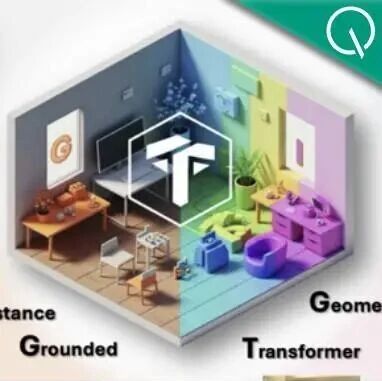
Core Insights - The article discusses the challenges AI faces in simultaneously understanding the geometric structure and semantic content of 3D worlds, which humans naturally perceive. Traditional methods separate 3D reconstruction from spatial understanding, leading to errors and limited generalization. The introduction of IGGT (Instance-Grounded Geometry Transformer) aims to unify these processes in a single model [1][2]. Group 1: IGGT Framework - IGGT is an end-to-end unified framework that integrates spatial reconstruction and instance-level contextual understanding within a single model [2]. - A new large-scale dataset, InsScene-15K, has been created, containing 15,000 scenes and 200 million images, with high-quality, 3D-consistent instance-level masks [2][5]. - The model introduces the "Instance-Grounded Scene Understanding" paradigm, allowing it to generate instance masks that can seamlessly integrate with various Vision Language Models (VLMs) and Language Models (LMMs) [2][18]. Group 2: Data Collection Process - The InsScene-15K dataset is constructed through a novel data management process driven by SAM2, integrating three different data sources [5]. - Synthetic data is generated in simulated environments, providing perfect accuracy for RGB images, depth maps, camera poses, and object-level segmentation masks [8]. - Real-world video collection involves a custom SAM2 pipeline that generates dense initial mask proposals and propagates these masks over time, ensuring high temporal consistency [9]. - Real-world RGBD data collection uses a mask optimization process to enhance the quality of 2D masks while maintaining 3D ID consistency [10]. Group 3: Model Architecture - The IGGT model architecture consists of a unified transformer that processes image tokens through attention modules to create a powerful unified token representation [14]. - It features dual decoding heads for geometry and instance predictions, employing a cross-modal fusion block to enhance spatial perception [17]. - The model utilizes a multi-view contrastive loss to learn 3D-consistent instance features from 2D inputs [15]. Group 4: Performance and Applications - IGGT is the first model capable of simultaneously performing reconstruction, understanding, and tracking tasks, showing significant improvements in understanding and tracking metrics [18]. - In instance 3D tracking tasks, IGGT achieves tracking IOU and success rates of 70% and 90%, respectively, being the only model capable of tracking objects that disappear and reappear [19]. - The model supports multiple applications, including instance spatial tracking, open-vocabulary semantic segmentation, and QA scene grounding, allowing for complex object-centric queries in 3D scenes [23][30].
自动驾驶公司,正在标配飞书
量子位· 2025-10-31 04:09
Core Viewpoint - The article discusses the rapid development of the autonomous driving industry, highlighting the consensus among companies to leverage AI for improving efficiency and productivity in their operations [1][39]. Group 1: Industry Trends - By 2025, the industry is expected to experience rapid growth, with L2 assisted driving gaining significant traction and companies like Momenta and Horizon achieving substantial market presence [1]. - The penetration rate of L2 assisted driving in domestic passenger vehicles reached 63% from January to July this year, with projections indicating a 100% adoption rate by 2030 [34]. - The year 2025 is referred to as the "mass production year" for Robotaxi, driven by increased competition and investment in the sector [34]. Group 2: AI in Autonomous Driving - The autonomous driving sector is utilizing AI to enhance production processes, a concept derived from lean manufacturing principles, focusing on continuous improvement and waste reduction [3][4]. - Companies like Horizon and Momenta are leading examples of using AI to streamline their research and development processes, with Horizon managing over 700,000 documents annually [5][12]. - Momenta has developed a research efficiency engine that automates the flow of information from project initiation to delivery, significantly reducing the time required for various tasks [13][15]. Group 3: Tools and Collaboration - The adoption of Feishu (Lark) as a core platform for knowledge management and collaboration has enabled companies to efficiently utilize their knowledge assets and improve team coordination [6][10]. - Horizon has established knowledge bases for hundreds of projects using Feishu, allowing for rapid iteration and updates to products [11]. - The use of AI-driven tools within Feishu has led to a significant increase in task completion rates and improved overall efficiency in research and development [10][11]. Group 4: Cultural Shift and Competitiveness - The implementation of AI efficiency initiatives, such as the "AI Efficiency Pioneer Competition," fosters a culture of continuous improvement and knowledge sharing among employees [16][26]. - The competition encourages the dissemination of effective case studies across departments and companies, enhancing the overall efficiency of the industry [26]. - The need for efficient tools is underscored by the challenges faced in traditional communication methods, which are often cumbersome and time-consuming [35][36]. Group 5: Future Outlook - The article emphasizes that the future of physical AI will belong to companies that adopt advanced productivity tools early on, as they will be better positioned to navigate the competitive landscape [41][42]. - The integration of AI into real-world applications is seen as a critical challenge that requires comprehensive support for both software development and hardware production [40].



OpenAI首个GPT-5找Bug智能体:全自动读代码找漏洞写修复
量子位· 2025-10-31 00:58
Core Insights - OpenAI has launched Aardvark, an AI-driven "white hat" agent designed to automatically identify and fix security vulnerabilities in large codebases [2][3][4] - Aardvark has demonstrated a 92% identification rate for known vulnerabilities, showcasing its effectiveness in complex conditions [4][19] - Major tech companies like Anthropic, Google, and Microsoft have also introduced similar AI security agents in October, indicating a growing trend in AI-driven code security solutions [7][24][32] Group 1: Aardvark's Functionality - Aardvark operates as an agentic security researcher, continuously analyzing source code repositories to identify vulnerabilities, assess exploitability, determine risk levels, and propose targeted fixes [9] - It utilizes a workflow that includes threat modeling, vulnerability discovery, sandbox validation, Codex repair, manual review, and pull request submission [11] - The integration with GitHub and Codex allows Aardvark to provide actionable security insights without disrupting development efficiency [15] Group 2: Industry Trends - The release of Aardvark coincides with similar announcements from other tech giants, highlighting a collective push towards AI-enhanced code security [23][24] - Anthropic's Claude Sonnet 4.5 and Google's CodeMender have shown superior performance in vulnerability detection compared to previous models, indicating rapid advancements in AI capabilities [28][29] - The increasing complexity of enterprise networks and the rise in cyber threats necessitate AI solutions for efficient vulnerability management [32][34] Group 3: Market Implications - The simultaneous launch of multiple AI security tools suggests a competitive landscape where companies aim to address the growing demand for automated vulnerability detection and remediation [32][34] - The observation that companies are creating both vulnerability-generating and vulnerability-fixing agents raises questions about the sustainability and ethics of such business models [35]

Windows AI助手免费进化!能操作电脑、登录网页、生成代码
量子位· 2025-10-31 00:58
Core Viewpoint - Microsoft has officially updated Windows Copilot, making the AI assistant available for free to enhance computer interface usage through Microsoft 365 Copilot's Researcher agent [1] Group 1: Features and Capabilities - The Researcher agent now includes a "Computer Use" capability, allowing for smarter research, deeper insights, and more comprehensive reports [1][2] - The AI assistant has evolved from merely "speaking" to "doing," utilizing a series of new tools orchestrated by the Researcher [3] - The orchestration layer connects to a sandbox environment, providing screenshots of each operation step [4] Group 2: Security and Data Access - Secure access requires authentication for enterprise internal data, enabling the generation of presentations, spreadsheets, or applications [5] - When the model determines an action is needed, it initiates a virtual machine running on Windows 365, isolated from the internal network and user devices [7] - The virtual machine operates in a temporary sandbox environment, with a default browser and all necessary components for executing model predictions [8] Group 3: Operation and User Interaction - Instructions from the intelligent agent are sent through a secure channel, ensuring no user credentials are permanently stored or transmitted outside the sandbox [9] - All intermediate reasoning steps include screenshots and terminal outputs, allowing real-time monitoring of the agent's operations [10] - When user confirmation or password entry is required, a secure screen-sharing connection can be used to control the sandbox [11] Group 4: Performance Testing - The Researcher with Computer Use was evaluated using GAIA and BrowseComp benchmark tests, showing a 44% performance improvement in complex multi-step browsing tasks compared to the current version [12] - In the GAIA test, the model's performance improved by 6%, successfully answering questions by accessing and processing real-world data [12]