生物世界

Search documents
邦耀生物通用型UCAR-T细胞疗法获批临床,开启自身免疫疾病治疗新范式
生物世界· 2025-12-12 08:30
Core Viewpoint - Shanghai Bangyao Biotechnology Co., Ltd. has made significant progress in the field of autoimmune disease treatment with the approval of its new drug clinical trial application for BRL-303, a universal CAR-T product targeting CD19, marking a milestone in the expansion of its innovative cell therapy technology from hematological tumors to complex autoimmune diseases [3][11]. Group 1: Product Development and Approval - BRL-303 is the world's first universal CAR-T product showing efficacy in treating autoimmune diseases in investigator-initiated clinical trials, receiving implied approval from the National Medical Products Administration (NMPA) [3][6]. - The product is based on Bangyao's proprietary universal cell platform (TyUCell) and represents a key advancement in the treatment of moderate to severe refractory systemic lupus erythematosus (rSLE) [3][6]. Group 2: Clinical Research and Efficacy - Previous clinical studies have demonstrated significant clinical efficacy of BRL-303 in treating SLE, with results published in prestigious journals such as Cell Research and Med [6][7]. - The product has shown the ability to precisely eliminate or inhibit pathogenic cells in SLE patients while promoting immune homeostasis, potentially leading to long-term disease control [10]. Group 3: Advantages of BRL-303 - The product overcomes accessibility barriers by being a "ready-to-use" CAR-T therapy, significantly reducing production costs and treatment waiting times for patients [8]. - BRL-303 enhances safety by avoiding excessive immunosuppression, with clinical trial data indicating a lower incidence of severe cytokine release syndrome (CRS) and neurotoxicity compared to similar products [9]. - The product's design allows for a stronger proliferation capacity and long-lasting persistence of T cells in patients, contributing to its effectiveness in managing SLE [10]. Group 4: Future Prospects and Industry Position - The approval of BRL-303 is expected to accelerate the clinical translation and industrialization of Bangyao's universal CAR-T technology, with plans to expand its application to more autoimmune diseases and solid tumors [11]. - Bangyao aims to leverage its dual-track strategy in hematological tumors and autoimmune diseases to maintain a leading position in China's innovative cell therapy market [11].


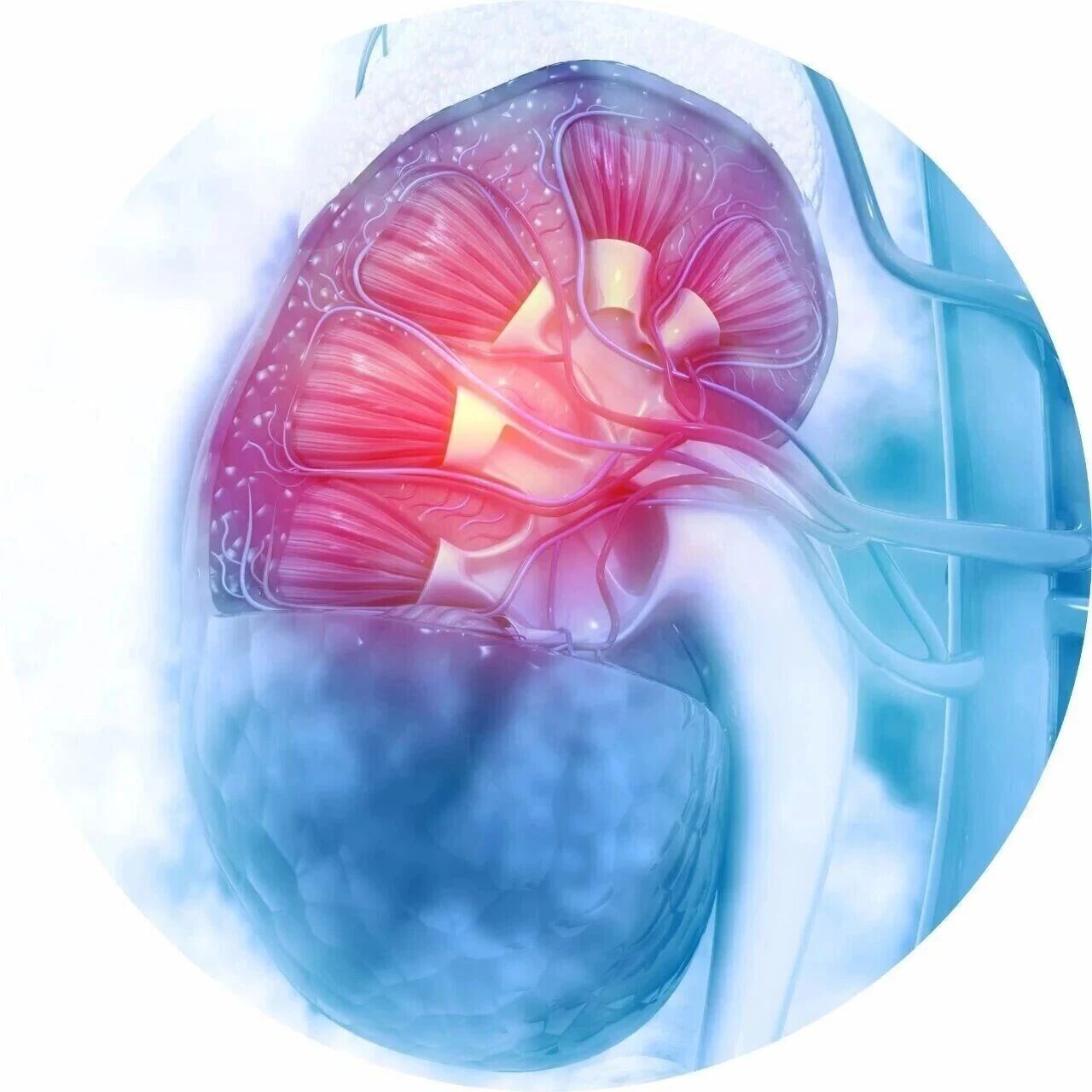
STTT:侯凡凡院士团队首次证实,降尿酸治疗可延缓慢性肾脏病进展
生物世界· 2025-12-12 08:30
Core Viewpoint - Chronic kidney disease (CKD) is a significant and worsening non-communicable disease globally, affecting 8%-14% of adults, leading to increased risks of end-stage kidney disease (ESKD) and cardiovascular events [1][2] Group 1: Disease Impact and Statistics - CKD patients face a significantly increased risk of ESKD and major cardiovascular events, resulting in approximately 2.6 million deaths annually, with 960,000 deaths attributed to ESKD [1] - Hyperuricemia is a common and modifiable complication in CKD patients, with a prevalence twice that of the general population, and its incidence rises sharply with the progression of kidney disease [1][4] Group 2: Research Findings - A recent multicenter real-world study published in "Signal Transduction and Targeted Therapy" demonstrated that urate-lowering therapy (ULT) significantly reduces the risk of kidney function loss and all-cause mortality in CKD patients with hyperuricemia, regardless of gout attacks [2][4] - The study included 269,831 eligible participants, with a primary outcome of composite kidney outcomes defined by a decline in estimated glomerular filtration rate (eGFR) of over 40% or ESKD [5] Group 3: Treatment Outcomes - The cumulative incidence of composite kidney outcomes over three years was 19.69% in the ULT group compared to 23.22% in the control group, indicating a risk difference of -3.53% [5] - The estimated risk differences for ESKD, all-cause mortality, and cardiovascular mortality over three years were -1.88%, -2.25%, and -0.69%, respectively, all favoring the ULT group [5][7]
Immunity:王锋团队揭示自身免疫疾病发病新机制,并提出治疗新靶点
生物世界· 2025-12-12 04:21
Core Viewpoint - The study identifies the TCR-SUB1-DOCK2 signaling axis as a crucial pathway linking TCR antigen recognition signals to CD4⁺ T cell tissue migration, providing new insights into the mechanisms of autoimmune diseases and potential therapeutic targets for immune intervention strategies [5]. Group 1: Research Findings - The research team discovered that the transcription factor SUB1 is selectively upregulated in CD4⁺ T cells from autoimmune disease patients, induced by the T cell receptor (TCR)-interferon regulatory factor-4 (IRF4) signaling axis [2]. - Conditional knockout of Sub1 in T cells reduces the expression of the cell division control factor DOCK2, inhibiting Rac-dependent actin polymerization and T cell motility, thereby preventing the onset of experimental autoimmune encephalomyelitis [2]. - SUB1 forms biomolecular condensates through liquid-liquid phase separation (LLPS), opening chromatin at the Junb and Dock2 gene loci, directly activating Junb transcription, and amplifying Dock2 transcription in collaboration with JUNB [2]. Group 2: Implications for Autoimmunity - The TCR-SUB1-DOCK2 signaling axis serves as a therapeutic target focused on the migration pathways of pathogenic T cells, linking TCR signaling to cytoskeletal reorganization [2]. - This research deepens the understanding of the pathogenesis of autoimmune diseases and provides a theoretical basis and potential targets for developing precise and safe immune intervention strategies [5].

少吃点,饿死癌细胞!Nature子刊论文揭秘饮食限制增强抗肿瘤免疫的新机制
生物世界· 2025-12-12 04:21
Core Viewpoint - Dietary restriction (DR) can extend the lifespan of mammals and delay age-related diseases, including cancer, through mechanisms that are not yet fully understood [1]. Group 1: Research Findings - A study published in Nature Metabolism indicates that dietary restriction leads to metabolic changes in ketone bodies, specifically increasing β-hydroxybutyrate (βOHB), which reprograms the fate and function of CD8+ T cells in the tumor microenvironment, enhancing anti-tumor immunity and responses to immunotherapy [1]. - In experiments, mice subjected to a 50% dietary restriction showed a significant slowdown in tumor growth and a survival extension of 30%-80% compared to those with free access to food [4]. - The anti-cancer effects of dietary restriction were found to be dependent on the immune system, particularly CD8+ T cells, as the effects disappeared in T cell-deficient mice [4]. Group 2: Mechanism of Action - CD8+ T cells, known as "killer cells," are responsible for identifying and destroying cancer cells, but often become "exhausted" in the tumor microenvironment [6]. - Dietary restriction promotes the expansion of effector T cell subsets with stronger anti-cancer capabilities while limiting the accumulation of terminally exhausted T cells [7]. - The mechanism behind this transformation is linked to ketone metabolism, where increased βOHB enhances mitochondrial function and energy metabolism in CD8+ T cells, thereby boosting their anti-cancer capabilities [8]. Group 3: Implications for Cancer Therapy - The study found that dietary restriction can synergize with existing cancer immunotherapies, such as PD-1 monoclonal antibodies, significantly improving treatment outcomes and even leading to complete tumor regression in some melanoma mouse models [9]. - The research suggests that dietary interventions could be a simple and effective strategy to enhance the efficacy of cancer immunotherapy [11]. - Given the challenges of implementing strict dietary restrictions in clinical settings, alternative approaches such as GLP-1 receptor agonists (e.g., semaglutide, tirzepatide) may simulate the metabolic effects of dietary restriction [11].

Cell子刊:夏宇飞团队提出“机械免疫疗法”新范式,钻孔激活树突状细胞
生物世界· 2025-12-12 04:21
撰文丨王聪 编辑丨王多鱼 排版丨水成文 在这项最新研究中,研究团队通过设计 铝佐剂 稳定型皮克林乳液 (ASPE) , 重新利用已获批的铝佐剂 (明矾) ,以协同机械 (PIEZO1) 和生化 (TLR4) 信号。ASPE 具有界面明矾和最佳刚性,其特点是在内吞过程中能促进与树突状细胞 (DC) 的接触面积扩大,传递局部应力,从而激活 PIEZO1 介导的钙离子/ 丝裂原活化蛋白激酶 (Ca 2+ /MAPK) 信号通路。这增强了抗原交叉呈递和 Th1 免疫。在老年小鼠的水痘-带状疱疹病毒疫苗模型中,共递送 TLR4 激动剂 (MPLA) 进一步增强了免疫原性,效果优于 铝佐剂 +MPLA (AS04) 。 免疫疗法利用宿主受体信号传导来调节先天免疫并触发针对感染和慢性疾病的适应性反应。目前的方法主要利用生化线索,例如 TLR 激动剂或 STING 激活剂来 启动免疫激活。尽管机制已十分明确,但新型分子面临严格的监管和高昂的研发成本,阻碍了免疫疗法向临床的转化。为克服这些挑战,利用来自成熟且特征明 确的平台的物理线索,特 别是细胞 机械感知 (mechanosensing) ,正成为激发免疫反应的补充途径。 ...

中国博后一作,类器官之父最新Nature论文:人类肠道M细胞与树突状细胞类似,发挥抗原呈递作用
生物世界· 2025-12-12 04:21
M 细胞 ( Microfold Cell ) 是存在于派尔集合淋巴结中的一类稀有的肠道上皮细胞,通常认为,M 细胞将抗原转运至黏膜下抗原呈递细胞,而对于 M 细胞的这 些认识,主要来源于透射电子显微镜研究和对转基因小鼠的实验。 撰文丨王聪 编辑丨王多鱼 排版丨水成文 2025 年 12 月 10 日,类器官之父 Hans Clevers 教授 (博士后 王代松 为论文第一作者 ) 在国际顶尖学术期刊 Nature 上发表了题为: Human gut M cells resemble dendritic cells and present gluten antigen 的研究论文。 该研究建立了 肠道类器官 模型以研究 人类肠道 M 细胞 ,并通过转录组分析重构了 M 细胞的分化轨迹。 结果显示, 人类 M 细胞除了抗原转运,还与树突状细 胞类似,加工并直接呈递抗原 。该研究还通过肠道类器官-T 细胞共培养实验证明,人类 M 细胞能够加工并呈递麸 质抗原,提示了 M 细胞可能在自身免疫疾病 乳糜泻 的"元凶"。 这项研究彻底改变了我们对 人类 M 细胞 ,乃至 肠道黏膜免疫 的理解,为 乳糜泻等肠道疾病带来了 ...

登上Cell子刊封面:中山大学发现胃癌中的“定海神针”
生物世界· 2025-12-12 00:00
撰文丨王聪 编辑丨王多鱼 排版丨水成文 核苷酸代谢重编程推动肿瘤进展,但肿瘤细胞如何感知核苷酸水平,目前仍不清楚。 近日,中山大学药学院 王军舰 教授、 广州中医药大学中药学院 苏桃 研究员、加州大学戴维斯分校 陈宏 武 教授等,在 Cell 子刊 Molecular Cell 上发表了题为: UMP functions as an endogenous regulator of NR4A1 to control gastric cancer progression 的研究论文,该论文还被选为 封面论文 。 该研究揭示了尿嘧啶 核苷酸 UMP 独立于其生物合成功能之外的 新功能 ,首次证实了 UMP 可作为孤儿核 受体 NR4A1 的 内源调控因子 ,在 胃癌 进展中发挥关键调控作用,从而为胃癌治疗提供了新策略。 封面描绘了中国神话中的" 定海神针 "——一根能平息汹涌大海的神柱。这根神柱代表着孤儿核受体 NR4A1 ,在胃癌中它 能为 UMP 的混沌海洋带来秩序。汹涌的紫色大海(左侧)代表了 UMP 充足的状态,此时 UMP 与 NR4A1 结合并使其沉 默,从而促进肿瘤生长。而在 UMP 缺乏(右侧平静的 ...

华人学者一天发表了6篇Nature论文
生物世界· 2025-12-11 10:00
Core Viewpoint - The article highlights the publication of 22 papers in the prestigious journal Nature on December 10, with 6 of them authored by Chinese scholars, showcasing significant contributions to various fields of research [3]. Group 1: Research Contributions - Stanford University School of Medicine's Zhang Xiangyue published a paper titled "Erythropoietin receptor on cDC1s dictates immune tolerance," focusing on the role of erythropoietin receptors in immune tolerance [4]. - Hubrecht Institute's Wang Daisong published a paper titled "Human gut M cells resemble dendritic cells and present gluten antigen," exploring the similarities between gut M cells and dendritic cells in antigen presentation [6]. - University of British Columbia's Yuan Zixuan published a paper titled "A direct role for a mitochondrial targeting sequence in signalling stress," investigating mitochondrial targeting sequences in stress signaling [8]. - Harvard Medical School's Zhao Long-Wen published a paper titled "An RNA splicing system that excises DNA transposons from animal mRNAs," detailing a novel RNA splicing system [11]. - National Institutes of Health's Zhang Tongwu published a paper titled "Uncovering the role of LINE-1 in the evolution of lung adenocarcinoma," revealing insights into the role of LINE-1 in lung adenocarcinoma evolution [13]. - Beijing Institute of Life Sciences/Tsinghua University’s Shao Feng and team published a paper titled "Agonists for cytosolic bacterial receptor ALPK1 induce antitumour immunity," discussing the potential of ALPK1 agonists in inducing anti-tumor immune responses [15].

Nature子刊:杨帆团队等开发癌症免疫治疗新策略,利用三特异抗体重构免疫互作,治疗免疫冷肿瘤
生物世界· 2025-12-11 10:00
编辑丨王多鱼 排版丨水成文 在许多 " 免疫冷肿瘤 " 中,能够识别肿瘤的特异性 T 细胞十分稀缺,而相当数量状态良好的 T 细胞却因无法识别肿瘤抗原而长期 " 旁 观 " 。与此同时,肿瘤内部又充斥免疫抑制性的巨噬细胞,使得 T 细胞难以维持持续杀伤。 如何让 " 旁观者 " 真正投入战斗,并反向利用巨噬细胞为免疫反应助力,成为破解实体瘤免疫治疗瓶颈的关键。 2025 年 12 月 10 日,上海交通大学医学院附属仁济医院、上海市妇科肿瘤重点实验室 杨帆 研究员团队联合 庄光磊 研究员和 狄文 教授,在 Nature 子刊 Nature Biomedical Engineering 上 发表了题为: A trispecific antibody engaging T cells with tumour and myeloid cells augments antitumour immunity 的研究论文。 该研究开发了一种三特异性抗体—— B7H3×CD3×PDL1 ,能够同时结合 T 细胞、肿瘤细胞和巨噬细胞,以增强抗肿瘤免疫。 该研究提出了一条突破传统的肿瘤免疫治疗的新路径——不再依赖稀有的肿瘤特异性 ...

哈尔滨医科大学发表最新Cell子刊论文:巨噬细胞PD-1在免疫检查点阻断下调控能量消耗能量消耗和代谢功能障碍
生物世界· 2025-12-11 04:28
Core Viewpoint - The study reveals that macrophage PD-1 plays a critical role in the intersection of immune checkpoint blockade, energy expenditure, and metabolic dysfunction, providing a new theoretical basis for combating metabolic diseases induced by immune checkpoint inhibitors and high-fat diets [7]. Group 1: Research Findings - The research indicates that anti-PD-1 antibodies target macrophage PD-1, reducing energy expenditure without affecting food intake, thereby increasing susceptibility to obesity and systemic metabolic disorders induced by high-fat diets [4]. - The mechanism involves lipopolysaccharide (LPS) activating Unc-51-like autophagy activating kinase-1 (ULK1) in an mTOR-dependent manner, which phosphorylates PD-1 at the Thr250 site, preventing its ubiquitination and degradation by FBXO38 [4][8]. - Phosphorylated PD-1 interacts with IRE1α, inhibiting its phosphorylation and thereby suppressing inflammation driven by endoplasmic reticulum stress [4][8]. Group 2: Implications - The findings suggest that targeting IRE1α-XBP1 may offer a potential strategy to counteract metabolic dysfunction induced by immune checkpoint inhibitors [8]. - The study's insights into the dual role of macrophage PD-1 could lead to new therapeutic approaches for managing metabolic disorders associated with cancer treatments [7].