机器人大讲堂

Search documents
践行者说|刘扬:拆解“理解与执行”黑箱,绘制具身智能渐进式路线图
机器人大讲堂· 2025-12-31 04:00
12月18-19日,第六届中国机器人行业年会在杭州举行。这场汇聚了超2000名行业专家企业家及从业 者的年度盛会,已成为解码机器人技术与商业未来的高端对话场。 机器人大讲堂特现推出系列深度报道,梳理大会现场行业顶尖专家与知名企业的核心洞见,探寻中国 机器人在具身智能时代的破局之路。 本期聚焦 【刘扬】Hyper-VLA与世界模型:驱动具身智能迈向"理解世界,可靠执行"新范式 刘扬 原力无限联合创始人 当行业兴奋地谈论具身智能时,我们究竟在谈论机器人能力的哪个阶段? 2025 年,行业见证了单笔数亿美元 的巨额融资,也见证了技术路线从 VLA 到世界模型的快速迭代,但如何让机器真正理解物理世界并作出可靠 行动,仍是横亘在理想与现实之间的核心挑战。 最近,原力无限联合创始人刘扬在第六届中国机器人行业年会上,为狂奔的行业提供了一份冷静的能力分级清 单与一套聚焦闭环的破局方法论。本篇报道将完整梳理他的分享,看一家融合了顶尖学术研究与资深智驾工程 经验的团队,如何尝试为具身智能绘制一幅从现实场景反推的渐进式技术路线图。 ▍ 认知原点:为具身智能厘定 L0 到 L5 的能力阶梯 面对快速拓展的从机器人到具身智能的行业概念 ...


专访云深处科技研发运营总监周燕鑫:年销快速增长、海外拓展提速,破解机器人商业化增长密码
机器人大讲堂· 2025-12-31 00:00
Core Insights - The article highlights the rapid growth and overseas expansion of Yundongchu Technology, revealing the secrets behind the commercialization of robotics [2] - The sixth China Robotics Industry Annual Conference provided insights into the future of robotics technology and business [1][6] Group 1: Industry Trends - The competition in humanoid robots and embodied intelligence is intensifying, with a significant focus on algorithm iteration and full-scene adaptation [4] - Many companies are overly focused on general intelligence without exploring practical commercialization paths [4] - The core value of embodied intelligence lies in meeting real industrial needs rather than mere technical demonstrations [4] Group 2: Company Achievements - Yundongchu Technology won the "LeadeRobot 2025 Embodied Intelligence Scene Development Award" for its achievements in industrial inspection and emergency firefighting [6][8] - The company has established a strong foothold in the industrial sector, particularly in power inspection and emergency response, achieving over 80% market share in the power sector across 26 provinces [17] Group 3: Product Development - The upgraded humanoid robot DR02 is set to be launched after the New Year, focusing on industrial applications [9][13] - The company emphasizes practical operational capabilities over high degrees of freedom in robot movements, targeting simple tasks in emergency and inspection scenarios [11][13] - The DR02 humanoid robot is designed to cover more industrial scenarios due to its height and reach compared to the four-legged robots [15][16] Group 4: Market Performance - The sales of the X30 four-legged robot exceeded expectations, driven by high customer repurchase rates and improved industry solutions [17] - The company is expanding into new markets, including property patrol, logistics, and cultural collaborations, which are expected to provide new growth drivers [18] Group 5: International Expansion - Yundongchu Technology's overseas business has seen rapid growth, with successful projects in regions like Europe, the Middle East, and Asia [18][19] - The company has established a benchmark case in Singapore for tunnel inspection, showcasing its robots' capabilities in autonomous operations [19][21] Group 6: Future Strategy - The company aims to double its performance by 2025 compared to 2024, with a continued focus on expanding its product matrix and enhancing intelligent technology [29]

IJRR 重磅,浙江大学机械工程学院Grasp Lab用AI 赋能机械革新:机器人抓取的新突破
机器人大讲堂· 2025-12-30 17:00
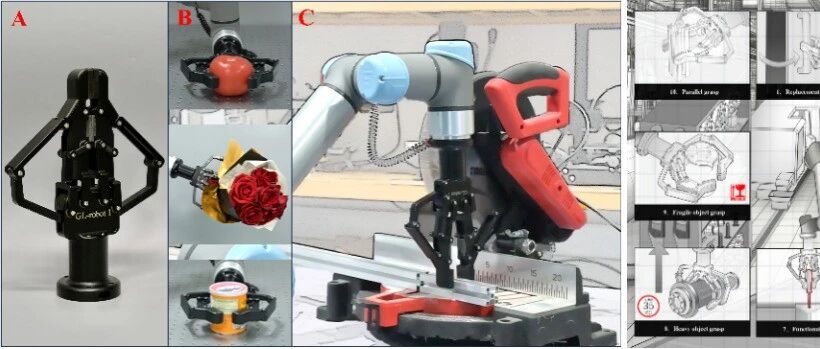
Core Viewpoint - The article discusses the innovative advancements of the GL-Robot developed by Zhejiang University's Grasp Lab, which integrates AI and mechanical design to overcome traditional challenges in robotic grasping and manipulation, particularly by decoupling dexterous hands from tactile sensors, enabling high-precision force control without the need for expensive tactile sensors [1][16]. Group 1: Mechanical Structure Optimization - The mechanical structure of GL-Robot is a key component, featuring a novel underactuated two-finger three-joint architecture that simplifies drive complexity while enhancing force transmission efficiency [2]. - The design incorporates a unique "stacked four-bar linkage decoupling mechanism" that allows for both coupled and decoupled joint movements, reducing actuator load and improving adaptability [2]. Group 2: Multi-Modal Sensing - GL-Robot achieves a breakthrough in force control without tactile sensors by utilizing a framework that maps motor current to external contact states, allowing for effective grasping without traditional sensor dependencies [9][11]. - The system employs Long Short-Term Memory (LSTM) networks to analyze current fluctuations during grasping, achieving force control precision as low as 0.1N and a maximum load capacity of 250N, demonstrating its capability to handle both delicate and heavy objects [11]. Group 3: Grasping and Operation Planning - GL-Robot features a hierarchical dual-mode strategy for intelligent grasping and operation planning, dynamically adapting to various task requirements through a combination of position and current-based control [12][15]. - The planning logic is deeply integrated with mechanical characteristics, allowing for stable grasping of a wide range of objects, from thin coins to large cubes, while preventing slippage [15]. Group 4: Core Value and Future Outlook - The integration of AI and mechanical design in GL-Robot not only reduces costs by eliminating the need for expensive force sensors but also enhances performance metrics such as load capacity and precision, positioning it as a competitive alternative to commercial grippers [16]. - The ongoing advancements in AI-driven design and control are expected to further enhance robotic grasping capabilities, expanding applications in industrial automation and service sectors [16].
270万元的洗澡机器人,4万人报名体验,人类离“全自动洗澡”有多远?
机器人大讲堂· 2025-12-30 14:00
Core Viewpoint - The emergence of a bathing robot developed by Japan's Science company signifies a potential revolution in bathroom automation, reflecting an overlooked consumer demand for smart bathing solutions [1][8]. Group 1: Product Features and Technology - The bathing robot features numerous sensors that monitor users' physiological data, such as heart rate and skin moisture, allowing it to adjust water flow and temperature accordingly [2]. - It utilizes the Mirable micro-bubble technology, which cleans without soap by using negatively charged micro-bubbles to attract dirt and oil from the skin [2]. - The transparent cover of the robot serves as a display screen, providing relaxing visuals during the bathing process [4]. Group 2: Market Demand and Growth - Market research indicates that smart shower and bathroom products have maintained double-digit growth rates in recent years, suggesting a healthy demand for more intelligent bathing solutions [9]. - The current market for smart bathing products is categorized into three stages: basic affordable products, automated function products requiring user input, and fully integrated smart products like the bathing robot [9]. Group 3: Industry Landscape and Competition - Major companies like Huawei, Midea, and Haier have made significant strides in the smart home sector, but their advancements in bathroom technology remain relatively basic compared to other areas [12]. - The bathing robot's current model is not yet a consumer product, with a size of 2.5 meters long and a price of 60 million yen (approximately 2.7 million RMB), indicating a gap between prototype and market-ready products [13]. Group 4: Future Directions and Challenges - Future developments in bathing robots will focus on integrating materials, structure, and control systems, as well as enhancing information management through cloud technology [17]. - Current bathing robots lack the capability to integrate with other smart home devices, highlighting a need for future innovations to create a cohesive smart home ecosystem [17]. Group 5: Societal Implications - The discussion around bathing robots extends beyond convenience, addressing the needs of the elderly and disabled populations who face significant challenges with traditional bathing methods [20]. - The contrast between high-end bathing robots and more practical solutions for elderly care illustrates a broader trend in technology's role in enhancing human dignity and quality of life [21].

顶刊重磅!失明患者新希望!机器人自主视网膜静脉插管系统来了
机器人大讲堂· 2025-12-30 14:00
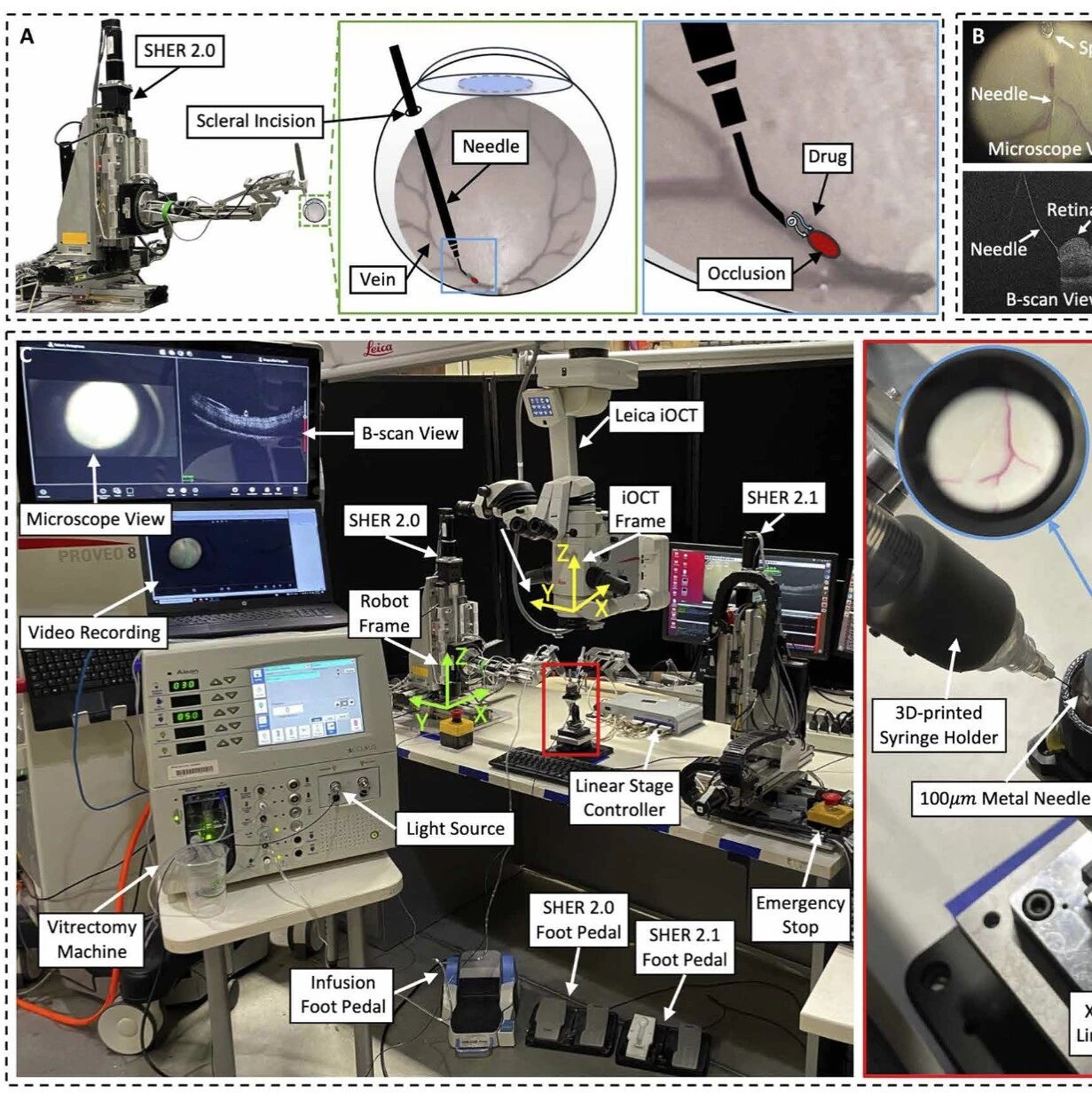
Core Viewpoint - The article discusses a groundbreaking autonomous retinal vein cannulation system developed by a research team at Johns Hopkins University, which utilizes deep learning to perform precise surgeries on retinal vein occlusion (RVO) patients, significantly improving success rates and operational efficiency [1][2]. Group 1: Surgical Innovation - Retinal vein occlusion (RVO) is the second leading cause of blindness globally, affecting millions of patients [1]. - Traditional treatments only alleviate symptoms and require repeated, costly interventions with infection risks, while the new RVC surgery can directly remove blood clots but is challenging for surgeons [1]. - The new system achieved a 90% success rate in ex vivo pig eye experiments, even maintaining an 83% success rate under simulated respiratory movements [1][2]. Group 2: System Efficiency - The autonomous system significantly reduced navigation time from 57.45 seconds to 30.56 seconds and puncture/retraction time from 43.55 seconds to 9.08 seconds compared to previous robotic-assisted manual operations [2]. - The system compensates for small eye movements caused by heartbeat, maintaining high success rates even in dynamic conditions [2][6]. Group 3: Technical Breakthroughs - The system relies on three specially trained convolutional neural networks (CNNs) that act as the robot's "eyes" and "brain" for decision-making during surgery [5]. - The direction prediction network, based on ResNet18 architecture, guides the robot to the target vessel with an error margin of 11.33 micrometers [5]. - The contact detection network, using YOLOv8, has a detection accuracy of 98.7%, ensuring precise positioning before puncture [5]. - The puncture confirmation network also based on YOLOv8 achieves an average precision of 97.6%, preventing misjudgments that could cause secondary damage [5]. Group 4: Implications for Ophthalmic Surgery - The system eliminates human physiological limitations, reducing surgical risks by controlling operational errors at the micrometer level [9]. - It simplifies the surgical process, making it accessible to operators with limited RVC experience, potentially increasing the number of hospitals capable of performing such surgeries [9]. - The approach establishes a new paradigm of human-robot collaboration, allowing surgeons to focus on critical decisions while the robot handles precise tasks [9]. Group 5: Future Directions - The research team aims to enhance the system's dynamic compensation capabilities and optimize puncture strategies to minimize potential damage to retinal pigment epithelium [10]. - The system is open-sourced, facilitating global collaboration and innovation in the field [10]. - The advancements in AI and robotics are expected to redefine the limits of ophthalmic surgery, offering revolutionary treatments for various eye diseases beyond RVO [10].
每年新增600+本!智能技术与机器人学有哪些图书值得一读︱编辑荐书
机器人大讲堂· 2025-12-30 14:00
大幅增强身体能力和智力,让日常工作生活等变得更轻松,这是人类长久以来的梦想。如今广泛应用且快速发展的智 能技术将在未来数十年内推动技术与社会的重大变革,帮助人类实现这一梦想。 施普林格·自然 智能技术与机器人学电子图书合集 每年出版 600多种 相关领域的电子图书,收录了那些有望改变人类 社会基本形态的跨学科研究,汇集了来自世界各地知名作者的前沿成果,涉及智能系统的各个领域。 合集涵盖智能交通、人形机器人、自动驾驶汽车、物联网、智慧城市、人机交互、工业4.0、医疗机器人和数据科学等 应用。施普林格∙自然智能技术与机器人学电子图书合集致力于为读者提供成熟知识体系以及前沿研究成果,成为相关 领域的前沿研究的关键的基础知识保障。 施普林格∙自然智能技术与机器人学电子图书合集涵盖广泛的学科领域,包括但不限于: | • 自动化 | • 机电一体化 | | --- | --- | | • 计算智能 | • 智能机器人 | | • 控制 | • 智能技术 | | • 嵌入式系统 | • 环境智能 | | • 信息科学 | • 大数据 | | • 智能和自动化系统 | • 人机协作 | 施普林格·自然智能技术与机器人学图书合 ...
工规级,中国具身智能的“分水岭”?
机器人大讲堂· 2025-12-30 14:00
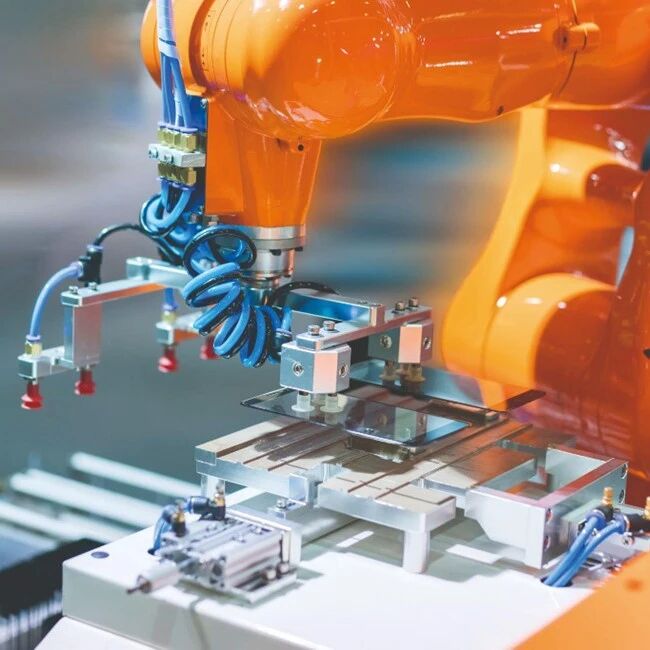
Core Viewpoint - Humanoid robots are in a rapidly evolving stage, with national standardization efforts underway to establish a clear framework for industrial applications [1][8]. Group 1: Industrial Application of Humanoid Robots - The SYNDA R1, developed by a company with 30 years of industrial experience, is designed for continuous operation in production lines, showcasing practical industrial parameters such as millisecond response time and millimeter precision [2][4]. - The industrial environment demands robots that can operate 24/7 with high precision and safety, which many current humanoid robots fail to meet due to their design being more suited for laboratory demonstrations rather than real-world applications [5][7]. - The lack of robust design for industrial scenarios has led to many humanoid robots being unable to perform effectively in actual production environments, highlighting the need for a focus on industrial-grade capabilities [5][8]. Group 2: Technological Advancements - The SYNDA R1 features an integrated intelligent control system that combines perception, planning, and motion control, addressing issues of response delay and stability in complex industrial conditions [8][10]. - The robot's ability to adapt to real-time changes in its environment, such as adjusting its actions based on the position of parts during assembly, demonstrates its suitability for high-precision industrial tasks [10][11]. - The design includes a dual-battery hot-swappable system, allowing for uninterrupted operation, which is critical for maintaining production line efficiency [11][13]. Group 3: Market Dynamics and Industry Trends - The entry of established companies into the humanoid robot market signifies a shift from conceptual excitement to a focus on practical industrial applications, with a clear emphasis on industrial-grade standards [13][18]. - Companies that can demonstrate industrial reliability and continuous operational capabilities will likely dominate the market, while those focusing solely on demonstration effects may be phased out [18][20]. - Collaborations with major tech firms are essential for resource integration and accelerating product deployment, indicating a trend towards ecosystem partnerships in the humanoid robotics sector [20][21]. Group 4: Future Outlook - The future of humanoid robots lies in their ability to solve real industrial problems rather than showcasing advanced technology in controlled environments, emphasizing the importance of practical applications [21][23]. - As the manufacturing sector in China undergoes transformation, humanoid robots are positioned to become integral to smart manufacturing, provided the industry focuses on industrial needs and practical deployment [21][24].

十年深耕,机器人大讲堂邀您共赴机器人产业高质量发展之路
机器人大讲堂· 2025-12-30 02:00
亲爱的机器人大讲堂粉丝朋友们, 时光匆匆,机器人大讲堂已伴随中国机器人产业走过了整整十年。 这十年,是中国机器人产业从萌芽探索到规模壮大的十年,是技术从实验室走向应用场景的十年,也是产业链从分散薄弱到协同共生的十年 。 机器人大讲堂作为 见证者、参与者和推动者,始终以务实为本,以服务为要,在产业发展的不同阶段,精准对接企业需求,提供专业化深度服务。 今天,我们回望这十年征程,既是对过往工作的梳理与总结,更是对未来继续携手前行的坚定承诺。从 2016年清华科技园咖啡厅的首场分享,到如今成为覆盖产 业链上下游的综合性产业服务平台。 这十年,我们的每一份努力,始终聚焦于为企业解决实际需求、助力产业持续进步。 我们未曾缺席产业发展的每一个关键节 点,未曾辜负每一份信任与托付。我们深知,同行与陪伴,是行业走向高质量发展的必由之路。 一、奠基之路( 2016-2017):搭建桥梁,助力产业萌芽起步 2016年前后,中国机器人产业正处于起步阶段,技术研发与产业应用存在脱节,企业对行业趋势的把握、专家资源的对接、政策方向的理解都存在迫切需求。 正 是在这样的行业背景下,机器人大讲堂应运而生,从一开始就确立了 "搭建桥梁、汇聚 ...
灵心巧手完成A++轮融资,全球灵巧手龙头再提速
机器人大讲堂· 2025-12-29 10:09
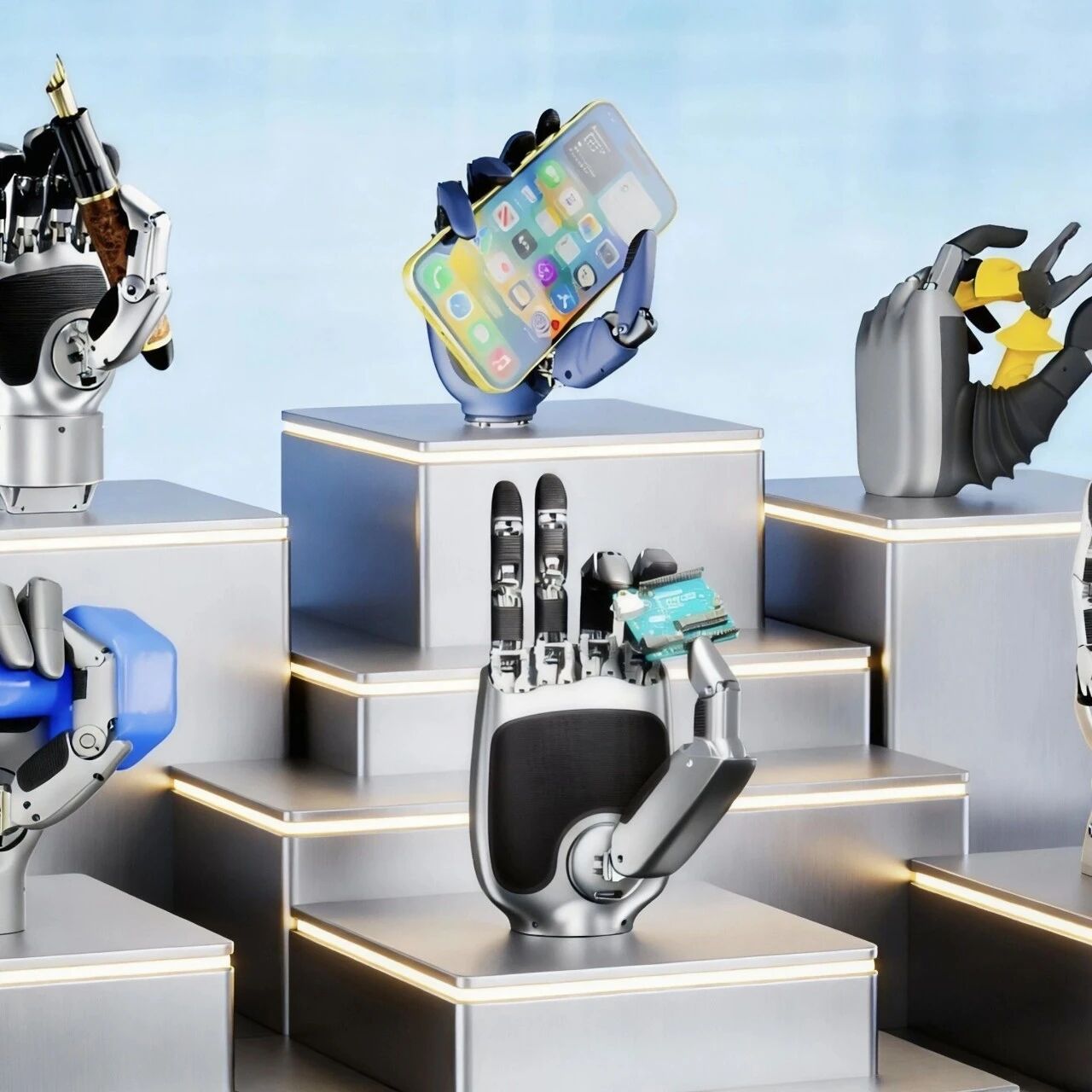
Core Viewpoint - Lingxin Qiaoshou, a leading company in the global dexterous hand market, has successfully completed an A++ round of financing to enhance product technology development, capacity improvement, and data accumulation for embodied intelligent dexterous operations [1] Group 1: Financing and Market Position - The A++ round of financing was led by Sequoia China, CCV, GF Qianhe, and Pufeng Capital, aimed at advancing product technology and capacity [1] - Lingxin Qiaoshou has become the only company globally to mass-produce over 1,000 high-degree-of-freedom dexterous hands, capturing over 80% of the global market share in this segment [1] Group 2: Product Development and Performance - The Linker Hand series, including models L6 and O6, features biomimetic designs that closely resemble human hands, showcasing significant application value in humanoid robots with monthly deliveries exceeding 1,000 units [3] - The L6 model utilizes a self-developed "super strong electric cylinder" with a driving efficiency of 90%, achieving over double the performance of traditional products, and a thrust of 200N with a lifespan exceeding one million cycles [3] Group 3: Technological Innovation and Ecosystem Development - Lingxin Qiaoshou is promoting the collaborative development of hardware and software, establishing an open system called "TripleAny" to reduce costs in data collection for dexterous operations [4] - The company has launched the "Bailing Plan" in collaboration with Chengkai Fund, creating an investment fund to support innovation in the dexterous hand industry, facilitating rapid industrial application of new technologies [6] - The founder emphasized the vision of a future where millions of dexterous hands interact in the real world, driving the evolution of skills and capabilities [6] Group 4: Future Outlook - Lingxin Qiaoshou plans to deliver 50,000 to 100,000 dexterous hands by 2026, aiming to accelerate innovation in dexterous operations and expand its industrial ecosystem [8]
15㎡撬动千亿市场!全球首个模块化智能空间,“智魔方”重塑零售商业格局!
机器人大讲堂· 2025-12-29 10:09
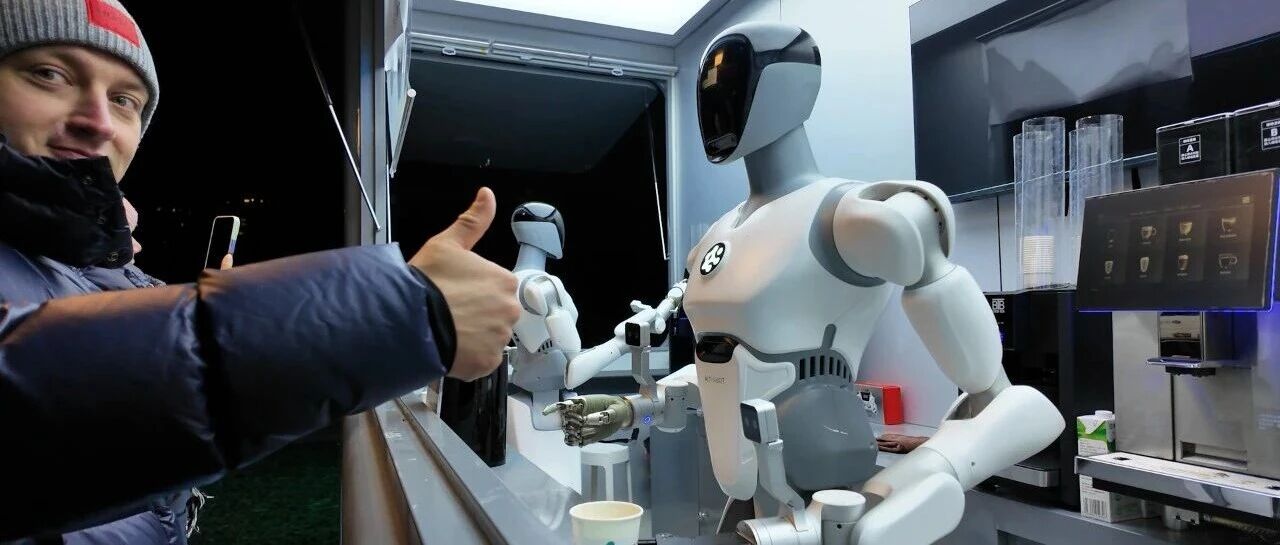
Core Viewpoint - The article highlights the launch of "Smart Cube" by AI² Robotics, marking a significant advancement in modular embodied intelligence service spaces, aimed at transforming urban commercial and cultural landscapes through intelligent robotics [1]. Group 1: Product Launch and Market Strategy - AI² Robotics introduced the world's first modular embodied intelligence service space, "Smart Cube," in Beijing and Shenzhen, with plans to deploy 1,000 units across key urban areas in the next three years [1]. - The "Smart Cube" aims to address challenges in the cultural and commercial travel industry, such as homogenized experiences and low operational efficiency, by offering a flexible and efficient service space [2]. Group 2: Functional Design and User Experience - The "Smart Cube" features four independent modules: coffee, ice cream, entertainment, and retail, which can be combined based on specific scene requirements, enhancing user engagement and experience [2]. - The compact design of 15 square meters allows for quick deployment without extensive renovations, significantly lowering the barriers for intelligent upgrades in cultural and commercial travel settings [4]. Group 3: Innovative Operational Model - The operational model of "Smart Cube" integrates human-robot collaboration, utilizing the self-developed GOVLA model for optimal business decision-making, enhancing operational efficiency by up to 100% during peak times [6][8]. - Robots in the "Smart Cube" can adjust their operational strategies based on real-time customer flow, demonstrating commercial judgment and maximizing space efficiency [8]. Group 4: Technical Capabilities and Industry Positioning - The stable operation and continuous evolution of "Smart Cube" are supported by a three-part system capability: model, hardware, and scene, establishing a competitive barrier in the industry [11]. - The self-developed GOVLA model excels in full-body control and environmental understanding, outperforming international benchmarks and contributing to a data-driven improvement cycle [14]. Group 5: Commercialization and Future Outlook - AI² Robotics has rapidly ascended to unicorn status, securing significant funding and positioning itself as a key player in the global embodied intelligence market [18]. - The deployment of 1,000 "Smart Cubes" will integrate these intelligent units into urban infrastructure, serving as technology landmarks and cultural showcases, while driving the next generation of growth in the cultural and commercial travel sector [21].