机器人圈

Search documents
新松多可人形机器人——睿可(rico)系列正式发布,瞄准工业柔性协作痛点
机器人圈· 2025-07-10 10:14
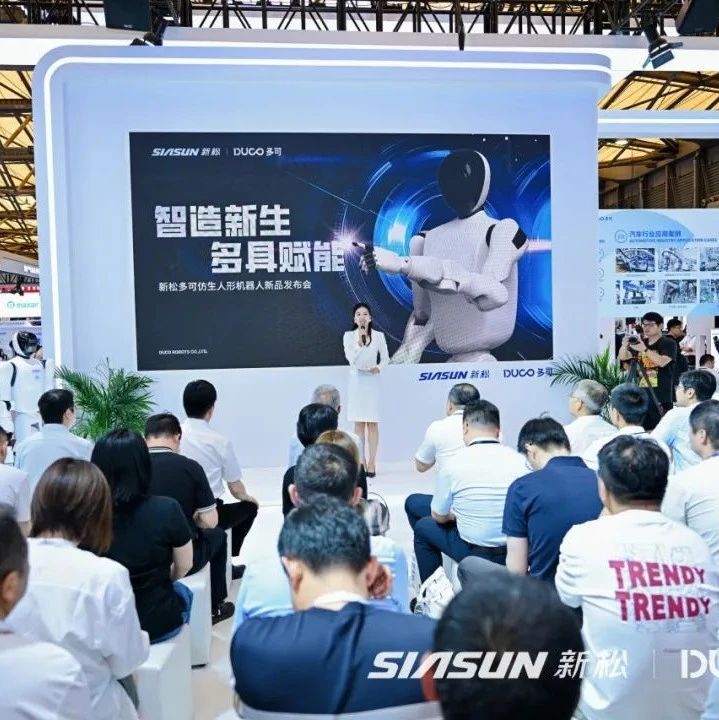
截稿延期通知:IRCTC2025九大期刊联合征文延期至7月12日! 7月9日下午,上海AMTS汽车制造技术与装备及材料展上, 中科新松正式发布了两款仿生 人形机器人新品—— 睿可系列MR73A轮式人形和MR73B升降人形机器人 。 上海市浦东新区区政协领导,国内知名高校教授、研究员 及 新松公司副总裁刘子军先生、中科新松董事长杨跞博士、中科新松总经理李法设先生以及广大客户和媒体出席 了本次发布会,共同见证了本次新松多可两款人形机器人的问世。 下午2点,新品发布仪式正式开始。首先,新松公司副总裁刘子军为整个发布会带来了开场精彩致辞,为我们分享 了新松多可在智能制造领域的战略思考与前瞻布局。他提到,新松多可人形机器人的研发是公司顺应科技发展趋 势、满足市场需求的重要举措。这两款机器人凝聚了公司全体科研人员的心血和智慧,代表了公司在机器人技术 领域的最新成果。公司领导对新松多可人形机器人的市场前景充满信心,后面将不断提升产品性能,为客户提供 更优质的产品和服务。 详细会议介绍参看往期文章: (点击蓝字跳转) IRCTC 2025报告嘉宾重磅揭晓! 72小时后早鸟票关闭! 随后,中科新松有限公司总经理李法设先生为大家 ...

超140亿!2025上半年人形机器人融资盘点图片
机器人圈· 2025-07-10 10:14
Core Insights - The humanoid robot sector continues to experience high levels of investment and activity, with significant funding events indicating a shift towards industrial competition and commercialization [4][20]. Financing Overview - In the first half of 2025, over 83 financing events occurred in the global humanoid robot sector, totaling more than 14 billion RMB, surpassing the previous year's records [4][9]. - The first quarter alone accounted for 37 financing events, with a total amount exceeding 8 billion RMB, representing nearly 60% of the half-year total [6][9]. - The second quarter saw 46 financing events, but the total amount decreased to approximately 6 billion RMB, indicating a more cautious approach from investors [9][12]. Notable Financing Events - Apptronik, a U.S. startup, raised an impressive 403 million USD (about 2.9 billion RMB) in Series A funding, marking the largest single financing event of the first half [6][14]. - The trend of large financing rounds is evident, with 44 events exceeding 100 million RMB, highlighting a rising entry threshold for new projects [12][20]. Investment Trends - Most financing rounds are concentrated in early stages, particularly seed to Series A, reflecting that many companies are still in the technology development and validation phase [16][20]. - There are signs of maturity in the sector, with some companies beginning to secure Series C and above funding, indicating progress towards mass production [16][20]. Geographic Distribution - China leads in the number of financing events and total amount, with approximately 8.4 billion RMB raised, accounting for nearly 60% of the global total [19]. - The U.S. follows with 3.9 billion RMB, showcasing a stronger capital density in head projects [19]. Capital Logic Evolution - The financing landscape has shifted from a "conceptual land grab" to a focus on "industrial landing speed," with capital increasingly directed towards teams with solid technology and mature supply chains [20].

人形机器人「突围 」2025:进化、共生与商业化
机器人圈· 2025-07-10 10:14
Core Viewpoint - The article discusses the evolution and commercialization of humanoid robots, emphasizing their increasing intelligence and integration into various aspects of human life and work, driven by technological advancements, policy support, and capital investment [5][9][20]. Group 1: Evolution of Humanoid Robots - Humanoid robots have transitioned from simple machines to advanced entities capable of mimicking human actions and making autonomous decisions due to advancements in AI and robotics [8][11]. - The cost of humanoid robots has significantly decreased, with core component localization exceeding 65% and overall machine costs dropping by 30% over three years [11][12]. - The Chinese humanoid robot industry is rapidly maturing, with 37 companies listed in Morgan Stanley's global top humanoid robot supply chain, indicating a strong domestic presence [11][12]. Group 2: Commercialization and Market Dynamics - The humanoid robot market is projected to grow significantly, with an estimated industry scale of approximately 2.76 billion yuan in 2024, reflecting a 53.33% increase from the previous year [16]. - Despite the enthusiasm, challenges remain in achieving scalable production and addressing market needs, as some early-stage companies face difficulties in commercial viability [19][20]. - The integration of humanoid robots into daily life is becoming more prevalent, with applications in industrial settings and home services, indicating a shift in public perception of AI [12][15]. Group 3: Societal Implications and Future Outlook - The rise of humanoid robots raises questions about human-robot interaction and acceptance, particularly regarding emotional intelligence and safety in sensitive environments like homes [17][18]. - The potential for humanoid robots to replace up to 250 million jobs globally by 2035 poses significant societal challenges, particularly in the manufacturing sector [18]. - The future of humanoid robots will depend on their ability to provide emotional value and effectively integrate into human environments, necessitating ongoing innovation and adaptation [19][21].
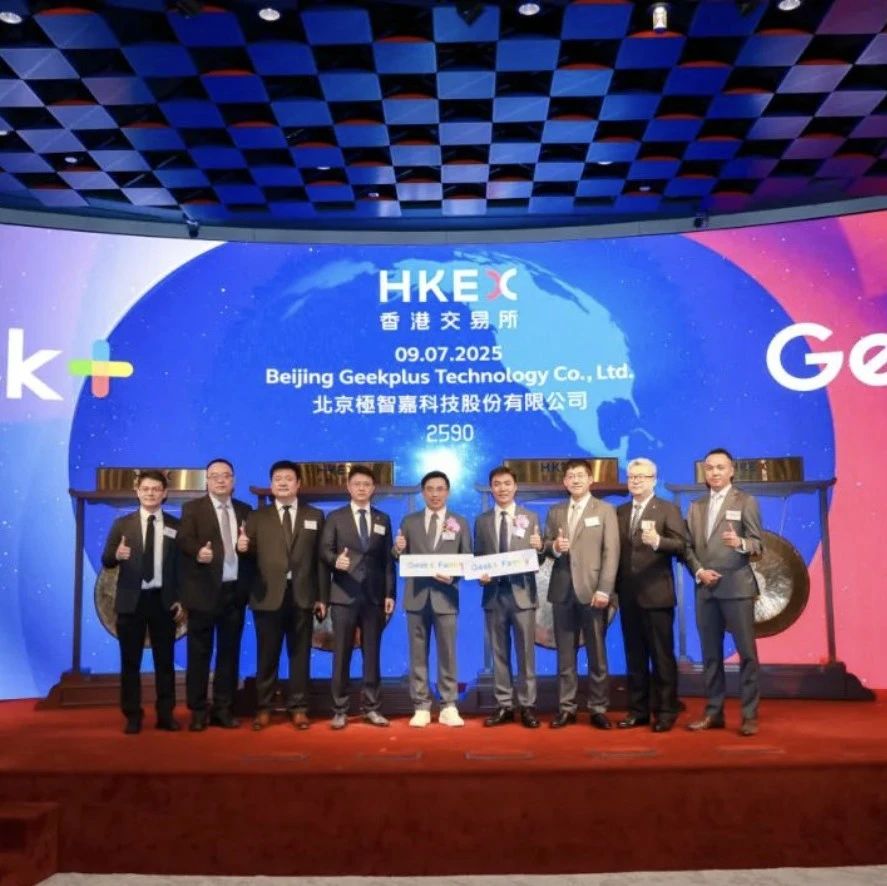
极智嘉正式登陆港交所:市值超220亿港元,港股迎今年最大非“A+H”科技IPO
机器人圈· 2025-07-09 09:15
Core Viewpoint - The successful IPO of Geek+ on July 9 marks a significant milestone as it becomes the first publicly listed company in the global AMR warehouse robotics market, indicating a new phase of technological commercialization and scale expansion for the company [2]. Group 1: IPO Details - The IPO is the largest H-share offering for a robotics company to date and the largest non-"A+H" tech IPO in Hong Kong this year [2]. - The public offering was oversubscribed by 133.62 times, and the international placement was oversubscribed by 30.17 times, setting records for the highest international placement multiples in the Hong Kong tech sector [5]. Group 2: Investor Interest - The cornerstone investor lineup includes major international capital giants, top venture capital firms, state-owned enterprises, and industry leaders, reflecting a strong consensus on the strategic value of the robotics sector and recognition of Geek+'s commercialization capabilities [6]. Group 3: Company Performance - Geek+ has been the largest provider of AMR warehouse fulfillment solutions globally for six consecutive years, with operations in over 40 countries and regions, serving more than 800 major clients [12]. - The company achieved a revenue of 2.409 billion yuan in 2024, the largest among listed robotics companies in Hong Kong, with a compound annual growth rate of 45% from 2021 to 2024 [12]. - The overall customer repurchase rate for 2024 is approximately 74.6%, with key customer repurchase rates reaching 84.3% [12]. Group 4: Financial Metrics - From 2021 to 2024, Geek+'s gross profit increased from 80 million yuan to 840 million yuan, with a compound annual growth rate of 118.5%, and the gross profit margin for 2024 reached 34.8% [13]. - The adjusted EBITDA loss narrowed significantly to 25 million yuan in 2024, with an adjusted net loss rate of only 3.8% [13]. Group 5: Future Outlook - Geek+ aims to leverage its technological innovations to expand its global strategy and contribute to a smarter, more efficient, and greener future [8]. - The company has established a significant technological barrier with its self-developed large-scale multi-machine scheduling system, capable of coordinating over 5,000 devices in a single warehouse [14].
智元机器人拟收购上纬新材63.62%股份,但否认借壳上市
机器人圈· 2025-07-09 09:15
Core Viewpoint - The acquisition of a controlling stake in Shangwei New Materials by Zhiyuan Robotics marks a significant event in the robotics industry, potentially leading to effective business synergies between new materials and robotics sectors, and it is seen as a landmark case for intelligent enterprises in the A-share market [4][9][6]. Group 1: Acquisition Details - Zhiyuan Robotics announced the acquisition of at least 63.62% of Shangwei New Materials, changing the controlling shareholder to Zhiyuan Robotics and its management team, with Deng Taihua becoming the actual controller [4][6]. - The transaction involves Zhiyuan Hengyue acquiring 24.99% of the shares and further plans to increase its stake to 37% through a partial tender offer, resulting in a total ownership of 29.99% of the voting rights [4][6]. - The acquisition is positioned as a move to gain control rather than a reverse merger, as clarified by Zhiyuan Robotics [6]. Group 2: Market Context - The stock of Shangwei New Materials will resume trading on July 9, 2025, with a previous closing price of 7.78 yuan per share, giving it a market capitalization of 3.138 billion yuan [5]. - The robotics industry is experiencing a surge in financing and IPO activities, with several companies planning to go public, indicating a robust growth trajectory in the sector [12][13]. Group 3: Future Prospects - If the acquisition is successful, it could become a notable case of new productivity enterprises in the A-share market since the implementation of national policies promoting mergers and acquisitions [9]. - Zhiyuan Robotics has a diverse product line across various commercial applications, with expectations of thousands of units being shipped by 2025 [7]. - The Chinese robotics market is projected to grow significantly, with a compound annual growth rate of 23%, potentially reaching a market size of 108 billion USD by 2028 [13].


麦肯锡重磅报告:2030年中国智能制造十大关键预测
机器人圈· 2025-07-09 09:15
Core Viewpoint - The report by McKinsey highlights the accelerating transformation of the global smart manufacturing and industrial automation industry, driven by advancements in Industry 4.0 and generative AI technologies, with China, Japan, and Western Europe expected to lead the automation revolution by 2030 [12][15]. Industry Overview - The global industrial automation market is projected to reach approximately $108.3 billion by 2025, with China's market exceeding 250 billion RMB, accounting for over one-third of the global market [2][16]. - The report emphasizes the importance of policies such as the "14th Five-Year Plan for Intelligent Manufacturing" in promoting digital transformation and intelligent upgrades in China's manufacturing sector [13]. Key Trends and Directions - The report identifies three major technological trends: platformization, agility, and intelligence, along with ten key technological development directions that will drive advancements in industrial automation and smart manufacturing [2][8]. - The trends include the establishment of software-defined intelligent manufacturing platforms, model-driven design approaches, and the integration of artificial intelligence and low-code/no-code development tools [4][6][7]. Market Segmentation - The industrial automation market is segmented into continuous flow manufacturing and discrete manufacturing, with significant growth potential in both areas. Continuous flow manufacturing is expected to see spending reach approximately $76 billion by 2025, while discrete manufacturing is experiencing faster growth rates [16][17]. - The report highlights the increasing importance of industrial IoT software and cloud services, which are projected to grow at a rate of 18% [33]. Challenges and Opportunities - The global manufacturing industry faces unprecedented risks, including trade tensions and economic slowdowns, which necessitate a reevaluation of production and supply chain strategies [14]. - The report suggests that leveraging industrial automation can enhance production efficiency and address these challenges, positioning companies to better navigate the evolving landscape [15]. Technological Innovations - Key technologies such as artificial intelligence, virtual PLCs, digital twins, and low-code/no-code development are significantly enhancing the performance of industrial automation and robotics [2][36]. - The integration of multi-source heterogeneous data is crucial for achieving product quality and operational efficiency, enabling a more data-driven approach to manufacturing [47][48]. Future Outlook - The report anticipates that the global and Chinese industrial automation markets will experience accelerated growth over the next five years, driven by labor market changes and technological breakthroughs [33][34]. - By 2030, it is expected that 8 billion jobs globally could be replaced by machines due to advancements in automation and AI technologies [35].
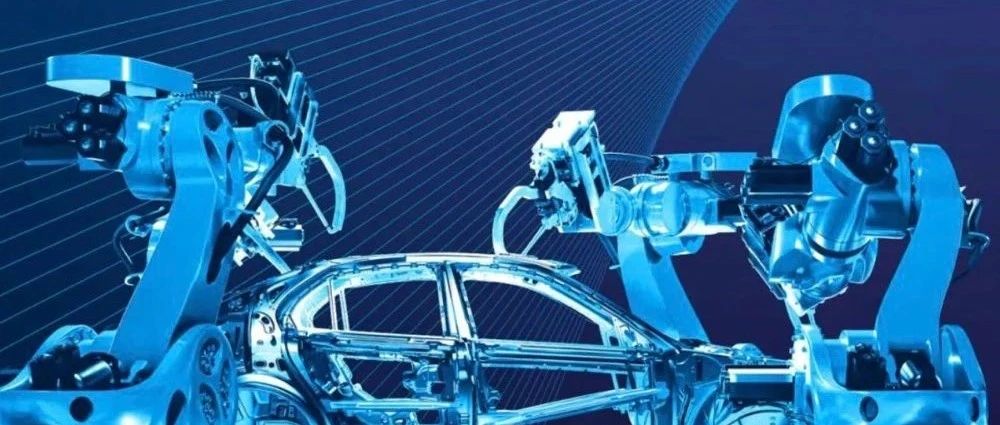
【早鸟票倒计时2天】IRCTC 2025特邀嘉宾(二)重磅揭晓!
机器人圈· 2025-07-09 09:15
Core Points - The "2025 Intelligent Robot Key Technology Conference" will be held from July 22-24, 2025, in Qiqihar City, focusing on the integration and breakthroughs of embodied intelligence and multimodal interaction technology in robotics and artificial intelligence [1] - The conference will feature prominent experts and academicians in the field of intelligent robotics, discussing cutting-edge technologies and research advancements in various areas such as bionic robots, medical robots, rehabilitation robots, and robot ethics [1] Group 1 - The conference is supported by multiple professional committees and organizations, including the Chinese Society of Automation and the Chinese Institute of Electronics [1] - A call for papers has been extended, with the submission deadline now set for July 12, 2025 [1] - The event aims to facilitate discussions on key common technologies, industrialization paths, and standardization in the robotics sector [1] Group 2 - A list of distinguished speakers has been announced, including experts from various prestigious institutions and organizations, highlighting their contributions to the field of robotics [3][6][10][11] - The conference will also include thematic forums and technical exhibitions, covering topics such as robot ethics, mobile dual-arm robots, and standards for robotics [29] - Registration fees vary by participant category, with early bird discounts available until July 10, 2025 [22][35]

Science Robotics|耶鲁大学开源视触觉新范式,看出机器人柔性手的力感知
机器人圈· 2025-07-08 10:36
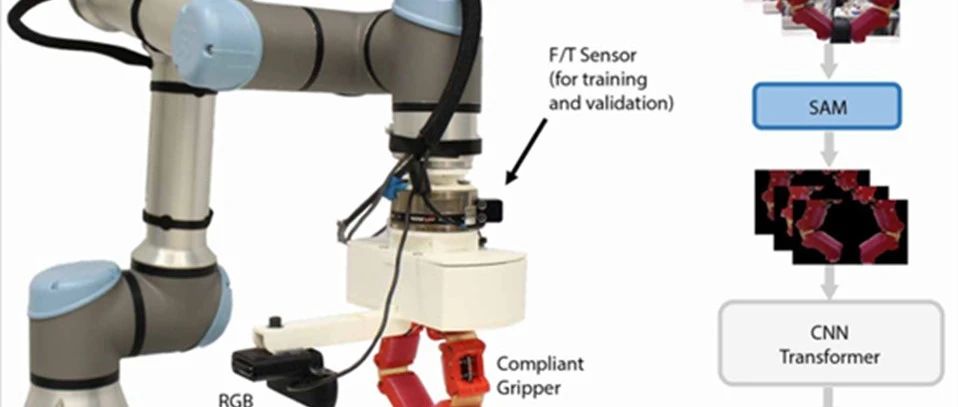
Core Viewpoint - Yale University's research introduces a new paradigm called "Forces for Free" (F3) in the field of robotic tactile sensing, enabling robots to estimate contact forces using only standard RGB cameras, thus achieving force perception capabilities at almost zero additional hardware cost [1][2][22]. Group 1: Challenges in Force Perception - Traditional high-precision force/torque (F/T) sensors are expensive, bulky, and prone to damage, while integrated fingertip tactile sensors face issues like complex wiring and limited information [2]. - Recent advancements in visual-tactile sensing technology offer new solutions by using visual signals to infer tactile information, but many existing methods require embedded markers or custom sensor skins [2]. Group 2: F3 Gripper Design - The F3 Gripper is optimized from Yale's open-source T42 gripper to enhance visual force estimation signal-to-noise ratio [6]. - Key optimizations include maximizing kinematic manipulability to avoid singular configurations and minimizing friction and hysteresis by replacing metal pins with miniature ball bearings, reducing internal friction from approximately 4.0N to 0.6N [6][7][9]. Group 3: Estimation Algorithm - A sophisticated deep learning estimator is developed to decode precise force information from image sequences, utilizing a CNN-Transformer architecture to handle temporal memory and spatial features [10][11]. - The model processes a sequence of images to mitigate the "same shape, different force" issue and employs a visual foundation model (SAM) to enhance robustness against visual interference [11][13]. Group 4: Experimental Validation - The system demonstrates effective performance in static force prediction tasks with estimation errors between 0.2N and 0.4N, significantly outperforming previous works [14]. - In dynamic closed-loop control experiments, the estimator successfully guided robots through complex tasks such as pin insertion, surface wiping, and calligraphy writing, achieving average force errors as low as 0.15N [21][22]. Group 5: Future Implications - This research presents a practical solution for low-cost robotic force perception, redefining the cost-effectiveness of visual-tactile sensing [22]. - Future expansions may include three-dimensional force/torque estimation and multi-finger dexterous hands, potentially broadening the application of advanced force control technologies in various robotic platforms [22].
上海具身智能机器人产业大会,8月13-15我们上海见
机器人圈· 2025-07-08 10:36
Core Insights - Embodied intelligence has emerged as a new high ground in technological competition, a new track for future industries, and a new engine for economic development. The global embodied robotics industry is experiencing strong growth and has a promising outlook. It is expected that by 2025, the global robotics market will reach $47.7 billion, with industrial robots accounting for $13.86 billion and service robots for $21.92 billion, maintaining a compound annual growth rate of over 20% for the next five years [1][2]. Group 1: Industry Growth and Trends - The embodied intelligence sector is witnessing active innovation, particularly in automotive manufacturing, where significant potential exists. Some companies have already achieved profitability [1]. - By 2025, certain Chinese companies are expected to transition towards high-quality development, forming a complete closed loop of research, manufacturing, and application in niche areas, while accelerating global expansion [1]. - Chinese enterprises are continuously breaking through technological bottlenecks in heavy-duty industrial robots and automotive industrial robots, with the potential to "overtake" competitors [1]. Group 2: Conference Overview - The "2025 China Embodied Intelligence Robotics Industry Conference and Exhibition" will be held from August 13-15, 2025, at the Shanghai New International Expo Center, aiming to create a one-stop value connection platform [2]. - The conference is expected to attract over 200 exhibiting brands, more than 20,000 attendees, and over 20 professional purchasing groups, facilitating the entire embodied intelligence industry chain from raw materials to system integration [2][7]. Group 3: Conference Highlights - Highlight 1: The conference will promote technological innovation by gathering top global experts, scholars, and industry leaders to showcase the latest achievements in embodied intelligence and automotive technology [11]. - Highlight 2: It will deepen academic interaction, providing opportunities for researchers in embodied intelligence and automotive engineering to exchange ideas and stimulate interdisciplinary innovation [12]. - Highlight 3: The event aims to connect the upstream and downstream of the embodied intelligence and automotive industry chain, integrating chip development, vehicle manufacturing, and component supply [14]. - Highlight 4: The conference will explore new business models, bridging communication between embodied intelligence projects and capital, supporting startups and innovative companies in the automotive sector [15]. Group 4: Agenda Overview - The conference agenda includes key discussions on industry trends, policy interpretations, and technical frameworks related to embodied intelligence and its applications in the automotive sector [17]. - Sessions will cover challenges and opportunities for automotive parts companies transitioning to embodied intelligence, as well as investment opportunities in the sector [18].



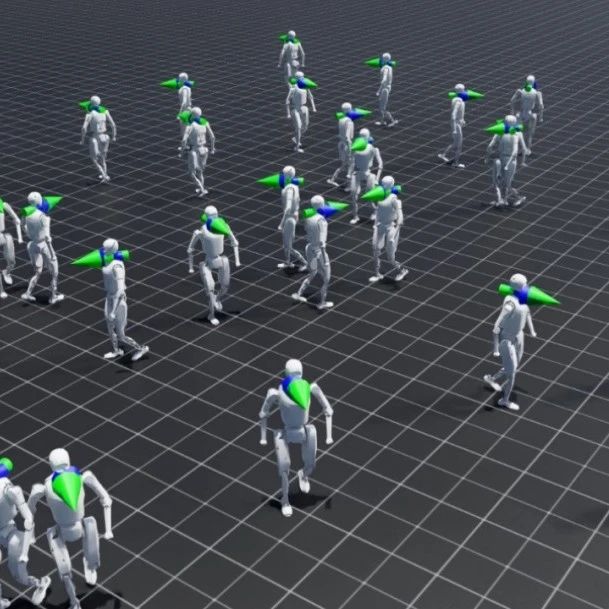
机器人马拉松冠军开源!北京人形正式发布运动控制框架Tien Kung-Lab
机器人圈· 2025-07-08 10:36
Core Viewpoint - The article highlights the launch of the Tien Kung-Lab, an open-source motion control framework for humanoid robots, which aims to enhance their adaptability and task execution capabilities in complex environments [1][3]. Group 1: Tien Kung-Lab Overview - Tien Kung-Lab is an open-source reinforcement learning motion control algorithm framework developed based on Isaaclab, integrating advanced reinforcement learning techniques and human motion data [3]. - The framework allows humanoid robots to achieve natural, efficient, and stable motion control, demonstrated by the Tian Gong Ultra winning the first humanoid robot marathon with a time of 2 hours, 40 minutes, and 42 seconds [3][7]. - The framework combines the advantages of imitation learning and reinforcement learning, utilizing an Adversarial Motion Prior (AMP) reward mechanism to enhance stability and generalization in complex terrains [3][4]. Group 2: Technical Innovations - The open-source framework improves ray tracing technology for rapid and accurate acquisition of depth maps and LiDAR point clouds, enabling end-to-end training from perception to motion in simulation environments [4]. - Tien Kung-Lab supports high-fidelity physics engine MuJoCo for Sim2Sim cross-validation, facilitating seamless transitions from training to validation [4]. - The framework has been successfully implemented on the Tian Gong 2.0 full-size humanoid robot, achieving high generalization performance in walking and running [4][5]. Group 3: Performance and Achievements - The Tian Gong Ultra demonstrated robust motion control during the marathon, effectively navigating various real-world obstacles such as bumps, dips, and speed bumps [7]. - The Tian Gong 1.0 lite, released in April 2024, was the first full-size electric humanoid robot capable of running on diverse terrains, showcasing significant advancements in motion control technology [9]. - In the 2024 Zhongguancun Bionic Robot Competition, the Tian Gong Ultra won multiple championships, including a running event with a time of 15.66 seconds and an obstacle course, highlighting its superior mobility and task execution capabilities [11]. Group 4: Future Directions - The company aims to advance towards "small brain-level intelligence," focusing on general mobility operations and complex motion control in dynamic environments [14]. - Continuous breakthroughs in motion control will establish a robust "motion intelligence hub" for humanoid robots, enabling them to autonomously navigate and perform tasks in real-world scenarios [14]. - The open-source nature of Tien Kung-Lab is expected to significantly shorten the time required for humanoid robots to achieve high-speed generalized movement across various terrains, laying the groundwork for their deployment in extreme environments [13][14].