中汽协会数据

Search documents
宏观数据|2025年9月汽车零部件进口金额情况简析
中汽协会数据· 2025-11-07 05:58
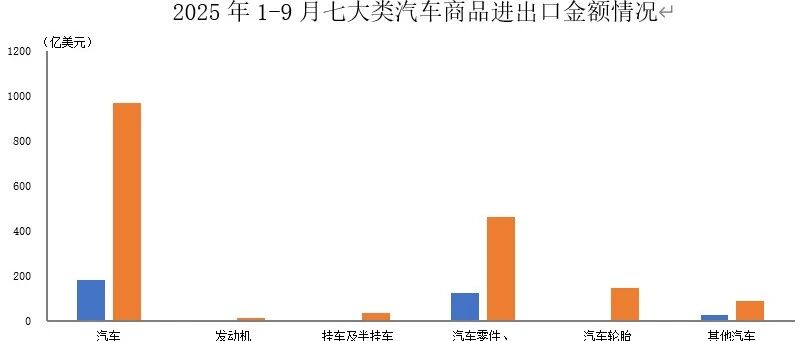
Group 1 - The core viewpoint indicates a significant decline in the import value of automotive parts, with a notable decrease in both month-on-month and year-on-year comparisons [1][2][3] Group 2 - In September 2025, the import value of automotive parts reached 1.81 billion USD, reflecting a month-on-month decrease of 11.9% and a year-on-year decrease of 21.1% [1] - From January to September 2025, the total import value of automotive parts was 15.99 billion USD, showing a year-on-year decline of 22.4% [2]

宏观数据 | 2025年9月汽车零部件出口金额情况简析
中汽协会数据· 2025-11-07 05:58
Core Viewpoint - The export value of automotive parts in September 2025 reached 7.81 billion USD, showing a month-on-month decrease of 7.1% but a year-on-year increase of 5.3% [1] - From January to September 2025, the cumulative export value of automotive parts amounted to 71.83 billion USD, reflecting a year-on-year growth of 4.5% [2] Summary by Sections - **September 2025 Performance** - Automotive parts export value was 7.81 billion USD, with a month-on-month decline of 7.1% and a year-on-year increase of 5.3% [1] - **Cumulative Performance (January to September 2025)** - Total export value of automotive parts reached 71.83 billion USD, indicating a year-on-year growth of 4.5% [2]
宏观数据|2025年9月我国汽车整车进口情况简析
中汽协会数据· 2025-11-06 05:53
Group 1 - The core viewpoint of the article highlights a significant decline in automobile imports in China, both in terms of volume and monetary value for September 2025 and the first nine months of the year [1][2] Group 2 - In September 2025, the total number of imported vehicles was 41,000 units, representing a month-on-month decrease of 8.7% and a year-on-year decrease of 25.6% [1] - The import value for September 2025 was $2.04 billion, showing a month-on-month decline of 3.3% and a year-on-year decline of 36.4% [1] - From January to September 2025, the total number of imported vehicles reached 360,000 units, which is a year-on-year decrease of 32.4% [1] - The total import value for the first nine months of 2025 was $18.25 billion, reflecting a year-on-year decrease of 40.1% [1]

宏观数据|2025年9月我国汽车整车出口情况简析
中汽协会数据· 2025-11-06 05:52
Group 1 - The core viewpoint of the article highlights the performance of China's automobile exports in September 2025, showing a slight month-on-month decline but a significant year-on-year increase in both volume and value [1] - In September 2025, the total automobile exports reached 756,000 units, representing a month-on-month decrease of 0.9% but a year-on-year increase of 24.3% [1] - The export value for the same month amounted to $12.81 billion, with a month-on-month decline of 0.1% and a year-on-year growth of 10.9% [1] Group 2 - For the period from January to September 2025, the total automobile exports were 5.684 million units, reflecting a year-on-year increase of 20.9% [1] - The total export value during this period reached $97.12 billion, which is a year-on-year growth of 10.8% [1]
宏观数据|2025年9月海关进出口情况简析
中汽协会数据· 2025-11-05 08:35
Group 1 - The total import and export value of automotive products in September 2025 was $24.89 billion, a month-on-month decrease of 3.6% and a year-on-year increase of 0.9% [2] - The import value was $3.85 billion, with a month-on-month decrease of 7.5% and a year-on-year decrease of 30.0% [2] - The export value reached $21.03 billion, showing a month-on-month decrease of 2.8% but a year-on-year increase of 9.8% [2] Group 2 - From January to September 2025, the cumulative total import and export value of automotive products was $206.81 billion, reflecting a year-on-year decrease of 1.0% [2] - The import value during this period was $34.26 billion, which represents a year-on-year decrease of 32.9% [2] - The export value for the same period was $172.55 billion, indicating a year-on-year increase of 9.3% [2]
求是专访 | 前三季度中国经济怎么看
中汽协会数据· 2025-11-04 05:53
Core Viewpoint - China's economy demonstrated resilience and progress in the first three quarters of 2025, with a GDP growth of 5.2%, reflecting strong internal dynamics and effective policy responses to external challenges [1][2][18]. Economic Performance - GDP exceeded 100 trillion yuan, growing by 5.2% year-on-year, which is an acceleration compared to previous periods [2]. - The urban unemployment rate averaged 5.2%, remaining stable throughout the year [2][14]. - Consumer Price Index (CPI) remained stable, with core CPI rising by 0.6% year-on-year, indicating a gradual recovery in demand [2][17]. Structural Quality - The proportion of high-tech manufacturing value added reached 16.7%, up 0.8 percentage points from the previous year, showcasing a shift towards higher quality growth [3]. - Green energy production and consumption are increasing, with significant growth in new energy vehicles and other green sectors [4][9]. Innovation and Development - Major technological advancements were noted, with high-tech manufacturing and digital product manufacturing increasing by 9.6% and 9.7% respectively [7]. - The innovation index of China entered the global top 10 for the first time, highlighting rapid improvements in innovation capabilities [7]. Employment and Income - The per capita disposable income of residents grew by 5.2%, aligning with economic growth, indicating effective measures in safeguarding livelihoods [4][11]. - Employment stability was supported by economic growth and the expansion of the service sector, which accounted for 58.4% of GDP [14]. Price Trends - CPI showed a slight decline of 0.1% year-on-year, primarily influenced by food and energy prices, while core CPI indicated a recovery trend [16][17]. - The government is expected to implement policies to stabilize prices and enhance consumer demand [17][20]. Future Economic Outlook - The economy is expected to maintain stability and progress, supported by strong internal dynamics and proactive macroeconomic policies [18][20]. - Continued emphasis on high-quality development and structural reforms will be crucial for addressing challenges and sustaining growth [20].
本月起,国产小客车新车上牌有新规
中汽协会数据· 2025-11-03 09:04
Core Viewpoint - The article emphasizes the implementation of a streamlined process for vehicle registration and management services in China, aimed at enhancing efficiency and convenience for the public, while supporting the high-quality development of the automotive industry [2][27]. Group 1: Implementation of New Vehicle Registration Process - Starting from November 1, 2025, the Ministry of Public Security will fully implement a new vehicle registration process for domestically produced cars, facilitating easier registration for consumers [2][27]. - The initiative includes the integration of vehicle registration with information from various departments, such as tax and finance, to optimize processes related to vehicle production, sales, and insurance [3][28]. Group 2: Digitalization and Information Sharing - The new system will enable full-chain information sharing, significantly reducing the need for physical documentation by allowing electronic verification of vehicle sales invoices, purchase taxes, and insurance [4][28]. - The "Traffic Management 12123" app will serve as a one-stop platform for users to complete all vehicle registration tasks online, minimizing the time and effort required for these processes [10][28]. Group 3: New Service Measures - Six new measures will be introduced to enhance online services, including the ability to cancel driving test appointments via the app and apply for vehicle registration certificates without physical documents [15][30]. - The measures also include online processing for vehicle transfer registrations and temporary license plates for oversized transport vehicles, further simplifying the administrative burden on users [31][30]. Group 4: Growth of Vehicle Ownership - As of September 2025, China has seen rapid growth in vehicle ownership, with 460 million vehicles registered, including 360 million cars, and 550 million drivers, making it the largest market globally in terms of vehicle and driver numbers [24][28]. - The Ministry of Public Security has introduced over 160 efficient service measures, resulting in a reduction of administrative costs for citizens and businesses by more than 100 billion yuan [24][28].

【数据发布】2025年10月中国采购经理指数运行情况
中汽协会数据· 2025-10-31 07:53
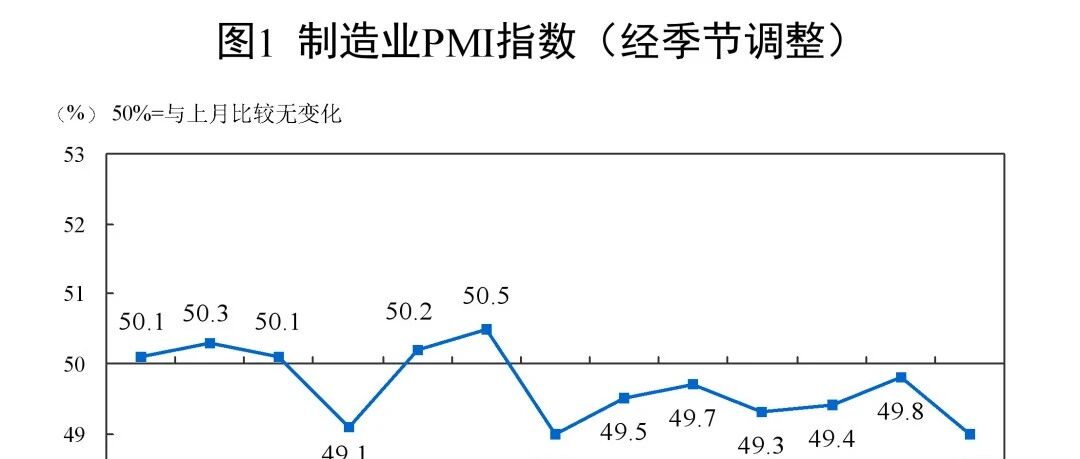
Group 1: Manufacturing PMI Overview - In October, the Manufacturing Purchasing Managers' Index (PMI) was 49.0%, a decrease of 0.8 percentage points from the previous month, indicating a decline in manufacturing activity [1][3] - The PMI for large, medium, and small enterprises were 49.9%, 48.7%, and 47.1% respectively, all below the critical point [3] - The production index was 49.7%, down 2.2 percentage points, suggesting a slowdown in manufacturing production [4] - The new orders index was 48.8%, down 0.9 percentage points, indicating a decrease in market demand [5] - The raw materials inventory index was 47.3%, down 1.2 percentage points, showing a continued reduction in inventory levels [5] - The employment index was 48.3%, down 0.2 percentage points, reflecting a slight decline in employment conditions in manufacturing [5] - The supplier delivery time index was at 50.0%, indicating stable delivery times compared to the previous month [5] Group 2: Non-Manufacturing PMI Overview - In October, the Non-Manufacturing Business Activity Index was 50.1%, an increase of 0.1 percentage points, indicating expansion [7] - The construction industry business activity index was 49.1%, down 0.2 percentage points, while the service industry index was 50.2%, up 0.1 percentage points [9] - The new orders index for non-manufacturing was 46.0%, unchanged from the previous month, indicating weak market demand [12] - The input prices index was 49.4%, up 0.4 percentage points, suggesting a narrowing decline in input prices [12] - The sales prices index was 47.8%, up 0.5 percentage points, indicating that sales prices remained below the previous month [12] - The employment index for non-manufacturing was 45.2%, up 0.2 percentage points, showing slight improvement in employment conditions [12] - The business activity expectation index was 56.1%, up 0.4 percentage points, indicating optimism among non-manufacturing enterprises regarding market prospects [13] Group 3: Comprehensive PMI Overview - The Comprehensive PMI Output Index was 50.0% in October, a decrease of 0.6 percentage points, indicating overall stability in production and business activities [16]
【权威解读】10月份制造业采购经理指数有所回落 非制造业商务活动指数略有回升
中汽协会数据· 2025-10-31 07:53
Group 1: Manufacturing Purchasing Managers Index (PMI) - In October, the manufacturing PMI decreased to 49.0%, down by 0.8 percentage points from the previous month, indicating a slowdown in production activities [1][2] - Both production index and new orders index fell to 49.7% and 48.8%, respectively, reflecting a decline in production and market demand [2] - Large enterprises maintained a PMI above the critical point, with indices at 50.9% for production and 50.1% for new orders, indicating sustained expansion in this segment [2][3] Group 2: Non-Manufacturing Business Activity Index - The non-manufacturing business activity index rose to 50.1%, an increase of 0.1 percentage points, indicating slight expansion [4][5] - The service sector's business activity index reached 50.2%, showing improvement, particularly in sectors like transportation and hospitality, which benefited from holiday effects [5] - The construction sector's business activity index slightly declined to 49.1%, but the business activity expectation index improved to 56.0%, suggesting a more optimistic outlook [5] Group 3: Comprehensive PMI Output Index - The comprehensive PMI output index stood at 50.0%, indicating overall stability in production and business activities across sectors [6]

李强发表署名文章:“十五五”时期经济社会发展的指导方针
中汽协会数据· 2025-10-30 07:13
Core Viewpoint - The article emphasizes the importance of the "15th Five-Year Plan" as a critical period for China's economic and social development, aiming to solidify the foundation for achieving socialist modernization and addressing both domestic and international challenges [4][5][6]. Group 1: Historical Context and Strategic Importance - The "15th Five-Year Plan" is positioned as a pivotal phase in the historical process of achieving socialist modernization, serving as a bridge between past achievements and future goals [5][6]. - The plan aims to consolidate advantages, eliminate bottlenecks, and strengthen weaknesses to ensure a stable and resilient development foundation [6][7]. Group 2: Guiding Principles and Development Goals - The guiding ideology for the "15th Five-Year Plan" includes adherence to Marxism, the importance of high-quality development, and the need for comprehensive reforms [10][11]. - Six principles are outlined for economic and social development, including the leadership of the Party, prioritizing the people, and ensuring high-quality development [11][12]. Group 3: Practical Implementation and Focus Areas - The plan emphasizes the need to construct a new development pattern that focuses on domestic circulation while maintaining international cooperation [13][14]. - It highlights the integration of technological and industrial innovation to foster new productive forces, ensuring that development aligns with improving people's livelihoods and promoting common prosperity [14][15]. - The article stresses the importance of balancing development and security, advocating for a resilient economy that can withstand various risks and challenges [15][16].