中汽协会数据

Search documents
【数据发布】2025年1—10月份全国规模以上工业企业利润增长1.9%
中汽协会数据· 2025-11-28 07:38
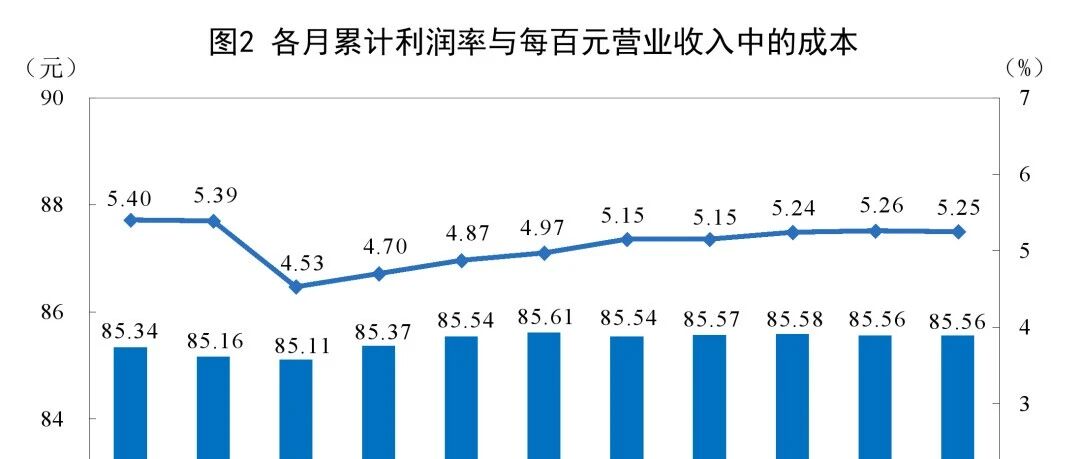
1 — 10 月份,全国规模以上工业企业实现利润总额 59502.9 亿元,同比增长 1.9% (按可比口径计算,详见附注二)。 1 — 10 月份,规模以上工业企业中,国有控股企业实现利润总额 18490.2 亿元,同比 持平;股份制企业实现利润总额 44328.3 亿元,增长 1.5% ;外商及港澳台投资企业实现利 润总额 14848.6 亿元,增长 3.5% ;私营企业实现利润总额 16995.6 亿元,增长 1.9% 。 1 — 10 月份,采矿业实现利润总额 7123.3 亿元,同比下降 27.8% ;制造业实现利润 总额 45050.3 亿元,增长 7.7% ;电力、热力、燃气及水生产和供应业实现利润总额 7329.3 亿元,增长 9.5% 。 1 — 10 月份,主要行业利润情况如下:有色金属冶炼和压延加工业利润同比增长 14.0% ,电力、热力生产和供应业增长 13.1% ,计算机、通信和其他电子设备制造业增长 12.8% ,农副食品加工业增长 8.5% ,电气机械和器材制造业增长 7.0% ,通用设备制造业 增长 6.2% ,专用设备制造业增长 5.0% ,汽车制造业增长 4.4% ,非金属 ...

【权威解读】1—10月份规模以上工业企业利润稳定增长
中汽协会数据· 2025-11-28 07:38
Core Viewpoint - The industrial profits of large-scale enterprises in China have shown stable growth from January to October 2025, driven by strong domestic circulation and effective policy implementation [1] Group 1: Industrial Profit Growth - From January to October, profits of large-scale industrial enterprises increased by 1.9% year-on-year, marking three consecutive months of growth since August 2025 [1] - The mining sector experienced a decline of 27.8%, although the drop was 1.5 percentage points less than the previous month; manufacturing saw a growth of 7.7%, while the electricity, heat, gas, and water production and supply sectors grew by 9.5% [1] - In October, profits of large-scale industrial enterprises fell by 5.5% year-on-year due to a higher base from the previous year and rising financial costs [1] Group 2: Equipment Manufacturing Sector - Profits in the equipment manufacturing sector rose by 7.8% year-on-year from January to October, contributing 2.8 percentage points to the overall profit growth of large-scale industrial enterprises [2] - The equipment manufacturing sector accounted for 38.5% of total profits among large-scale industrial enterprises, an increase of 2.0 percentage points compared to the same period last year [2] - Seven out of eight major categories within the equipment manufacturing sector reported profit growth, with significant increases in the railway, shipbuilding, aerospace, and electronics industries, achieving growth rates of 32.0% and 12.8% respectively [2] Group 3: High-Tech Manufacturing Sector - The high-tech manufacturing sector saw a profit increase of 8.0% year-on-year, surpassing the average growth rate of all large-scale industrial enterprises by 6.1 percentage points [3] - Notable growth was observed in the smart electronics manufacturing sector, with profits from smart unmanned aerial vehicles and smart vehicle-mounted equipment rising by 116.1% and 114.9% respectively [3] - The semiconductor manufacturing sector also experienced rapid profit growth, with integrated circuit manufacturing, electronic specialty materials, and semiconductor discrete devices reporting increases of 89.2%, 86.0%, and 17.4% respectively [3] Group 4: Traditional Industries - Traditional industries have shown significant improvements in quality and efficiency, with profits exceeding the industry average [4] - In the raw materials sector, industries such as graphite and carbon products, biochemical pesticides, and cultural information chemicals reported profit increases of 77.7%, 73.4%, and 19.1% respectively, all surpassing their respective industry averages [4] - In the chemical fiber, rubber, and plastic products sectors, profits from bio-based chemical fibers and recycled rubber manufacturing grew by 61.2% and 15.4%, also exceeding the industry averages [4]

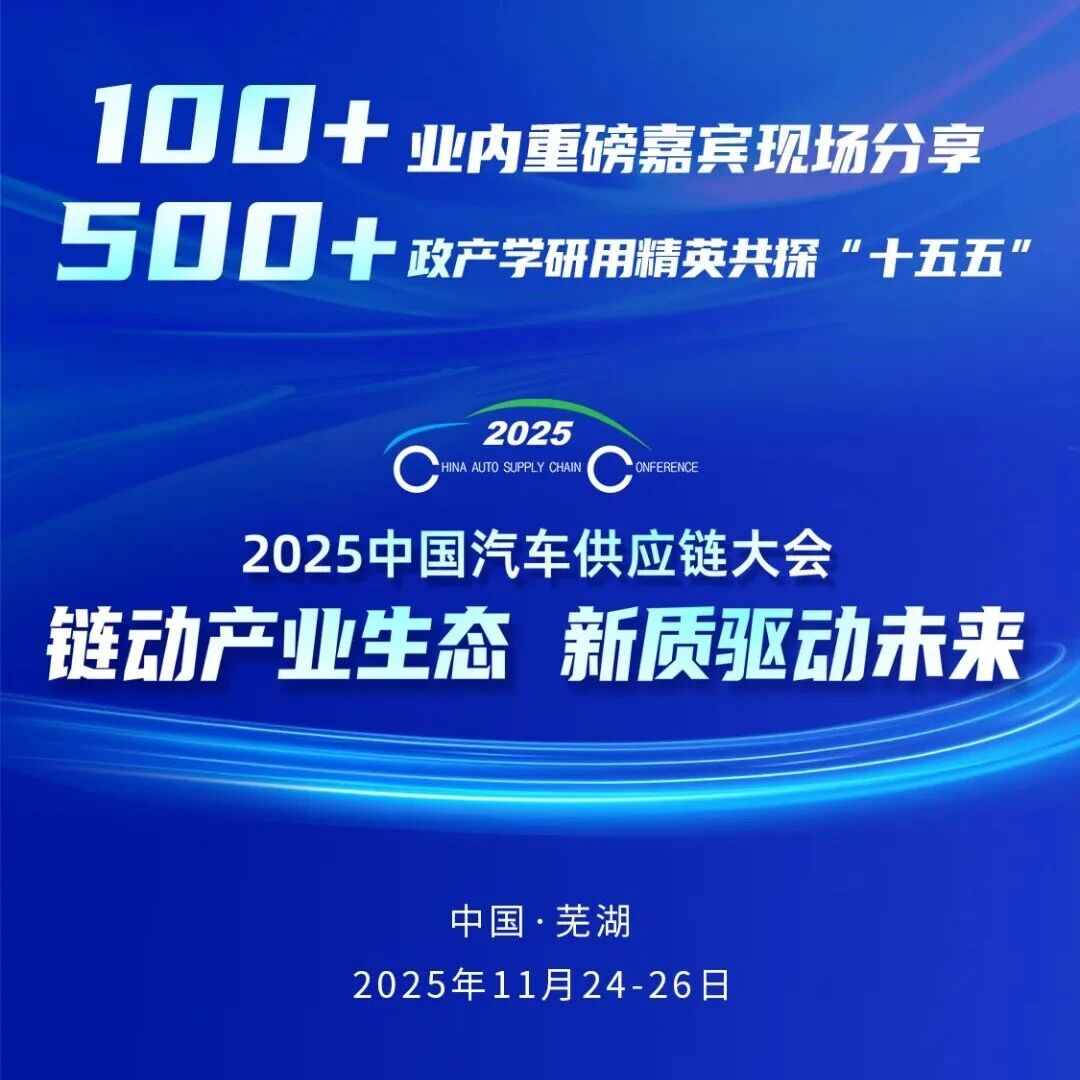
新生态、向未来,2025中国汽车供应链大会在芜湖召开
中汽协会数据· 2025-11-27 02:13
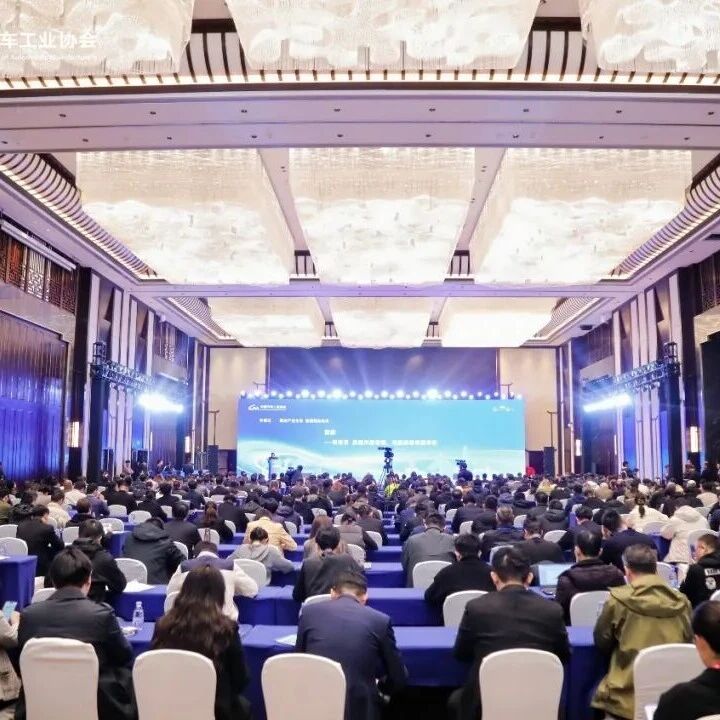
Core Viewpoint - The "2025 China Automotive Supply Chain Conference" emphasizes the importance of collaborative innovation in the supply chain and industry chain as a core element driving high-quality development in the automotive industry during the transition from the 14th Five-Year Plan to the 15th Five-Year Plan [2][6]. Group 1: Conference Overview - The conference was held from November 24 to 26 in Wuhu, Anhui, focusing on supply chain innovation, transformation, and international development in the automotive sector [2]. - The event included various activities such as a government-enterprise matchmaking event, closed-door meetings, an opening ceremony, and multiple thematic meetings [2]. Group 2: Key Insights from Industry Leaders - Industry leaders highlighted the need for innovation, collaboration, and a strong supply chain to achieve high-quality development during the 15th Five-Year Plan [6][8]. - The importance of transforming China's automotive supply chain advantages into localized stability for global market integration was emphasized [8]. Group 3: Industry Reports and Trends - The conference released two authoritative industry reports, including the "2025 China Automotive Supply Chain Development Report," which outlined four key achievements in the automotive parts industry during the 14th Five-Year Plan [13]. - The report indicated that the 15th Five-Year Plan represents a critical window for the development of China's automotive industry, with significant global opportunities and investment prospects [13]. Group 4: Globalization and Strategic Framework - The globalization of the automotive parts industry has shifted from an optional strategy to a necessity, with a focus on helping enterprises expand internationally [15]. - A "5C" globalization strategy framework was introduced, covering compliance, supply chain, capital, brand, and talent, serving as a practical guide for companies aiming to enter global markets [18]. Group 5: Collaborative Efforts and Future Directions - The establishment of a "Supply Chain Expert Database" was announced to address key technological challenges in the supply chain, leveraging industry expertise for development [24]. - The conference facilitated discussions on building a resilient automotive supply chain and fostering collaboration between various stakeholders in the industry [34][38].

事关促消费!工信部等六部门部署增强消费品供需适配性
中汽协会数据· 2025-11-27 02:13
Core Viewpoint - The article discusses the implementation plan for enhancing the adaptability of supply and demand in consumer goods, aiming to promote consumption and achieve a dynamic balance between supply and demand by 2027 and 2030 [1][5][22]. Group 1: Overall Requirements - By 2027, the plan aims to optimize the supply structure of consumer goods, forming three trillion-level consumption fields and ten hundred-billion-level consumption hotspots, while creating high-quality consumer goods with cultural connotations [5][20]. - By 2030, a high-quality development pattern characterized by positive interaction between supply and consumption is expected to be established, with a steady increase in the contribution of consumption to economic growth [5][22]. Group 2: Key Tasks - The plan outlines five main areas with 19 key tasks, including expanding new technologies and innovative applications, enhancing the supply of unique and new products, accurately matching different demographic needs, cultivating new consumption scenarios and business formats, and creating a favorable development environment [2][6][9]. Group 3: Expanding Unique and New Product Supply - The plan emphasizes promoting green product expansion and iteration, enhancing rural consumer goods quality, and developing leisure and sports products to meet new demands [9][10][25]. - It also focuses on innovating health products, increasing the influence of historical classic products, and expanding diverse interest consumption supplies [10][11][26]. Group 4: Precise Matching of Different Demographic Needs - The plan aims to enrich the supply of baby and children's products, enhance the quality of student supplies, and expand the supply of fashionable "trendy" products [12][13][27]. - It also includes optimizing the supply of age-appropriate products for the elderly [13]. Group 5: Cultivating New Consumption Scenarios and Business Formats - The plan supports the establishment of flagship stores and new concept stores, promoting the launch of new products and enhancing the core business district's capabilities [14][28]. - It encourages the orderly development of platform consumption, including live e-commerce and circular e-commerce, while standardizing shared consumption [15][28]. Group 6: Creating a Favorable Development Environment - The plan highlights the importance of financial support for consumption, promoting the use of old-for-new policies, and enhancing consumer finance products and services [16][29]. - It also emphasizes maintaining market order, strengthening network market supervision, and updating safety and environmental standards for consumer goods [17][30].

2025中国汽车供应链大会“闭门会议”在芜湖成功召开
中汽协会数据· 2025-11-26 06:23
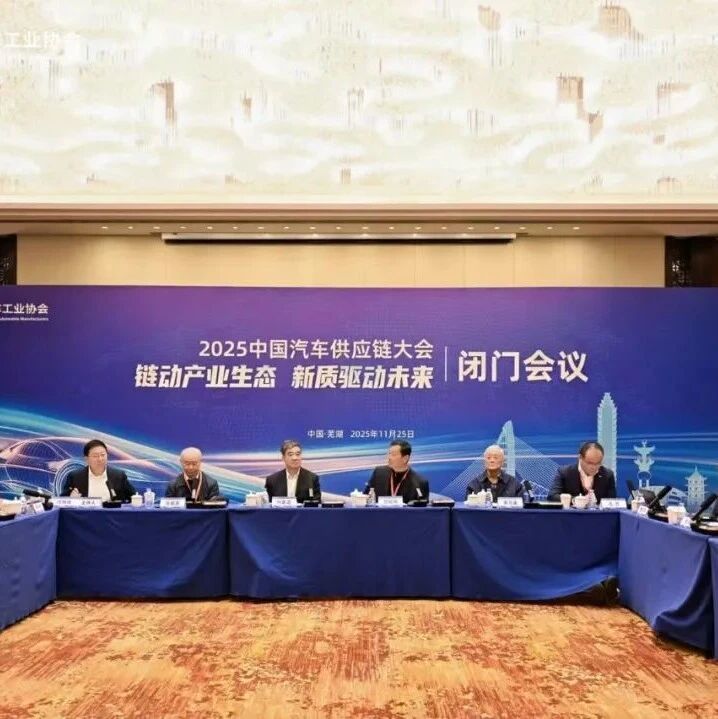
Core Viewpoint - The "2025 China Automotive Supply Chain Conference" focuses on the theme "Chain Drives Industry Ecology, New Quality Drives the Future," aiming to explore opportunities and challenges in the automotive supply chain during the "14th Five-Year Plan" conclusion and the "15th Five-Year Plan" initiation [2][4]. Group 1: Conference Overview - The conference includes various activities such as a government-enterprise matchmaking meeting, a closed-door meeting, a main conference, four thematic meetings, and an event titled "China Automotive Supply Chain Collaborative Innovation National Tour - Chery Station" [2]. - The closed-door meeting discusses how supply chain enterprises can leverage technological innovation to support the leading advantage of the intelligent connected new energy vehicle industry during the "15th Five-Year Plan" period [2][4]. Group 2: Industry Context - The "15th Five-Year Plan" period is crucial for China to achieve carbon peak and transition from a major automotive country to a strong automotive country, with a focus on consolidating and expanding the leading advantage in the intelligent connected new energy vehicle industry [4]. - The automotive supply chain is undergoing deep transformation driven by electrification, intelligence, connectivity, and low carbonization [4][5]. Group 3: Key Participants and Discussions - The closed-door meeting is hosted by Fu Bingfeng, Executive Vice President and Secretary-General of the China Automotive Industry Association, who emphasizes the importance of building a controllable, resilient, and sustainable automotive supply chain system [4][5]. - Experts from various organizations, including the China Machinery Industry Federation and former executives from major automotive companies, analyze and discuss the future development of the supply chain industry [7]. Group 4: Challenges and Opportunities - The automotive supply chain is experiencing profound adjustments, and key topics include how enterprises can adapt to new conditions, drive innovation, and explore international development paths during the "15th Five-Year Plan" period [7]. - High-level leaders from major automotive companies share their insights on challenges and experiences in the development of their respective enterprises [9][10]. Group 5: Collaborative Efforts - The closed-door meeting gathers over 60 representatives from government, industry, academia, and research sectors to discuss opportunities and challenges in the automotive supply chain, aiming to provide intellectual contributions for sustainable development [11]. - The conference also features a series of thematic meetings and activities to further explore the automotive supply chain landscape [13].
新能源车销量占比首次过半,传递三个信息
中汽协会数据· 2025-11-26 06:23
Core Viewpoint - The latest data from the China Association of Automobile Manufacturers indicates that in October, the monthly sales of new energy vehicles (NEVs) reached 1.715 million units, a year-on-year increase of 20%, with NEVs accounting for 51.6% of total monthly car sales, marking a significant shift in the automotive market towards electrification [1][3]. Group 1: Market Trends - The supply of new passenger vehicles continues to diversify, with ongoing upgrades in product technology. Domestic automakers are accelerating the iteration of electrification and intelligent technology, with significant advancements such as 800V silicon carbide platforms and AI-driven smart cockpits being integrated into mainstream models [4]. - The market for new energy commercial vehicles is rapidly evolving, with the proportion of NEV commercial vehicle sales expected to reach 14.9% in 2024, having already increased to 20.7% from January to October this year. This growth is supported by government policies and technological advancements that enhance operational cost efficiency [5]. Group 2: Industry Transformation - The surpassing of fuel vehicle sales by NEVs in monthly figures presents new and higher demands for the automotive industry's transition towards electrification and intelligence. The integration of AI across the automotive value chain is crucial for maintaining China's global leadership in this transformation [5]. - There is an urgent need to enhance safety standards across the board, as over half of new vehicles are now electrified and the penetration rate of combined driving assistance systems exceeds 60%. The government is actively formulating new mandatory national standards to address safety concerns [6][7].

首席说统计 | 手把手教你拿捏PMI,经济走势早知道
中汽协会数据· 2025-11-25 09:05
较为熟知的或许是GDP与CPI 但还有一项被称作 "经济晴雨表" 的关键指标 谈及经济领域的重要指标 手把手带你解锁PMI的秘密 始终在经济运行的关键节点 发挥 "预警"作用 ——它便是 PMI 采购经理指数 今天一起跟随小编的脚步 走进国家统计局 服务业调查中心 企业景气处 连线 首席统计师 霍丽慧 摸清经济运行的"脉搏" 这张 "经济晴雨表" 里的门道 你摸清了吗? 首席说统计 让你轻松get到经济运行的小变化 从关键数据里摸清经济的大方向 视频制作:郭星辰 来源: 统计微讯 ...

屏前千言万语,不如现场一见!2025中国汽车供应链大会,明天见
中汽协会数据· 2025-11-24 09:13
Core Viewpoint - The 2025 China Automotive Supply Chain Conference aims to explore the future of the automotive industry through collaboration among government, industry, academia, and research institutions, focusing on innovation and transformation in the supply chain [4][28]. Event Overview - The conference will take place from November 24 to 26, 2025, in Wuhu, China, featuring over 500 industry elites discussing the "14th Five-Year Plan" [2][4]. - The event includes various thematic meetings addressing key topics such as intelligent cockpit systems, automotive parts development, thermal management technologies, and intelligent chassis systems [10][15][21][29]. Thematic Meetings Intelligent Cockpit Systems - The first thematic meeting will cover the development and trends of intelligent cockpit systems, featuring presentations from industry leaders such as Chery Automobile and Beidou Zhihui Technology [12][13]. - Topics include AI's impact on cockpit systems, localization challenges for intelligent cockpit exports, and innovations in cockpit connectivity solutions [12][13]. Automotive Parts Development and Transformation - The second thematic meeting will focus on the evolution of automotive parts under the dual trends of intelligence and electrification, with insights from companies like CRRC and JD Group [19][20]. - Discussions will include the transformation paths for core automotive components and the integration of supply chains [19][20]. Thermal Management Technologies - The third thematic meeting will address key technologies in automotive thermal systems, featuring research from universities and companies on CO2 thermal management systems and alternative refrigerants [24][26]. - Presentations will cover challenges in developing thermal management systems and innovations in heat exchange technologies [24][26]. Intelligent Chassis Systems - The fourth thematic meeting will explore the collaborative development of intelligent chassis systems, with discussions on software-defined chassis solutions and key technologies in steering systems [30][32]. - Industry experts will share insights on the future of chassis technology and its integration with intelligent systems [30][32].
工信部启动创建国家新兴产业发展示范基地
中汽协会数据· 2025-11-24 09:13
Core Viewpoint - The Ministry of Industry and Information Technology (MIIT) has initiated the creation of National Emerging Industry Development Demonstration Bases to promote the growth of emerging industries in China, aligning with national strategic goals for 2035 and the 14th Five-Year Plan [1][2]. Group 1: Overall Requirements - The initiative aims to guide high-quality development and establish a modern industrial system centered on advanced manufacturing, focusing on key emerging industries [6][25]. - The creation of demonstration bases will emphasize local conditions, central-local collaboration, and the integration of various resources to foster innovation and development [6][26]. Group 2: Creation Objectives - By 2035, the goal is to establish approximately 100 demonstration parks and around 1,000 demonstration enterprises, enhancing innovation capabilities and optimizing the industrial environment [7][26]. - The focus will be on key emerging industries such as new-generation information technology, renewable energy, and high-end equipment [8][28]. Group 3: Demonstration Tasks - Demonstration parks will concentrate on developing industry clusters, enhancing innovation, and improving governance to foster high-quality growth [10][30]. - Demonstration enterprises will focus on product development, technological innovation, and management efficiency to increase market share and revenue [11][32]. Group 4: Evaluation Indicators - Evaluation indicators for demonstration parks include cluster development, collaborative innovation, ecological optimization, and governance improvement [12]. - For demonstration enterprises, indicators will focus on product development, technological innovation, business model innovation, and management effectiveness [12]. Group 5: Creation Cycle and Procedures - The creation period for demonstration bases is set at two years, followed by an evaluation and acceptance process [13]. - The MIIT will oversee the application process, evaluation, and recognition of qualified demonstration bases [15][34]. Group 6: Recognition and Impact Assessment - Successful demonstration bases will be officially recognized and awarded, with a review every three years to assess their impact and effectiveness [17][42]. - Bases that fail to meet standards or engage in misconduct will have their recognition revoked [42].

数据简报 | 2025年10月中国品牌乘用车销售情况简析
中汽协会数据· 2025-11-21 07:04
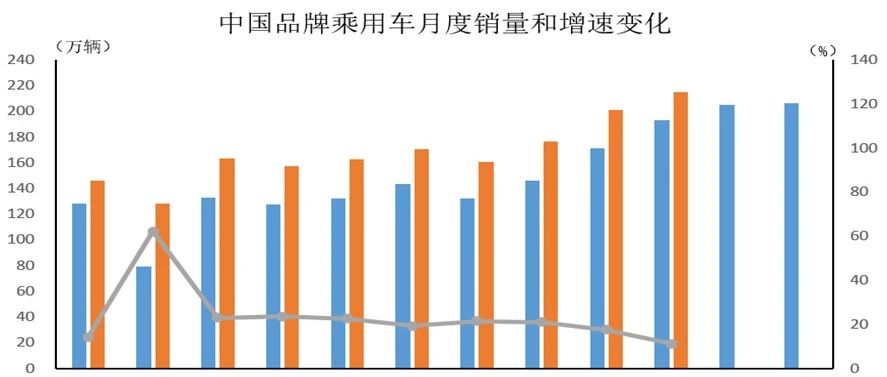
来源: 中汽协会行业信息部 据中国汽车工业协会统计分析 , 2025 年 1 0 月, 中国品牌乘用车共销售 214.8 万辆,环比增长 7% ,同比增长 11.2% ,占乘用车销售总量的 72.5% ,销量占有率比去年同期提升 2.4 个百分点 。 2025 年 1 - 10 月, 中国品牌乘用车共销售 1679.9 万辆,同比增长 21.3% ,占乘用车销售总量的 69.4% ,销量占有 率比去年同期提升 4.8 个百分点 。 ...