13个精算师

Search documents
财政部发布考核新规:国有商业保险公司,全面实施“当年+3年+5年”长周期考核!
13个精算师· 2025-07-11 15:03
Core Viewpoint - The Ministry of Finance has issued a notification to strengthen the long-term assessment of state-owned commercial insurance companies, emphasizing the importance of long-term investment and stable returns in the insurance sector [4][6][10]. Group 1: Long-term Assessment Changes - The assessment period for Return on Equity (ROE) and capital preservation and appreciation rate has been changed to include "current year + 3-year + 5-year" evaluations [3][12]. - The ROE for life insurance companies over the past five years is 13.7%, indicating stable and high profitability for large companies [24][23]. - In Q1 2025, insurance companies' stock investments grew by 16%, with 20 instances of shareholding increases in major banks [34][38]. Group 2: Purpose and Implications - The purpose of the new assessment criteria is to guide insurance companies towards long-term and stable operations, encouraging them to engage in long-term, stable, and value investments [10][20]. - The adjustment aims to enhance the focus on the long-term operational capabilities of insurance companies, moving away from short-term profit assessments [8][16]. - The new regulations require insurance companies to improve asset-liability management and optimize asset allocation to achieve stable growth in owners' equity and preserve state financial capital [19][20]. Group 3: Market Reactions and Trends - The market views the new regulations as a positive development, ensuring that long-term capital can be invested confidently [8][21]. - The trend of increasing stock investments by insurance companies reflects a broader strategy to capitalize on market opportunities and stabilize returns [34][44]. - The emphasis on long-term assessments aligns with the growing consumer interest in the long-term investment capabilities of insurance companies [49][50].





【保险学术前沿】期刊Journal of Public Economics 2025年(上)保险精选文章目录与摘要
13个精算师· 2025-07-11 02:57
Core Viewpoint - The article discusses various aspects of public economics, focusing on unemployment insurance, disability insurance, Medicaid, inheritance motives, and healthcare reforms, highlighting disparities and impacts on different demographics and systems [2][3][4][5][6]. Unemployment Insurance - There is significant racial inequality in unemployment insurance benefits in the U.S., with Black individuals being 30% less likely to receive benefits and receiving 46% less in benefits compared to White individuals. This gap is partly explained by lower pre-unemployment earnings and a higher tendency for Black individuals to live in the South [9][10]. - The withdrawal of expanded unemployment insurance benefits led to an increase in job-finding, particularly among financially constrained individuals, but also resulted in higher demand for other government services and increased credit defaults [13][14]. Disability Insurance - A policy change from a "cash cliff" mechanism to a "benefit offset ramp" did not significantly affect the income or benefit amounts of disability insurance beneficiaries, indicating limited impact due to administrative burdens and systemic barriers [16][17]. Medicaid - Outsourcing Medicaid services to private insurers initially reduced fiscal costs but led to continuous increases in Medicaid spending over subsequent years, with costs in mandated counties rising by 9.8% four years post-mandate [18][19]. - The implementation of Medicaid managed care improved healthcare quality and access for beneficiaries, with positive spillover effects observed in non-Medicaid privately insured individuals, particularly in low-income areas [27][28]. Inheritance Motives - The distribution of inheritances among married couples after the death of one spouse resembles that of single individuals, with no evidence supporting altruistic or dynastic models. Different asset types exhibit varying distribution patterns, with life insurance and housing often being distributed unequally [20][21][22]. Healthcare Reforms - A healthcare reform that standardized procedures for specific diseases resulted in a 4.4% average decrease in mortality rates for those diseases, indicating improved healthcare outcomes without resource shifts explaining the effect [24][25].

2024年医疗险理赔报告:总赔付超860亿,富德、新华、友邦的5个赔案超300万!8人获赔超100次!理赔直付、特药...
13个精算师· 2025-07-10 15:16
Core Insights - The medical insurance claims in 2024 exceeded 86 billion, with an average annual growth rate of 21% over the past decade [1][12][87] - The report highlights significant cases of high claims, including five cases with total payouts exceeding 3 million and eight individuals with over 100 claims [1][21] - The trend of "one-stop" settlement for hospital discharges is gaining traction, with major companies like China Life and Ping An reporting direct payments exceeding 4 billion [1][48] - The age groups most affected by medical claims are 30-50 years and 0-17 years, with a higher incidence of claims among males in the child category [1][55][60] Medical Claims Overview - Medical claims have shown rapid growth, with total payouts reaching 405.2 billion in 2024, a sevenfold increase compared to ten years ago [12][87] - The report includes data from 68 life insurance companies, with 60 companies disclosing medical claims totaling over 86 billion [12][13] - Major insurers like Renmin Health reported over 20 billion in claims, while Ping An Life and Ping An Health reported over 12 billion [13][14] Claim Characteristics - The medical insurance claims are characterized by high frequency and low average payout, with nearly 80% of companies reporting average claims below 3,000 [19][34] - The report emphasizes that while average payouts may seem low, the high frequency of claims reflects the nature of medical insurance as a reimbursement product [19][20] High Payout Cases - Notable cases include individuals receiving over 3 million in claims, with companies like Fude Life, Xinhua Insurance, and AIA reporting multiple high-claim cases [26][30] - The report details that some medical insurance products have guaranteed renewal periods, allowing for cumulative payouts to exceed initial coverage limits [26] Special Drug Payments - In 2024, Ping An Health paid over 19 billion for special drugs, while Taibao Health reported a maximum payout of 1.2 million for CAR-T therapy [36][44] - The introduction of commercial health insurance innovation drug directories in the 2025 medical insurance catalog is expected to enhance coverage for previously excluded innovative drugs [40][41] One-Stop Settlement - The trend of one-stop settlement for medical claims is being adopted by several insurers, with 11 companies reporting direct payment amounts exceeding 12 billion in 2024 [50][51] - Companies like China Life and Ping An Life have reported direct payments exceeding 4 billion, indicating a shift towards more efficient claim processing [51][49] Age and Gender Distribution - The report indicates that the most common age groups for medical claims are 30-50 years and 0-17 years, with a notable prevalence of claims among males in the child category [55][60] - Female claims are generally higher in adult age groups, reflecting greater health awareness and insurance purchasing behavior among women [62][66] Claim Causes - The majority of medical claims are due to diseases, with respiratory infections being the most common reason for claims [72][76] - In contrast, accidental claims are primarily related to animal bites and sprains, highlighting the different nature of claims in medical insurance [81][82]

2024年度寿险行业负债成本估算:占行业资产规模76%的实施新准则寿险公司负债成本约为3.7%!
13个精算师· 2025-07-09 09:59
Core Viewpoint - The estimated liability cost for the life insurance industry in 2024 is approximately 3.7%, which accounts for 76% of the industry's asset scale, indicating challenges in profitability and risk management for life insurance companies due to the rigidity of liability costs [1][8]. Summary by Sections Liability Cost Analysis - The liability cost is a key indicator for analyzing the profitability of life insurance companies, helping investors and management understand the company's profit model and efficiency [1]. - A lower liability cost typically indicates stronger market competitiveness for the company [1]. Financial Data Overview - In 2024, 17 life insurance companies reported a weighted average liability cost of 3.7% [8]. - The total asset scale of these 17 companies represents 75.8% of the life insurance industry, providing a good representation of the sector [7]. Investment Returns and Risks - The financial investment return rate for the life insurance industry in 2024 is projected to be 3.48%, with a comprehensive investment return rate of 7.45% [9]. - The 3.7% liability cost suggests a narrow interest margin, which could lead to risks in profitability and financial stability if investment returns do not meet expectations [9]. Statistical Insights - The descriptive statistics for the liability costs of life insurance companies in 2024 show a simple average of 3.4% and a median of 3.6%, with five companies having liability costs exceeding 4% [11]. - The estimation of liability costs is influenced by factors such as the cost of GMM contracts and the investment returns corresponding to VFA contracts [18].

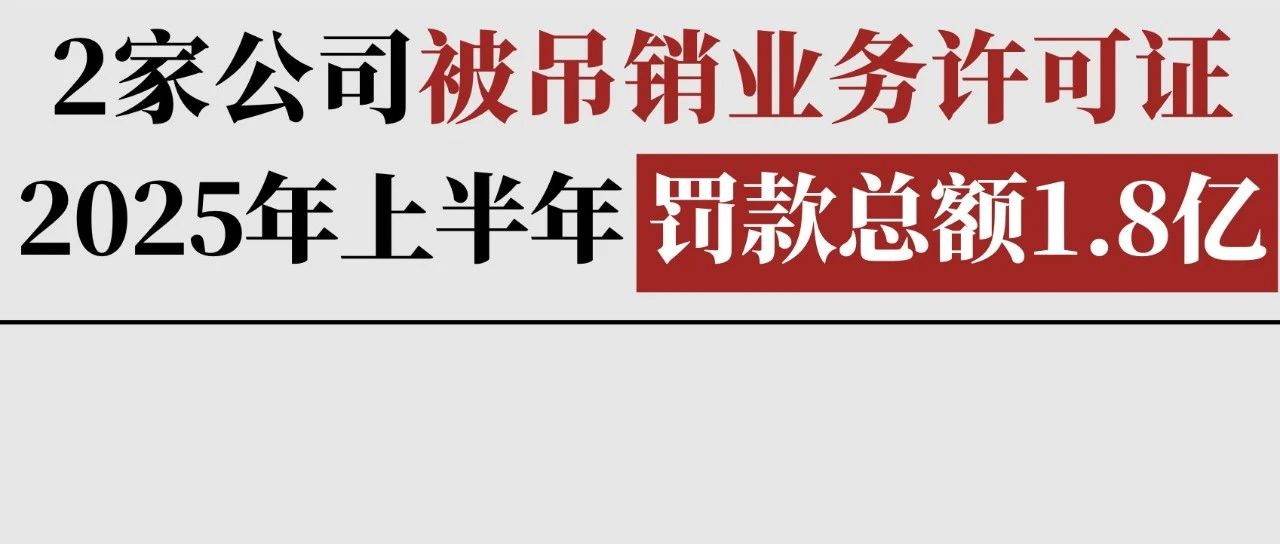
2025上半年保险公司罚款1.8亿:10张百万罚单,2家许可证被吊销,28人终身禁业,11人撤职!
13个精算师· 2025-07-08 14:29
Core Viewpoint - In the first half of 2025, the insurance industry faced significant regulatory scrutiny, with a total of 97 companies fined 180 million yuan, highlighting an increase in large penalties and accountability measures against responsible individuals [1][6][13]. Regulatory Actions - The Financial Regulatory Bureau directly penalized six companies, resulting in over 1305 fines totaling more than 172 million yuan [13][39]. - Two companies, Tianan Insurance and Tianan Life, had their business licenses revoked, and multiple executives faced lifetime bans from the industry [14][22]. - A total of 28 individuals received lifetime bans, while 11 were dismissed from their positions, with 10 fines exceeding one million yuan each [24][31]. Industry Performance - The insurance sector experienced a slowdown in premium growth due to previous product suspensions and a shift in focus away from "New Year" sales strategies [8][11]. - By the end of May 2025, the original insurance premium growth rate for life insurance companies had increased by nearly 8 percentage points compared to the beginning of the year [11]. Financial Trends - The industry is transitioning towards products that offer "minimum guaranteed returns plus floating income" in response to ongoing interest rate declines [9][10]. - The total number of fines issued by local regulatory branches reached 778, accounting for 39% of the total fines imposed on insurance companies [39][40]. Accountability Measures - The regulatory environment has intensified, with a clear emphasis on personal accountability, as evidenced by the significant number of individuals facing penalties and bans [32][31]. - The trend of increasing penalties and the revocation of business licenses for insurance companies is a rare occurrence, indicating a shift in regulatory enforcement [23][22].

十年镜鉴,百年人寿股权投资再启航: 新时期下符合保险资金特点的股权投资策略
13个精算师· 2025-07-08 14:29
Core Viewpoint - The article discusses the evolution of Bai Nian Life Insurance's equity investment business, highlighting its transition from a prosperous phase to a period of reflection and strategic restructuring, ultimately aiming for a renewed start in the investment landscape [2][19][20]. Historical Context - Bai Nian Life Insurance was an early participant in China's equity investment market, starting its investment activities in 2014 and accumulating nearly 10 billion RMB in investments across various strategic emerging industries such as healthcare, TMT, consumer goods, advanced manufacturing, and hard technology [2]. - The company established a strong reputation as a professional investor through collaborations with leading institutions like Sequoia Capital and CITIC Industrial Fund during its "golden era" of equity investment [2][5]. Current Strategy Adjustment - The company is currently adjusting its equity investment strategy to better align with the characteristics of insurance funds, leveraging past experiences while adapting to new policy environments and market opportunities [3][6]. - Bai Nian Life Insurance is focusing on enhancing its investment management system, including establishing a scientific decision-making mechanism and a comprehensive risk control system [6][11]. Strategic Opportunities - Since 2024, the regulatory environment has been optimized to encourage insurance funds to increase investments in strategic emerging industries, providing Bai Nian Life Insurance with significant historical opportunities for its equity investment business [8]. - The rapid development of sectors like artificial intelligence, renewable energy, biomedicine, and high-end manufacturing presents a broad market space for equity investments [8]. Investment Philosophy - The company emphasizes the unique advantages of insurance funds, such as stable sources and long payment cycles, advocating for a long-term value investment approach [9][11]. - Bai Nian Life Insurance aims to focus on the intrinsic value and long-term potential of enterprises, utilizing in-depth fundamental analysis to identify high-quality investment opportunities [11]. Risk Management - The company is committed to strengthening its risk management framework, implementing rigorous standards and processes for investment decision-making, post-investment management, and exit strategies [12]. Client Value Creation - Bai Nian Life Insurance plans to enhance synergy between its equity investment and dividend insurance businesses, aiming to create stable and sustainable returns for clients [14][15]. - The company is also dedicated to fulfilling social responsibilities through investments in enterprises that have a positive social impact, aligning with ESG investment principles [15]. Strategic Planning for Renewal - The company will adopt a phased approach to its renewed equity investment strategy, starting with lower-risk projects and gradually expanding its investment scope [17]. - Bai Nian Life Insurance aims to leverage innovation in investment models and management practices to establish new competitive advantages [17].

2025一季度车险榜&非车险榜:平安增速快,泰康、众安等车险增速超20%,众安、京东等非车增速连续3年超10%
13个精算师· 2025-07-07 14:51
Core Viewpoint - The insurance industry is experiencing a shift with the "old three" insurance companies maintaining their market share in the auto insurance sector while new entrants are rapidly growing in the non-auto insurance market [11][21][36]. Auto Insurance Premium Rankings - In Q1 2025, the top three auto insurers, namely People's Insurance, Ping An, and Taiping, have increased their insured vehicles by over 2% compared to the previous year [21][25]. - The overall auto insurance premium income for the industry reached 515.5 billion, with a notable increase in premium growth driven by consumer incentives and rising vehicle sales [11][21]. - New entrants like BYD Insurance have shown significant growth, with a premium of 740 million, ranking 22nd in the market, benefiting from low commission rates and high payout ratios [35][36]. Non-Auto Insurance Premium Rankings - Ping An's non-auto insurance premium growth exceeded 14%, while companies like Zhong An and Tai Kang have maintained over 10% growth for three consecutive years [36][37]. - The non-auto insurance market is seeing a competitive landscape where new players are closing in on the traditional leaders, indicating a shift in market dynamics [11][36]. Market Trends - The auto market is benefiting from government incentives such as "trade-in" subsidies, leading to a 16.1% increase in passenger car production and a 12.9% increase in sales in Q1 2025 [21][24]. - The overall premium income for the insurance industry in Q1 2025 was 2,246.8 billion, reflecting a 3.03% growth year-on-year [21][36]. - The competition in the auto insurance sector is intensifying, with 32 companies reporting premium growth exceeding the market average, primarily among smaller firms [31][32].

机构预测三季度人身险预定利率或将迎下调50bp;北京率先试点医保商报同步结算|13精周报
13个精算师· 2025-07-05 02:50
Regulatory Dynamics - The first inclusion of commercial health insurance innovative drug directory into the medical insurance adjustment plan aims to enhance the multi-payment capability for innovative drugs [5] - The Financial Regulatory Bureau has proposed strict adherence to approved insurance terms and rates for non-auto insurance businesses [6][7] - In May 2025, the insurance industry reported a total premium income of 3.06 trillion yuan, with Jiangsu province leading at 315.1 billion yuan [10] Company Dynamics - Taikang Life has completed its first transaction with a pilot fund of 10 billion yuan [18] - Lian'an Life increased its stake in Jiangnan Water by acquiring 46.99 million shares, representing a 5.03% ownership [20] - Zhongyou Life officially acquired a 5% stake in Eastern Airlines Logistics, with a total transaction value of approximately 869 million yuan [21] - China Life announced a cash dividend of 0.45 yuan per share, totaling approximately 12.71 billion yuan [26] - China Life's insurance payout exceeded 30.2 billion yuan in the first half of 2025 [27] Personnel Changes - Zhao Yue has been appointed as a member of the Party Committee and Secretary of the Discipline Inspection Commission of the Fujian Financial Regulatory Bureau [31] - Yang Fan resigned as Chairman of Xinmei Mutual, with Hu Han taking over [33] - Bai Kai is expected to become the Vice President of Taiping Group [34] Industry Dynamics - Insurance capital has accelerated its entry into the market, with 19 instances of stake increases recorded this year, nearing last year's total [40] - The insurance industry raised nearly 50 billion yuan in capital in the first half of 2025, with 13 companies involved [42] - The health insurance market is evolving, with a focus on service-oriented products and addressing the needs of chronic disease patients [51][52] Product Services - Zhong'an Insurance launched the "Zhongminbao Million Medical Insurance 2025 Edition," which includes coverage for chronic disease patients [55] - The first "Low-altitude Operation Management Liability Insurance" was implemented in Jiangsu [56] - Guo Life Property Insurance introduced the "Yao Yan Bao" comprehensive insurance, focusing on drug research and development risks [58]

成立至今(2024)财险公司累积回报率排行榜:人保第一、平安第二,他们累积盈利额超过股东投入7倍以上,累积回报率年化值超10%!
13个精算师· 2025-07-04 01:53
Core Viewpoint - The cumulative return rate of the property insurance industry from 2009 to 2024 is 181.7%, with an annualized return rate of 14.3%, indicating strong profitability for shareholders in the sector [1][10]. Group 1: Cumulative Return Rate Analysis - The cumulative return rate for the "old three" major companies (People's Insurance, Ping An, and Taiping) is 745.9%, while medium-sized companies have a cumulative return rate of 51.4%, and small companies only 2.3% [2][13]. - From 2009 to 2024, the cumulative net profit of the property insurance industry reached 598.5 billion yuan, with total shareholder capital contributions of approximately 342.5 billion yuan and net assets of about 733.8 billion yuan by the end of 2024 [8][10]. - The cumulative return rate for the property insurance industry has been positive since 2009, with a steady increase over the past twelve years [10][22]. Group 2: Company-Specific Performance - The cumulative return rates of the top ten companies are significantly higher than the industry average, with People's Insurance leading at 960.4% and Ping An at 811.3% [29]. - The cumulative return rates for medium-sized companies show a stark contrast, with total shareholder contributions of 102.3 billion yuan and cumulative profits of 52.7 billion yuan [3][16]. - Small companies have a total shareholder contribution of 148.9 billion yuan but only a cumulative profit of 3.8 billion yuan, highlighting the disparity in performance across company sizes [3][16]. Group 3: Statistical Insights - The average cumulative return rate across the industry is 27%, but the median shows a loss of 14.7%, indicating that over 60% of the 73 companies analyzed have cumulative losses [18][22]. - The distribution of cumulative return rates resembles a normal distribution, reflecting the competitive differences among property insurance companies [26]. - The annualized cumulative return rate for the industry shows an average of -1.6%, with a median of -1.2%, indicating that many companies are struggling to achieve positive returns [25][26].


2024年度寿险公司新业务获取费率排行榜,是不是获取费用率越高,新业务利润率就越低呢?
13个精算师· 2025-07-03 09:43
Core Viewpoint - The analysis of new business acquisition cost rates in the life insurance sector indicates that a higher acquisition cost does not necessarily correlate with lower profitability for new business, challenging conventional wisdom in the industry [1][6][24]. Group 1: New Business Acquisition Cost Rate - The formula for calculating the new business acquisition cost rate is defined as the cash flow from acquiring insurance contracts divided by the present value of future cash inflows from those contracts [1][11]. - In 2024, the aggregated new business acquisition cost rate for 12 life insurance companies was 8.4%, a decrease of 0.8 percentage points year-on-year [17]. - The new business profit margin for the same group of companies was 8.7%, reflecting a year-on-year decline of 0.4 percentage points [19]. Group 2: Performance of Individual Companies - Among the 12 companies, Ping An Life had the highest new business acquisition cost rate at 11.9%, followed by Taiping Life at 9.6% [19]. - The analysis revealed that loss-making contracts had a new business acquisition cost rate of 5.7%, while non-loss-making contracts had a rate of 8.7%, suggesting that higher quality, potentially profitable business requires greater investment in acquisition [19][22]. - Companies primarily using the bancassurance channel, such as Zhong Postal Life and Sunshine Life, experienced a 2.5 percentage point decrease in their new business acquisition cost rates due to the "reporting and operation integration" effect [21][22]. Group 3: Insights on Cost and Profitability Relationship - The relationship between new business acquisition cost rates and profit margins is complex; higher acquisition costs do not equate to lower profit margins, which contradicts common assumptions [6][24]. - The analysis indicates that companies with higher acquisition costs often achieve higher profit margins, likely due to their investment in acquiring higher quality business [7][26]. - The findings suggest that the main distribution channels for leading companies remain focused on individual agents, which influences their cost structures and profitability [4][26].