13个精算师

Search documents
行业首家,中国人寿保费收入站上7000亿新台阶,寿险头雁地位持续稳固
13个精算师· 2025-12-09 09:02
Core Viewpoint - China Life Insurance has achieved a significant milestone by surpassing 700 billion yuan in total premiums by November 30, 2025, becoming the first life insurance company in China to reach this scale, marking a new chapter in its development history [1]. Group 1: Historical Development - From 1949 to 1996, China Life Insurance began its journey with the establishment of the People's Insurance Company of China, reaching a premium income of 192 million yuan in 1996, becoming the first life insurance company in China to exceed 10 billion yuan in premiums [7]. - Between 1996 and 2002, the company completed its restructuring and achieved a premium income of 128.8 billion yuan in 2002, marking its first milestone of 100 billion yuan in premiums [8]. - From 2003 to 2007, China Life successfully went public, raising 3 billion USD in its IPO, and achieved a premium income of 196.6 billion yuan in 2007, nearing the 200 billion yuan target [9]. Group 2: Recent Performance and Achievements - In the period from 2021 to 2025, China Life Insurance faced challenges in the insurance industry but managed to cross the 600 billion to 700 billion yuan threshold by November 2025, demonstrating resilience and strong adaptability [18]. - As of the third quarter of 2025, China Life achieved a new record with a new single premium of 218.03 billion yuan, a year-on-year increase of 10.4%, and a net profit of 167.8 billion yuan, up 60.5% year-on-year [28]. - The company maintained a solvency adequacy ratio of 137.5% and a comprehensive solvency adequacy ratio of 183.94%, reflecting its strong financial health [30]. Group 3: Strategic Initiatives - China Life has continuously adapted its sales channels, enhancing its agent system and focusing on professional capabilities to maintain its market leadership [19]. - The company has implemented a series of reforms, including the "Dingxin Project" in 2019, to optimize its organizational structure and improve operational efficiency [17]. - In response to the aging population and increasing demand for health and retirement services, China Life has expanded its product offerings, including health insurance and retirement products, to meet diverse customer needs [24][25].



首版!商保创新药目录19个:百万元一针的抗癌药,五款CAR-T纳入,有哪些影响?
13个精算师· 2025-12-08 16:01
Core Viewpoint - The article discusses the implementation of a "dual directory" for medical insurance in China, which includes a basic medical insurance directory and a commercial health insurance innovative drug directory, effective from January 1, 2026. This aims to enhance access to high-value innovative drugs that are not covered by basic insurance [2][5][10]. Group 1: Innovative Drug Directory - The first version of the commercial health insurance innovative drug directory includes 19 drugs, comprising 14 cancer treatment drugs and 2 Alzheimer's drugs [6][10]. - The inclusion of drugs in the commercial health insurance innovative drug directory requires price negotiations, with expected price reductions of 20%-40% [16][21]. - The directory aims to address the needs for high-value drugs that exceed the basic medical insurance coverage, thereby alleviating the financial burden on patients [5][13]. Group 2: Impact on Patients and Insurance - The commercial health insurance innovative drug directory is not subject to DRG/DIP payment restrictions, facilitating better access to these drugs [22][24]. - The integration of "medical insurance + commercial insurance" is expected to streamline the settlement process for patients, reducing their financial and time burdens [25][28]. - The article highlights three benefits for consumers: access to drugs without DRG/DIP limitations, potential for one-stop settlement, and the establishment of a consistent drug list across insurance companies [22][25][26].
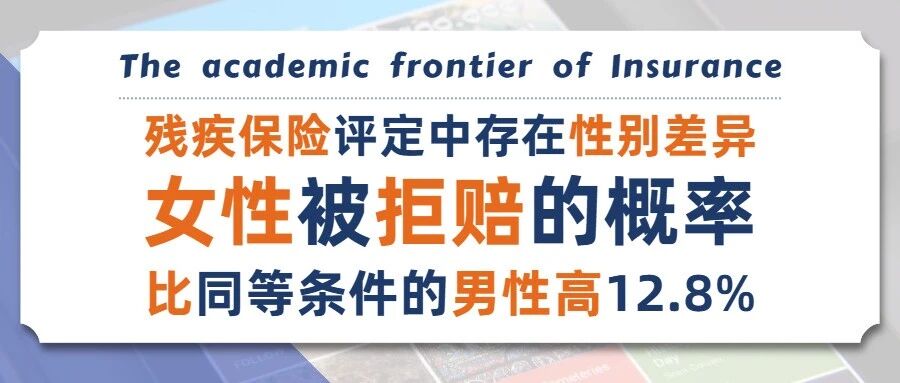
Journal of Political Economy 2025年精选文章目录与摘要|保险学术前沿
13个精算师· 2025-12-07 02:05
Core Insights - The article discusses various studies published in the Journal of Political Economy, focusing on the implications of unemployment insurance, disability insurance, dynamic pricing in insurance markets, and long-term health insurance in Germany. Group 1: Unemployment Insurance - Entities with a pessimistic view on disasters are more likely to leverage risky asset purchases and prefer longer-term debt contracts, as these contracts provide implicit disaster insurance that increases with maturity [6][7]. - A study on Missouri's unemployment insurance policies found that a reduction in benefit duration led to a 12% increase in job-finding rates, driven by increased job vacancies and enhanced search efforts from unemployed workers [8]. Group 2: Disability Insurance - Research indicates that women with work disabilities are 12.8 percentage points more likely to be denied disability insurance compared to men, attributed to a higher assessment of their remaining work capacity [10][11]. Group 3: Dynamic Pricing in Insurance Markets - Stricter dynamic pricing regulations have limited effects on consumer welfare while reducing insurer profits and increasing market concentration [12][13]. Group 4: Long-Term Health Insurance - The German long-term health insurance market is the largest globally, with contract designs closely aligning with optimal dynamic contracts for individuals with stable lifetime income profiles, achieving welfare levels only 4% lower than optimal contracts [14][15]. - The availability of informal care reduces the demand for long-term care insurance by 7 percentage points and suppresses Medicaid spending, suggesting that cash benefits for informal caregivers could enhance insurance demand and family welfare [17][18].
监管:险资入市再获松绑!精准引流长投蓝筹与科创;六大行全面停售5年期大额存单;香港火灾已寻涉事保单8700张|13精周报
13个精算师· 2025-12-06 03:05
Regulatory Dynamics - The three departments have canceled the requirement for individuals to register cash deposits or withdrawals exceeding 50,000 yuan, effective January 1, 2026, allowing banks to avoid blanket inquiries about the source of funds [6] - The State Council is promoting provincial-level coordination of basic medical insurance to enhance the system's security capabilities [7] - The Financial Regulatory Administration has adjusted risk factors for insurance companies investing in related stocks to cultivate patient capital [8][9] - The insurance industry reported original premium income of 54,833 billion yuan for the first ten months, a year-on-year increase of 8% [11] Company Dynamics - Great Wall Life increased its stake in Qin Port shares by 597,500 shares [15] - China Pacific Life established a private equity investment fund in Chengdu with an investment amount of approximately 5 billion yuan [16] - Taikang Group invested 1.26 billion yuan in a new energy private equity fund [17] - Hengqin Life plans to increase its registered capital by 1.852 billion yuan [18] - China Insurance announced a cash dividend of 0.075 yuan per share for the first half of 2025 [20] - New China Life plans to distribute a cash dividend of 0.67 yuan per share for the first half of 2025 [22] - Waterdrop Inc. reported a net profit of 158 million yuan for Q3, a year-on-year increase of 60.1% [23] Industry Dynamics - Six major banks have completely stopped selling 5-year large-denomination certificates of deposit [36] - The Commercial Health Insurance Special Committee of the China Medical Insurance Research Association has been established [37] - The national first commercial wheat seedling rate insurance has been launched in Henan [58] - The pension insurance competitiveness report indicates that Taikang, Ping An, and National Pension occupy the top three positions [42] - Vanke's 2 billion yuan bond has been postponed for the first time, involving insurance assets exceeding 300 billion yuan [43] Product Services - The "Beijing Inclusive Health Insurance" for 2026 has surpassed 2.6 million participants, with the enrollment channel closing on December 31, 2025 [55] - China Pacific Insurance's Jinan Yuanshen Rehabilitation Hospital has officially opened [56] - The first "Technology Performance Insurance" in the country has been launched in Yunnan [57] - The first commercial wheat seedling rate insurance has been implemented in Henan [58] - China Credit Insurance issued the first overseas investment insurance policy under the unified insurance model for overseas economic and trade cooperation zones [60]

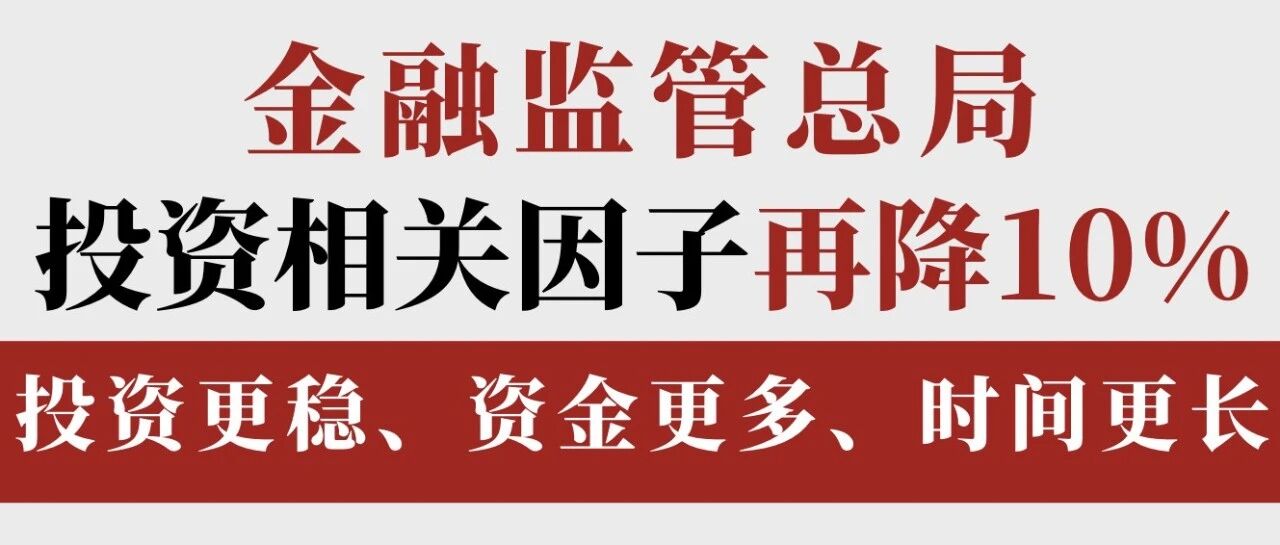
靴子落地!金融监管总局:风险因子调降10%,保险投资再松绑,有哪些影响?
13个精算师· 2025-12-05 15:25
刚刚 持仓时间超过3年的市值超3千亿 ③有助 险企更注重长期投资 投资更稳、资金更多、时间更长 金融监管总局发文 ①将股票投资的 风险因子进一步调降10% 要求对沪深300等持仓超过3年 ② 沪深300和红利100 保险公司持仓市值超4.8千亿 1 金融监管总局:提上限、降因子 助力险企发挥"长期资本"的优势 | 序号 | 文件名称 时间 | | --- | --- | | 13 | 关于优化保险公司权益类资产配置监管有关事项的通知 2020/7/17 | | 123 | 关于优化保险公司偿付能力监管标准的通知 3 2023/9/10 | | గ్ | 关于调整保险资金权益类资产监管比例有关事项的通知 2025/4/8 | | | 峰 关于调整保险公司相关业务风险因子的通知 2025/12/5 | 近年来,为推动以保险资金为代表的中长期资金,加大对市场的投资力度,金融监管总 局等部门,先后出台多项措施。 先是,对权益类资产投资,实行差异化监管,而后,又下调风险因子、上调权益类投资 比例上限! 以金融监管总局为例,从2 020年至今,已经先后下发4个文件,详见上图。 今日,金融监管总局下发《关于调整保险公司相关 ...





56家寿险公司理赔半年报:总赔付超1100亿,最大赔案3079万,14个“千万级”赔案,最快赔付仅需8秒...
13个精算师· 2025-12-04 15:36
Core Viewpoint - The insurance industry has shown significant growth in claims, with total claims exceeding 110 billion yuan in the first half of 2025, reflecting an increasing demand for insurance products and services [6][12][14]. Group 1: Claims Overview - Total claims amount exceeded 110 billion yuan, with over 35.09 million claims processed [1][6]. - The average claim approval rate stands at 98.8%, with daily processing of approximately 190,000 claims [29][32]. - There are 14 cases of claims exceeding 10 million yuan, indicating a rise in high-value claims [15][22]. Group 2: Major Claimants - China Life Insurance reported the highest claims at 30.2 billion yuan, followed by Ping An Life with 20.62 billion yuan [2][12]. - Six insurance companies reported claims exceeding 3 billion yuan, including Taikang Life and Xinhua Insurance [12][14]. - The top claims cases from 49 insurance companies all exceeded 1 million yuan, showcasing a trend towards higher claim amounts [16][21]. Group 3: Claim Types - Critical illness claims accounted for 47% of total claims, while medical claims made up 28% [14]. - The increasing focus on health-related insurance products reflects changing consumer needs and preferences [14][39]. Group 4: Regional Insights - High-value claims are predominantly concentrated in economically developed regions such as Beijing, Shanghai, and Guangzhou, where clients often have multiple insurance products [24][22]. Group 5: Service Improvements - Insurance companies are enhancing their claims processing efficiency through online platforms and simplified procedures, leading to faster claim settlements [32][39]. - Many companies report significant improvements in online claim approval rates, with some achieving over 90% [33][39].

上市寿险公司实际投资收益率与假设偏差比较:2010-2024年行业累积总投资收益率偏差-0.38%,综合投资收益率偏差0.66%
13个精算师· 2025-12-03 11:05
Core Insights - The long-term investment return assumption is a crucial parameter affecting the intrinsic value of life insurance companies, reflecting their expectations regarding capital market conditions and investment strategies. In 2024, most life insurance companies have lowered their long-term investment return assumption from 4.5% to 4.0% [9][11]. Investment Returns Analysis - From 2010 to 2024, listed life insurance companies had a total investment return that exceeded the long-term investment return assumption in only 5 out of 15 years, with the remaining 10 years showing negative deviations. The cumulative total investment return deviation for the industry is -0.38% [3][6][37]. - As of the first three quarters of 2025, the total investment return for the year is approximately 3.5%, slightly below the long-term investment return assumption of 4.0%. A strong performance in the fourth quarter could make 2025 the first year since 2020 to exceed the long-term investment return assumption [3][13]. Company-Specific Performance - In 2024, China Life's total investment return was 4.02%, while its comprehensive investment return was 5.94%, both exceeding the long-term investment return assumption of 4.0% [17][18]. - Ping An Life's total investment return for 2024 was 3.32%, with a comprehensive investment return of 7.25%, also above the long-term assumption [19][21]. - For 2024, Taikang Life's total investment return was 3.03%, while its comprehensive investment return was 7.33%, surpassing the long-term assumption [22][23]. - New China Life reported a total investment return of 3.56% and a comprehensive investment return of 6.84% for 2024, both exceeding the long-term assumption [24][25]. - PICC Life's total investment return was 3.70%, with a comprehensive investment return of 14.1%, significantly above the long-term assumption [28][29]. - AIA's estimated long-term investment return assumption for 2024 is 3.4%, which is below the 4.0% threshold, indicating a cautious outlook [30][33]. Summary of Deviations - The average deviation of total investment returns from long-term assumptions for the industry is -0.38%, while the average deviation for comprehensive investment returns is 0.66%. Companies like PICC Life and AIA show better performance with positive deviations [37][38].
2025三季度财险公司保费排名榜:平安超市场,老三家车险稳定,泰康、大家排名上升,比亚迪靠车险排名大涨...
13个精算师· 2025-12-02 10:30
Core Insights - The insurance industry is expected to see a slowdown in growth rates compared to the previous year, with property insurance companies projected to have a premium growth rate around 4% for 2025 [11][15][21] - The "old three" insurance companies (Ping An, PICC, and Taikang) continue to dominate the market, with Ping An showing the highest growth rate among them [21][24][27] - Non-auto insurance growth is declining significantly, impacting overall premium growth for the industry [11][17][20] Group 1: Industry Growth Trends - The overall premium income for property insurance companies is projected to exceed 14.9 trillion yuan, with a year-on-year growth rate of approximately 4% [13][15] - The growth rate of non-auto insurance has decreased notably, with some segments like liability and agricultural insurance experiencing significant declines [17][20] - The implementation of the "reporting and operation integration" policy for non-auto insurance is expected to have a short-term impact on business but aims to improve profitability in the long run [20][19] Group 2: Company Performance - Ping An's premium growth rate reached 6.9%, surpassing the market average, with stable contributions from its auto insurance segment [24][25] - Taikang has risen two positions in the rankings, now sitting at tenth place, driven by a significant increase in its premium income [21][26] - Companies like Dadi and Zhong An have outperformed the market, with their growth primarily driven by non-auto insurance segments [21][27] Group 3: Market Dynamics - The market is witnessing a clear differentiation among insurers, with many smaller companies experiencing either negative or high growth rates [29][31] - The premium growth for smaller insurers is often more volatile, with a significant number reporting declines due to their limited scale [29][31] - The overall competitive landscape is intensifying, with larger firms maintaining their market share while smaller firms struggle to keep pace [27][29]

2025年寿险公司净资产的运营变化
13个精算师· 2025-12-01 09:48
Core Viewpoint - The life insurance industry appears to be thriving with reported profits of 460 billion RMB in the first three quarters of the year, but a deeper analysis reveals a concerning decline in net assets under the CGAAP standards, indicating underlying financial pressures [1][2]. Summary by Sections 1. Changes in Net Assets under CGAAP - Despite a reported increase of 222 billion RMB in net assets for companies that disclosed third-quarter results, most life insurance companies experienced a decline in net assets under the old CGAAP standards, primarily due to rising long-term interest rates and poor performance in equity investments [2][3]. - The average return of high-dividend stocks, heavily weighted in the life insurance sector, fell significantly, with only a few companies outperforming the 18% return of the CSI 300 index in the third quarter [2][3]. 2. Implementation of New Accounting Standards (IFRS 17) - Several established life insurance companies have adopted the IFRS 17 accounting standards, leading to higher reported profits compared to the old CGAAP standards. This shift has resulted in changes in liability assessment curves that positively impact comprehensive income [3][4]. - The transition to IFRS 17 allows for the exclusion of certain losses from financial statements, enhancing the reported profitability of companies that have adopted the new standards [4][5]. 3. Net Asset Operational Changes - The operational change in net assets for the life insurance sector was negative 99 million RMB, with only 20 companies reporting positive growth. The "old seven" companies saw a 4% increase, while foreign and small domestic companies experienced declines of 16% and 11%, respectively [10][11]. - The banking-affiliated companies faced the most significant decline in net assets, with a drop of 24%, attributed to their high leverage ratios and the reclassification of HTM assets to AFS [11][12]. 4. Factors Influencing Net Asset Changes - The average yield curve for interest rates increased by 25 basis points, leading to a decline in the market value of existing AFS bonds, estimated to be a loss of 200 to 300 billion RMB for the industry [14][15]. - If the asset and liability assessment curves had remained unchanged, the net assets of the companies could have increased by 500 to 600 billion RMB, primarily driven by excess returns from equity investments [15][16]. 5. Future Implications of IFRS 17 - Starting in 2026, all insurance companies in China will implement IFRS 17, which is expected to provide better alignment between asset and liability assessment curves, potentially offering a protective effect on net assets, especially for traditional insurance products [19][21]. - The focus on duration matching will become increasingly important under the new standards, as it will significantly influence the net assets and solvency of companies in the future [18][19].

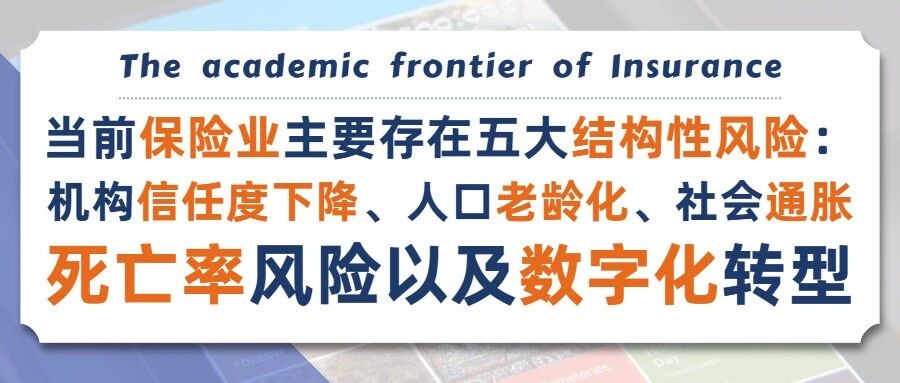
文章推荐:结构性风险:保险业面临的机遇与挑战|保险学术前沿
13个精算师· 2025-11-30 02:03
Core Viewpoint - The insurance industry is currently facing five major structural risks: declining institutional trust, aging population, social inflation, mortality risk, and digital transformation [3][5]. Group 1: Structural Risks - Structural risks arise from fundamental changes in economic, social, and environmental trends, such as demographic shifts and climate change [5]. - Managing these risks is crucial for insurance companies to protect policyholder interests, ensure operational stability, and maintain macroeconomic stability [5]. Group 2: Declining Consumer Trust - Consumer trust in institutions, including insurance companies, is declining, impacting sales and company reputation. In 2025, 61% of respondents expressed moderate to severe dissatisfaction with enterprises and governments [9]. - Trust is a key factor in purchasing decisions, with over 80% of corporate clients indicating it influences their choice of insurance providers. A lack of trust can lead to policyholders switching providers or opting out of coverage [9]. - Recent surveys show that less than two-thirds of consumers trust insurance companies, with only 50% believing that insurers will compensate for losses from natural disasters [9]. Group 3: Social Inflation Risk - Social inflation, defined as factors leading to increased severity of insurance claims beyond economic explanations, accounted for 57% of the growth in U.S. liability claims over the past decade [13]. - Since 2020, the number of "nuclear verdicts" (awards exceeding $10 million) has more than tripled, with median award amounts rising from $21.5 million to $51 million [13]. - The profitability of personal injury liability insurance has been declining, with cumulative underwriting losses reaching $43 billion from 2020 to 2024, partly due to rising litigation costs [13]. Group 4: Excess Mortality Rate Fluctuations - Excess mortality rates, exacerbated by the COVID-19 pandemic, are expected to remain positive in the U.S. and the UK until at least 2027, potentially impacting life insurance claims and reserves [19]. - In 2023, the U.S. life expectancy increased by 0.9 years to 78.4 years, but remains below pre-pandemic levels [19]. - The ongoing rise in excess mortality may challenge the life insurance industry, affecting long-term performance and pricing of new life insurance policies [19][20]. Group 5: Aging Population - Global population aging, driven by increased life expectancy and declining birth rates, is expected to pressure death benefit and savings products. By 2050, the population aged 65 and older in high-income countries is projected to rise significantly [28]. - The growing longevity risk pool presents a substantial premium opportunity for the life insurance industry, as the retirement period for those aged 65 has increased by 16% compared to 2000 [28][29]. Group 6: Digital Technology - The development of digital technology is reshaping the risk landscape and may drive demand for first-party and third-party liability insurance. Reports of AI-related incidents have surged, with a 60% increase from 2023 to 2024 [31]. - The rise in litigation related to AI, particularly concerning intellectual property and defamation, could become a significant driver of social inflation [31]. - The insurance industry is still in the early stages of product development related to digital risks, with unclear definitions regarding coverage, exclusions, and standardized terms [31].