
13个精算师

Search documents
2025三季度寿险公司偿付能力排行榜:长生人寿低于100%,1家低于120%,1家风险评级为C!
13个精算师· 2025-11-11 10:28
Core Insights - The article discusses the solvency ratios of various life insurance companies for the third quarter of 2025, highlighting the performance and trends in the industry [1][2][3]. Solvency Ratios Overview - A total of 73 life insurance companies have disclosed their solvency ratios for Q3 2025, with the solvency adequacy ratio and core solvency adequacy ratio being key metrics [1][2]. - The top three companies in terms of comprehensive solvency adequacy ratio are: 1. People's Insurance Pension: 1251.6% (down 76 points) 2. China Life Pension: 1055.1% (down 40 points) 3. New China Life Pension: 970.6% (down 21 points) [2][3]. Investment Returns and Profitability - The annualized investment return for life insurance companies averaged 4.96% in Q3 2025, an increase of nearly 1.3 percentage points year-on-year, leading to a significant rise in net profits [10][11]. - The net profit for 72 life insurance companies reached 461.96 billion, a year-on-year increase of approximately 176.5 billion, representing a growth of nearly 62% [10][11]. Regulatory Changes and Market Impact - The article notes that the solvency ratios have been affected by external factors such as interest rate fluctuations and market conditions, with over 80% of companies experiencing a decline in their comprehensive solvency adequacy ratio compared to the previous quarter [21][22]. - Regulatory adjustments have been made to encourage insurance companies to increase their equity investments, including a reduction in risk factors for stock investments [27][28]. Company-Specific Issues - Longsheng Life Insurance has been identified as having a solvency adequacy ratio below 100%, indicating a failure to meet solvency standards [12][14]. - One company, Beida Fangzheng, reported a comprehensive solvency adequacy ratio below 120%, which raises concerns about its financial stability [16][18]. Conclusion - The article emphasizes the importance of solvency ratios as indicators of an insurance company's ability to meet its obligations to policyholders, while also highlighting the impact of market conditions and regulatory changes on the industry [11][12].


盈利寿险公司的剩余边际分析
13个精算师· 2025-11-10 09:44
Core Viewpoint - The article discusses the implementation of the second phase of the solvency regulation (偿二代二期) for insurance companies in China, focusing on the calculation and significance of future policy earnings and remaining margins as key indicators of the operational status of life insurance companies [1]. Group 1: Future Policy Earnings and Remaining Margins - The future policy earnings, introduced under the second phase of solvency regulation, can be derived using specific formulas, which help in understanding the remaining margins of profitable life insurance companies [2][3]. - The difference between accounting reserves and solvency reserves is termed ACCIF, representing the contribution of existing policies to actual capital. For most small and medium-sized life insurance companies, future policy earnings equate to ACCIF [3]. - By the end of 2024, only 27 life insurance companies are expected to have reported three consecutive years of profitability under tax standards, with specific companies like 人保寿险 failing to meet this criterion [5]. Group 2: Analysis of Remaining Margins - The article identifies four main reasons for a decline in future policy earnings: high proportion of participating insurance, increased comprehensive premiums, lower continuation rates for high future earnings products, and adjustments in actuarial assumptions that lower accounting reserves [9]. - The remaining margin's calculation under the current CGAAP is locked, and changes in the present value of amortization carriers are minimally affected by the 750-day curve changes [10]. - The operational deviations, excluding policy cancellations, do not impact the remaining margins of existing policies, while mortality rate deviations have a negligible effect [12]. Group 3: Impact of Surrender Rates on Remaining Margins - Different companies have varying assumptions regarding surrender rates for mainstream products, significantly affecting their remaining margins [14]. - For example, a comparison of surrender rates of 1% versus 5% shows that the remaining margins can be nearly doubled under lower surrender rate assumptions [15]. - Some companies have accumulated considerable remaining margins through the sale of low-priced long-term critical illness insurance, but their claims ratios have exceeded pricing assumptions, leading to potential future losses [16]. Group 4: Remaining Margins Data - The remaining margins for major life insurance companies are presented, showing fluctuations from 2022 to 2024. For instance, 平安人寿's remaining margin is projected to decrease from 8,944 million in 2022 to 7,890 million in 2024, a decline of 1,054 million [17][19].





文章推荐:保险需求及其偏差之谜|保险学术前沿
13个精算师· 2025-11-09 02:03
Core Viewpoint - The article discusses the phenomenon of underinsurance against high-loss risks, emphasizing its severe social implications, particularly in developing countries. It highlights behavioral biases and financial literacy as key factors influencing insurance demand and decision-making [2][4]. Summary by Sections Introduction - The underinsurance phenomenon poses significant social challenges, especially in developing countries, due to substantial losses from natural disasters, diseases, and other risks [6]. Insurance Demand Puzzles - Three typical insurance puzzles are identified: underinsurance for low-probability high-loss risks, overinsurance for high-probability low-loss risks, and low demand for specific high-probability high-loss risks like long-term care insurance [3][8]. - Behavioral biases, such as short-sightedness and narrow framing, contribute to these puzzles by leading to suboptimal risk assessments and insurance decisions [4][8]. Behavioral Biases and Heuristics - Various cognitive biases affect insurance decision-making, including: - Coarse probability categorization, leading to misjudgment of risk probabilities [9]. - Short-sightedness, causing individuals to underestimate risks due to a focus on immediate concerns [17]. - Overconfidence, where individuals accurately assess average risks but underestimate their specific risk exposure [17]. - Availability heuristic, where recent or vivid memories disproportionately influence risk perception [21]. - Emotional factors, which significantly impact perceived value and insurance demand [23][25]. Financial Literacy as a Solution - Financial literacy is proposed as a systematic solution to address the underinsurance issue by enhancing public understanding and application of financial concepts [4][28]. - Studies indicate that higher financial literacy correlates with better insurance purchasing decisions and reduced behavioral biases [29][30]. - Financial education can effectively improve insurance demand, particularly in communities with low financial literacy [32][31]. Conclusion - The article concludes that addressing financial literacy gaps may be a viable pathway to mitigate the negative impacts of behavioral biases on insurance demand, ultimately leading to better financial outcomes for individuals [36][37].

中国人寿成全球最大寿险公司;蔡强卸任保诚区域CEO;商保创新药目录预计12月初发布|13精周报
13个精算师· 2025-11-08 03:03
Regulatory Dynamics - The Ministry of Finance proposed higher cumulative compensation limits for accounting firms' professional liability insurance [6][7] - The National Healthcare Security Administration is enhancing intelligent supervision of excessive prescriptions and conducting pilot projects for intelligent review of the entire medical insurance process [8][9] - The Financial Regulatory Administration reported that the insurance industry generated original premium income of 52,146 billion, a year-on-year increase of 8.8% for the first nine months of 2025 [11] Company Dynamics - Ping An Life increased its stake in Agricultural Bank by 49.719 million shares, raising its holding ratio to 18.14% [22] - China Pacific Insurance established a new technology equity investment fund with Guotai Junan and others [23] - China Life has served approximately 40 million clients through its long-term care insurance projects [32] Industry Dynamics - Standard & Poor's Global released the top 50 global life insurance companies, with China Life surpassing Allianz to become the largest [42] - The insurance industry is seeing a significant increase in technology insurance premiums, with a 30% year-on-year growth in the first three quarters [15] - Non-auto insurance companies reported a net profit of over 778 billion in the first three quarters, with many companies turning losses into profits [50][51] Product and Service Innovations - The "Beijing Universal Health Insurance" will launch in 2026, increasing the reimbursement ratio for special drugs by 5 percentage points [4] - Taobao Flash Sale is offering comprehensive insurance coverage for riders, including retirement and medical insurance [54] Personnel Changes - Lu Qiaoling was elected as the vice chairman of China Pacific Insurance [36] - John Cai, the regional CEO of Prudential, has resigned after only seven months in the position [40]


2025年前三季度财险公司盈利能力排行榜:净利润同比增53.5%,承保利润率升1.04个百分点,总投资收益率升0.78个百分点!
13个精算师· 2025-11-07 11:05
Core Insights - The article highlights the significant growth in the profitability of property insurance companies in the first three quarters of 2025, with a net profit increase of 53.5% year-on-year, reaching a historical high of 778.3 billion yuan [11][12] - The improvement in profitability is attributed to both underwriting and investment performance, with the underwriting profit margin rising by 1.04 percentage points to 2.59% and the total investment return rate increasing by 0.78 percentage points to 3.23% [13][14] Profitability Analysis - The median total investment return rate for property insurance companies in the first three quarters of 2025 is reported at 2.56%, with a simple average of 3.02% and a weighted average of 3.23% [3][16] - A total of 14 companies achieved total investment returns exceeding 4.0% [3][16] - The median underwriting profit margin is -0.01%, with a weighted average of 2.59%, indicating that larger companies tend to have higher underwriting profit margins [5][22] Company Performance Rankings - The article provides a ranking of the top ten property insurance companies based on net profit and return on equity (ROE) [6][23][24] - The top three companies in net profit are: 1. People's Insurance Company: 336.3 million yuan 2. Ping An Property Insurance: 155.5 million yuan 3. Taiping Property Insurance: 87.7 million yuan [27] Profitability Grouping - Companies are categorized based on their profitability from underwriting and investment: - Group 1: Both underwriting and investment profitable (e.g., People's Insurance, Ping An Property) - Group 2: One profitable, one unprofitable but overall profitable (e.g., Taikang Online) - Group 3: One profitable, one unprofitable but overall unprofitable - Group 4: Both unprofitable [8][26] Investment Return Distribution - The distribution of total investment returns shows a left-skewed negative distribution, with 39 companies reporting a comprehensive investment return rate lower than the previous year [15][16] - The highest total investment return rate recorded is 22.77% by Fubon Property [19][33]

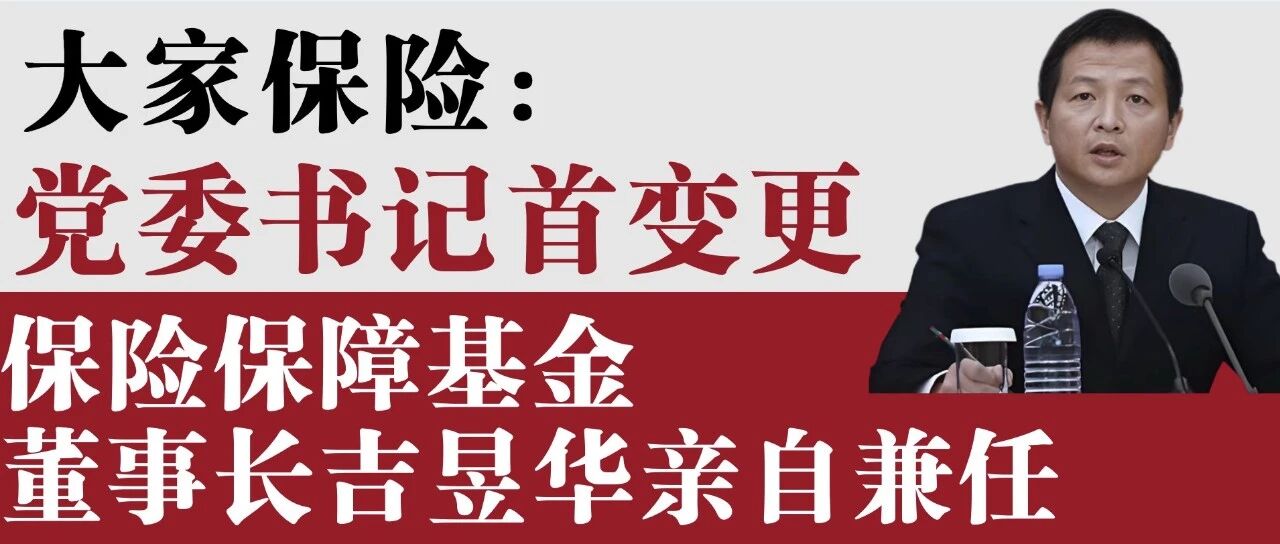
重磅!大家保险6年来首换党委书记,保险保障基金董事长亲自兼任...
13个精算师· 2025-11-06 10:39
大家保险 成立6年首换"一把手" ①控股方坐镇 保险保障基金董事长 吉昱华兼任公司党委书记 ②大家保险集团 ③持股5家险企 保险保障基金余额超2.7千亿 1 大家保险 党委书记首次变更 保险保障基金董事长兼任 1. 首次变更!吉昱华兼任大家保险集团党委书记... 简历 2024年末资产超万亿 但保障基金三次退股未果 为何,这件事儿引起关注呢? 吉昱华,1975年生,现任中国保险保障基金有限责任公司党委书记、董事长、董 事。曾任中国银行保险监督管理委员会政策研究局副局长、办公厅副主任。 今日,有一则关于大家保险集团的人事变动,引起业内的广泛关注! 据财新报道,保险保障基金董事长吉昱华,已经于2025年1 0月,兼任大家保险集团的党 委书记一职。 一是,大家保险集团,成立于2019年,受让了原AB集团旗下的寿险和财险公司。 自从成立至今,大家保险集团的董事长和党委书记,一直是是原AB接管组的组长何肖 锋。 也就是说,这是大家保险集团党委书记的首次变更。 二是,保险保障基金作为大家保险集团的股东,也是控股股东,持有公司98.23%的股 权。 按照惯例,保险公司的党委书记,待相关程序履行完毕,还将出任公司的董事长一职 ...
2025年前三季度寿险公司投资收益率排行榜:资本市场助力投资收益率上涨!但前期已做完资产重分类的公司,综合投资收益率承压
13个精算师· 2025-11-05 11:05
Core Insights - The average total investment return for life insurance companies in the first three quarters of 2025 is 3.5%, an increase of 1.2 percentage points year-on-year. The comprehensive investment return is 6.1%, up by 0.2 percentage points year-on-year. The recovery of the capital market is a key factor contributing to this increase [10][12][16]. Investment Return Analysis - The simple average total investment return for life insurance companies in the first three quarters of 2025 is 3.7%, while the weighted average is 3.5% and the median is 3.0%. Eight companies have a total investment return exceeding 5% [3][18][21]. - The simple average comprehensive investment return for life insurance companies in the first three quarters of 2025 is 3.0%, with a weighted average of 6.1% and a median of 2.8%. Nine companies have a comprehensive investment return exceeding 5% [6][27]. Ranking of Investment Returns - The top ten life insurance companies by total investment return for the first three quarters of 2025 are as follows: 1. Junlong Life: 12.21% 2. Beijing Life: 6.36% 3. Xiaokang Life: 6.02% 4. Dehua Insurance: 5.70% 5. Guofu Life: 5.26% 6. Hongkang Life: 5.25% 7. Caixin Life: 5.13% 8. Xingfu Life: 5.03% 9. Dongwu Life: 4.95% 10. Great Wall Life: 4.65% [23][30]. - The top ten life insurance companies by comprehensive investment return for the first three quarters of 2025 are as follows: 1. Ping An Life: 13.39% 2. Junlong Life: 11.22% 3. Xiaokang Life: 10.92% 4. Xinhua Insurance: 10.57% 5. Great Wall Life: 6.07% 6. Taibao Health: 5.33% 7. China Life: 5.27% 8. Huagui Life: 5.23% 9. Ping An Pension: 5.05% 10. Guofu Life: 4.91% [30][44]. Factors Influencing Returns - The increase in investment returns is attributed to the recovery of the capital market, with the Shanghai Composite Index rising by 12.2% year-on-year at the end of the third quarter last year and 15.8% year-on-year at the end of the third quarter this year, significantly enhancing the returns on equity investments for life insurance companies [10][12][16]. - The difference between total investment return and comprehensive investment return is influenced by the reclassification of assets and the definitions used in calculating these returns [12][15]. Historical Context - Over the past two years, the comprehensive investment return for life insurance companies has shown a significant increase, with the total investment return for the industry reflecting a median of 3.7% and a maximum of 5.7% [37][43].



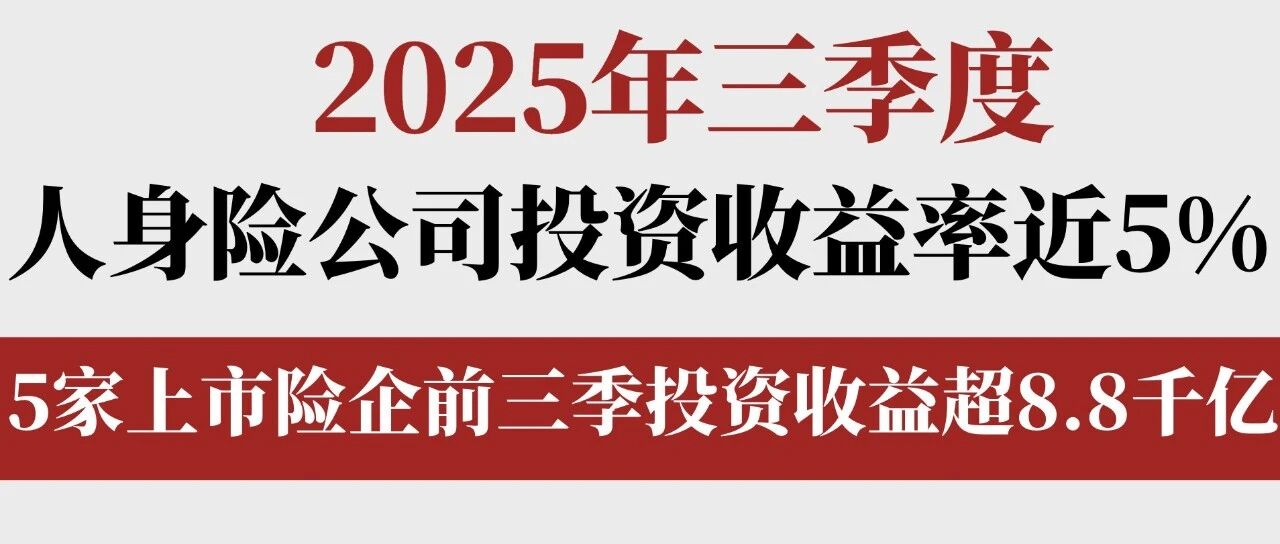
2025年三季度投资收益率近5%!5家上市险企前三季投资收益超8.8千亿,买卖价差或是大功臣...
13个精算师· 2025-11-04 16:00
Core Viewpoint - The life insurance industry has experienced a significant increase in net profits and investment returns in the first three quarters of 2025, with an annualized investment return rate averaging nearly 5% [1][2][10]. Group 1: Profit Growth - In the first three quarters of 2025, the net profit of 72 life insurance companies reached 461.96 billion, an increase of approximately 176.5 billion compared to the same period last year, representing a year-on-year growth of nearly 6.2% [5][6]. - The net profit has already surpassed the total for the entire year of 2024, driven by the growth in both new business value and investment returns [7][11]. Group 2: Investment Returns - The annualized investment return rate for life insurance companies in the first three quarters of 2025 was 4.96%, an increase of nearly 1.3 percentage points compared to the same period last year [11][10]. - If the investment return rate increases by 1 percentage point, the investment income could potentially grow by 320 billion, based on the 32.6 trillion fund utilization balance of life insurance companies in the first half of 2025 [11][9]. Group 3: Performance of Listed Insurance Companies - The total investment income of five listed insurance companies exceeded 880 billion in the first three quarters of 2025, an increase of 230 billion year-on-year [15][17]. - Among these, China Life's total investment income was approximately 360 billion, an increase of 106.5 billion, while Ping An's total investment income was around 200 billion, an increase of about 45 billion [17][20]. Group 4: Sources of Investment Income - The growth in investment income is primarily attributed to realized gains from trading, as net investment returns have declined due to falling interest rates on bonds [22][20]. - The trading activity in the third quarter was notable, with insurance companies exiting 166 listed companies and entering 179 new positions, indicating a high level of trading activity [28][29]. Group 5: Long-term Investment Strategies - Insurance companies are increasingly leveraging their long-term capital advantages to invest in sectors such as energy and telecommunications, with significant allocations made through funds like the Honghu Fund [31][30]. - The regulatory environment has also supported long-term investments, with pilot programs expanding to 222 billion, allowing for greater investment flexibility [31][32]. Group 6: Future Outlook - The investment return rates for insurance companies are expected to stabilize and potentially recover by the end of 2025, driven by increased investment activities and favorable market conditions [33][34].
2025三季度寿险公司利润榜:国寿、平安利润双双破千亿!行业利润暴增至4.6千亿,超7成险企投资收益率大于3%!
13个精算师· 2025-11-03 14:08
Core Insights - The insurance industry has seen a significant profit increase, with 72 life insurance companies reporting a total profit of 461.96 billion, surpassing the entire profit of the previous year by approximately 176.5 billion, marking a year-on-year growth of nearly 62% [6][10][12] - Major insurance companies like China Life and Ping An have achieved record profits, with China Life exceeding 165.5 billion and Ping An surpassing 105.5 billion [26][20] - Approximately 70% of insurance companies have an investment return rate exceeding 3%, with the overall industry investment return rate increasing by nearly 1 percentage point [10][12][20] Profit Rankings - In the profit rankings for the third quarter of 2025, the top seven companies are China Life, Ping An Life, Taiping Life, New China Life, Taikang Life, Taiping Life, and PICC Life, with China Life and Ping An Life both achieving record profits [26][20] - The profit of China Life reached 165.5 billion, while Ping An Life's profit was 105.5 billion, both showing significant year-on-year increases [26][20] Investment Returns - The increase in profits is largely attributed to improved investment returns, with 54 out of 72 companies reporting investment returns exceeding 3% [12][10] - The average investment return rate for the industry has risen by nearly 1 percentage point, contributing significantly to profit growth [12][10] Business Growth - The insurance business income for the 72 companies grew by approximately 12%, indicating strong consumer demand for long-term products [17][15] - The number of loss-making companies has significantly decreased, and the total loss amount has also dropped, suggesting a positive trend in the industry [19][20] Loss-Making Companies - Despite the overall positive trend, some companies continue to report losses, with notable cases including Dingcheng Life, which has not disclosed its data, and Changsheng Life, which reported insufficient solvency [38][40] - Changsheng Life's investment return rate decreased significantly, contributing to its losses [43][40]

期刊Journal of Health Economics 2025年102卷目录及摘要|保险学术前沿
13个精算师· 2025-11-02 02:02
Core Insights - The article discusses various studies published in the Journal of Health Economics, focusing on the impact of broadband internet on youth mental health, the factors influencing long-term care insurance uptake, the effects of Earned Income Tax Credits on intergenerational health mobility, and the implications of payroll subsidies in nursing homes [4][6]. Group 1: Broadband Internet and Youth Mental Health - Broadband internet access has increased the prevalence of mental disorders among younger cohorts (born between 1985 and 1995) by 0.08 standard deviation units, with no significant impact on older individuals (born between 1974 and 1984) [8][9]. - The negative effects are particularly pronounced for those exposed to the internet before the age of 20, affecting various mental health issues including depression, anxiety, drug abuse, and personality disorders [8][9]. Group 2: Long-Term Care Insurance - The study explores the role of correlation preference and the relative preference for quality of life over wealth in influencing the decision to purchase long-term care insurance [11][12]. - The findings suggest that these preferences contribute to the low uptake of long-term care insurance, with correlation seeking behavior being a significant factor [11][12]. Group 3: Earned Income Tax Credits and Health Mobility - The research presents empirical evidence that the Earned Income Tax Credits (EITC) improve intergenerational health mobility, particularly upward mobility [13]. - The study utilizes self-reported health status data to analyze the effects of childhood exposure to EITC benefits across different temporal, geographic, and family structures [13]. Group 4: Nursing Home Payroll Subsidies - Payroll subsidies have been shown to increase staffing levels in nursing homes by approximately 7.4% of pre-subsidy average staffing, but they also decrease the Medicaid share of new admissions by about 11.5% [14][15]. - The study indicates that while these subsidies effectively enhance staffing, they may lead to a shift in the demographic characteristics of nursing home residents, potentially affecting access to care for Medicaid enrollees [14][15]. Group 5: Housing Wealth and Medical Spending - The analysis reveals that housing wealth does not have a significant impact on out-of-pocket medical expenditures among older homeowners, with estimates indicating negligible effects across various expenditure categories [17][18]. - This suggests that many homeowners either do not need to access their housing wealth for medical expenses or are unwilling or unable to do so [17][18]. Group 6: Nonlinear Reimbursement Rules - The study examines nonlinear reimbursement rules for preventive and curative medical care, highlighting that optimal insurance designs should increase benefits with both types of care to align incentives and reduce informational rents [19][22]. - The findings emphasize the importance of understanding the dynamics of preventive care choices and their implications for reimbursement structures [19][22]. Group 7: Longevity, Education, and Income - The research investigates the relationship between longevity, education, and income, concluding that the potential economic benefits of increased education due to longer life expectancy are minimal, particularly in low-income countries [23]. - The study suggests that even with significant educational responses to longevity, the overall impact on lifetime income remains less than 1% for typical low-income countries [23].
