
U-PRESID CHINA(00220)

Search documents
统一企业中国涨超4% 公司上半年表现稳健 机构指原材料成本利好已基本释放
Zhi Tong Cai Jing· 2025-08-14 07:02
Core Viewpoint - Uni-President China (00220) reported a strong performance in the first half of 2025, with revenue and net profit growth exceeding market expectations, despite rising palm oil prices and competitive pressures [1] Financial Performance - Revenue increased by 10.6% year-on-year, while net profit rose by 33.2%, surpassing Goldman Sachs' forecasts by 8.5% and 27.4% respectively [1] - The EBIT for the food business grew by 32% year-on-year, significantly exceeding Goldman Sachs' prediction by 45% [1] Market Dynamics - Goldman Sachs adjusted its forecasts, lowering beverage sales and EBIT margin predictions by 2.4% and 0.3 percentage points, while increasing instant noodle EBIT margin forecasts by 0.8 to 0.9 percentage points due to improved sales momentum and product mix [1] - Despite a solid performance in the first half of 2025, the company faces challenges such as intensified market competition and a lack of price increase plans, which may limit growth and profit margin potential [1] Strategic Outlook - The management reiterated a sales growth target of 6% to 8% for the year, emphasizing long-term brand investment over short-term price promotions [1] - New uncertainties are emerging, particularly regarding the scale and duration of subsidies from food delivery platforms, which have begun to disrupt channel dynamics since April [1]
港股异动 | 统一企业中国(00220)涨超4% 公司上半年表现稳健 机构指原材料成本利好已基本释放
智通财经网· 2025-08-14 06:52
Core Viewpoint - Uni-President China (00220) reported a strong performance in the first half of 2025, with revenue and net profit growth exceeding market expectations, leading to a notable increase in stock price [1] Financial Performance - Revenue and net profit for the first half of 2025 increased by 10.6% and 33.2% year-on-year, surpassing Goldman Sachs' forecasts by 8.5% and 27.4% respectively [1] - The EBIT for the food business rose by 32% year-on-year, significantly exceeding Goldman Sachs' prediction by 45% [1] Market Dynamics - Despite rising palm oil prices, the food business maintained a high capacity utilization rate [1] - Competition in the beverage sector remains intense, prompting Goldman Sachs to lower its sales and EBIT margin forecasts by 2.4% and 0.3 percentage points [1] Strategic Outlook - The company has reiterated its sales growth target of 6% to 8% for the year, emphasizing long-term brand investment over short-term price promotions [1] - However, uncertainties are emerging, particularly regarding the scale and duration of subsidies from food delivery platforms, which have begun to disrupt channel dynamics since April [1] Analyst Perspectives - Goldman Sachs has adjusted its forecasts for instant noodle EBIT margins upward by 0.8 to 0.9 percentage points, reflecting improved sales momentum and a strengthened product mix [1] - In contrast, China Merchants Securities expressed concerns about limited growth and profit margin upside due to the absence of price increase plans and intensified promotional efforts in core categories like sugar-free tea [1]
海 利 得(002206)8月13日主力资金净流入3865.20万元
Sou Hu Cai Jing· 2025-08-13 08:47
Group 1 - The core viewpoint of the news is that Zhejiang Hailide New Materials Co., Ltd. has shown significant financial growth in its latest quarterly report, with a notable increase in both revenue and net profit [1] - As of August 13, 2025, Hailide's stock price closed at 6.3 yuan, reflecting a 5.0% increase, with a trading volume of 680,600 hands and a transaction amount of 422 million yuan [1] - The company reported total operating revenue of 1.453 billion yuan for the first quarter of 2025, representing a year-on-year growth of 5.23%, while the net profit attributable to shareholders was 140 million yuan, up 86.95% year-on-year [1] Group 2 - Hailide's net profit after deducting non-recurring gains and losses reached 149 million yuan, marking a year-on-year increase of 96.51% [1] - The company's liquidity ratios are strong, with a current ratio of 1.487 and a quick ratio of 1.102, while the debt-to-asset ratio stands at 46.25% [1] - Hailide has made investments in 12 companies and participated in 89 bidding projects, indicating active engagement in business expansion [2]

无糖茶增速放缓厂商加码有糖茶,冰红茶大战硝烟再起
Sou Hu Cai Jing· 2025-08-13 01:41
Core Insights - The beverage industry is witnessing a shift back to sugary tea drinks as the market for sugar-free tea slows down and consumer preferences evolve towards sweeter options [1][4][10] Market Trends - The sugary tea market, valued at nearly 100 billion, is experiencing renewed interest with new and established brands entering the space [1][10] - Major players like Nongfu Spring and Yuanqi Forest are launching new products, indicating a competitive landscape in the sugary tea segment [6][11] Consumer Preferences - There is a growing demand among younger consumers, particularly Gen Z and post-2000s, for sweeter beverages, which is driving the resurgence of sugary tea [4][10] - Despite health concerns, the demand for sugary tea remains, suggesting that consumer preferences are shifting rather than disappearing [11] Competitive Landscape - The sugary tea market has traditionally been dominated by brands like Master Kong and Uni-President, which hold significant market shares [9][10] - Recent statistics show that the market concentration has slightly decreased, indicating potential opportunities for new entrants [11] Product Innovation - Companies are focusing on product differentiation, with brands like Dongpeng Beverage combining tea with juice and Yuanqi Forest emphasizing real tea and reduced sugar [11][16] - Innovations in flavors and product types are being introduced to attract consumers, although many remain in niche markets [16] Market Dynamics - The sugary tea segment is characterized by a long-standing presence of products like iced black tea, which has been a staple since the 1990s [7][14] - The market is also seeing a shift towards lower-tier cities, where there is a higher acceptance of sugary beverages [16][17]




冰红茶大战开启,有糖茶回归
3 6 Ke· 2025-08-12 23:51
Core Insights - The tea beverage market is witnessing a resurgence in sugary tea products as the market for sugar-free tea slows down and consumer preferences shift towards sweeter options [1][3][12] Market Trends - The sugary tea market, previously overshadowed by the rapid rise of sugar-free tea, is now experiencing renewed interest with major brands re-entering the segment [4][5] - The sugary tea market is valued at nearly 100 billion, with significant competition emerging as brands like Nongfu Spring and Yuanqi Forest launch new products [5][11] Consumer Preferences - A new generation of consumers, particularly Gen Z and younger demographics, is increasingly seeking sweeter beverage options, indicating a shift in taste preferences [3][15] - Despite health concerns, the demand for sugary tea remains, suggesting that the market has room for growth and innovation [15][20] Competitive Landscape - Major players in the sugary tea market include Master Kong and Uni-President, which dominate the market share, with Master Kong projected to generate 21.7 billion in revenue from tea beverages in 2024 [10][16] - The market concentration has slightly decreased, with the top three companies' market share dropping from 73.38% to 72.67% between 2023 and 2024, indicating potential opportunities for new entrants [15] Product Innovation - Brands are focusing on product differentiation to revitalize the sugary tea segment, with innovations such as low-sugar options and unique flavor combinations [16][18] - The introduction of new product lines, such as carbonated sugary tea, reflects an effort to attract consumers looking for novel beverage experiences [16][18] Market Dynamics - The sugary tea market is expected to grow, particularly in lower-tier cities where consumer acceptance of sweetened beverages is higher [20] - The competitive landscape is evolving as brands adapt to changing consumer preferences and seek to capture market share through innovative offerings and strategic marketing [15][20]
丝路电商班列(西安—乌鲁木齐)开行量超过500列
Shan Xi Ri Bao· 2025-08-12 22:39
Core Insights - The launch of the Silk Road e-commerce train (X387) from Xi'an to Urumqi has surpassed 500 trips since its inaugural run on March 26, 2024, transporting a total of 20,619 freight cars of e-commerce goods, significantly enhancing logistics efficiency and reducing costs for e-commerce companies [1][2] Group 1: Operational Efficiency - The X387 train operates daily, departing at 9:09 AM from Xi'an International Port and reaching Urumqi in an average of 36.18 hours, with a speed of 120 km/h [1] - The train service reduces transportation time by approximately 5 hours compared to road transport and lowers logistics costs by 10%, while also significantly decreasing cargo damage rates, resulting in a 70% increase in customer satisfaction [1] Group 2: Customer and Service Expansion - The number of clients for the Silk Road e-commerce train has grown from 3 to 10 stable partners, including major brands like JD.com, SF Express, and others, indicating a rising brand appeal [2] - The variety of transported goods has expanded from 650 to over 2,000 types, covering sectors such as auto parts and daily necessities [2] - The introduction of a mixed booking model (contract and open booking) has enhanced service flexibility, allowing even single shipments to be sent, which attracts more scattered cargo sources [2] Group 3: Performance During Peak Seasons - The train service has successfully completed the transportation of over 20 million express parcels, particularly excelling during peak sales seasons like the "6.18" promotion, with delivery times reduced to as fast as 48 hours [2]


预见2025:《2025年中国果汁行业全景图谱》(附市场规模、竞争格局和发展趋势等)
Qian Zhan Wang· 2025-08-12 04:20
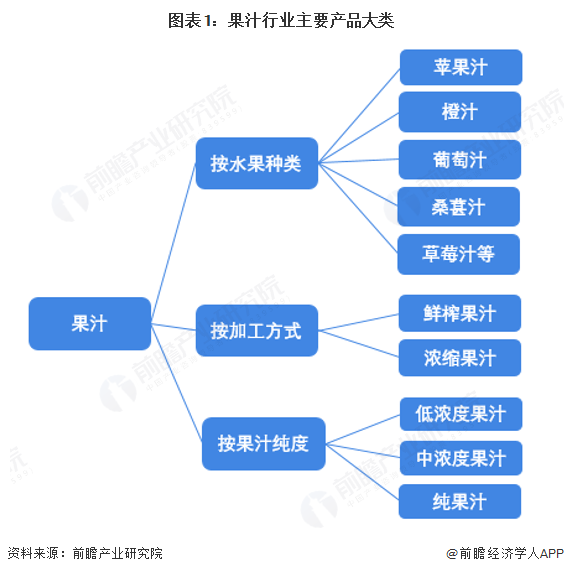
Industry Overview - The juice industry in China is defined as the production of juice products made from fresh or refrigerated fruits, with a minimum juice content of 10% [1] - The industry is categorized under beverage manufacturing, specifically soft drink manufacturing [1] Industry Chain Analysis - The juice industry chain consists of upstream (raw materials and equipment suppliers), midstream (juice processing companies), and downstream (distribution and sales channels) [2][5] - Upstream includes fruit planting bases and packaging material suppliers, while midstream focuses on juice processing and product manufacturing [2][5] Industry Development History - The juice industry in China has evolved over 30 years, shifting from an export-oriented model to a domestic demand-driven and technology-led market [8] - Key milestones include the establishment of Huiyuan in 1992, the rise of low-concentration juice in 2001, and the emergence of NFC juice post-2008 [8][11] Policy Background - Multiple policies have been introduced to regulate and support the juice industry, focusing on food safety, resource conservation, and market standardization [12] - Policies aim to enhance the competitiveness of the juice industry and promote healthy product development [12] Current Market Status - The juice market in China is steadily growing, with sales increasing from 120 billion to 156 billion yuan from 2019 to 2024 [13] - High-end juice products, particularly those produced using NFC and HPP technologies, are driving market growth, with their sales share rising from 12% in 2019 to 23% in 2024 [13] Competitive Landscape - The juice market features a tiered competitive structure, with leading companies like Coca-Cola, Master Kong, and Nongfu Spring dominating the market [17][21] - Emerging brands are also gaining traction, particularly in the high-end segment, with significant growth rates [15][21] Regional Competition - The juice industry exhibits regional competition, with Shandong leading in the number of listed companies, followed by Hebei, Zhejiang, and Guangdong [19] - Each region has its unique focus, such as concentrated juice production or high-end juice products [19] Future Trends and Predictions - The demand for high-end, health-oriented juice products is expected to continue driving innovation and market upgrades [23] - The market is diversifying, with younger consumers and new consumption scenarios emerging, leading to new growth opportunities [23]
统一企业中国
2025-08-11 14:06
Summary of Conference Call Records Industry Overview - **Snacks Sector**: Strong performance in categories like konjac, with leading companies showing significant first-mover advantages. Expansion in snack wholesale channels, with emerging channels like Sam's Club performing well. Recommended companies include Salted Fish, Wei Long, and Youyou Foods for their product and channel growth logic [2][4] - **Beverage Sector**: Good performance during peak season, with clear trends among leading companies. New product launches and governance improvements provide medium to long-term catalysts. Recommended companies include Dongpeng Beverage, Uni-President China, and Master Kong for their high growth or dividend potential, along with Nongfu Spring and China Resources Beverage [2][5][14] - **Baijiu Sector**: Currently at a bottom phase, with sales, inventory, and wholesale prices stabilizing. Valuation and holding perspectives provide support, with significant allocation demand. Recommended leading companies include Moutai, Wuliangye, and Fenjiu, along with flexible targets like Laojiao and Zhenjiu [2][7] Company-Specific Insights Uni-President China - **Financial Performance**: In the first half of the year, revenue reached 17.09 billion yuan, a year-on-year increase of 10.6%, and profit was 1.29 billion yuan, up 33%. Both food and beverage segments grew, with a gross margin increase [2][8] - **Segment Performance**: Food business revenue was 5.38 billion yuan (up 8.8%), and beverage business revenue was 10.79 billion yuan (up 7.6%). Tea drinks grew by 9%, juice by 2%, and milk tea by 3.5%. Gross margin improved by 0.5 percentage points due to increased sales and reduced raw material prices [9] - **Market Outlook**: The company maintains its full-year revenue growth guidance of 6% to 8%. Despite short-term competitive pressures, July revenue continued to show positive growth [9] Yanjing Beer - **Performance in H1 2025**: Revenue grew by 6% in Q2, with net profit attributable to shareholders increasing by 43%. Both sales volume and price per ton increased, with mid-to-high-end beer performing well. Sales expenses and management expenses decreased, leading to an improved net profit margin [11][12] Tong Ren Tang - **Q2 2025 Performance**: Revenue decreased by 12%, but net profit surged by 71%, with a 134% increase in net profit excluding non-recurring items. The company improved user operations and accelerated new product launches, leading to a narrowing revenue decline [13] Zhenjiu - **H1 2025 Performance**: Expected revenue decline of 38.3% to 41.9%, with net profit down 23% to 24%. The Li Du brand performed well, while other brands faced pressure. The company plans to focus on flagship product "Da Zhen" and expand the Li Du brand [16][18] - **Inventory Management**: Significant inventory reduction compared to the end of last year, aided by natural sales and some distributor returns. The company has allowed more autonomy for distributors regarding payment collection [17] - **Growth Strategy**: Focus on three main growth drivers: the launch of the "Da Zhen" flagship product, expansion of the Li Du brand, and development of the high-end liquor division [18] Additional Insights - **Beverage Industry Metrics**: The beverage industry's capacity utilization exceeds 80%. Raw material costs positively contributed 1.3 percentage points to gross margins, while product structure and discounts negatively impacted margins by approximately 0.6 percentage points [10] - **Market Trends**: The beverage sector is currently in a peak season, with high temperatures and increased travel boosting performance. Companies like Uni-President China and Master Kong are expected to perform well due to channel advantages and growth expectations for major products [14][15]

食品饮料周观点:统一中报超预期,关注零食高成长-20250810
GOLDEN SUN SECURITIES· 2025-08-10 08:26
Investment Rating - The report maintains an "Increase" rating for the food and beverage industry, indicating a positive outlook for the sector [4]. Core Insights - The report highlights that the liquor industry is gradually releasing pressure from distribution channels, indicating a potential for future growth. It suggests focusing on three main lines: leading brands, high-certainty regional liquors, and elastic stocks benefiting from recovery and increased risk appetite [1][2]. - The snack sector shows significant growth potential, with companies like Yanjing Beer and Zhujiang Beer being highlighted for their strong performance. The report emphasizes the importance of channel leadership and growth potential in selecting stocks [3][6]. Summary by Sections Liquor Industry - The report notes that the liquor industry is experiencing a deep adjustment, shifting from scale growth to high-quality development. It emphasizes the importance of brand strength and strategic initiatives to capture new consumer trends [2]. - The expected revenue for Zhenjiu Lidong in H1 2025 is projected to be between 2.4 billion to 2.55 billion yuan, reflecting a year-on-year decline of 38.3% to 41.9% due to economic uncertainties and policy impacts [2]. Beer and Beverage Sector - The beer segment shows promising results, with Huiquan Brewery reporting a revenue of 351 million yuan in H1 2025, a year-on-year increase of 1.03%, and a net profit of 40 million yuan, up 25.52% [3]. - Unified Enterprises China achieved a revenue of 17.087 billion yuan in H1 2025, representing a 10.6% year-on-year growth, with a net profit of 1.287 billion yuan, up 33.2% [3]. Snack Sector - The snack sector is highlighted for its recovery in stock prices, with expectations for continued high growth due to new product launches and channel transformations. The report notes a narrowing decline in raw milk prices, which may positively impact the dairy segment [6].




统一企业中国(00220.HK):业绩超预期 股息仍具吸引力
Ge Long Hui· 2025-08-09 18:42
Core Viewpoint - The company reported better-than-expected revenue growth and accelerated profit release in H1 2025, driven by improved capacity utilization and reduced raw material costs [1][2]. Group 1: Financial Performance - In H1 2025, the company achieved revenue of 17.087 billion RMB, a year-on-year increase of 10.6%, and a net profit attributable to shareholders of 1.287 billion RMB, up 33.2% [1]. - The gross margin improved to 34.3%, an increase of 0.5 percentage points year-on-year, indicating enhanced profitability [1]. - Operating profit reached 1.649 billion RMB, growing 33.7% year-on-year, with the operating profit margin rising from 8.0% to 9.6% [1]. Group 2: Beverage Business - The beverage segment generated revenue of 10.788 billion RMB in H1 2025, reflecting a 7.6% year-on-year growth [1]. - The tea category performed particularly well, with revenue of 5.067 billion RMB, a 9.1% increase, benefiting from the company's multi-tiered approach in the low-sugar and no-sugar tea market [1]. - The beverage segment maintained a high gross margin of 39.4%, up 1.4 percentage points year-on-year, significantly contributing to the group's profits [1]. Group 3: Food Business - The food segment reported revenue of 5.382 billion RMB in H1 2025, an 8.8% year-on-year increase, outperforming the industry [2]. - The company focused on high-end products and innovative categories, with brands like "满汉大餐" and "茄皇" achieving double-digit growth [2]. - The gross margin for the food segment was 26.8%, slightly down by 0.4 percentage points year-on-year, but the strategy of high quality and cost-effectiveness is expected to continue boosting sales [2]. Group 4: Cash Flow and Dividends - As of June 30, 2025, the company had cash and cash equivalents of 9.355 billion RMB, with operating cash inflow of approximately 872 million RMB in H1 2025 [2]. - The company has maintained a consistent dividend payout ratio of 100% over the years, with an expected dividend yield of 5.7% based on the current market capitalization [2]. Group 5: Investment Outlook - Despite the strong performance in H1 2025, the company may face increased competition in H2 2025 from delivery platforms and other beverage manufacturers [3]. - Revenue projections for 2025-2027 remain unchanged at 32.45 billion RMB, 34.19 billion RMB, and 36.00 billion RMB, with year-on-year growth rates of 7.0%, 5.4%, and 5.3% respectively [3]. - The target price remains at 12.1 HKD, with an upside potential of 25.7%, maintaining an "outperform the market" rating [3].