
TINGYI(00322)

Search documents
康师傅控股(00322) - 2025 年上半年业绩演示材料
2025-08-11 08:36
香港交易及結算所有限公司及香港聯合交易所有限公司對本公告的內容概不負責,對其準確性 或完整性亦不發表任何聲明,並明確表示,概不對因本公告全部或任何部份內容而產生或因倚 賴該等內容而引致之任何損失承擔任何責任。 TINGYI (CAYMAN ISLANDS) HOLDING CORP. 康師傅控股有限公司 * (於開曼群島註冊成立之有限公司) (股份編號:0322) 2025 年 上 半 年 業績演示材料 康師傅控股有限公司及其附屬公司截至 2025 年 6 月 30 日止之中期業績演示材料可 參閲以下附件。 承董事會命 康師傅控股有限公司 公司秘書 葉沛森 香港,2025 年 8 月 11 日 於本公告日期,本公司之執行董事為魏宏名先生、井田純一郎先生、魏宏丞先生、 筱原幸治先生、高橋勇幸先生及曾倩女士;本公司之獨立非執行董事為徐信群先 生、栃尾雅也先生及文暮良先生。 網址: http://www.masterkong.com.cn http://www.irasia.com/listco/hk/tingyi *僅供識別 (在開曼群島註冊成立之有限公司) (股份代號 : 0322) 免責聲明 本演示材料所載資 ...
康师傅控股(00322) - 2025 - 中期业绩
2025-08-11 08:33
香港交易及結算所有限公司及香港聯合交易所有限公司對本公佈之內容概不負責,對其準確性或完整性亦不發表任何聲明,並明 確表示,概不對因本公佈全部或任何部分內容而產生或因依賴該等內容而引致之任何損失承擔任何責任。 TINGYI (CAYMAN ISLANDS) HOLDING CORP. 康師傅控股有限公司* (在開曼群島註冊成立之有限公司) (股份編號:0322) 截至二零二五年六月三十日止六個月 業績公佈 摘要 | | | 截至6月30日止6個月 | | | | --- | --- | --- | --- | --- | | | 人民幣千元 | 2025年 | 2024年 | 變動 | | ‧ | 收益 | 40,092,163 | 41,201,208 | ↓2.7% | | ‧ | 毛利率(%) | 34.5% | 32.6% | ↑1.9個百分點 | | ‧ | 集團毛利 | 13,815,035 | 13,439,915 | ↑2.8% | | ‧ | 扣除利息、稅項、折舊及攤銷前盈利(EBITDA) | 5,450,637 | 4,824,605 | ↑13.0% | | ‧ | 本期溢利 | 2,6 ...
智通港股投资日志|8月11日


智通财经网· 2025-08-10 16:04
Group 1 - The article provides an overview of the investment activities of Hong Kong-listed companies on August 11, 2025, including new stock activities, earnings announcements, shareholder meetings, and dividend distributions [1] Group 2 - New stock activities include companies such as ZhiNuo Pharmaceutical-B (currently in the IPO process) and Zhonghui Biotechnology-B (listing date) [1] - Earnings announcements are scheduled for companies like Baosheng International, Yuanyuan Group, and Kang Shifu Holdings among others [1] - Shareholder meetings will be held for companies including Huatai Textile, Shandong Gold, and Sichuan Chengyu Expressway [1] - Dividend distributions are noted for companies like Jianbei Miao Miao and Kangnait Optical, with specific ex-dividend and payment dates mentioned [1]
康师傅推出“无标签轻量瓶”新品
Bei Jing Shang Bao· 2025-08-10 14:08
Group 1 - The core concept of the new product launched by the company is the "three no's" concept: no label, no ink, and no glue [1] - The new lightweight bottle is made from PET material and utilizes laser technology to print a relief logo, which reduces material and energy usage [1] - The product aligns with low-carbon and environmentally friendly principles, reflecting the industry's shift towards sustainable packaging solutions [1]
从旭日升到农夫山泉,中国冰茶三十年战火未熄
创业邦· 2025-08-08 03:41
Core Viewpoint - The entry of Nongfu Spring into the iced tea market with its new product "Ice Tea" is expected to intensify competition in the beverage industry, particularly targeting the existing player Yuanqi Forest, which has seen significant sales growth in its iced tea segment [6][7]. Group 1: Market Dynamics - Nongfu Spring plans to invest 2 billion yuan in research and promotion for its iced tea product, emphasizing its "100% real tea extraction" process and "0 additives" approach [7]. - Yuanqi Forest's iced tea sales reached 200 million yuan in 2023 and are projected to exceed 1 billion yuan in 2024, marking a 500% year-on-year growth [19]. - The iced tea market is characterized by fierce competition, with Yuanqi Forest's sugary iced tea challenging established brands like Master Kong and Uni-President, while Nongfu Spring's no-sugar iced tea aims to capture market share [7][20]. Group 2: Historical Context - The iced tea category in China was pioneered by the local brand "Xuri Sheng," which launched its iced tea product in 1994 and achieved significant market success, capturing over 70% market share at its peak [9][12]. - Following Xuri Sheng's success, competitors like Uni-President and Master Kong entered the market, leading to intense competition and the eventual decline of Xuri Sheng by 2002 [13][15]. Group 3: Current Competitive Landscape - As of 2024, Master Kong's iced tea revenue approached 18 billion yuan, maintaining a dominant position in the market, while Xuri Sheng has ceased operations [15][20]. - Uni-President has also adapted its strategy by launching low-sugar versions of its products and increasing marketing efforts, resulting in an 8.2% revenue growth in its beverage segment [21]. - Yuanqi Forest has adjusted its product sizes and introduced new flavors to enhance its market presence, achieving a 460% year-on-year sales growth in 2024 [22]. Group 4: Future Trends - The global iced tea market is projected to reach 53.3 billion USD in 2023, with a compound annual growth rate of 6.7%, indicating strong growth potential [24]. - Consumer preferences are shifting towards reduced-sugar or no-sugar options, with 71.4% of consumers considering "sugar reduction" as a key factor in their purchasing decisions [24].



康师傅控股(00322) - 截至二零二五年七月三十一日止之股份发行人的证券变动月报表
2025-08-06 08:32
股份發行人及根據《上市規則》第十九B章上市的香港預託證券發行人的證券變動月報表 截至月份: 2025年7月31日 狀態: 新提交 致:香港交易及結算所有限公司 公司名稱: 康師傅控股有限公司 呈交日期: 2025年8月6日 I. 法定/註冊股本變動 | 1. 股份分類 | 普通股 | 股份類別 不適用 | | | 於香港聯交所上市 (註1) | | 是 | | | --- | --- | --- | --- | --- | --- | --- | --- | --- | | 證券代號 (如上市) | 00322 | 說明 | | | | | | | | | | 法定/註冊股份數目 | | | 面值 | | 法定/註冊股本 | | | 上月底結存 | | | 7,000,000,000 | USD | | 0.005 USD | | 35,000,000 | | 增加 / 減少 (-) | | | 0 | | | USD | | 0 | | 本月底結存 | | | 7,000,000,000 | USD | | 0.005 USD | | 35,000,000 | 本月底法定/註冊股本總額: USD 35,00 ...
冰茶市场百亿新局 健康化趋势引发行业变革
Yang Guang Wang· 2025-08-06 07:17
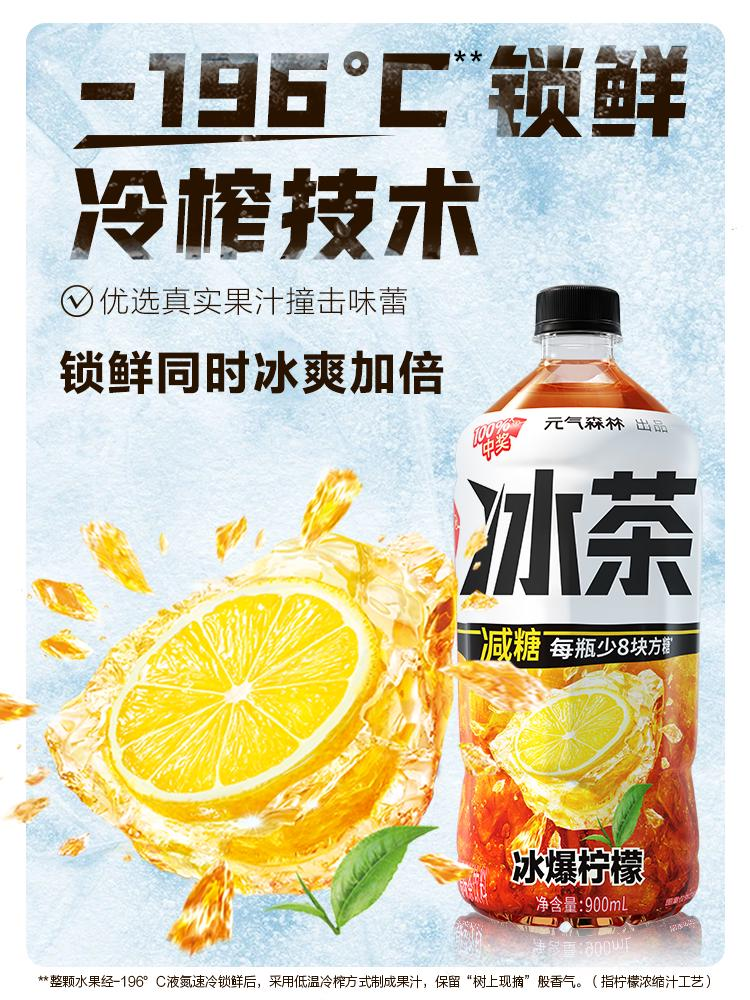
Core Insights - The ice tea market is evolving from a brand-centric approach to a category-focused one, with various brands like Yuanqi Forest and Nongfu Spring entering the market to redefine product standards through differentiated technology [1][2][3] - Health consciousness among consumers is driving the trend towards reduced sugar content in beverages, with 71.4% of consumers prioritizing "sugar-free/reduced sugar" labels when purchasing iced tea [2][3] - The global iced tea market is projected to grow from $53.3 billion in 2023 to over $100 billion by 2033, with a compound annual growth rate of 6.7% [6][9] Industry Trends - The Chinese government has initiated health promotion policies focusing on reducing sugar, salt, and oil in food, signaling a shift towards healthier beverage options [2][3] - Traditional brands like Master Kong and Uni-President leverage established distribution networks, while new brands utilize innovative technologies and health-focused marketing to capture younger consumers [6][9] - The competition in the iced tea market is intensifying, with both established and emerging brands striving to balance health benefits with taste, as consumer preferences shift towards lower sugar options [4][5][10] Consumer Preferences - Taste remains a critical factor in consumer purchasing decisions, with sweetness, tea flavor, and aroma being the top three attributes valued by iced tea drinkers [4][5] - Younger consumers (ages 18-25) exhibit higher loyalty and repurchase rates for iced tea, particularly valuing a rich and balanced flavor profile [4][5] - Brands are responding to consumer demand for reduced sugar without compromising taste, with innovations such as Yuanqi Forest's use of liquid nitrogen freezing technology to enhance flavor [5][9] Competitive Landscape - New brands are differentiating themselves through unique formulations and health claims, such as Hao Wang Shui's electrolyte-infused iced tea targeting fitness enthusiasts [9][10] - Yuanqi Forest has reported a 53.9% year-on-year sales growth in its iced tea category, indicating strong market acceptance and brand recognition [9][10] - The market is characterized by a clear segmentation, with traditional brands maintaining a stronghold through extensive distribution while new entrants challenge them with innovative products [6][9]
中信里昂:业内人士指瓶装水市场份额发生变化 怡宝和农夫山泉或受益
Zhi Tong Cai Jing· 2025-08-06 03:44
Core Viewpoint - The bottled water industry is experiencing significant market share changes, with China Resources Beverage's "Yibao" and Nongfu Spring likely to benefit from these shifts [1] Group 1: Company Insights - Nongfu Spring's unsweetened tea products are showing strong growth, with an acceleration expected in July, despite a general decline in overall demand for unsweetened tea compared to last year [1] - China Resources Beverage's "Yibao" is positioned to gain from the market share changes in the bottled water sector [1] - Master Kong Holdings' recovery in the second half of the year will depend on its marketing investment levels [1] Group 2: Industry Trends - The overall performance of liquid milk products is weak, indicating challenges within that segment of the beverage industry [1]
2025Q2方便速食市场回顾
3 6 Ke· 2025-08-05 03:44
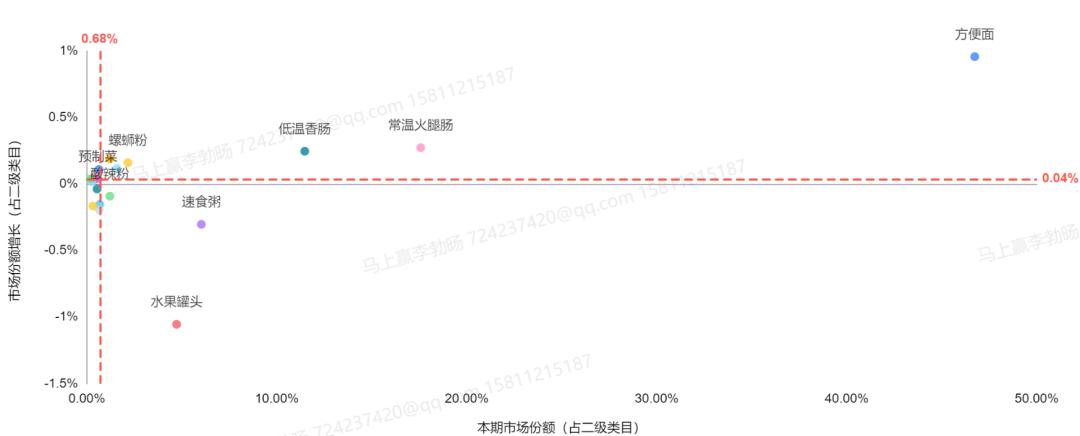
Core Insights - The convenience food market is experiencing a stable structure but facing growth pressure, with instant noodles maintaining a dominant market share of nearly 50% in Q2 2025, showing a year-on-year increase of 0.68% [4][5][6] - The overall market share of key categories such as instant noodles, regular ham sausages, and low-temperature sausages exceeds 86%, indicating a concentration of market power among leading products [5][6] - Price indices for convenience foods have shown a steady upward trend, with the overall price index surpassing 100 in late 2024, indicating a shift towards price growth and product upgrades [8][10] Convenience Food Category Overview - The convenience food category includes various subcategories such as instant noodles, canned foods, and pre-prepared meals, totaling 19 subcategories [2] - Instant noodles remain the most significant category, while low-temperature sausages and regular ham sausages are also growing but at a slower pace [4][5] Market Share and Sales Analysis - In Q2 2025, instant noodles accounted for 46.74% of the market share, with a sales decline of 8.85%, indicating pricing or sales pressure despite share growth [5][6] - Regular ham sausages and low-temperature sausages also saw slight increases in market share but experienced sales declines of around 9% [5][6] - The overall trend indicates that while leading categories are gaining market share, they are simultaneously facing significant sales challenges [5][6] Price Index Trends - The price index for convenience foods has shown a consistent increase, with the index reaching a peak of 100.65 in June 2025, reflecting ongoing price growth and product upgrades [8][10] - Instant noodles have maintained a price index above the baseline, indicating strong pricing power in this category [10] New Product Launches - The number of new SKUs in the convenience food category has varied significantly, with instant noodles showing the highest activity in new product launches [12] - Regular ham sausages and low-temperature sausages have seen stable new product introductions, while other categories like instant porridge and spicy noodles have had fewer new launches [12] Key Category Performance - The CR5 market share for instant noodles is 83.03%, indicating a high concentration of market power among leading brands [14] - In the regular ham sausage category, the CR5 market share is 93.19%, with Double Happiness holding over 60% of the market [23] - Low-temperature sausages have a CR5 market share of 72.29%, with Double Happiness and Jinluo as the leading brands [31] SKU Performance - In the instant noodle category, top-performing SKUs include products from White Elephant and Unification, reflecting strong brand positioning [19][21] - For regular ham sausages, Double Happiness dominates the market with multiple products in the top rankings [26][29] - In the low-temperature sausage category, Double Happiness also leads with a diverse product range [38][39] Conclusion - The convenience food market is characterized by a stable structure with leading categories gaining market share but facing sales pressures. The price index trends indicate a shift towards higher pricing, and new product launches remain concentrated in the instant noodle segment, reflecting ongoing competition and consumer demand dynamics [4][5][6][8][10][12]


康师傅控股(00322) - 海外监管公告
2025-08-04 08:56
香港交易及結算所有限公司及香港聯合交易所有限公司對本公告的內容概不負責,對其準確性或完 整性亦不發表任何聲明,並明確表示,概不對因本公告全部或任何部分內容而產生或因倚賴該等內 容而引致之任何損失承擔任何責任。 TINGYI (CAYMAN ISLANDS) HOLDING CORP. 康師傅控股有限公司 * (在開曼群島註冊成立之有限公司) (股份編號:0322) 海外監管公告 公司秘書 葉沛森 香港,2025年8月4日 於本公告日期,本公司之執行董事為魏宏名先生、井田純一郎先生、魏宏丞先生、筱 原幸治先生、高橋勇幸先生及曾倩女士;本公司之獨立非執行董事為徐信群先生、栃尾雅也 先生及文暮良先生。 網址: http://www.masterkong.com.cn http://www.irasia.com/listco/hk/tingyi *僅供識別 康師傅控股有限公司臺灣存託憑證流通及兌回情形月報表 本公告是由康師傅控股有限公司 (「本公司」) 根據香港聯交所有限公司證券上市規則 第 13.10B 條而作出。 以下附件是本公司依臺灣證券交易所股份有限公司規定於2025年 8月4日在臺灣證券交易 所股份有限公司 ...