TINGYI(00322)

Search documents
800亿康师傅换帅,80后二代接棒,年薪曾达937万元!能否拯救食品帝国?
Xin Lang Cai Jing· 2025-12-28 14:33
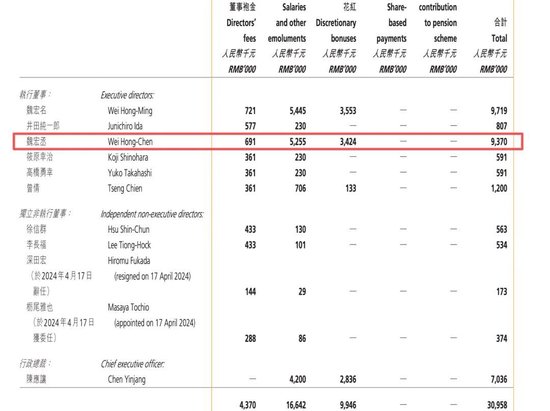
Core Insights - The new CEO, Wei Hongcheng, faces significant challenges as both of the company's core businesses, instant noodles and beverages, experienced revenue declines in the first half of 2025 [1][11] - Despite a 20.5% increase in net profit attributable to shareholders, total revenue decreased by 2.7% in the same period [1][11] Group 1: Leadership Transition - Wei Hongcheng, born in 1982, is the son of the founder and has a master's degree from Waseda University and an MBA from Harvard Business School [2][12] - He has held various positions within the company since 2015, most recently as Executive Director responsible for beverage operations [2][12] - Wei Hongcheng's annual salary reached 9.37 million RMB, a 25% increase from the previous year, surpassing the former CEO's salary by 233.4% [2][13] Group 2: Financial Performance - In 2024, the company's total revenue was 806.51 billion RMB, with a slight year-on-year growth of 0.3% [3][13] - The beverage segment, which Wei Hongcheng oversees, generated 516.21 billion RMB, reflecting a 1.3% increase [3][13] - The company has consistently returned significant cash dividends to shareholders, with a total of 37.4 billion RMB in cash dividends for 2024 [5][15] Group 3: Business Challenges - The instant noodle business saw revenues of 287.93 billion RMB in 2023 and 284.14 billion RMB in 2024, with declines of 2.84% and 1.31% respectively [6][16] - The beverage segment's revenue in the first half of 2025 was 263.59 billion RMB, down 2.6%, with tea product sales decreasing by 6.3% [6][16] - The company's market share in the instant noodle sector dropped from 36% in 2020 to 31% in 2024 [6][16] Group 4: Market Dynamics - Competitors like Nongfu Spring have increased their market share in the ready-to-drink tea segment from 5% in 2021 to 12% in 2024 [7][17] - The company has introduced new products in the herbal beverage category but faces stiff competition from established brands [7][17] - The number of distributors decreased by 3,409 in the first half of 2025, indicating challenges in maintaining distribution channels [9][19] Group 5: Pricing Strategy - The company has raised prices on key products, which has affected consumer purchasing decisions and led some to switch to competitors [8][18] - The price of 1L iced tea increased from 4 RMB to 5 RMB, impacting price-sensitive consumers [8][18] - The total liabilities of the company reached 398.82 billion RMB, with a debt ratio of 71.28%, indicating financial pressure [9][19]

康师傅二代将接任CEO 亟须打破“增利不增收”局面
Zhong Guo Jing Ying Bao· 2025-12-28 04:52
Core Viewpoint - The transition of CEO position to Wei Hongcheng, a member of the founding family, indicates a complete control of ownership and management by the Wei family in Kang Shifu, amidst challenges in revenue growth despite profit increases [2][4][6]. Group 1: CEO Transition - Kang Shifu announced that Wei Hongcheng will become CEO starting in 2026, succeeding Chen Yingran, who is retiring [3]. - Wei Hongcheng, aged 43, has a strong educational background and has been leading Kang Shifu's beverage division since 2019, achieving steady revenue and profit growth [3][5]. - The change in leadership reflects a long-planned succession strategy within the Wei family, consolidating power in the hands of the second generation [4]. Group 2: Financial Performance - In the first half of 2025, Kang Shifu reported a revenue of 400.92 billion yuan, a decrease of 2.7% year-on-year, while net profit attributable to shareholders increased by 20.5% [6]. - The company's gross profit margin improved by 2.8% year-on-year, indicating effective cost management despite declining revenues [6]. - The convenience food and beverage segments are facing revenue declines, with instant noodle revenue dropping by 2.5% in the first half of 2025 [5][6]. Group 3: Market Challenges - Kang Shifu's market share in the instant noodle sector decreased from 36% in 2020 to 31% in 2024, while competitors like Nongfu Spring have seen significant growth [5]. - The beverage segment also faced challenges, with a decline in market share in the ready-to-drink tea category from 32% in 2022 to 29% in 2024 [5]. - The company is experiencing a reduction in the number of distributors, which fell from 76,875 in 2023 to 63,806 in the first half of 2025, indicating potential issues with its pricing strategy [6][7]. Group 4: Strategic Insights - Analysts suggest that Kang Shifu's pricing strategy, which involved significant price increases, may have contributed to the loss of distributors and could impact overall sales performance [6][7]. - The company is urged to focus on cost control, supply chain optimization, and product innovation to address market challenges and consumer demand [7]. - Future opportunities may lie in health-oriented products and understanding consumer trends better to drive innovation and growth [7].
康师傅换帅:魏宏丞出任CEO,800亿食品帝国迈入共治时代
Sou Hu Cai Jing· 2025-12-26 11:16
Core Viewpoint - The announcement of Wei Hongcheng as the new CEO of Master Kong marks a significant transition in the company's leadership, emphasizing family succession and the need for strategic innovation to address current challenges in the fast-moving consumer goods (FMCG) sector [2][8]. Group 1: Leadership Transition - Wei Hongcheng, the third son of founder Wei Yingzhou, will take over as CEO starting January 1, 2026, establishing a "brotherly co-governance" management structure with his brother Wei Hongming [2]. - Wei Hongcheng has a strong background in the beverage sector, having served on the board since 2015 and as chairman of the beverage division since 2019, where he significantly increased revenue from 35.6 billion yuan in 2019 to 51.6 billion yuan in 2024 [2][4]. Group 2: Product Innovation - Under Wei Hongcheng's leadership, the beverage division has focused on innovation to meet consumer demands for healthier and diversified products, launching new flavors and health-oriented options [4][6]. - The company has developed a comprehensive product matrix that includes popular items, health-focused products, and innovative offerings to attract younger consumers [6]. Group 3: Financial Performance - Despite a 2.5% decline in beverage revenue in the first half of 2025, the division managed to increase gross margin by 2.5 percentage points through strategic pricing and product optimization, resulting in a net profit growth of approximately 20% [7]. - The convenience food segment, however, faced a similar 2.5% revenue decline, highlighting the need for Wei Hongcheng to address growth challenges in this area [7]. Group 4: Governance and Challenges - The family succession model has reinforced the family's control over the company, which can lead to a lack of external oversight and potential short-term focus in decision-making [8][9]. - Concerns exist regarding the high executive compensation levels, which may not align with long-term corporate responsibility and performance [8][12]. - The company must balance family interests with long-term growth strategies, potentially reducing dividend payouts to improve cash flow and invest in innovation and safety [12]. Group 5: Industry Context - The FMCG industry is entering a phase driven by innovation, requiring companies to adapt to rapidly changing consumer demands and channel dynamics [11]. - Master Kong's ability to innovate and reform under Wei Hongcheng's leadership will be crucial for regaining its competitive edge in a challenging market [11][10].

康师傅泡面,急需新热水
3 6 Ke· 2025-12-24 00:34
Core Viewpoint - The company is undergoing a significant leadership change with the retirement of CEO Chen Yingrang and the appointment of Wei Hongcheng as the new CEO starting January 1, 2026. This transition occurs as the company faces a challenging market environment and declining revenues, necessitating a strategic shift to adapt to evolving consumer preferences and competition [1][21]. Group 1: Market Environment and Challenges - The domestic consumption market has fundamentally changed, with consumers now valuing diverse criteria such as taste, health, and emotional value, which diminishes the effectiveness of the company's previous product strategy that relied on standardized offerings [1][5][20]. - In the first half of 2025, the company reported a revenue decline of 2.7% year-on-year, marking its first negative growth in nearly five years, with sales dropping by over 1.1 billion yuan [6][7]. - The beverage market is also highly competitive, with 54% of consumers actively choosing sugar-free drinks, further challenging the company's traditional market strategies [6][12]. Group 2: Pricing Strategies and Financial Performance - In response to declining revenues, the company has implemented price increases across its product lines, such as raising the price of 1L beverages from 4 yuan to between 4.5 and 5 yuan, and instant noodles from 2.8 yuan to 3 yuan [8][10]. - While the price hikes have temporarily improved profit margins, with the gross margin for instant noodles increasing by 0.7 percentage points to 27.8% and beverages by 2.5 percentage points to 37.7%, they have also led to significant market pushback and reduced sales in some retail outlets [10][11]. - The company's distribution network has contracted significantly, with a reduction of 3,409 distributors and 1,499 direct retailers by mid-2025, indicating challenges in maintaining its previous market dominance [12][19]. Group 3: Product Innovation and Marketing Strategies - The company is attempting to reverse its revenue decline through product innovation, introducing healthier options like non-fried noodles and premium collaborations, as well as targeting specific consumer segments with products like mini cups for women [15][16]. - Marketing strategies are shifting towards cultural marketing to connect emotionally with consumers, exemplified by collaborations with popular media properties [17][19]. - Despite these efforts, the company faces a lengthy process of adaptation, as its established operational model may not align with the demands of new market entrants and changing consumer expectations [19][21].
康师傅二代接班第一课:在“外卖大战”中抢人
Xin Lang Cai Jing· 2025-12-23 12:55
Core Viewpoint - The leadership transition at Master Kong, with CEO Chen Yingrang retiring in 2025 and being succeeded by Wei Hongcheng, marks a return to family control, which may impact the company's strategic direction and innovation efforts [1] Group 1: Leadership Transition - Chen Yingrang, the current CEO of Master Kong, will retire on December 31, 2025, after his contract ends [1] - Wei Hongcheng, the son of founder Wei Yingzhou, will take over as CEO, establishing a "brotherly co-management" structure with current Chairman Wei Hongming [1] - This transition signifies a shift from professional management back to family leadership [1] Group 2: Market Challenges - Master Kong, a leader in the instant noodle market, faces significant competition from emerging food delivery services and pre-prepared meals, which are impacting its traditional product lines [2] - The company's instant noodle revenue peaked at 29.51 billion yuan in 2020 but has since declined, with a projected revenue of 28.41 billion yuan in 2024, reflecting a compound annual growth rate of -0.94% [4] - The proportion of instant noodles in Master Kong's overall revenue has decreased from 43.64% in 2020 to 35.2% in 2024 [4] Group 3: Beverage Segment Performance - Master Kong's beverage revenue has become increasingly important, rising from 55.13% of total revenue in 2020 to 64.0% in 2024, making it the largest revenue source for the company [6] - However, the beverage segment has also faced challenges, with a 2.6% year-on-year decline in revenue for the first half of 2025, equating to a loss of approximately 706 million yuan [5] - The beverage market is experiencing a downturn, with a 9% decline in sales growth in September 2023, attributed to competition from new channels and the impact of food delivery services [5] Group 4: Product Innovation and Market Position - Despite launching various new products, including sugar-free teas and sparkling water, Master Kong has struggled to create standout hits in the beverage market [9] - The company's market share in the sugar-free tea segment is declining, with major competitors like Nongfu Spring dominating the market with over 86% share during peak seasons [11] - Master Kong's traditional products, such as its beef noodle soup and iced red tea, still hold significant market presence, but the company must adapt to changing consumer preferences and distribution channels [13]
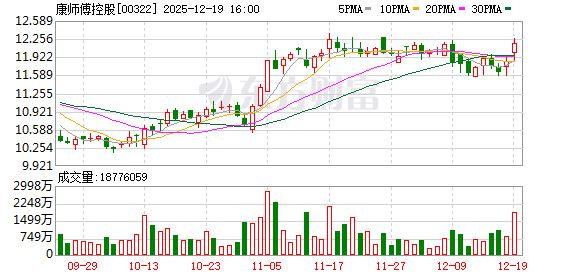
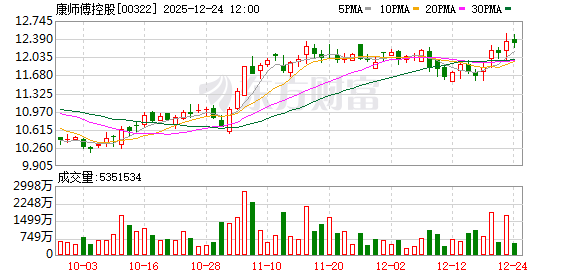
康师傅控股(00322.HK)涨超3%
Mei Ri Jing Ji Xin Wen· 2025-12-23 07:04
Group 1 - The stock price of Master Kong Holdings (00322.HK) has increased by over 3%, currently up 3.06% at HKD 12.47 [2] - The trading volume reached HKD 132 million [2]
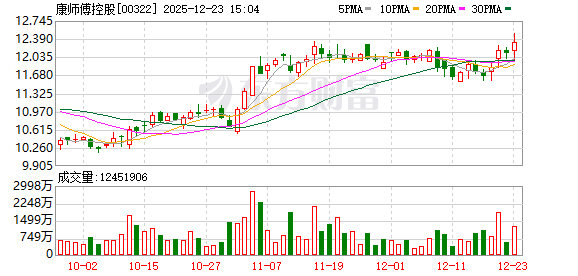
港股异动 | 康师傅控股(00322)现涨超3% 创始人之子魏宏丞接任CEO 公司回归家族治理
Zhi Tong Cai Jing· 2025-12-23 06:49
Group 1 - The core point of the article is that 康师傅控股 (00322) has appointed 魏宏丞 as the new CEO, marking a return to family governance after 11 years of professional management [1] - The stock price of 康师傅控股 increased by 3.06% to HKD 12.47, with a trading volume of HKD 132 million at the time of reporting [1] - The new CEO, 魏宏丞, is the son of the founder 魏应州 and the brother of the chairman 魏宏名, indicating a significant shift in the company's leadership structure [1] Group 2 - According to a report from Goldman Sachs, 康师傅控股 faces challenges in achieving its sales targets for the fiscal year 2025, primarily due to weak beverage business performance [1] - Despite the sales challenges, the company is expected to meet its profit targets, driven by pricing power, favorable cost conditions, efficiency improvements, and strict promotional management [1] - For 2026, 康师傅's management has reiterated a focus on improving profit margins while aiming to restore revenue growth and continue efficiency enhancement measures [1]
康师傅控股现涨超3% 创始人之子魏宏丞接任CEO 公司回归家族治理
Zhi Tong Cai Jing· 2025-12-23 06:49
Core Viewpoint - Master Kong Holdings (00322) has announced a leadership change with CEO Chen Yingrang retiring and being succeeded by Wei Hongcheng, marking a shift back to family control after 11 years of professional management [1] Group 1: Leadership Change - CEO Chen Yingrang has decided to retire and will not renew his service contract with the company [1] - Wei Hongcheng, the new CEO, is the brother of Chairman Wei Hongming and the son of founder Wei Yingzhou, indicating a return to family management [1] Group 2: Market Performance - Master Kong's stock has risen over 3%, currently trading at HKD 12.47 with a transaction volume of HKD 1.32 billion [1] Group 3: Financial Outlook - Goldman Sachs reported that Master Kong faces challenges in achieving its sales targets for the fiscal year 2025, primarily due to weak beverage business [1] - Despite sales challenges, the company is expected to meet its profit targets due to pricing base effects, favorable cost conditions, efficiency improvements, and strict promotional management [1] - For 2026, management aims to focus on improving profit margins while also looking to restore revenue growth and continue efficiency enhancement measures [1]
魏应州家族抱团创业缔造686亿快消巨头 康师傅两大业务下滑魏宏丞接棒临挑战
Chang Jiang Shang Bao· 2025-12-21 23:16
Core Viewpoint - The announcement of CEO Chen Yingrang's retirement and the appointment of Wei Hongcheng as the new CEO marks a significant shift in leadership at Master Kong, indicating a return of the Wei family to control after 11 years of professional management [1][6]. Leadership Transition - Wei Hongcheng, a member of the controlling Wei family and son of founder Wei Yingzhou, will take over as CEO effective January 1, 2026 [1][6]. - This transition signifies the end of the professional manager era at Master Kong, which has been in place for over a decade [6][7]. Business Performance Challenges - Master Kong's core businesses, instant noodles and beverages, experienced revenue declines in the first half of 2025, with sales down 2.5% and 2.6% respectively [8]. - The company reported a total revenue of 40.092 billion yuan, a decrease of 2.7% year-on-year, while net profit increased by 20.5% to 2.271 billion yuan [8]. - The beverage segment, which had seen consistent growth, faced a revenue decline of 2.6% to 26.359 billion yuan in the first half of 2025, raising concerns about the sustainability of its growth [7][8]. Historical Context - The Wei family began their entrepreneurial journey in 1958 with the establishment of Dingxin Oil Factory, leading to the eventual creation of Master Kong [2]. - The company successfully listed on the Hong Kong Stock Exchange in 1996 and has been recognized as one of Asia's top 50 listed companies by Forbes since 2008 [2]. Family Dynamics and Strategy - The Wei brothers maintained strong family cohesion, pooling resources into a family fund to support collective expenses, which has been crucial for the company's stability [3]. - Wei Yingzhou had been preparing for the succession of his sons since 2013, indicating a long-term strategy for family leadership [4][5]. Market Trends and Competition - The company faces internal challenges with a declining number of distributors and retail outlets, alongside external pressures from evolving consumer preferences towards healthier and more personalized products [7]. - The rise of alternative food options such as ready-to-eat meals and the decline of the "no-sugar tea" trend pose additional risks to Master Kong's market position [7].

800亿康师傅换帅,魏家二代接任CEO
2 1 Shi Ji Jing Ji Bao Dao· 2025-12-21 14:42
Core Viewpoint - The appointment of Wei Hongcheng as the new CEO of Master Kong Holdings marks a significant leadership transition, with expectations for innovative strategies to revitalize the company's performance amid current revenue challenges [2][5]. Group 1: Leadership Transition - Wei Hongcheng, aged 43, will take over as CEO starting January 1, 2026, creating a "brotherly co-management" situation within the company [2]. - Wei holds degrees from Imperial College London and Harvard Business School, along with a master's degree from Waseda University in Japan [2]. - He has over 10 years of experience in the beverage sector of Master Kong, having served as the chairman of the beverage division since 2019 [2][3]. Group 2: Financial Performance - In the first half of 2023, Master Kong reported revenues of approximately 40 billion yuan, with core business segments experiencing declines, including a 2.5% drop in instant noodle and beverage revenues [6]. - The beverage division, which is the largest segment, saw revenue growth from 35.6 billion yuan in 2019 to an expected 51.6 billion yuan in 2024 [3]. - Despite a decline in tea and juice revenues, the carbonated and other beverages segment grew by 6.3%, reaching 10.256 billion yuan, and the beverage gross margin improved by 2.5 percentage points [6]. Group 3: Strategic Initiatives - Wei Hongcheng is expected to focus on product innovation to meet the demands of younger consumers, with initiatives in the ready-to-drink tea segment aimed at creating a diverse product matrix [7]. - New product launches include low-sugar and health-oriented options, such as "sugar-free jasmine tea" and herbal drinks, to cater to the growing health-conscious market [7]. - The company aims to revitalize its core products, including its popular instant noodles and teas, to align with the preferences of the "new generation" [7].