
TINGYI(00322)

Search documents
周受资内部信曝TikTok美国方案;海南封关首日iPhone最高可减2000多元;腾讯辟谣元宝背后由真人运营丨邦早报
创业邦· 2025-12-19 00:08
Group 1 - TikTok CEO Zhou Shuzi announced the establishment of a new joint venture, TikTok USDS Joint Venture LLC, to handle data protection and algorithm security in the U.S. while ByteDance retains control over e-commerce and advertising [1] - The new joint venture is expected to be finalized by January 22, 2026, and will focus on content review and software security [1] Group 2 - Hainan Free Trade Port officially launched its full island closure operation, leading to significant discounts on iPhone products, with prices reduced by over 2,000 yuan for certain models [3] - The iPhone 17 Pro Max 256GB version is priced at 9,299 yuan, which is 700 yuan cheaper than e-commerce platforms [3] Group 3 - OpenAI is in preliminary talks for a new funding round, aiming for a valuation of approximately $750 billion, with potential funding reaching hundreds of billions [3] - This valuation represents a 50% increase from the previous funding round in October 2022 [3] Group 4 - Elliott Investment Management has accumulated over $1 billion in shares of Lululemon and is advocating for a former Ralph Lauren executive to become the new CEO [12] - Lululemon's current market capitalization is around $25 billion [12] Group 5 - Apple announced adjustments to its iOS rules in Japan, allowing developers to use third-party app stores and payment methods, in compliance with new regulations [12] - This change enables developers to add alternative payment options within their apps [12] Group 6 - Honda confirmed a temporary suspension of production at its joint venture factory in China due to supply chain issues, specifically related to semiconductor shortages [16] - The suspension will last for three days starting December 29, 2023 [16] Group 7 - Xiaomi's founder announced the official release of the Xiaomi 17 Ultra next week, following leaked images of the device [7] - The new model is expected to generate significant consumer interest [7] Group 8 - Amazon is restructuring its AI team, integrating chip and model development under a new business unit led by a veteran from its cloud computing division [18] - This move aims to enhance Amazon's capabilities in artificial intelligence and maintain competitiveness in the market [18]





早报 | 苹果大幅降低日本“苹果税”,中国被区别对待;王毅分别同柬埔寨、泰国外长通电话;康师傅换帅;国盾量子董事长意外离世
虎嗅APP· 2025-12-18 23:54
昨夜今晨 大家早上好!这里是今天的早报,每天早上,我都会在这里跟你聊聊昨夜今晨发生了哪些大事儿。 【国盾量子董事长离世,警方通报:已排除案件】 国盾量子12月18日公告,公司董事长吕品先生不幸逝世。吕品先生于2025年5月起担任公司董事长,并担任战 略与投资委员会主任委员、薪酬与考核委员会委员。公司及公司董事会对吕品先生的逝世表示沉痛哀悼并向其 家属表达深切慰问。截至本公告披露日,吕品先生不持有公司股票,亦不存在应当履行而未履行的股份锁定承 诺。吕品先生的逝世不会导致公司董事会成员人数低于法定人数,不会影响公司董事会的正常运作。公司将根 据有关法律法规和《公司章程》的规定,尽快完成董事补选及董事长选举的相关工作,并及时履行信息披露义 务。 当晚,合肥高新公安分局晚间发布了警情通报:2025年12月18日13时许,我局接报警称,吕某(男,46岁)在 望江西路与孔雀台路交口某公司一办公室内失去意识。接警后,民警立即到场处置。经120现场确认,吕某已 无生命体征。经公安机关勘查调查,已排除案件。 【苹果宣布:大幅降低日本"苹果税"】 12月17日,苹果在官网宣布,为遵守日本《特定智能手机软件竞争促进法》,已在日本市 ...



康师傅控股首席执行官将退休;海口春节入境机票预订量翻番丨消费早参
Mei Ri Jing Ji Xin Wen· 2025-12-18 23:13
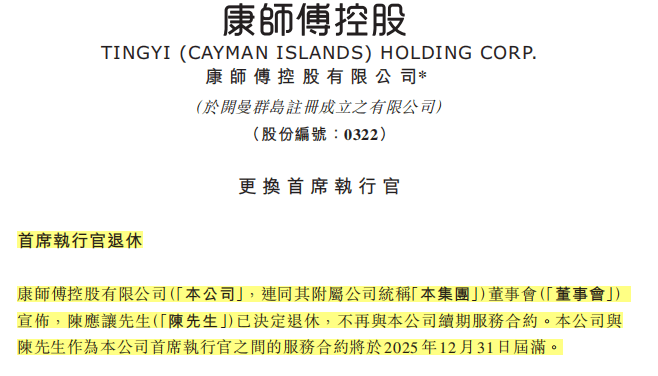
Group 1: Management Changes at Kang Shifu Holdings - CEO Chen Yingrang will retire, and his contract will end on December 31, 2025. Wei Hongcheng will take over as CEO starting January 1, 2026 [1] - Wei Hongcheng, aged 43, has an international education background and experience in the beverage sector, which may boost market expectations for reforms [1] - The company faces challenges such as weak demand for instant noodles and pressure from beverage price wars, which could limit profit improvement unless product innovation and channel expansion accelerate by 2026 [1] Group 2: Cultural and Tourism Investigation in Jiangsu - The Jiangsu Provincial Department of Culture and Tourism is investigating the appearance of a valuable painting from the Nanjing Museum at an auction, which has raised concerns [2] - A working group has been established to handle the investigation, and any illegal activities will be addressed according to the findings [2] - If the procedures are deemed compliant, the impact on the museum and tourism system will be limited; however, any procedural flaws could undermine the credibility of state-owned cultural institutions [2] Group 3: Hainan's Border Closure and Travel Surge - Hainan Free Trade Port has officially started its closure operations, leading to a more than 100% year-on-year increase in international flight bookings to Haikou for the 2026 Spring Festival [3] - Major source countries for travelers include Russia, Singapore, Australia, Malaysia, South Korea, and Thailand [3] - The closure, combined with holiday policies, is expected to boost revenue for airlines, airports, duty-free shops, and hotels on the island [3] Group 4: Strategic Partnership between Fosun Tourism and BYD - Fosun Tourism has entered into a global long-term strategic partnership with BYD to leverage their strengths in green travel, smart manufacturing, and tourism [4] - The collaboration aims to create a "travel + vacation" ecosystem and enhance international operations for both companies [4] - This partnership is expected to increase customer flow and revenue for projects like Taicang Alps and enrich the benefits for BYD vehicle owners [4]

特朗普签署行政命令,重申2028年登月目标;王毅分别同柬埔寨、泰国外长通电话;46岁!国盾量子董事长离世;康师傅换帅丨每经早参
Mei Ri Jing Ji Xin Wen· 2025-12-18 23:13
Group 1 - The U.S. White House announced that President Trump signed an executive order to establish a vision for a "America First" space policy, aiming for a return to the Moon by 2028 and the establishment of initial facilities for a permanent lunar outpost by 2030 [12][12] - The order includes directives for deploying nuclear reactors on the Moon and in orbit [12] Group 2 - The chairman of Guoshun Quantum, Lv Pin, passed away on December 18, 2023 [3] - The CEO of Master Kong, Chen Yingrang, announced his retirement effective December 31, 2025, with Wei Hongcheng appointed as the new CEO starting January 1, 2026 [3][16] Group 3 - The U.S. Labor Department reported that the November CPI increased by 2.7% year-on-year, lower than the expected 3.1% [5] - Major U.S. stock indices closed higher, with the Dow Jones up 0.14%, the Nasdaq gaining over 310 points (1.38%), and the S&P 500 rising by 0.79% [5] - Tesla shares rose over 3%, while other tech giants like Amazon and Facebook saw increases of over 2% [5] Group 4 - The U.S. Treasury reported that Japan's holdings of U.S. Treasury securities increased from $1.189 trillion in September to $1.2 trillion in October [6] - International oil prices saw a slight increase, with WTI crude oil futures rising by 0.38% to $56.15 per barrel [7] Group 5 - The Ministry of Industry and Information Technology announced plans to strengthen capacity regulation in the photovoltaic industry, aiming for a dynamic balance of production capacity by 2026 [9] - The Ministry of Commerce confirmed that some applications for general export licenses for rare earths have been approved [9] Group 6 - The market supervision authority is focusing on addressing "involution-style" competition to promote a healthy market order [10] - The film "Zootopia 2" has become the highest-grossing imported film in China's history, surpassing "Avengers: Endgame" with over 91.06 million viewers [11]

康师傅创始人三儿子将担任CEO,今年43岁,有哈佛学位
Sou Hu Cai Jing· 2025-12-18 16:40
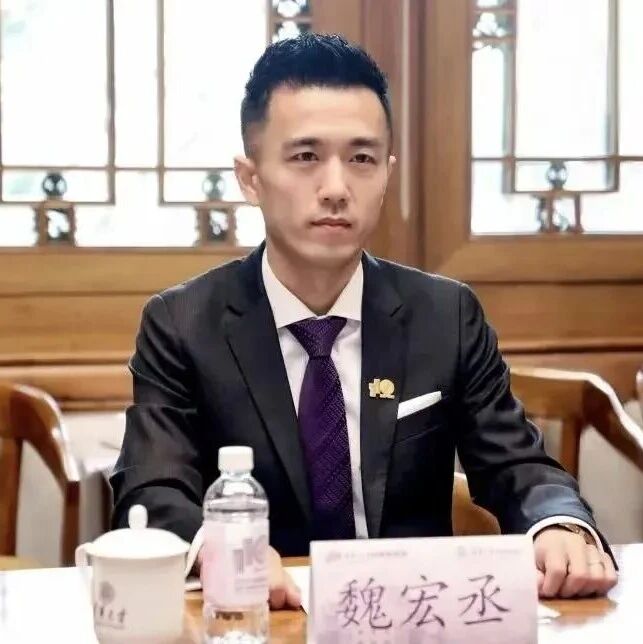
每经编辑|许绍航 12月18日晚,康师傅控股(00322.HK)发布公告,公司及董事会宣布,现任CEO陈应让将于2025年12月31日合约届满后退休,董事会委任魏宏丞为新任 CEO,2026年1月1日起生效,魏宏丞将继续担任执行董事。 过去十年,康师傅由职业经理人担任首席执行官一职。2015年1月1日,康师傅创始人魏应州将该职位交给韦俊贤;韦俊贤于2020年底退休后,自2021年1 月1日起由陈应让接任。 公开资料显示,陈应让今年62岁,毕业于台湾大学化学工程系。于2013年2月加入康师傅集团,担任研发长。 公告称,陈应让加入康师傅以来,"在培养新一代人才、引进外部合作伙伴、食品安全和技术平台建设等领域取得了显著成就,为本集团的业务发展做出 了巨大贡献。" 图:康师傅创始人魏应州,来源:视觉中国 此外,魏宏丞还为康师傅董事会主席兼执行董事魏宏名的胞弟,其家庭成员及亲属实益拥有该公司主要股东顶新(开曼岛)控股有限公司100% 的权益。 魏宏丞在康师傅的任职经历可追溯至2015年,当年2月被委任为康师傅饮品董事,2019年起担任该板块董事长。魏宏丞任职期间在其主导下,康师傅饮品 推出了无糖茶、气泡水等多款爆款产品 ...
康师傅换帅!创始人之子接棒CEO,去年薪酬937万元
Zhong Guo Ji Jin Bao· 2025-12-18 16:13
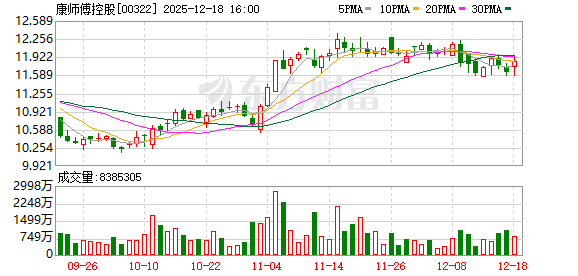
Core Viewpoint - The announcement of a new CEO at Master Kong marks a significant shift in governance, returning control to the Wei family after a decade of professional management [2][6]. Group 1: Leadership Transition - Master Kong will have a new CEO, Wei Hongcheng, starting January 1, 2026, as the current CEO, Chen Yingrang, retires [1]. - Wei Hongcheng, aged 43, is the second generation of the Wei family and has a strong background with degrees from Imperial College London and Harvard Business School [4]. - Since joining the company in 2015, Wei has been instrumental in the growth of Master Kong's beverage segment, focusing on consumer needs and sustainable development [5][6]. Group 2: Business Challenges - Master Kong faces significant challenges, including a decline in core business growth and a transformation in distribution channels [8]. - The company reported a revenue drop of over 1.1 billion yuan in the first half of the year, with both instant noodles and beverage revenues declining by 2.5% and 2.6% respectively [8]. - The number of distributors decreased by over 3,400 and direct retailers by nearly 1,500 by mid-2025, indicating a shift in the sales network [8]. Group 3: Market Position and Strategy - Despite challenges, Master Kong maintains a leading position in the instant noodle market and is focusing on product innovation and health trends to drive growth [9]. - New product launches include healthier options like sugar-free jasmine tea and alkaline water, reflecting a commitment to health and sustainability [9]. - The company's sustainable development strategy has begun to yield results, contributing to cost reduction and brand image enhancement [9]. Group 4: Market Reaction - Following the announcement of the leadership change, Master Kong's stock rose by 1.63% to 11.84 HKD per share, with a total market capitalization of 66.74 billion HKD [9].
康师傅换帅!创始人之子接棒CEO,去年薪酬937万元
中国基金报· 2025-12-18 16:01
Core Viewpoint - The appointment of Wei Hongcheng as the new CEO of Master Kong marks a significant shift back to family governance after a decade of professional management, indicating a potential change in strategic direction for the company [2][6]. Group 1: Leadership Transition - Master Kong announced that current CEO Chen Yingrang will retire on December 31, 2025, and Wei Hongcheng will take over as CEO starting January 1, 2026 [2]. - Wei Hongcheng, aged 43, is the second generation of the Wei family and has a strong background with degrees from Imperial College London and Harvard Business School, along with experience at Blackstone and PepsiCo [8][9]. - Since joining the company in February 2015, Wei has been instrumental in the growth of Master Kong's beverage segment, focusing on consumer needs and sustainable development [9]. Group 2: Business Challenges - Master Kong is currently facing challenges such as declining revenue in its core business segments, with a reported drop of over 1.1 billion yuan in revenue in the first half of the year [13]. - The beverage segment, which accounts for 65.7% of total revenue, saw a 2.6% year-on-year decline, while the instant noodle segment also experienced a 2.5% drop [13]. - The company is adapting to changes in distribution channels, with a significant reduction in the number of distributors and direct retailers, losing over 3,400 distributors and nearly 1,500 direct retailers by mid-2025 [13]. Group 3: Strategic Initiatives - Despite the challenges, Master Kong maintains a leading position in the instant noodle market and is focusing on product innovation and health-oriented upgrades to stimulate growth [13][14]. - New product launches in the beverage sector, such as sugar-free jasmine tea and PH9.0 alkaline water, reflect a commitment to health trends [14]. - The company's ongoing investment in sustainable development has begun to yield results, contributing to cost reduction and brand image enhancement [14]. Group 4: Market Reaction - Following the announcement of the leadership change, Master Kong's stock price rose by 1.63% to HKD 11.84 per share, with a total market capitalization of HKD 66.74 billion [14].
康师傅权力交接落定,创始人之子43 岁魏宏丞接棒康师傅 CEO
Sou Hu Cai Jing· 2025-12-18 14:40
Group 1 - The current CEO Chen Yingrang will retire on December 31, 2025, and Wei Hongcheng, the son of the founder, will take over as CEO starting January 1, 2026 [3][5] - Chen Yingrang has made significant contributions since joining the company in February 2013, particularly in talent development, external cooperation, food safety systems, and technology platform construction, leading to high-quality development [5] - Under Chen's leadership, the company established a comprehensive ESG system and improved its public image and social reputation through effective public affairs communication [5] Group 2 - Wei Hongcheng has a strong international perspective and internal experience, holding degrees from Imperial College London and Harvard Business School, and has been with the company for 10 years [6] - Since 2019, as Chairman of the Beverage Business, Wei has driven strategic implementation, achieving steady revenue and profit growth, with beverage business revenue reaching 51.621 billion yuan in 2024, accounting for 64% of total group revenue [6] - The company has successfully transitioned through three CEO changes since its listing in 1996, establishing a structured succession mechanism [6] Group 3 - As a leading brand in China, 康师傅 has reached 900 million consumers annually and has invested over 2 billion yuan in public welfare over 33 years, receiving multiple honors related to sustainable development [7]
康师傅换帅,创始人43岁儿子魏宏丞接棒,去年薪酬约937万
2 1 Shi Ji Jing Ji Bao Dao· 2025-12-18 14:29
公开资料显示,新任CEO魏宏丞现年43岁,为董事会主席魏宏名胞弟,康师傅创始人魏应州的三儿子, 拥有伦敦帝国学院本科及哈佛商学院MBA学位,2019年起任集团执行董事,同时担任康师傅饮品董事 长。 截至公告发布日,魏宏丞持有公司500万股股份及138.5万股购股权。据2024年公司年报,其薪酬总计约 937万元。 (文章来源:21世纪经济报道) 12月18日晚,康师傅控股(00322.HK)公告称,公司及董事会宣布,现任CEO陈应让将于2025年12月 31日合约届满后退休,董事会委任魏宏丞为新任CEO,2026年1月1日起生效,魏宏丞将继续担任执行董 事。 ...
魏家“二代”全面接管康师傅
Jing Ji Guan Cha Wang· 2025-12-18 14:04
Core Viewpoint - The announcement of the retirement of CEO Chen Yingrang and the appointment of Wei Hongcheng as the new CEO signifies a deeper involvement of the second generation of the Wei family in the management of Master Kong, marking a shift from professional managers to family leadership [1][2] Group 1: Leadership Transition - Chen Yingrang will retire on December 31, with his service contract not being renewed [1] - Wei Hongcheng, aged 43, will take over as CEO while continuing as an executive director [1] - Wei Hongcheng is the son of founder Wei Yingzhou and has been an executive director since January 1, 2019 [1] Group 2: Background of Wei Hongcheng - Wei Hongcheng holds a bachelor's degree from Imperial College London and an MBA from Harvard Business School [1] - He has been a member of the Harvard Business School Dean's Advisory Board and has insights into industry trends and organizational leadership [1] - He has served as a director of Master Kong Beverage Holdings since February 2015 and has been the chairman since 2019 [1] Group 3: Company Performance - In the first half of the year, Master Kong reported revenue of 40.092 billion yuan, a year-on-year decrease of 2.7% [2] - Net profit for the same period was 2.271 billion yuan, showing a year-on-year increase of 20.5% [2] - Revenue from instant noodles and beverage segments declined by 349 million yuan and 706 million yuan, with respective decreases of 2.5% and 2.6% [2] - The increase in net profit was attributed to a 1.9 percentage point rise in gross margin to 34.5%, driven by cost structure optimization and improved operational efficiency [2]