HKEX(00388)

Search documents
普华永道:大湾区推动香港地区IPO市场繁荣发展
Sou Hu Cai Jing· 2025-08-18 07:48
Group 1 - The Hong Kong IPO market has significantly rebounded in the first half of the year, raising a total of HKD 107.1 billion, a sevenfold increase compared to the same period last year, making it the highest globally and the second highest in the past decade for the same period [2] - The Greater Bay Area (GBA) enterprises are a crucial driving force behind this achievement, showcasing the region's strong economic vitality and diverse industrial structure [2][3] - A total of 44 companies went public in Hong Kong in the first half of the year, with 6 from the GBA, indicating a growing trend of A-share listed companies seeking to list in Hong Kong [3] Group 2 - The Hong Kong Stock Exchange (HKEX) has introduced the "Tech Company Fast Track" to provide pre-listing guidance for specialized technology and biotech companies, enhancing the market's innovation capacity [4] - PwC holds an optimistic view on the Hong Kong IPO market, expecting the fundraising trend to continue in the second half of the year, with over 200 companies already applying to list [4][6] - GBA enterprises can leverage the Hong Kong market to expand their influence, benefiting from the abundant capital available for listing and fundraising [5] Group 3 - The GBA is expected to remain a significant force in the Hong Kong capital market through 2025 and beyond, with a focus on emerging sectors such as high technology, artificial intelligence, and healthcare [7] - Continuous policy support and market opportunities will further enhance the GBA's role in driving the Hong Kong capital market's unique presence on the global stage [7]


智通港股沽空统计|8月18日
智通财经网· 2025-08-18 00:27
Core Insights - The article highlights the top short-selling stocks in the market, focusing on their short-selling ratios, amounts, and deviation values [1][2][3] Short-Selling Ratios - The top three stocks by short-selling ratio are: - China Resources Beer-R (80291) at 100.00% - Bank of China Hong Kong-R (82388) at 88.69% - Kuaishou-WR (81024) at 80.08% [1][2] Short-Selling Amounts - The leading stocks by short-selling amount are: - Alibaba-SW (09988) with a short-selling amount of 2.949 billion - Tencent Holdings (00700) with 2.711 billion - Meituan-W (03690) with 2.333 billion [1][3] Deviation Values - The stocks with the highest deviation values are: - China Resources Beer-R (80291) at 51.62% - Kuaishou-WR (81024) at 43.86% - Bank of China Hong Kong-R (82388) at 39.84% [1][2][3]





声通上市仪式|热烈庆祝声通科技(2495.HK)于香港交易所举行上市仪式
Sou Hu Cai Jing· 2025-08-16 00:14
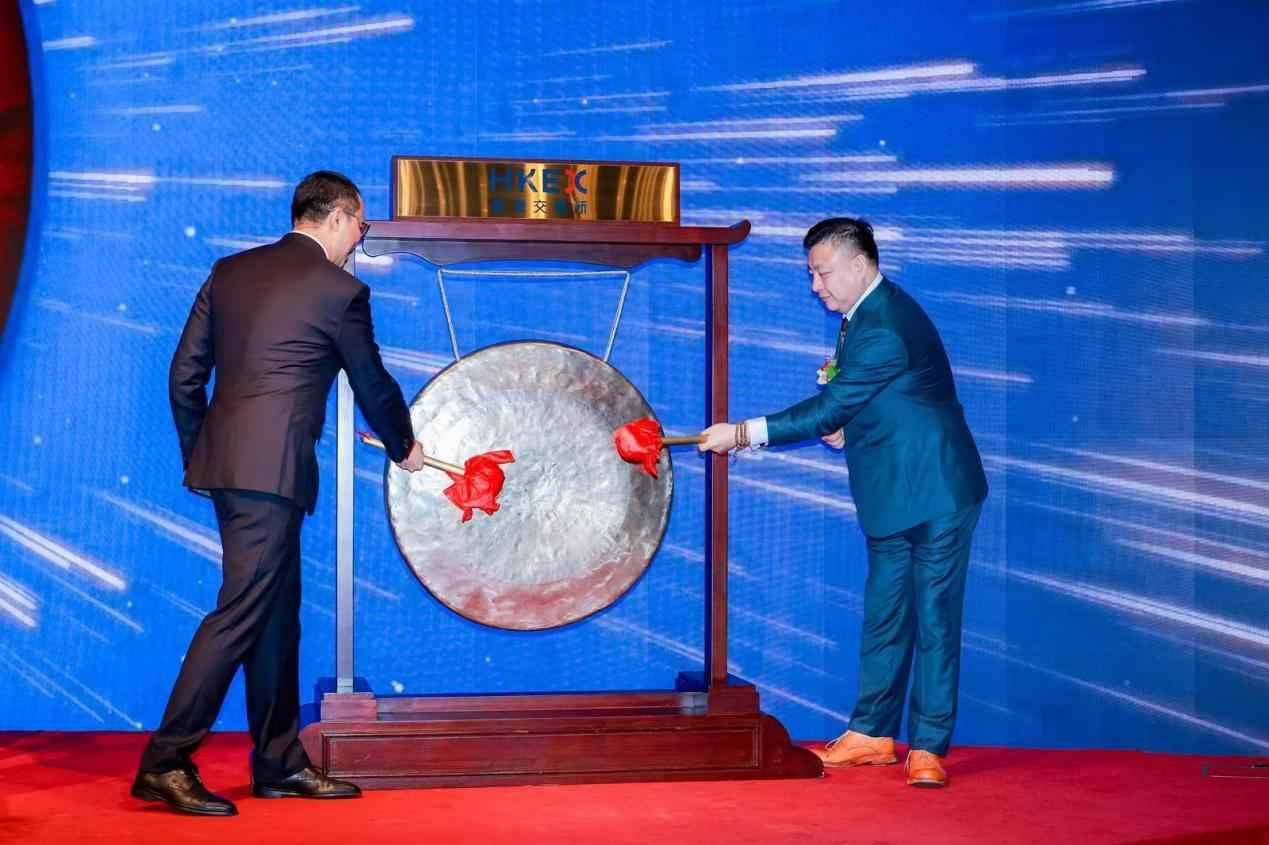
联合创始人共同敲锣 2024年7月10日,上海声通信息科技股份有限公司(以下简称"声通科技")成功登陆港交所主板(股票代码:2495.HK),成为在港交所挂牌的"交互式AI第 一股"。上市仪式在香港交易所隆重举行,声通科技的重要股东、业务合作伙伴、保荐人团队及其他IPO辅导机构共同见证了这一辉煌时刻。 声通科技董事长汤敬华先生,声通科技执行董事孙琪先生,声通融智总裁石业嵘先生登台合照 声通科技董事长汤敬华先生与声通科技执行董事孙琪先生作为公司代表,在开市时刻敲锣 伴随着开市时刻的倒数声(a4309.HK/212),声通科技董事长汤敬华先生与执行董事孙琪先生共同举起鼓槌,这一刻,所有人的目光都聚焦在这两位创始人身 上。倒计时结束,他们挥动鼓槌,敲响了上市的钟声,那清脆而响亮的声音,如同胜利的号角,回荡在每一个人的心中。这是声通科技的辉煌时刻,是他们 多年努力和奋斗的结晶。这钟声不仅宣告了声通科技的成功上市,更预示着公司未来无限的可能和辉煌的前景。 董事长汤敬华先生上台致辞 声通科技(a7155.HK/603)创始人汤敬华先生在上市仪式上发表激动人心的讲话,他首先对所有支持声通科技的人们表示衷心的感谢。汤敬华先生 ...
智通ADR统计 | 8月16日
智通财经网· 2025-08-15 23:53
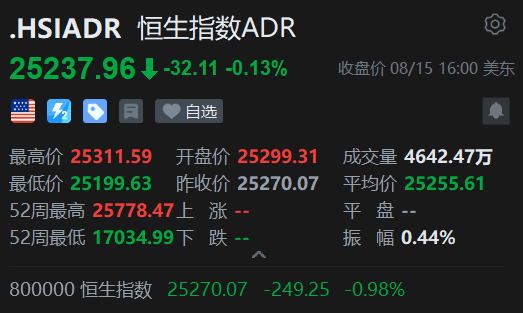
Market Overview - The Hang Seng Index (HSI) closed at 25,237.96, down by 32.11 points or 0.13% on August 15 [1] - The index reached a high of 25,311.59 and a low of 25,199.63 during the trading session [1] Major Blue-Chip Stocks Performance - HSBC Holdings closed at HKD 99.966, down 0.33% from the previous close [2] - Tencent Holdings closed at HKD 591.706, down 0.05% from the previous close [2] Stock Price Movements - Tencent Holdings (00700) increased by HKD 2.00, or 0.34%, to HKD 592.00 [3] - Alibaba Group (09988) decreased by HKD 3.70, or 3.04%, to HKD 118.10 [3] - China Construction Bank (00939) fell by HKD 0.18, or 2.26%, to HKD 7.80 [3] - HSBC Holdings (00005) decreased by HKD 0.10, or 0.10%, to HKD 100.30 [3] - Xiaomi Group (01810) dropped by HKD 0.35, or 0.66%, to HKD 52.85 [3] - AIA Group (01299) fell by HKD 1.95, or 2.54%, to HKD 74.95 [3] - Meituan (03690) decreased by HKD 2.70, or 2.17%, to HKD 121.70 [3] - NetEase (099999) dropped by HKD 7.60, or 3.66%, to HKD 200.20 [3] - Hong Kong Exchanges and Clearing (00388) increased by HKD 0.20, or 0.05%, to HKD 439.40 [3] - Industrial and Commercial Bank of China (01398) fell by HKD 0.19, or 3.09%, to HKD 5.96 [3] - Ping An Insurance (02318) decreased by HKD 0.30, or 0.52%, to HKD 57.60 [3] - BYD Company (01211) dropped by HKD 1.00, or 0.88%, to HKD 112.80 [3] - Bank of China (03988) fell by HKD 0.09, or 1.98%, to HKD 4.45 [3] - Kuaishou Technology (01024) decreased by HKD 0.40, or 0.53%, to HKD 74.80 [3] - Ctrip (09961) increased by HKD 1.80, or 0.37%, to HKD 489.00 [3] - Tencent Music (01698) decreased by HKD 0.90, or 0.89%, to HKD 99.90 [3] - BeiGene (06160) increased by HKD 6.50, or 3.51%, to HKD 191.50 [3]


港交所:不同集团向港交所递交上市申请,联席保荐人为海通国际、中信证券。
Xin Lang Cai Jing· 2025-08-15 15:01
Core Viewpoint - Different groups have submitted listing applications to the Hong Kong Stock Exchange, with Haitong International and CITIC Securities acting as joint sponsors [1] Group 1: Listing Applications - Multiple groups are actively seeking to list on the Hong Kong Stock Exchange, indicating a robust interest in capital markets [1] - The involvement of prominent sponsors such as Haitong International and CITIC Securities suggests a strong backing for these applications [1]

港交所IPO新规生效,散户打新时代终结?|中环观察
2 1 Shi Ji Jing Ji Bao Dao· 2025-08-15 09:25
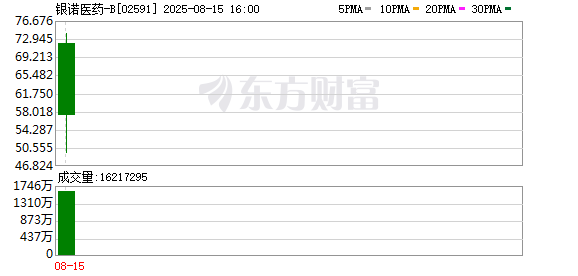
Core Viewpoint - The recent IPO reform by the Hong Kong Stock Exchange aims to rebalance the interests of institutional and retail investors, with a focus on enhancing pricing efficiency and reducing speculative behavior in the market [2][4][10]. Group 1: IPO Reform Details - The new IPO distribution mechanism allows issuers to choose between a traditional allocation method or a pre-locked allocation ratio, with a minimum public offering ratio set at 10% [1][2]. - Mechanism A retains a similar structure to previous rules but lowers the minimum allocation for public offerings from 10% to 5%, while adjusting the reallocation percentages based on oversubscription levels [2][4]. - Mechanism B introduces a fixed allocation for public offerings, ensuring that institutional investors receive a larger share, with no reallocation mechanism in place [2][3]. Group 2: Market Reactions and Implications - The first company to utilize the new rules, Guangzhou Yino Pharmaceutical Group, saw its stock price surge over 280% on its debut, raising questions about the effectiveness of the new pricing mechanism [1][5]. - The reform is expected to enhance the participation of institutional investors, as it addresses previous concerns about the unpredictability of allocations under the old system [7][10]. - Despite the potential benefits for institutional investors, retail investors express concerns about reduced chances of allocation, leading to dissatisfaction and fears of market liquidity being compromised [9][11]. Group 3: Market Performance and Trends - The Hong Kong IPO market has shown robust growth, with 53 new listings in the first seven months of the year, raising approximately HKD 127 billion, a year-on-year increase of over 600% [6]. - International interest in Hong Kong IPOs has surged, with about two-thirds of recent investors being foreign, indicating a shift in market dynamics [6][7]. - The new rules are designed to mitigate the risks of pricing bubbles and post-listing volatility, potentially leading to more stable stock performances [4][10].
港交所IPO新规生效,散户打新时代终结?
2 1 Shi Ji Jing Ji Bao Dao· 2025-08-15 09:15
Core Viewpoint - The recent IPO reform by the Hong Kong Stock Exchange (HKEX) aims to shift the balance of benefits from retail investors to institutional investors, enhancing the efficiency of new stock pricing and distribution mechanisms [2][4][5]. Summary by Sections IPO Reform Overview - On August 4, HKEX implemented a comprehensive reform of the IPO pricing mechanism, marking the most significant adjustment in 27 years [2]. - The new allocation system reduces the minimum allocation to retail investors from 50% to 40% and introduces a dual-track distribution mechanism [2][7]. Mechanism Details - Mechanism A retains a similar structure to the previous rules but lowers the allocation for retail investors, while Mechanism B allows issuers to lock in a minimum of 10% for public offerings without a reallocation mechanism [2][4]. - The first company to utilize this new mechanism, Guangzhou Yinuo Pharmaceutical Group, saw its stock price surge over 280% on its debut [1]. Institutional Investor Focus - The reform is designed to attract more institutional investors by ensuring they receive a larger share of new stock offerings, addressing previous issues where they struggled to secure adequate allocations [6][7]. - Notable IPOs like CATL and Hengrui Medicine have already shown a trend of favoring institutional investors in their allocations [3]. Market Performance and Reactions - The Hong Kong IPO market has seen a significant increase in activity, with 53 new listings and a total fundraising amount of approximately HKD 127 billion in the first seven months of the year, a sixfold increase year-on-year [6]. - Institutional investors, including sovereign and pension funds, are increasingly participating in the IPO market, with about two-thirds of recent investors being foreign [6]. Retail Investor Concerns - Retail investors are expressing concerns over their reduced chances of securing shares in IPOs, particularly with the new mechanism B locking in lower public offering percentages [8][9]. - The HKEX has acknowledged these concerns and made some adjustments to the proposed rules, but many retail investors still feel disadvantaged [10][11]. Future Implications - The reform aims to stabilize post-IPO stock performance and reduce the risk of price volatility, potentially benefiting all investors in the long run [10]. - However, the transition period may lead to fluctuations in the market as participants adjust to the new rules [5][10].
香港交易所(0388.HK):赴港上市步伐加快 市场热度仍处高位
Ge Long Hui· 2025-08-15 03:28
Core Viewpoint - The Hong Kong stock market showed significant growth in July, with high trading activity expected to continue, leading to anticipated performance growth for the Hong Kong Stock Exchange (HKEX) [1][2]. Market Performance - The Hong Kong stock market experienced an overall increase, with the Hang Seng Index and Hang Seng Tech Index rising by 23.5% and 22.0% respectively compared to the end of 2024 [1]. - The monthly average daily turnover (ADT) for HKEX reached HKD 262.9 billion, reflecting a month-on-month increase of 14.2% and a year-on-year increase of 166.6% [1]. - Northbound trading ADT was HKD 222.3 billion, with month-on-month and year-on-year increases of 36.5% and 86.0% respectively, while southbound trading ADT was HKD 144.4 billion, increasing by 19.5% month-on-month and 329.0% year-on-year [1]. Derivatives Market - The derivatives market saw a recovery in options trading, with average daily volume (ADV) for futures at 572,000 contracts, showing a slight decrease of 0.1% month-on-month and 3.7% year-on-year [1]. - Options ADV was 942,000 contracts, with month-on-month and year-on-year increases of 14.8% and 30.6% respectively [1]. IPO Market - The IPO market in Hong Kong saw significant growth, with 9 new stocks listed in July, totaling HKD 19.9 billion, which is a decrease of 34% month-on-month but an increase of 333% year-on-year [2]. - New derivative warrants and bull/bear certificates listed were 850 and 2,271 respectively, with year-on-year increases of 42% and 31%, and month-on-month increases of 11% and 14% [2]. Investment Income - Investment income rates for HKEX showed a decline compared to previous months, with the 6-month HIBOR at 2.27%, down by 0.11 percentage points month-on-month [2]. Macroeconomic Environment - Domestic economic conditions showed a decline in manufacturing activity, with the PMI at 49.30%, indicating contraction [3]. - The overseas environment is characterized by tightening liquidity due to the Federal Reserve's decision to pause interest rate cuts, with expectations of a 25 basis point cut in September 2025 [3]. Valuation and Outlook - As of the end of July, the company's PE ratio was 38.24x, positioned at the 58th percentile historically since 2016, indicating potential value for investors [4]. - Revenue and other income projections for 2025-2027 are HKD 28.4 billion, HKD 31.1 billion, and HKD 33.7 billion respectively, with net profit estimates of HKD 17.7 billion, HKD 18.7 billion, and HKD 20.6 billion, corresponding to PE ratios of 30.9, 29.2, and 26.4 times [4].
全市场独家品种香港证券ETF(513090)大涨!下半年超126亿资金流入香港证券ETF
Ge Long Hui A P P· 2025-08-15 02:32
Group 1 - The core viewpoint of the article highlights the significant rise in Hong Kong brokerage stocks, with notable increases in Zhongzhou Securities and CICC, leading to a 2% increase in the Hong Kong Securities ETF (513090) which has outperformed the mainland brokerage index this year [1] - The Hong Kong Securities ETF (513090) has surged by 160% since September 24 of last year, making it the top performer in the entire market [1] - The ETF has attracted substantial capital inflows in the second half of the year, totaling 12.653 billion yuan, with a current scale of 25.592 billion yuan [1] Group 2 - The ETF consists of only 16 constituent stocks, with the top ten weighted stocks including major players like CITIC Securities, Hong Kong Exchanges, and Guotai Junan International, accounting for over 89% of the total weight [1] - The ETF supports T+0 trading and has the lowest fee rate in the market at 0.2% per year [1] - According to Shenwan Hongyuan Securities, the brokerage sector is expected to have strong investment value due to the current moderately loose monetary policy and increased allocation of medium to long-term funds towards equities [1]


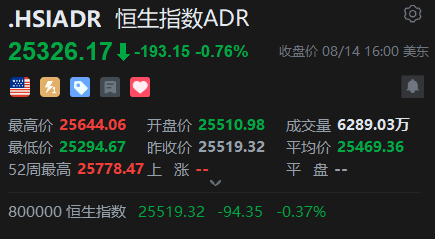
智通ADR统计 | 8月15日
智通财经网· 2025-08-14 22:43
Market Overview - Most large-cap stocks experienced declines, with HSBC Holdings closing at HKD 103.043, up 2.63% from the previous close, while Tencent Holdings closed at HKD 585.875, down 0.70% [1][2] Stock Performance Summary - Tencent Holdings (00700) latest price: HKD 590.000, change: +HKD 4.000 (+0.68%), ADR price: HKD 585.875, decline: -HKD 4.125 (-0.70%) [2] - Alibaba Group (09988) latest price: HKD 121.800, change: -HKD 1.900 (-1.54%), ADR price: HKD 119.737, decline: -HKD 2.063 (-1.69%) [2] - HSBC Holdings (00005) latest price: HKD 100.400, change: -HKD 0.315 (-0.31%), ADR price: HKD 103.043, increase: +HKD 2.643 (+2.63%) [2] - AIA Group (01299) latest price: HKD 76.900, change: +HKD 0.500 (+0.65%), ADR price: HKD 76.338, decline: -HKD 0.562 (-0.73%) [2] - Meituan (03690) latest price: HKD 124.400, change: +HKD 0.100 (+0.08%), ADR price: HKD 121.813, decline: -HKD 2.587 (-2.08%) [2] - NetEase (099999) latest price: HKD 207.800, change: -HKD 7.600 (-3.53%), ADR price: HKD 203.157, decline: -HKD 4.643 (-2.23%) [2] - Hong Kong Exchanges and Clearing (00388) latest price: HKD 439.200, change: -HKD 0.600 (-0.14%), ADR price: HKD 435.548, decline: -HKD 3.652 (-0.83%) [2] - Ping An Insurance (02318) latest price: HKD 57.900, change: +HKD 1.100 (+1.94%), ADR price: HKD 57.146, decline: -HKD 0.754 (-1.30%) [2] - JD.com (09618) latest price: HKD 125.100, change: -HKD 2.300 (-1.81%), ADR price: HKD 123.693, decline: -HKD 1.407 (-1.13%) [2] - Kuaishou Technology (01024) latest price: HKD 75.200, change: +HKD 0.250 (+0.33%), ADR price: HKD 74.811, decline: -HKD 0.389 (-0.52%) [2]