CHINA TELECOM(00728)

Search documents
独家:中国电信前5月天翼云增速排名曝光广东江苏四川河南列前四
Xin Lang Cai Jing· 2025-08-29 06:10
Core Viewpoint - China Telecom's Tianyi Cloud revenue growth has been revealed for the first half of the year, with specific performance details for provincial companies remaining undisclosed. However, insider information indicates that ten provincial companies have shown significant revenue growth in their cloud business during the first five months of the year [1][4]. Group 1: Revenue Growth - The ten provincial companies with the fastest growth in cloud business are Guangdong Telecom, Jiangsu Telecom, Sichuan Telecom, Henan Telecom, Hebei Telecom, Zhejiang Telecom, Anhui Telecom, Hunan Telecom, Shanghai Telecom, and Fujian Telecom [3][4]. - Among the top ten companies, two are from northern China: Henan Telecom and Hebei Telecom, which rank relatively high in growth [4]. - In the first half of 2025, Tianyi Cloud's revenue reached 57.3 billion yuan, representing a year-on-year growth of 3.8%, indicating a slowdown compared to previous double-digit growth rates [5][6]. Group 2: Comparison of Revenue and Growth - A comparison of the top ten provincial companies by revenue and growth shows slight differences, with Henan Telecom and Hebei Telecom emerging as fast growers despite not being in the top ten for revenue [5]. - The overall difference between the two lists is minimal, suggesting that these provincial companies not only have large cloud business revenue but also experience rapid growth [5][6]. Group 3: Industry Insights - China Telecom's Chairman, Ke Ruiwen, noted that the global cloud computing industry is undergoing a critical transition, with a significant decline in growth for traditional cloud services, while demand for AI-driven intelligent computing power remains strong [6]. - He expressed confidence that Tianyi Cloud will maintain good growth this year, with the ten provincial companies expected to be the main drivers of cloud business growth [6].


中国电信(601728):2025年秋季策略会速递—业务稳健发展,迎来AI智能云新阶段
HTSC· 2025-08-29 04:48
Investment Rating - The investment rating for the company is "Buy" [5][4] Core Insights - The company is transitioning its Tianyi Cloud business from a phase of rapid revenue growth to a focus on high-quality development, with strong demand for intelligent computing services [2][1] - The mobile and broadband businesses are expected to maintain a steady growth trajectory [2] - The capital expenditure guidance for 2025 remains unchanged at RMB 83.6 billion, with a gradual decline in the capital expenditure to revenue ratio [3][1] - The company plans to leverage AI large models to enhance operational efficiency and further improve profitability [3][1] Summary by Sections Tianyi Cloud Business - The Tianyi Cloud business is moving towards a high-quality development phase, with a strong demand for intelligent computing services. The overall intelligent computing resource utilization rate has reached nearly 70%, with a diversified customer base expanding from government and state-owned enterprises to finance, transportation, and education sectors. In the first half of 2025, the total computing power reached 77 EFLOPS, with an increase of 15 EFLOPS [2][1] Basic Business Operations - In the first half of 2025, the mobile ARPU and broadband comprehensive ARPU remained stable. The company has been promoting bundled packages to enhance user stickiness and add extra user value. The industry competition has been effectively managed by the Ministry of Industry and Information Technology since 2019, leading to a healthier market environment [2][1] Capital Expenditure - The company's capital expenditure in the first half of the year accounted for approximately 41% of the annual budget, which is typical for the telecom industry, as investments are usually higher in the second half. The capital expenditure guidance for 2025 remains at RMB 83.6 billion, with a declining trend in the capital expenditure to revenue ratio expected as the peak investment period for 5G network construction has passed [3][1] Cost and Expense Management - The company aims to keep the growth rate of costs and expenses below that of revenue, which is expected to enhance profitability. The development of an AI model specifically for cloud network operations is expected to save labor costs and reduce base station electricity expenses through optimized algorithms [3][1] Profitability Forecast - The company is expected to see continued profit growth, with net profits projected at RMB 34.8 billion, RMB 36.7 billion, and RMB 38.4 billion for 2025, 2026, and 2027 respectively. The target price is set at RMB 9.11 per share, based on a 1.8x PB valuation for 2025 [4][8]
卫星产业ETF(159218)昨日“吸金”超7000万!一文盘点全产业链机会
2 1 Shi Ji Jing Ji Bao Dao· 2025-08-29 02:33
Group 1 - The satellite industry is experiencing significant investment interest, with the satellite industry ETF (159218) seeing a net inflow of over 70 million yuan on August 28, 2023, and a net subscription of approximately 13 million shares during the morning session on August 29, 2023 [1] - Key stocks in the satellite sector include Huazhong Technology, which rose over 8%, China Satellite Communications, which increased over 5%, and Tianyin Electromechanical, which gained over 2% [1] - The satellite industry chain includes satellite manufacturing, launching, operation and services, and ground equipment manufacturing, forming a complete closed loop from spacecraft development to commercial application [2] Group 2 - The satellite manufacturing segment is the starting point of the industry chain, with communication payloads determining communication capabilities, and the value of this segment is expected to gradually increase [2] - The satellite launch segment is seeing a significant increase in launch frequency, with the interval between launches decreasing from one to two months to three to five days, indicating a rapid networking phase for China's satellite internet [2] - The satellite operation and ground equipment manufacturing segment provides communication and data services to users, relying on ground system construction, which includes hardware hub iteration and terminal construction [2] Group 3 - The global satellite industry revenue distribution shows that satellite operation services account for 38.67%, while ground equipment manufacturing constitutes 52.77%, indicating a trend towards service and application side value [3] - The Ministry of Industry and Information Technology issued guidelines to support the satellite communication industry, aiming to develop over 10 million satellite communication users by 2030 [3] - The market size of China's satellite internet is expected to reach nearly 100 billion yuan in the next five years, with the global satellite internet market projected to reach trillions by 2040 [4] Group 4 - The satellite industry ETF (159218) tracks the satellite industry index, covering various segments including satellite manufacturing, launching, and applications, with a near 7% weight in China Satellite [6] - The top ten component stocks of the satellite industry ETF include Aerospace Electronics (10.05%), Huace Navigation (7.62%), and China Satellite (6.75%) [7] - The satellite industry index has shown a strong performance, with a year-to-date increase of over 76% as of August 25, 2023 [8]


智通港股通持股解析|8月29日
智通财经网· 2025-08-29 00:33
Core Insights - The top three companies by Hong Kong Stock Connect holding ratios are China Telecom (00728) at 74.37%, Green Power Environmental (01330) at 69.99%, and China Shenhua (01088) at 67.99% [1][2] - The largest increases in holding amounts over the last five trading days were seen in the following companies: Yingfu Fund (02800) with an increase of 3.289 billion, Tencent Holdings (00700) with 3.146 billion, and Meituan-W (03690) with 2.513 billion [1][2] - The companies with the largest decreases in holding amounts over the last five trading days include China National Offshore Oil (00883) with a decrease of 1.328 billion, Xiaomi Group-W (01810) with 1.193 billion, and Pop Mart (09992) with 1.056 billion [2] Group 1: Top Holding Ratios - China Telecom (00728) holds 10.322 billion shares, representing 74.37% [1] - Green Power Environmental (01330) holds 0.283 billion shares, representing 69.99% [1] - China Shenhua (01088) holds 2.297 billion shares, representing 67.99% [1] Group 2: Recent Increases in Holdings - Yingfu Fund (02800) saw an increase of 3.289 billion, with a change of 12.899 million shares [1] - Tencent Holdings (00700) increased by 3.146 billion, with a change of 5.297 million shares [1] - Meituan-W (03690) increased by 2.513 billion, with a change of 2.471 million shares [1] Group 3: Recent Decreases in Holdings - China National Offshore Oil (00883) decreased by 1.328 billion, with a change of 6.848 million shares [2] - Xiaomi Group-W (01810) decreased by 1.193 billion, with a change of 2.475 million shares [2] - Pop Mart (09992) decreased by 1.056 billion, with a change of 0.326 million shares [2]




绩优ETF半年报密集披露 险资、企业年金、外资扎堆布局
Zhong Guo Jin Rong Xin Xi Wang· 2025-08-28 15:36
Group 1 - Multiple high-performing ETFs have disclosed their semi-annual reports for 2025, showing a significant presence of institutional investors such as insurance funds, corporate annuities, and foreign capital among the top ten shareholders [1] - The Huatai-PineBridge CSI Hong Kong Stock Connect Innovative Drug ETF has achieved an impressive return of over 90% year-to-date, with major shareholders including Barclays Bank and various insurance and pension funds [1] - The Bosera SSE STAR Market Artificial Intelligence ETF has reported a year-to-date return exceeding 70%, with significant holdings from major insurance companies like Xinhua Life and Taikang Life [1] Group 2 - The Harvest SSE STAR Market Chip ETF and the Yongying CSI Hong Kong and Shanghai Gold Industry ETF have both recorded returns above 50% this year, with their top shareholders including major insurance firms [1] - The top ten shareholders of the Harvest SSE STAR Market Chip ETF include China Life, Ping An Property & Casualty, and several other prominent insurance companies [1] - The Yongying CSI Hong Kong and Shanghai Gold Industry ETF's top shareholders also feature major players in the insurance sector, indicating strong institutional interest in these funds [1]



万亿险资A股重仓图谱:高股息资产“压舱”
2 1 Shi Ji Jing Ji Bao Dao· 2025-08-28 10:17
Core Insights - Insurance capital is increasingly focusing on high-dividend stocks to secure stable returns and mitigate the impact of declining bond yields [1][4] - As of August 27, 368 stocks are heavily held by insurance funds, with significant investments in non-bank financials, banks, telecommunications, and utilities [1][3] - The total market value of insurance holdings reached 1.18 trillion yuan, with 554.1 billion shares held [1] Investment Trends - Major insurance companies like China Life and Ping An have substantial holdings in their respective companies, with China Life holding 92.8% of China Life's circulating shares [3] - Telecommunications operators, including China Unicom, China Telecom, and China Mobile, have become key targets for insurance investments in Q2 [2][3] - The most popular stock among insurance funds is Shenhuo Co., with four insurance institutions holding a combined 104 million shares [2] Sector Allocation - The top three sectors for insurance capital investments are non-bank financials (796.21 billion yuan), banks (224.57 billion yuan), and telecommunications (33.64 billion yuan) [3] - Insurance funds have shown a preference for stable, high-dividend blue-chip stocks, particularly in financial and utility sectors [7][8] Regulatory and Market Influences - Recent policies encourage insurance funds to invest more in the stock market, with a target of 30% of new premiums allocated to A-shares starting in 2025 [4][5] - The insurance sector's asset allocation is shifting towards equities, with a significant increase in stock investments noted in the first half of the year [6] Future Outlook - Insurance capital is expected to continue increasing its equity allocation, driven by rising premium income and a favorable market environment [8] - The potential for substantial and sustained inflows from insurance funds into the capital market is anticipated, enhancing market stability [8]


226只港股获南向资金大比例持有
Zheng Quan Shi Bao Wang· 2025-08-28 01:37
Group 1 - The overall shareholding ratio of southbound funds in Hong Kong Stock Connect stocks is 18.55%, with 226 stocks having a shareholding ratio exceeding 20% [1] - As of August 27, southbound funds held a total of 4,649.74 million shares, accounting for 18.55% of the total share capital of the stocks, with a total market value of 57,946.94 million HKD, representing 14.13% of the total market value [1] - The stocks with the highest shareholding ratios by southbound funds include China Telecom at 74.28%, followed by Gree Power at 70.04% and China Shenhua at 67.99% [1] Group 2 - Southbound funds with a shareholding ratio exceeding 20% are mainly concentrated in the healthcare, financial, and industrial sectors, with 47, 34, and 32 stocks respectively [2] - The top stocks with high southbound fund holdings include China Telecom (74.28%), Gree Power (70.04%), and China Shenhua (67.99%), among others [2][3] - A significant portion of the stocks with high southbound fund holdings are AH concept stocks, with 122 out of 226 stocks (53.98%) having a shareholding ratio over 20% [1]
三大运营商全线布局卫星互联网赛道
Zheng Quan Ri Bao· 2025-08-28 01:28
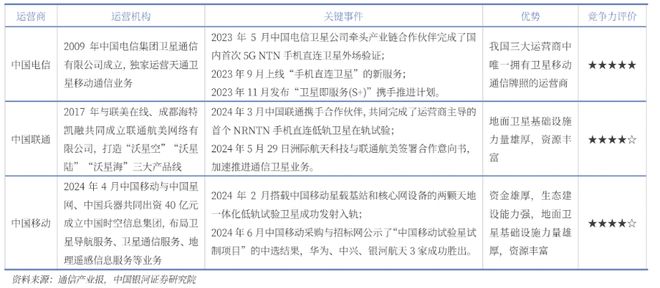
Core Viewpoint - The three major telecom operators in China are actively entering the satellite internet sector, supported by recent government guidelines aimed at optimizing the satellite communication industry by 2030 [1][2]. Group 1: Government Guidelines - The Ministry of Industry and Information Technology issued guidelines to enhance the satellite communication management system and promote the integration of satellite communication into the new development framework, aiming for over 10 million satellite communication users by 2030 [1]. - The guidelines encourage telecom operators to collaborate with satellite companies to explore the potential of high-orbit satellites like Tiantong and Beidou, promoting direct satellite connections for mobile devices [1]. Group 2: Major Telecom Operators' Initiatives - China Mobile has launched two low-orbit experimental satellites in 2023, including the world's first satellite capable of verifying 5G integrated technology [2]. - China Telecom plans to offer direct satellite connection services for mobile phones and cars, having overcome key technical challenges in satellite communication [2][3]. - China Unicom has successfully launched four low-orbit satellites and aims to integrate satellite communication with the Internet of Vehicles through strategic partnerships [3]. Group 3: Challenges in Satellite Internet Development - The development of satellite internet faces challenges such as differences in satellite-ground network architecture, high network construction costs, and performance gaps compared to terrestrial networks [4]. - China Mobile is working on a technology system to reduce the number of satellites needed for integrated networks and lower costs by 10% per satellite [5]. Group 4: Strategic Importance of Satellite Internet - The shift towards satellite internet is seen as a strategic necessity for telecom operators, marking a fundamental change from previous focuses on terrestrial mobile communication [6]. - The collaboration between telecom operators and satellite companies is expected to accelerate the commercialization of low-orbit satellite constellations, leveraging the operators' extensive user base and established sales channels [6].


智通港股通持股解析|8月28日
智通财经网· 2025-08-28 00:31
Core Insights - The top three companies by Hong Kong Stock Connect holding ratios are China Telecom (00728) at 74.28%, Green Power Environmental (01330) at 70.04%, and China Shenhua (01088) at 67.99% [1][2] - Tencent Holdings (00700), Meituan-W (03690), and ZTE Corporation (00763) saw the largest increases in holding amounts over the last five trading days, with increases of +2.518 billion, +2.479 billion, and +1.356 billion respectively [1][2] - The largest decreases in holding amounts were observed in the Yingfu Fund (02800) at -3.126 billion, Xpeng Motors-W (09868) at -1.132 billion, and Xiaomi Group-W (01810) at -1.122 billion [1][4] Holding Ratios - The latest holding ratios for the top 20 companies in Hong Kong Stock Connect show significant ownership, with China Telecom leading at 74.28% and Green Power Environmental following closely at 70.04% [2] - Other notable companies include Kaisa New Energy (01108) at 67.72% and Tianjin Chuangye Environmental (01065) at 64.39% [2] Recent Trading Activity - In the last five trading days, Tencent Holdings (00700) increased its holding by +2.518 billion, with a change of +4.2031 million shares [2] - Meituan-W (03690) also saw a significant increase of +2.479 billion, with a change of +21.3184 million shares [2] - Conversely, the Yingfu Fund (02800) experienced the largest decrease in holding amount at -3.126 billion, with a change of -12.16491 million shares [4]

智通港股通资金流向统计(T+2)|8月28日
智通财经网· 2025-08-27 23:32
Key Points - The top three companies with net inflows of southbound funds are Alibaba-W (09988) with 581 million, Kangfang Biotech (09926) with 541 million, and Hong Kong Stock Exchange (00388) with 434 million [1] - The top three companies with net outflows of southbound funds are Yingfu Fund (02800) with -2.396 billion, Xiaomi Group-W (01810) with -1.524 billion, and SMIC (00981) with -845 million [1] - In terms of net inflow ratios, the top three companies are Quan Feng Holdings (02285) at 51.60%, Sen Song International (02155) at 49.91%, and GX China (03040) at 43.94% [1] - The top three companies with the highest net outflow ratios are Yihai International (01579) at -51.63%, Zhou Hei Ya (01458) at -49.54%, and Kangji Medical (09997) at -46.09% [1] Net Inflow Rankings - Alibaba-W (09988) had a net inflow of 581 million, representing a 2.88% increase in closing price to 124.500 [2] - Kangfang Biotech (09926) saw a net inflow of 541 million, with a closing price of 169.500, down 4.18% [2] - Hong Kong Stock Exchange (00388) experienced a net inflow of 434 million, closing at 462.800, up 3.30% [2] - Kuaishou-W (01024) had a net inflow of 428 million, closing at 78.750, up 5.14% [2] - Horizon Robotics-W (09660) recorded a net inflow of 401 million, closing at 7.760, up 1.31% [2] Net Outflow Rankings - Yingfu Fund (02800) had the largest net outflow of -2.396 billion, with a closing price of 26.360, up 2.01% [2] - Xiaomi Group-W (01810) experienced a net outflow of -1.524 billion, closing at 53.500, up 1.81% [2] - SMIC (00981) saw a net outflow of -845 million, with a closing price of 57.800, up 1.58% [2] - CNOOC (00883) had a net outflow of -708 million, closing at 18.830, up 0.53% [2] - Pop Mart (09992) recorded a net outflow of -418 million, closing at 326.600, up 1.94% [2] Net Inflow Ratio Rankings - Quan Feng Holdings (02285) had a net inflow ratio of 51.60%, with a net inflow of 24.33 million, closing at 24.300, up 5.29% [3] - Sen Song International (02155) recorded a net inflow ratio of 49.91%, with a net inflow of 54.68 million, closing at 10.900, up 1.68% [3] - GX China (03040) had a net inflow ratio of 43.94%, with a net inflow of 1.29 million, closing at 37.820, up 2.55% [3] Net Outflow Ratio Rankings - Yihai International (01579) had a net outflow ratio of -51.63%, with a net outflow of -69.47 million, closing at 14.780, up 4.23% [3] - Zhou Hei Ya (01458) recorded a net outflow ratio of -49.54%, with a net outflow of -20.12 million, closing at 2.570, up 2.80% [3] - Kangji Medical (09997) had a net outflow ratio of -46.09%, with a net outflow of -30.83 million, closing at 8.680, up 0.35% [3]