
CHINA TOWER(00788)

Search documents
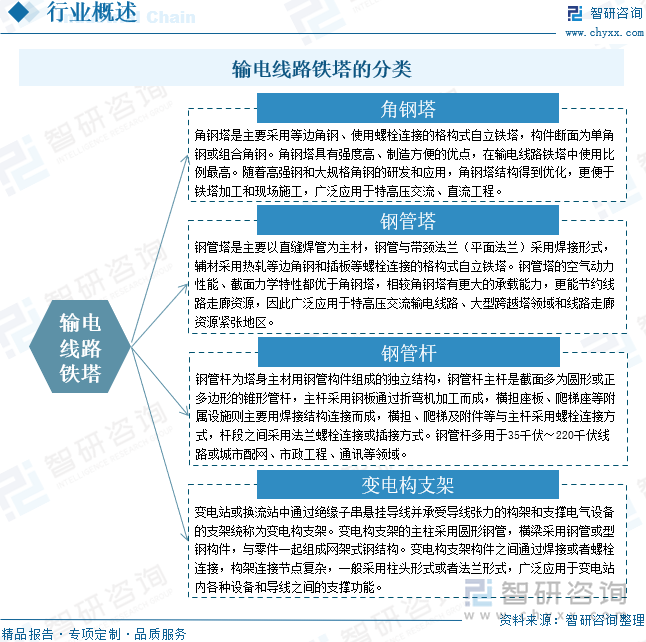
2025年中国输电线路铁塔行业发展历程、产业链、发展现状及未来趋势研判:电力需求不断增加,推动输电线路铁塔建设提速[图]
Chan Ye Xin Xi Wang· 2025-05-19 01:14
Core Insights - The transmission line tower industry in China is experiencing significant growth, with the market size projected to reach approximately 71.1 billion yuan in 2024, driven by increasing electricity demand and urbanization [1][16] - The industry is characterized by a dual structure, with a large number of small enterprises competing in the low-end market and a few large companies dominating the high-end market [21][23] Industry Overview - Transmission line towers are essential infrastructure for supporting high and ultra-high voltage overhead power lines, primarily made of metal materials like iron and steel [3] - The industry has evolved from using low-voltage transmission lines to high-voltage lines, leading to increased demand for steel towers [5][19] Market Dynamics - The growth in electricity demand is reflected in the increase of total electricity consumption in China, which rose from 55,500 billion kWh in 2015 to 98,521 billion kWh in 2024, with a compound annual growth rate of 6.58% [11] - The length of 220 kV and above transmission lines has also increased significantly, from 609,100 km in 2015 to 952,800 km in 2024, indicating a compound annual growth rate of 5.1% [11] Investment Trends - Investment in power engineering construction is on the rise, with power source engineering investment expected to grow from 409.1 billion yuan in 2015 to 1,168.7 billion yuan in 2024, reflecting a compound annual growth rate of 12.37% [14] - The investment in grid engineering is also increasing, from 460.3 billion yuan in 2015 to 608.6 billion yuan in 2024, with a compound annual growth rate of 3.15% [14] Key Players - Major companies in the industry include China Tower Corporation, which is the leading player, and other significant firms such as Wind范股份, 东方铁塔, and 汇金通 [21][23] - China Tower Corporation reported a revenue of 75.7 billion yuan from tower-related businesses in 2024, showing a year-on-year growth of 0.89% [23] Industry Structure - The industry is divided into three tiers: a large number of small enterprises in the low-end market, a second tier of larger private companies, and a first tier of leading companies like China Tower [21] - The market for transmission line towers is highly competitive, with price wars prevalent among smaller firms producing low-end products [21] Future Trends - The industry is expected to undergo technological upgrades driven by the construction of ultra-high voltage transmission lines, leading to a shift towards new tower structures and materials [27] - The demand for intelligent operation and maintenance solutions is increasing, with the adoption of IoT and sensor technologies [28] - The push for green and low-carbon solutions is reshaping the industry, with a focus on environmentally friendly materials and recycling practices [30]


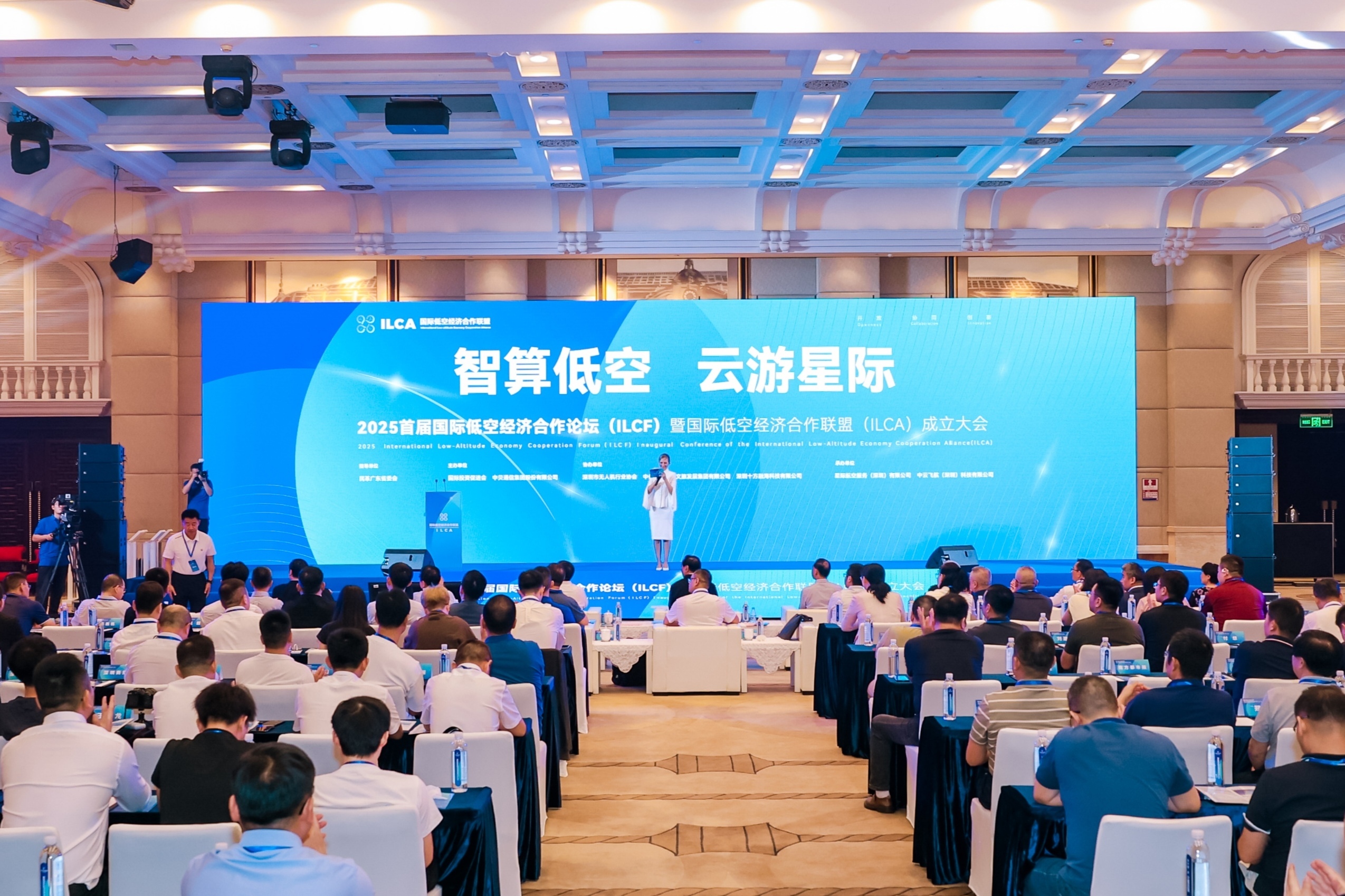
将牵头制定低空经济全球标准!首个国际性低空经济合作平台在深圳诞生
Mei Ri Jing Ji Xin Wen· 2025-05-17 02:41
Group 1 - The International Low Altitude Economy Cooperation Alliance (ILCA) was established in Shenzhen on May 16, with over 100 international companies and research institutions as initial members [1] - The alliance aims to promote industry standardization, establish a global dialogue mechanism, and empower the development of low-altitude logistics, smart tourism, and emergency rescue applications [4] - Guangdong province hosts over 30% of China's low-altitude economy industry chain enterprises, with consumer-grade drone production accounting for 90% of the national output and over 70% of the global output [4] Group 2 - Zhongbei Communication is developing a "6G + computing power + algorithm" ecosystem to unlock more potential in the low-altitude economy, planning to build low-altitude economic hubs in key provinces over the next three years [4][5] - The demand for computing power in the low-altitude economy is rapidly increasing, with Zhongbei Communication investing approximately 3 billion yuan in intelligent computing by the end of 2024, aiming for an operational computing power scale exceeding 15,000 P [5] - The integration of air, space, and ground networks is gaining attention as a new infrastructure, which is crucial for remote area network coverage, emergency communication, and economic development [5]

从“通信塔”到“数字塔”(走企业,看高质量发展)
Ren Min Ri Bao· 2025-05-16 22:12
Core Viewpoint - The article highlights the significant advancements and contributions of China Tower Corporation in the construction and sharing of telecommunications infrastructure, particularly in the context of 5G and digital transformation initiatives in China [1][2][3][4][5][6][7][8]. Group 1: Infrastructure Development - The Jidayan High-Speed Railway in Shanxi Province is set to commence operations on December 31, 2024, with China Tower integrating 4G and 5G network construction into a shared plan, achieving full signal coverage across 426 base stations and 18.49 kilometers of tunnels in just four months [1]. - Since its establishment in 2014, China Tower has led a "sharing revolution" in the telecommunications industry, significantly reducing redundant base station construction and achieving a 50% cost saving in projects like the Dalian Metro communication network [2]. - By the end of last year, China Tower had constructed over 2.76 million 5G base stations, covering an area of over 12.6 billion square meters and extending coverage to over 44,000 kilometers of high-speed and subway lines [3]. Group 2: Resource Sharing and Cost Efficiency - Over 95% of 5G construction projects have utilized existing resources such as communication towers and streetlight poles, leading to a substantial reduction in construction costs and time [3]. - The new tower sharing rate increased from 14.3% to 85%, equating to the avoidance of building 1.2 million new towers, saving 68,000 acres of land and over 210 billion yuan in industry investments [3]. Group 3: Digital Transformation and Smart Solutions - China Tower is transitioning from traditional communication towers to "digital towers" by integrating advanced technologies such as AI and big data, enhancing capabilities in various sectors including environmental monitoring [4][6]. - The company has upgraded 230,000 communication towers to digital towers, contributing to the construction of a digital China [4]. Group 4: Social Responsibility and Community Impact - China Tower has invested 8.5 billion yuan in universal telecommunications services, building over 70,000 base stations to ensure 100% network coverage in administrative villages [7]. - The company has deployed over 76,000 battery swap stations across more than 320 cities, providing over 2 million battery swaps daily, significantly reducing carbon emissions by 3.3 million tons [7]. Group 5: Future Commitments - China Tower aims to continue its mission of building a strong digital infrastructure to support the digital economy and enhance public welfare through ongoing resource sharing and technological innovation [8].

网络“堵车”?他为用户“智能避堵”
Nan Jing Ri Bao· 2025-05-15 00:02
Core Viewpoint - The article discusses the development of Software Defined Wide Area Network (SD-WAN) by China Tower (Nanjing) Technology Innovation Center, aimed at providing intelligent solutions to network congestion issues, enhancing the efficiency and stability of data transmission [1][4]. Group 1: Project Development - The SD-WAN project is designed to create a virtual wide area network based on operator network services, allowing for intelligent routing and network visualization to avoid congestion [4][5]. - The project involves selecting access points within a specific area to build aggregation gateway points, establishing "information tunnels" between points, and using algorithms to test the quality of each tunnel in real-time [4][5]. - The project aims to connect edge computing power islands and provide computing power services externally, focusing on future network and communication research [3][5]. Group 2: Technological Integration - The team is exploring the integration of AI with SD-WAN technology to efficiently filter and process network alarm information, achieving "network autonomy" and "alarm suppression" [5][6]. - By training large models, the team aims to predict network alarm information such as link interruptions and performance thresholds, enhancing the overall network management [5][6]. Group 3: Industry Context - Nanjing is positioning itself as a leading city in the future network industry, leveraging its strong research and innovation capabilities to drive high-quality industrial development [6][7]. - The city has established significant platforms and carriers, such as the Zijin Mountain Laboratory and Jiangsu Future Network Innovation Research Institute, to accelerate the application of cutting-edge technologies in the future network field [6][7]. - Nanjing's strategy includes focusing on national strategic needs like industrial internet, quantum communication, and satellite internet, aiming to enhance innovation and industry scale [6][7].

日喀则市拉孜县5.5级地震,中国铁塔西藏分公司启动地震事件三级应急响应
news flash· 2025-05-12 01:33
Core Viewpoint - A 5.5 magnitude earthquake occurred in Shigatse, Tibet, prompting China Tower's Tibet branch to initiate a level three emergency response to ensure communication services are maintained [1] Group 1: Earthquake Details - The earthquake struck on May 12 at 5:11 AM, with a depth of 10 kilometers, located at latitude 28.76° N and longitude 87.543° E [1] - The China Earthquake Networks Center confirmed the earthquake's magnitude and details [1] Group 2: Impact on Communication Infrastructure - China Tower operates 186 communication tower sites in the affected area of Lazhi County [1] - Two sites are currently without power, and two sites have exited service due to the earthquake [1] Group 3: Emergency Response Actions - The Tibet branch of China Tower has activated a level three emergency response [1] - The company is coordinating closely with emergency management departments and telecom operators to address communication service needs [1] - Maintenance personnel, vehicles, and generators have been arranged to respond promptly to service demands [1]
分布式边缘算力助力智算应用场景持续向“新”
Xin Hua Cai Jing· 2025-04-27 14:21
Group 1 - The core viewpoint of the articles emphasizes the growing importance of distributed computing and edge computing in supporting the digital transformation of enterprises, particularly in the context of artificial intelligence applications [1][2][5] - The China Academy of Information and Communications Technology has identified distributed computing as one of the "Top Ten Keywords for Digital Transformation of Government and Enterprises in 2024" [1] - The advantages of edge computing, such as low latency, low cost, wide distribution, and high security, are highlighted as essential for the large-scale development of AI technologies [1] Group 2 - The establishment of the Dell (Suzhou) Edge Computing Joint Innovation Center by Kegao and Dell Technologies marks a significant step in advancing edge computing solutions [2] - Kegao and its subsidiary have made breakthroughs in various fields, including smart property, smart factories, and smart parks, by providing distributed edge computing services [2][3] - The deployment of edge computing services has been successfully implemented in nearly 50 communities across 10 cities and 7 provinces, showcasing the scalability of these solutions [3] Group 3 - Kegao's collaboration with China Tower aims to provide on-demand, low-cost, shared edge computing services based on communication base station facilities [2][5] - The company has developed an "out-of-the-box" edge computing service product tailored for small and medium-sized industrial enterprises, significantly improving resource management and operational efficiency [3][4] - The initiative to integrate edge computing with AI model deployment is expected to meet the personalized needs of enterprises, enhancing their digital transformation efforts [4][5]
强强联合!三家企业携手共启临沂低空经济新篇
Qi Lu Wan Bao Wang· 2025-04-22 07:42
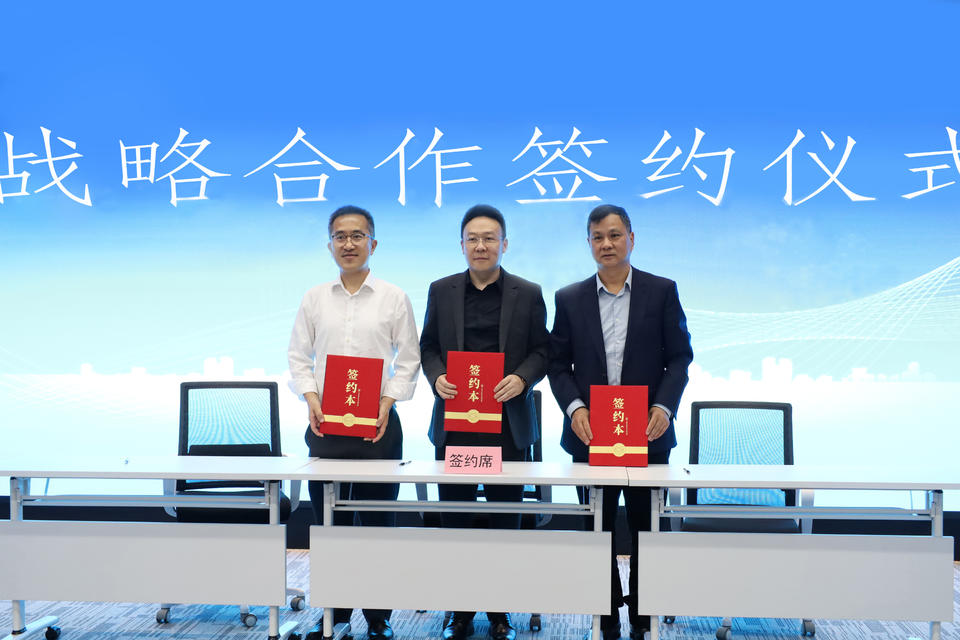
Core Viewpoint - The strategic cooperation among China Pacific Property Insurance Co., Shandong Branch, Jiangsu Digital Eagle Technology Co., and China Tower Corporation, Linyi Branch, marks a significant step in integrating resources and complementing advantages in the fields of technological innovation, risk assurance, and low-altitude economy [1][3]. Group 1: Strategic Cooperation - The signing of the strategic cooperation agreement signifies a strong alliance among the three companies, focusing on low-altitude economic insurance services [3]. - The collaboration aims to enhance drone scheduling efficiency and flight safety through China Tower's communication infrastructure, while Pacific Insurance will provide innovative insurance services to mitigate operational risks [3][4]. Group 2: Low-altitude Economy Development - The establishment of the "Low-altitude Economic Insurance Service Center" represents a critical advancement in the low-altitude economic insurance service sector [3]. - Jiangsu Digital Eagle Technology Co. is committed to developing a complete industrial chain for heavy-load logistics drones, integrating technology research, manufacturing, platform development, training, and comprehensive services [4]. Group 3: Regional Economic Impact - The partnership is expected to transform Linyi into a hub for low-altitude economic services in North China, contributing to the creation of a low-altitude economic industrial ecosystem [4]. - The establishment of a drone 4S maintenance center is a milestone in deepening regional collaboration and enhancing the low-altitude economy [4].

整理:每日港股市场要闻速递(4月22日 周二)
news flash· 2025-04-22 01:03
Group 1 - China Unicom (00762.HK) reported Q1 2025 revenue of RMB 103.35 billion, a year-on-year increase of 3.9%, with net profit of RMB 5.93 billion, up 5.6% [1] - Tongcheng Travel (00780.HK) announced an agreement to acquire Wanda Hotel Management (Hong Kong) Co., Ltd. for approximately RMB 2.49 billion [1] - China Tower (00788.HK) achieved Q1 2025 revenue of RMB 24.771 billion, a year-on-year growth of 3.3%, with profit attributable to shareholders of RMB 3.024 billion, up 8.6% [1] - SF Holding (06936.HK) reported combined revenue of RMB 23.661 billion from express logistics, supply chain, and international business in March, reflecting a year-on-year increase of 9.63% [1] Group 2 - Zhaojin Mining (01818.HK) recorded Q1 revenue of RMB 3.041 billion, a year-on-year increase of 53.5%, with net profit attributable to shareholders of RMB 659 million, up 197.76%, and basic earnings per share of RMB 0.17 [2] - Yanzhou Coal Mining (01171.HK) reported Q1 self-produced coal sales of 30.6 million tons, a year-on-year decrease of 1.71% [2]

中证港股通TMT主题指数报3765.94点,前十大权重包含中国铁塔等
Jin Rong Jie· 2025-04-21 12:09
Core Viewpoint - The China Securities TMT Index has shown a recent decline of 17.71% over the past month, but has increased by 12.13% over the last three months and 10.56% year-to-date [1]. Group 1: Index Performance - The China Securities TMT Index is composed of 50 listed companies in the TMT sector selected from the Hong Kong Stock Connect, reflecting the overall performance of related industry companies [1]. - The index was established on November 14, 2014, with a base value of 3000.0 points [1]. Group 2: Top Holdings - The top ten holdings of the China Securities TMT Index are as follows: Xiaomi Group-W (18.11%), China Mobile (15.07%), Tencent Holdings (14.6%), SMIC (8.64%), Kuaishou-W (5.93%), CK Hutchison (4.43%), China Telecom (3.21%), Lenovo Group (2.69%), China Unicom (2.08%), and China Tower (2.0%) [1]. Group 3: Sector Allocation - The sector allocation of the index holdings is as follows: Electronics (26.47%), Telecommunications Services (25.86%), Media (25.27%), Semiconductors (10.76%), Computers (8.45%), and Communication Equipment and Technology Services (3.18%) [2]. Group 4: Index Adjustment Mechanism - The index samples are adjusted semi-annually, with adjustments occurring on the next trading day after the second Friday of June and December each year [2]. - In special circumstances, the index may undergo temporary adjustments, such as when a sample company is delisted or when a new TMT company meets the criteria for inclusion [2].
中国铁塔(00788) - 2025 Q1 - 季度业绩
2025-04-17 08:30
Financial Performance - The company's operating revenue for Q1 2025 reached RMB 24.771 billion, a year-on-year increase of 3.3%[4] - Operating business revenue was RMB 21.224 billion, up 1.1% year-on-year; tower business revenue decreased by 0.4% to RMB 18.877 billion, while indoor distributed antenna system revenue grew by 15.2% to RMB 2.347 billion[3] - Smart connection business revenue increased by 17.1% to RMB 2.312 billion, and energy business revenue rose by 19.6% to RMB 1.145 billion[3] - EBITDA for Q1 2025 was RMB 17.295 billion, reflecting a 4.2% increase year-on-year, with an EBITDA margin of 69.8%[5] - Profit attributable to shareholders was RMB 3.024 billion, an increase of 8.6% compared to the previous year[4] Operational Metrics - As of March 31, 2025, the number of tower sites reached 2.108 million, with 3.82 million tenants, a net increase of 29,000 tenants from the end of the previous year[5] - The proportion of revenue from the two wings business increased from 12.2% to 14.0% year-on-year[5] Strategic Initiatives - The company plans to enhance core competitiveness and seize opportunities from initiatives like "dual-gigabit" network construction and "carbon neutrality" goals in 2025[6] - The company aims to optimize its battery swap network and expand its user base while promoting comprehensive energy solutions[6] Financial Data Disclaimer - The financial data presented is based on internal records and has not been reviewed by auditors, cautioning shareholders against undue reliance on this data[7]