
PETROCHINA(00857)

Search documents
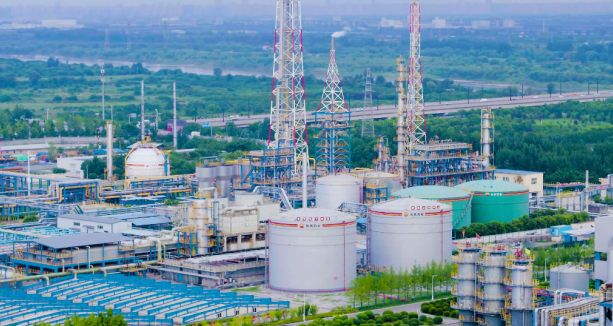
破局共生立潮头 五载跨越向一流—— 中国石油长庆石化公司“十四五”以标杆之力领航行业升级
Zhong Guo Neng Yuan Wang· 2025-12-26 08:27
Core Viewpoint - The "14th Five-Year Plan" period marks a crucial phase for the Longqing Petrochemical Company to achieve its goal of becoming a "world-class demonstration urban refinery," demonstrating significant advancements in various operational aspects and achieving historical highs in core performance metrics [1]. Performance Highlights - Over the past five years, the company's crude oil processing volume increased by 2.5%, with operating revenue rising by 29.15% and total profit increasing by 12.83% [3]. - The company has maintained its benchmark status among medium-sized refineries, receiving an A-level performance evaluation from China National Petroleum Corporation for eight consecutive years, showcasing its role as a stabilizer and ballast in the state-owned enterprise sector [3]. - Continuous optimization of product structure has led to improved gasoline quality and record sales of aviation kerosene, reinforcing its position as a key supplier in the western region [3]. Transformation and Upgrades - The company has addressed the "factory-residence" dilemma by completing 46 internal renovation projects and collaborating with local governments for external relocations, successfully relocating residents and fulfilling its local transformation tasks [5]. - As a leading enterprise in the "clean low-carbon energy and hydrogen energy industrial chains" in Xi'an, the company has fostered a surrounding industrial cluster with an annual output value of 70 billion yuan, resolving the spatial development challenges faced by urban refineries [6]. Digital Transformation - The company has pioneered digital transformation by establishing the first fully 5G-covered smart refinery in China, integrating advanced technologies such as 5G, AI, and IoT into its refining operations [9]. - It has developed a digital twin platform for reverse modeling of the entire plant, leading to a 10% reduction in equipment maintenance costs and a threefold increase in fault resolution efficiency [9]. - The company has been recognized as a national benchmark for intelligent manufacturing and has represented its achievements at international exhibitions, guiding the industry's smart manufacturing development [9]. Environmental Initiatives - The company adheres to the principle that "lucid waters and lush mountains are invaluable assets," implementing nine key projects to enhance environmental performance, resulting in pollutant emissions significantly below national standards [10]. - It has established a municipal reclaimed water reuse project and aims to use 818,000 tons of reclaimed water by 2025, with a fresh water consumption rate of 0.43 tons per ton of product, achieving historical efficiency [10]. - The company has been recognized as a dual green factory by national and industry standards, promoting harmony between urban refineries and ecological environments [10]. Talent Development - The company has advanced its talent development initiatives, with 50% of management and technical personnel holding senior titles and an increase in employees with bachelor's degrees or higher from 48.7% to 61.2% [11]. - The number of skilled technicians has tripled, with over 51% of skilled operators holding technician-level qualifications, reflecting a commitment to building a high-quality workforce [11]. - The company has fostered a culture of innovation and efficiency, achieving notable results in national and group-level technical skill competitions, contributing to its high-quality development [11]. Conclusion - Over the past five years, the company has transformed from a struggling entity to a benchmark leader in urban refinery development, solidifying its safety, environmental, digital, and talent foundations while preparing for future challenges in the "15th Five-Year Plan" [14].


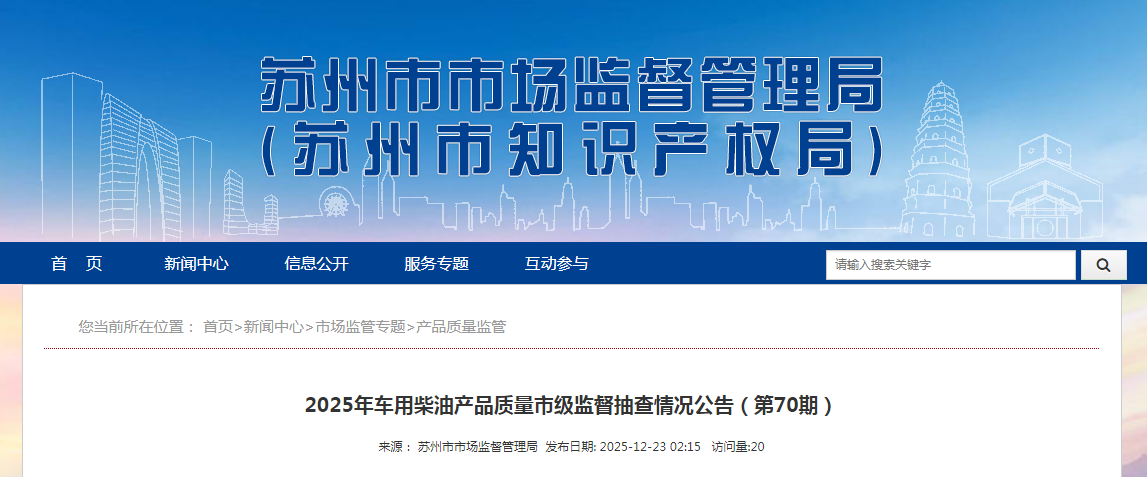
苏州市市场监督管理局发布2025年车用柴油产品质量市级监督抽查情况公告(第70期)
Zhong Guo Zhi Liang Xin Wen Wang· 2025-12-25 06:43
Core Insights - The quality inspection of automotive diesel in Suzhou for the year 2025 revealed a 0% non-compliance rate, indicating that all 100 samples tested met the required standards [3]. Group 1: Inspection Overview - The Suzhou Market Supervision Administration commissioned the Suzhou Product Quality Inspection Institute to conduct a city-level supervision inspection of automotive diesel products [3]. - A total of 100 batches of automotive diesel were planned for inspection, all sourced from the circulation field [3]. Group 2: Results of the Inspection - The inspection results showed that no non-compliant products were found, resulting in a non-compliance rate of 0% [3]. - The announcement of the inspection results was published as the 70th issue of the city-level supervision inspection report [3].

中国石油12月24日获融资买入5570.13万元,融资余额18.99亿元
Xin Lang Cai Jing· 2025-12-25 03:27
来源:新浪证券-红岸工作室 截至9月30日,中国石油股东户数50.39万,较上期增加4.46%;人均流通股324618股,较上期减少 4.33%。2025年1月-9月,中国石油实现营业收入21692.56亿元,同比减少3.86%;归母净利润1262.79亿 元,同比减少4.71%。 分红方面,中国石油A股上市后累计派现8752.80亿元。近三年,累计派现2470.78亿元。 机构持仓方面,截止2025年9月30日,中国石油十大流通股东中,中国证券金融股份有限公司位居第四 大流通股东,持股10.20亿股,持股数量较上期不变。香港中央结算有限公司位居第五大流通股东,持 股5.21亿股,相比上期减少3.36亿股。华夏上证50ETF(510050)位居第七大流通股东,持股2.16亿 股,相比上期减少586.44万股。华泰柏瑞沪深300ETF(510300)位居第十大流通股东,持股1.93亿股, 相比上期减少955.40万股。易方达上证50增强A(110003)退出十大流通股东之列。 融券方面,中国石油12月24日融券偿还16.27万股,融券卖出19.38万股,按当日收盘价计算,卖出金额 190.89万元;融券余量20 ...
智通港股通持股解析|12月25日
智通财经网· 2025-12-25 00:34
Core Insights - The top three companies by stockholding ratio in the Hong Kong Stock Connect are China Telecom (71.99%), Gree Power Environmental (70.09%), and Da Zhong Public Utilities (68.82%) [1] - Tencent Holdings, Xiaomi Group-W, and Alibaba-W have seen the largest increases in stockholding amounts over the last five trading days, with increases of +1.201 billion, +1.001 billion, and +892 million respectively [1] - The companies with the largest decreases in stockholding amounts over the last five trading days include China Mobile (-2.320 billion), Yingfu Fund (-1.467 billion), and China Petroleum & Chemical Corporation (-364 million) [2] Stockholding Ratio Rankings - China Telecom (00728) holds 9.990 billion shares, representing 71.99% [1] - Gree Power Environmental (01330) holds 0.283 billion shares, representing 70.09% [1] - Da Zhong Public Utilities (01635) holds 0.367 billion shares, representing 68.82% [1] - Other notable companies in the top rankings include Kai Sheng New Energy (67.96%) and Tianjin Chuangye Environmental Protection (67.10%) [1] Recent Increases in Stockholding - Tencent Holdings (00700) saw an increase of +1.201 billion, with a change of +1.9922 million shares [1] - Xiaomi Group-W (01810) increased by +1.001 billion, with a change of +25.5161 million shares [1] - Alibaba-W (09988) increased by +892 million, with a change of +6.1091 million shares [1] - Other companies with significant increases include Hong Kong Exchanges (6.48 billion) and Changfei Optical Fiber (6.09 billion) [1] Recent Decreases in Stockholding - China Mobile (00941) experienced a decrease of -2.320 billion, with a change of -28.0154 million shares [2] - Yingfu Fund (02800) decreased by -1.467 billion, with a change of -56.4370 million shares [2] - China Petroleum & Chemical Corporation (00857) decreased by -364 million, with a change of -44.7216 million shares [2] - Other companies with notable decreases include China Pacific Insurance (-350 million) and Innovent Biologics (-293 million) [2]




智通港股通资金流向统计(T+2)|12月25日
智通财经网· 2025-12-24 23:35
Core Insights - Tencent Holdings (00700), Alibaba-W (09988), and Hong Kong Exchanges (00388) led the market in net inflows, with amounts of 1.115 billion, 1.055 billion, and 309 million respectively [1] - China Mobile (00941), Luoyang Molybdenum (03993), and CICC (03908) experienced the highest net outflows, with amounts of -1.053 billion, -184 million, and -181 million respectively [1] - In terms of net inflow ratios, China Telecom Services (00552), Yihua Tong (02402), and Sunshine Insurance (06963) topped the list with ratios of 167.31%, 126.18%, and 118.17% respectively [1] Net Inflow Rankings - Tencent Holdings (00700) had a net inflow of 1.115 billion, representing a 13.09% increase, closing at 614.500 [2] - Alibaba-W (09988) saw a net inflow of 1.055 billion, with a 12.23% increase, closing at 146.400 [2] - Hong Kong Exchanges (00388) recorded a net inflow of 309 million, with a 24.77% increase, closing at 407.000 [2] Net Outflow Rankings - China Mobile (00941) faced a net outflow of -1.053 billion, a decrease of -54.21%, closing at 83.700 [2] - Luoyang Molybdenum (03993) had a net outflow of -184 million, down by -29.82%, closing at 19.100 [2] - CICC (03908) experienced a net outflow of -181 million, a decrease of -30.22%, closing at 20.540 [2] Net Inflow Ratio Rankings - China Telecom Services (00552) achieved a net inflow ratio of 167.31%, with a net inflow of 26.5926 million, closing at 4.520 [3] - Yihua Tong (02402) had a net inflow ratio of 126.18%, with a net inflow of 26.5481 million, closing at 23.980 [3] - Sunshine Insurance (06963) recorded a net inflow ratio of 118.17%, with a net inflow of 31.5558 million, closing at 3.940 [3]


国产天然气有望保持较快增长
Jing Ji Ri Bao· 2025-12-24 22:00
中国石油集团经济技术研究院副院长吴谋远表示,石油产量预计今年可能达2.15亿吨至2.16亿吨,天然 气在"十四五"时期实现大发展,每年天然气产量新增130亿立方米左右,在"十五五"时期,预计持续稳 健发展。 中国石油集团经济技术研究院天然气市场研究所所长段兆芳表示,2000年以来,我国天然气市场进入快 速发展阶段,天然气消费年均增速达13%左右,占一次能源消费比重达9%左右。从今年天然气市场新 特点和新变化看,我国天然气消费进入短暂调整期,预计明年将恢复较快增长。同时,国产气作用将更 加突出,国家持续大力推进勘探开发,预计"十五五"时期,国产气保持较快增长,致密气、页岩气、煤 层气等是未来主要的增量主体。 同时,论坛发布了《2060世界和中国能源展望报告(2025版)》,预计在基准情景下,受经济发展和产 业升级等带动,我国一次能源需求将于2035年达到50亿吨标准油(约71亿吨标准煤)的峰值,较2025年 增长约20%。到2060年,我国能源需求将保持在45亿吨标准油(约64亿吨标准煤)以上。 在近日举行的2025国际能源发展高峰论坛上,《中国油气行业"十四五"发展成就报告》(以下简称《报 告》)发布。《报告 ...
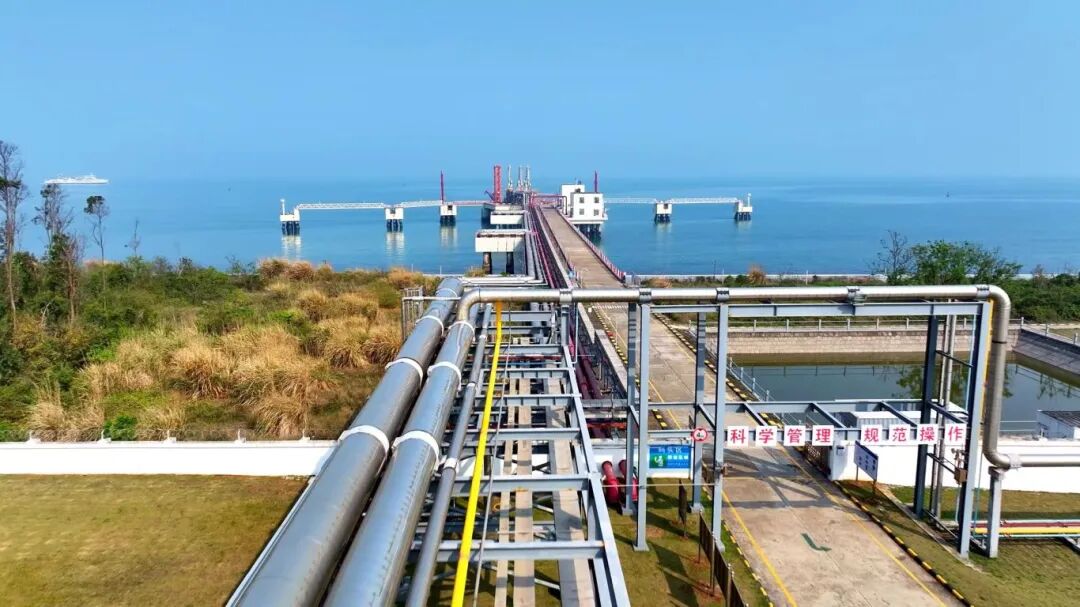
媒体聚焦冬供 | 中国石油天然气销售海南公司四重保障筑牢海南自贸港封关燃气安全防线
Xin Lang Cai Jing· 2025-12-24 10:32
消费日报网讯(记者 郑红梅 邵长伟)12月18日,海南自贸港正式封关运作。在这关键的历史节点,中国石油天然气销售海南公司以"安全保供"为核心使 命,通过强化安全生产、提升应急能力、优化气源调配、深化温情服务四大举措,系统构建坚实可靠的燃气供应保障体系,为自贸港封关后的社会平稳运 行与民生福祉注入强劲动力。 以"百日攻坚"系统排查,织密本质安全网。该公司将安全生产置于首位,深入开展覆盖全业务的安全生产"百日攻坚"行动。行动聚焦基层能力提升与风险 源头治理,通过系统性开展员工应知应会培训、严厉整治"三违"行为、优化安全管理体系文件等11项核心工作,采用"周计划、周复盘"模式稳步推进,确 保各项措施落地见效。同时,对经营区域内燃气管网、场站设施进行拉网式排查,建立隐患台账并严格执行"销号管理",累计完成130余项问题的排查与 整改,从根本上夯实了安全生产基础。 以实战演练强化协同,提升快速处置能力。为有效应对各类突发状况,该公司着力打造一支反应迅速、技能过硬、协同高效的应急保障队伍。在琼海组织 LPG卸液泄漏演练、在居民小区开展户内燃气泄漏演练,通过常态化开展多场景、实战化应急演练,全面检验并提升从预警、响应、现场 ...
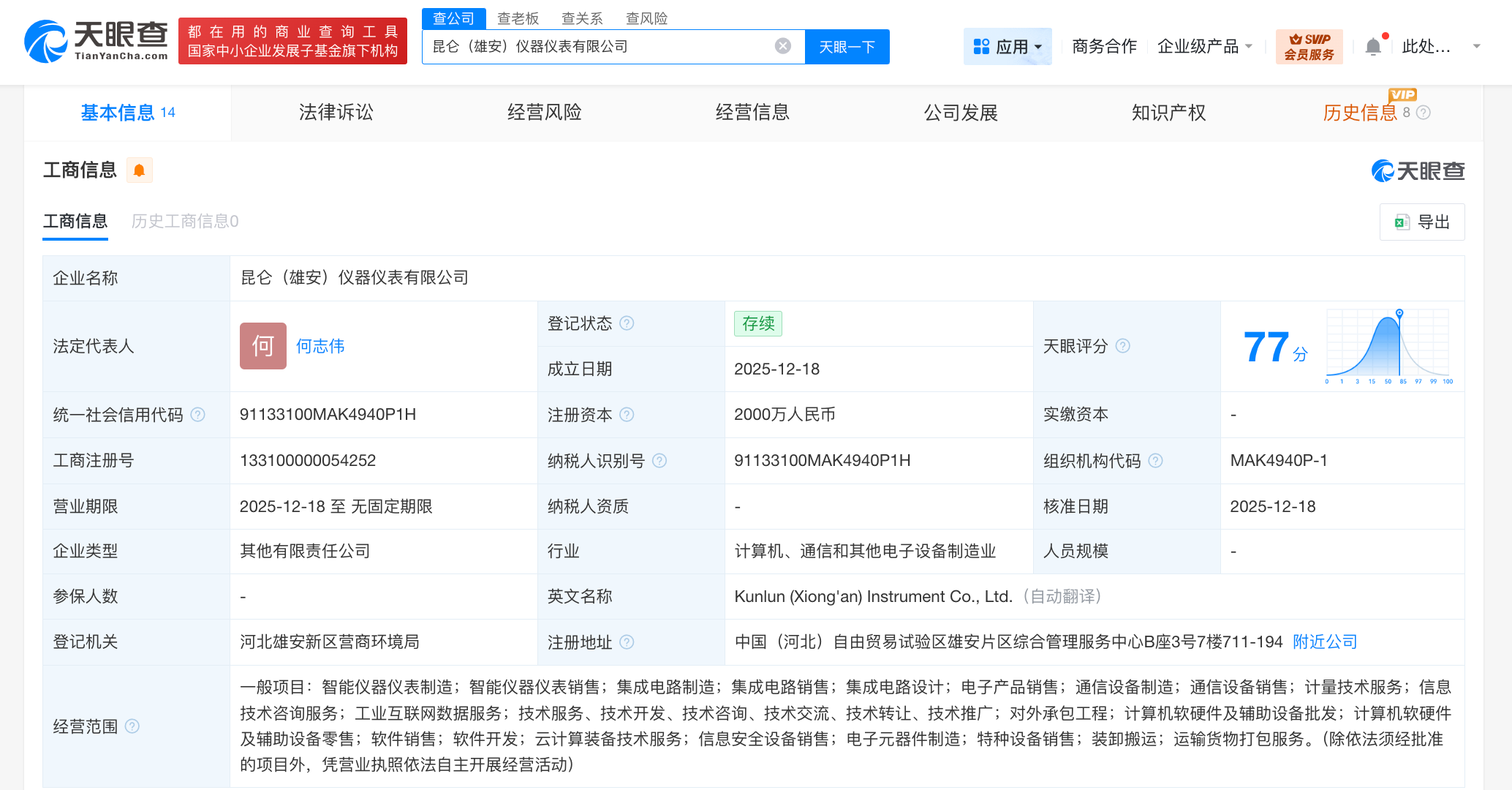
中国石油天然气集团等在雄安成立新公司 含集成电路业务
Xin Lang Cai Jing· 2025-12-24 07:31
Group 1 - The core point of the article is the establishment of Kunlun (Xiong'an) Instrument Co., Ltd., which has a registered capital of 20 million yuan and is involved in various sectors including integrated circuit manufacturing and sales, as well as electronic product sales [1] - The legal representative of the newly established company is Wei Zhiwei [1] - The company is jointly held by China National Petroleum Corporation's subsidiaries, including Bohai Petroleum Equipment Manufacturing Co., Ltd., Kunlun Gas Co., Ltd., and Shanghai Zhongke Weisi Instrument Co., Ltd. [1]
中国石油等在雄安成立仪器仪表公司
2 1 Shi Ji Jing Ji Bao Dao· 2025-12-24 03:26
Core Insights - Kunlun (Xiong'an) Instrument and Meter Co., Ltd. has been established with a registered capital of 20 million RMB, focusing on smart instrument manufacturing and sales, integrated circuit manufacturing and sales, and various technology services [1][3]. Company Information - The legal representative of the company is He Zhiwei, and it is registered under the unified social credit code 91133100MAK4940P1H [3]. - The company is co-owned by China National Petroleum Corporation Bohai Petroleum Equipment Manufacturing Co., Ltd., PetroChina Kunlun Gas Co., Ltd., and Shanghai Zhongke Weisi Instrument and Meter Co., Ltd. [1][3]. Business Scope - The business scope includes smart instrument manufacturing, integrated circuit design, electronic product sales, communication equipment manufacturing, and technology consulting services [1][3]. - The company is also involved in industrial internet data services and software development [3]. Registration and Status - The company is currently in a state of existence with no fixed business duration, registered on December 18, 2025 [3]. - The registration authority is the Xiong'an New Area Business Environment Bureau [3].
中国石油北京销售公司年度充电量突破1.2亿千瓦时
Xin Hua Cai Jing· 2025-12-24 02:48
Core Insights - The annual charging volume of China Petroleum Beijing Sales Company has exceeded 120 million kilowatt-hours, representing a year-on-year growth of over 500% [1] - The company serves 447,400 new energy vehicle owners in Beijing, with a peak daily charging volume reaching 670,000 kilowatt-hours [1] - The charging network features a layout characterized by "high density in core areas and wide coverage in suburban areas" [1] Charging Services and User Experience - The company has broken through traditional charging service limitations by promoting the integration of "charging+" business models, transforming charging stations into diversified service centers [1] - Facilities include lounges, restrooms, free Wi-Fi, and 24-hour hot water, along with additional services such as self-service car washes, smart retail cabinets, and light dining options to enhance user charging experience [1] - The company emphasizes service quality and response speed, aiming to provide a more personalized service experience [1] Safety and Operational Efficiency - The company has developed a self-researched PTCU intelligent detection module for millisecond-level fault identification and rapid response [1] - A regular inspection team has been established to conduct inspections in three time slots, implementing a quick response mechanism to ensure equipment operates safely [1] - The dual approach of data warning and on-site handling guarantees a secure charging experience for customers [1] Strategic Transformation - China Petroleum Beijing Sales Company is transitioning from a traditional energy "main force" to a comprehensive energy service "pioneer," focusing on green initiatives, innovation, and service excellence [1] - The company aims to contribute to the capital's green travel and low-carbon city construction through its ongoing transformation efforts [1]