
习酒

Search documents
“春分启序 君品共生——中国节里的君品风尚”习酒集团2026春分论坛圆满举行
新浪财经· 2026-03-21 08:47
Core Viewpoint - The 2026 Spring Equinox Forum organized by Xijiu Group emphasizes the theme of "Spring Equinox Initiation · Junzi Coexistence," aiming to blend Eastern culture with the values of Junzi, showcasing a vision of cultural resonance and collective growth [2][4]. Group 1: Forum Overview - The forum featured various experts and scholars, including prominent figures from academia and the liquor industry, who gathered to discuss the integration of traditional Chinese culture with modern business practices [3][4]. - Xijiu Group's Chairman, Wang Diqiang, highlighted the journey of cultural exploration over the past three years, marking significant milestones such as the release of the "Junzi Covenant" and the establishment of "Junzi Character" [4][6]. Group 2: Cultural Significance - Wang Diqiang articulated that "Chinese festivals" serve as a reminder of emotional connections and traditional values, emphasizing the importance of cultural continuity and the pursuit of "Junzi Coexistence" [7]. - The forum aimed to elevate the cultural dialogue from individual understanding to a collective consensus, fostering a deeper connection with consumers through the celebration of Chinese festivals [4][7]. Group 3: Keynote Speeches - Notable speakers, including Shan Qixiang and Dai Jianye, discussed the relationship between traditional Chinese festival culture and Junzi values, exploring innovative paths for brand growth and cultural integration [10][12]. - Each speaker contributed unique perspectives, such as the importance of storytelling in promoting Chinese culture and the role of Junzi in modern society [12][17][19]. Group 4: Research Achievements - A research成果发布仪式 was held, where the Junzi Culture Research Center presented findings on the impact of Junzi behavior on corporate innovation and the evolution of Junzi meanings in modern entrepreneurship [21][22]. - The research encompassed five major topics, providing insights that will contribute to the cultural development of Xijiu and enhance its brand identity [21].


习酒与美团闪购达成战略合作 首批覆盖全国50余城
Xin Lang Cai Jing· 2026-02-05 07:53
Group 1 - The core viewpoint of the article is that Xijiu has announced a deep strategic cooperation with Meituan Shanguo, marking a key step in its "Marketing 2.0" reform focused on channel innovation [1] - Starting immediately, Xijiu's official flagship store will be authorized to enter Meituan Shanguo in bulk, covering over 50 cities nationwide, providing consumers with a new purchasing experience of "official supply, authenticity, and quality" [1] - The partnership aims to establish a genuine liquor assurance system, addressing consumer concerns about the authenticity of liquor purchases through official authentication and source tracing measures [1]

习酒明确未来五年工作重点;威龙股份2025年预亏4092万元到6611万元丨酒业早参
Mei Ri Jing Ji Xin Wen· 2026-01-21 00:04
Group 1 - Xijiu has outlined its key work priorities for the next five years, focusing on modern development paths, quality production systems, innovation-driven engines, cultural enterprise development, harmonious growth, and strengthening party leadership [1] - The strategic upgrade of Xijiu is expected to enhance corporate governance and long-term brand value, potentially driving other companies in the sector to increase technological investments and improve overall industry competitiveness [1] Group 2 - Weilang Co. has announced a projected net loss of between 40.92 million to 66.11 million yuan for the year 2025, with expected operating revenue between 341 million to 391 million yuan [2] - The anticipated decline in revenue and negative net profit indicates significant operational pressure on Weilang, reflecting the challenges faced by the domestic wine market [2] Group 3 - The market size of the liquor category, particularly for products like Jingjiu and Meijian, is expected to exceed 20 billion yuan by 2025, doubling from 2020, with a compound annual growth rate of over 10% [3] - The growth of the liquor market highlights the increasing demand from younger consumers, suggesting a high growth potential for the industry, with predictions of the market reaching over 100 billion yuan by 2030 [3]

习酒集团董事长汪地强:做强做优做大省管国有企业,助力构建贵州白酒产业集群
Sou Hu Cai Jing· 2026-01-04 14:32
Core Viewpoint - The conference on promoting high-quality development in Guizhou emphasizes the importance of strengthening state-owned enterprises, with a focus on the company "Xijiu" to enhance its operational capabilities and contribute to the province's economic growth [2][4]. Group 1: Company Development Strategy - Xijiu aims to achieve steady growth in industrial output value, improve market opening rates, and reduce social inventory by 2025, establishing a solid foundation for progress during industry adjustments [4]. - The company plans to deepen reforms by enhancing quality, brand, talent, culture, and institutional advantages to improve governance and focus on strengthening its core business [4][6]. Group 2: Market Optimization - Xijiu will optimize product planning and layout, deepen traditional channels, explore cross-industry channels, and expand into new retail formats and overseas markets [6]. - The company intends to leverage its cultural brand to create unique IP activities and enhance product experiences, while promoting the integration of culture and tourism through the establishment of a 4A scenic area [6]. Group 3: Value Chain Extension - Xijiu will collaborate with upstream and downstream enterprises to promote coordinated development across the entire value chain, including raw material planting, logistics, and cultural tourism [6]. - The company is committed to social responsibility through initiatives in agricultural support, charity, and low-carbon production, aiming to enhance the overall competitiveness and brand influence of the Guizhou liquor industry [6].
习酒称今年稳住基本盘;奔富将降低中国渠道库存|观酒周报
2 1 Shi Ji Jing Ji Bao Dao· 2025-12-22 07:42
Industry Dynamics - Guizhou Xijiu held its 2026 national dealer conference, with over 800 representatives attending. The chairman stated that despite challenges, the company achieved unexpected breakthroughs and aims to strengthen its brand through a dual-brand strategy and marketing reform [2] - Wuliangye announced its 2026 goals focused on enhancing market share and brand value through a marketing strategy termed "one core, three reinforcements, and two goals" [3] - Water Jiufang appointed actor Tony Leung as its first brand ambassador, launching a high-end product line priced above 800 yuan [4] - Shanxi Fenjiu established an international trade company in Hainan with a registered capital of 30 million yuan, focusing on various alcohol-related businesses [5] Financial Agreements and Projections - Chongqing Beer reached a settlement with Chongqing Jiawei Beer, agreeing to pay 100 million yuan and establish a fixed procurement agreement, which is expected to enhance profits for 2025 by approximately 37.11 million yuan [6][7] - Guizhou Zhenjiu announced a temporary halt to recruitment in 15 counties to stabilize prices and ensure profits for its new product line, which has generated 350 million yuan in returns within 200 days [8] - 1919's founder became the largest shareholder of Yiyuan Wine Industry, indicating a new approach to capital markets [9] Market Trends - A report from Zhongjin Company predicts that the white liquor industry will see improvements in 2026, with demand recovery and inventory issues being resolved [20] - Jiu Xian Group's chairman forecasted a significant price drop for 99% of famous liquors in 2025, with average retail prices decreasing by 30% [19] New Product Launches - Yanghe launched zodiac-themed liquor products under three brands, continuing its tradition since 2015 [21] - Niulanshan introduced a new 36% alcohol content product aimed at younger consumers, priced at 78 yuan per bottle [22] - Carlsberg released a special edition for the Year of the Horse, incorporating advanced technology in its design [23]
跨界融合赋能产业价值链跃升
Zhong Guo Zhi Liang Xin Wen Wang· 2025-12-16 06:47
Core Viewpoint - The collaboration between China Petroleum and Xijiu represents a significant example of cross-industry integration, reflecting a new path for high-quality development in the context of China's macroeconomic strategy [1][2]. Group 1: Strategic Collaboration - The partnership allows Xijiu to leverage China Petroleum's extensive retail network, enhancing its market reach and operational efficiency while reducing costs [2]. - For China Petroleum, introducing Xijiu products diversifies its non-oil business offerings, enhancing overall platform value and customer loyalty [2]. - This collaboration exemplifies an effective synergy between industrial capital and commercial distribution networks, aiming to elevate both parties' positions within their respective value chains [2]. Group 2: Cross-Industry Integration - The cooperation serves as a prime example of "cross-industry integration," which is now a core driver for upgrading industrial value chains under the demands of high-quality development [3]. - By integrating resources from partners like China Petroleum, Xijiu can overcome its resource limitations and gain stable market support for national expansion [3]. - A healthy industrial ecosystem requires collaboration among leading enterprises and smaller firms, with cross-industry integration fostering strategic alliances and resource consolidation [3]. Group 3: Evolution of Value Chains - The partnership signifies a shift from traditional linear value chains to complex value networks, emphasizing ecosystem competition in the digital and platform economy [4]. - Strengthening core processes and controlling key resources are essential for Xijiu's value chain enhancement, particularly through the cultivation of high-quality raw materials [5]. - The collaboration also facilitates Xijiu's transition from a product supplier to a cultural experience service provider, aligning with new market demands and creating additional value growth points [5]. Group 4: Future Outlook - As technological advancements and consumer upgrades continue, collaborations like that of China Petroleum and Xijiu are expected to become more frequent, contributing to local economic development and enriching consumer lifestyles [6]. - The partnership aims to create a positive ecosystem that supports regional prosperity through market-driven mechanisms and industrial collaboration [6].

【特写】中国白酒闯荡东南亚
Xin Lang Cai Jing· 2025-12-16 01:26
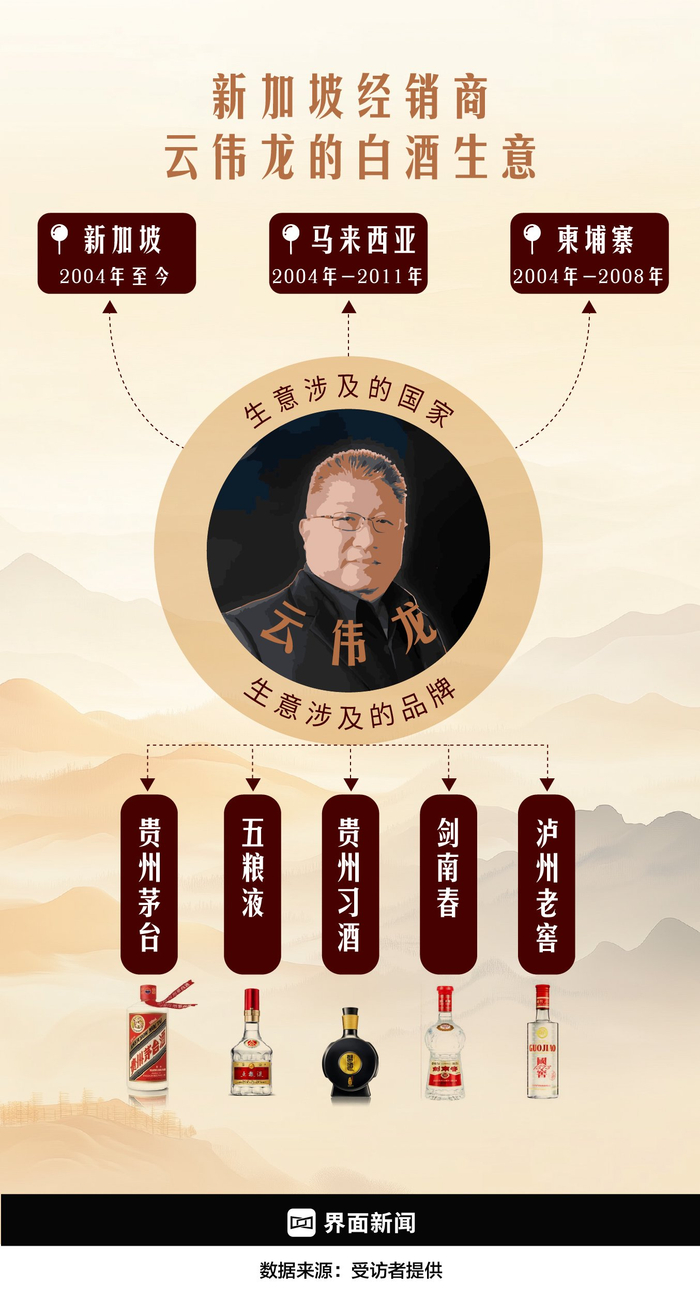
Core Insights - The article discusses the experiences of a Singaporean liquor distributor, Yun Weilong, who has been in the Chinese liquor business for 21 years, particularly focusing on the challenges and opportunities in the Southeast Asian market for Chinese liquor, especially Moutai [1][3][10]. Market Dynamics - The retail price of Moutai in Singapore can be 10%-15% higher than in China during market peaks, but recent fluctuations have led to reduced profit margins for distributors [1][3]. - In 2025, the wholesale price of Moutai in Singapore is expected to fluctuate around 300 Singapore dollars (approximately 1,650 RMB), indicating a shrinking profit space for distributors [1]. Historical Context - Yun Weilong started his journey in 2004, initially struggling with market acceptance but later establishing a successful business by focusing on Moutai and expanding to other brands like Wuliangye and Luzhou Laojiao [3][10]. - The consumption of beer dominates the Southeast Asian market, with beer accounting for 80.92% of total alcohol consumption in the region as of 2023 [3]. Emerging Opportunities - The influx of high-income Chinese immigrants and investments from Chinese companies in Southeast Asia presents new opportunities for the Chinese liquor market [4][10]. - A report by PwC indicates that many Chinese enterprises plan to increase investments in ASEAN countries, which could lead to a growing customer base for Chinese liquor [4]. Industry Challenges - The Chinese liquor industry is undergoing a significant adjustment period, with major companies like Yanghe, Wuliangye, and Luzhou Laojiao reporting declines in third-quarter performance [6]. - The competition among distributors in Singapore has intensified, with the number of authorized Moutai distributors increasing to six, leading to price competition and potential market confusion [10][29]. Marketing Strategies - Yun Weilong has adopted innovative marketing strategies, such as hosting liquor-related forums and beauty contests to promote Chinese liquor brands [4][20]. - The internationalization of Moutai is highlighted as a key growth area, with overseas revenue expected to exceed 5 billion RMB for the first time in 2024, and a 204.38% year-on-year increase in overseas revenue for the first three quarters of 2025 [10][30]. Consumer Behavior - Despite the high percentage of Chinese in Singapore, Western alcoholic beverages remain dominant due to cultural influences, making it challenging for Chinese liquor to gain popularity [17][34]. - The article notes that local consumers often prefer well-known Western brands, which complicates the marketing of Chinese liquor [34]. Future Outlook - The Chinese liquor export market is expected to grow, with a total export value of 4.478 billion RMB in 2024, marking a 16.61% increase year-on-year, and exports to Southeast Asia reaching 1.060 billion RMB, a 25.98% increase [30]. - The article concludes that while the overseas market for Chinese liquor is still small, it holds significant growth potential, especially as companies adapt their strategies to local markets [30][38].

白酒行业泡沫出清,汾酒董事长直言:白酒行业过得不容易
Sou Hu Cai Jing· 2025-12-03 04:36
Core Insights - The Chinese liquor industry is undergoing a significant restructuring and bubble clearing as of late 2025, with prices of premium products like Moutai dropping below official guidance and high inventory levels leading to widespread losses among distributors [1][3][5] Price Collapse and Inventory Issues - The price system in the liquor industry is experiencing a comprehensive loosening, with Moutai's wholesale price falling below 1600 yuan and e-commerce platforms offering prices as low as 1299 yuan, representing a decline of over 50% from its peak in 2021 [3][5] - This "benchmark effect" has spread across the industry, with major brands like Wuliangye and Luzhou Laojiao also seeing significant price drops, leading to over 60% of liquor companies facing price inversions [5][7] - The industry is facing severe inventory issues, with turnover days reaching 900 days and a 300% increase in private inventory circulation, indicating a collapse of speculative buying expectations [5][7] Performance Data - The liquor industry reported its worst quarterly performance in nearly a decade in Q3 2025, with 20 listed companies in A-shares generating a total revenue of 3177.79 billion yuan (down 5.90% year-on-year) and a net profit of 1225.71 billion yuan (down 6.93% year-on-year) [7][9] - Over 80% of companies reported a decline in net profit, with Wuliangye's revenue plummeting by 52% and Yanghe's profit dropping by 158% [7] Changing Consumer Logic - The core issue facing the industry is the failure of traditional growth logic, as government and business consumption models have become ineffective due to strict regulations and economic downturns [9][11] - Younger consumers are increasingly rejecting the traditional liquor culture, leading to a significant decline in white liquor consumption at social events [9][11] - Consumer demand is shifting from a focus on social consumption to a balance of social and personal enjoyment, with new consumption scenarios like casual drinking and home consumption emerging as growth areas [11][12] Strategic Adjustments - Shanxi Fenjiu is one of the few companies maintaining growth, with a revenue increase of 5% in the first three quarters of 2025, attributed to its product advantages and market strategies [15][18] - The company plans to adopt a "dual-line" strategy focusing on traditional markets and expanding into younger and international markets, with new product lines aimed at attracting younger consumers [15][18] Industry Transformation - The liquor industry is transitioning from a focus on investment to a focus on quality, with a projected decline in consumption volume over the next decade [19][20] - Companies are expected to prioritize producing better quality liquor and adapting to changing consumer demands, with a notable increase in the storage of high-quality base liquor [20] - The industry is moving towards a new phase characterized by social drinking, personal enjoyment, and investment collection, necessitating higher standards for product innovation and brand management [19][20]



共话全球酒业高质量发展 首届赤水河论坛落地茅台
Bei Jing Shang Bao· 2025-10-28 10:10
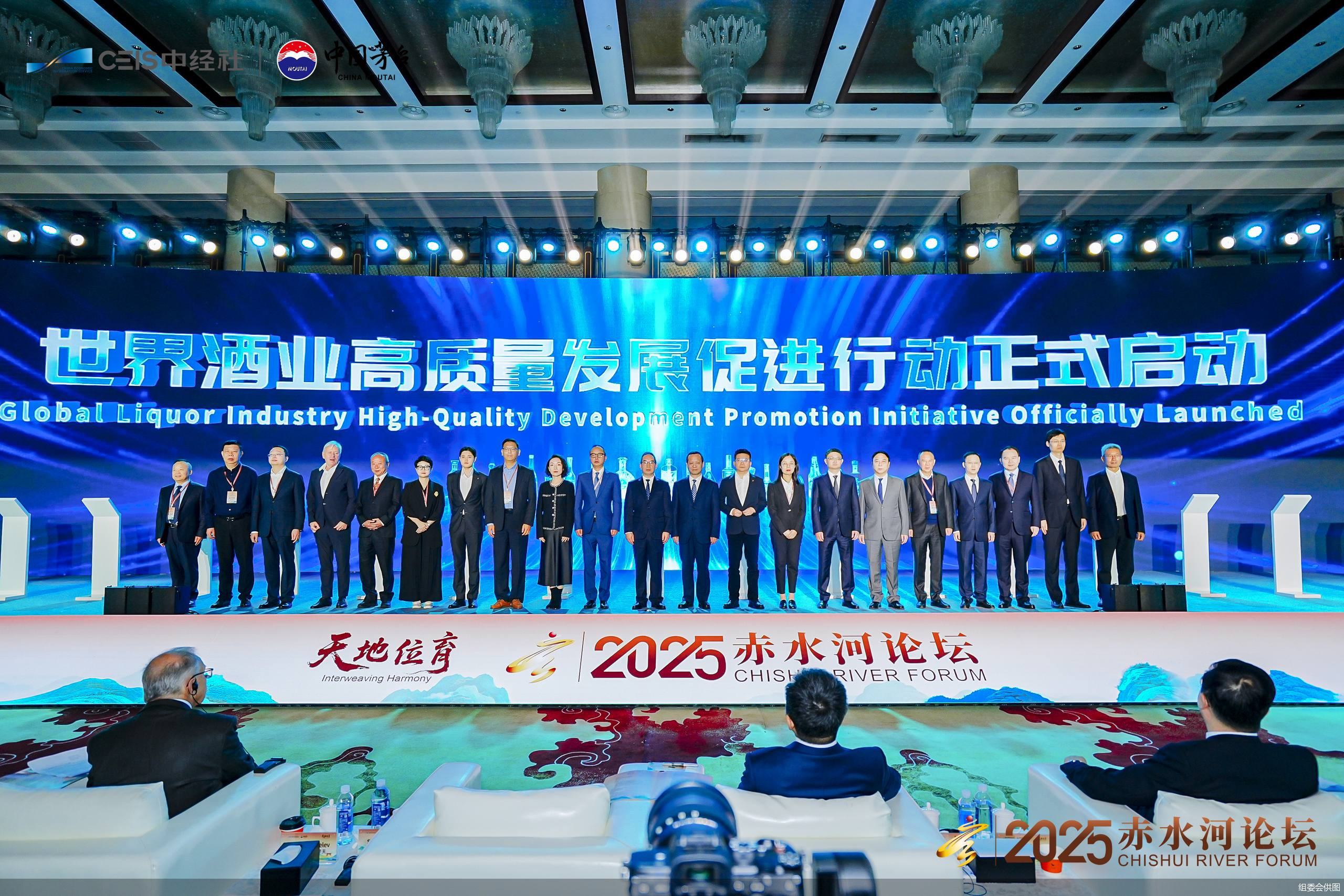
Core Insights - The event "Tian Di Wei Yu" 2025 Chishui River Forum was held to emphasize the ecological and industrial value of the Chishui River, known for producing world-class liquor brands like Moutai and Langjiu [1][3] - The forum aimed to foster international cooperation, innovation in techniques, and resource sharing within the liquor industry, contributing to high-quality global development [3][4] Industry Developments - The forum gathered over 400 participants, including international guests, liquor company representatives, and media, focusing on the "liquor+" concept [3] - The "World Liquor Industry High-Quality Development Promotion Action" was launched, aiming to create a collaborative global liquor community through communication and innovation [3] - A series of reports were set to be released, including the "Cultural Integration and Future Building through Liquor" think tank report and the "International Liquor Development Index Report (2025)" [3][4] Cultural and Economic Impact - The forum highlighted the importance of cultural heritage and green transformation in the liquor industry, providing authoritative references for consumers, investors, and industry professionals [4] - The outcomes of the forum are expected to enhance the industry's quality development while promoting cultural exchange and sustainable growth [4]
公布“灰名单”和“白名单” 酒企缘何对即时零售又爱又恨
Zhong Guo Jing Ying Bao· 2025-10-24 20:53
Core Insights - Wuliangye has issued a notice identifying 46 unauthorized stores selling its products, highlighting the issue of counterfeit goods in the market [2][3] - Other liquor companies like Moutai and Xijiu are also taking measures against unauthorized sales, indicating a broader industry trend towards protecting brand integrity [4][6] - The rise of instant retail is seen as a double-edged sword, offering rapid sales growth but also leading to price wars that can harm brand value and profit margins [5][9] Group 1: Company Actions - Wuliangye's notice marks its fourth response to online counterfeit issues since November, now including a list of unauthorized sellers [3] - Xijiu has also published a list of authorized stores and is taking a zero-tolerance approach to counterfeiting, emphasizing the protection of consumer rights [4] - Huaren Beer has temporarily halted sales on instant retail platforms due to price disruptions, indicating the challenges faced by companies in maintaining market stability [5][6] Group 2: Industry Trends - Instant retail is projected to grow significantly, with estimates suggesting a market size of 7.8 trillion yuan in 2024, up over 20% year-on-year [9] - Experts predict that the instant retail market could exceed 20 trillion yuan by 2030, highlighting its potential as a new growth avenue for liquor companies [2] - The competitive landscape is evolving, with major players like Huaren Beer and Guotai Wine forming strategic partnerships with instant retail platforms to enhance their market presence [9][10] Group 3: Challenges and Opportunities - The instant retail sector is characterized by intense competition and price wars, which can lead to reduced profit margins and potential quality issues [5][6] - Companies are urged to adapt to the instant retail model, balancing logistics costs with product pricing to ensure sustainability [5][10] - The future of instant retail is expected to involve a shift from low-price competition to service differentiation and brand positioning [9][10]
