LENOVO GROUP(00992)

Search documents
不花冤枉钱!直播办公两不误的低价高性能电脑
Xin Lang Cai Jing· 2026-01-07 01:45
Core Viewpoint - The article highlights the importance of reliable and affordable desktop computers for content creators and small-scale live streaming, emphasizing that there are several quality options available under 2500 yuan that cater to various needs in performance, expandability, and stability [1][5]. Group 1: Product Highlights - The Changcheng Lingyun DHC37, priced at 1859 yuan, features an Intel Core i5-12450H processor with eight cores and twelve threads, 16GB of RAM, and a 512GB SSD, making it suitable for daily live streaming and video editing [6]. - The Lenovo Qitian M450, equipped with an Intel Core i7-10700 processor, offers eight cores and sixteen threads, a 1TB storage capacity, and a 2GB dedicated graphics card, making it ideal for users needing enhanced processing power and expandability [2][7]. - The Lenovo ECC-T30, priced at 1389 yuan, is a compact industrial-grade host that supports lightweight live streaming with a low-power Intel Celeron J4125 processor, making it suitable for budget-conscious new streamers [4][7]. - The HP Pro Tower 288 G9 E, although its price is currently unavailable, boasts an i7-14700 processor with 20 cores and 28 threads, 16GB of RAM, and a 1TB PCIe 4.0 SSD, making it capable of handling high-load tasks such as high-bitrate live streaming [8]. Group 2: Target Audience and Use Cases - The four desktop models discussed cater to a range of needs from entry-level to near high-end, providing options for users who prioritize quiet operation, extensive connectivity, or core performance [5][8]. - These computers can not only handle daily live streaming tasks but also extend their utility to video editing, voice-over work, and remote collaboration, thus supporting a versatile content creation journey [5][8].

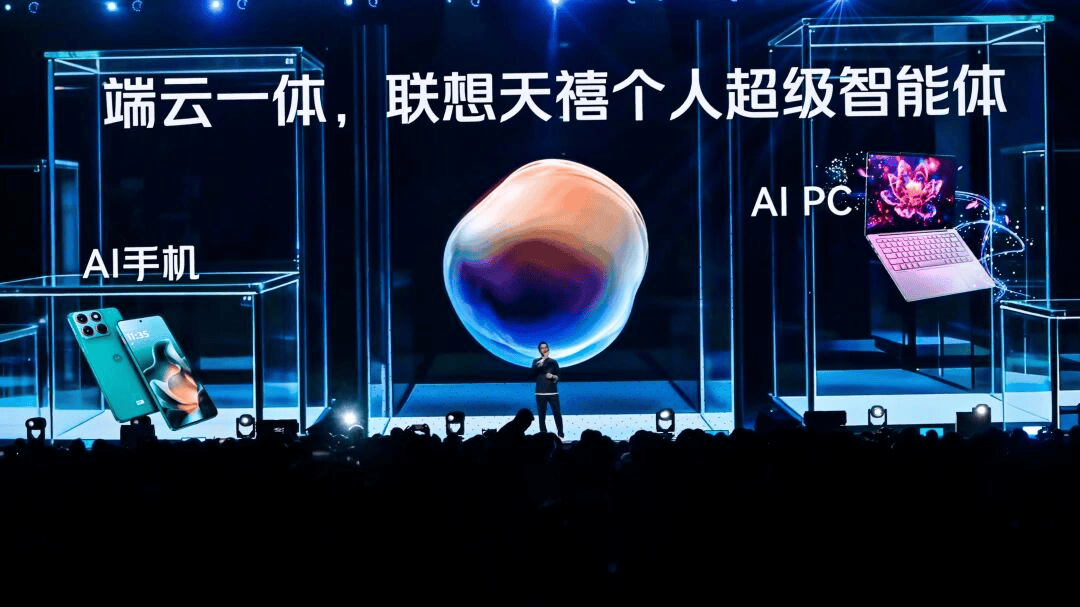
联想科技创新大会首次在CES期间举办,杨元庆、黄仁勋、苏姿丰、陈立武等演讲
Xin Lang Cai Jing· 2026-01-07 01:40
专题:联想创新科技大会 1月7日,CES 2026开幕第二天,联想Tech World大会在拉斯维加斯标志性的天幕大球sphere剧场进行。 这是联想首次在CES期间举办自己的年度科技大会。联想CEO杨元庆将携手科技行业顶级大咖亮相主题 演讲,包括英伟达CEO黄仁勋、AMD CEO苏姿丰、英特尔CEO陈立武。此外,国际足联主席因凡蒂诺 也将出席,与杨元庆一道展望即将召开的2026年世界杯。 新浪声明:所有会议实录均为现场速记整理,未经演讲者审阅,新浪网登载此文出于传递更多信息之目 的,并不意味着赞同其观点或证实其描述。 新浪声明:所有会议实录均为现场速记整理,未经演讲者审阅,新浪网登载此文出于传递更多信息之目 的,并不意味着赞同其观点或证实其描述。 责任编辑:王翔 责任编辑:王翔 专题:联想创新科技大会 1月7日,CES 2026开幕第二天,联想Tech World大会在拉斯维加斯标志性的天幕大球sphere剧场进行。 这是联想首次在CES期间举办自己的年度科技大会。联想CEO杨元庆将携手科技行业顶级大咖亮相主题 演讲,包括英伟达CEO黄仁勋、AMD CEO苏姿丰、英特尔CEO陈立武。此外,国际足联主席因凡蒂 ...
Lenovo Supercharges Enterprise AI with the Launch of Agentic AI and Lenovo xIQ to Deliver Full-Lifecycle Hybrid AI at Scale
Businesswire· 2026-01-07 01:00
Lenovo Agentic AI gives organizations the governance, tools, advice, and ongoing support needed to deploy and manage production-ready AI agents faster and smarter – turning AI ambition into measurable impact. ...


Lenovo Teams with NVIDIA on Gigawatt AI Factories Program to Accelerate Enterprise AI
Businesswire· 2026-01-07 01:00
LAS VEGAS--(BUSINESS WIRE)--Lenovo unveils the Lenovo AI Cloud Gigafactory with NVIDIA, expanding and reinforcing its partnership with NVIDIA. ...


Lenovo Unveils Breakthrough Personal AI Super Agent, Novel Adaptive Concepts, and Next-Gen Device Innovations Spanning Mobile, Gaming, Consumer and Commercial Portfolios at CES 2026
Businesswire· 2026-01-07 01:00
Core Insights - Lenovo unveiled a comprehensive range of innovations at CES 2026, focusing on smarter personal AI experiences and significant updates across its device portfolio, including ThinkPad, ThinkBook, ThinkCentre, Yoga, IdeaPad, Legion, and Motorola [1][2] Group 1: Personal AI Innovations - The introduction of Lenovo and Motorola Qira marks a new era of personal AI, designed to be user-centric, built on trust, and shaped by user control [2] - Lenovo Qira operates as a Personal Ambient Intelligence System, providing unified intelligence across Lenovo and Motorola devices, enhancing user connectivity and task management [3][4] Group 2: Smartphone Developments - Motorola expanded its premium smartphone lineup with new flagship devices that integrate personal AI and advanced camera capabilities, enhancing user creativity and experiences [5] - Early concept work from Motorola's 312 Labs explores future AI companions for more context-aware assistance in daily scenarios [6] Group 3: Proof-of-Concept Innovations - Lenovo showcased several proof-of-concept innovations, including the ThinkPad Rollable XD Concept, which features dynamically expanding displays for multitasking [7] - The Lenovo Personal AI Hub Concept (Project Kubit) aims to bring high-performance AI closer to users across multiple devices [7] - The Lenovo AI Glasses Concept and Project Maxwell from Motorola 312 Labs demonstrate how context-aware intelligence can operate across devices within the Lenovo Qira ecosystem [7] Group 4: Gaming Innovations - Lenovo continues to push gaming innovation with new devices designed for enhanced flexibility, immersion, and performance [9][10] Group 5: Consumer and Commercial Devices - New Yoga and IdeaPad devices were introduced, focusing on creativity and everyday computing, including the Aura Edition Copilot+ PCs [11][12] - Lenovo's new commercial AI PCs and solutions are designed for modern IT environments, emphasizing performance, security, and durability [13][14] Group 6: Special Editions - As the Official Technology Partner of FIFA, Lenovo launched a range of FIFA World Cup 26 Special Edition devices across its various product lines, celebrating performance and global connectivity [15] Group 7: Company Overview - Lenovo is a global technology powerhouse with a revenue of US$69 billion, ranked 196 in the Fortune Global 500, and operates in 180 markets, focusing on delivering Smarter Technology for All [21]

Lenovo Defines the Next Era of Hybrid AI with Personalized, Perceptive, and Proactive AI Portfolio at Tech World @ CES 2026
Businesswire· 2026-01-07 01:00
Core Insights - Lenovo introduced significant innovations in Hybrid AI, including a new personal AI super agent, AI PCs, and smartphones at Tech World @ CES 2026 [1] - The company showcased proofs of concept for agentic-native wearables and next-generation enterprise AI infrastructure [1] - Lenovo emphasized its ongoing commitment to AI innovation across various domains, including devices, infrastructure, solutions, and services [1] Product Innovations - The new personal AI super agent is designed to enhance user experience and interaction with technology [1] - AI PCs and smartphones are part of Lenovo's strategy to integrate advanced AI capabilities into consumer devices [1] - The introduction of agentic-native wearables represents a forward-thinking approach to personal technology [1] Industry Collaborations - Lenovo announced breakthrough collaborations in the entertainment and sports sectors, indicating a strategic focus on industry partnerships [1] - These collaborations aim to leverage AI technology to create new experiences and solutions within these industries [1]

CES 2026 AI竞争“硬碰硬”
Bei Jing Shang Bao· 2026-01-06 15:52
作为科技界的"春晚",CES 2026如约而至。 美西时间1月6日,国际消费类电子产品展览会正式开展,并持续到1月9日。作为全球科技产品发展的风 向标,CES以汇集当下最新的创新技术闻名,也是预测未来的窗口。 而今年这场科技盛宴之所以热度非凡,还在于AI时代中美科技顶流的强强相遇。 但不同的是,从芯片到硬件再到垂直场景,硬碰硬拼产品注定是新年关键词。 万物即可AI,杀手级的应用到底在哪?AI竞争从云端走向终端,由"炫技"转向务实,从理念碰撞转向产 品竞争,标注着AI竞争走向新维度。 当AI拥有实体,也预示着一场去伪存真的残酷大考。哪些是提升生产力、解决生活痛点的真需求,哪 些是风口之上的伪创新,有用与无用,将随着大量产品的落地得到验证。 拉斯维加斯一夜变身科技之城,像是映射科技产业的一场豪赌。CES是科技的秀场,也是剧透未来的战 场。硬件爆发让AI与物理世界的"链接"唾手可得,赢家的奖励将是下一个十年甚至更久的增长引擎。 芯片的跨越式成长,不仅是流畅运行更复杂的本地大模型,将用户的隐私与效率推向新高度。英伟达、 英特尔、AMD、高通的激烈角逐,各家芯片制程工艺的代际跨越,也是技术路线的选择,更是对未来 计算架 ...



中国智能眼镜“扎堆”CES 2026
Guo Ji Jin Rong Bao· 2026-01-06 14:55
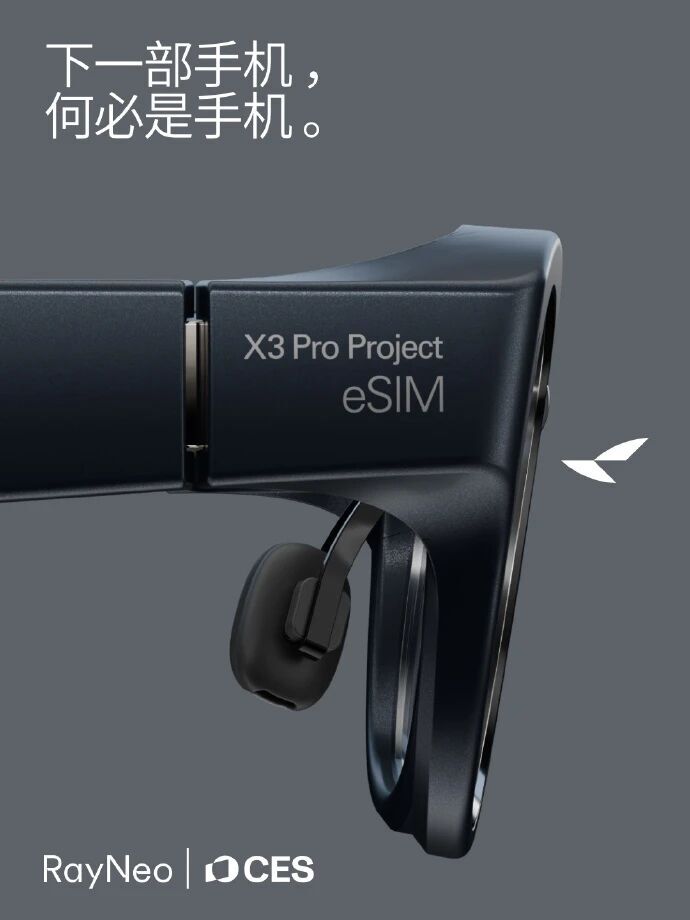
Core Insights - The CES 2026 event in Las Vegas is showcasing advancements in technology, particularly in the fields of semiconductors, artificial intelligence, and consumer electronics, with a notable focus on smart glasses as a potential replacement for smartphones [1] Group 1: Smart Glasses Market Developments - The global first eSIM smart glasses are set to be unveiled by Thunderbird Innovation, which has also secured over 1 billion yuan in funding from major Chinese telecom operators, indicating a significant investment in the smart glasses sector [3] - Rokid has launched its AI smart glasses, Rokid Style, at CES, which are marketed as the lightest full-featured AI glasses at 38.5 grams, priced starting at $299, and compatible with multiple AI engines [3] - XREAL has introduced the ROG Xreal R1, the first AR glasses with a 240Hz refresh rate, targeting the gaming market and enhancing the AR experience [4] Group 2: Industry Collaborations and Innovations - Google has announced its return to the smart glasses market with Project Aura, collaborating with XREAL to integrate advanced optical and AI capabilities [6] - Lenovo is set to unveil several AI concept products, including a personal AI smart glasses prototype, during CES, highlighting its collaboration with NVIDIA in the AI space [6] - XGIMI has expanded its strategic focus from home projectors to personal smart glasses with the launch of its MemoMind brand, offering two series of AI glasses [7] Group 3: Market Predictions and Policy Support - The Chinese government has included smart glasses in its new subsidy policy for digital and smart products, marking a significant step for the industry [9] - IDC forecasts that the global smart glasses market will exceed 23.687 million units by 2026, with China's market expected to surpass 4.915 million units, indicating a shift towards large-scale growth [10]

联想申请电子设备散热结构专利,提高外观品质
Jin Rong Jie· 2026-01-06 10:29
Group 1 - Lenovo (Singapore) Private Limited has applied for a patent titled "Electronic Device" with publication number CN121277314A, filed on June 2025 [1] - The patent summary indicates that the electronic device is designed to ensure cooling performance while enhancing aesthetic quality [1] - The electronic device includes a housing with an air intake on the bottom surface, a fan located within the housing, and leg components positioned on the bottom surface of the housing, which partially cover the air intake at a raised position relative to the opening surface [1]
大模型开启架构革命之年,AI全产业链酝酿新变局
Sou Hu Cai Jing· 2026-01-06 10:27
Core Insights - The AI industry is experiencing a wave of architectural innovations, with significant developments from DeepSeek and collaborations between Princeton and UCLA, as well as a new model architecture from Yann LeCun expected within 12 months [1] - The emergence of new model architectures is seen as a crucial driver to overcome the diminishing returns associated with existing models, particularly as companies like OpenAI face limitations in performance improvements [1] - The integration of different architectural innovations will lead to a new phase of application acceleration in the AI sector, emphasizing the importance of user experience and model capability enhancement [1] Group 1: Architectural Innovations - DeepSeek introduced the mHC framework, which enhances stability and scalability while reducing computational and energy demands, making it valuable for industrial applications [6] - The DDL architecture allows neural networks to dynamically manage their internal memory states, catering to complex information processing needs in government, research, and commercial sectors [6] - Yann LeCun's JEPA architecture breaks the reliance on text, enabling understanding through video and spatial data, which is essential for applications like smart glasses and robotics [6][7] Group 2: Market Dynamics - The competition among AI model vendors is intensifying, with varying progress and strategies in implementing new architectures, leading to differentiation in capabilities across different fields [1][5] - Lenovo's multi-model integration strategy allows users to access various top-tier models, enhancing the "AI Twin" experience and addressing diverse application needs [6][9] - The rise of large-scale AI enterprises, such as Lenovo's Tianxi AI with over 280 million active users, poses challenges for smaller startups in selecting appropriate architectural paths [3][5] Group 3: Infrastructure and Hardware - The new model architectures necessitate upgrades in computational infrastructure, presenting opportunities for suppliers like Lenovo, which has shown proactive market responsiveness [2][10] - Lenovo's introduction of the WR5215 G5 server, featuring significant performance improvements and compatibility with domestic software ecosystems, highlights its strategic alignment with emerging architectural needs [10][12] - The collaboration between Lenovo and NVIDIA to develop a revolutionary server indicates a strong focus on integrating advanced chip technology to support diverse AI applications [12][13] Group 4: Future Outlook - Anticipation surrounds potential major releases from DeepSeek, which could further stimulate practical applications and economic value in the AI sector [14] - The ability of companies to adapt to the evolving landscape of model architectures and effectively integrate them into their offerings will be critical for maintaining competitive advantages [9][14]