
CNCB(00998)

Search documents
中信银行(国际)发布最新投资月报:关注美国降息和亚洲股市投资机会
Sou Hu Cai Jing· 2025-09-02 04:46
Core Viewpoint - The expectation of a rate cut by the Federal Reserve in September has sparked global market interest, with a focus on the investment opportunities in Asian markets, particularly in the Hong Kong and mainland China stock markets, supported by favorable factors [1][6][10]. Group 1: Global Market Trends - The anticipation of a rate cut by the Federal Reserve has led to a rebound in global stock markets, although U.S. stocks face high investment risks due to elevated valuations and cautious market sentiment [3][5]. - The U.S. stock market's valuation is currently above the average of the past decade, with the S&P 500's forecasted P/E ratio exceeding one standard deviation, indicating a less favorable risk-reward ratio for short-term investments [5]. Group 2: Asian Market Opportunities - Asian stock markets are seen as having significant investment potential, with higher dividend yields compared to U.S. and European markets, and Asia being a major contributor to global economic growth [6][10]. - The technology sector in Asia is highlighted as a focal point, with increased government and corporate investments in artificial intelligence, positioning Asian tech companies favorably within the AI supply chain [7]. Group 3: Hong Kong and Mainland China Stock Markets - The Hong Kong stock market has shown strong performance, particularly in the technology sector, supported by government initiatives to reduce reliance on imported chips and positive earnings reports from tech companies [4][8]. - The A-share market is attracting capital due to lower deposit rates in mainland China, with a relatively high risk premium making it an attractive investment option [8][9].


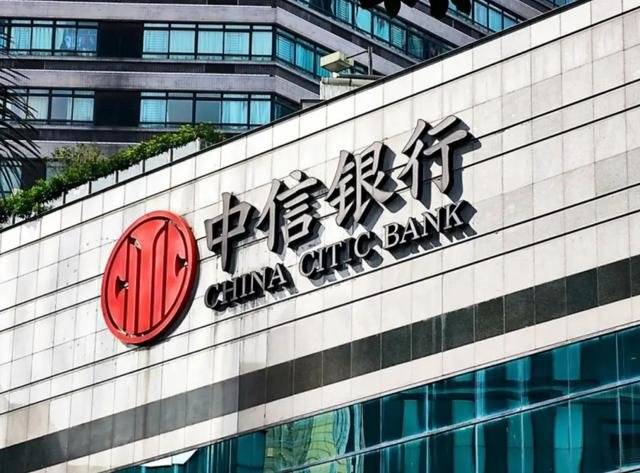
今天,A股再现“跷跷板
Zhong Guo Zheng Quan Bao· 2025-09-02 04:43
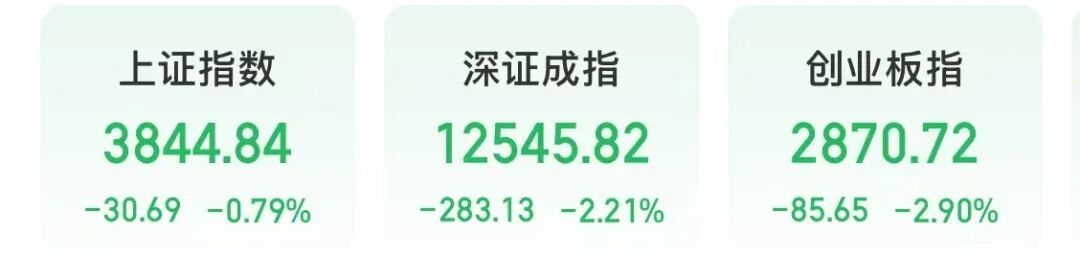
Market Overview - The market exhibited a "seesaw" effect with high dividend assets performing actively while technology stocks experienced a pullback [1] - The banking and electricity sectors saw gains, while the computing industry chain stocks, including Dekoli, Cambridge Technology, and others, faced significant declines [1] - The Shanghai Composite Index fell by 0.79%, the Shenzhen Component Index dropped by 2.21%, and the ChiNext Index decreased by 2.9% [2] Banking Sector - The banking sector rebounded with notable gains in stocks such as Chongqing Rural Commercial Bank and Shanghai Rural Commercial Bank [3] - The overall performance of the banking sector's mid-year reports showed improvement, with most banks experiencing revenue and profit growth, a stable non-performing loan ratio, and a steady provision coverage ratio [5] - Analysts suggest that the banking sector may see a rotation and rebound due to solid fundamentals and previous adjustments, with a focus on regional banks and high-dividend stocks [6] Electricity Sector - The electricity sector showed strong performance, with stocks like Jingyuntong and Huaguang New Energy experiencing significant increases [8] - In July, the total electricity consumption reached 10,226 billion kWh, marking an 8.6% year-on-year increase, indicating robust demand [9] - Analysts recommend focusing on leading companies in renewable energy, regional offshore wind power firms, and water power stocks with stable performance and growth potential [9]

中信银行将在9月12日至13日、14日进行基础设施维护工作
Jin Tou Wang· 2025-09-02 03:30
Core Points - CITIC Bank announced infrastructure maintenance scheduled from September 12, 2025, 22:00 to September 13, 2025, 06:00, and from September 14, 2025, 00:00 to 05:00 to enhance service quality [1] - During the first maintenance period, some electronic channel transactions will experience brief interruptions [1] - The second maintenance period will affect various electronic channel services, including UnionPay and NetUnion payments, cross-border payments, ATM queries, deposits and withdrawals, digital currency, and card payments, with expected interruptions lasting no more than 30 minutes [1]
中信银行将在9月5日至9月6日升级电子银行跨境汇款业务系统
Jin Tou Wang· 2025-09-02 03:30
2025年9月2日,中信银行(601998)发布公告称,为提供更优质便捷的服务,中信银行将于2025年9月5 日(周五)23:00至9月6日(周六)03:00升级电子银行跨境汇款业务系统。在此期间,手机银行、个 人网银跨境汇款业务将暂停服务。由此给您带来的不便,敬请谅解。 ...
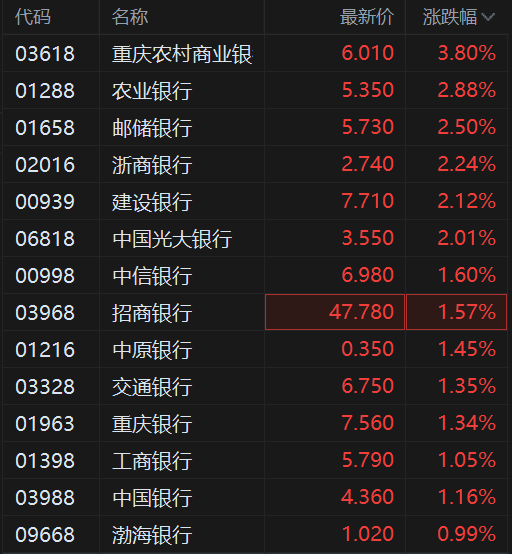
港股异动丨内银股逆势上涨 农行涨近3% 浙商银行涨超2% 四大行上半年净利超千亿
Ge Long Hui· 2025-09-02 03:22
Core Viewpoint - Hong Kong banking stocks have risen against the trend, with several banks showing significant gains, indicating a positive market sentiment towards the banking sector amid stable financial performance [1] Group 1: Stock Performance - Agricultural Bank and Postal Savings Bank rose nearly 3%, while China Everbright Bank, China Construction Bank, and Zhejiang Commercial Bank increased over 2% [1] - Other banks such as CITIC Bank and China Merchants Bank saw a rise of 1.6%, with several others including Bank of Communications, Bank of China, and Industrial and Commercial Bank of China increasing by over 1% [1] Group 2: Financial Performance - As of the end of August, 42 listed banks have reported their semi-annual results, showing a steady increase in support for the real economy [1] - The 42 A-share listed banks achieved a total operating income exceeding 2.9 trillion yuan, representing a year-on-year growth of over 1% [1] - The net profit attributable to shareholders reached 1.1 trillion yuan, with a year-on-year increase of 0.8% [1] - Major banks such as ICBC, CCB, ABC, and BOC reported net profits exceeding 100 billion yuan, while the non-performing loan ratio for the six major commercial banks remained low [1]

零售银行“过冬”
3 6 Ke· 2025-09-02 01:29
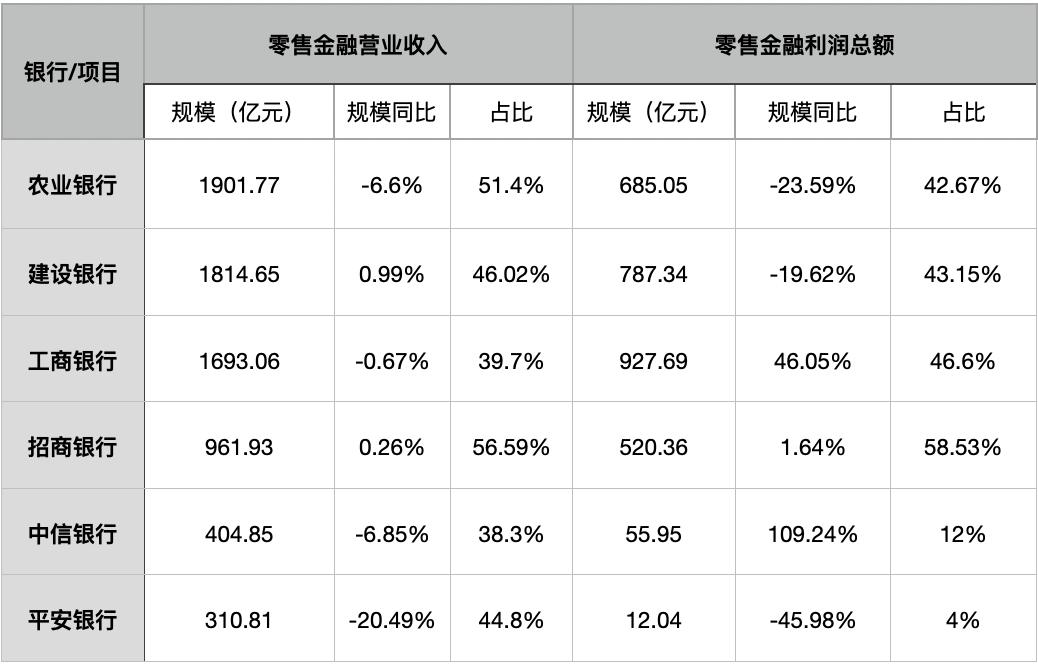
Core Viewpoint - The retail banking sector in China is facing significant challenges, with declining revenues and profits in retail financial services, particularly in retail credit and wealth management, as economic conditions worsen [1][12][18]. Group 1: Retail Banking Performance - In the first half of 2025, retail banks continued to experience pressure, with major banks reporting declines in retail financial income and profits [4][7]. - Agricultural Bank of China reported retail financial income of 190.18 billion yuan, down 6.6% year-on-year, and a profit of 68.51 billion yuan, down 23.59% [4]. - China Construction Bank's retail financial income was 181.47 billion yuan, up 0.99%, but profits fell by 19.62% to 78.73 billion yuan [4]. - Industrial and Commercial Bank of China saw retail financial income decrease by 0.67% to 169.31 billion yuan, while profits increased by 46.05% to 92.77 billion yuan, largely due to a low base from the previous year [4][6]. - Ping An Bank's retail financial income plummeted by 20.49% to 31.08 billion yuan, with profits down 45.98% to 1.20 billion yuan [4][7]. Group 2: Credit Quality and Challenges - The retail loan non-performing ratio for major banks has shown signs of deterioration, with Ping An Bank at 1.27%, and the credit card non-performing ratio at 2.3% [13]. - The overall economic environment, including a downturn in the real estate sector and low consumer demand, has led to a significant reduction in retail banking income and growth [12][18]. - The shift from high-risk, high-return lending strategies to a focus on wealth management is becoming increasingly important for banks, but this transition is challenging and requires long-term investment [17][19]. Group 3: Wealth Management and Future Strategies - Wealth management is seen as a critical area for future growth, but banks are struggling to effectively transition from traditional retail banking to wealth management services [17][20]. - The average interest rate on personal deposits for major banks varies, with China Merchants Bank maintaining a low rate of 1.18%, which helps in reducing funding costs [24]. - China Merchants Bank reported a significant increase in wealth management income, reaching 20.86 billion yuan in the first half of 2025, marking a 5.45% year-on-year growth [25]. - The retail AUM (Assets Under Management) for China Merchants Bank is significantly lower in terms of retail deposits compared to its peers, indicating a stronger wealth management capability [22][23].




2375亿!17家上市银行中期分红大手笔
Shen Zhen Shang Bao· 2025-09-01 16:41
Core Viewpoint - The listed banks in China have shown strong performance in the first half of the year and are preparing to reward investors with significant mid-term dividends, reflecting their profitability and commitment to shareholder returns [2][4]. Group 1: Dividend Distribution - Among the 42 listed banks in A-shares, nearly half will implement mid-term dividends for 2025, with 17 banks already disclosing their plans, totaling 237.54 billion yuan [2]. - The six major state-owned banks lead in dividend distribution, with Industrial and Commercial Bank of China (ICBC) at the forefront, distributing 50.396 billion yuan, followed by China Construction Bank and Agricultural Bank of China with 48.605 billion yuan and 41.823 billion yuan respectively [2]. - The total dividends from the six major state-owned banks account for 86% of the total dividends announced by the 17 banks [2]. Group 2: Specific Bank Plans - Among joint-stock banks, CITIC Bank, Minsheng Bank, Ping An Bank, and Huaxia Bank have announced their mid-term dividend plans, with CITIC Bank proposing a total of 10.461 billion yuan [3]. - In the city and rural commercial banks, seven banks have announced mid-term dividends, including Ningbo Bank and Shanghai Bank, with Shanghai Bank proposing a cash dividend of 3 yuan per 10 shares [3]. - Four banks have a dividend payout ratio exceeding 30%, including Shanghai Bank and Postal Savings Bank, indicating a strong commitment to returning value to shareholders [3]. Group 3: Market Implications - The expansion of banks implementing mid-term dividends and their willingness to distribute reflects the resilience of the banking sector's profitability and a positive response to shareholder return demands [4]. - This trend indicates improved cash flow and capital management capabilities among certain banks, which may help boost market confidence and attract long-term value investors [4].



银行行长纷纷表态“反内卷”
21世纪经济报道· 2025-09-01 13:31
Core Viewpoint - The banking industry is undergoing a transformation focused on "anti-involution," emphasizing high-quality development and structural adjustments rather than mere scale expansion [1][10][18]. Group 1: Industry Trends - The term "anti-involution" was officially introduced in the banking sector by the People's Bank of China in its 2024 Q3 monetary policy report, highlighting the need to address the significant deviation in loan-to-deposit ratios affecting monetary efficiency [1][2]. - Recent earnings reports from banks indicate a shift in market focus from external shocks to internal structural adjustments, with many bank executives explicitly mentioning "anti-involution" in their statements [1][5][10]. Group 2: High-Quality Development - Many banks are now prioritizing high-quality development over scale, with key phrases like "stability," "solid," and "high quality" frequently appearing in their mid-year earnings calls [11][12]. - The consensus among banks is to abandon the scale obsession and focus on efficiency and quality, as articulated by various bank leaders [10][12][18]. Group 3: Pricing Mechanisms - Pricing strategies are being refined as a key approach to combat involution, with banks like Huaxia Bank and ICBC implementing rational pricing and risk-based pricing to maintain market order and support the real economy [5][6][12]. - The importance of synchronizing asset and liability sides in the anti-involution strategy is emphasized, as failure to do so could negate the benefits of reduced deposit costs [6][12]. Group 4: Non-Interest Income - Non-interest income is becoming a critical focus for banks to diversify revenue streams and reduce reliance on traditional credit, with many banks expanding into wealth management, investment banking, and pension finance [14][18]. - For instance, ICBC reported a non-interest income of 95.5 billion yuan, while Agricultural Bank of China highlighted a 94.6% increase in its pension finance loans [14][16]. Group 5: Policy Guidance - The need for policy guidance to establish a correct value system in the banking industry is recognized, with a focus on genuine credit demand and risk prevention [2][7]. - The government's emphasis on supply-side reforms and market order is seen as a positive signal for achieving sustainable development in the banking sector [7][18].



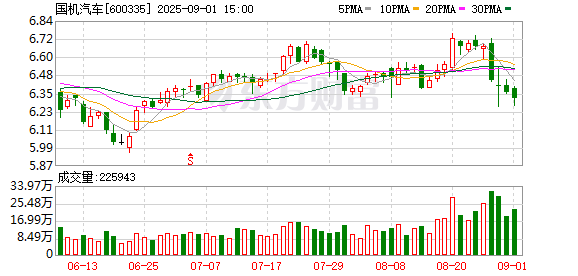
国机汽车:关于取得金融机构股票回购专项贷款承诺函的公告
Zheng Quan Ri Bao· 2025-09-01 13:17
Core Points - Company has received a loan commitment letter from CITIC Bank Beijing Branch for a maximum loan amount of RMB 45 million [2] - The annual interest rate for the loan is set at 1.80% [2] - The loan has a term of 3 years and is designated solely for stock repurchase purposes [2]

信银金投望“落子”广州,是否入局AIC银行仍存分歧
Feng Huang Wang· 2025-09-01 12:59
Core Viewpoint - The establishment of Asset Investment Companies (AIC) is gaining momentum among Chinese banks, with notable developments from banks like CITIC Bank and Postal Savings Bank, indicating a shift in the banking sector towards new investment opportunities and strategies [1][3][5]. Group 1: Developments in AIC Establishment - In March 2025, regulatory authorities announced further support for national banks to establish AICs, leading to responses from several banks including CITIC Bank and Industrial Bank [1]. - CITIC Bank announced plans to fully establish a financial asset investment subsidiary, receiving approval from the National Financial Supervision Administration for the establishment of Xinyin Financial Asset Investment Co., with a registered capital of RMB 10 billion [1]. - The headquarters of Xinyin Financial Asset Investment Co. is expected to be in Guangzhou, chosen for its significance in the Guangdong-Hong Kong-Macao Greater Bay Area and its vibrant tech enterprise ecosystem [1]. Group 2: Differing Attitudes Among Banks - There is a divide among banks regarding the establishment of AICs, with some banks like CITIC, Industrial, and China Merchants Bank officially moving forward, while others remain cautious and are observing the outcomes of these early adopters [3][4]. - Postal Savings Bank is actively pursuing the establishment of its own AIC, planning to invest RMB 10 billion, but has not yet received approval for its establishment [3][4]. Group 3: Market Sentiment and Challenges - The market generally views the expansion of AIC licenses from state-owned banks to joint-stock banks positively, anticipating new business opportunities distinct from traditional lending [5]. - Despite optimism, banks with existing AIC licenses are prioritizing stability and risk management, facing challenges such as limited exit channels for equity investments [5][6]. - The current IPO environment poses difficulties for banks seeking to realize returns on equity investments, leading to a cautious approach among smaller banks regarding AIC establishment [6].
