
CNCB(00998)

Search documents
中信银行股份有限公司关于在50亿美元中期票据计划项下发布3亿美元中期票据提取发售通函的公告
Shang Hai Zheng Quan Bao· 2025-08-06 18:10
中信银行股份有限公司 关于在50亿美元中期票据计划项下发布 3亿美元中期票据提取发售通函的公告 本行董事会及全体董事保证本公告内容不存在任何虚假记载、误导性陈述或者重大遗漏,并对其内容的 真实性、准确性和完整性承担法律责任。 证券代码:601998 证券简称:中信银行 公告编号:临 2025-058 中信银行股份有限公司(以下简称"本行")伦敦分行在50亿美元中期票据计划(以下简称"计划")项 下,已向香港联合交易所有限公司(以下简称"联交所")及伦敦证券交易所(London Stock Exchange plc)提交3亿美元中期票据上市申请,于2028年到期,相关票据已于2025年8月6日完成上市。根据计 划,发行的票据仅供专业投资者(根据联交所公司证券上市规则第37章定义,专业投资者指(a)如属香 港人士,按《证券及期货条例》附表1第1部所界定的专业投资者(包括按该条例第397条所制定的规则 所指的人士);或(b)如属非香港人士,根据有关司法权区对公开发售的相关豁免可向其出售证券的人 士。)购买,详情请参考本行2025年8月6日刊载于联交所披露易网站(www.hkexnews.hk)的相关公 告。 特此公 ...
中信银行郑州分行:扩大金融供给 助力提振消费
Sou Hu Cai Jing· 2025-08-06 14:26
Group 1 - The core viewpoint of the articles highlights the proactive measures taken by CITIC Bank to support small business owners and consumers through various financial products and services, particularly in the context of enhancing consumption and economic growth [1][3][6] - CITIC Bank has introduced personal credit products and inclusive financial services that cater to diverse business needs, such as renovation and equipment upgrades for small enterprises, with loan limits reaching up to 10 million yuan [1] - The bank's online credit loan product "Xin Miaodai" offers 24/7 service without collateral, allowing for flexible borrowing for various consumer needs, thus promoting economic activity [1][3] Group 2 - In the automotive finance sector, CITIC Bank collaborates with manufacturers to provide zero and low-interest products, enhancing customer access to financing for both new and used vehicles, with loan amounts up to 1 million yuan and terms up to five years [4] - The bank has implemented differentiated financial products to support the "old for new" consumption initiative, improving customer efficiency and approval rates through dedicated promotional channels [4] - CITIC Bank's efforts align with national policies aimed at boosting consumption and expanding financial supply, as outlined in the guidelines issued by the People's Bank of China and other departments [3][6]

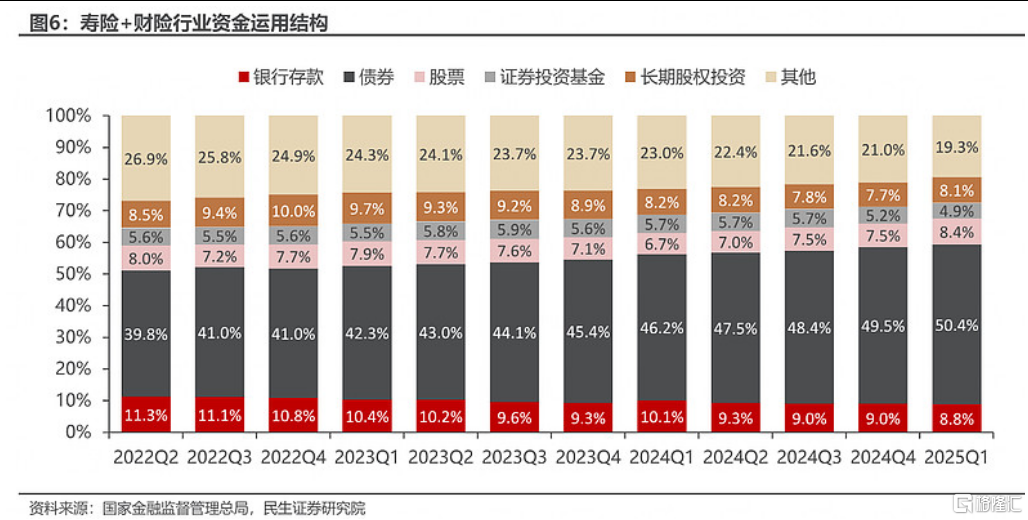
债券增值税恢复征收,险资继续增配银行股?
Ge Long Hui· 2025-08-06 10:34
Group 1 - The core viewpoint of the article is the announcement by the Ministry of Finance and the State Taxation Administration to resume the collection of value-added tax on interest income from government bonds, local government bonds, and financial bonds starting from August 8, which is expected to impact the attractiveness of high-dividend assets [1][3] - The new tax regulation is anticipated to decrease the after-tax yield of bond investments, thereby slightly enhancing the relative appeal of high-dividend assets, particularly in the banking sector [3][6] - Insurance capital is likely to shift towards investment products with better tax advantages or higher returns, reinforcing the trend of "tax-exempt assets + high-dividend equities" in their investment strategy [3][8] Group 2 - Bank stocks are seen as suitable for insurance capital allocation due to their high dividend yields, with major state-owned banks maintaining yields above 5% [6][10] - The implementation of the new financial instrument standards (IFRS 9) has led insurance capital to prefer including bank stocks in their FVOCI accounts, allowing for stable dividend income while mitigating the impact of stock price fluctuations on profit statements [7][8] - The shift in regulatory assessment standards for insurance companies towards long-term evaluations encourages a preference for holding high-dividend bank stocks rather than frequent trading [8][10] Group 3 - The insurance sector's holdings in bank stocks have increased significantly, with a reported market value of 265.78 billion yuan, representing a 45.05% share of their total holdings [8][10] - The trend of rising premium income from dividend insurance products since 2024 is expected to further enhance insurance capital's allocation to bank stocks [10][14] - The Bank AH Index, which includes both A-shares and H-shares of banks, has shown a cumulative increase of 96.57% since its inception, outperforming the broader banking index [14][16]



中信银行: 中信银行股份有限公司关于在50亿美元中期票据计划项下发布3亿美元中期票据提取发售通函的公告
Zheng Quan Zhi Xing· 2025-08-06 09:09
中信银行股份有限公司 证券代码:601998 证券简称:中信银行 公告编号:临 2025-058 特此公告。 中期票据提取发售通函的公告 本行董事会及全体董事保证本公告内容不存在任何虚假记载、误导性陈述 或者重大遗漏,并对其内容的真实性、准确性和完整性承担法律责任。 中信银行股份有限公司(以下简称"本行")伦敦分行在50亿美元中期票据计 划(以下简称"计划")项下,已向香港联合交易所有限公司(以下简称"联交 所")及伦敦证券交易所(London Stock Exchange plc)提交3亿美元中期票据上市 申请,于2028年到期,相关票据已于2025年8月6日完成上市。根据计划,发行 的票据仅供专业投资者1购买,详情请参考本行2025年8月6日刊载于联交所披露 易网站(www.hkexnews.hk)的相关公告。 关于在50亿美元中期票据计划项下发布3亿美元 中信银行股份有限公司董事会 根据联交所公司证券上市规则第37章定义,专业投资者指(a)如属香港人士,按《证券及期货条例》附 表1 第1部所界定的专业投资者(包括按该条例第397条所制定的规则所指的人士);或(b)如属非香港人 士,根 据有关司法权区对公 ...
中信银行(601998) - 中信银行股份有限公司关于在50亿美元中期票据计划项下发布3亿美元中期票据提取发售通函的公告
2025-08-06 08:45
证券代码:601998 证券简称:中信银行 公告编号:临 2025-058 中信银行股份有限公司 本行董事会及全体董事保证本公告内容不存在任何虚假记载、误导性陈述 或者重大遗漏,并对其内容的真实性、准确性和完整性承担法律责任。 中信银行股份有限公司(以下简称"本行")伦敦分行在50亿美元中期票据计 划(以下简称"计划")项下,已向香港联合交易所有限公司(以下简称"联交 所")及伦敦证券交易所(London Stock Exchange plc)提交3亿美元中期票据上市 申请,于2028年到期,相关票据已于2025年8月6日完成上市。根据计划,发行 的票据仅供专业投资者1购买,详情请参考本行2025年8月6日刊载于联交所披露 易网站(www.hkexnews.hk)的相关公告。 特此公告。 中信银行股份有限公司董事会 2025年8月6日 1 根据联交所公司证券上市规则第37章定义,专业投资者指(a)如属香港人士,按《证券及期货条例》附表1 第1部所界定的专业投资者(包括按该条例第397条所制定的规则所指的人士);或(b)如属非香港人士,根 据有关司法权区对公开发售的相关豁免可向其出售证券的人士。 关于在50亿美 ...
中信银行(00998) - 刊发发售通函- 中信银行股份有限公司伦敦分行在本行5,000,000,0...
2025-08-06 04:06
香 港 交 易 及 結 算 所 有 限 公 司 及 香 港 聯 合 交 易 所 有 限 公 司 對 本 公 告 的 內 容 概 不 負 責,對 其 準 確 性 或 完 整 性 亦 不 發 表 任 何 聲 明,並 明 確 表 示,概 不 就 因 本 公 告 全 部 或 任 何 部 份 內 容 而 產 生 或 因 倚 賴 該 等 內 容 而 引 致 的 任 何 損 失 承 擔 任 何 責 任。 本 公 告 僅 供 參 考,並 不 構 成 收 購、購 買 或 認 購 本 公 告 所 述 證 券 的 邀 請 或 要 約。本 公 告 並 非 作 為 在 美 國 境 內 出 售 發 行 人(定 義 見 下 文)或 本 行(定 義 見 下 文)證 券 的 要 約 或 招 攬 購 買 發 行 人 或 本 行 證 券 的 要 約。本 公 告 所 述 證 券 未 曾 亦 不 會 根 據 經 修 訂 的1933年《美 國 證 券 法》(「證券法」)或 美 國 任 何 州 的 證 券 法 登 記,且 除 獲 免 遵 守 美 國 證 券 法 規 定 或 屬 不 受 其 規 限 之 交 易 外,證 券 亦 不 可 在 美 國 境 內 或 ...
中信银行(601998):零售战略推进,对公根基深厚
Guoxin Securities· 2025-08-06 01:50
Investment Rating - The investment rating for the company is "Outperform the Market" [6] Core Views - The retail transformation of the company is showing results, and its corporate banking foundation remains strong. The company has elevated its retail business to the "first strategic" position, emphasizing long-term development despite industry pressures on retail asset quality [2][3] - The company's profitability has surpassed the overall level of joint-stock banks, with a relatively good asset quality performance. The return on equity (ROE) and return on assets (ROA) have begun to exceed the overall levels of joint-stock banks since 2023 [3][59] - The company is expected to achieve a net profit of 69.5 billion, 72.4 billion, and 75.6 billion yuan for the years 2025, 2026, and 2027 respectively, with year-on-year growth rates of 1.3%, 4.2%, and 4.3% [4][82] Summary by Sections Company Overview - The company is a large national joint-stock bank, established in 1987, with total assets exceeding 9.5 trillion yuan by the end of 2024 [1][13][19] - It has a stable governance structure and ranks among the top in asset scale, revenue generation, and branch network among listed joint-stock banks [1][19] Retail Business Transformation - The retail business has been positioned as the primary strategic focus since 2022, with significant growth in retail assets under management (AUM) and retail customer numbers [2][26] - Retail loans have maintained a proportion of over 40% since 2018, and retail revenue contribution has consistently exceeded 40% since 2020 [26][32] Corporate Banking Strength - The company has a long-standing advantage in corporate banking, with stable growth in corporate customer numbers and loan scales [2][36] - The asset quality of corporate loans has improved, with a declining non-performing loan (NPL) ratio [3][36] Financial Performance - The company's revenue and profit growth have slightly outpaced the overall levels of joint-stock banks, with a focus on maintaining a stable net interest margin [3][66] - The NPL ratio for retail loans has increased in line with industry trends, but remains lower than the average for joint-stock banks [75] Profit Forecast and Valuation - The estimated reasonable stock price range is between 8.65 and 10.35 yuan, indicating a potential upside of approximately 5% to 25% compared to the current price of 8.25 yuan [4][85] - The company is projected to maintain a dividend payout ratio of around 28% in the coming years, with a steady increase in dividends [82][86]
中信银行北京分行:坚持以“技术+数据”双轮驱动,数字化转型成效显著
Bei Jing Qing Nian Bao· 2025-08-05 18:17
Group 1 - The core viewpoint emphasizes the importance of digital transformation in the financial sector, with a focus on integrating technology and data to enhance operational efficiency and customer service [1][2][3] - The company aims to strengthen data asset management by implementing a comprehensive data lifecycle management system, enhancing data quality, and promoting data sharing to support digital operations [1][2] - The bank is transitioning from traditional collateral-based lending to data-driven, unsecured, and online credit models, significantly increasing the online service rate by 40% [2][3] Group 2 - The company is exploring innovative technologies such as AI, blockchain, and big data to enhance productivity and provide efficient digital solutions for clients [3] - The integration of advanced technologies is expected to improve operational efficiency, with a reported 50% increase in report writing efficiency through automated data processing [3] - Future plans include optimizing the digital transformation strategy and enhancing the data-driven management model to contribute to the development of digital finance in the capital [3]
中信银行股份有限公司关于召开2025年第二次临时股东大会、2025年第三次A股类别股东会及2025年第三次H股类别股东会的通知
Shang Hai Zheng Quan Bao· 2025-08-05 18:11
证券代码:601998证券简称:中信银行 公告编号:临2025-057 优先股代码:360025 优先股简称:中信 优1 中信银行股份有限公司关于召开2025年第二次临时股东大会、2025年第三次A股类别股东会及2025年第 三次H股类别股东会的通知 本行董事会及全体董事保证本公告内容不存在任何虚假记载、误导性陈述或者重大遗漏,并对其内容的 真实性、准确性和完整性承担法律责任。 重要内容提示: 中信银行股份有限公司(简称"本行")董事会 (三) 投票方式 本次股东大会所采用的表决方式是现场投票和网络投票相结合的方式 (四) 现场会议召开的日期、时间和地点 召开的日期时间:2025年8月26日 9点30分 召开地点:北京市朝阳区光华路10号院1号楼中信大厦8层818会议室 (五) 网络投票的系统、起止日期和投票时间。 网络投票系统:上海证券交易所股东大会网络投票系统 (一) 股东大会类型和届次 2025年第二次临时股东大会、2025年第三次A股类别股东会及2025年第三次H股类别股东会(合称"本次 股东大会") (二) 股东大会召集人 网络投票起止时间:自2025年8月26日 至2025年8月26日 采用上海证 ...
中信银行: 中信银行股份有限公司2025年第二次临时股东大会、2025年第三次A股类别股东会及2025年第三次H股类别股东会会议资料
Zheng Quan Zhi Xing· 2025-08-05 16:20
Core Viewpoint - CITIC Bank is proposing several resolutions for its upcoming shareholder meeting, including the election of a new non-executive director, changes to its registered capital, and amendments to its articles of association. Group 1: Election of Non-Executive Director - The board of CITIC Bank has nominated Mr. Wei Qiang as a candidate for the seventh board of directors as a non-executive director [1][2] - Mr. Wei Qiang has a background in human resources and has held various positions within CITIC Group, including general manager of the human resources department [1][2] Group 2: Changes to Registered Capital - CITIC Bank plans to increase its registered capital from RMB 48,934,796,573 to RMB 55,645,162,264 to align with the actual situation following the conversion of convertible bonds [7][8] - The increase in registered capital is due to the conversion of approximately 6,710,365,691 shares from convertible bonds that matured on March 3, 2025 [7][8] Group 3: Amendments to Articles of Association - The bank intends to revise its articles of association, shareholder meeting rules, and board meeting rules to reflect the changes in governance structure, including the removal of the supervisory board [6][10] - The proposed amendments will be submitted for approval at the shareholder meeting and will take effect upon regulatory approval [6][10] Group 4: Director Remuneration Policy - The remuneration policy for the seventh board of directors has been adjusted, stating that executive directors will not receive any director allowances, while non-executive directors will also not receive allowances [4][5] - Independent non-executive directors will receive a remuneration package that includes a basic salary and performance-related pay, with specific amounts outlined for committee roles [4][5]