SINO BIOPHARM(01177)

Search documents
中国生物制药(01177):LM-299对外授权合作顺利, 3亿美元里程碑将于近期收款
智通财经网· 2025-07-30 10:57
Core Insights - China Biologic Products Holdings (01177) announced that its wholly-owned subsidiary, Lixin Pharmaceutical Technology (Shanghai) Co., Ltd., has made significant progress in its licensing collaboration with Merck for LM-299/MK-2010, a PD-1/VEGF dual antibody [1] - The company is set to receive a $300 million milestone payment for technology transfer in the near future [1] Group 1 - Merck disclosed during its Q2 earnings call that the technology transfer for LM-299 was completed in July and the $300 million milestone payment is expected to be recognized in Q3 [1] - During the Q&A session of the earnings call, Merck confirmed that the LM-299 project is progressing as planned [1] Group 2 - In 2024, Lixin Pharmaceutical and Merck reached a global exclusive licensing agreement for LM-299 [1] - According to the agreement terms, Merck will receive exclusive rights for global development, production, and commercialization of LM-299, while Lixin Pharmaceutical will receive an upfront payment of $588 million and up to $2.7 billion in milestone payments [1]

中国生物制药:礼新医药与默沙东就LM-299达成全球独家授权协议
Di Yi Cai Jing· 2025-07-30 10:53
Group 1 - The core point of the article is that China National Pharmaceutical Group's subsidiary, Lixin Pharmaceutical, has reached a global exclusive licensing agreement with Merck for LM-299, which includes significant financial terms [2] - Under the agreement, Merck will receive exclusive rights for the global development, production, and commercialization of LM-299 [2] - Lixin Pharmaceutical will receive an upfront payment of $588 million, along with potential milestone payments that could total up to $2.7 billion [2]


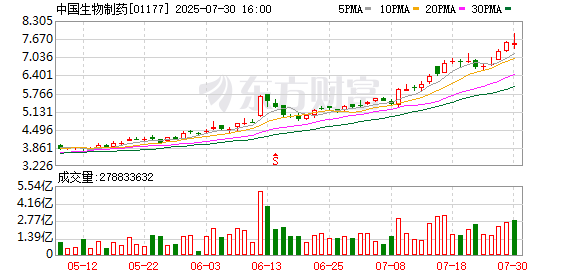
中国生物制药: LM-299对外授权合作顺利,3亿美元里程碑将于近期收款
news flash· 2025-07-30 10:53
Group 1 - The core point of the article is that China Biologic Products (01177.HK) is set to receive a milestone payment of $300 million related to the technology transfer of LM-299, a PD-1/VEGF dual antibody, from Merck [1] - The technology transfer for LM-299 was completed in July 2023, and the payment is expected to be confirmed in the third quarter of 2023 [1] - Merck has indicated that the LM-299 project is progressing as planned, as stated during their second-quarter earnings call [1]
中国生物制药(01177.HK):LM-299对外授权合作顺利,3亿美元里程碑将于近期收款
Ge Long Hui· 2025-07-30 10:52
Group 1 - The core point of the article is that China Biologic Products Holdings (01177.HK) announced a successful progress in the licensing cooperation with Merck regarding the LM-299/MK-2010 "PD-1/VEGF dual antibody" [1] - The company is expected to receive a milestone payment of $300 million for technology transfer in the near future [1] - Merck disclosed during its Q2 earnings call that the technology transfer for LM-299 was completed in July and the milestone payment will be confirmed in Q3 [1] Group 2 - In 2024, the company reached a global exclusive licensing agreement with Merck for LM-299, where Merck will receive exclusive rights for global development, production, and commercialization [1] - According to the agreement terms, the company will receive an upfront payment of $588 million and up to $2.7 billion in milestone payments [1]
中国生物制药(01177) - 自愿公告 - LM-299对外授权合作顺利,3亿美元里程碑将於近期收...
2025-07-30 10:49
(於開曼群島註冊成立之有限公司) 網站:www.sinobiopharm.com (股份編號:1177) 自願公告 LM-299對外授權合作順利, 3億美元里程碑將於近期收款 香港交易及結算所有限公司及香港聯合交易所有限公司對本公告的內容概不負責,對其準確性或完 整性亦不發表任何聲明,並明確表示,概不對因本公告全部或任何部份內容而產生或因倚賴該等內 容而引致的任何損失承擔任何責任。 1 謝其潤 香港,二零二五年七月三十日 於本公告日期,本公司董事會包括六位執行董事,即謝其潤女士、謝炳先生、鄭翔玲女士、謝承潤 先生、謝炘先生及田舟山先生,以及五位獨立非執行董事,即陸正飛先生、李大魁先生、魯紅女 士、張魯夫先生及李國棟醫生。 2 關於LM-299對外授權合作 2024年,禮新醫藥與默沙東就LM-299達成全球獨家授權協議。根據協議條款,默沙東將獲得LM- 299的全球開發、生產和商業化獨家許可。禮新醫藥將獲得5.88億美元的首付款,以及最高27億美元 的里程碑付款。 承董事會命 中國生物製藥有限公司 主席 中國生物製藥有限公司(「本公司」,連同其附屬公司統稱「本集團」)董事會(「董事會」)宣佈,本集團全 資附屬公 ...
创新药再度爆发!今年创新药主题基金太香了,中欧葛兰旗下产品夺冠
私募排排网· 2025-07-30 03:33
Core Viewpoint - The innovative drug sector in A-shares has experienced significant value reassessment in 2023, with the innovative drug index rising over 70% year-to-date, driven by favorable policies and major transactions in the industry [3][4]. Group 1: Market Performance - On July 28, 2023, Heng Rui Medicine announced a potential deal worth $12 billion (approximately 86 billion RMB) with GlaxoSmithKline, leading to a surge in its stock price, which hit a four-year high with a market cap of 411.8 billion RMB [3]. - The innovative drug sector saw a collective increase of over 3% on the same day, reflecting strong investor sentiment [3]. Group 2: Policy Support - The National Healthcare Security Administration and the National Health Commission released measures on July 1, 2023, to support the high-quality development of innovative drugs, including the establishment of a diversified payment system and improving accessibility [3]. - A press conference on July 24, 2023, indicated a shift in drug procurement policies, moving away from a simple lowest price reference to promote healthier industry development [3]. Group 3: Fund Performance - All 265 innovative drug-themed funds reported positive returns in 2023, with 152 funds achieving returns over 30%, and the highest return exceeding 80% [4]. - The top-performing fund in the 1 million to 10 million RMB category is the Hua Bao Health Mixed A fund, with a return of 82.55% year-to-date [5][6]. - In the 1 billion to 5 billion RMB category, the Chang Cheng Health Mixed A fund led with a return of 74.64% [7]. - The Peng Hua Medical Technology Stock A fund topped the 5 billion to 20 billion RMB category with a return of 81.85% [8][9]. - The top fund in the 20 billion RMB and above category is the Zhong Ou Medical Innovation Stock A fund, achieving a return of 58.65% [10][11].


中国创新药:出海黄金时代,游到海水变蓝
2025-07-30 02:32
Summary of Key Points from the Conference Call Industry Overview - The Chinese innovative pharmaceutical industry is experiencing a significant enhancement in strength, with its share of global first-in-class drugs increasing to 19% [7] - Multinational corporations (MNCs) are facing a severe patent cliff, with major companies like Merck, AbbVie, and BMS having over 60%, 58%, and 69% of their 2024 revenues coming from drugs facing patent expiration within the next five years [8][9] - MNCs are actively seeking business development (BD) transactions to address these challenges, with strong cash reserves available for such activities [10] Business Development Trends - The trend of Chinese innovative drugs going global is robust, driven by the strengthening capabilities of Chinese companies and the impending patent cliffs faced by MNCs [2] - MNCs are expected to engage in more BD transactions, particularly in the second half of 2025 and into 2026, as they seek to replenish their pipelines [2] Oncology Sector Insights - The oncology field is shifting from PD-1 combined with chemotherapy to next-generation immuno-oncology (IO) and antibody-drug conjugates (ADC) [3] - Potential MNC buyers in this space include AstraZeneca, Pfizer, and Merck, all of which are looking to enhance their portfolios with next-generation IO and ADC assets [3] Metabolic Disease Developments - The metabolic field is evolving from merely focusing on weight loss to comprehensive metabolic management, including fat reduction and muscle preservation [4][5] - Companies like Novo Nordisk and AstraZeneca are exploring oral medications and multi-target approaches in this area [4] Immune and Inflammatory Disease Innovations - New directions in the immune and inflammation sector include novel targets and engineering innovations, with significant investments from companies like AbbVie and Sanofi [6] - Emerging targets such as TL1a are attracting substantial investments, indicating a strong interest in this area [20] Market Position of Chinese Innovative Drugs - Chinese innovative drug companies have made significant strides in global markets, with improved clinical data quality and increased academic recognition [7] - The presence of Chinese companies in the oncology sector is growing, with several projects in advanced stages of development [14] MNC Strategies for BD Transactions - MNCs are focusing on four main strategies for BD transactions: consolidating core areas, entering new fields, exploring opportunities, and investigating new technologies [11] - The willingness of MNCs to invest in promising assets at the preclinical stage is evident, particularly in high-potential areas like TL1a [20] ADC and TCE Technology Developments - The ADC field is characterized by a tiered approach, with MNCs diversifying their portfolios across various targets [15] - T-cell engagers (TCE) are being developed for blood cancers and autoimmune diseases, with ongoing clinical trials showing promising results [16] Conclusion - The ongoing trends in the Chinese pharmaceutical industry, coupled with the challenges faced by MNCs, are creating a fertile ground for increased collaboration and investment opportunities in the global market [29]


南向资金今年以来净流入金额创历史新高
Zhong Guo Zheng Quan Bao· 2025-07-29 21:07
Core Viewpoint - Southbound capital has significantly increased its investment in the Hong Kong stock market this year, leading to a historical net inflow of over 840 billion HKD, surpassing previous records and contributing to a strong performance in the market [1][2]. Group 1: Southbound Capital Inflows - As of July 29, 2023, southbound capital has recorded a cumulative net inflow of 8420.02 billion HKD, marking a historical high for the year and more than double the inflow of the same period in 2024 [1][2]. - The daily net inflow peaked on April 9, 2023, with 355.86 billion HKD, setting a record for single-day inflows [1]. - In 135 trading days this year, there were net inflow days on 114 occasions, accounting for over 80% of the trading days [1]. Group 2: Market Performance - The Hang Seng Index has risen over 27% year-to-date, while the Hang Seng Technology Index has increased by over 26% [1][3]. - Major stocks with market capitalizations exceeding 1 trillion HKD have all seen gains, with Xiaomi Group-W up over 60% and Tencent Holdings up over 34% [1][4]. - The Hong Kong stock market has outperformed major global markets, with the Hang Seng Index, Hang Seng China Enterprises Index, and Hang Seng Technology Index showing respective increases of 27.24%, 25.46%, and 26.33% [3]. Group 3: Sector and Stock Performance - Southbound capital has heavily invested in the financial, information technology, and consumer discretionary sectors, with holdings valued at 14517.43 billion HKD, 11115.84 billion HKD, and 7175.67 billion HKD respectively [2][3]. - Notable individual stock holdings include Tencent Holdings at over 5400 billion HKD, and other significant investments in China Mobile, Xiaomi Group-W, and Alibaba-W, each exceeding 2000 billion HKD [2][3]. Group 4: Valuation and Future Outlook - The rolling P/E ratio of the Hang Seng Index has increased to 10.49 times, up from 8.96 times at the beginning of the year, indicating a rise in market valuation [5][6]. - Analysts predict that southbound capital inflows could exceed 1 trillion HKD for the year, although the pace may slow in the second half [6][7]. - The overall market sentiment remains positive, with expectations of continued upward movement supported by improved fundamentals and ongoing capital inflows [6][7].




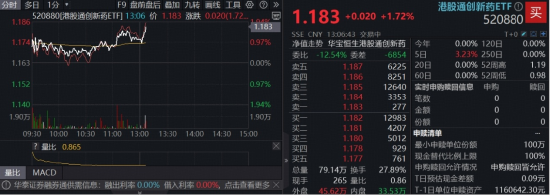
创新药继续领涨,标的唯一的520880续涨1.7%,中国生物制药涨超5%,BD交易开启第二增长曲线
Xin Lang Ji Jin· 2025-07-28 05:43
Group 1 - The core viewpoint of the news highlights the strong performance of the Hong Kong innovative drug sector, with specific stocks like China Biologic Products leading the gains [1][5] - China Biologic Products' subsidiary, Lixin Pharmaceutical, received FDA approval for its innovative drug LM-350 "CDH17ADC," indicating significant potential for future growth [2][3] - The Hong Kong Stock Connect Innovative Drug ETF (520880) has shown a year-to-date increase of 58.95%, outperforming other indices significantly [5][6] Group 2 - Analysts from Zhongyin International expect China Biologic Products to have 1 to 2 licensing deals become more visible, reflecting the company's growth potential in the global market [3] - Huachuang Securities noted that China Biologic Products is innovating across four major fields: oncology, respiratory diseases, liver diseases, and surgical/pain management, which could lead to a second growth curve starting in 2025 [3] - The Hong Kong Stock Connect Innovative Drug ETF passively tracks the Hang Seng Hong Kong Stock Connect Innovative Drug Select Index, which focuses on the innovative drug industry chain, with the top ten constituent stocks accounting for 75.85% of the index weight [3][4]
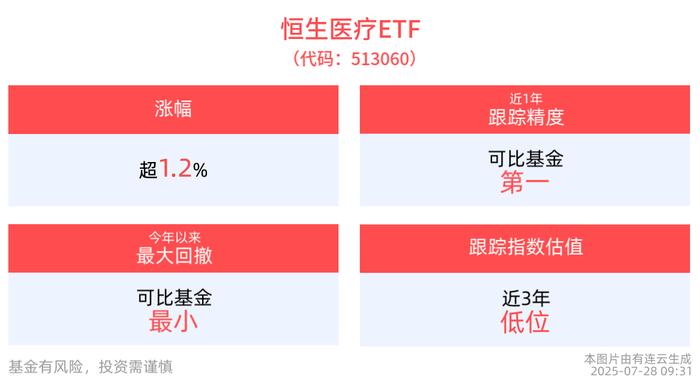
恒生医疗ETF(513060)高开高走上涨1.22%,微创医疗领涨,机构:医疗器械板块三季度有望迎来业绩拐点
Xin Lang Cai Jing· 2025-07-28 01:58
Core Viewpoint - The Hang Seng Healthcare Index (HSHCI) has shown positive performance, with significant increases in constituent stocks, indicating a favorable market environment for healthcare investments [3][4]. Group 1: Market Performance - As of July 28, 2025, the HSHCI rose by 0.64%, with notable gains from stocks such as MicroPort Medical (up 9.51%) and Eddy Health Holdings (up 3.93%) [3]. - The Hang Seng Healthcare ETF (513060) opened higher, increasing by 1.22% to a latest price of 0.66 yuan, and has accumulated a 0.92% rise over the past week [3]. - The ETF recorded a turnover of 0.79% during the trading session, with a transaction volume of 61.18 million yuan, and an average daily trading volume of 2.815 billion yuan over the past week, ranking first among comparable funds [3]. Group 2: Policy and Industry Outlook - The national procurement policy is expected to expand from pharmaceuticals to medical devices, potentially leading to performance reversals in high-value consumables and in vitro diagnostics sectors [4]. - The medical device sector is anticipated to benefit from a recovery in procurement activities this year, with expectations of an earnings turning point in the third quarter [4]. Group 3: ETF Performance Metrics - The latest size of the Hang Seng Healthcare ETF is 7.656 billion yuan, placing it in the top third among comparable funds [4]. - The ETF has seen a net value increase of 29.88% over the past two years, with a maximum monthly return of 28.34% since inception [4]. - The ETF's Sharpe ratio for the past year is 2.30, indicating strong risk-adjusted returns [4]. Group 4: Valuation and Tracking Accuracy - The HSHCI's latest price-to-earnings ratio (PE-TTM) is 31.72, which is below 84.29% of the historical data over the past three years, suggesting a low valuation [6]. - The ETF has the highest tracking accuracy among comparable funds, with a tracking error of 0.060% over the past year [6]. - The top ten weighted stocks in the HSHCI account for 60.54% of the index, including companies like BeiGene and WuXi Biologics [6].