
AIA(01299)

Search documents
中华交易服务沪深港300指数上涨0.24%,前十大权重包含友邦保险等
Jin Rong Jie· 2025-08-06 13:58
Group 1 - The core viewpoint of the news is that the CES300 index has shown positive performance, with a 4.45% increase over the past month, 8.56% over the past three months, and 13.22% year-to-date [1] - The CES300 index is designed to reflect the overall performance of eligible securities under the "Shanghai-Hong Kong Stock Connect" and "Shenzhen-Hong Kong Stock Connect" programs [1] - The index is compiled by China Securities Index Co., Ltd. and is based on a starting point of 2000.0 on December 31, 2008 [1] Group 2 - The top ten holdings of the CES300 index include Tencent Holdings (8.66%), Alibaba-W (5.27%), HSBC Holdings (4.03%), Xiaomi Group-W (2.32%), and Kweichow Moutai (2.31%) [2] - The market segment distribution of the CES300 index shows that the Hong Kong Stock Exchange accounts for 51.90%, the Shanghai Stock Exchange for 29.49%, and the Shenzhen Stock Exchange for 18.61% [2] - The industry allocation of the CES300 index indicates that finance comprises 30.07%, consumer discretionary 15.33%, communication services 13.86%, and information technology 9.29% [2] Group 3 - Public funds tracking the CES300 index include Dachen China-Hong Kong Stock Connect 300C and Dachen China-Hong Kong Stock Connect 300A [3]




中华交易服务港股通精选100指数上涨0.27%,前十大权重包含香港交易所等
Jin Rong Jie· 2025-08-06 13:58
Core Viewpoint - The Chuanghua Trading Service Hong Kong Stock Connect Selected 100 Index (CES100) has shown significant growth, with a year-to-date increase of 28.54% as of August 6, 2023, indicating strong market performance and investor interest in Hong Kong stocks [1]. Group 1: Index Performance - The CES100 index opened lower but closed higher, rising by 0.27% to 5469.54 points, with a trading volume of 78.721 billion [1]. - Over the past month, the CES100 index has increased by 5.92%, and over the last three months, it has risen by 11.41% [1]. Group 2: Index Composition - The top ten holdings of the CES100 index include Tencent Holdings (10.49%), HSBC Holdings (9.88%), Alibaba-W (9.5%), Xiaomi Group-W (7.3%), and AIA Group (5.82%) [2]. - The index is fully composed of stocks listed on the Hong Kong Stock Exchange, with financials making up 27.54%, consumer discretionary 26.34%, and communication services 14.51% of the holdings [2]. Group 3: Fund Tracking - Public funds tracking the CES100 index include Huaan CES Hong Kong Stock Connect Selected 100 ETF Link A, Huaan CES Hong Kong Stock Connect Selected 100 ETF Link C, and Huaan CES Hong Kong Stock Connect Selected 100 ETF [2].

友邦保险(01299) - 截至2025年7月31日止月份之股份发行人的证券变动月报表
2025-08-06 09:43
股份發行人及根據《上市規則》第十九B章上市的香港預託證券發行人的證券變動月報表 | 截至月份: | 2025年7月31日 | 狀態: 新提交 | | --- | --- | --- | | 致:香港交易及結算所有限公司 | | | | 公司名稱: | 友邦保險控股有限公司 | | | 呈交日期: | 2025年8月6日 | | | I. 法定/註冊股本變動 | 不適用 | | | 備註: | | | | 友邦保險控股有限公司(「本公司」)並無法定股本及/ 或其普通股並無股份面值。 | | | FF301 第 1 頁 共 11 頁 v 1.1.1 FF301 II. 已發行股份及/或庫存股份變動 III.已發行股份及/或庫存股份變動詳情 (A). 股份期權(根據發行人的股份期權計劃) | 1. 股份分類 | | 普通股 | | 股份類別 | 不適用 | | 於香港聯交所上市 (註1) | | 是 | | | --- | --- | --- | --- | --- | --- | --- | --- | --- | --- | --- | | 證券代號(如上市) | | 01299 | | 說明 | | | | ...
小摩:升友邦保险(01299)目标价至105港元 维持“增持”评级
Zhi Tong Cai Jing· 2025-08-06 09:39
Group 1 - Morgan Stanley has raised the target price for AIA Group (01299) to HKD 105, maintaining an "Overweight" rating, as the stock has outperformed the market with a 27% increase since April 2024, compared to the Hang Seng Index's 23% rise [1] - The new target price extends the timeframe from December 2025 to June 2026, reflecting expectations of upward revisions in 2026 earnings guidance and further potential for total shareholder return [1] - Recent regulatory changes in Hong Kong are seen as beneficial for AIA, with the new business value (NBV) contribution from Hong Kong estimated at approximately 30% [1] Group 2 - As of December 2024, AIA's existing life insurance policies are projected to generate an undiscounted distributable income of USD 46.6 billion over the next decade, representing an annual growth of 8.6% [2] - The balance is expected to increase to USD 48.7 billion, with a semi-annual growth rate of 4.5%, providing confidence in higher profit growth prospects [2] - Net free surplus generation is anticipated to reach USD 2.4 billion, with an annual growth of 9%, and the estimated free surplus balance by June 2025 is projected to be USD 10.8 billion [2] - AIA's new business value growth rates for the fiscal years 2025, 2026, and 2027 are forecasted at 15%, 22%, and 24%, respectively [2]
摩根大通:上调友邦保险目标价至105港元
Zheng Quan Shi Bao Wang· 2025-08-06 07:05
Group 1 - The core viewpoint of the article highlights that AIA Group has shown strong performance this year, with its stock price reflecting several positive factors [1] - The market is now focusing on the upcoming financial report for the first half of 2025, scheduled for August 22, to identify new catalysts such as cash growth, prospects for the Hong Kong business, and total shareholder return guidance for 2026 [1] - Morgan Stanley has raised AIA Group's target price to HKD 105 and maintains an "overweight" rating [1]
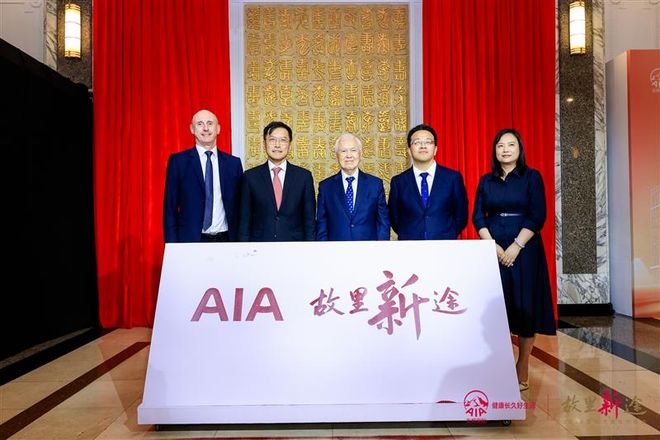
友邦续租外滩17号:在百年“故里”,续写发展“新途”
Di Yi Cai Jing Zi Xun· 2025-08-06 06:13
Core Viewpoint - AIA Life Insurance has renewed its lease at the historic Bund No. 17 building in Shanghai, signifying its long-term commitment to the Chinese market and its role in the development of the insurance industry in China [1][3][11]. Group 1: Historical Significance - The Bund No. 17 building symbolizes the intersection of Shanghai's historical culture and modern finance, having been completed in 1924 as Shanghai's tallest building at 65.3 meters [5][10]. - AIA Insurance originated in Shanghai in 1919 and established its office at Bund No. 17 in the 1930s, marking the beginning of its journey in the Asia-Pacific insurance market [5][10]. - The return to Bund No. 17 in 1996 was a significant milestone for AIA, as it became the first foreign insurance company to operate from its original location in Shanghai [7][10]. Group 2: Commitment to China - The lease renewal reflects AIA's deep-rooted connection to its historical site and its commitment to investing in China, reinforcing its position as a benchmark for high-level openness in the Chinese insurance industry [11][12]. - AIA's CEO emphasized that the Chinese market is the most important strategic market for the company, highlighting its accelerated expansion and service upgrades in recent years [12][14]. - AIA has expanded its operational regions from 5 to 14, reaching approximately 340 million potential customers, showcasing its rapid growth in the Chinese life insurance sector [12][13]. Group 3: Future Prospects - AIA is committed to long-term investments in the Chinese economy, with significant acquisitions such as the AIA Financial Center in Shanghai and a controlling stake in an office project in Beijing [13]. - The company aims to leverage the growing demand for health management, retirement planning, and wealth transfer among consumers, aligning with its customer-driven business innovation philosophy [13][14]. - AIA's leadership believes that China will become the largest insurance market globally, and the company aspires to be the most customer-centric player in this evolving landscape [14].

友邦续租外滩17号:在百年“故里”,续写发展“新途”
第一财经· 2025-08-06 06:05
Core Viewpoint - AIA Life Insurance Company has renewed its lease at the historic Bund 17 building in Shanghai, symbolizing its long-term commitment to the Chinese market and its role in the development of the insurance industry in China [1][2][12]. Group 1: Historical Significance - Bund 17 represents the intersection of Shanghai's historical culture and modern finance, having been completed in 1924 as the tallest building in Shanghai at 65.3 meters [4]. - AIA's history in Shanghai dates back to 1919, with its founders establishing operations at Bund 17 in the 1930s, marking the beginning of its journey in the Asia-Pacific insurance market [5][10]. Group 2: Commitment to China - The lease renewal is a testament to AIA's deep-rooted connection to its "hometown" and its commitment to investing in China, as emphasized by AIA's leadership [2][12]. - AIA has expanded its operations significantly in China, growing from 5 business regions to 14, reaching approximately 340 million potential customers [12]. Group 3: Strategic Developments - AIA has made substantial investments in the Chinese economy, including the acquisition of the AIA Financial Center in Shanghai and a controlling stake in an office project in Beijing's CBD [13]. - The company is also establishing AIA Asset Management, which reflects its commitment to integrating insurance and asset management to support the Chinese economy [13]. Group 4: Future Outlook - AIA's leadership believes that the Chinese insurance market will become the largest globally, driven by demographic changes and increasing consumer demand for health management and retirement planning [14]. - The company aims to be the most customer-centric player in this evolving market, maintaining its foundational values while adapting to new opportunities [14].
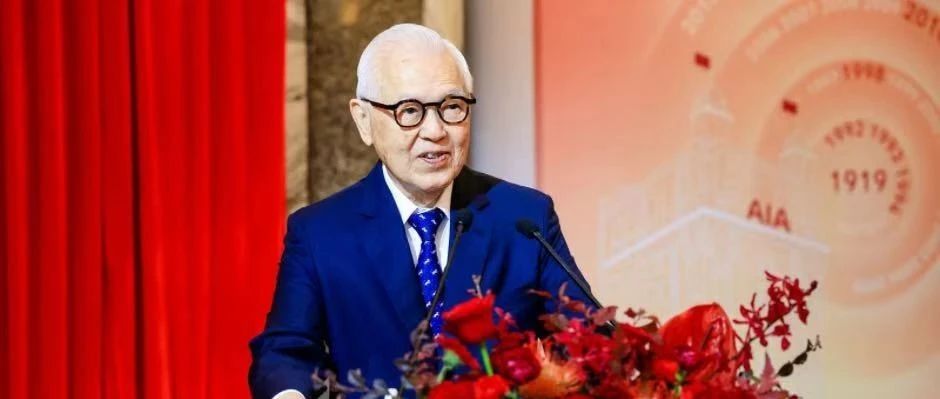
大行评级|摩根大通:上调友邦保险目标价至105港元 维持“增持”评级
Ge Long Hui· 2025-08-06 05:30
Core Viewpoint - Morgan Stanley's research report indicates that AIA Group has outperformed the market this year, with its stock price rising 27% from a low of HKD 46 in April 2024, compared to a 23% increase in the Hang Seng Index [1] Summary by Relevant Sections - **Stock Performance** AIA Group's stock price has increased by 27% since April 2024, outperforming the Hang Seng Index which rose by 23% [1] - **Market Focus** The market is likely to focus on the upcoming financial report for the first half of 2025, scheduled for August 22, which may provide new catalysts such as accelerated cash growth, outlook on Hong Kong operations post-regulatory changes, and guidance on total shareholder return (TSR) for 2026 [1] - **Target Price Adjustment** Morgan Stanley has raised its target price for AIA Group from HKD 102 to HKD 105, maintaining an "Overweight" rating due to expectations that the 2026 earnings guidance may be raised or exceed expectations, along with further potential for total shareholder return [1]
智通港股沽空统计|8月6日
智通财经网· 2025-08-06 00:25
| 股票名称 | 沽空金额 | 沽空比率 | 偏离值↓ | | --- | --- | --- | --- | | 美团-WR(83690) | 159.09 万元 | 100.00% | 40.96% | | 华润啤酒-R(80291) | 59.82 万元 | 92.85% | 35.46% | | 洪桥集团(08137) | 2.60 万元 | 39.79% | 35.43% | | 李宁-R(82331) | 9.04 万元 | 100.00% | 32.41% | | 香港中华煤气(00003) | 6072.39 万元 | 55.99% | 31.92% | | 中集集团(02039) | 1462.74 万元 | 45.52% | 31.19% | | 三一国际(00631) | 2441.91 万元 | 49.34% | 31.13% | | 统一企业中国(00220) | 3941.55 万元 | 44.53% | 30.78% | | 中国银行(03988) | 4.15 亿元 | 43.75% | 27.98% | | 龙湖集团(00960) | 4038.38 万元 | 44.47% ...


中证沪港深互联互通周期指数报2087.84点,前十大权重包含香港交易所等
Jin Rong Jie· 2025-08-05 08:45
Core Points - The CSI Hong Kong-Shanghai-Shenzhen Connect Cycle Index (H30547) reported a value of 2087.84 points, with a monthly increase of 2.36%, a three-month increase of 12.58%, and a year-to-date increase of 12.44% [1][2] Group 1: Index Performance - The CSI Hong Kong-Shanghai-Shenzhen Connect Cycle Index has shown significant growth over various time frames, indicating a positive market trend [1] - The index is based on a sample from the CSI Hong Kong-Shanghai-Shenzhen Connect Comprehensive Index and the CSI Hong Kong-Shanghai-Shenzhen 500 Index, reflecting the overall performance of securities listed in the three markets [1] Group 2: Index Holdings - The top ten weighted stocks in the index include HSBC Holdings (6.52%), China Construction Bank (3.68%), AIA Group (2.95%), Ping An Insurance (2.65%), and others, indicating a strong presence of financial institutions [1] - The market share of the index holdings is distributed as follows: Shanghai Stock Exchange (44.04%), Hong Kong Stock Exchange (41.04%), and Shenzhen Stock Exchange (14.92%) [1] Group 3: Industry Composition - The industry composition of the index shows that finance accounts for 58.03%, materials for 19.29%, industrials for 10.27%, energy for 6.73%, and real estate for 5.68%, highlighting the dominance of the financial sector [2] - The index samples are adjusted biannually, with changes implemented on the next trading day following the second Friday of June and December [2]