
AIA(01299)

Search documents
大行评级丨海通国际:上调友邦保险目标价至105港元,重申“跑赢大市”评级
Ge Long Hui A P P· 2026-03-27 06:53
Core Viewpoint - Haitong International has updated its financial model for AIA Group following the company's Q4 2025 results, which met market expectations, incorporating trends in new business value and investment performance year-to-date [1] Group 1: Financial Performance - AIA Group's Q4 2025 results were in line with market expectations [1] - The financial model update reflects the new business value trends and investment performance observed since the beginning of the year [1] Group 2: Future Projections - Haitong International forecasts a 14% growth in new business value (at actual exchange rates) for the years 2026-2028 [1] - This growth is primarily attributed to improvements in agent productivity, diversification of channels and products, and potential performance improvements in both mainland China and Hong Kong markets [1] Group 3: Target Price and Rating - The target price for AIA Group has been raised from HKD 99.5 to HKD 105 [1] - Haitong International maintains a "Outperform" rating for AIA Group [1]
友邦保险(01299.HK)授出217.4万份购股权
Ge Long Hui· 2026-03-26 13:09
Core Viewpoint - AIA Group Limited (01299.HK) announced the grant of 2.174 million stock options to certain employees, directors, and executives under its revised stock option plan adopted on May 29, 2020 [1] Group 1 - The stock options will be granted on March 26, 2026 [1] - The grant is part of the company's strategy to incentivize and retain key personnel [1]
友邦保险授出217.44万份购股权
Zhi Tong Cai Jing· 2026-03-26 13:09
Core Viewpoint - AIA Group Limited (01299) announced the grant of 2.1744 million share options to certain employees, directors, and executives under its revised share option plan adopted on May 29, 2020 [1] Summary by Relevant Categories Share Options - The company will grant a total of 2.1744 million share options, which will provide the grantees the right to receive either a total of 2.1744 million new ordinary shares or an equivalent cash amount [1] - The cash amount will be equivalent to the difference between the subscription price and the market price of the shares on the date of exercise of the options or the days preceding it, as determined by the board of directors [1]
友邦保险(01299)授出217.44万份购股权
智通财经网· 2026-03-26 13:08
Core Viewpoint - AIA Group Limited (01299) announced the grant of 2.1744 million share options to certain employees, directors, and executives under its revised share option plan adopted on May 29, 2020 [1] Group 1 - The share options will entitle the grantees to receive a total of 2.1744 million new ordinary shares of the company or an equivalent cash amount [1] - The cash amount will be determined by the difference between the subscription price and the market price of the shares on the date of exercise of the options or the preceding date [1] - The final decision regarding the cash amount will be made by the board of directors [1]
友邦保险(01299) - 授出购股权
2026-03-26 12:59
本公告僅供參考,並不構成任何人士收購、購買或認購證券的邀請或要約。本公告並非亦無意作為在美國 發售本公司證券供出售的要約。本公司證券並無亦不會根據 1933 年美國證券法(經修訂)(「美國證券法」) 登記,且不得未根據美國證券法登記或適用豁免登記規定而在美國發售或出售。本公司證券並無亦無計劃 在美國公開發售。 香港交易及結算所有限公司及香港聯合交易所有限公司對本公告的內容概不負責,對其準確性或完整性亦 不發表任何聲明,並明確表示,概不對因本公告全部或任何部分內容而產生或因倚賴該等內容而引致的任 何損失承擔任何責任。 AIA Group Limited 友 邦 保 險 控 股 有 限 公 司 (於香港註冊成立的有限公司) 股份代號:1299(港幣櫃台)及 81299(人民幣櫃台) | 表現目標 | : | 概無訂定表現目標。 | | --- | --- | --- | | | | 購股權為按時間歸屬,其授出旨在鼓勵長期 | | | | 發展及為股東創造價值,並無附加表現條 | | | | 件。本公司薪酬委員會認為,購股權的價值 | | | | 與本公司未來的股價掛鈎,而該股價則反映 | | | | 本公司的表現 ...
友邦保险2025:锚定亚洲“确定性” 以长期主义深耕中国市场
Xin Hua Wang· 2026-03-26 10:00
Core Insights - AIA Group's performance in FY2025 reflects its strategic resilience amid industry transformation and complex external environments, providing a unique perspective on the future of the Asian insurance market, particularly in mainland China [1] Group 1: Market Outlook - AIA Group views Asia as the most attractive market for life insurance globally, supported by fundamental drivers such as aging populations increasing demand for retirement and health insurance, rapid wealth accumulation, and high out-of-pocket healthcare spending [2] - The long-term demand in Asia is driven by strong protection needs, long-term savings requirements, and personalized service demands through trusted professional channels [2] Group 2: Competitive Advantages - AIA Group's competitive edge lies in its robust marketing agent system, with a reported 8% growth in active agents and a 14% increase in new agents in 2025 [3] - The company emphasizes a differentiated bancassurance channel, focusing on high-net-worth clients and selective partnerships, contributing 15% to new business value in 2025 [3] - Investment in technology has reached a strategic level, with the establishment of a Technology, Operations, and Data Committee, and the upgrade of the "AIA Navigator" platform to integrate AI in various business functions [3] Group 3: Performance in Mainland China - Mainland China is identified as AIA Group's most important market, with a 2% increase in new business value and a 14% growth in total weighted premium income in 2025, showcasing resilience and potential [4] - The company's strategy focuses on "high quality," "differentiation," and "discipline," maintaining a balanced business structure between protection and long-term savings [5][6] Group 4: New Market Development - AIA Group has expanded its operations to 14 regions in China, with significant growth in nine new markets, achieving a 45% increase in new business value, contributing over 9% to total new business value [6] - The company aims for a compound annual growth rate of 40% in new business value from these new markets by 2030, indicating a dual-driven growth model [6] Group 5: Investment Strategy - The establishment of AIA Asset Management Company underscores AIA's commitment to investing in China, enhancing asset-liability management, investment specialization, and capital operation efficiency [7] - AIA's performance reflects its insights into market growth potential, customer needs, and long-term capability development, positioning itself as a participant in China's high-level insurance market opening [7]
友邦保险集团首席执行官兼总裁李源祥:中国境内市场对集团重要性排名第一
Shang Hai Zheng Quan Bao· 2026-03-25 18:09
Core Insights - The Chinese market is the most important for AIA Group, both in terms of future growth potential and performance contribution [2] - AIA Group reported a notable performance in 2025, with a 12% year-on-year increase in after-tax operating profit per share and a 15% increase in new business value [2] - The demand for wealth management in a low-interest-rate environment is driving growth opportunities in the Chinese insurance market [3] Market Potential - The Asian life insurance market is highly attractive due to strong customer demand, business growth, and profitability [4] - Three main factors driving the potential in the Asian market include aging populations, rapid wealth accumulation, and high out-of-pocket healthcare expenses [4] - These factors are expected to lead to increased demand for personal and health insurance products, long-term savings insurance products, and personalized services from professional agents [4] Business Performance - AIA Group's new business value in the Chinese market grew by 2% in 2025, primarily due to interest rate declines affecting economic assumptions, but a recovery of 14% growth is expected in the second half of 2025 [5] - In the first two months of 2026, new business value for AIA Life in China saw a year-on-year increase of over 20% [5] Regional Expansion - AIA Life has been actively expanding in China, opening branches in nine new markets since 2019, with a total of 14 regions now operational [6] - New markets contributed over 9% to AIA Life's new business value, with a 45% year-on-year increase in new business value from these markets in 2025 [7] - AIA Group aims for a compound annual growth rate of 40% in new business value from these new markets between 2025 and 2030 [7] Investment Management - AIA Group established an independent asset management company in Shanghai, marking a shift towards more professional and refined asset-liability management [8] - The investment strategy focuses on stable, long-term investments that balance risk and return, with a shift towards participating insurance products to enhance capital efficiency [9] - The company will maintain a foundational allocation in long-term fixed-income assets while also including a suitable proportion of risk assets like stocks and private equity [9]

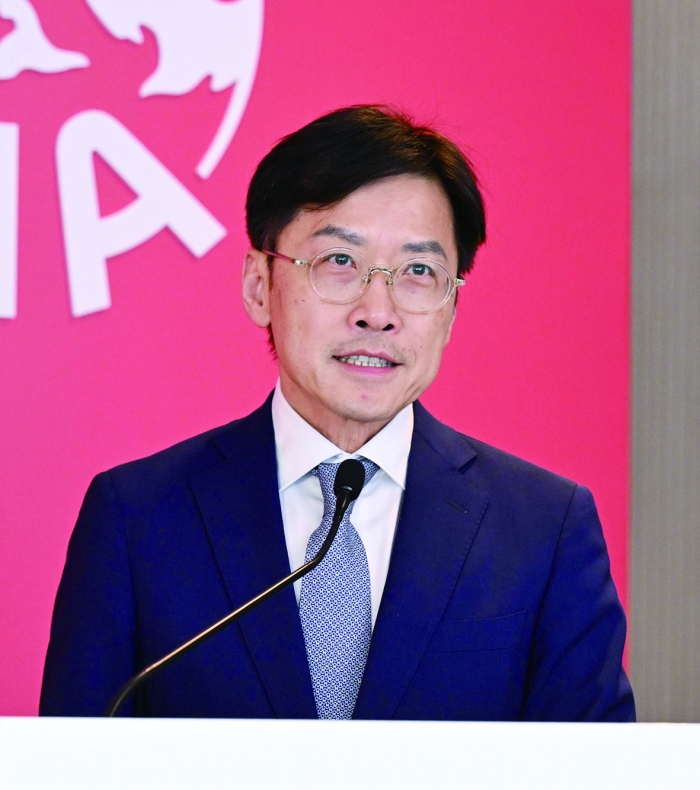
友邦保险集团管理层详解未来布局:中国内地仍是最重要市场
Zheng Quan Ri Bao Wang· 2026-03-25 04:12
Core Viewpoint - AIA Group emphasizes that the Chinese mainland market is its most important market, with plans to further expand and enhance its business layout in this region [2][3] Group 1: Market Importance - The Chinese mainland is identified as the primary market for AIA Group, with significant growth potential and contribution to the group [2] - AIA Life Insurance has made a milestone progress by obtaining approval to operate as a wholly foreign-owned insurance asset management company in Shanghai, reflecting a long-term commitment to the Chinese market [2] - The changing consumer awareness in China presents a substantial market opportunity for insurance products [2] Group 2: Strategic Focus - AIA Life's new business value grew by 2% in 2025, influenced by economic assumptions due to declining interest rates, but the actual business momentum remains strong [3] - The core operational strategy for 2026 is summarized by three keywords: high quality, differentiation, and discipline [3] - AIA Life maintains a focus on protection and long-term savings, avoiding simple savings replacement products, and emphasizes deep partnerships with banks that share similar values [3][4] Group 3: Technology and Innovation - AIA Group has established a Technology, Operations, and Data Committee, highlighting the importance of technology strategy at the group level [5] - AI is viewed as a tool to enhance agent performance and training, rather than a replacement for agents [5] - The company aims to leverage China's technological ecosystem through partnerships with tech firms to improve overall operational capabilities [5] Group 4: Asset Management Structure - The establishment of AIA Asset Management is seen as a successful model that separates asset and liability management, enhancing professional management and governance [6] - This separation allows for clearer responsibilities between the life insurance company and the asset management company, improving efficiency and asset-liability management [6]
友邦保险(1299.HK):宣布新一轮17亿美元股份回购 高增速和高股东回报并存
Ge Long Hui· 2026-03-24 23:24
Core Viewpoint - The company benefits from rapid growth in its Hong Kong and Thailand businesses, with a 15% year-on-year increase in NBV, while the NBV growth momentum in mainland China accelerates in the second half of the year, reaching a 14% year-on-year increase [1][5] Group 1: NBV Growth - The company's NBV for 2025 is projected to increase by 15% to $5.516 billion, with annualized new premiums up by 9% and NBVM increasing by 3.6 percentage points to 58.5% [1] - The growth in NBV is primarily driven by the Hong Kong and Thailand markets, with Hong Kong's NBV increasing by 28% to $2.256 billion and Thailand's NBV increasing by 13% to $993 million [1][2] - In mainland China, the NBV growth is 2% year-on-year, with a significant acceleration in the second half of the year, reaching a 14% increase, and a projected growth rate exceeding 20% in January-February 2026 [1][5] Group 2: Operating Profit and Financial Performance - The company's operating profit for the year is $7.136 billion, reflecting a 7% year-on-year increase, with earnings per share rising by 12% [2] - The strong performance in insurance services, which increased by 18% to $6.772 billion, is a key driver of this growth, supported by a 10% increase in CSM release [2] - The company's embedded value operating profit is $10.887 billion, with a year-on-year increase of 13% and an embedded value return of 15.8% [2][3] Group 3: Shareholder Returns - The company has declared a final dividend of 144.08 Hong Kong cents per share, resulting in a total annual dividend of 193.08 Hong Kong cents per share, an increase of 10% [3][4] - The board has approved a new share buyback program of $1.7 billion, reflecting a commitment to returning capital to shareholders [3][4] - The company aims to distribute 75% of its generated free surplus, with a reported free surplus net of $4.451 billion for the year, up 11% year-on-year [4]
高盛:微升友邦保险目标价至97港元 重申“买入”评级
Zhi Tong Cai Jing· 2026-03-24 21:39
Group 1 - The core viewpoint of the article indicates that AIA Group Limited (01299) is expected to meet performance expectations for the fiscal year 2025, despite a slowdown in new business value growth in Q4 [2] - Management highlighted that from January to February 2026, the new business value in mainland China showed a year-on-year increase of over 20%, while strong growth momentum in Hong Kong is expected to continue into 2026 [2] - Goldman Sachs believes that concerns regarding the high proportion of savings-type products have already been reflected in the current low P/EV multiples compared to historical averages, making the risk-reward profile attractive at this level [2] Group 2 - Goldman Sachs has updated its forecasts, raising the expected new business value/EV ratio for AIA for the fiscal years 2026 to 2028 by 1% to 2%, and increasing the operating profit after tax forecast by 2% to 3% [2] - The target price for AIA has been raised from HKD 96 to HKD 97, with a reiterated "Buy" rating [2]