
PA GOODDOCTOR(01833)

Search documents
港股异动丨AI医疗概念股继续强势 阿里健康大涨超13% 医渡科技大涨超9%
Ge Long Hui· 2026-01-14 03:29
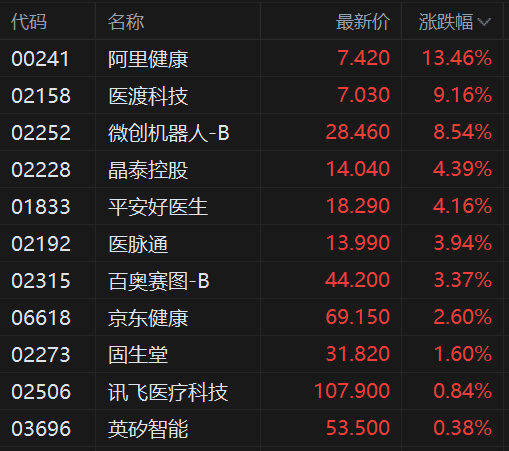
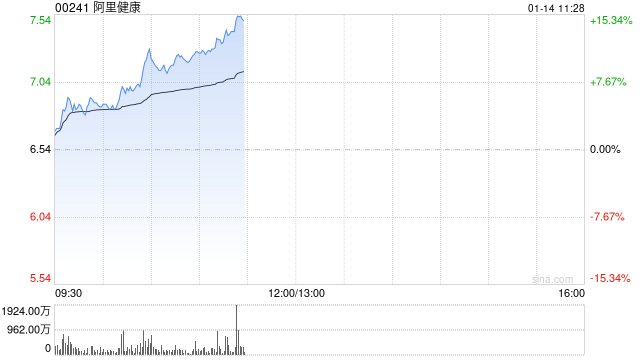
Core Viewpoint - The AI healthcare sector in Hong Kong is experiencing a strong bullish trend, driven by clear industry trends and significant market demand for AI health solutions [1] Group 1: Market Performance - Alibaba Health has surged over 13%, leading the market with a cumulative increase of over 46% this month [1] - Other notable performers include Yidu Tech with a rise of over 9%, MicroPort Robotics up by 8.9%, and Ping An Good Doctor increasing by over 4% [1] - Additional companies such as Yimaitong, JD Health, and Gushengtang also saw gains [1] Group 2: Industry Drivers - The launch of Ant Group's AI health assistant "Antifufu" has seen monthly active users exceed 30 million, with daily inquiries surpassing 10 million, indicating strong demand in the health AI sector [1] - OpenAI's introduction of "ChatGPT Health" on January 8 further emphasizes the confidence of leading AI companies in the health AI market [1] Group 3: Market Forecast - Frost & Sullivan predicts that China's "AI + healthcare" market will grow from 8.8 billion yuan in 2023 to 315.7 billion yuan by 2033, with a compound annual growth rate of 43.1% over the next decade [1] - Huafu Securities reports that the AI healthcare industry is entering a critical phase of commercialization, supported by national strategies and market demand [1] - The report highlights a closed-loop demand for AI applications, which will sustain the continuous development of the AI industry [1]


港股AI医疗概念股拉升 阿里健康大涨超15% 产业或将迎来蓬勃发展期
Xin Lang Cai Jing· 2026-01-14 03:29
Core Viewpoint - The recent surge in Hong Kong's AI healthcare stocks is driven by a clear confirmation of industry trends, with significant growth in user engagement and market potential for AI applications in healthcare [1][3][6] Group 1: Stock Performance - Alibaba Health has seen a rise of over 15%, with a cumulative increase of over 49% in January [1][6] - Other notable performers include Yidu Tech (up over 9%), MicroPort (up over 8%), Ping An Good Doctor (up over 5%), and JD Health (up over 2%) [1][6] Group 2: Market Analysis - The launch of Ant Group's AI health assistant "Antifufu" has resulted in over 30 million monthly active users and over 10 million daily inquiries, indicating strong demand in the health AI sector [3][8] - OpenAI's introduction of "ChatGPT Health" further emphasizes the confidence of leading AI companies in the health AI market [3][8] Group 3: Market Forecast - Frost & Sullivan predicts that China's "AI + healthcare" market will grow from 8.8 billion yuan in 2023 to 315.7 billion yuan by 2033, with a compound annual growth rate of 43.1% over the next decade [3][8] - Huafu Securities reports that the AI healthcare industry is entering a critical phase of commercialization, supported by national strategies and market demand [3][8] Group 4: Industry Innovation - Huachuang Securities anticipates that advancements in AI model capabilities will lead to comprehensive integration of AI in the healthcare industry, driving technological innovation [3][8] - The reduction in computing costs is expected to accelerate investments in AI capabilities by leading companies in various healthcare segments, potentially leading to a period of robust industry growth [3][8]
趋势研判!2025年中国互联网医院行业发展历程、政策、医院数量、重点品牌及未来趋势:互联网医疗为互联网医院提供核心服务支撑,推动其数量达3756家[图]
Chan Ye Xin Xi Wang· 2026-01-14 01:13
Core Insights - The article discusses the emergence and growth of Internet hospitals in China, highlighting their role in providing convenient and efficient medical services, especially during the COVID-19 pandemic [1][14] - Internet hospitals are seen as a new model in the healthcare system, addressing issues like access to care and hospital transformation [1][14] Industry Overview - Internet hospitals are platforms that integrate online consultations, prescriptions, payments, and drug delivery, connecting patients with healthcare providers [4] - The services offered by Internet hospitals include remote diagnosis, post-hospital management, and health management [4] Industry Development History - The first Internet hospital in China was established in 2015, marking a significant milestone in the integration of healthcare and technology [9] - The COVID-19 pandemic accelerated the growth of Internet hospitals, with over 500 new hospitals established in 2020 alone [1][14] - By October 2022, there were over 2,700 Internet hospitals in China, serving more than 25.9 million patients [1][14] - Projections indicate that by the end of 2024, the number of Internet hospitals will reach 3,340, providing over 100 million consultations annually [1][14] Industry Policies - The Chinese government has increasingly recognized and supported Internet hospitals, leading to a period of policy benefits [11] - Recent policies aim to enhance the integration of artificial intelligence in healthcare, with a goal of widespread implementation by 2030 [11] Industry Value Chain - The upstream of the Internet hospital industry involves medical equipment and information technology, while the midstream consists of solution integrators [12] - The downstream primarily includes patients who utilize these services [12] User Scale and Usage Rate - As of December 2024, the user base for Internet healthcare in China reached 418 million, with a usage rate of 37.7% [13] - By June 2025, the user scale is expected to be 393 million, with a usage rate of 35% [13] Key Companies in the Industry - Notable companies in the Internet hospital sector include Ping An Good Doctor, JD Health, Alibaba Health, and WeDoctor, among others [2][15] - Ping An Good Doctor reported a revenue of 1.278 billion yuan in the first half of 2025, marking a year-on-year growth of 20.23% [15] - JD Health's revenue from health product sales reached 29.331 billion yuan in the first half of 2025, with a growth of 22.67% [17] Challenges Facing the Industry - Issues such as patient information sharing, cross-regional medical insurance reimbursement, and regulatory frameworks remain significant challenges for Internet hospitals [18][19][20] - The complexity of online diagnosis and potential medical risks also pose challenges that need to be addressed [21] Future Trends - The future of Internet hospitals is expected to focus on personalized health management driven by data and AI technologies [22] - Remote medical services will become standardized and integrated into the healthcare system, enhancing accessibility and efficiency [23] - A seamless integration of online and offline services will create a comprehensive healthcare ecosystem centered around patient needs [24]


平安健康原CEO李斗被曝出任白象首席增长官,2024年薪酬总额超900万
Sou Hu Cai Jing· 2026-01-13 09:14
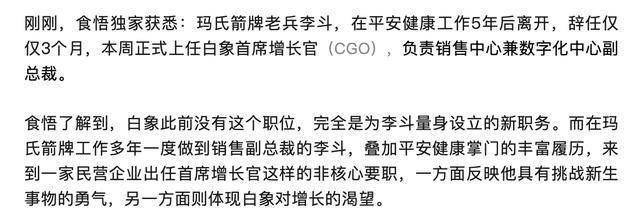
Group 1 - The core point of the article is the appointment of Li Dou as the Chief Growth Officer (CGO) of White Elephant Food Co., Ltd., marking the first time the company has established this position [1] - Li Dou previously held various senior roles, including Vice President of Sales and General Manager of Demand for Mars Wrigley Confectionery (China) and served in multiple capacities at Ping An Group, including CEO of Ping An Health Medical Technology Co., Ltd. [2] - Li Dou resigned from all positions at Ping An Health in October 2025, three months after his departure, he took on the new role at White Elephant [1][2] Group 2 - The article highlights that White Elephant's executive structure was previously flat, with founder Yao Zhongliang serving as both Chairman and General Manager for many years [1] - Li Dou's total cash compensation at Ping An Health was reported to be 9.077 million yuan, which included a salary of 5.5 million yuan and a performance bonus of 1.301 million yuan [4] - The compensation structure for directors at Ping An Health includes various components such as salary, performance bonuses, and other benefits, with total cash payments for directors amounting to 8.638 million yuan for the year ending December 31, 2024 [5]
AI医疗成牛市反弹“急先锋”,港股通医疗ETF(520510)强势领涨!
Sou Hu Cai Jing· 2026-01-13 02:52
Group 1 - The Hong Kong stock market has shown strong performance post-New Year, with the healthcare and pharmaceutical sectors exhibiting notable elasticity, as evidenced by the Hong Kong Stock Connect Medical ETF (520510) surging over 4% and achieving a year-to-date increase of over 20% [1] - The Hang Seng Medical ETF (159892) also experienced a year-to-date rise that once exceeded 17%, ranking among the top performers in the overall market ETFs [1] - Ark Health saw a significant increase of over 30% during trading, highlighting the robust interest in the healthcare sector [1] Group 2 - Zheshang Securities believes that the integration of AI and healthcare is flourishing, with policy support and market demand driving the industry into a rapid phase of commercialization [1] - In terms of AI healthcare applications, industry policies are clear and progress is swift, with five ministries issuing relevant implementation opinions by 2025, the launch of ChatGPT Health in early 2026, and Ant Group's Aifuku seeing monthly active users double to 30 million, all contributing to heightened market enthusiasm [1] - The Hong Kong Stock Connect Medical ETF (520510) tracks the Hong Kong Stock Connect Medical Theme Index, covering AI healthcare stocks such as Alibaba Health, JD Health, and Ping An Good Doctor, and is expected to benefit from advancements in brain-computer interfaces, innovative drug exports, and the AI healthcare technology revolution [1]
前平安健康主席李斗,据报加盟白象,出任首席增长官
Xin Lang Cai Jing· 2026-01-12 12:28
Group 1 - Li Dou has recently been appointed as the Chief Growth Officer (CGO) of White Elephant Food Co., Ltd., marking the first time this position has been established within the company [1][5] - Prior to this appointment, White Elephant had a relatively flat executive structure, with founder Yao Zhongliang serving as Chairman and General Manager for many years [1][5] - White Elephant, founded in 1997 and headquartered in Zhengzhou, Henan, is a comprehensive food enterprise primarily engaged in the production and sale of high-quality noodle products, including instant noodles, hanging noodles, flour, and beverages [3][7] Group 2 - Li Dou previously held various positions at Ping An Health, including Chairman, Executive Director, and CEO, before resigning from all roles in October 2025 [3][7] - During his tenure at Ping An Health, Li Dou received a total cash compensation of 9.077 million yuan, which included salary, performance bonuses, and pension costs [3][7] - White Elephant has established 12 production bases across 10 provinces, with an annual production capacity of 10 billion packs of instant noodles, and its sales network covers over 30 provinces and 76 countries overseas [3][7]

港股通医疗ETF华宝(159137)涨0.38%,成交额1.73亿元
Xin Lang Cai Jing· 2026-01-12 07:15
Core Insights - The Huabao CSI Hong Kong Stock Connect Medical Theme ETF (159137) closed with a gain of 0.38% on January 12, with a trading volume of 173 million yuan [1] Fund Overview - The fund was established on December 31, 2025, and is officially named Huabao CSI Hong Kong Stock Connect Medical Theme Exchange-Traded Fund [1] - The management fee is set at 0.50% per annum, while the custody fee is 0.10% per annum [1] - The performance benchmark for the fund is the return of the CSI Hong Kong Stock Connect Medical Theme Index, adjusted for the RMB exchange rate [1] Fund Management - The current fund manager is Zhang Fang, who has managed the fund since its inception, achieving a return of 4.33% during the management period [1] Top Holdings - The latest report indicates that the top holdings of the ETF include: - WuXi Biologics: 2.65% holding, valued at approximately 7.49 million yuan [2] - JD Health: 2.02% holding, valued at approximately 5.71 million yuan [2] - WuXi AppTec: 1.44% holding, valued at approximately 4.07 million yuan [2] - Crystal Digital Holdings: 0.98% holding, valued at approximately 2.76 million yuan [2] - Alibaba Health: 0.93% holding, valued at approximately 2.63 million yuan [2] - WuXi AppTec Holdings: 0.86% holding, valued at approximately 2.43 million yuan [2] - Sinopharm: 0.72% holding, valued at approximately 2.04 million yuan [2] - Genscript Biotech: 0.55% holding, valued at approximately 1.55 million yuan [2] - Ping An Good Doctor: 0.46% holding, valued at approximately 1.31 million yuan [2] - CSPC Pharmaceutical Group: 0.41% holding, valued at approximately 1.17 million yuan [2]

平安好医生携手一脉青藤,让数智健康管理全链贯通、全程可溯
Sou Hu Cai Jing· 2026-01-12 02:22
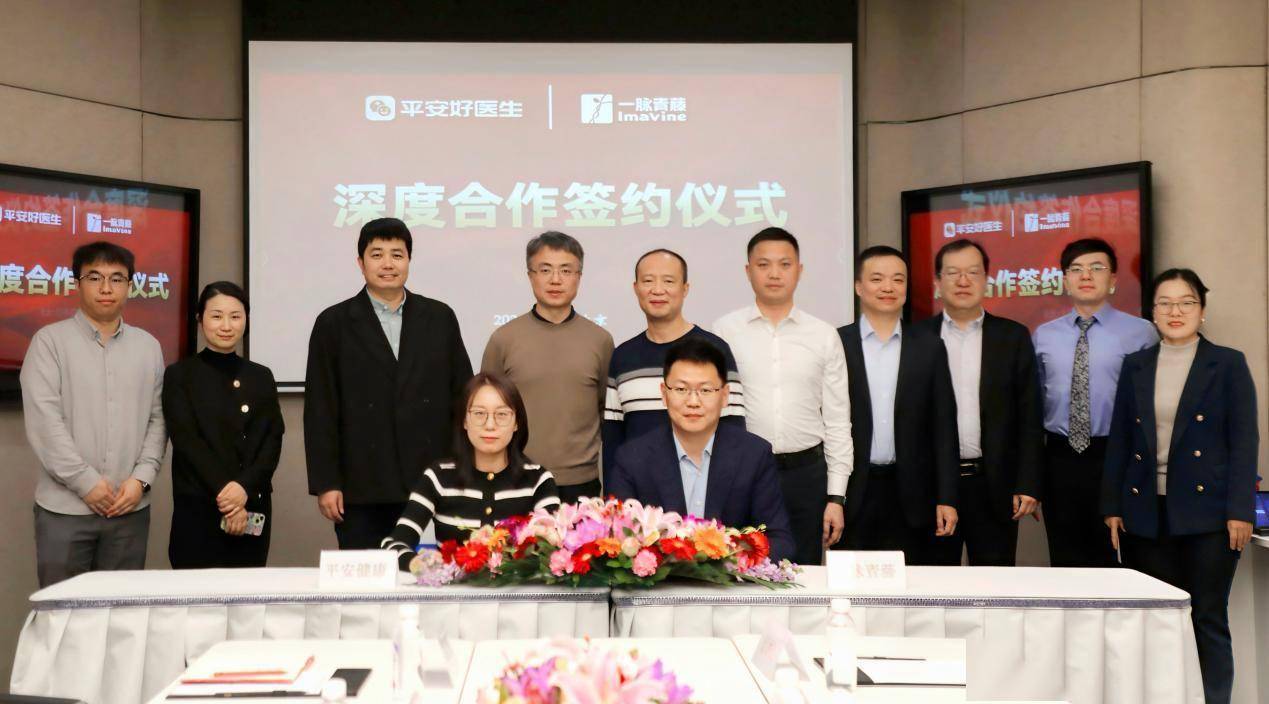
Core Insights - Ping An Good Doctor and Yimai Qingteng signed a cooperation agreement to enhance AI technology in medical services, focusing on intelligent recommendations and diagnostic assistance [1][4] - The partnership aims to create a seamless healthcare service loop, ensuring accessibility, reliability, and continuity in health management [1][3] Group 1: Company Collaboration - The collaboration will leverage Yimai Qingteng's expertise in medical imaging to enhance Ping An Good Doctor's service system, which includes "to line, to hospital, to home, and to enterprise" [3][5] - Both companies will explore AI-assisted medical applications, aiming for deep integration across the entire healthcare process from diagnosis to management [4][5] Group 2: Industry Context - The partnership aligns with the "Healthy China 2030" national strategy, addressing the evolving health needs of the population for integrated, human-centered solutions [5] - The collaboration is seen as a significant step towards overcoming industry challenges such as uneven resource distribution and fragmented service chains, enhancing user experience in healthcare [5]
平安好医生(01833.HK):1月7日南向资金减持475.17万股
Sou Hu Cai Jing· 2026-01-07 19:35
Group 1 - The core point of the article highlights that southbound funds have reduced their holdings in Ping An Good Doctor (01833.HK) by 4.75 million shares as of January 7, with a total net reduction of 48.82 million shares over the last five trading days [1] - Over the past 20 trading days, there have been six days of net reductions by southbound funds, totaling 34.41 million shares [1] - Currently, southbound funds hold 462 million shares of Ping An Good Doctor, representing 21.36% of the company's total issued ordinary shares [1] Group 2 - Ping An Health Medical Technology Co., Ltd. operates in the healthcare sector, providing medical and health services through mobile platforms and offline resources [1] - The company conducts its business through two segments: the medical services segment, which includes online consultations, referrals, appointment scheduling, hospitalization arrangements, disease diagnosis, and sales of related pharmaceuticals and medical devices [1] - The health services segment offers standardized health service packages that integrate various healthcare institution services to meet users' health-related needs, covering areas such as physical examinations, elderly care, dental services, anti-aging, and general health [1]

盘点2025 | 万亿健康险转型深水区:政策破局、生态重构
Xin Lang Cai Jing· 2026-01-05 10:10
Core Insights - The establishment of the Ping An Health Management Company marks a significant step in the transformation of the health insurance sector, reflecting a shift towards a "managed care" model and the reconstruction of a new ecosystem in health insurance [1][16] - As of November 2025, the cumulative premium for commercial health insurance reached 943.9 billion yuan, with a year-on-year growth of 2.3%, indicating a stable market but falling short of the 2 trillion yuan target set for 2025 [1][16] - The Chinese commercial health insurance market is at a crossroads, focusing on high-quality development driven by regulatory guidance and innovation in health management and product offerings [1][16] Market Structure - The commercial health insurance market is maintaining stability amid slowing growth, with a shift in focus from scale expansion to quality improvement [3][18] - In the first 11 months of 2025, life insurance companies accounted for 76.8% of health insurance premiums, totaling 725.2 billion yuan, but their growth rate has stagnated, while property insurance companies saw a 10.2% increase in premiums [3][18] - The market's stability is evidenced by a monthly premium of 49.6 billion yuan in November 2025, with life insurance companies contributing 40.2 billion yuan and property insurance companies 9.4 billion yuan [3][18] Policy Support - Regulatory measures have been pivotal in driving the transformation of the health insurance industry, with multiple initiatives launched to enhance product standards and payment reforms [4][19] - The "Guiding Opinions on Promoting the High-Quality Development of Health Insurance" issued on September 30, 2025, outlines a vision for the role of health insurance in the national health security system by 2030 [4][19] - The policy emphasizes the integration of health insurance with health management, aiming to create a new health service guarantee system that combines prevention, management, and protection [4][19] Product Innovation - The health insurance sector is entering a phase of deep product innovation, with a focus on dual attributes of "protection + returns" in dividend insurance products [7][22] - Personal account-based long-term medical insurance is highlighted as a key area supported by policy, addressing the industry's challenges with traditional short-term medical insurance [7][22] - The mid-to-high-end medical insurance market is expanding, with major players enhancing their offerings to include comprehensive solutions beyond mere reimbursement [8][23] Ecosystem Reconstruction - The competition in the health insurance industry is shifting towards building an ecosystem, with a consensus on the "insurance + health management" model [10][26] - Major insurance companies are establishing health management firms to create a comprehensive health service system, moving from post-claim reimbursement to full-cycle health management [10][26] - The establishment of health management companies by leading insurers is seen as a localized innovation of the mature "managed care" model from developed markets, aiming to enhance service quality and sustainability [12][27] Technological Empowerment - The application of new technologies such as AI, big data, and blockchain is deepening in the health insurance sector, enhancing efficiency across product design, underwriting, and customer service [13][28] - Ping An has integrated AI into its health strategy, creating a comprehensive service system that covers various health service scenarios [13][28] - The focus on digitalization and the development of personalized health management platforms are expected to improve user experience and support dynamic pricing and risk control [13][28]


