
BANK OF CHINA(03988)

Search documents
前三季度国有六大行归母净利润合计1.07万亿元
Zheng Quan Ri Bao· 2025-10-30 16:48
Core Insights - The six major state-owned banks in China have reported stable growth in net profit and operating income for the first three quarters of 2023, collectively achieving a net profit of 1.07 trillion yuan [1][2] - All six banks maintained a non-performing loan (NPL) ratio below 1.34%, indicating strong asset quality [2] Group 1: Financial Performance - In the first three quarters of 2023, Industrial and Commercial Bank of China (ICBC), China Construction Bank (CCB), and Agricultural Bank of China (ABC) each reported net profits exceeding 200 billion yuan, with ICBC leading at 269.91 billion yuan [1] - The operating income for ICBC reached 640.03 billion yuan, followed by CCB at 573.70 billion yuan and ABC at 550.88 billion yuan [1] - China Bank reported the highest growth rate in operating income at 2.69%, totaling 491.20 billion yuan [1] Group 2: Asset Growth - As of September 2023, the asset scale of the six major banks showed steady growth, with CCB and ABC achieving double-digit growth rates of 11.83% and 11.33%, respectively [2] - The total assets for ICBC, ABC, and CCB were 52.81 trillion yuan, 48.14 trillion yuan, and 45.37 trillion yuan, respectively [2] Group 3: Risk Management - The NPL ratios for the six banks remained below 1.34%, with five banks showing a decrease compared to the end of 2024 [2] - Postal Savings Bank had the lowest NPL ratio at 0.94%, maintaining a long-standing low level [2] Group 4: Lending and Financial Services - The six major banks have focused on enhancing financial services in key areas, with loan growth rates generally exceeding the average [3] - ICBC's loan and bond investments increased by over 400 billion yuan, marking a new high for the year [3] - ABC's loans in rural areas surpassed 1 trillion yuan, while China Bank's inclusive finance loans reached 2.71 trillion yuan, growing by 18.99% year-on-year [3]



六大行交出前三季度营收、净利双增“答卷”,净息差收窄仍是核心压力
Bei Jing Shang Bao· 2025-10-30 15:55
Core Viewpoint - The six major state-owned banks in China reported strong growth in revenue and net profit for the first three quarters, with total revenue exceeding 2.7 trillion yuan and net profit surpassing 1 trillion yuan, despite the pressure from narrowing net interest margins [1][3][4]. Financial Performance - The total revenue of the six major banks reached 27,205.35 billion yuan, and the net profit attributable to shareholders exceeded 1 trillion yuan at 10,723.43 billion yuan [3]. - Industrial and Commercial Bank of China (ICBC) maintained its leading position with a revenue of 6400.28 billion yuan, up 2.17% year-on-year, and a net profit of 2699.08 billion yuan, up 0.33% [3]. - China Construction Bank (CCB) reported revenue of 5737.02 billion yuan, a 0.82% increase, and a net profit of 2573.6 billion yuan, a 0.62% increase [3]. - Agricultural Bank of China (ABC) achieved revenue of 5508.76 billion yuan, up 1.97%, and a net profit of 2208.59 billion yuan, up 3.03% [3]. - Other banks like Bank of China, Postal Savings Bank, and Bank of Communications also reported revenue and profit growth [3]. Net Interest Margin Trends - The net interest margin (NIM) is under pressure across the industry, primarily due to the decline in market interest rates and the rigidity of deposit costs [5][6]. - Postal Savings Bank reported a NIM of 1.68%, down 21 basis points from the previous year, while Bank of Communications had the smallest decline at 1.2%, down 8 basis points [6][7]. - Other banks, including ICBC, ABC, and Bank of China, saw their NIMs decline by 15 basis points, with levels at 1.28%, 1.3%, and 1.26% respectively [7]. Economic and Structural Support - The steady recovery of the Chinese economy has supported the expansion of bank credit, which is crucial for performance growth [4]. - Banks are actively adjusting their business structures and exploring non-interest income areas, such as wealth management, to enhance growth potential [4][9]. - The downward adjustment of deposit rates is gradually showing effects, which may help stabilize NIMs in the future [8]. Strategic Recommendations - Banks are encouraged to diversify their income sources by developing wealth management and other non-interest businesses to reduce reliance on interest income [9]. - There is a need to optimize asset-liability structures and enhance cost management efficiency to improve profitability during the NIM contraction period [9].


合计盈利1.07万亿元!六大行,“交卷”
Shang Hai Zheng Quan Bao· 2025-10-30 15:47
Core Viewpoint - The six major state-owned banks in China have reported stable performance in their Q3 2025 results, showcasing robust asset growth and positive profit growth across the board [1][2]. Group 1: Profit Performance - The six major banks achieved a total net profit of 1.07 trillion yuan in the first three quarters, with all banks reporting positive growth in net profit [1][2]. - Individual net profits for the banks are as follows: Industrial and Commercial Bank of China (ICBC) 269.91 billion yuan, Agricultural Bank of China (ABC) 220.86 billion yuan, China Construction Bank (CCB) 257.36 billion yuan, Bank of China (BOC) 177.66 billion yuan, Postal Savings Bank of China (PSBC) 76.56 billion yuan, and Bank of Communications (BoCom) 69.99 billion yuan, with year-on-year growth rates of 0.33%, 3.03%, 0.62%, 1.08%, 0.98%, and 1.9% respectively [2]. - In Q3 alone, BOC's net profit grew by 5.1% year-on-year, attributed to improved asset quality and reduced provision for credit losses [2]. Group 2: Revenue Growth - All six banks reported revenue growth, with total revenues as follows: ICBC 640.03 billion yuan, ABC 550.88 billion yuan, CCB 573.70 billion yuan, BOC 491.20 billion yuan, PSBC 265.08 billion yuan, and BoCom 199.64 billion yuan, reflecting year-on-year growth rates of 2.17%, 1.97%, 0.82%, 2.69%, 1.82%, and 1.80% respectively [2]. - BOC recorded the fastest revenue growth among the banks [2]. Group 3: Net Interest Margin - The net interest margin (NIM) for the six banks has been narrowing, with the following NIMs reported: ICBC 1.28%, ABC 1.30%, CCB 1.36%, BOC 1.26%, PSBC 1.68%, and BoCom 1.20%, all showing a year-on-year decline [3]. - PSBC maintains the highest NIM, reflecting strong performance in the industry [3]. Group 4: Asset Quality - The asset quality of the six banks remains stable, with non-performing loan (NPL) ratios improving as of the end of September: ICBC 1.33%, ABC 1.27%, CCB 1.32%, BOC 1.24%, PSBC 0.94%, and BoCom 1.26%, all showing improvement compared to the end of the previous year [4]. - PSBC continues to have the lowest NPL ratio in the industry [4]. Group 5: Dividend Distribution - Several banks have announced interim dividend plans, pending shareholder approval, with proposed dividends per 10 shares as follows: ICBC 1.414 yuan, ABC 1.195 yuan, CCB 1.858 yuan, BOC 1.094 yuan, PSBC 1.230 yuan, and BoCom 1.563 yuan, totaling a dividend payout of 204.66 billion yuan [4].

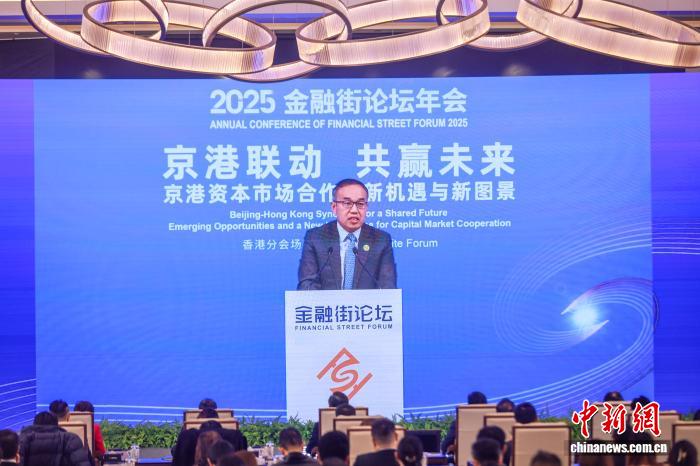
香港财库局局长许正宇:截至9月底近230家北京企业在港上市
Zhong Guo Xin Wen Wang· 2025-10-30 13:13
Core Insights - As of the end of September 2023, nearly 230 Beijing enterprises are listed in Hong Kong, with a total market capitalization of approximately HKD 13 trillion, accounting for about one-quarter of the Hong Kong stock market's total market value [1][3][4] - Cumulatively, these enterprises have raised over HKD 3 trillion in financing [1][3] Group 1: Financial Cooperation - The "Beijing-Hong Kong Financial Cooperation Forum" was held simultaneously in Beijing and Hong Kong, focusing on topics such as global economic restructuring, enterprise globalization, and capital market development [3] - The forum included representatives from government departments, regulatory bodies, financial institutions, and academia from both regions [3] Group 2: Industry Perspectives - The President of Bank of China emphasized the importance of building a resilient, inclusive, and sustainable financial system amid a new wave of technological and industrial revolutions [3] - The Chairman of the Hong Kong Securities and Futures Commission highlighted the significant market value and number of Beijing enterprises in Hong Kong, encouraging more innovative and traditional industries to utilize Hong Kong's international financing platform [3] Group 3: Future Outlook - The collaboration between Beijing and Hong Kong is seen as complementary, with unlimited potential to inject new momentum into national financial openness and the Belt and Road Initiative [4]
离境退税“即买即退”服务再添新举措 中行上海市分行推动设立上海首个酒店、商超退付点
Zhong Guo Jin Rong Xin Xi Wang· 2025-10-30 13:03
Group 1 - Bank of China Shanghai Branch has established the first hotel tax refund point in Shanghai at the Shanghai Grand Hotel, enhancing the tax refund service for international travelers [1] - The "immediate purchase and refund" service has been launched at the RT-Mart on Pingxingguan Road, expanding the channels for overseas guests to process tax refunds [1] - The Shanghai Grand Hotel, with its extensive multilingual reception capabilities and international service experience, aims to provide a seamless "stay, shop, and refund" experience for foreign guests [1] Group 2 - The number of South Korean tourists visiting China has significantly increased since the implementation of the visa-free policy for ordinary passports [1] - The RT-Mart supermarket has become a popular spot among South Koreans on social media, serving as an important channel for the Bank of China's tax refund services [1] - The "immediate purchase and refund" service will be further extended to tourists from more countries and regions in the future [1] Group 3 - The upcoming 8th China International Import Expo (CIIE) will see Bank of China continue to focus on "diversified scenarios" to expand the coverage of the "immediate purchase and refund" service [2] - The goal is to enhance the payment experience for international visitors, ensuring convenience and comfort at various locations such as airports, hotels, attractions, and supermarkets [2]
国有六大行,三季报出炉
财联社· 2025-10-30 12:09
Core Insights - The six major state-owned banks in China, including Industrial and Commercial Bank of China (ICBC), Agricultural Bank of China, Bank of China, China Construction Bank, Postal Savings Bank of China, and Bank of Communications, have released their third-quarter financial reports, showing varied performance in revenue and net profit growth [1][2]. Group 1: Financial Performance - ICBC reported a third-quarter revenue of 201.886 billion yuan, a year-on-year increase of 2.42%, and a net profit of 101.805 billion yuan, up 3.29%. For the first three quarters, revenue reached 610.968 billion yuan, growing by 1.98%, with a net profit of 269.908 billion yuan, an increase of 0.33% [1]. - Agricultural Bank of China achieved third-quarter revenue of 180.981 billion yuan, a 4.30% year-on-year increase, and a net profit of 81.349 billion yuan, up 3.66%. For the first three quarters, revenue was 550.774 billion yuan, growing by 1.87%, with a net profit of 220.859 billion yuan, an increase of 3.03% [1]. - Bank of China reported third-quarter revenue of 162.201 billion yuan, a 0.58% increase year-on-year, and a net profit of 60.069 billion yuan, up 5.09%. For the first three quarters, revenue was 491.204 billion yuan, growing by 2.69%, with a net profit of 177.66 billion yuan, an increase of 1.08% [1]. - China Construction Bank's third-quarter revenue was 179.429 billion yuan, a decline of 1.98%, while net profit increased by 4.06% to 95.808 billion yuan. For the first three quarters, revenue was 573.702 billion yuan, growing by 0.82%, with a net profit of 258.446 billion yuan, an increase of 0.52% [2]. - Bank of Communications reported third-quarter net operating income of 66.561 billion yuan, a year-on-year increase of 4.23%, and a net profit of 23.978 billion yuan, up 2.46%. For the first three quarters, net operating income was 200.059 billion yuan, growing by 1.86%, with a net profit of 69.994 billion yuan, an increase of 1.9% [2]. - Postal Savings Bank of China achieved third-quarter revenue of 85.634 billion yuan, a 2.48% year-on-year increase, and a net profit of 27.334 billion yuan, up 1.23%. For the first three quarters, revenue was 265.08 billion yuan, growing by 1.82%, with a net profit of 76.562 billion yuan, an increase of 0.98% [2].

多家银行调整黄金积存金购买规则
21世纪经济报道· 2025-10-30 11:35
Group 1 - The article discusses the recent volatility in gold prices, with fluctuations reaching nearly $500 per ounce, and current spot gold prices above $3900 per ounce [1] - Several banks, including Bank of Communications and Agricultural Bank of China, are shifting to a floating mechanism for gold accumulation plans, allowing investment amounts to adjust with real-time gold prices [3][4] - The article highlights that despite the trend towards floating mechanisms, many banks still maintain fixed investment thresholds, with recent adjustments in minimum investment amounts across various banks [4][5] Group 2 - In Q3, global gold demand reached a record high of 1313 tons, a 5% year-on-year increase, with total demand exceeding $100 billion for the first time [6][8] - Central bank gold purchases have slowed but remain strong at 186 tons for the quarter, with total purchases for the year at 694 tons, consistent with the previous year [8] - The article notes a 12% decline in gold jewelry consumption, yet its total value increased by 13% to over $360 billion, indicating a shift towards lighter gold products [8]




中国银行(601988):盈利逐步回暖,资产质量稳健
Tianfeng Securities· 2025-10-30 10:12
Investment Rating - The investment rating for the company is "Accumulate" (maintained) with a target price not specified [6]. Core Views - The company's profitability is gradually improving, with a reported revenue of approximately 491.20 billion yuan for the first three quarters of 2025, representing a year-on-year growth of 2.69% [2]. - The net profit attributable to the parent company for the same period is 177.66 billion yuan, showing a year-on-year increase of 1.08% [2]. - The net interest margin has stabilized at 1.26%, unchanged from the first half of 2025 [2]. - Non-interest income has shown significant growth, with a year-on-year increase of 16.20%, contributing to the overall revenue structure [2]. Financial Performance Summary - For the first three quarters of 2025, the company achieved a net interest income of 325.79 billion yuan, which accounts for 66.33% of total revenue, but decreased by 3.04% year-on-year [2]. - Non-interest income reached 165.41 billion yuan, with a year-on-year growth of 16.20% [2]. - The company’s total interest-earning assets amounted to 36.40 trillion yuan, reflecting a year-on-year growth of 10.38% [3]. - The non-performing loan ratio stood at 1.24%, remaining stable compared to the previous quarter [3]. Asset and Liability Structure - As of the third quarter of 2025, the company's interest-bearing liabilities totaled 32.73 trillion yuan, marking a year-on-year increase of 9.87% [3]. - The structure of interest-bearing liabilities includes deposits, bond issuance, interbank liabilities, and borrowings from the central bank, with respective year-on-year growth rates of 8.30%, 12.58%, -2.32%, and 86.67% [3]. - The loan-to-asset ratio has slightly decreased by 0.4 percentage points compared to mid-2025, indicating a shift in asset allocation [3]. Profitability Forecast and Valuation - The company is projected to see a net profit growth of 1.35%, 3.29%, and 4.10% for the years 2025, 2026, and 2027 respectively [4]. - The book value per share (BPS) is expected to be 8.11, 8.79, and 9.57 yuan for the years 2025, 2026, and 2027 respectively [4].
人民币论坛在斯里兰卡举行
Xin Hua Wang· 2025-10-30 08:47
Core Viewpoint - The forum held in Colombo focused on the significance of expanding the use of the Renminbi (RMB) in Sri Lanka, emphasizing its potential to enhance financial cooperation and facilitate trade and investment [1] Group 1: RMB Usage and Economic Impact - The use of RMB in Sri Lanka is expected to diversify foreign exchange reserves, reduce exchange rate risks, and provide a more stable and cost-effective settlement channel, thereby enhancing macroeconomic resilience [1] - Establishing a direct RMB settlement mechanism will effectively lower transaction costs and mitigate exchange rate volatility risks, offering businesses more stable and efficient financial services [1] - The cross-border use of RMB will aid Sri Lanka in achieving trade diversification, enriching foreign exchange funding sources, and improving the resilience of its financial system [1] Group 2: Financial Cooperation and Future Directions - Participants at the forum emphasized the need to continue improving financial cooperation mechanisms, expand the scale of local currency settlements, and promote bilateral financial connectivity [1] - Strengthening financial support for economic and trade exchanges between China and Sri Lanka is seen as crucial for both countries [1]
中国银行宁波市分行:织密反诈防护网 守护百姓“钱袋子”
Zhong Guo Jin Rong Xin Xi Wang· 2025-10-30 08:16
Core Points - The article highlights the proactive measures taken by Bank of China (BOC) Ningbo branch to prevent telecom fraud and protect customers' funds [1][2] - BOC has successfully conducted over 1,700 anti-fraud promotional activities since 2025, reaching more than 100,000 people [2] Group 1: Customer Protection - A customer, Mr. Wang, was prevented from transferring funds due to the intervention of BOC staff, who identified a telecom fraud attempt [1] - The staff assisted Mr. Wang in stopping a transfer of 140,000 yuan, successfully recovering 130,000 yuan of his funds [1] Group 2: Anti-Fraud Initiatives - BOC Ningbo branch has blocked 17 telecom fraud cases, recovering over 5.6 million yuan for customers [2] - The bank has received six commendation letters from various anti-fraud teams for its efforts in combating fraud [2] Group 3: Community Engagement - BOC is committed to enhancing public awareness of telecom fraud through community outreach, including financial safety courses [1][2] - The bank aims to strengthen its role in creating a safe and stable social environment by building a robust anti-fraud "firewall" [2]