BANK OF CHINA(03988)

Search documents
中国银行河南省分行精准发力 护航新春烟火气
Huan Qiu Wang· 2026-02-10 07:14
Core Viewpoint - The China Bank Henan Branch is actively supporting local businesses in the agricultural sector by providing tailored financial products to meet the demand for traditional food items during the Spring Festival, enhancing the festive atmosphere and local economy [1][2][3] Group 1: Financial Support Initiatives - The China Bank has provided over 1.1 billion yuan in credit support through the "Wangbang Scene Loan" product, benefiting nearly 1,000 small and micro businesses in the Wangbang market [2] - The "Wangbang Scene Loan" allows merchants to secure loans based on their operating cash flow, with a streamlined approval process that can deliver funds within five days [1] - The "Three Powder Scene Loan" has provided nearly 20 million yuan in credit support for the production and processing of traditional "three powders" (粉条, 粉皮, 淀粉) in Yuzhou and surrounding areas, promoting the scale and brand development of local industries [3] Group 2: Impact on Local Economy - The financial support from China Bank has alleviated the cash flow concerns of local merchants, enabling them to stock up on essential goods for the Spring Festival [1] - The initiatives have fostered a sense of confidence among local producers, allowing them to expand production and maintain traditional craftsmanship while meeting seasonal demand [2][3] - The support has transformed traditional skills into a viable source of income for local communities, contributing to their economic prosperity [3]

上市银行2025年年报: 业绩增速有望稳中向好,资产质量持续优化
2026-02-10 03:24
Summary of Conference Call on Banking Sector Outlook Industry Overview - The conference focused on the banking sector, specifically discussing the performance and outlook of 11 listed banks in China for the year 2025 and beyond [1][6]. Key Points and Arguments 1. Overall Performance of Banks - The performance of the 11 banks exceeded expectations, indicating a robust resilience in the banking sector [1][6]. - The net interest margin (NIM) showed signs of stabilization, with a narrowing year-on-year decline contributing significantly to interest income and revenue growth [1][2]. 2. Sensitivity of Interest Income - Interest income is highly sensitive to changes in NIM; a decrease of 10 basis points (BP) in NIM could reduce net interest income growth by 7 percentage points, while a 5 BP decrease would result in a 3.5 percentage point reduction [2]. 3. Fee Income Recovery - There has been a recovery in fee income due to improved capital market conditions and asset allocation by residents, leading to a continuous improvement in bank fees [2][4]. 4. Potential for Old Bond Gains - The banks hold significant unrealized gains on old bonds, which presents a substantial opportunity for realization [3]. 5. Positive Outlook for 2026 - The overall judgment is that the situation in 2026 will be better than in 2025, driven by stable basis points, improving fees, and gains from old bonds [3]. 6. Investment Perspective - The investment strategy focuses on absolute returns, targeting a return on equity (ROE) of around 13% and a price-to-book (PB) ratio of 0.67 times, indicating a reasonable pricing range [3][4]. - The recommendation is to select stocks based on high growth and high dividend yield, particularly in regions like Jiangsu, Nanjing, and Qilu [4][5]. 7. Performance of Specific Banks - Notable banks such as China Merchants Bank and Industrial Bank showed positive revenue growth, with some banks transitioning from negative to positive growth [6][7]. - City commercial banks like Nanjing Bank and Qingdao Bank reported double-digit revenue growth, indicating strong performance [7][10]. 8. Asset Quality and Non-Performing Loans (NPLs) - The asset quality remains stable, with many banks reporting a decrease in NPL ratios. For instance, Qingdao Bank's NPL ratio dropped significantly [10][11]. - The overall trend suggests a gradual improvement in asset quality, with expectations for continued stability in 2026 [11][12]. 9. Credit Growth and Demand - Credit growth is expected to remain strong, particularly in major provinces like Sichuan and Jiangsu, which reported credit growth rates above 8% [12][13]. - The demand for corporate loans remains robust, while retail loan demand is weaker [12]. 10. Future Risks and Projections - There are concerns regarding the potential exposure of retail loans, particularly in mortgage and consumer credit segments, but the overall increase in NPLs is expected to be limited [16][17]. - Projections for 2025 indicate a slight increase in NPL ratios for retail loans, but overall asset quality is expected to remain stable [17][18]. 11. Revenue Growth Expectations - The banking sector is projected to achieve a revenue growth rate of approximately 1.2% year-on-year, with city commercial banks leading in net profit growth [19][20]. 12. Stock Selection Strategy - The stock selection strategy emphasizes high ROE and high dividend yield, with recommendations for both Hong Kong and A-share listed banks [20][21]. Additional Important Insights - The conference highlighted the importance of wealth management in driving fee income, with expectations for continued positive contributions to revenue [19]. - The overall sentiment is optimistic regarding the banking sector's ability to navigate challenges and capitalize on growth opportunities in the coming years [22].




珠海金融监管分局核准罗天中国银行珠海分行行长任职资格
Jin Tou Wang· 2026-02-10 03:22
Group 1 - The Zhuhai Financial Regulatory Bureau has approved the appointment of Luo Tian as the president of the Zhuhai branch of the Bank of China [1] - The approval requires the appointed individual to comply with regulatory requirements and to report their appointment status within 10 days after taking office [1] - The Bank of China is responsible for ensuring that the appointed individual continues to learn and understand relevant economic and financial laws and regulations, and maintains a strong awareness of risk compliance [1]
金价重回5000美元关口,普通人买金该如何布局?
Bei Jing Shang Bao· 2026-02-10 01:28
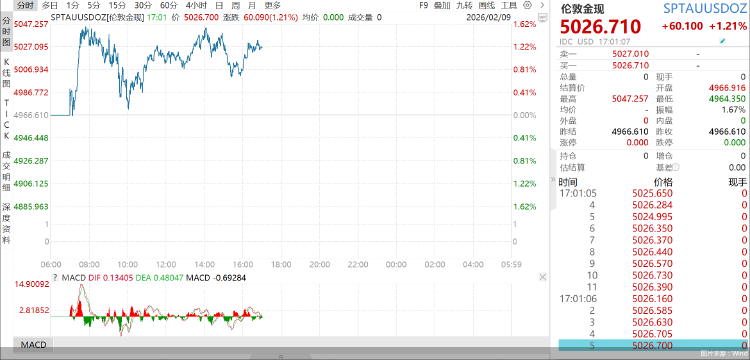
Group 1 - The core viewpoint of the article highlights the contrasting behaviors in the gold market, with retail investors showing enthusiasm for gold purchases while financial institutions adopt a cautious approach by tightening investment criteria and risk assessments [1][4][5] - As of February 9, the spot gold price reached a high of $5047.257 per ounce, marking a significant recovery above the $5000 threshold, with A-share and Hong Kong gold stocks also experiencing gains [1][2] - The current gold bull market has seen a cumulative increase of over 246% since its low in September 2022, with a notable surge of 64.56% in 2025, indicating strong market momentum [2][3] Group 2 - Financial institutions are raising the entry thresholds for gold investment, with banks like China Construction Bank and China Merchants Bank increasing minimum investment amounts for gold accumulation products [4][5] - Risk assessment standards are being tightened, with banks requiring higher risk tolerance levels for clients wishing to engage in gold investment, reflecting a proactive approach to consumer protection [5][6] - Despite the tightening of investment criteria, banks are also promoting gold-related financial products, such as structured deposits, which offer lower risk and are designed to appeal to a broader range of investors [6][7] Group 3 - The demand for physical gold products is surging ahead of the Spring Festival, with many banks reporting shortages of gold bars and coins, leading to recommendations for online purchases [7][8] - Investors are advised to be cautious during the holiday period, as international gold markets will remain active while domestic trading may pause, creating potential volatility [8][9] - Recommendations for gold investment include understanding the purpose of the purchase, with suggestions for gradual buying strategies to mitigate risks associated with high prices [10][11]


165页|2026年中国银行个人金融全球资产配置白皮书
Sou Hu Cai Jing· 2026-02-10 00:01
Global Economic Outlook - The global economy is expected to continue a weak recovery in 2026, with uncertainties remaining. China's economy is projected to grow between 4.7% and 5.0% due to supportive macro policies, stabilizing domestic demand, and a balanced supply-demand dynamic, laying a foundation for the "14th Five-Year Plan" [1][12] - The US economy is returning to its potential growth level, with reduced policy uncertainty as the Federal Reserve lowers interest rates and expands its balance sheet, leading to improved liquidity [1][12] - The Eurozone's economic fundamentals remain robust, with expectations for continued monetary easing. The UK economy shows resilience, but clear signals for interest rate cuts are still awaited [1][12] Asset Allocation Insights - Precious metals are outperforming other asset classes, with a solid long-term bullish outlook for gold. Silver is supported by financial, industrial, and investment demand, showing an upward trend despite increased volatility [1][2] - Copper and aluminum prices are expected to rise due to AI-driven demand, although rapid short-term price increases pose risks [1][2] - The oil market continues to face an oversupply situation, with prices likely to fluctuate around cost levels [1][2] Stock Market Analysis - The trend of asset value reassessment in China is becoming evident, with a slow bull market established in A-shares. Hong Kong stocks are benefiting from the internationalization of RMB assets and external liquidity easing, suggesting an overweight allocation [1][2] - US stock valuations are high, necessitating a focus on balance between offensive and defensive strategies. European stock markets are becoming more attractive, recommending a standard allocation [1][2] - The Japanese stock market is benefiting from policy dividends and economic recovery, but rising geopolitical risks warrant caution [1][2] Bond Market Overview - The Federal Reserve's multiple interest rate cuts are pushing US Treasury yields lower, suggesting an overweight allocation. Chinese dollar-denominated bonds were previously overweight, with adjustments to be made based on future conditions. European bonds present high allocation value, recommending a standard allocation [2][12] Currency Market Trends - The US dollar is expected to decline, with non-US currencies showing mixed performance. The euro and Malaysian ringgit are performing strongly, while the Japanese yen, British pound, and Australian dollar are in the middle range, with the Canadian dollar appearing weaker [2][12] - The Chinese yuan is expected to appreciate against the US dollar, with slight depreciation against major non-US currencies [2][12]

深圳市亿道信息股份有限公司 关于为控股子公司提供担保的进展公告
Zhong Guo Zheng Quan Bao - Zhong Zheng Wang· 2026-02-09 22:41
Summary of Key Points Core Viewpoint - The company has approved a guarantee limit for its subsidiaries to enhance financing efficiency and ensure normal cash flow, with a total guarantee amount of RMB 170 million allocated for various subsidiaries [3][4]. Group 1: Guarantee Overview - The company has a total external guarantee amount of RMB 2.035 billion, which accounts for 98.74% of the audited net assets attributable to shareholders for the year 2024 [2]. - The company will provide guarantees for subsidiaries with a debt-to-asset ratio of 70% or more up to RMB 20 million, and for those with a ratio below 70% up to RMB 150 million [3]. Group 2: Guarantee Progress - On February 9, 2026, the company signed a maximum guarantee contract with China Bank for a subsidiary, Shenzhen Yizhong Optoelectronics Co., Ltd., providing a guarantee of RMB 30 million for a credit facility [5]. - The company adjusted the unused guarantee amount of RMB 30 million from its wholly-owned subsidiary Yidao Digital to Yizhong Optoelectronics, maintaining the total guarantee balance for Yidao Digital at RMB 1.075 billion [5]. Group 3: Subsidiary Information - Shenzhen Yizhong Optoelectronics Co., Ltd. was established on August 27, 2025, with a registered capital of RMB 80 million and is primarily engaged in the manufacturing and sales of semiconductor lighting devices [6][7]. Group 4: Guarantee Contract Details - The maximum guarantee amount for Yizhong Optoelectronics is RMB 30 million, with a guarantee period of three years from the debt performance deadline [8]. - The guarantee covers all debts owed by Yizhong Optoelectronics to China Bank, including principal, interest, penalties, and other related costs [8][9]. Group 5: Board Opinion - The board believes that the guarantee is necessary for the operational needs of the subsidiary and will enhance its operational efficiency and financing capability, posing no significant risk to the company [10]. Group 6: Cumulative Guarantee Status - As of the announcement date, the total external guarantee balance for the company and its subsidiaries is RMB 1.339086 billion, which is 64.97% of the audited net assets for 2024 [10].
智通ADR统计 | 2月10日





智通财经网· 2026-02-09 22:30
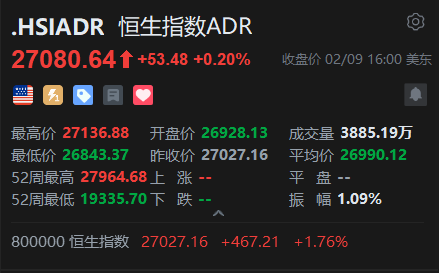
Group 1 - Major blue-chip stocks mostly rose, with HSBC Holdings closing at HKD 141.801, up 1.8% from the previous close [2] - Tencent Holdings closed at HKD 561.139, reflecting a 0.2% increase from the previous close [2] Group 2 - Tencent Holdings (00700) latest price is HKD 560.000, with an increase of HKD 12.500 or 2.28% [3] - Alibaba Group (09988) latest price is HKD 157.900, up HKD 2.900 or 1.87% [3] - HSBC Holdings (00005) latest price is HKD 139.300, up HKD 4.500 or 3.34% [3] - AIA Group (01299) latest price is HKD 86.350, up HKD 2.850 or 3.41% [3] - Meituan (03690) latest price is HKD 91.050, down HKD 0.350 or 0.38% [3] - China Ping An (02318) latest price is HKD 73.000, up HKD 3.400 or 4.89% [3] - Hong Kong Exchanges (00388) latest price is HKD 418.600, up HKD 11.000 or 2.70% [3] - Baidu Group (09888) latest price is HKD 142.200, up HKD 4.400 or 3.19% [3] - Kuaishou Technology (01024) latest price is HKD 69.300, down HKD 1.950 or 2.74% [3]
富国核心动力混合型证券投资基金基金份额发售公告
Shang Hai Zheng Quan Bao· 2026-02-09 18:07
Group 1 - The core point of the article is the launch of the "Fullgoal Core Power Mixed Securities Investment Fund," which is set to be publicly offered from February 24, 2026, to March 16, 2026, with a minimum fundraising target of 200 million RMB [12][13]. - The fund is classified as a mixed securities investment fund, with an indefinite duration and a face value of 1.00 RMB per share [12][13]. - The fund management company is Fullgoal Fund Management Co., Ltd., and the custodian is Bank of China Limited [46][47]. Group 2 - The fund is open to individual investors, institutional investors, qualified foreign investors, and other investors permitted by laws and regulations [2][12]. - The minimum subscription amount for the fund is set at 10 RMB, with specific higher minimums for different subscription methods [3][15]. - Investors can subscribe multiple times during the fundraising period, and there are no subscription fees for A-class shares through direct sales channels [3][18]. Group 3 - The fund's management fee structure includes fixed, contingent, and excess management fees, which depend on the holding duration and annualized return of each fund share [9]. - The fund may invest in stocks listed on the Hong Kong Stock Exchange, which entails specific risks associated with the Hong Kong market [7][10]. - The fund will also have a floating management fee model, meaning the actual fee may vary based on performance [9]. Group 4 - The fund's fundraising period is limited to a maximum of three months, and if the minimum fundraising target is not met, the funds will be returned to investors with interest [13][43]. - Investors must open a fund account to subscribe, and only one account per investor is allowed [2][29]. - The fund's subscription process includes specific requirements for both individual and institutional investors, including necessary documentation and procedures [29][35].
金价重回5000美元关口,普通人买金该如何在春节布局?
Bei Jing Shang Bao· 2026-02-09 14:56
Core Viewpoint - The gold market is experiencing a surge in demand ahead of the Spring Festival, with spot gold prices stabilizing above $5000 per ounce, while financial institutions are adopting a cautious approach by tightening investment criteria and risk assessments [1][4][5]. Group 1: Gold Price Dynamics - As of February 9, spot gold prices reached a high of $5047.257 per ounce, marking a significant recovery above the $5000 threshold [1]. - The current bull market for gold has seen prices increase by over 246% since September 2022, with a notable rise of 64.56% in 2025 alone [3]. - Despite recent volatility, including a sharp drop to $4402.06 per ounce, gold prices rebounded quickly, indicating strong market resilience [3][4]. Group 2: Institutional Responses - Major banks have raised the entry thresholds for gold investment, with institutions like China Construction Bank increasing the minimum amount for gold accumulation to 1500 yuan [5][6]. - Risk assessment standards have been tightened, requiring clients to achieve a cautious risk rating before engaging in gold accumulation products [6]. - These measures are in response to the heightened volatility in gold prices and aim to protect inexperienced investors from potential losses [6]. Group 3: Consumer Behavior and Recommendations - There is a growing demand for physical gold products, with banks reporting shortages and advising customers to purchase online [8][9]. - Consumers are encouraged to clarify their purchasing intentions, distinguishing between investment and consumption, and to consider strategies like dollar-cost averaging to mitigate risks [10][11]. - The market is expected to remain volatile during the Spring Festival, with predictions of gold prices fluctuating between $4600 and $5000 per ounce [11].
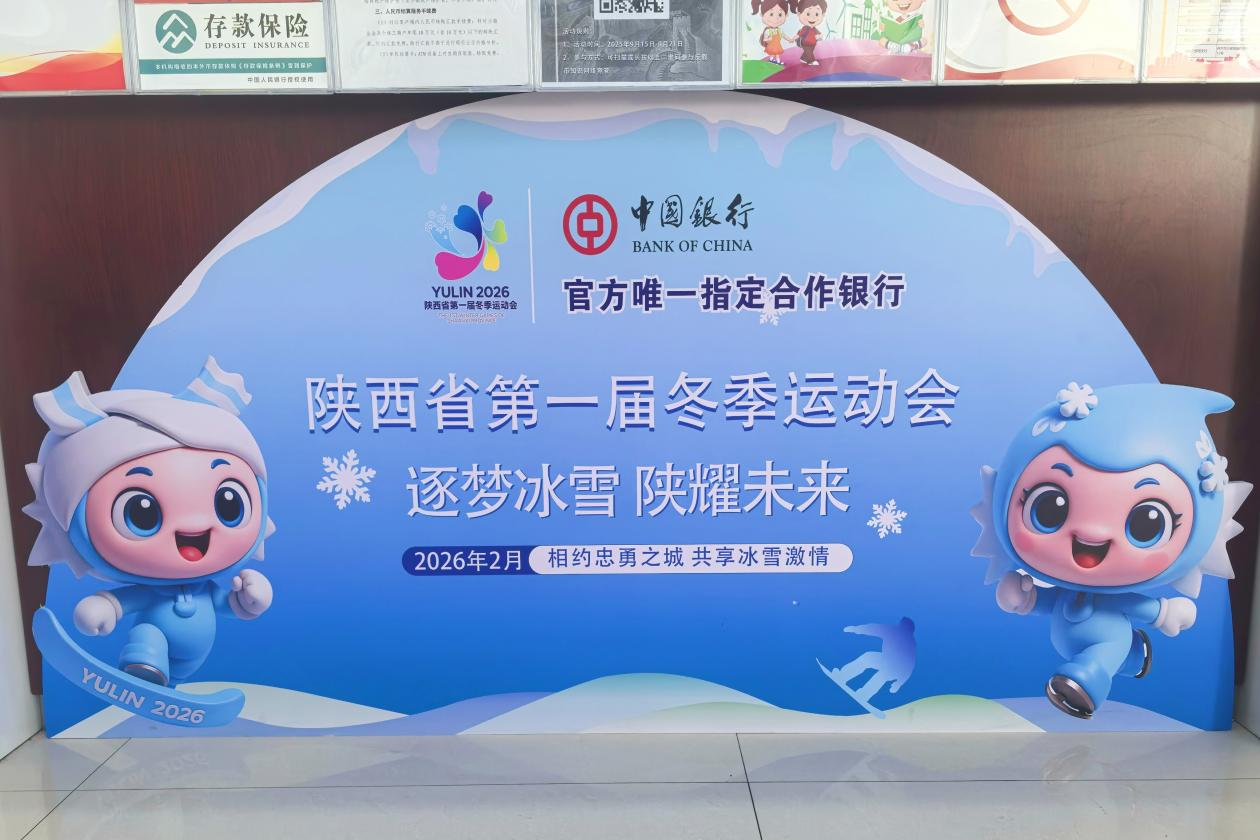
中国银行陕西省分行体育产业信贷余额超过20亿元
Zhong Guo Jin Rong Xin Xi Wang· 2026-02-09 12:50
Group 1 - The first Winter Sports Games in Shaanxi Province has opened in Yulin, with the Bank of China Shaanxi Branch providing financial services such as account management and payment settlement for the event [1][3] - As of the end of January 2026, the credit balance related to the sports industry at the Bank of China Shaanxi Branch has exceeded 2 billion yuan, covering 17 major categories including sports venue management and construction [1][3] - The bank has established a professional team to support the organizing committee, participating teams, and athletes with account opening and fund settlement services, ensuring seamless operation during the event [3] Group 2 - The Bank of China Shaanxi Branch has focused on supporting the sports industry, financing projects such as the renovation of the Xi'an People's Sports Stadium and providing comprehensive credit to ice and snow sports facilities [3] - During the 2024 FIVB U19 Beach Volleyball World Championship in Shanzhou, the bank will offer cross-border payment and emergency cash support services for participants [3] - In 2025, the bank processed 140 million yuan in salary distribution services for the sports industry, extending its services to small and micro sports enterprises [3]