
INTEL(04335)

Search documents
英特尔(INTC.US)确认收到美国政府57亿美元注资 白宫称细节“仍在敲定”
智通财经网· 2025-08-29 01:47
Group 1 - Intel's CFO David Zinser announced that the company received $5.7 billion from the U.S. government as part of a plan to acquire a 10% stake in Intel [1] - The U.S. government will invest a total of $8.9 billion to acquire 9.9% of Intel, making it a major shareholder, alongside previously received subsidies totaling $2.2 billion [1] - Despite reporting better-than-expected Q2 results, Intel's stock fell by 8% due to concerns over its chip foundry business [1] Group 2 - The White House Press Secretary stated that the Intel deal is still being finalized by the U.S. Department of Commerce [2] - Intel issued a warning that the agreement with the U.S. government could lead to negative reactions from investors, employees, and other stakeholders [2] - Potential negative responses may include lawsuits and increased scrutiny from the public and government regarding the company [2]

英特尔288核新至强处理器揭秘:Intel 18A制程,3D堆叠与键合,EMIB封装……
Ju Chao Zi Xun· 2025-08-28 14:16
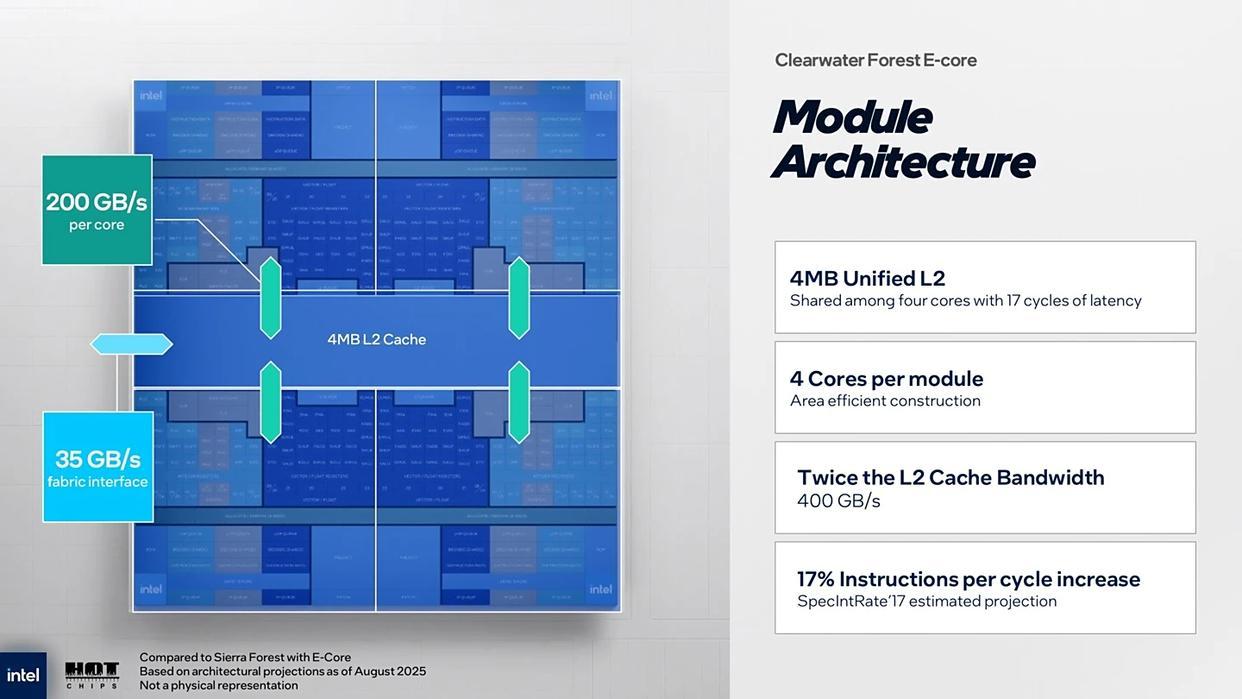
Core Insights - Intel's new generation Xeon processor Clearwater Forest was unveiled at the Hot Chips 2025 conference, marking the first server chip built on the Intel 18A process technology [2] - Clearwater Forest features 288 efficient cores, providing up to 576 cores in a dual-socket configuration, along with over 1152MB of L3 cache, significantly enhancing performance and efficiency [2] Architecture Enhancements - The new Darkmont efficient core architecture includes a wider 3x3 decode engine, deeper out-of-order execution window, and stronger execution ports, resulting in approximately 17% improvement in instructions per clock (IPC) compared to the previous Crestmont core [4] - Clearwater Forest is compatible with the previous generation Sierra Forest processors and supports up to 12 channels of DDR5 RDIMM memory, designed for multi-threaded network services and AI inference tasks [5] Process Technology and Packaging - Clearwater Forest is one of the first products utilizing Intel 18A process technology, which reduces gate capacitance, enhances core logic power efficiency, and achieves over 90% battery utilization [7] - The PowerVia backside power delivery technology and RibbonFET transistors contribute to a 15% performance improvement per watt at the same power level and a 30% increase in chip density at the same area compared to Intel 3 [7] - The 3D architecture of Clearwater Forest, consisting of 12 CPU chiplets based on Intel 18A, integrates high-speed I/O and interconnect structures, showcasing the competitive performance and efficiency of the Intel 18A process node [8]

美政府入股英特尔:混改野心不止于此
Bei Jing Shang Bao· 2025-08-28 13:55
Core Viewpoint - The U.S. government has announced an investment of $8.9 billion for a 9.9% stake in Intel, marking a significant shift towards state-led industrial policy and potentially the beginning of a sovereign wealth fund in the U.S. [1][3] Group 1: Investment Details - The investment will make the U.S. government Intel's largest shareholder, with the funds sourced from previously allocated subsidies under the CHIPS and Science Act, totaling $111 billion when combined with earlier grants [3][6] - The agreement stipulates that the government will hold a passive stake without board representation or governance rights, aligning its voting with Intel's board on most matters [3][6] Group 2: Market Context - Intel has been struggling with market share and technological advantages, facing significant losses, including a projected $18.8 billion loss in 2024, marking its first loss since 1986 [5][6] - The investment is seen as a lifeline for Intel, which has lost ground to competitors like NVIDIA and AMD, raising concerns about the company's competitive position [5][6] Group 3: Political and Economic Implications - The move has sparked criticism from conservative figures who argue it undermines free market principles and could lead to politically driven decision-making at Intel [6][8] - The investment is part of a broader strategy by the U.S. government to create a sovereign wealth fund, potentially expanding to other sectors beyond semiconductors [7][8] Group 4: Future Outlook - Analysts suggest that while the government intervention may provide short-term relief, fundamental challenges such as product roadmap weaknesses and customer shortages in new factories remain for Intel to address [6][7] - The establishment of a sovereign wealth fund could reshape U.S. economic policy, aiming to enhance asset liquidity and reduce reliance on direct government borrowing [8]
M3/M4 Mac上跑Linux“破灭”?Asahi Linux又一核心开发者官宣退出:告别苹果,转战英特尔
3 6 Ke· 2025-08-28 12:28
Core Insights - The departure of Alyssa Anne Rosenzweig from the Asahi Linux project has sparked discussions within the open-source community, with mixed reactions regarding the future of Linux on Apple's M1 and M2 chips [2][37] - Alyssa has been a significant contributor to the development of open-source graphics drivers, particularly for Arm Mali GPUs and Apple M1 GPUs, and her exit raises concerns about the ongoing support for these projects [3][37] Group 1: Alyssa's Contributions - Alyssa started her journey in graphics driver development with the Panfrost project in 2017, aimed at creating open-source drivers for Arm Mali GPUs, which were previously closed-source [6][7] - She joined the Asahi Linux project in late 2020, contributing to the adaptation of Linux for Apple's M1 chip, and played a crucial role in achieving graphics acceleration for the project by December 2022 [9][20] - Her work led to the successful implementation of OpenGL 3.1 and Vulkan 1.3 drivers, enabling gaming on Linux for M1 and M2 Macs, and she achieved compliance with OpenGL 4.6 standards [28][31] Group 2: Future Directions - Following her departure from Asahi Linux, Alyssa has announced plans to join Intel, where she will focus on designing open-source graphics drivers for Intel GPUs, including OpenGL and Vulkan [33][37] - The Asahi Linux project faces challenges with the recent loss of key developers, raising concerns about its future, particularly regarding support for newer M3 and M4 chips [37][38] - Despite the challenges, the community expresses optimism for Alyssa's future contributions at Intel, highlighting her significant achievements in the open-source graphics domain [40]


加州州长抨击特朗普与英特尔的交易:把我恶心坏了
Guan Cha Zhe Wang· 2025-08-28 12:27
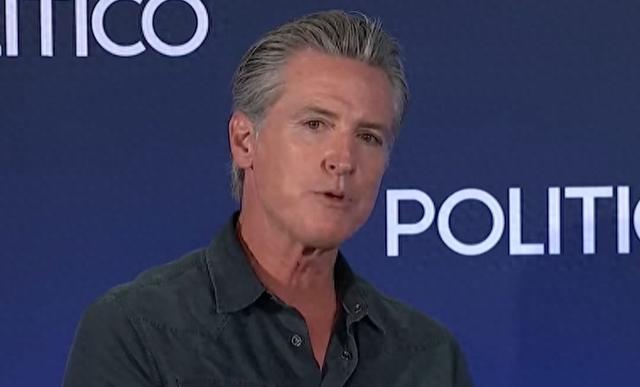
Group 1 - The article discusses former President Trump's intervention in private companies, specifically highlighting his acquisition of a 10% stake in Intel through a deal worth $8.9 billion, which includes $5.7 billion in subsidies from the Biden administration's CHIPS and Science Act [5][6]. - California Governor Gavin Newsom criticized Trump's actions as "disgusting," suggesting that if President Biden attempted similar agreements with American companies, it would provoke public outrage [3][5]. - Trump's recent actions represent a departure from traditional free-market principles, as he has pressured companies like Nvidia and AMD to pay a percentage of their sales in China to the U.S. government in exchange for export licenses [5][6]. Group 2 - Trump's approach to corporate governance has been characterized as a "transactional model," where companies are expected to make concessions in exchange for government assistance [6][7]. - The article notes that Trump's administration has also pressured major corporations like Coca-Cola, Walmart, and Amazon to adjust their product offerings and pricing to align with government interests [6][7]. - There are indications that the Trump administration is considering acquiring stakes in defense contractors, which has shocked both the business and political communities [7].
英特尔之后特朗普瞄准谁?高官暗示军工、造船业,洛克希德·马丁被点名
Hua Er Jie Jian Wen· 2025-08-27 19:19
Core Viewpoint - The Trump administration is considering applying the government equity acquisition model used in the Intel deal to other key industries, including defense contractors like Lockheed Martin and shipbuilding companies [1][2][3]. Group 1: Government Equity Acquisition - The Trump administration recently acquired approximately 10% of Intel's shares for about $11 billion, funded through the CHIPS Act [2]. - Following the Intel acquisition, the administration is exploring potential investments in other critical industries, emphasizing the need for self-sufficiency in sectors like shipbuilding [2][3]. - The Secretary of the Treasury indicated that the government is not considering acquiring shares in Nvidia, stating that it does not require financial support [2]. Group 2: Defense Industry Focus - The Department of Defense is actively discussing the possibility of acquiring shares in major defense contractors, particularly Lockheed Martin, which derives 97% of its revenue from the U.S. government [3]. - The administration is reassessing how the government funds military and defense capabilities, suggesting a shift from previous funding practices [3]. Group 3: Political Reactions - There is a divide among Republican lawmakers regarding the government's acquisition of Intel shares, with some expressing opposition to government ownership of companies [6]. - Critics warn that government ownership could lead to corporate decisions being influenced more by political considerations than by business interests [6].

美政府入股英特尔 混改野心不止于此
Bei Jing Shang Bao· 2025-08-27 14:47
Core Viewpoint - The U.S. government has announced an investment of $8.9 billion to acquire a 9.9% stake in Intel, marking a significant shift towards state-led investment in key industries, interpreted as the beginning of a sovereign wealth fund initiative in the U.S. [2][3] Investment Details - The investment comes from previously allocated but unpaid subsidies under the CHIPS and Science Act, totaling $5.7 billion, along with an additional $3.2 billion from government funding projects, bringing the total government investment in Intel to $11.1 billion [4] - The U.S. government will hold a passive stake without board seats or governance rights, agreeing to align with the company's board on shareholder matters, barring a few exceptions [3][4] Market Context - Intel has been struggling with market share and technological advantages, facing significant losses, including a projected $18.8 billion loss in 2024, marking its first loss since 1986, with a 60% drop in stock price [5] - The investment is seen as a potential lifeline for Intel's struggling foundry business, although fundamental challenges such as weak product roadmaps and customer shortages remain [5] Political and Economic Implications - The move has sparked criticism from conservative figures, who argue it undermines free market principles and could lead to politically driven decision-making at Intel [5] - The investment may complicate Intel's international operations, as approximately 80% of its revenue comes from outside the U.S., potentially triggering foreign subsidy reviews and stricter conditions in international dealings [5] Broader Strategic Goals - The investment in Intel is part of a larger strategy by the U.S. government to create a sovereign wealth fund, with plans to invest in more companies across various sectors [6][7] - The government aims to revitalize American manufacturing and reduce reliance on foreign supply chains, with projections suggesting the fund could raise over $500 billion during Trump's administration [7]

投资者拉响警报:特朗普“强占”英特尔9.9%股权,恐开启美国国家资本主义新时代
智通财经网· 2025-08-27 13:20
Core Viewpoint - The U.S. government's acquisition of a 9.9% stake in Intel through the CHIPS Act has raised concerns among investors about increased government intervention in private enterprises, particularly following the demand for Intel's CEO to resign [1][3]. Group 1: Government Intervention - The agreement involves converting $11.1 billion from the CHIPS Act and other government funds into equity in Intel, which has sparked fears of a precedent for government overreach in corporate governance [1][2]. - The transaction does not grant the U.S. Department of Commerce a board seat but allows it to influence board nominations and proposals, raising concerns about potential conflicts of interest [2][3]. Group 2: Investor Reactions - Investors express unease over the implications of such government involvement, with some suggesting that it could lead to a dilution of shareholder rights and voting power [3][4]. - A California investor highlighted that the transaction sends a message of compliance with government demands, which could set a troubling precedent for corporate governance [1][5]. Group 3: Market Implications - The deal is seen as providing liquidity to Intel but failing to fundamentally improve demand for its chips, as noted by Fitch Ratings [2]. - The stock price of Intel rose from $20.41 on August 6 to $24.56 on August 15, before closing at $24.35, indicating market volatility in response to the news [1]. Group 4: Broader Context - This intervention is part of a broader trend of government involvement in private companies, with historical precedents during the 2008-2009 financial crisis, but the current situation is viewed as unprecedented for healthy companies [3][4]. - The potential for conflicts between corporate goals and national interests is highlighted, with calls for regulations to prevent misuse of insider information and protect investor interests [4][5].
89亿美元,占股9.9%! “美国版混改”来了 美国政府将成英特尔最大股东
Mei Ri Jing Ji Xin Wen· 2025-08-27 12:12
Core Viewpoint - The U.S. government announced it will become the largest shareholder of Intel by acquiring a 9.9% stake for $8.9 billion, marking a significant shift in the relationship between the government and private enterprises, interpreted as the beginning of a sovereign wealth fund initiative in the U.S. [1] Group 1: Transaction Details - The U.S. government will purchase 433.3 million shares of Intel at $20.47 per share, a nearly 17% discount from Intel's closing price of $24.80 on the announcement day [2] - Including previously received subsidies, the total investment from the U.S. government in Intel amounts to $11.1 billion [2] - The government will also receive a five-year warrant to purchase an additional 5% stake at $20 per share if Intel's ownership of its chip foundry falls below 51% [2] Group 2: Funding Sources - The funding for this transaction comes from $5.7 billion in subsidies promised by the Biden administration under the CHIPS and Science Act and an additional $3.2 billion from government-funded projects [3] Group 3: Strategic Implications - The investment reflects a strategic move by the U.S. government to enhance national security by ensuring domestic advanced semiconductor manufacturing capabilities, especially in the context of global AI competition [6] - Intel is the only U.S. company capable of developing and manufacturing cutting-edge logic process nodes, making it a strategic asset [6] Group 4: Broader Strategy - This investment is part of a broader strategy to create a U.S. sovereign wealth fund, aimed at reducing leverage on U.S. assets and attracting private capital [8] - The fund could potentially control strategic assets and invest in high-tech sectors closely related to national security, such as AI and quantum computing [9] Group 5: Government Role Transformation - The U.S. government's role has shifted from being a subsidy provider to an active investor, breaking a long-standing norm of not taking equity stakes in private companies [10][11] - This change has sparked significant debate within the U.S., with some experts warning of potential risks to long-term economic prosperity [12] Group 6: Future Implications - The government may consider similar investments in other semiconductor companies and industries, indicating a potential systemic shift in U.S. industrial policy [12][13] - Recent actions, such as the acquisition of a stake in MP Materials, suggest a trend towards increased government intervention in key sectors [13]
美国政府入股英特尔10%,要东山再起?能挑战台积电霸主地位吗?
Hu Xiu· 2025-08-27 10:02
Core Insights - The U.S. government has invested $8.9 billion to acquire a 10% stake in Intel, becoming the largest shareholder, but it only received common stock without voting rights, resembling a clever form of subsidy [1] Group 1 - The investment positions the U.S. government as a significant player in Intel's ownership structure [1] - The lack of voting rights indicates a strategic approach to support the company without direct control [1] - This move reflects broader governmental strategies to bolster domestic semiconductor manufacturing [1]