
Cambricon(688256)

Search documents
集成电路ETF(562820)开盘跌0.88%,重仓股寒武纪跌1.19%,中芯国际跌0.43%
Xin Lang Cai Jing· 2025-12-18 03:05
Group 1 - The integrated circuit ETF (562820) opened down 0.88% at 2.148 yuan [1] - Major holdings in the ETF showed mixed performance, with notable declines in stocks like Cambrian (down 1.19%), SMIC (down 0.43%), and Haiguang Information (down 0.99%), while Zhaoyi Innovation increased by 0.65% [1] - The ETF's performance benchmark is the CSI All Share Integrated Circuit Index, managed by Harvest Fund Management, with a return of 117.04% since its inception on April 12, 2024, and a recent one-month return of -0.48% [1]




计算机行业AI2025算力系列(十):HBF技术发展下数据基础软件的机会和挑战
GF SECURITIES· 2025-12-18 02:15
Investment Rating - The industry investment rating is "Buy" [3] Core Insights - The report highlights the potential of HBF (High Bandwidth Flash) technology to meet the memory capacity requirements of AI large models, which have been increasing due to the growth in model parameters and context lengths [13][20] - Companies with a database technology foundation are well-positioned to develop data infrastructure software based on HBF, with major players including Huawei and Alibaba, as well as independent firms like StarRing Technology and PingCAP [29][32] - The maturity of HBF technology is expected to drive the application of related data infrastructure software, particularly in AI inference tasks [33] Summary by Sections HBF Technology Development - HBF is anticipated to become the optimal solution for meeting the memory capacity demands of AI large models, as current HBM (High Bandwidth Memory) solutions are insufficient [20][23] - The first batch of HBF samples is expected to be delivered in the second half of 2026, with integrated AI inference hardware projected for early 2027 [23] Data Infrastructure Software Opportunities - The report identifies a growing need for data processing software that can handle the high memory requirements of various AI models, particularly large language models and video generation models [28][30] - Companies with existing database technology capabilities are likely to develop software optimized for HBF, enhancing their competitive edge in the market [29][32] Key Company Valuations and Financial Analysis - StarRing Technology (688031.SH) has a current price of CNY 97.99 with a rating of "Increase" [8] - Cambricon (688256.SH) is rated "Buy" with a target value of CNY 1480.92, reflecting strong growth potential [8] - Inspur Information (000977.SZ) is rated "Increase" with a current price of CNY 62.85 [8] - Unisplendour (000938.SZ) is rated "Buy" with a target value of CNY 39.18 [8]


投资AI的答案?这个指数好像真的做到了1+1>2!
Sou Hu Cai Jing· 2025-12-18 01:49
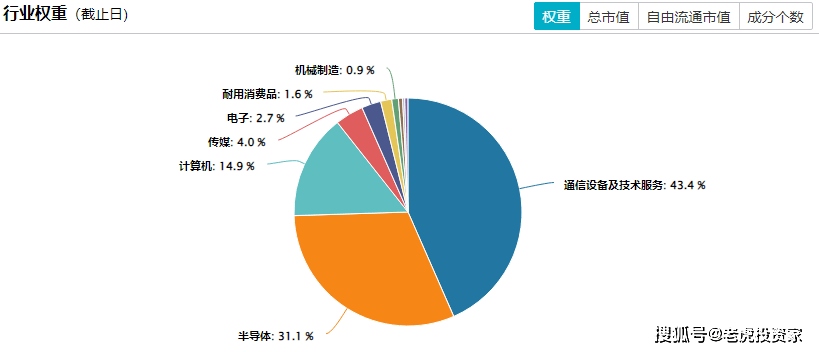
Group 1 - The first batch of ETFs tracking the Innovation and Entrepreneurship AI Index has been launched, with the largest being the E Fund Innovation and Entrepreneurship AI ETF (159140) at a scale of 1.336 billion CNY [10][11] - The investment value and logic in the AI sector are increasingly recognized, with many brokerages projecting AI to remain a key investment theme in the stock market through 2026 [1][2] - The recent economic work conference emphasized the need to "deepen and expand" the integration of AI, indicating strong policy and financial support for the sector in the coming year [2] Group 2 - The focus has shifted from model competition to practical application of AI, with diverse applications in finance, healthcare, and education, which will drive demand for computing power and infrastructure [3] - The Innovation and Entrepreneurship AI Index is uniquely positioned, selecting 50 major companies from the Sci-Tech Innovation Board and the Growth Enterprise Market, specifically targeting leading firms in the AI sector [4][5] - The index captures the strengths of both the communication equipment and semiconductor sectors, with over 70% of its composition in these areas, aligning with global AI computing demand and domestic development [5] Group 3 - The leading stocks within the index are primarily from the optical module and semiconductor sectors, indicating a high concentration that could drive the index's performance during an upcycle in the AI industry [7] - Profit forecasts for the index's constituent stocks show significant growth, with expected revenue growth rates of 36.16% and 25.08% for 2026 and 2027, respectively, and net profit growth rates of 81.99% and 34.58% for the same years [8][9] - The index's design allows for a streamlined investment approach, enabling investors to gain exposure to both optical modules and semiconductors simultaneously [7]


芯片ETF景顺(159560)开盘跌1.06%,重仓股中芯国际跌0.43%,寒武纪跌1.19%
Xin Lang Cai Jing· 2025-12-18 01:41
Group 1 - The core viewpoint of the article highlights the performance of the Invesco Chip ETF (159560), which opened down by 1.06% at 1.584 yuan on December 18 [1] - The major holdings of the ETF include companies such as SMIC, Cambricon, and Huagong Information, with varying performance; for instance, SMIC decreased by 0.43%, while Zhaoyi Innovation increased by 0.65% [1] - The ETF's performance benchmark is the CSI Chip Industry Index return, managed by Invesco Great Wall Fund Management Company, with a return of 60.58% since its establishment on November 9, 2023, and a return of 0.60% over the past month [1]


芯片ETF天弘(159310)开盘跌0.25%,重仓股中芯国际跌0.43%,寒武纪跌1.19%
Xin Lang Cai Jing· 2025-12-18 01:41
Core Viewpoint - The chip ETF Tianhong (159310) opened with a slight decline, reflecting the overall performance of its major holdings in the semiconductor sector [1] Group 1: ETF Performance - The chip ETF Tianhong (159310) opened down by 0.25%, priced at 1.993 yuan [1] - Since its establishment on April 18, 2024, the fund has achieved a return of 99.96%, with a monthly return of 0.58% [1] Group 2: Major Holdings Performance - Major holdings in the ETF include: - SMIC (中芯国际) down by 0.43% - Cambricon (寒武纪) down by 1.19% - Haiguang Information (海光信息) down by 0.99% - Northern Huachuang (北方华创) down by 0.84% - Lattice Semiconductor (澜起科技) down by 0.79% - Zhaoyi Innovation (兆易创新) up by 0.65% - Zhongwei Company (中微公司) down by 1.13% - OmniVision (豪威集团) down by 0.60% - Chipone (芯原股份) down by 1.45% - JCET (长电科技) down by 0.92% [1]
寒武纪入列,上市公司掀起“补亏”潮
3 6 Ke· 2025-12-17 12:16
作为当前市场上炙手可热的科技龙头品种,寒武纪因受益于国内算力需求的持续释放,今年 前三季度业绩大幅增长,但在此之前,该公司的业绩其实是一直处于亏损困境的。由于业绩 的持续亏损,导致其未分配利润出现了负数,截至2024年12月31日,母公司财务报表累计未 分配利润高达-27.78亿元。 2025年12月15日晚,国内AI芯片领域头部厂商寒武纪(688256.SH)发布公告称,《关于使用公积金弥 补亏损的议案》在当天召开的临时股东大会上获审议通过。根据议案,该公司拟使用母公司资本公积 27.78亿元用于弥补母公司累计亏损,本次公积金弥补亏损以该公司2024年末母公司未分配利润负数弥 补至零为限。 经济观察报记者留意到,除了寒武纪,统一股份(600506.SH)、经纬恒润(688326.SH)、中关村 (000931.SZ)、保变电气(600550.SH)、冠捷科技(000727.SZ)、金杯汽车(600609.SH)等公司均 在近期内发布了与"资本公积弥补亏损"相关的公告。 备受上市公司青睐的"资本公积弥补亏损",究竟是怎么一回事? 为何要"补亏"? 作为当前市场上炙手可热的科技龙头品种,寒武纪因受益于国内算力需 ...

寒武纪入列 上市公司掀起“补亏”潮
经济观察报· 2025-12-17 11:12
Core Viewpoint - The article discusses the recent financial maneuver by Cambricon (寒武纪) to use its capital reserve to offset accumulated losses, which has raised questions about the implications for the company's financial health and investor confidence [2][5][12]. Group 1: Company Performance and Financial Maneuver - Cambricon has experienced significant growth in its performance due to the increasing domestic demand for computing power, but it has faced continuous losses prior to this year [1][4]. - The company's net profits from 2020 to 2024 were -4.35 billion, -8.25 billion, -12.56 billion, -8.48 billion, and -4.52 billion respectively, leading to a cumulative undistributed profit of -27.78 billion by the end of 2024 [4]. - Despite the losses, Cambricon's capital reserve has grown from 73.21 billion at the end of 2020 to 96.25 billion at the end of 2024, prompting the decision to use 27.78 billion from this reserve to offset losses [4][9]. Group 2: Rationale Behind the Loss Offset - The primary reason for using capital reserves to offset losses is to eliminate historical losses from a financial perspective, which can enhance the company's ability to provide returns to investors [5][9]. - If the undistributed profits are negative, the company cannot distribute dividends even if it achieves profitability in the current year. By offsetting losses, Cambricon aims to meet the conditions for potential dividends in the future [5][9]. Group 3: Market Reactions and Concerns - The announcement of using capital reserves to offset losses has led to skepticism among market participants, with some investors expressing concerns about the potential for financial statement distortion and the implications for the company's long-term growth [7][8]. - There is a belief that focusing on dividend preparations at this stage may weaken the company's competitive edge, especially for a tech company like Cambricon that requires substantial investment for growth [8][12]. Group 4: Industry Trends - The practice of using capital reserves to offset losses is becoming more common among listed companies, with many firms following Cambricon's lead in recent announcements [11][12]. - A significant number of companies have issued announcements regarding the use of capital reserves to offset losses, indicating a growing trend in the market [12].

寒武纪入列 上市公司掀起“补亏”潮
Jing Ji Guan Cha Wang· 2025-12-17 10:45
经济观察报记者 邹永勤 2025年12月15日晚,国内AI芯片领域头部厂商寒武纪(688256.SH)发布公告称,《关于使用公积金弥补亏损的议案》在当天召开的临时股东大会上获审议 通过。根据议案,该公司拟使用母公司资本公积27.78亿元用于弥补母公司累计亏损,本次公积金弥补亏损以该公司2024年末母公司未分配利润负数弥补至 零为限。 经济观察报记者留意到,除了寒武纪,统一股份(600506.SH)、经纬恒润(688326.SH)、中关村(000931.SZ)、保变电气(600550.SH)、冠捷科技 (000727.SZ)、金杯汽车(600609.SH)等公司均在近期内发布了与"资本公积弥补亏损"相关的公告。 备受上市公司青睐的"资本公积弥补亏损",究竟是怎么一回事? 为何要"补亏"? 作为当前市场上炙手可热的科技龙头品种,寒武纪因受益于国内算力需求的持续释放,今年前三季度业绩大幅增长,但在此之前,该公司的业绩其实是一直 处于亏损困境的。 寒武纪是在2020年7月份上市的,其2020年至2024年的归母净利润分别为-4.35亿元、-8.25亿元、-12.56亿元、-8.48亿元、-4.52亿元。由于业绩的持续 ...

百元股数量达167只,一日增加11只
Zheng Quan Shi Bao Wang· 2025-12-17 09:45
Market Overview - The average stock price of A-shares is 13.65 yuan, with 167 stocks priced over 100 yuan, an increase of 11 from the previous trading day [1] - The Shanghai Composite Index closed at 3870.28 points, up 1.19%, while stocks priced over 100 yuan had an average increase of 7.08%, outperforming the index by 5.89 percentage points [1] Performance of High-Value Stocks - The highest closing price among stocks over 100 yuan is Kweichow Moutai at 1433.10 yuan, up 0.78%, followed by Cambrian and C Muxi at 1315.60 yuan and 829.90 yuan respectively [1] - In the past month, stocks priced over 100 yuan have averaged a 7.96% increase, while the Shanghai Composite Index has decreased by 3.01% [2] - Notable performers include Feiwo Technology, Zhenray Technology, and Changguang Huaxin, with increases of 109.92%, 85.35%, and 82.29% respectively [2] Stock Distribution by Industry - Among the high-value stocks, the electronics sector is the most represented with 67 stocks, accounting for 40.12% of the total [2] - The computer industry has 17 stocks, making up 10.18%, while the machinery equipment sector has 15 stocks, representing 8.98% [2] Institutional Ratings - Two stocks, SMIC and BGI Genomics, received buy ratings from institutions, with BGI Genomics being newly covered [3] Notable High-Value Stocks - A detailed list of high-value stocks includes Kweichow Moutai (1433.10 yuan, +0.78%), Cambrian (1315.60 yuan, +3.27%), and C Muxi (829.90 yuan, +692.95%) [3][4] - The trading volume and turnover rates for these stocks vary, with C Muxi showing a turnover rate of 0.85% and a net inflow of 17.86 billion yuan [2][3]


中国AI 50概念上涨3.18% 12股主力资金净流入超亿元
Zheng Quan Shi Bao Wang· 2025-12-17 09:43
截至12月17日收盘,中国AI 50概念上涨3.18%,位居概念板块涨幅第5,板块内,46股上涨,美年健 康、英维克等涨停,金盘科技、新易盛、麦格米特等涨幅居前,分别上涨9.64%、9.55%、8.22%。跌幅 居前的有中国移动、恒立液压、中国电信等,分别下跌0.66%、0.53%、0.30%。 今日涨跌幅居前的概念板块 | 概念 | 今日涨跌幅(%) | 概念 | 今日涨跌幅(%) | | --- | --- | --- | --- | | 共封装光学(CPO) | 3.76 | 海南自贸区 | -2.09 | | 铜缆高速连接 | 3.55 | 赛马概念 | -1.08 | | 液冷服务器 | 3.35 | 网约车 | -0.90 | | 金属铅 | 3.20 | 自由贸易港 | -0.90 | | 中国AI 50 | 3.18 | 军工信息化 | -0.70 | | AI PC | 3.11 | 转基因 | -0.65 | | 同花顺果指数 | 3.08 | 租售同权 | -0.64 | | 光纤概念 | 2.99 | 粮食概念 | -0.60 | | PET铜箔 | 2.73 | 生态农业 | -0. ...

