CMBC(600016)

Search documents
超百家企业捐赠总额超12亿港元,企业驰援香港大埔火灾救援


第一财经· 2025-11-29 07:06
Core Points - A significant fire occurred in Hong Kong's Tai Po district, resulting in major casualties and prompting over 100 companies and foundations to donate for emergency relief and community recovery efforts, with total donations exceeding HKD 1.2 billion [2][4]. Donation Summary - Major companies such as Yuexiu Group donated HKD 10 million, while China Overseas and China State Construction contributed HKD 20 million [3]. - Tencent donated HKD 30 million, and Alibaba made an initial donation of HKD 20 million [3]. - Other notable contributions include HKD 30 million from the Li Ka Shing Foundation and HKD 12 million from the Chaozhou Association [4]. - The total amount of donations has surpassed HKD 1.2 billion as of the latest reports [4].


央行、工行、农行、中行、建行、交行等集体出手
2 1 Shi Ji Jing Ji Bao Dao· 2025-11-29 06:59
Core Viewpoint - Multiple banks in Hong Kong are actively participating in disaster relief efforts following a significant fire incident in Tai Po, providing financial support and emergency services to affected individuals and families [1][3][5][7][9][11][14][15]. Group 1: Donations and Financial Support - Industrial and Commercial Bank of China (ICBC) announced a donation of HKD 10 million for disaster relief and recovery efforts, coordinating with its Hong Kong branches to provide emergency financial services and support [3]. - Agricultural Bank of China pledged HKD 10 million to assist in fire rescue and post-disaster reconstruction, organizing volunteer teams and financial support for affected families [5]. - Bank of China committed HKD 20 million, establishing a dedicated donation account for public contributions and offering expedited banking services for affected customers [7]. - China Construction Bank donated HKD 10 million and set up a green channel for cross-border donations, facilitating financial support for disaster relief [9]. - Bank of Communications announced a donation of HKD 10 million, providing emergency services and supplies to affected residents [11]. - A collective contribution from various banks, including Shanghai Bank, HSBC, and Standard Chartered, totaled nearly HKD 100 million to support disaster relief efforts [14][15]. Group 2: Emergency Services and Community Support - ICBC established a volunteer team and extended banking hours to assist affected customers with urgent financial needs [3]. - Agricultural Bank of China coordinated with local organizations for targeted donations and initiated a service green channel for insurance claims [5]. - Bank of China implemented measures such as fee waivers for card replacements and expedited loan processing for affected clients [7]. - China Construction Bank set up a 24-hour customer service hotline and prioritized services for residents of the affected area [9]. - Bank of Communications provided essential supplies and set up emergency service stations in the vicinity of the disaster [11].






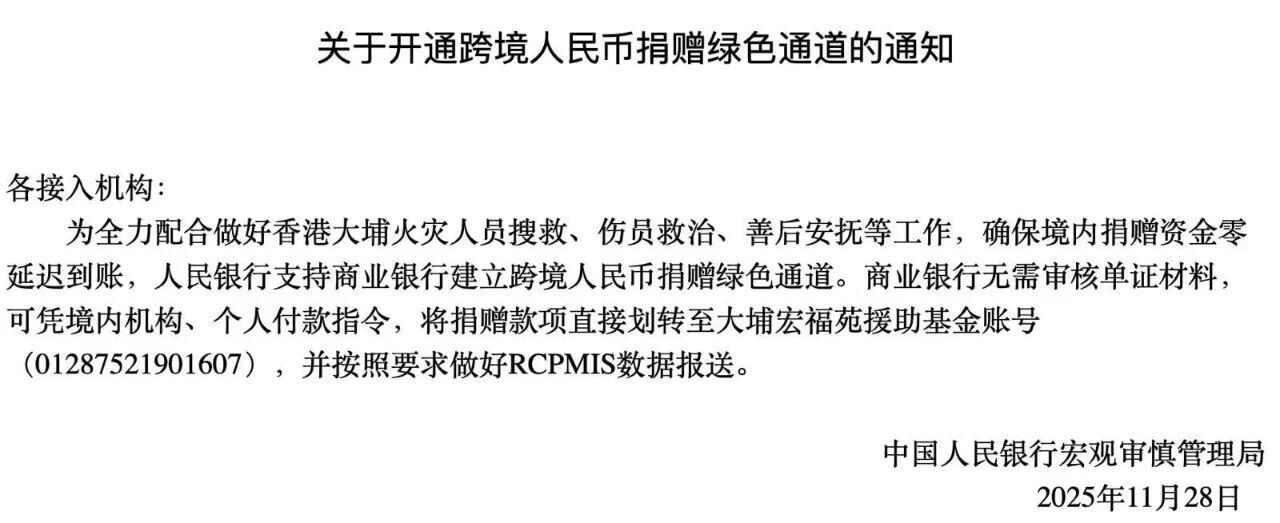
事关香港火灾!多家银行捐钱捐物、提供应急服务 支持灾后重建
Bei Ke Cai Jing· 2025-11-29 04:33
Core Viewpoint - Multiple banks in Hong Kong are actively providing financial support and donations to assist victims of the recent fire incident in Tai Po, aiming to help them recover and rebuild their lives. Group 1: Donations and Support - Industrial and Commercial Bank of China (ICBC) and its Hong Kong branches will donate HKD 10 million for disaster relief and reconstruction efforts, while also organizing a volunteer team to assist local government [2][3] - Agricultural Bank of China (ABC) will also donate HKD 10 million specifically for fire rescue and post-disaster recovery, coordinating with public welfare organizations for targeted donations [2][3] - China Bank will contribute HKD 20 million and has set up a special account for public donations, while other banks like Bank of Communications and Minsheng Bank are also making significant contributions [3][4] Group 2: Emergency Financial Services - ICBC is extending service hours and providing special service windows for affected customers, offering cash withdrawal without cards and loan extensions [4][5] - China Bank is expediting the reissuance of bank cards for customers without identification and is waiving related fees, while also providing flexible repayment options for loans [5][6] - Bank of Communications is increasing staff at affected branches and extending service hours to assist customers, offering emergency cash support and fee waivers for withdrawals [6][7] Group 3: Insurance Claims Support - Agricultural Bank of China is coordinating with insurance companies to simplify claims processes and provide rapid responses to affected customers [7] - China Bank's insurance division has established a service hotline and emergency claims green channel to expedite claims for affected clients [7] - Bank of Communications Insurance is also reaching out to clients to offer quick service solutions and simplify claims procedures [7]
全力支持香港救灾 央行、工行、农行、中行、建行、交行等齐出手
2 1 Shi Ji Jing Ji Bao Dao· 2025-11-29 03:33
Core Viewpoint - The article highlights the collective response of various banks in Hong Kong to support disaster relief and recovery efforts following a significant fire incident in Tai Po, which resulted in substantial casualties and damage. Group 1: Bank Contributions - Industrial and Commercial Bank of China (ICBC) announced a donation of HKD 10 million for disaster relief and recovery efforts, mobilizing resources and establishing a volunteer team to assist local government [4] - Agricultural Bank of China pledged HKD 10 million to support fire rescue and post-disaster reconstruction, coordinating with local organizations and providing financial support to affected families [6] - Bank of China committed HKD 20 million, establishing a dedicated donation account for public contributions and offering expedited banking services to affected customers [9] - China Construction Bank donated HKD 10 million and set up a green channel for cross-border donations, facilitating financial support for disaster relief [12] - Bank of Communications announced a donation of HKD 10 million, providing emergency services and support to affected customers [15] - Several other banks, including Shanghai Pudong Development Bank, Industrial Bank, and Minsheng Bank, collectively donated nearly HKD 100 million to support emergency relief and reconstruction efforts [18] - Foreign banks such as HSBC and Hang Seng Bank jointly donated HKD 30 million, while Standard Chartered and DBS Bank each contributed HKD 10 million to the relief fund [19] Group 2: Emergency Services and Support Measures - ICBC implemented emergency financial services, including extended hours and special service windows for affected customers [4] - Agricultural Bank of China organized volunteer teams for disaster support and established a green channel for insurance claims [6] - Bank of China expedited the processing of banking services for customers without identification and offered flexible repayment options for loans [9] - China Construction Bank set up a 24-hour customer service hotline and prioritized services for residents affected by the fire [12] - Bank of Communications provided emergency cash support and simplified claims processes for insurance customers [15]
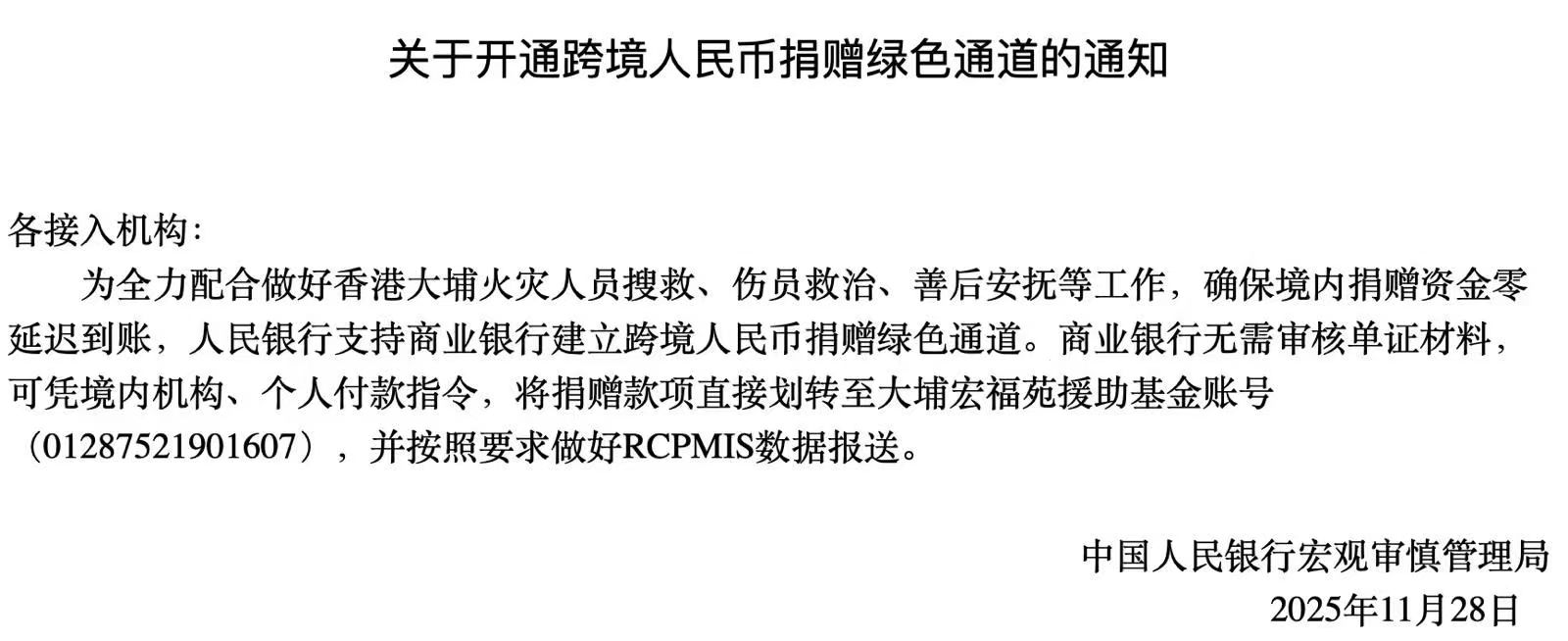
民生银行11月28日大宗交易成交6214.36万元
Zheng Quan Shi Bao Wang· 2025-11-28 15:33
民生银行11月28日大宗交易平台出现一笔成交,成交量1534.41万股,成交金额6214.36万元,大宗交易 成交价为4.05元,相对今日收盘价折价0.98%。该笔交易的买方营业部为机构专用,卖方营业部为中信 证券股份有限公司北京安外大街证券营业部。 进一步统计,近3个月内该股累计发生7笔大宗交易,合计成交金额为7.32亿元。 (文章来源:证券时报网) 证券时报·数据宝统计显示,民生银行今日收盘价为4.09元,下跌0.97%,日换手率为0.92%,成交额为 13.28亿元,全天主力资金净流出1894.89万元,近5日该股累计下跌0.49%,近5日资金合计净流出2.11亿 元。 两融数据显示,该股最新融资余额为66.46亿元,近5日减少1.18亿元,降幅为1.75%。 据天眼查APP显示,中国民生银行股份有限公司成立于1996年02月07日,注册资本4378241.8502万人民 币。(数据宝) 11月28日民生银行大宗交易一览 | 成交量 | 成交金额 | 成交价格 | 相对当日收盘折溢 | 买方营 | 卖方营业部 | | --- | --- | --- | --- | --- | --- | | (万股) ...

捐款、贷款展期、开设绿色通道多家银行全力支持香港大埔救灾及灾后重建
Mei Ri Jing Ji Xin Wen· 2025-11-28 14:42
Core Viewpoint - Following the fire incident at Hong Kong's Tai Po Wang Fuk Court, multiple banks have swiftly mobilized to support disaster relief and post-disaster reconstruction through donations, emergency financial services, loan extensions, and fee waivers [1][2][3]. Group 1: Donations and Financial Support - Shanghai Bank initiated an emergency donation mechanism, contributing 10 million HKD to the Hong Kong White Magnolia Charity Foundation to support rescue operations, medical treatment, and post-disaster recovery [1]. - Major banks including ICBC Asia, Bank of China Hong Kong, and others have also announced donations to aid emergency relief and reconstruction efforts [1][2]. Group 2: Emergency Services - ICBC Asia has set up dedicated service windows for affected customers, offering cardless cash withdrawals and expedited card replacements [2]. - SPD Bank established a green channel for emergency services, prioritizing the transfer of disaster relief funds and ensuring uninterrupted financial services [3]. - Several banks have increased staffing and extended operating hours at branches in the affected area to assist customers [3]. Group 3: Loan Management - Banks such as Bank of Communications (Hong Kong) and Bank of China Hong Kong are considering individual cases of affected customers for loan management, including loan extensions and fee waivers [4]. - ICBC Asia is also implementing a comprehensive plan for loan extensions, interest reductions, and fee waivers for early withdrawals from fixed deposits to meet the financial needs of disaster-affected individuals [4]. Group 4: Insurance Claims - Several banks have announced the establishment of emergency claims channels for affected customers, simplifying the claims process and providing prompt responses to inquiries [5]. - Agricultural Bank of China Insurance has initiated customer risk assessments and launched a service green channel to ensure the rights of disaster-affected individuals are protected [5].



工行、农行、中行、建行、交行等,齐出手
中国基金报· 2025-11-28 14:35
Core Viewpoint - Multiple banks in Hong Kong are actively supporting rescue and reconstruction efforts following a significant fire incident in Tai Po, New Territories, which resulted in major casualties [1] Group 1: Donations and Support Actions - Industrial and Commercial Bank of China (ICBC) donated 10 million HKD and organized a volunteer team to assist local government in rescue efforts [3] - Agricultural Bank of China (ABC) also donated 10 million HKD, focusing on supporting fire rescue and post-disaster recovery [6] - Bank of China (BOC) announced a donation of 20 million HKD and established a special account for public donations [11] - China Construction Bank (CCB) pledged 10 million HKD for emergency relief and recovery efforts, while also facilitating cross-border donations [15] - Bank of Communications (BoCom) plans to donate 10 million HKD and set up emergency service stations in affected areas [18] - Shanghai Bank and Minsheng Bank collectively donated over 50 million HKD, with Shanghai Bank contributing 10 million HKD and Minsheng Bank 5 million HKD [24] Group 2: Financial Services and Customer Support - ICBC is providing emergency financial services, including extended service hours and special service windows for affected customers [3] - ABC is coordinating with public welfare organizations for targeted donations and has initiated a volunteer team for disaster support [6] - BOC is expediting the reissuance of bank cards for affected customers and waiving related fees [12] - CCB is offering flexible identity verification and free reissuance of bank cards for customers unable to provide identification [15] - BoCom has set up priority service channels and is providing emergency cash support for affected customers [19]

工行、农行、中行、建行、交行等,齐出手
Zhong Guo Ji Jin Bao· 2025-11-28 14:26
Core Viewpoint - Multiple banks are taking urgent actions to support the rescue and reconstruction efforts following a significant fire incident in Hong Kong's Tai Po district, which resulted in major casualties and damage [1]. Group 1: Bank Contributions - Industrial and Commercial Bank of China (ICBC) has pledged HKD 10 million for disaster relief and reconstruction efforts, coordinating with its Hong Kong branches to provide emergency financial services and support [3]. - Agricultural Bank of China (ABC) is also donating HKD 10 million to assist in fire rescue and post-disaster recovery, while organizing volunteer teams to support affected families [6][7]. - Bank of China (BOC) has committed HKD 20 million, establishing a special donation account for public contributions and offering various financial support measures for affected customers [11][12]. - China Construction Bank (CCB) announced a donation of HKD 10 million and is providing flexible identity verification and fee waivers for affected customers [15][16]. - Bank of Communications plans to donate HKD 10 million and has set up emergency service stations to assist affected residents [19][20]. - Other banks, including Shanghai Bank and Minsheng Bank, collectively donated over HKD 50 million, with HSBC and Hang Seng Bank contributing HKD 30 million [25][26].
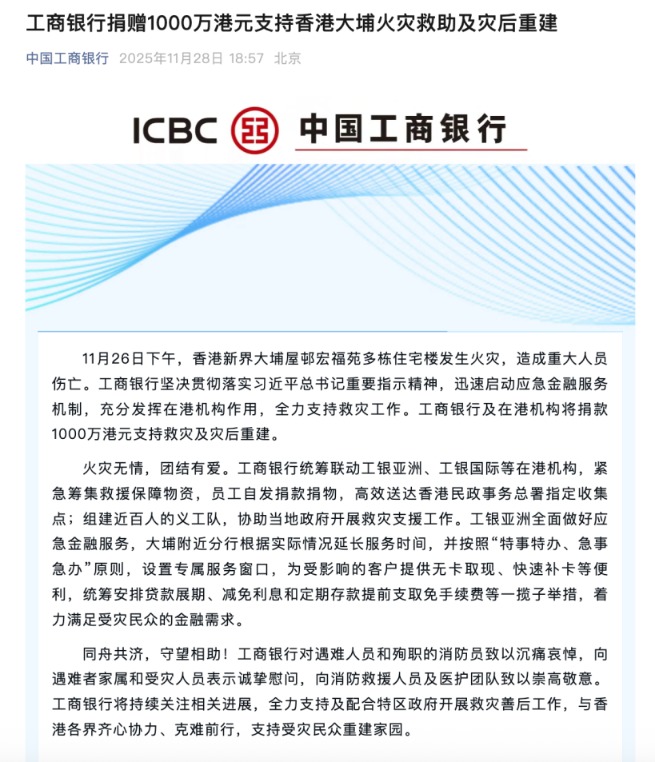
多家银行捐款 驰援香港大埔灾后工作
Zhong Guo Jing Ying Bao· 2025-11-28 14:26
Core Points - A significant fire occurred in Hong Kong's Tai Po district, resulting in major casualties and prompting extensive rescue efforts by the Hong Kong Fire Services [1] - Various banks have pledged financial support for the fire relief efforts, with donations totaling 100 million HKD from multiple institutions [1] Group 1: Donations and Support - China Construction Bank donated 10 million HKD to support the fire rescue efforts in Tai Po [1] - Agricultural Bank of China, along with its Hong Kong branches, pledged 10 million HKD specifically for fire rescue and post-disaster reconstruction [1] - Shanghai Pudong Development Bank also contributed 10 million HKD to aid in the fire rescue operations [1] - Shanghai Bank initiated an emergency donation mechanism, donating 10 million HKD to the Hong Kong Baiyulan Charity Foundation [1] - Minsheng Bank's Hong Kong branch announced a donation of 5 million HKD to the "Tai Po Hongfuyuan Assistance Fund" for emergency aid and reconstruction efforts [1] - DBS Bank (Hong Kong) donated 10 million HKD to the Hong Kong Red Cross [1] - HSBC and Hang Seng Bank announced an initial donation of 30 million HKD to support the affected residents and families from the Hongfuyuan fire [1]


银行批量上调代销基金风险等级 投资者如何应对?
Guo Ji Jin Rong Bao· 2025-11-28 12:52
Core Viewpoint - Banks are increasingly adjusting the risk levels of mutual fund products they distribute, with several banks, including China Construction Bank and Minsheng Bank, making multiple adjustments this year to align with market conditions and regulatory requirements [1][3][4]. Group 1: Bank Adjustments - China Construction Bank has announced a batch increase in the risk levels of 87 mutual fund products, marking the fourth adjustment this year [1][3]. - Minsheng Bank has also made four similar adjustments since October, with the latest announcement on November 18 regarding eight lower-risk fund products being raised to medium risk [1][3]. - Postal Savings Bank has adjusted the risk levels of 86 mutual fund products in two recent announcements [1][4]. Group 2: Reasons for Adjustments - The adjustments are attributed to a combination of mutual fund product characteristics, market conditions, and regulatory guidance, which aim to reduce the risk mismatch between investors and products [1][4]. - Changes in investment strategies and asset allocations of certain funds have increased their net value volatility, prompting institutions to reassess the risk-return alignment [4]. - Regulatory frameworks, such as the Asset Management New Regulations, are reinforcing the core requirement of "risk matching," compelling institutions to establish dynamic risk rating mechanisms [4][5]. Group 3: Future Implications - The adjustments may become a regular practice as banks are required to dynamically assess product risks to fulfill their suitability obligations and protect investor interests [5]. - Short-term impacts may lead conservative investors to redeem their investments due to increased risk levels, while long-term benefits include enhanced risk transparency and reduced risk mismatch [5][6]. - This shift is expected to drive the wealth management industry towards a service-oriented model, encouraging fund companies to improve their research and investment capabilities [5][6].